


Bolshoi Opera and Ballet Theatre Alisher Navoï tickets 22 February 2026 - La Bayadère | GoComGo.com

La Bayadère

Bolshoi Opera and Ballet Theatre Alisher Navoï, Tashkent, Uzbekistan
All photos (8)
Select date and time
7 PM
From
US$ 33

E-tickets: Print at home or at the box office of the event if so specified. You will find more information in your booking confirmation email.

You can only select the category, and not the exact seats.
If you order 2 or 3 tickets: your seats will be next to each other.
If you order 4 or more tickets: your seats will be next to each other, or, if this is not possible, we will provide a combination of groups of seats (at least in pairs, for example 2+2 or 2+3).

Important Info
Type: Ballet
City: Tashkent, Uzbekistan
Starts at: 19:00

E-tickets: Print at home or at the box office of the event if so specified. You will find more information in your booking confirmation email.

You can only select the category, and not the exact seats.
If you order 2 or 3 tickets: your seats will be next to each other.
If you order 4 or more tickets: your seats will be next to each other, or, if this is not possible, we will provide a combination of groups of seats (at least in pairs, for example 2+2 or 2+3).

Cast
Creators
Composer: Ludwig Minkus
Librettist: Sergei Khudekov
Overview

La Bayadère is a grand classical ballet set to the music of Ludwig Minkus, telling a dramatic story of love, betrayal, and destiny in ancient India. Presented at the Alisher Navoi State Academic Bolshoi Opera and Ballet Theatre, the production captivates audiences with its elegance and legendary choreography.

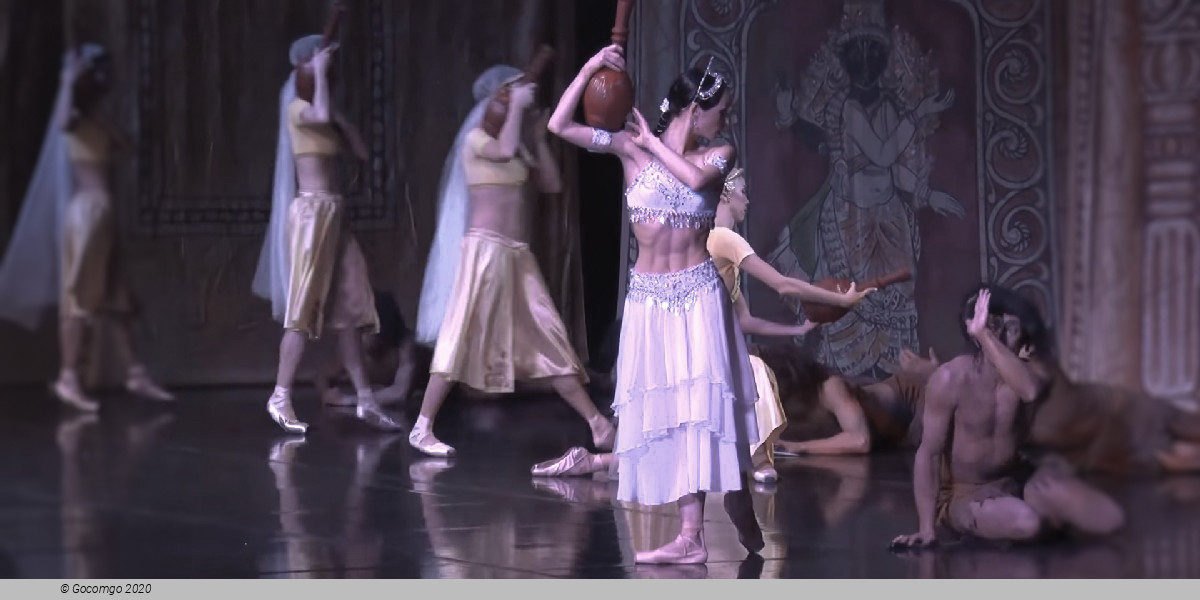
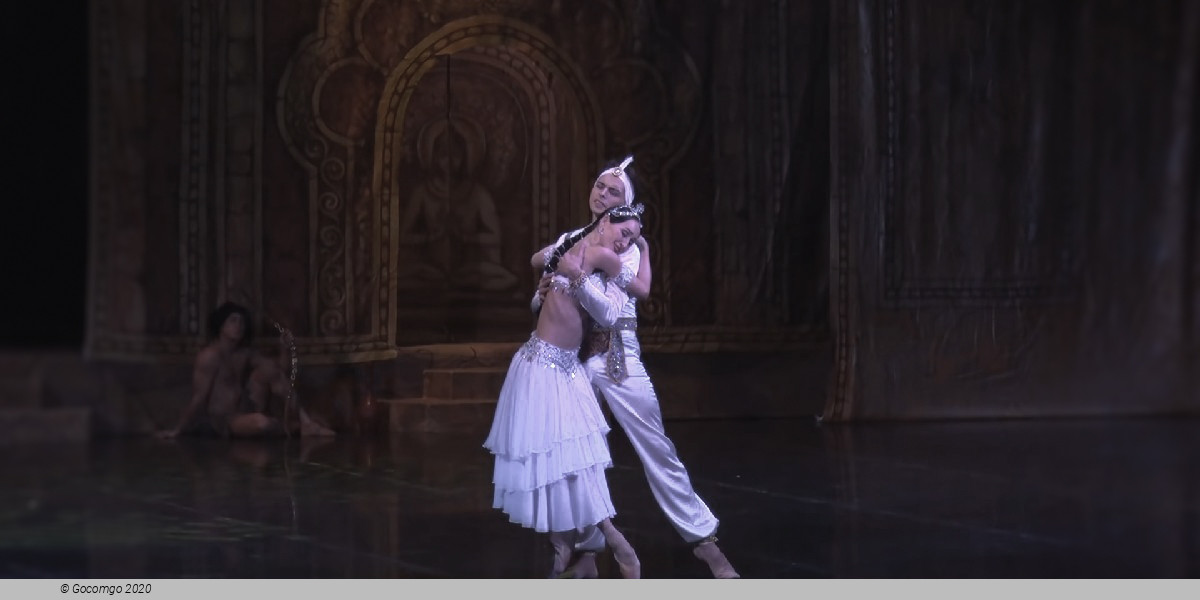
La Bayadère is one of the greatest masterpieces of classical ballet, originally choreographed by Marius Petipa to the music of Ludwig Minkus. Set in a romanticized vision of ancient India, the ballet tells the tragic love story of the temple dancer Nikiya and the noble warrior Solor, whose devotion is destroyed by jealousy, betrayal, and rigid social obligations.

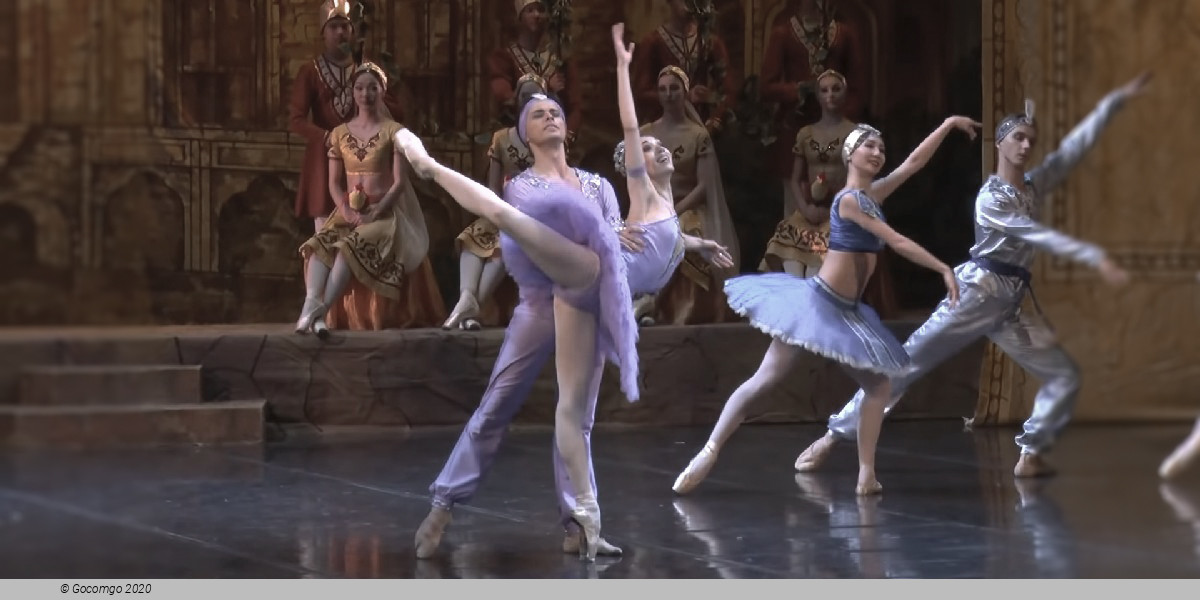
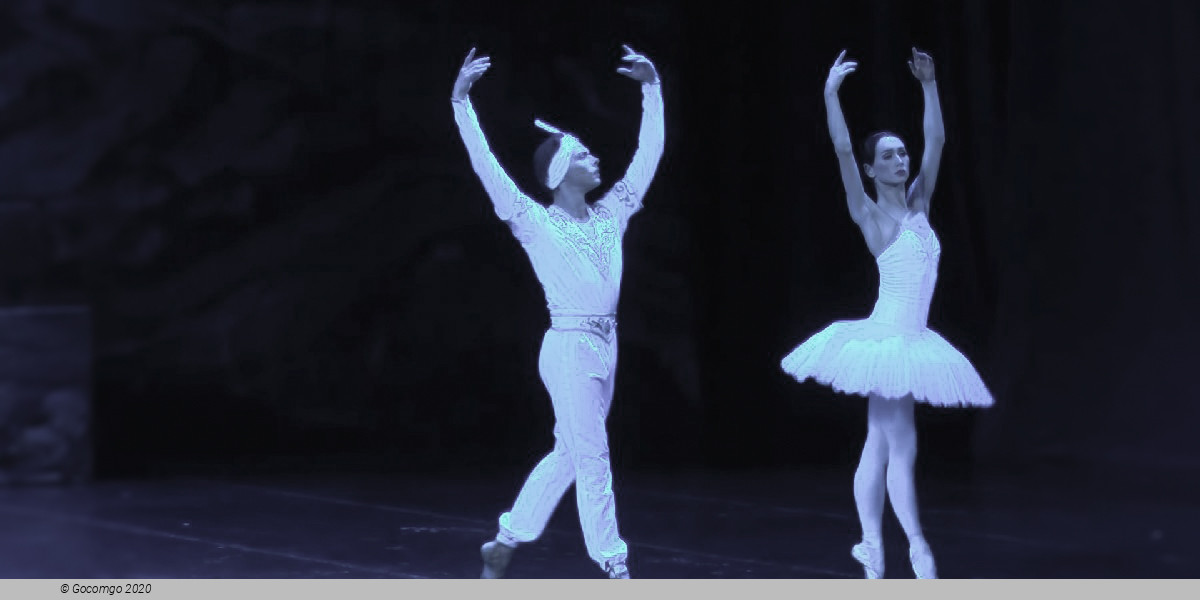
The ballet is world-famous for its iconic Kingdom of the Shades scene, a poetic and hypnotic sequence that represents the height of classical ballet purity and precision. Rich in grand ensemble dances, expressive pas de deux, and dramatic storytelling, La Bayadère combines technical brilliance with deep emotional power.

At the Alisher Navoi State Academic Bolshoi Opera and Ballet Theatre, this production is presented with sumptuous sets, opulent costumes, and refined classical choreography. The performance immerses audiences in an exotic and tragic world, offering a timeless exploration of love, honor, and fate.

La Bayadère is a classical ballet by Ludwig Minkus that tells a tragic love story set in ancient India. Performed at the Alisher Navoi State Academic Bolshoi Theatre, the ballet captivates audiences with its grandeur, exotic atmosphere, and iconic choreography.

La Bayadère, composed by Ludwig Minkus with original choreography by Marius Petipa, is one of the masterpieces of classical ballet. Premiered in 1877, the ballet is celebrated for its rich storytelling, spectacular scenes, and technical brilliance.

The story unfolds in ancient India and centers on the forbidden love between the temple dancer Nikiya and the noble warrior Solor. Their romance is threatened by jealousy, betrayal, and the rigid laws of society, leading to dramatic conflict and tragic consequences. One of the most famous scenes in ballet history, the Kingdom of the Shades, embodies pure classical beauty and poetic elegance.

Presented at the Alisher Navoi State Academic Bolshoi Theatre, this production preserves the traditions of classical ballet while highlighting the precision, grace, and expressive power of the dancers. Lavish costumes, atmospheric sets, and Minkus’s melodic score transport the audience into a world of passion, destiny, and timeless artistry.

History
Premiere of this production: 23 January 1877, Imperial Bolshoi Kamenny Theatre in St. Petersburg, Russia

La Bayadère (en. The Temple Dancer) is a ballet, originally staged in four acts and seven tableaux by French choreographer Marius Petipa to the music of Ludwig Minkus. The ballet was staged especially for the benefit performance of the Russian Prima ballerina Ekaterina Vazem, who created the principal role of Nikiya.

Synopsis

Set in the Royal India of the past, La Bayadère is a story of eternal love, mystery, fate, vengeance, and justice.  The ballet relates the drama of a temple dancer (bayadère), Nikiya, who is loved by Solor, a noble warrior.  She is also loved by the High Brahmin, but does not love him in return, as she does Solor.

Act I

Scene I, Outside Temple in the Sacred Forest.

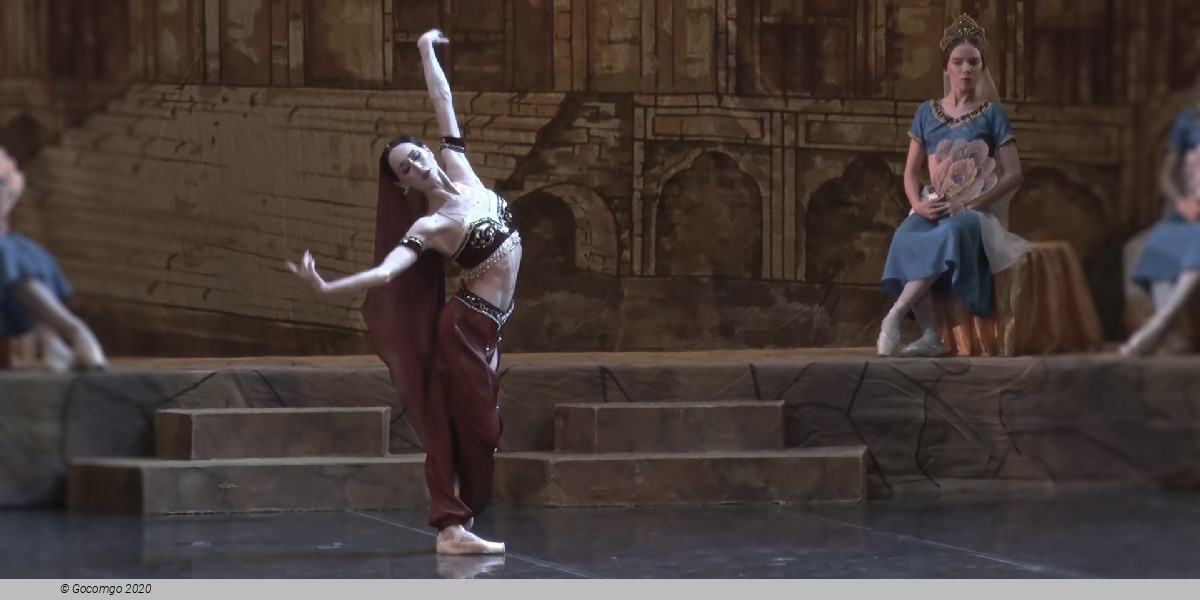
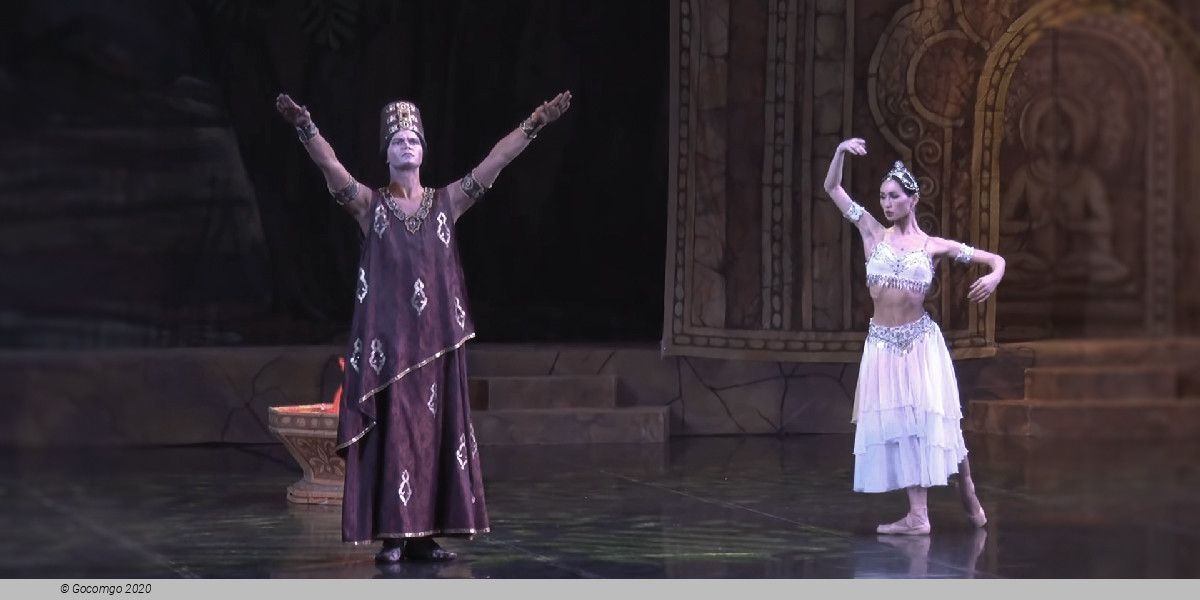
The High Brahmin, priests, and temple dancers are celebrating the Indian Ritual of Fire.  Nikiya, the most beautiful of the bayadères, has been chosen to be consecrated the lead temple dancer.  The High Brahmin declares his love for Nikiya, but is rejected by her.  Nikiya meets secretly with Solor later that evening.  They dance together and swear eternal love over the Sacred Fire, but are discovered by the jealous High Brahmin, who vows to kill Solor.

Scene II, A Room in the Palace.

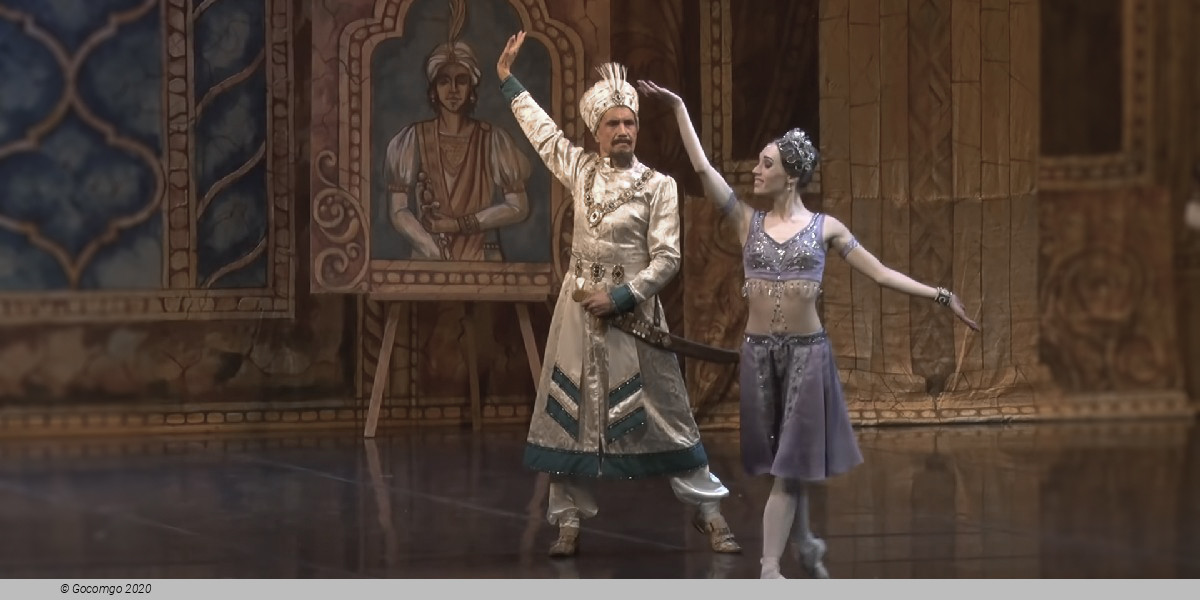
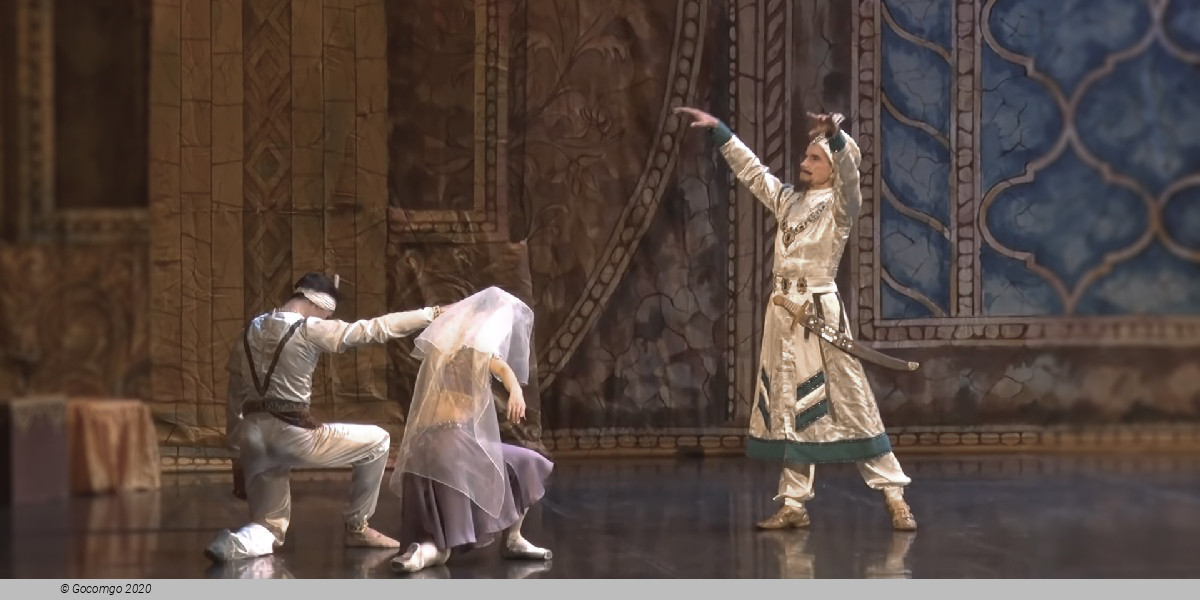
The Rajah has decided to reward Solor’s valor and decrees that the warrior will marry his daughter, Gamzatti.  Gamzatti falls in love with Solor’s portrait, and when they meet, he is overwhelmed by her beauty.  Even though he has sworn eternal love to Nikiya, he cannot defy the wishes of the Rajah and agrees to marry Gamzatti.  The High Brahmin informs the Rajah of Nikiya and Solor’s secret love, hoping that the Rajah will do away with Solor.  Instead, the Rajah decides to kill Nikiya.

This conversation is overhead by Gamzatti, who summons Nikiya to her rooms and attempts to bribe Nikiya to give up Solor.  Refusing, Nikiya frantically attempts to kill  Gamzatti.  Nikiya flees and Gamzatti swears to destroy her.

Scene III, The Garden of the Palace.

At the betrothal of Solor and Gamzatti, Nikiya is commanded to dance.  Gamzatti presents her with a basket of flowers that Nikiya believes to be from Solor, and which conceals a deadly snake.  Nikiya is bitten, and when Solor leaves with Gamzatti, she refuses the proffered antidote and dies.

Act II. The Tent of Solor.

Solor, grief‑stricken and under the influence of opium, dreams of being reunited with Nikiya in the Kingdom of the Shades.  Awakening, he realizes that he must prepare to marry Gamzatti.

Act III. The Temple.

The vision of Nikiya remains with Solor as the wedding ceremony begins at the Sacred Temple.  As Solor and Gamzatti say their vows and are blessed by the High Brahmin, the vengeance of the gods is unleashed, and the temple and all the celebrants are destroyed.  Nikiya and Solor are once again united in eternal love.

Venue Info

Bolshoi Opera and Ballet Theatre Alisher Navoï - Tashkent
Location   Moustafa Kamoul Atatürk, Bukhara Street 28, 100029, Tashkent, Uzbekistan

The Alisher Navoi State Academic Bolshoi Theatre is Uzbekistan’s leading opera and ballet theatre, renowned for its classical repertoire, grand architecture, and rich cultural heritage. It stands as a symbol of national art and musical excellence in Tashkent.

The Alisher Navoi State Academic Bolshoi Theatre is the principal opera and ballet theatre of Uzbekistan and one of the most important cultural institutions in Central Asia. Located in the heart of Tashkent, the theatre was founded in 1939 and named after the great poet and thinker Alisher Navoi.

The building is a masterpiece of monumental architecture, harmoniously combining classical forms with traditional Uzbek decorative elements. Its interior halls are richly adorned with national ornaments, marble, and intricate craftsmanship, each reflecting the artistic traditions of different regions of Uzbekistan.

The theatre’s repertoire includes world-renowned operas and ballets by composers such as Verdi, Tchaikovsky, Bizet, and Prokofiev, alongside national works by Uzbek composers. For decades, the stage of the Alisher Navoi Theatre has been home to outstanding singers, dancers, conductors, and choreographers who have shaped the country’s performing arts.

As a cultural landmark of Tashkent, the theatre continues to play a vital role in preserving classical traditions while promoting artistic innovation, international cooperation, and cultural exchange.

Important Info
Type: Ballet
City: Tashkent, Uzbekistan
Starts at: 19:00
Top of page