


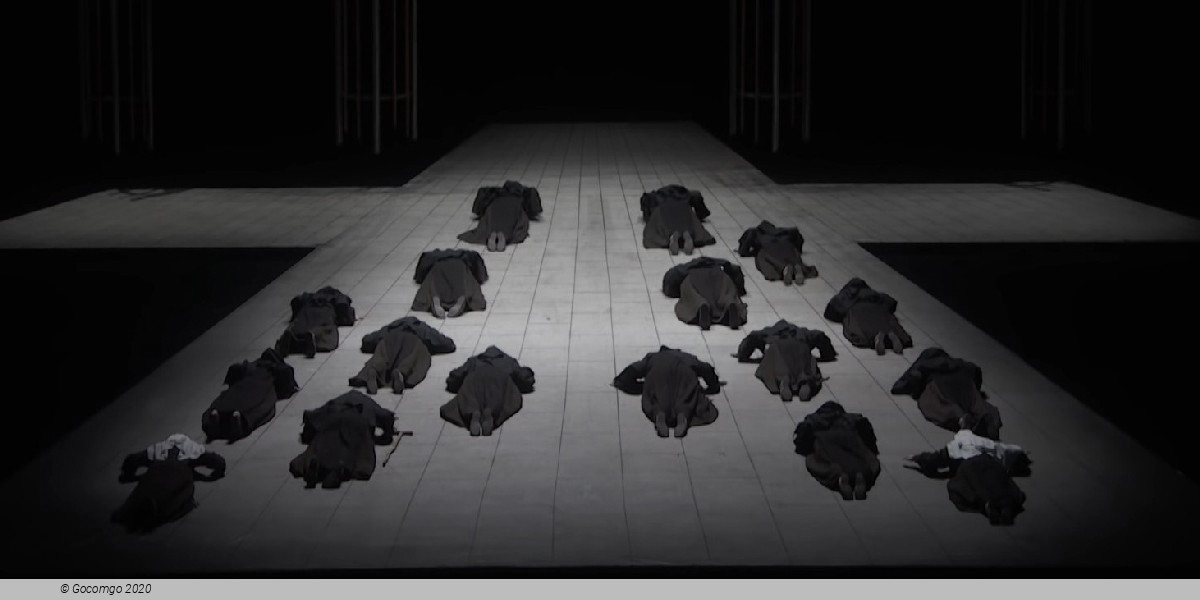
Bavarian State Opera 8 June 2023 - Dialogues des Carmélites | GoComGo.com

Dialogues des Carmélites

Bavarian State Opera, National Theatre, Munich, Germany
All photos (9)
Select date and time
6 PM

E-tickets: Print at home or at the box office of the event if so specified. You will find more information in your booking confirmation email.

You can only select the category, and not the exact seats.
If you order 2 or 3 tickets: your seats will be next to each other.
If you order 4 or more tickets: your seats will be next to each other, or, if this is not possible, we will provide a combination of groups of seats (at least in pairs, for example 2+2 or 2+3).

Important Info
Type: Opera
City: Munich, Germany
Starts at: 18:00
Acts: 3
Duration: 3h 20min
Sung in: French
Titles in: German

E-tickets: Print at home or at the box office of the event if so specified. You will find more information in your booking confirmation email.

You can only select the category, and not the exact seats.
If you order 2 or 3 tickets: your seats will be next to each other.
If you order 4 or more tickets: your seats will be next to each other, or, if this is not possible, we will provide a combination of groups of seats (at least in pairs, for example 2+2 or 2+3).

Overview

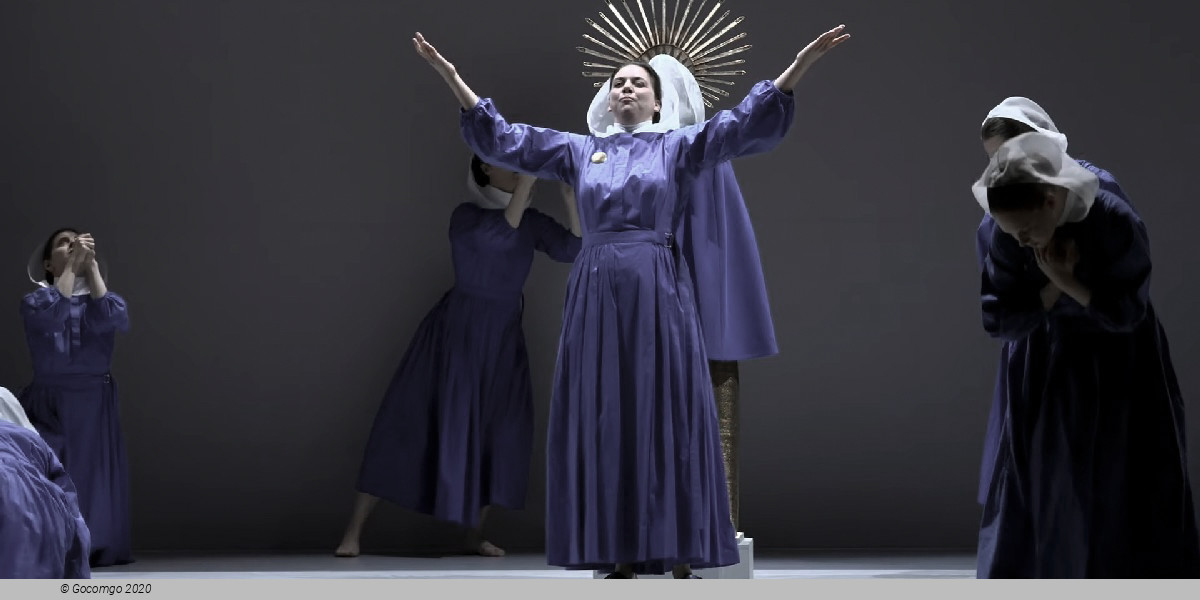
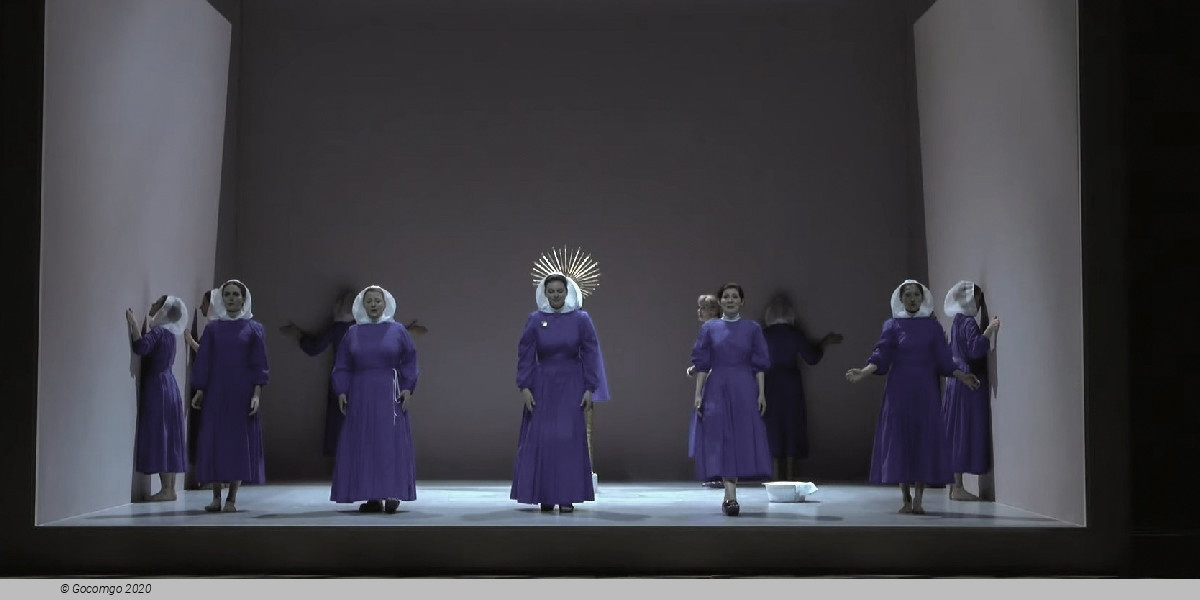
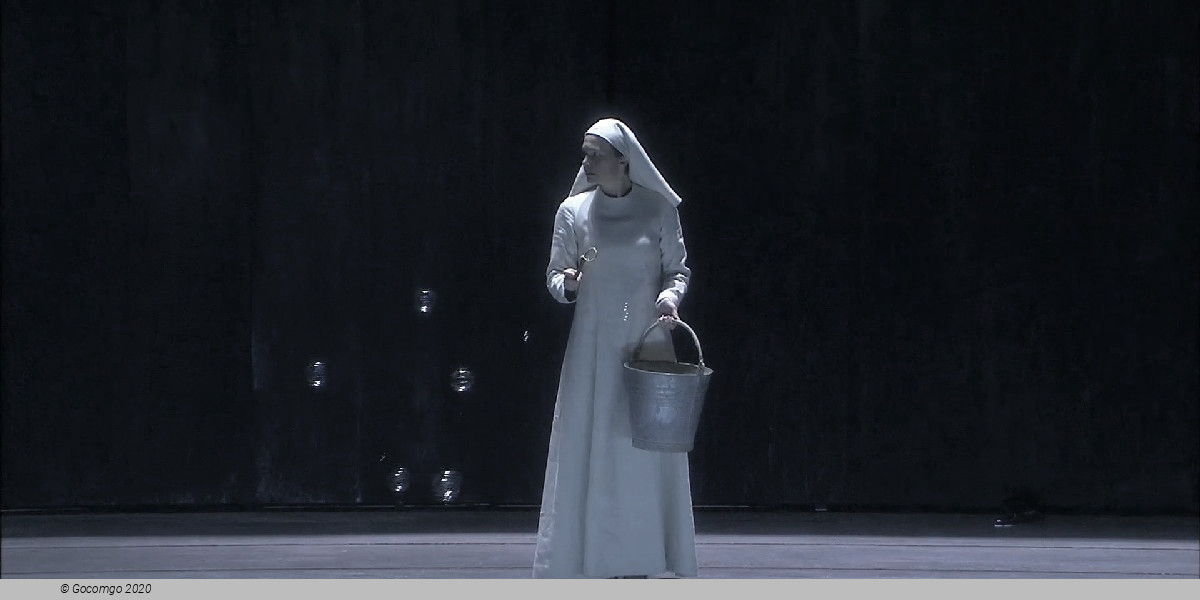
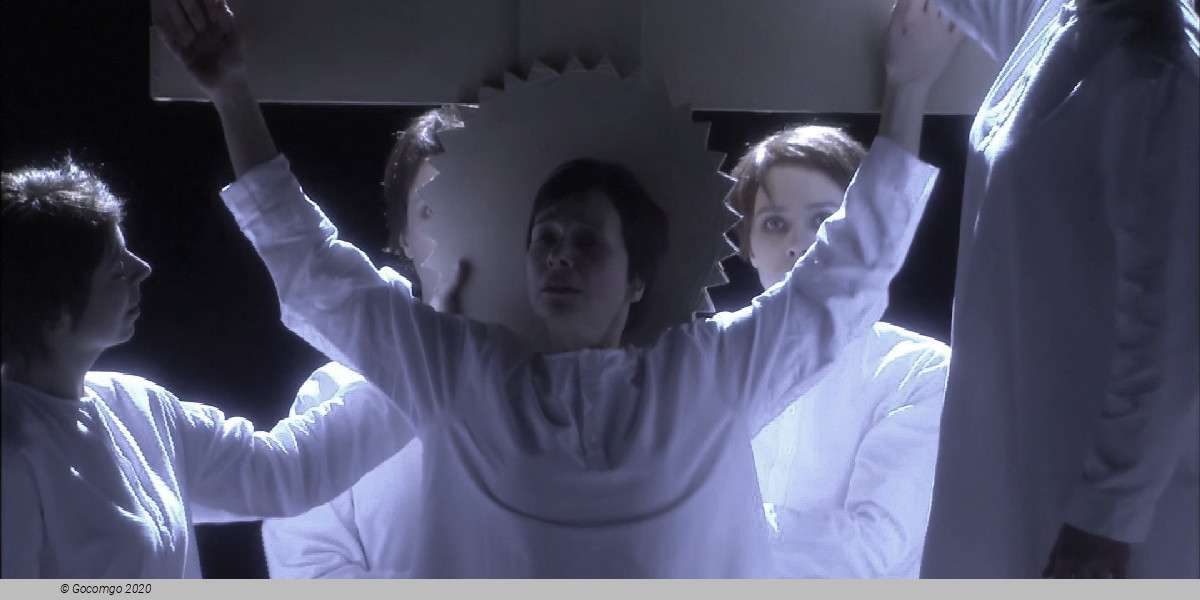
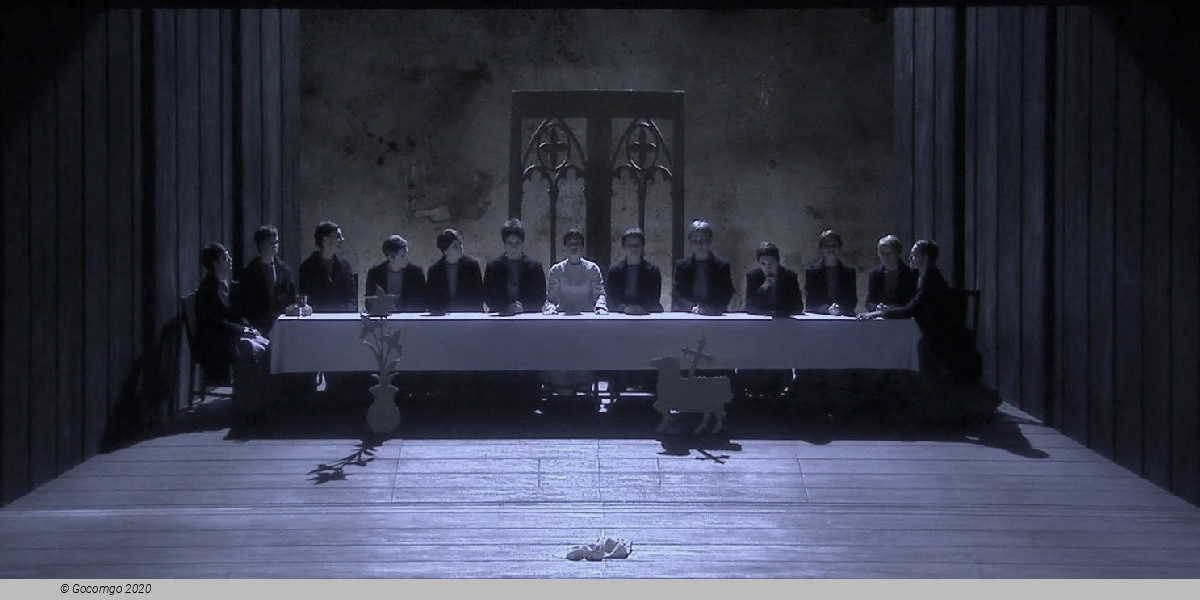
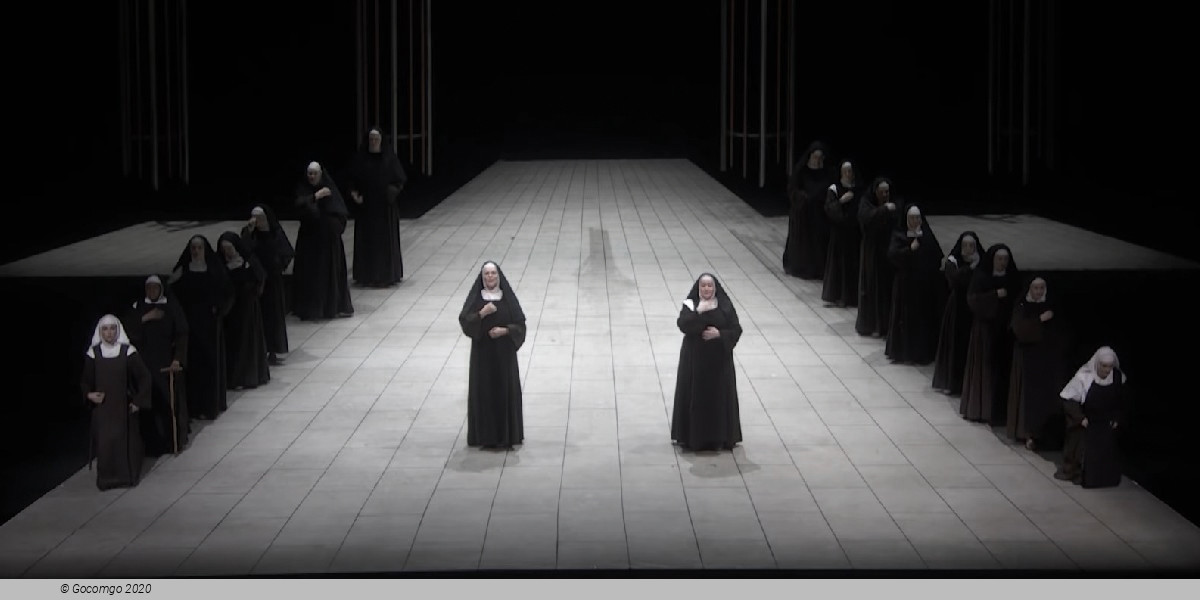
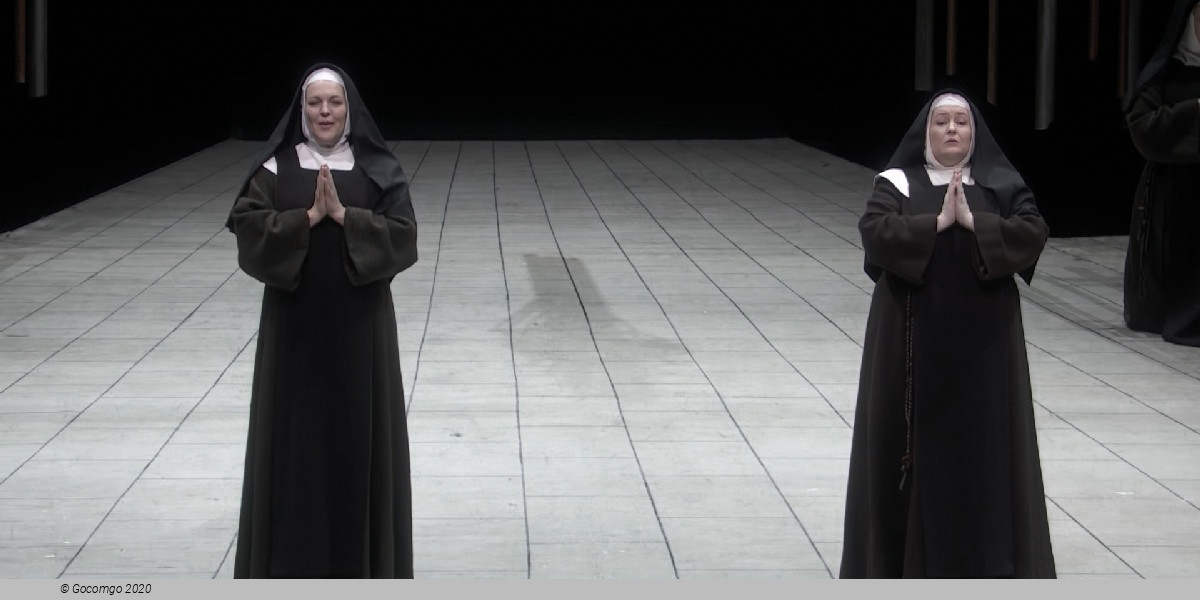
In his 1957 opera Dialogues des Carmélites, French composer Francis Poulenc sets revolution and religion on a collision course: young Blanche de la Force, haunted from birth by panic attacks, seeks refuge in the isolation of a convent, where she hopes to overcome her torturous fear of life.

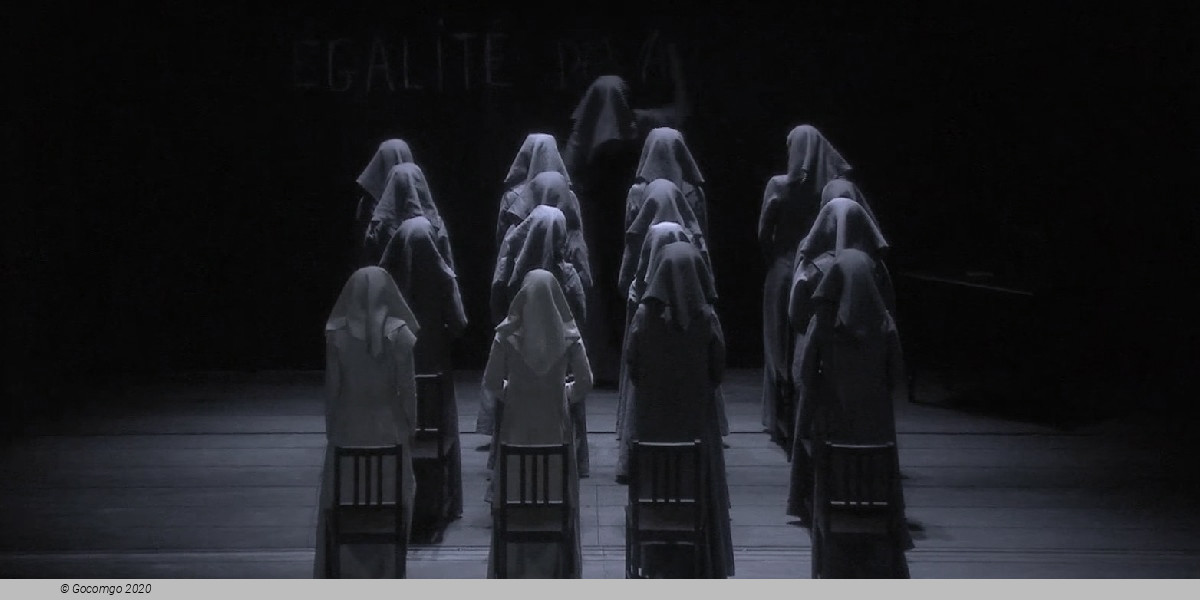
Her entry into the Order of the Carmelites and her conversations with the other nuns strengthen her and her faith, but the fear remains. The French Revolution does not stop at the walls of the convent and prohibits the nuns from carrying out the rules of their order. They rise in opposition, even accepting a martyr’s death rather than give in. All except Blanche – she flees again, terrified of death. The steadfastness with which the sisters face their martyrdom rescues Blanche from her anxiety. Fearlessly, she follows them to the gallows.

History
Premiere of this production: 26 January 1957, La Scala, Milan (in Italian)

Dialogues des Carmélites (Dialogues of the Carmelites) is an opera in three acts, divided into twelve scenes with linking orchestral interludes, with music and libretto by Francis Poulenc, completed in 1956. The composer's second opera, Poulenc wrote the libretto after the work of the same name by Georges Bernanos. The opera tells a fictionalised version of the story of the Martyrs of Compiègne, Carmelite nuns who, in 1794 during the closing days of the Reign of Terror during the French Revolution, were guillotined in Paris for refusing to renounce their vocation.

Synopsis

Place: Paris and Compiègne, 1789–94
Time: during the French Revolution
Act 1
Against the setting of the French Revolution, when crowds stop carriages in the street and aristocrats are attacked, the pathologically timid Blanche de la Force decides to retreat from the world and enter a Carmelite convent. The Mother Superior informs her that the Carmelite Order is not a refuge; it is the duty of the nuns to guard the Order, not the other way around. In the convent, the chatterbox Sister Constance tells Blanche (to her consternation) that she has had a dream that the two of them will die young together. The prioress, who is dying, commits Blanche to the care of Mother Marie. The Mother Superior passes away in great agony, shouting in her delirium that despite her long years of service to God, He has abandoned her. Blanche and Mother Marie, who witness her death, are shaken.

Act 2
Sister Constance remarks to Blanche that the prioress' death seemed unworthy of her, and speculates that she had been given the wrong death, as one might be given the wrong coat in a cloakroom. She said that perhaps someone else will find death surprisingly easy. Perhaps we die not for ourselves alone, but for each other.

Blanche's brother, the Chevalier de la Force, arrives to announce that their father thinks Blanche should withdraw from the convent, since she is not safe there (being both an aristocrat and the member of a religious community, at a time of anti-aristocracy and anti-clericalism in the rising revolutionary tides). Blanche refuses, saying that she has found happiness in the Carmelite Order. Later she admits to Mother Marie that it is fear (or the fear of fear itself, as the Chevalier expresses it) that keeps her from leaving.

The chaplain announces that he has been forbidden to preach (presumably for being a non-juror under the Civil Constitution of the Clergy). The nuns remark on how fear rules the country, and no one has the courage to stand up for the priests. Sister Constance asks, "Are there no men left to come to the aid of the country?" "When priests are lacking, martyrs are superabundant," replies the new Mother Superior. Mother Marie says that the Carmelites can save France by giving their lives, but the Mother Superior corrects her: it is not permitted to choose to become a martyr; God decides who will be martyred.

A police officer arrives and announces to the community that the Legislative Assembly has nationalized the convent and its property, and the nuns must give up their religious habits. When Mother Marie acquiesces, the officer taunts her for being eager to dress like everyone else. She replies that the nuns will continue to serve, no matter how they are dressed. "The people have no need of servants," proclaims the officer haughtily. "No, but they have a great need for martyrs," responds Mother Marie. "In times like these, death is nothing," he says. "Life is nothing," she answers, "when it is so debased."

Act 3
In the absence of the new prioress, Mother Marie proposes that the nuns take a vow of martyrdom. However, all must agree, or Mother Marie will not insist. A secret vote is held; there is one dissenting voice. Sister Constance declares that she was the dissenter, and that she has changed her mind, so the vow can proceed. Blanche runs away from the convent, and Mother Marie goes to look for her, finding her in her father's library. Her father has been guillotined, and Blanche has been forced to serve her former servants.

The nuns are all arrested and condemned to death, but Mother Marie is away at the time of the arrest. Upon receiving the news, the chaplain tells Mother Marie, when they meet again, that since God has chosen to spare her, she cannot voluntarily become a martyr by joining the others in prison.

At the place of execution, one nun after another stands and slowly processes toward the guillotine, as all sing the "Salve Regina" ("Hail, Holy Queen"). At the last moment, Blanche appears, to Constance's joy, to join her condemned sisters. Having seen all the other nuns executed, as she mounts the scaffold, Blanche sings the final stanza of the "Veni Creator Spiritus," "Deo Patri sit gloria...", the Catholic hymn traditionally used when taking vows in a religious community and offering one's life to God.

Venue Info

Bavarian State Opera - Munich
Location   Max-Joseph-Platz 2

The Bavarian State Opera or the National Theatre (Nationaltheater) on Max-Joseph-Platz in Munich, Germany, is a historic opera house and the main theatre of Munich, home of the Bavarian State Opera, Bavarian State Orchestra, and the Bavarian State Ballet.

During its early years, the National Theatre saw the premières of a significant number of operas, including many by German composers. These included Wagner’s Tristan und Isolde (1865), Die Meistersinger von Nürnberg (1868), Das Rheingold (1869) and Die Walküre (1870), after which Wagner chose to build the Festspielhaus in Bayreuth and held further premières of his works there.

During the latter part of the 19th century, it was Richard Strauss who would make his mark on the theatre in the city in which he was born in 1864. After accepting the position of conductor for a short time, Strauss returned to the theatre to become principal conductor from 1894 to 1898. In the pre-War period, his Friedenstag (1938) and Capriccio were premièred in Munich. In the post-War period, the house has seen significant productions and many world premieres.

First theatre – 1818 to 1823
The first theatre was commissioned in 1810 by King Maximilian I of Bavaria because the nearby Cuvilliés Theatre had too little space. It was designed by Karl von Fischer, with the 1782 Odéon in Paris as architectural precedent. Construction began on 26 October 1811 but was interrupted in 1813 by financing problems. In 1817 a fire occurred in the unfinished building.

The new theatre finally opened on 12 October 1818 with a performance of Die Weihe by Ferdinand Fränzl, but was soon destroyed by another fire on 14 January 1823; the stage décor caught fire during a performance of Die beyden Füchse by Étienne Méhul and the fire could not be put out because the water supply was frozen. Coincidentally the Paris Odéon itself burnt down in 1818.

Second theatre – 1825 to 1943
Designed by Leo von Klenze, the second theatre incorporated Neo-Grec features in its portico and triangular pediment and an entrance supported by Corinthian columns. In 1925 it was modified to create an enlarged stage area with updated equipment. The building was gutted in an air raid on the night of 3 October 1943.

Third theatre – 1963 to present
The third and present theatre (1963) recreates Karl von Fischer's original neo-classical design, though on a slightly larger, 2,100-seat scale. The magnificent royal box is the center of the interior rondel, decorated with two large caryatids. The new stage covers 2,500 square meters (3,000 sq yd), and is thus the world's third largest, after the Opéra Bastille in Paris and the Grand Theatre, Warsaw.

Through the consistent use of wood as a building material, the auditorium has excellent acoustics. Architect Gerhard Moritz Graubner closely preserved the original look of the foyer and main staircase. It opened on 21 November 1963 with an invitation-only performance of Die Frau ohne Schatten under the baton of Joseph Keilberth. Two nights later came the first public performance, of Die Meistersinger von Nürnberg, again under Keilberth.

Important Info
Type: Opera
City: Munich, Germany
Starts at: 18:00
Acts: 3
Duration: 3h 20min
Sung in: French
Titles in: German
Top of page