Act One
The story is set in and around Naples
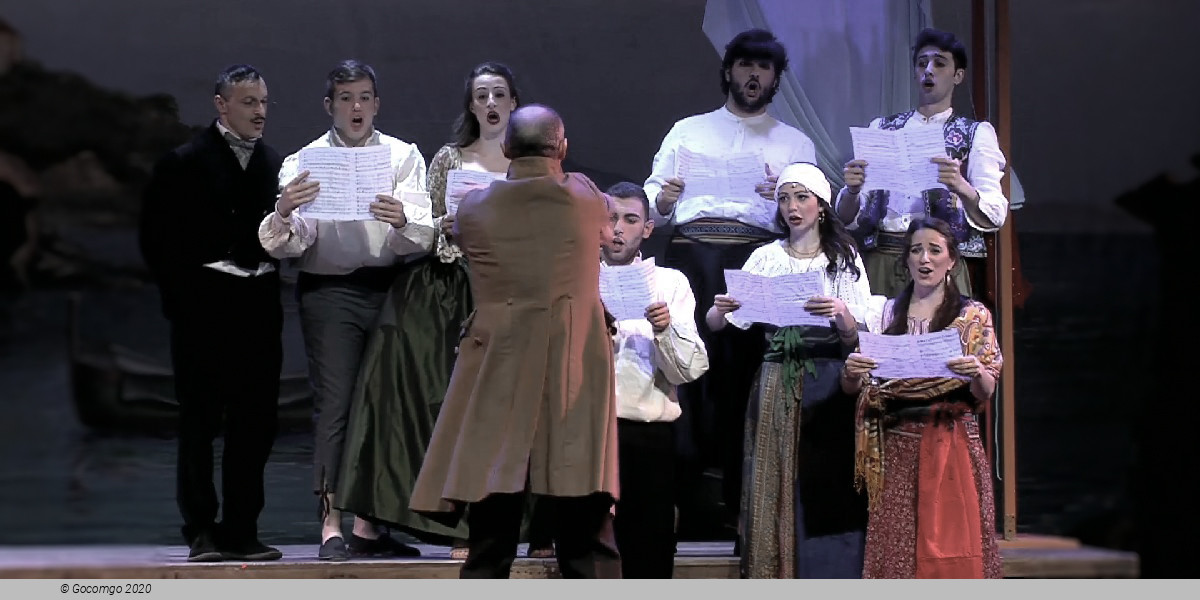
Prosdocimo, a poet, has been commissioned to write the libretto for a comic opera but is still searching for inspiration for an exciting piece. When he observes a group of gipsies arriving, he decides to open his opera with a gipsy chorus and discard his original idea to write a piece about his friend Don Geronio, his young, capricious wife Fiorilla and her lover Don Narciso.
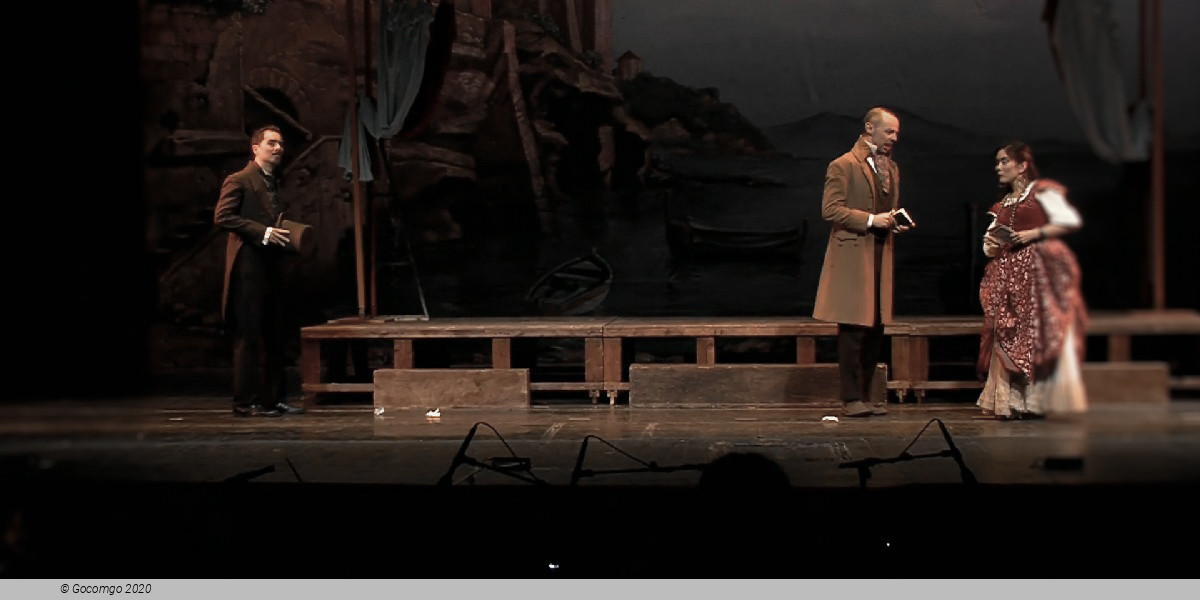
As luck would have it, however, the aforementioned Don Geronio, in despair because of his wife’s flighty behaviour, comes to the gipsy camp to have his palm read. Zaida, a young gipsy girl, and her friends see through his story and mock the cuckolded husband.
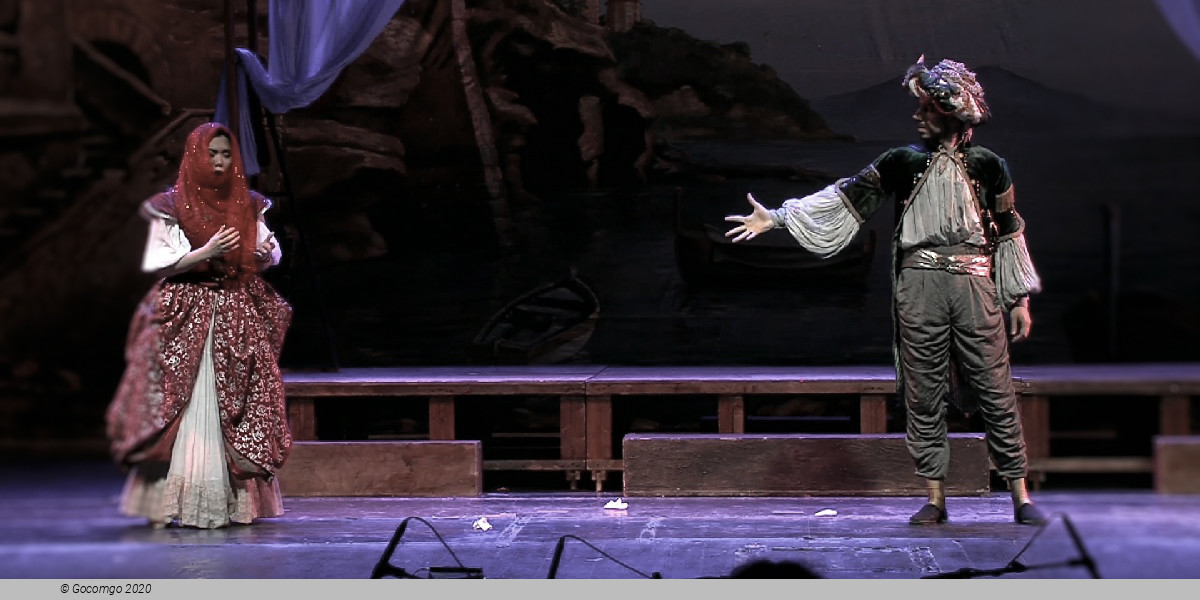
The poet, who has been watching all the time, becomes increasingly interested in Zaida and learns from her that she was once the favourite of a Turkish prince. Her master, however, had sentenced her to death in a fit of jealousy, and since then she has been living among the gipsies, unrecognized, accompanied only by her faithful Albazar. The poet promises Zaida that she will return to her prince.
Meanwhile, Fiorilla is carefully observing the arrival of a wealthy Turk in Naples harbour; he wants to find out what life is like in Italy. The two very quickly make contact with each other.
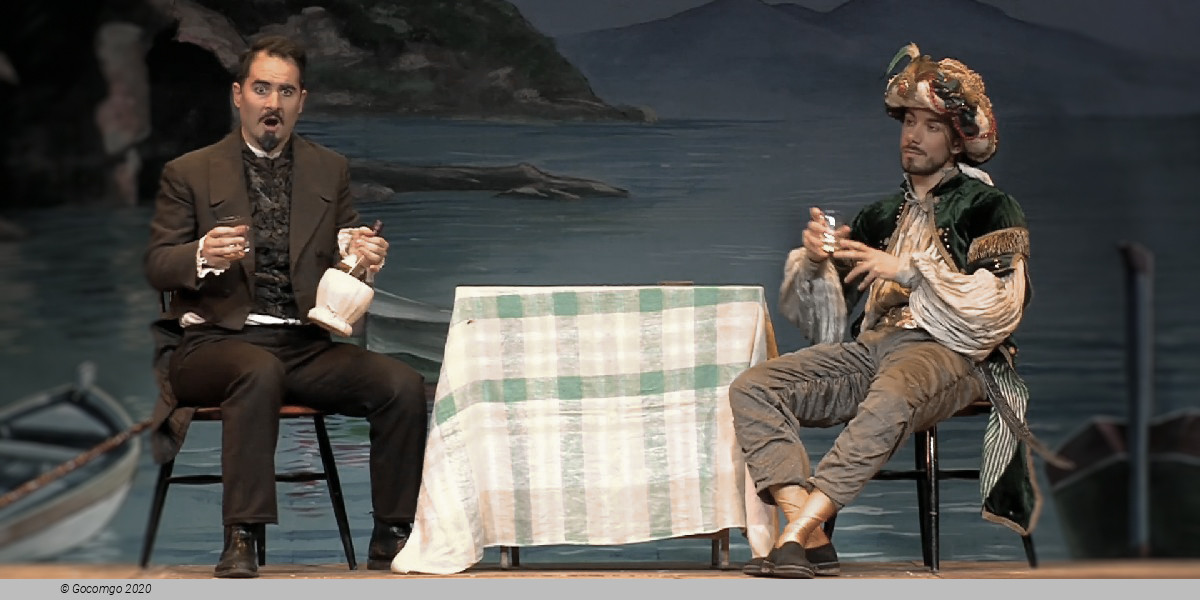
Fiorilla’s husband and Narciso, in the guise of a family friend, discuss with the poet what can be done about the threat posed by the Turk. In the course of this conversation, the poet learns that Fiorilla’s latest acquaintance is one Selim Damelec – the selfsame former lover of Zaida. The poet now realizes that he has discovered the perfect theme for his comedy. Geronio and Narciso put up a fight against being exploited as characters in a comic opera.
Fiorilla has already invited the Turk to her house to prepare Italian coffee for him. Don Geronio, stirred into action by the equally jealous Don Narciso, appears on the scene, but is urged by his wife to behave politely and generously. Selim is amazed at the ways of Italian husbands and their wives. He uses the general confusion to make an assignation with Fiorilla for that night at the harbour. Fiorilla seems to have decided suddenly to run away with the Turk.
Alone with his wife again, Don Geronio tries to take her to task and forbids her to invite Turks and Italians to their home. But Fiorilla is quickly able to put her husband in a romantic mood and then reproaches him vehemently, claiming he has treated her unfairly. Don Geronio is helpless.
The poet, who has unfortunately missed the arrival of the Turk as well as the latter’s visit to Fiorilla, is still following Zaida. Fortunately for the poet, Selim, who is planning to elope with Fiorilla, meets Zaida at the harbour at night and recognizes her as his former lover. Old feelings are quickly revived. Fiorilla, however, prepared to elope to a new life far away from Europe, surprises the couple and feels betrayed. Both women insist that they have the right to Selim and a loud quarrel ensues, which all the gentlemen present are unable to stop. The poet is delighted. He could not wish for a better ending to the first act of a comic opera.
Act Two
Selim has made up his mind. He wants to take Fiorilla back to Turkey with him; why should her husband not follow Turkish custom and sell her to him. Don Geronio, actively supported by the poet, is horrified and challenges Selim to a duel.
The poet is worried that it is taking a long time to find a solution to the conflict. A second confrontation between the two women, initiated by Fiorilla, also fails to bring about a decision. Quite the contrary, bidden to choose between them, Selim again wavers, cannot make up his mind. Fiorilla and Selim, both already with very hurt feelings and disappointed in their expectations, are very tense but still fall into each other’s arms again to make plans for their elopement. The impending masked ball will provide a favourable setting for their plan.
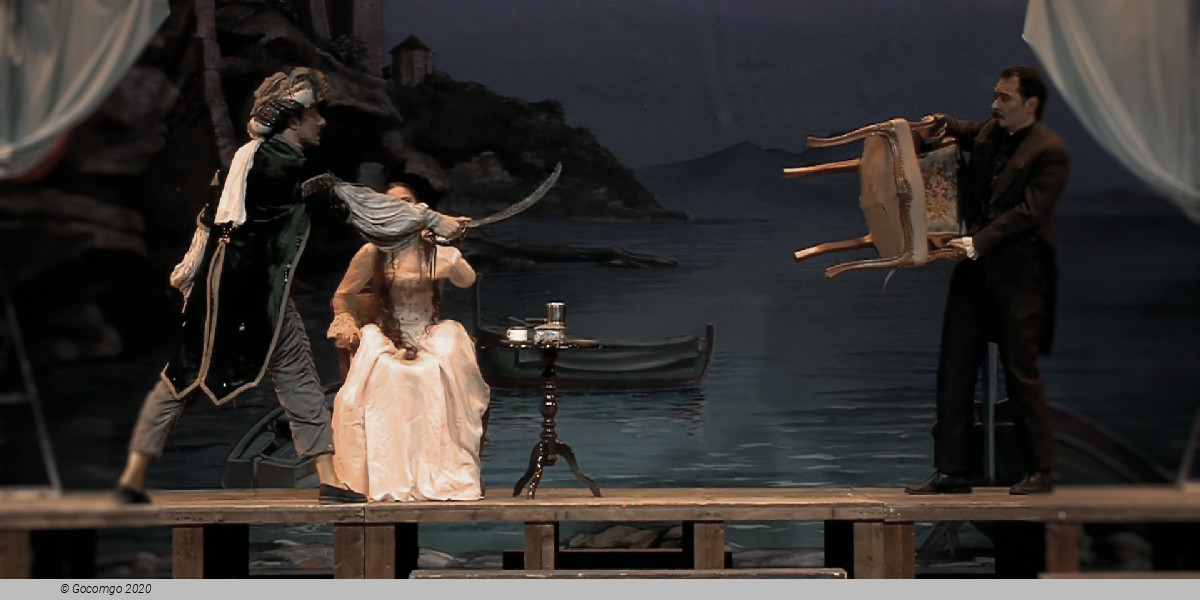
The poet now arranges for Zaida and Don Geronio to appear at the ball in the same disguise as Fiorilla and Selim in order to hinder their plan to elope. Don Narciso, who has overhead the plans for the secret tryst, also decides to turn up at the ball dressed like the Turk. At the ball, Selim now mistakes Zaida for Fiorilla and Fiorilla, for her part, thinks Don Narciso is Selim. Don Geronio, also dressed as a Turk, does not know which couple to watch. All the people at the ball laugh at the desperate, jealous husband.
The confusion at the ball has finally resulted in a reconciliation between Zaida and Selim. The poet can now prepare for the final intrigue. Knowing that Selim is no longer a threat, he persuades Don Geronio to threaten his wife with divorce and all its consequences. Suddenly Fiorilla feels cheated and deserted by all men. Now the poet has achieved what he wanted: Fiorilla regrets what she has done and nothing more stands in the way of a moral ending. Don Geronio and Fiorilla are also reconciled, even the lover, Don Narciso, promises to remain nothing but a friend, and all concerned seem to have learned from experience and are determined to renounce any risky adventures that life might offer in future.
Christof Loy
© Bavarian State Opera
Time: 18th Century
Place: In and around Naples
Act 1
By the sea shore near Naples
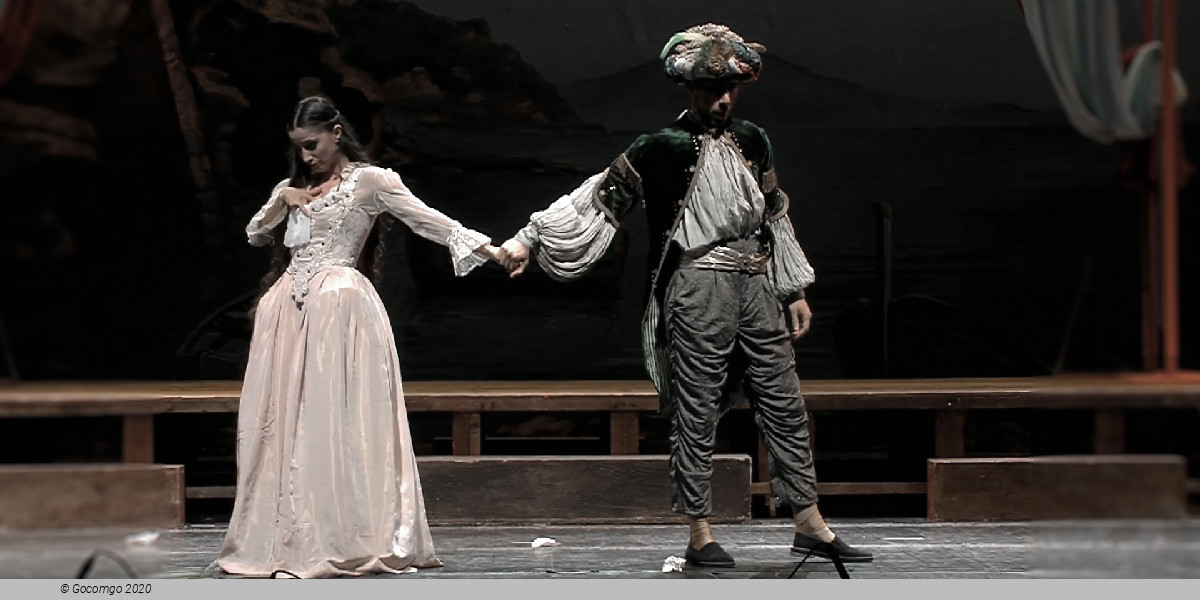
The poet Prosdocimo (baritone) is searching for a plot for a drama buffo. He meets a band of Gypsies, including the beautiful but unhappy Zaida (mezzo-soprano) and her confidant Albazar (tenor). Perhaps the Gypsies can provide some ideas? Prosdocimo's friend, the obstinate and sometimes foolish Geronio (bass), is looking for a fortune teller to advise him on his marital problems, but the Gypsies tease him. Zaida tells Prosdocimo that she is from a Turkish harem. She and her master, Prince Selim, were in love, but jealous rivals accused her of infidelity and she had to flee for her life, accompanied by Albazar. Nevertheless, she still loves only one man and that man is Selim. Prosdocimo knows that a Turkish prince will shortly be arriving in Italy. Perhaps he can help? Geronio's capricious young wife Fiorilla (soprano) enters singing (in contrast to Zaida) of the joys of free and unfettered love. A Turkish ship arrives and the prince disembarks. It is Selim (bass) himself. Fiorilla is immediately attracted to the handsome Turk, and a romance rapidly develops. Narciso (tenor) appears in her pursuit. He is an ineffectual admirer of Fiorilla posing as a friend of her husband. Geronio follows, horrified to learn that Fiorilla is taking the Turk home to drink his coffee!
Geronio's house
Fiorilla and Selim are flirting. Geronio enters timidly and Selim is initially impressed by his unexpected meekness, however Narciso noisily scolds Geronio. The domestic menage irritates Selim and he leaves after quietly arranging to meet Fiorilla again by his ship. Geronio tells Fiorilla he will not allow any more Turks - or Italians - in his house. She sweetly undermines his complaints, and then, when he softens, threatens to punish him by enjoying herself even more wildly.
The sea shore at night
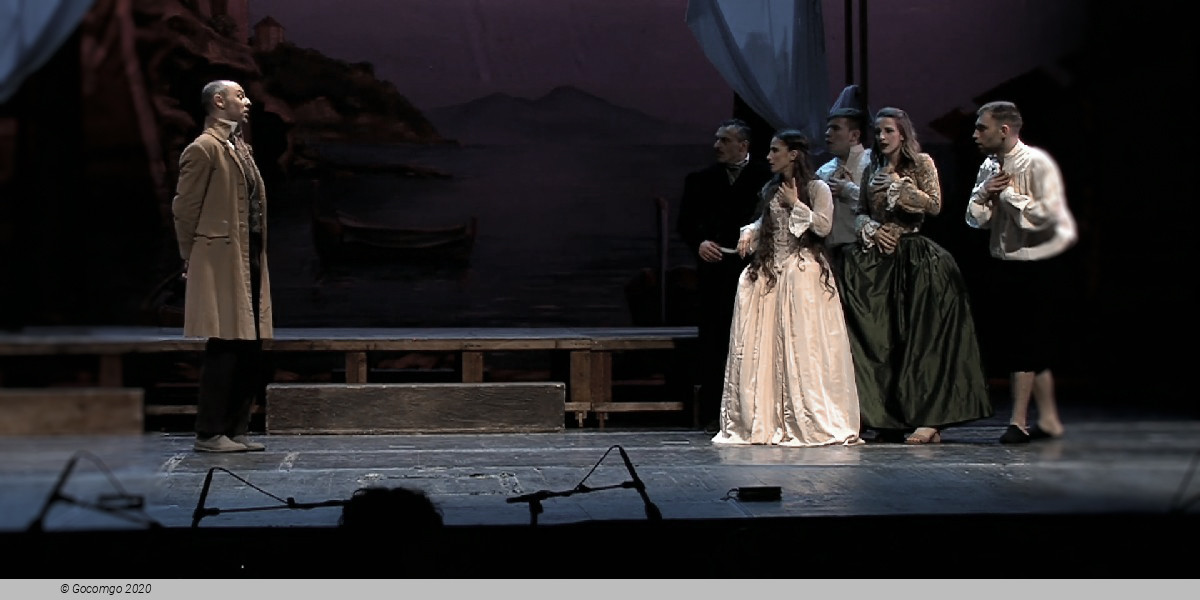
Selim is waiting for Fiorilla. Instead he meets Zaida. The former lovers are shocked and delighted, and declare once more their mutual love. Narciso re-appears, followed by Fiorilla in disguise, with Geronio in pursuit. Selim confuses the veiled Fiorilla with Zaida and the two women come suddenly face to face. Fiorilla accuses Selim of betrayal. Zaida confronts Fiorilla. Geronio tells his wife to go home. There is a stormy finale.
Act 2
At an inn
Selim approaches Geronio amicably, offering to buy Fiorilla. That way Geronio can be rid of his problems and also make some money. Geronio refuses. Selim vows to steal her instead. After they leave, Fiorilla and a group of her friends appear, followed by Zaida. Fiorilla has set up a meeting between them and Selim, so that the Turk will be forced to decide between the two women. In the event he is indecisive, not wishing to lose either of them. Zaida leaves in disgust. Selim and Fiorilla quarrel but are eventually reconciled. As the poet tells Geronio, there is going to be a party. Fiorilla will be there to meet Selim, who will be masked. Geronio should also go - disguised as a Turk! Narciso overhears this, and decides to take advantage of the situation to take Fiorilla himself, in revenge for her former indifference. Geronio laments his destiny, that he should have such a terrible, crazy wife. Albazar passes by holding a costume - for Zaida!
A ballroom with masqueraders and dancers
Fiorilla mistakes Narciso for Selim and Narciso leads her away. Meanwhile, Selim enters with Zaida, under the impression that she is Fiorilla. Geronio is in utter despair at finding two couples and two Fiorillas! Narciso and Selim both entreat their partners to leave with them. Confused and angry, Geronio attempts to stop both couples, but they eventually escape.
Back at the inn
Prosdocimo meets Geronio. They now know that Selim was with Zaida and guess that Fiorilla was with Narciso. Albazar confirms that Selim will definitely stay with Zaida. Prosdocimo advises Geronio to have his revenge on Fiorilla by pretending to divorce her and threatening to send her back to her family.
Having discovered Narciso's deception, Fiorilla tries to find Selim, but he has already left with Zaida. She returns home only to find the divorce letter, and her belongings being removed from the house. She is devastated by shame, and promptly deserted by her friends.
The beach
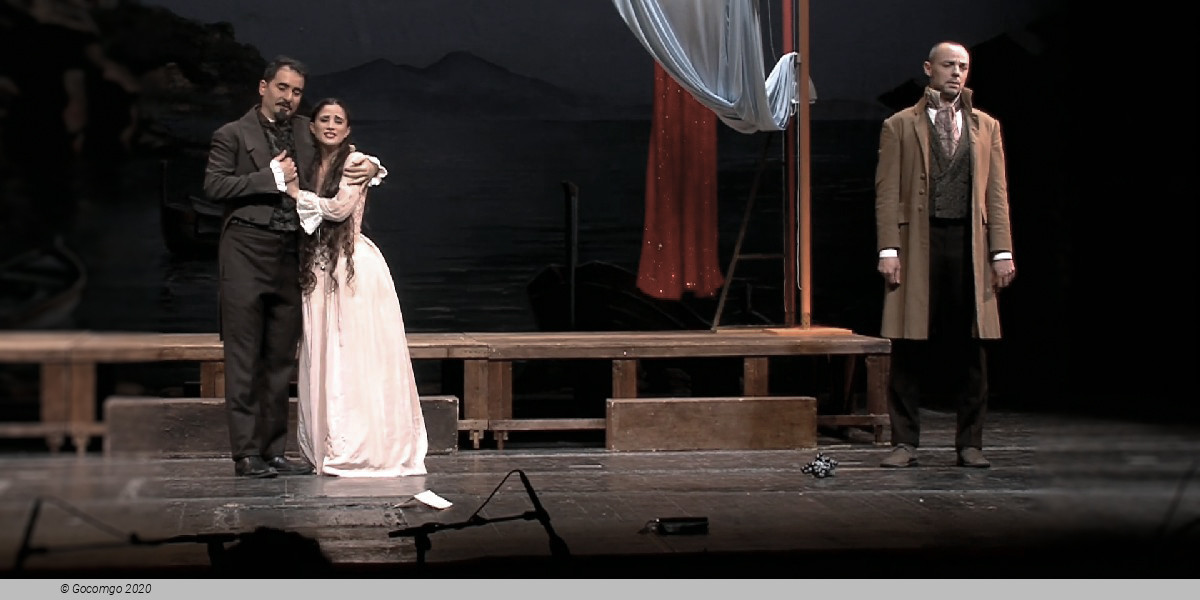
Selim and Zaida are about to set sail for Turkey, while Fiorilla is looking for a boat to take her back to her home town. Geronio finds and forgives her. They are affectionately reconciled. Both couples are now reunited and Prosdocimo is delighted with his happy ending.









 Max-Joseph-Platz 2