





Bavarian State Opera 19 February 2024 - La Bayadère | GoComGo.com

La Bayadère

Bavarian State Opera, National Theatre, Munich, Germany
All photos (8)
Select date and time
7:30 PM

E-tickets: Print at home or at the box office of the event if so specified. You will find more information in your booking confirmation email.

You can only select the category, and not the exact seats.
If you order 2 or 3 tickets: your seats will be next to each other.
If you order 4 or more tickets: your seats will be next to each other, or, if this is not possible, we will provide a combination of groups of seats (at least in pairs, for example 2+2 or 2+3).

Important Info
Type: Ballet
City: Munich, Germany
Starts at: 19:30
Acts: 2
Duration: 2h 35min

E-tickets: Print at home or at the box office of the event if so specified. You will find more information in your booking confirmation email.

You can only select the category, and not the exact seats.
If you order 2 or 3 tickets: your seats will be next to each other.
If you order 4 or more tickets: your seats will be next to each other, or, if this is not possible, we will provide a combination of groups of seats (at least in pairs, for example 2+2 or 2+3).

Overview

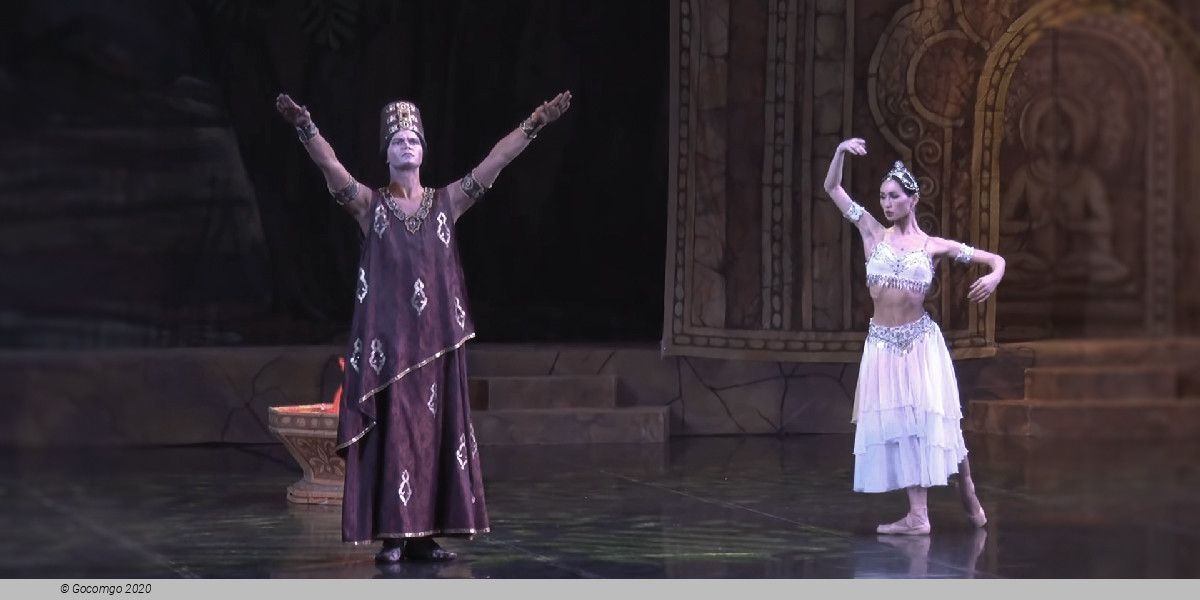
The Bayerisches Staatsballett  worked on this version, together with the French choreographer Patrice Bart and the Japanese stage- and costume designer Tomio Mohri. The heart of the piece, the 'Kingdom of Shades' act, the betrothal celebration scene with it ceremonious line filing dance and some elaborate pantomime scenes can be seen in its original version.

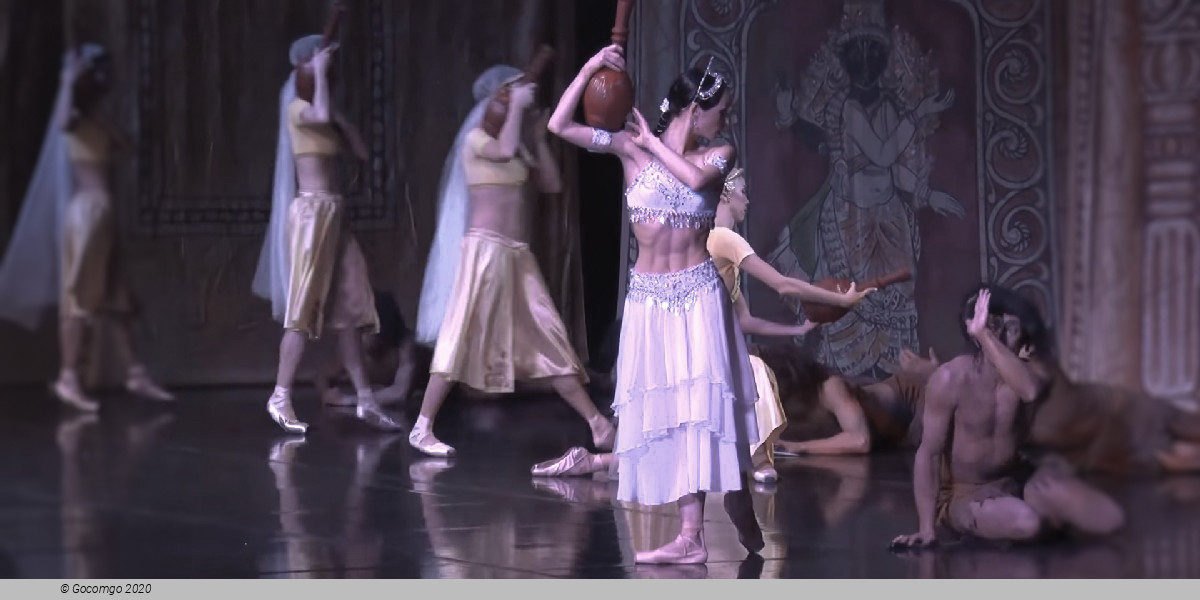
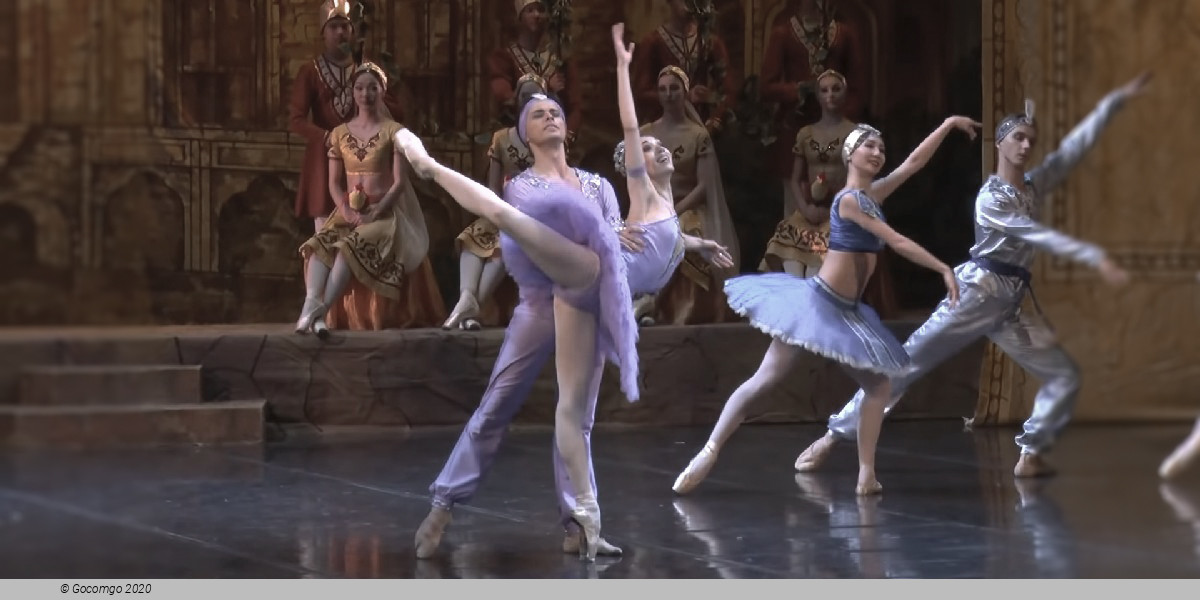
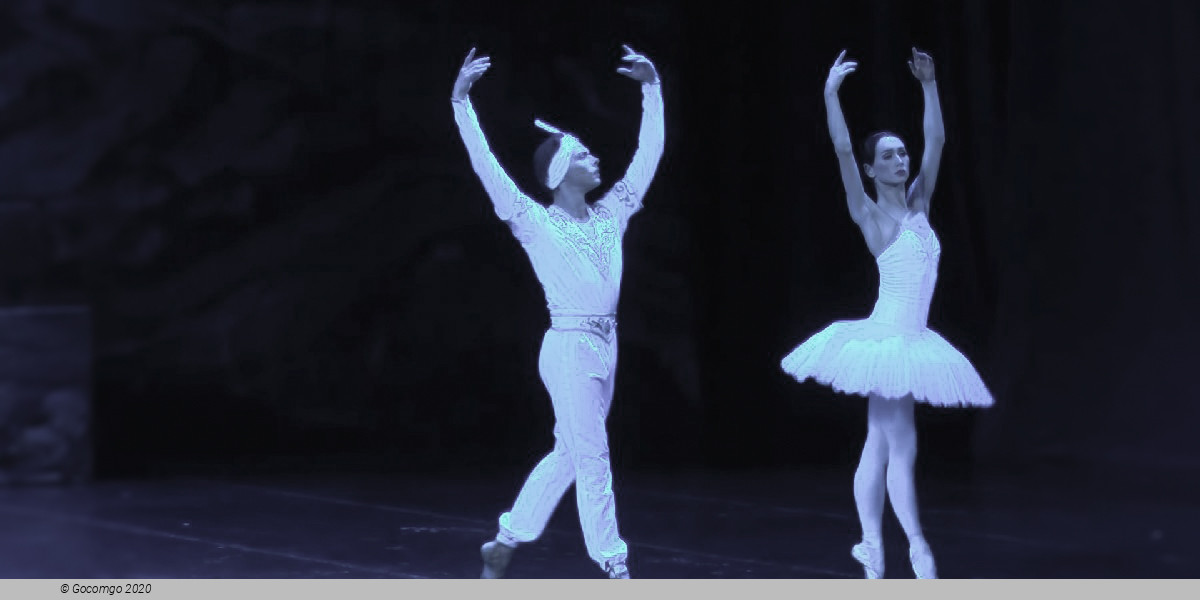
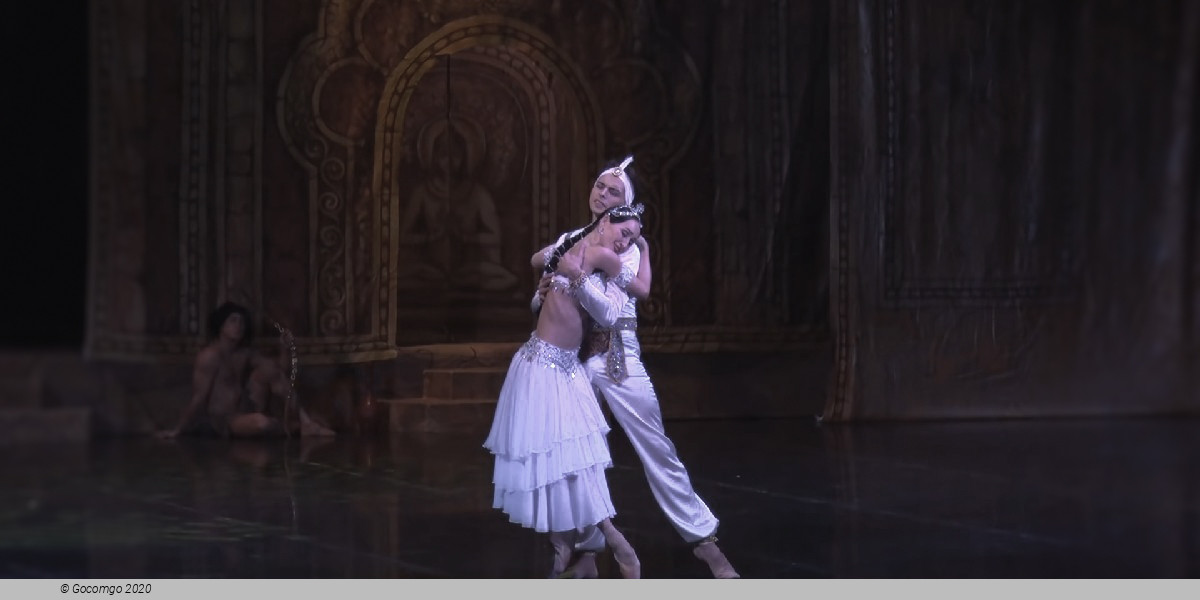
Created in 1877, La Bayadère is a mixture of an exotic tale, a thriller and a celebration of virtuosity. At its center are the two lovers: the priestess, the Bayadère, Nikija and the soldier Solor. The latter however is promised in marriage to Gamzatti, the daughter of the Radja, whilst the Great Brahman has fallen in love with his priestess Nikija. Nikija falls victim to murder by her rival and Solor dreams himself into the 'Kingdom of Shades' in order to be reunited with his love. What follows is one of the most famous, magnificent white acts in ballet history.

The Munich production is characterized by the stage and costume design by the designer Tomio Mohri, which is influenced by Japanese aesthetics. This circumvents the clichéd representations of Indian culture, which have recently triggered discussions on the basis of various productions within the framework of postcolonial theoretical approaches. On the occasion of the revival of La Bayadère, a separate mediation offer is planned to discourse the questions connected with the work.

The final act, lost in Russia since the beginning of the century, is part a new creation, part reconstruction.

History
Premiere of this production: 23 January 1877, Imperial Bolshoi Kamenny Theatre in St. Petersburg, Russia

La Bayadère (en. The Temple Dancer) is a ballet, originally staged in four acts and seven tableaux by French choreographer Marius Petipa to the music of Ludwig Minkus. The ballet was staged especially for the benefit performance of the Russian Prima ballerina Ekaterina Vazem, who created the principal role of Nikiya.

Synopsis

Set in the Royal India of the past, La Bayadère is a story of eternal love, mystery, fate, vengeance, and justice.  The ballet relates the drama of a temple dancer (bayadère), Nikiya, who is loved by Solor, a noble warrior.  She is also loved by the High Brahmin, but does not love him in return, as she does Solor.

Act I

Scene I, Outside Temple in the Sacred Forest.

The High Brahmin, priests, and temple dancers are celebrating the Indian Ritual of Fire.  Nikiya, the most beautiful of the bayadères, has been chosen to be consecrated the lead temple dancer.  The High Brahmin declares his love for Nikiya, but is rejected by her.  Nikiya meets secretly with Solor later that evening.  They dance together and swear eternal love over the Sacred Fire, but are discovered by the jealous High Brahmin, who vows to kill Solor.

Scene II, A Room in the Palace.

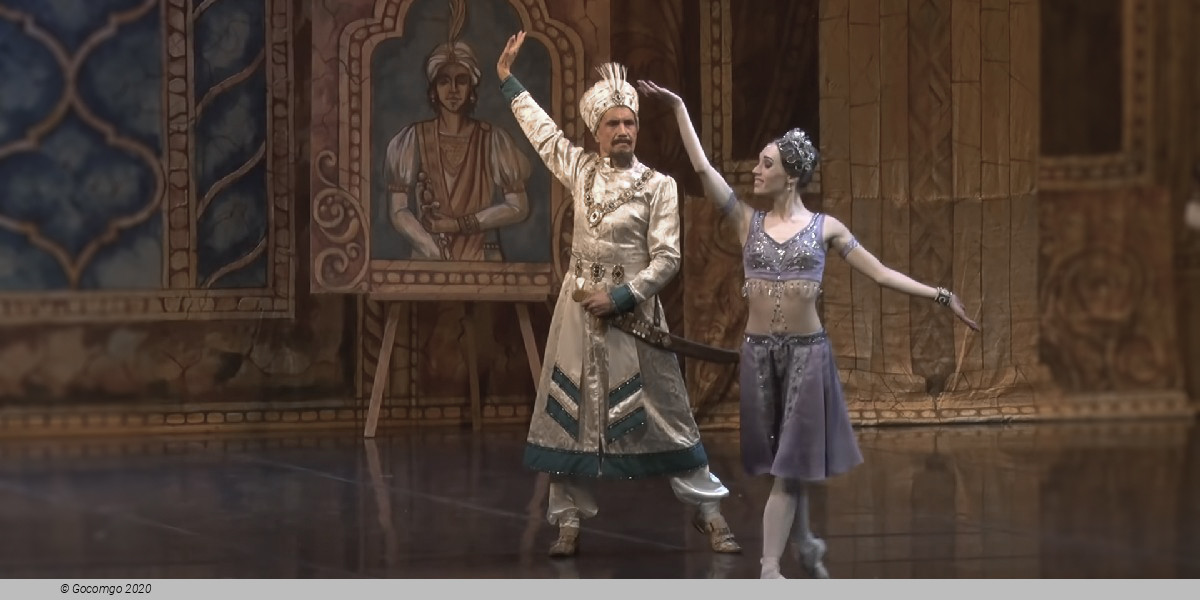
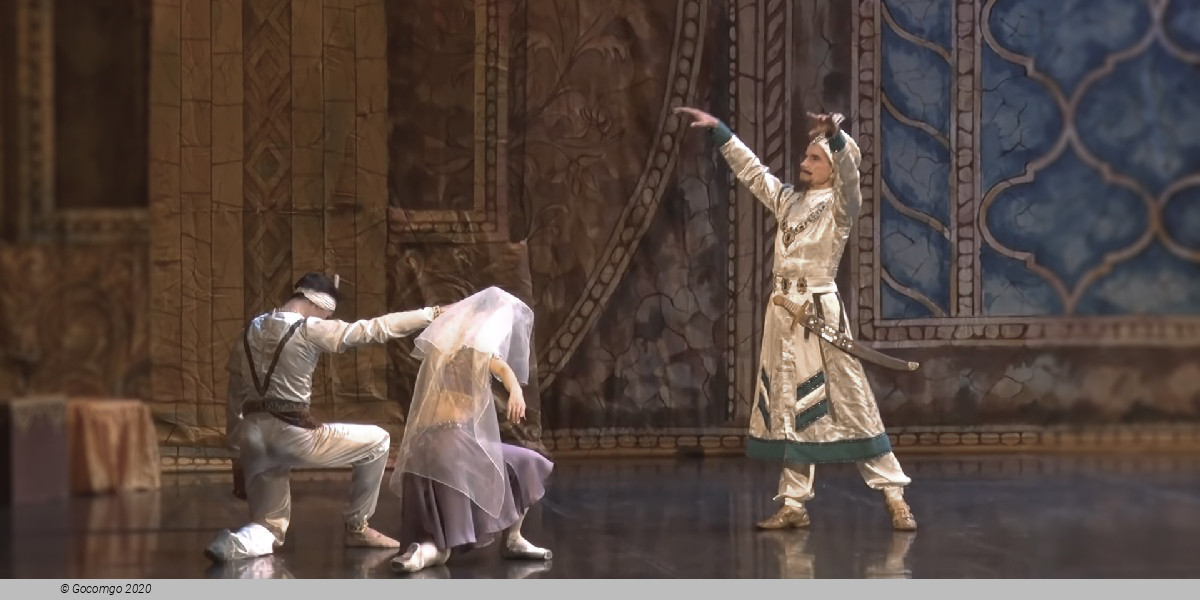
The Rajah has decided to reward Solor’s valor and decrees that the warrior will marry his daughter, Gamzatti.  Gamzatti falls in love with Solor’s portrait, and when they meet, he is overwhelmed by her beauty.  Even though he has sworn eternal love to Nikiya, he cannot defy the wishes of the Rajah and agrees to marry Gamzatti.  The High Brahmin informs the Rajah of Nikiya and Solor’s secret love, hoping that the Rajah will do away with Solor.  Instead, the Rajah decides to kill Nikiya.

This conversation is overhead by Gamzatti, who summons Nikiya to her rooms and attempts to bribe Nikiya to give up Solor.  Refusing, Nikiya frantically attempts to kill  Gamzatti.  Nikiya flees and Gamzatti swears to destroy her.

Scene III, The Garden of the Palace.

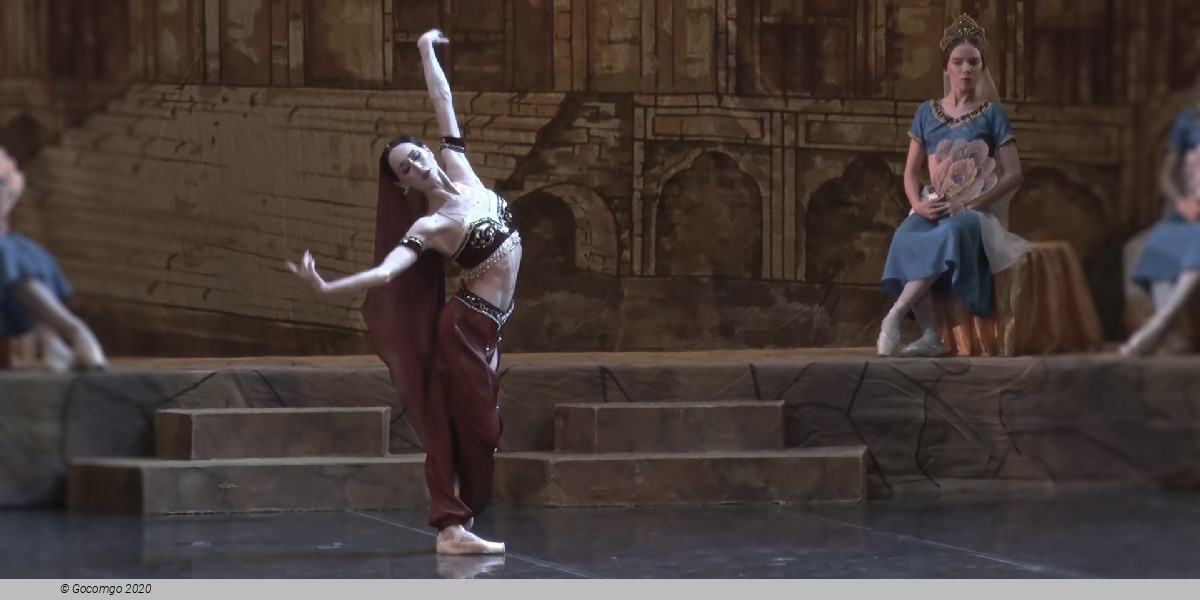
At the betrothal of Solor and Gamzatti, Nikiya is commanded to dance.  Gamzatti presents her with a basket of flowers that Nikiya believes to be from Solor, and which conceals a deadly snake.  Nikiya is bitten, and when Solor leaves with Gamzatti, she refuses the proffered antidote and dies.

Act II. The Tent of Solor.

Solor, grief‑stricken and under the influence of opium, dreams of being reunited with Nikiya in the Kingdom of the Shades.  Awakening, he realizes that he must prepare to marry Gamzatti.

Act III. The Temple.

The vision of Nikiya remains with Solor as the wedding ceremony begins at the Sacred Temple.  As Solor and Gamzatti say their vows and are blessed by the High Brahmin, the vengeance of the gods is unleashed, and the temple and all the celebrants are destroyed.  Nikiya and Solor are once again united in eternal love.

Venue Info

Bavarian State Opera - Munich
Location   Max-Joseph-Platz 2

The Bavarian State Opera or the National Theatre (Nationaltheater) on Max-Joseph-Platz in Munich, Germany, is a historic opera house and the main theatre of Munich, home of the Bavarian State Opera, Bavarian State Orchestra, and the Bavarian State Ballet.

During its early years, the National Theatre saw the premières of a significant number of operas, including many by German composers. These included Wagner’s Tristan und Isolde (1865), Die Meistersinger von Nürnberg (1868), Das Rheingold (1869) and Die Walküre (1870), after which Wagner chose to build the Festspielhaus in Bayreuth and held further premières of his works there.

During the latter part of the 19th century, it was Richard Strauss who would make his mark on the theatre in the city in which he was born in 1864. After accepting the position of conductor for a short time, Strauss returned to the theatre to become principal conductor from 1894 to 1898. In the pre-War period, his Friedenstag (1938) and Capriccio were premièred in Munich. In the post-War period, the house has seen significant productions and many world premieres.

First theatre – 1818 to 1823
The first theatre was commissioned in 1810 by King Maximilian I of Bavaria because the nearby Cuvilliés Theatre had too little space. It was designed by Karl von Fischer, with the 1782 Odéon in Paris as architectural precedent. Construction began on 26 October 1811 but was interrupted in 1813 by financing problems. In 1817 a fire occurred in the unfinished building.

The new theatre finally opened on 12 October 1818 with a performance of Die Weihe by Ferdinand Fränzl, but was soon destroyed by another fire on 14 January 1823; the stage décor caught fire during a performance of Die beyden Füchse by Étienne Méhul and the fire could not be put out because the water supply was frozen. Coincidentally the Paris Odéon itself burnt down in 1818.

Second theatre – 1825 to 1943
Designed by Leo von Klenze, the second theatre incorporated Neo-Grec features in its portico and triangular pediment and an entrance supported by Corinthian columns. In 1925 it was modified to create an enlarged stage area with updated equipment. The building was gutted in an air raid on the night of 3 October 1943.

Third theatre – 1963 to present
The third and present theatre (1963) recreates Karl von Fischer's original neo-classical design, though on a slightly larger, 2,100-seat scale. The magnificent royal box is the center of the interior rondel, decorated with two large caryatids. The new stage covers 2,500 square meters (3,000 sq yd), and is thus the world's third largest, after the Opéra Bastille in Paris and the Grand Theatre, Warsaw.

Through the consistent use of wood as a building material, the auditorium has excellent acoustics. Architect Gerhard Moritz Graubner closely preserved the original look of the foyer and main staircase. It opened on 21 November 1963 with an invitation-only performance of Die Frau ohne Schatten under the baton of Joseph Keilberth. Two nights later came the first public performance, of Die Meistersinger von Nürnberg, again under Keilberth.

Important Info
Type: Ballet
City: Munich, Germany
Starts at: 19:30
Acts: 2
Duration: 2h 35min
Top of page