
Bavarian State Opera 16 March 2023 - Die Teufel von Loudun | GoComGo.com

Die Teufel von Loudun

Bavarian State Opera, National Theatre, Munich, Germany
All photos (4)
Select date and time
7 PM

E-tickets: Print at home or at the box office of the event if so specified. You will find more information in your booking confirmation email.

You can only select the category, and not the exact seats.
If you order 2 or 3 tickets: your seats will be next to each other.
If you order 4 or more tickets: your seats will be next to each other, or, if this is not possible, we will provide a combination of groups of seats (at least in pairs, for example 2+2 or 2+3).

Important Info
Type: Opera
City: Munich, Germany
Starts at: 19:00
Acts: 3
Sung in: German
Titles in: German,English

E-tickets: Print at home or at the box office of the event if so specified. You will find more information in your booking confirmation email.

You can only select the category, and not the exact seats.
If you order 2 or 3 tickets: your seats will be next to each other.
If you order 4 or more tickets: your seats will be next to each other, or, if this is not possible, we will provide a combination of groups of seats (at least in pairs, for example 2+2 or 2+3).

Overview

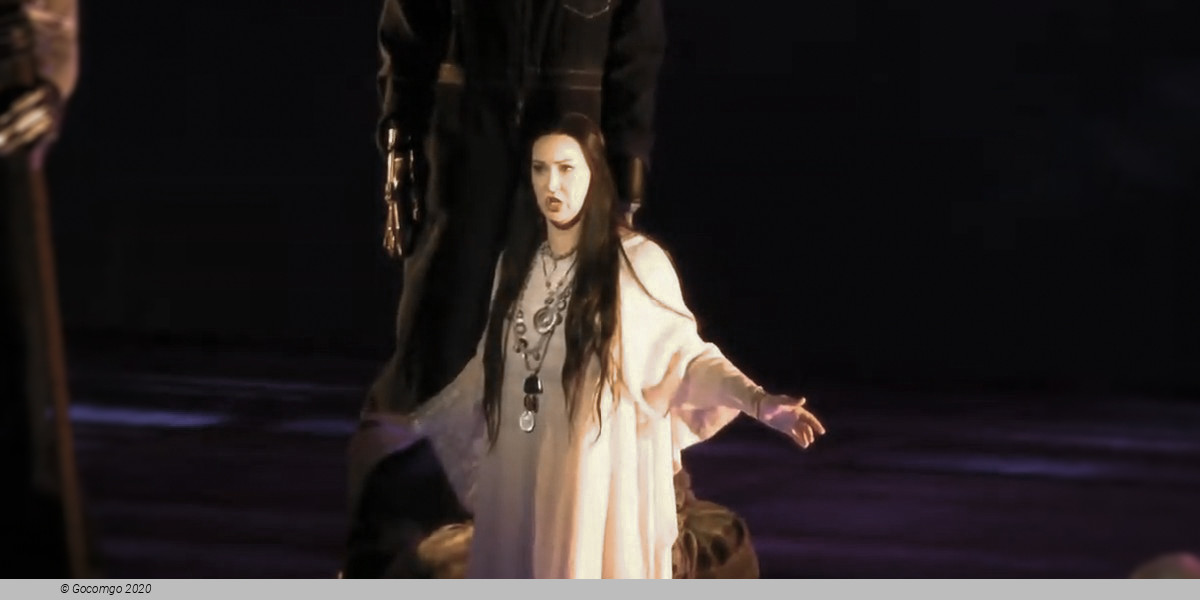
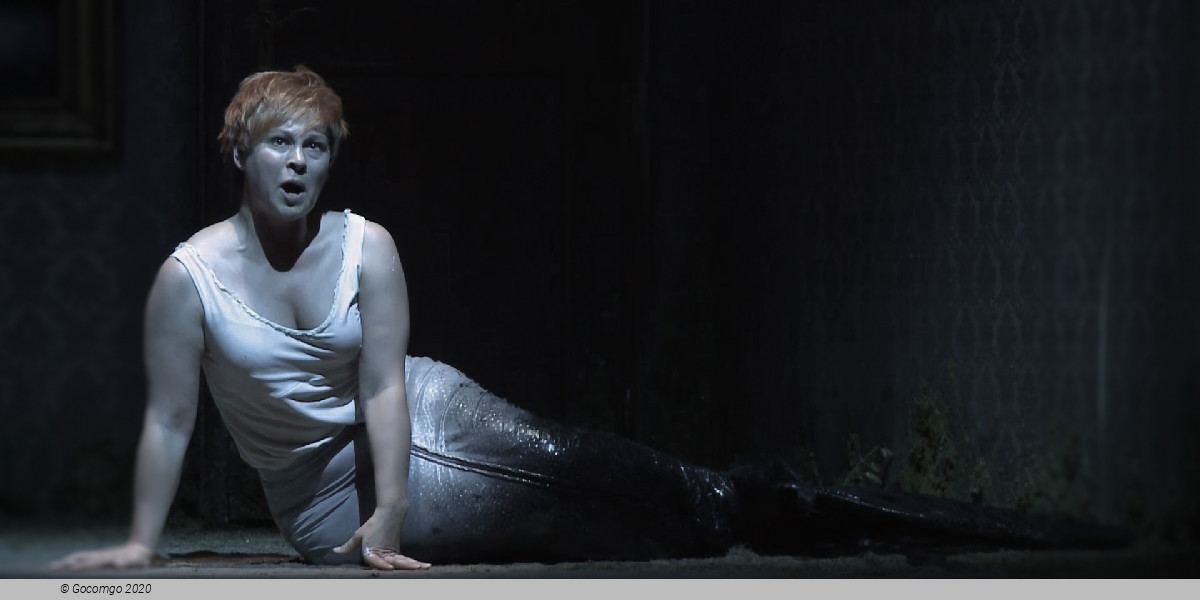
A nun’s sinful fantasies, a priest’s bawdy excesses, bigoted petty bourgeois envy and jealousy – and above all, the political master plan of an ambitious clergyman. The piece is one of the 20th century’s most vivid, has remained disconcertingly topical, and now comes to Munich for the first time as a premiere to open the 2022 Opera Festival on the stage of the Nationaltheater.

From such a melange emerged an exorcism excess in a provincial French town in the early 17th century. The simulated exorcism of the allegedly possessed Ursuline nun, Jeanne, became a means for Cardinal Richelieu to silence undesirable forces such as the openly spiritual Grandier on the scaffold, and thus generate a climate of fear, in which none would ever dare oppose him. Aldous Huxley powerfully illustrated these events in a historical novel in 1952, and from a dramatization of the book, Krzysztof Penderecki created a unique opera in 1969: The Devils of Loudun. Into it he introduces a wealth of voices and instruments, sounds and noises, which he combines entirely with the scenic elements. Like waves, the 34 short scenes wash over the audience, and very quickly it’s gasping for breath.

History
Premiere of this production: 20 June 1969, Hamburg State Opera

Die Teufel von Loudun (The Devils of Loudun) is an opera in three acts written in 1968 and 1969 by Polish composer Krzysztof Penderecki and then revised in 1972 and 1975. The Devils of Loudun, the first and most popular of Penderecki's operas, is emblematic of the composer's interest in historical events of traumatic nature.

Synopsis

Act 1

Sister Jeanne, the abbess of the Ursuline convent in Loudun, is having night visions in which Father Grandier, the Vicar of St. Peter's Church, appears wearing a heretic shirt with a rope around his neck as he is escorted by two guards. This dreadful image of the parish priest is followed by another one; in this instance, however, Grandier rests in the arms of a woman. These macabre visions let Sister Jeanne, among other convent nuns, to the belief that they had been possessed by the devil, and thus to eventually confesses her visions to Father Mignon. In the meantime, Father Grandier's unchaste life is disclosed through his relationships with Ninon (a widow), and Philippe (a young woman). Furthermore, Grandier assures his fatal destiny by opposing the decree to demolish the city's fortifications put forth by the King and the powerful Cardinal Richelieu. The act comes to a close with the exorcism of Sister Jeanne performed by Barré, the Vicar of Chinon. Barré attempts to ask her "possessor," who Jeanne calls Asmodeus: "how did you gain entry to the body of this nun?" Jeanne responds, in a man's voice: "through the offices of a friend." Jeanne states that the friend is Grandier.

Act 2

Jeanne's exorcism continues. This time, however, Barré is assisted by Father Mignon and Father Rangier; yet, the attempts to expel the devil are unsuccessful. Following, Grandier denies ever seeing Jeanne, and implores God to help her. Nonetheless, his words prove feeble as Jeanne claims that he had forced the Ursuline nuns to practice black magic. The situation becomes even more convoluted when Philippe informs Grandier that she is bearing his child. Meanwhile, the exorcisms continue now in public at St. Peter's Church, where Grandier is arrested as he enters.

Act 3

Grandier is held responsible for the demonical possessions of the Ursuline nuns, accused of conspiracy with the devil, and indicted for blasphemy and unchastity. He is, consequently, sentenced to public torture and death at stake. Grandier's death thus becomes a realization of Jeanne's visions. Finally, Jeanne comes to realize that her unanswered love for Grandier was the cause of her possession.

Venue Info

Bavarian State Opera - Munich
Location   Max-Joseph-Platz 2

The Bavarian State Opera or the National Theatre (Nationaltheater) on Max-Joseph-Platz in Munich, Germany, is a historic opera house and the main theatre of Munich, home of the Bavarian State Opera, Bavarian State Orchestra, and the Bavarian State Ballet.

During its early years, the National Theatre saw the premières of a significant number of operas, including many by German composers. These included Wagner’s Tristan und Isolde (1865), Die Meistersinger von Nürnberg (1868), Das Rheingold (1869) and Die Walküre (1870), after which Wagner chose to build the Festspielhaus in Bayreuth and held further premières of his works there.

During the latter part of the 19th century, it was Richard Strauss who would make his mark on the theatre in the city in which he was born in 1864. After accepting the position of conductor for a short time, Strauss returned to the theatre to become principal conductor from 1894 to 1898. In the pre-War period, his Friedenstag (1938) and Capriccio were premièred in Munich. In the post-War period, the house has seen significant productions and many world premieres.

First theatre – 1818 to 1823
The first theatre was commissioned in 1810 by King Maximilian I of Bavaria because the nearby Cuvilliés Theatre had too little space. It was designed by Karl von Fischer, with the 1782 Odéon in Paris as architectural precedent. Construction began on 26 October 1811 but was interrupted in 1813 by financing problems. In 1817 a fire occurred in the unfinished building.

The new theatre finally opened on 12 October 1818 with a performance of Die Weihe by Ferdinand Fränzl, but was soon destroyed by another fire on 14 January 1823; the stage décor caught fire during a performance of Die beyden Füchse by Étienne Méhul and the fire could not be put out because the water supply was frozen. Coincidentally the Paris Odéon itself burnt down in 1818.

Second theatre – 1825 to 1943
Designed by Leo von Klenze, the second theatre incorporated Neo-Grec features in its portico and triangular pediment and an entrance supported by Corinthian columns. In 1925 it was modified to create an enlarged stage area with updated equipment. The building was gutted in an air raid on the night of 3 October 1943.

Third theatre – 1963 to present
The third and present theatre (1963) recreates Karl von Fischer's original neo-classical design, though on a slightly larger, 2,100-seat scale. The magnificent royal box is the center of the interior rondel, decorated with two large caryatids. The new stage covers 2,500 square meters (3,000 sq yd), and is thus the world's third largest, after the Opéra Bastille in Paris and the Grand Theatre, Warsaw.

Through the consistent use of wood as a building material, the auditorium has excellent acoustics. Architect Gerhard Moritz Graubner closely preserved the original look of the foyer and main staircase. It opened on 21 November 1963 with an invitation-only performance of Die Frau ohne Schatten under the baton of Joseph Keilberth. Two nights later came the first public performance, of Die Meistersinger von Nürnberg, again under Keilberth.

Important Info
Type: Opera
City: Munich, Germany
Starts at: 19:00
Acts: 3
Sung in: German
Titles in: German,English
Top of page