
Berliner Philharmonie 1 November 2019 - Zubin Mehta conducts Strauss and Beethoven | GoComGo.com

Zubin Mehta conducts Strauss and Beethoven

Berliner Philharmonie, Berlin, Germany
All photos (1)
Select date and time
8 PM
Request for Tickets
Important Info
Type: Classical Concert
City: Berlin, Germany
Starts at: 20:00
Duration:

E-tickets: Print at home or at the box office of the event if so specified. You will find more information in your booking confirmation email.

You can only select the category, and not the exact seats.
If you order 2 or 3 tickets: your seats will be next to each other.
If you order 4 or more tickets: your seats will be next to each other, or, if this is not possible, we will provide a combination of groups of seats (at least in pairs, for example 2+2 or 2+3).

Programme
Richard Strauss: Don Quixote, Symphonic Poem, op. 35
Ludwig van Beethoven: Symphony No. 3 in E flat major, op. 55 “Eroica”
Overview

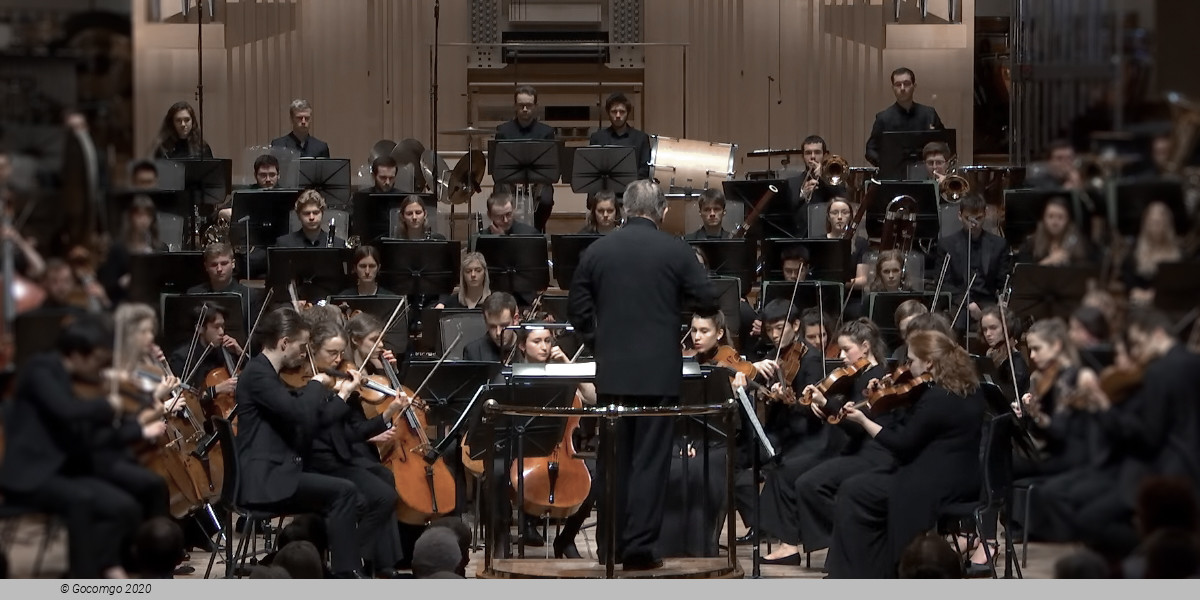
In this concert, Zubin Mehta and the Berliner Philharmoniker present musical tales of heroes. On the one hand, there is the knight Don Quixote, who in his fanciful imagination experiences exciting adventures with giants, robbers and a flying horse – inspiring Richard Strauss to create a wonderfully effective score. In contrast, the hero in Beethoven’s Eroica remains anonymous – it is rather a principle that is celebrated here: the determined struggle for a better world.

“We all have something of Don Quixote within us”, Ludwig Quandt, 1st Principal Cellist of the Berliner Philharmoniker, has said in an interview conducted for the Digital Concert Hall. And what makes Quixote so fascinating for him? “The way he perceives the world. There’s a great discrepancy between his imagination and reality.” A flock of sheep or windmills are an enemy army that, in Quixote’s eyes, needs to be combatted; an ugly peasant girl ignites his heart because he considers her to be Dulcinea, the most beautiful woman in the world. At his side there’s his faithful, pragmatic squire Sancho Panza, who fatalistically endures all his lord’s follies. Miguel de Cervantes’s tale of the knight from la Mancha, published in 1605, is among the most important novels in European cultural history. With it, the Spanish writer created a parody of the chivalric novels so popular at the time. Cervantes’s parodistic approach and the situations that Quixote experiences in his delirium inspired Richard Strauss to his tone poem Don Quixote, in which he satirizes the musical form of the variation in a humorous, ironic fashion. At the same time, he succeeded in creating a brilliant characterisation of Don Quixote in terms of music psychology, depicted instrumentally by a solo cello, and his squire Sancho Panza, to which the solo viola lends its voice. On this concert programme Amihai Grosz, the orchestra’s 1st Principal Violist since 2010, is companion to Ludwig Quandt, who will bring the eccentric knight to life musically on the cello.

The conductor for this programme has been an artistic friend of the Berliner Philharmoniker for many years: Zubin Mehta, whom the orchestra appointed an honorary member last season, and who enjoys programming works by Richard Strauss and Ludwig van Beethoven together. It’s all the more surprising that he has never yet conducted the Philharmonic in one of the best-known symphonies by the Viennese master, his Eroica. With this work, the composer broke with the norms of the time for the genre – not only thematically, formally and harmonically, but also in view of the fact that it establishes Beethoven’s monumental style. At the same time, the symphony, created under the impression of France’s revolutionary music and which refers thematically to Beethoven’s ballet ThCreatures of Prometheus, conveys a political message: it grapples with the ideal of a new humanity, engendered by the societal upheavals brought about by the French Revolution and the Napoleonic Wars.

Venue Info

Berliner Philharmonie - Berlin
Location   Herbert-von-Karajan-Str. 1

The Berliner Philharmonie is a concert hall in Berlin, Germany and home to the Berlin Philharmonic Orchestra. The Philharmonie lies on the south edge of the city's Tiergarten and just west of the former Berlin Wall. The Philharmonie is on Herbert-von-Karajan-Straße, named for the orchestra's longest-serving principal conductor. The building forms part of the Kulturforum complex of cultural institutions close to Potsdamer Platz.

The Philharmonie consists of two venues, the Grand Hall (Großer Saal) with 2,440 seats and the Chamber Music Hall (Kammermusiksaal) with 1,180 seats. Though conceived together, the smaller hall was opened in the 1980s, some twenty years after the main building.

Hans Scharoun designed the building, which was constructed over the years 1960–1963. It opened on 15 October 1963 with Herbert von Karajan conducting Beethoven's 9th Symphony. It was built to replace the old Philharmonie, destroyed by British bombers on 30 January 1944, the eleventh anniversary of Hitler becoming Chancellor. The hall is a singular building, asymmetrical and tentlike, with the main concert hall in the shape of a pentagon. The height of the rows of seats increases irregularly with distance from the stage. The stage is at the centre of the hall, surrounded by seating on all sides. The so-called vineyard-style seating arrangement (with terraces rising around a central orchestral platform) was pioneered by this building, and became a model for other concert halls, including the Sydney Opera House (1973), Denver's Boettcher Concert Hall (1978), the Gewandhaus in Leipzig (1981), Walt Disney Concert Hall in Los Angeles (2003), and the Philharmonie de Paris (2014).

Jazz pianist Dave Brubeck and his quartet recorded three live performances at the hall; Dave Brubeck in Berlin (1964), Live at the Berlin Philharmonie (1970), and We're All Together Again for the First Time (1973). Miles Davis's 1969 live performance at the hall has also been released on DVD.

On 20 May 2008 a fire broke out at the hall. A quarter of the roof suffered considerable damage as firefighters cut openings to reach the flames beneath the roof. The hall interior sustained water damage but was otherwise "generally unharmed". Firefighters limited damage using foam. The cause of the fire was attributed to welding work, and no serious damage was caused either to the structure or interior of the building. Performances resumed, as scheduled, on 1 June 2008 with a concert by the San Francisco Symphony Youth Orchestra.

The main organ was built by Karl Schuke, Berlin, in 1965, and renovated in 1992, 2012 and 2016. It has four manuals and 91 stops. The pipes of the choir organs and the Tuba 16' and Tuba 8' stops are not assigned to any group and can be played from all four manuals and the pedals.

Important Info
Type: Classical Concert
City: Berlin, Germany
Starts at: 20:00
Duration:
Top of page