





Berliner Philharmonie 21 September 2019 - Santtu-Matias Rouvali and Alice Sara Ott | GoComGo.com

Santtu-Matias Rouvali and Alice Sara Ott

Berliner Philharmonie, Berlin, Germany
All photos (1)
Select date and time
7 PM
Request for Tickets
Important Info
Type: Classical Concert
City: Berlin, Germany
Starts at: 19:00
Duration:

E-tickets: Print at home or at the box office of the event if so specified. You will find more information in your booking confirmation email.

You can only select the category, and not the exact seats.
If you order 2 or 3 tickets: your seats will be next to each other.
If you order 4 or more tickets: your seats will be next to each other, or, if this is not possible, we will provide a combination of groups of seats (at least in pairs, for example 2+2 or 2+3).

Programme
Uuno Klami: Kalevala Suite, op. 23: 4th Movement Cradle Song for Lemminkäinen
Uuno Klami: Kalevala Suite, op. 23: 5th Movement The Forging of the Sampo
Maurice Ravel: Concerto for Piano and Orchestra in G major
Jean Sibelius: Symphony No. 1 in E minor, op. 39
Overview

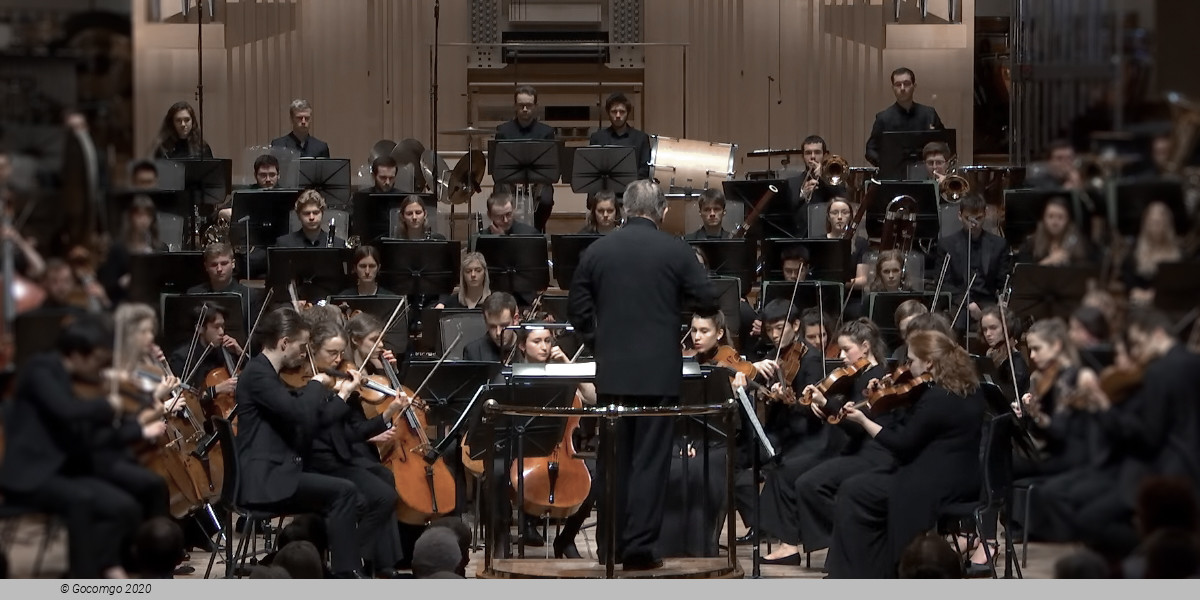
The London Telegraph described pianist Alice Sarah Ott as the “hottest new talent in classical music”. She now makes her debut with the Berliner Philharmoniker performing Ravel’s vibrant, jazz-influenced Piano Concerto in G major. Another artist making his debut is the Finnish conductor Santtu-Matias Rouvali, who shows the music of his homeland from its most passionate side: with Jean Sibelius’s Tchaikovsky-inspired First Symphony, and music by the internationally too little known Uuno Klami.

Two outstanding young talents will make their debuts with the Berliner Philharmoniker: the German-Japanese pianist Alice Sara Ott from Munich and the Finnish conductor Santtu-Matias Rouvali, currently chief conductor of the Tampere Philharmonic Orchestra and the Gothenburg Symphony Orchestra. What the two have in common? Both were taken along to a classical concert by their parents as young children – and were immediately electrified by the music. Alice Sara Ott knew from that moment on she wanted to become a pianist; Santtu-Matias Rouvali became interested in percussion and conducting. He started his musical career as a percussionist and gradually turned more toward conducting. In an interview with the Bavarian broadcasting service, he describes the profession with the following words: “70 percent of our work is that of a psychologist, winning over other people for your own cause.”

Santtu-Matias Rouvali considers himself, furthermore, an ambassador for the music of Finland: “I always like to bring along a piece from my home country.” Thus, he will start the programme with two movements from the atmospherically dense, superbly orchestrated KalevalaSuite by Uuno Klami, an important 20th-century Finnish composer, who was inspired by the famous Finnish national epic in terms of content, but musically follows the models of Igor Stravinsky and Maurice Ravel. That comes as no surprise, as Klami was a student of Ravel in Paris. His piano concerto in G major is one of Alice Sara Ott’s showpieces: she will render the work brilliantly, with a transparent sound. According to Ravel, the concerto was composed in the spirit of “Mozart and Saint-Saëns”; it melds elements of the classical concerto with jazz elements in a congenial manner, including Basque and Spanish folk music as well.

The programme concludes with Jean Sibelius’s First Symphony. After a series of tone poems, in 1898 the Finnish composer turned during his stay in Berlin to the symphony genre. With this work he paid homage to the genre traditions of that time: the beginning with its long and discursive, dreamy clarinet solo reminds one of Peter Tchaikovsky’s Fifth Symphony; the descending sighing motif of the main theme seems taken from Edvard Grieg. All the same, Sibelius in his first symphony shows himself to be a composer with his own, nationally and romantically characteristic tonal language. Santtu-Matias Rouvali has already proven himself a gifted Sibelius interpreter in a recording of the work with the Gothenburg Symphony Orchestra. “High-voltage Sibelius, subtle, electrifying. More of this please!”, were the words of a review on Bavarian Radio.

Venue Info

Berliner Philharmonie - Berlin
Location   Herbert-von-Karajan-Str. 1

The Berliner Philharmonie is a concert hall in Berlin, Germany and home to the Berlin Philharmonic Orchestra. The Philharmonie lies on the south edge of the city's Tiergarten and just west of the former Berlin Wall. The Philharmonie is on Herbert-von-Karajan-Straße, named for the orchestra's longest-serving principal conductor. The building forms part of the Kulturforum complex of cultural institutions close to Potsdamer Platz.

The Philharmonie consists of two venues, the Grand Hall (Großer Saal) with 2,440 seats and the Chamber Music Hall (Kammermusiksaal) with 1,180 seats. Though conceived together, the smaller hall was opened in the 1980s, some twenty years after the main building.

Hans Scharoun designed the building, which was constructed over the years 1960–1963. It opened on 15 October 1963 with Herbert von Karajan conducting Beethoven's 9th Symphony. It was built to replace the old Philharmonie, destroyed by British bombers on 30 January 1944, the eleventh anniversary of Hitler becoming Chancellor. The hall is a singular building, asymmetrical and tentlike, with the main concert hall in the shape of a pentagon. The height of the rows of seats increases irregularly with distance from the stage. The stage is at the centre of the hall, surrounded by seating on all sides. The so-called vineyard-style seating arrangement (with terraces rising around a central orchestral platform) was pioneered by this building, and became a model for other concert halls, including the Sydney Opera House (1973), Denver's Boettcher Concert Hall (1978), the Gewandhaus in Leipzig (1981), Walt Disney Concert Hall in Los Angeles (2003), and the Philharmonie de Paris (2014).

Jazz pianist Dave Brubeck and his quartet recorded three live performances at the hall; Dave Brubeck in Berlin (1964), Live at the Berlin Philharmonie (1970), and We're All Together Again for the First Time (1973). Miles Davis's 1969 live performance at the hall has also been released on DVD.

On 20 May 2008 a fire broke out at the hall. A quarter of the roof suffered considerable damage as firefighters cut openings to reach the flames beneath the roof. The hall interior sustained water damage but was otherwise "generally unharmed". Firefighters limited damage using foam. The cause of the fire was attributed to welding work, and no serious damage was caused either to the structure or interior of the building. Performances resumed, as scheduled, on 1 June 2008 with a concert by the San Francisco Symphony Youth Orchestra.

The main organ was built by Karl Schuke, Berlin, in 1965, and renovated in 1992, 2012 and 2016. It has four manuals and 91 stops. The pipes of the choir organs and the Tuba 16' and Tuba 8' stops are not assigned to any group and can be played from all four manuals and the pedals.

Important Info
Type: Classical Concert
City: Berlin, Germany
Starts at: 19:00
Duration:
Top of page