Act I
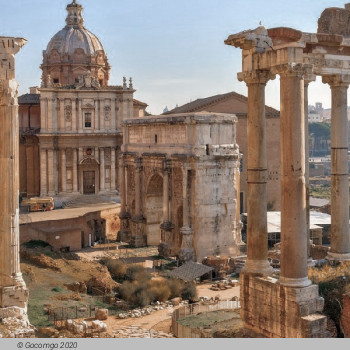
“Oh Rome, the city of celebration, city of great victories and achievements — proud, mighty, and invincible!” — perhaps thought the citizens of Ancient Rome, as they were flocking once again to the streets and squares of their glorious city for yet another round of fun. Although every now and then an unpleasant rumor about a new denunciation, a plot or a detention might spread — such matters could never compare to the greatness of the Empire and the faith in the almighty gods! Which is why the Herald proclaims Caesar Nero’s will: the theatre and the circus shall open on the occasion of the celebrations in honor of the goddess Minerva. All praise Caesar.
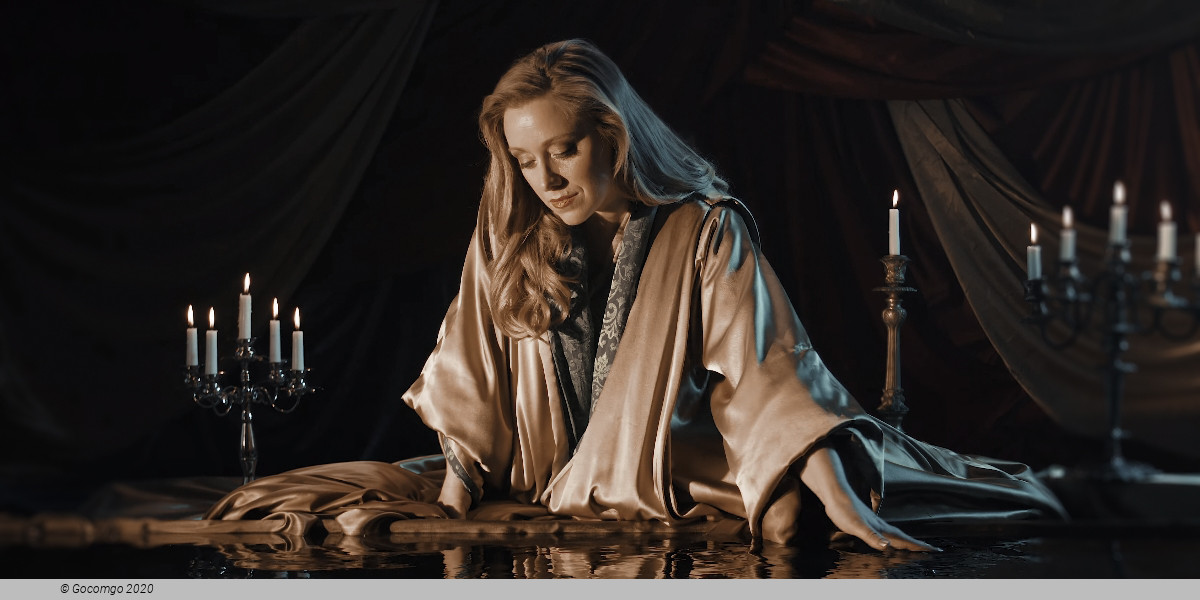
However, suspicious Hispo does not share the universal complacency — he reports that the Christians have reappeared in Rome. Meanwhile, a strange Old Man, who appeared out of nowhere, is sitting on the roadside and closely watching the scene. Who knows what’s on his mind… But the Romans were not born to ponder the same things over and over again — they need new experiences. Now all eyes turn toward the daughter of a famous Roman senator Soranus — the beautiful Servilia, gliding like a swan through the crowd of astonished onlookers.
A sacred procession appears — and the crowd is humming with pleasant anticipation. Servilia too is watching the sacred rite. Suddenly, in the midst of jubilation, the “cursed” Old Man seems to come to live. He wrathfully accuses the Romans of their impiety and demands them to repent of their sins before the Almighty. The Old Man gets seized; seems like it’s coming to a reprisal. The lynching gets interrupted by Servilia’s scream and the appearance of tribune Valerius. Catching Servilia’s frightened gaze, Valerius immediately restrains the fury of the enraged pagans, thus saving the Old Man from imminent death — at least for the moment.
Act II
During a secret gathering, senators Paconius, Helvidius and Montanus discuss the latest disturbing news. Rome is disturbed: surveillance, ratting and arrests are everywhere… Egnatius, senators’ confidant in word and Tigellinus’s henchman in deed, only fans the flames as he appears. He brings the senators an allegedly intercepted denunciation against themselves — they are accused of treason against Rome and against Caesar Nero himself! Panicking, the senators make a devastating decision: to write to Caesar to justify themselves.
Nothing relieves the statesmen’s nervous strain like a plentiful meal around the beautiful bacchants. The feast begins at Paconius’s sign. Meanwhile, Egnatius obligingly makes the record and gets fairly drunk and careless senators to seal the message with their personal signets. The paper is signed — the trap is closed. Suddenly, the guards appear and arrest the dignitaries, who by now barely understand what is happening. The screams about a fire in the city (it was the beginning of the famous Great Fire of Rome in 64 AD which was to consume almost the entire city) only deepen the sense of hopelessness.
The fire is a misery for the people, but not for their leader. Tigellinus, the almighty praetorian prefect and the de facto ruler of Rome, enters the room. It is to him that the senators “owe” their arrest. Tigellinus is pleased with Egnatius’s work and offers him a reward. But Egnatius seems to not hear his master. Only love is on his mind…
Act III
Unease has taken over Soranus’s household. After the fire, living in Rome is no longer safe — domestic spying is everywhere, prisons are overflowing, executions follow one after another… Gloomy clouds gather over Soranus himself. To protect his beloved daughter from the “all-seeing eye”, Soranus announces to Servilia his will to marry her off to senator Thrasea. Servilia contradicts her father, for she is in love with tribune Valerius. Thrasea’s coming only intensifies the emotional turmoil within her.
Servilia runs away from home. She rushes to her beloved through the dark and empty streets of Rome, only recently rumbling with fireworks. There he is, at his desk — writing, receiving visitors. Coming to his senses after Servilia’s unexpected arrival, Valerius gives a sign for everyone to leave. Painfully beautiful is the scene of two lovers, destined to an eternal farewell…
But the wise Thrasea decides otherwise: he willingly refuses Servilia's hand. It seems as if the way for the blissful love in now open, Servilia and Valerius can tie the knot of a blessed marriage — if not for the sudden arrival of a Centurion and his guards, forever shattering all hope for happiness. Thrasea and Soranus are arrested — and so is Valerius, who tried to defend them. Servilia’s sorrow knows no bounds.
Act IV
When one’s last hope gets taken away, in a fit of despair they seek solace in supernatural forces… Left completely alone after losing her home, social status, her father, and her beloved, Servilia turns for help to Locusta, known at the time as the “great enchantress” of Rome.
Locusta’s house is crowded. But the visitors of a famous Roman poisoner resemble rather the spirits of the dead than the living people. After receiving rich gifts, Locusta agrees to help Servilia and begins to cast a spell. The summoned Apparition declares that the hope of rescue shall come from the one whom Servilia doesn't notice for no good reason.
The oracle vanishes, and Egnatius steps out towards the scared Servilia. No, never before had Ancient Rome heard such an ardent and passionate confession from a man who had committed heinous crimes only for the sake of love for his one-and-only beloved! Servilia is shocked by Egnatius’s confession. In turn, he demands reciprocation. Appalled, the woman curses the torturer of her father, fiancé, and a family friend. In a fit of rage that took over the outpouring of love, Egnatius makes an oath: Servilia shall leave Locusta’s house only as his wife.
Left alone, Servilia implores the gods to help her. Yet help comes from where she could never have imagined: Nevolea, a timid Christian slave, offers her the path to salvation…
Act V
A trial. The tribunal condemns the betraying senators to eternal exile — Thrasea and Soranus among others. Like in a nightmare, the exhausted Servilia hears the voices of the court as if they're reaching her from another life. Seems like the Praetor calls Servilia herself before the tribunal and makes charges. Like in a delirium, Servilia mutters in response that she did go to the enchantress Locusta, but her father is innocent, and she begs the judges to show him mercy. She hears the angry shouts of the crowd making the lictors let the citizens into the forum. Afer, Valerius’s loyal follower, asserts under oath Servilia's innocence. She sees her father calling out to her. And there he is — her beloved! Suddenly appearing, Valerius exclaims “Veto!” — and by the power granted to him he adjourns the meeting. Servilia can’t help but feel that this whole court nightmare is merely a shadow of what has been lost forever…
Valerius and Egnatius stand before Servilia: the man who could have brought her happiness, and the one who took it away forever. Like two angels — black and white — they hover over Servilia. Yet someone says: “She is gone”. How odd — could this be about her? Awaking as if from a heavy dream, Servilia confesses that she has converted to Christianity; she forgives her enemies and asks Valerius to give up on revenge and turn to God. Valerius is stunned. Slowly, Servilia ascends higher and higher, followed by invisible voices…
Olga Ivanova, the director
Servilia, daughter of the senator Soranus, is desired by her father to contract an alliance with Trasea, but the latter, hearing of her preference for his adopted son Valerius, withdraws his suit. Egnatius, the freedman of Soranus, being enamoured of Servilia, conspires against his master and Trasea, and intimates to Servilia that her submission alone will secure their safety. Valerius has mysteriously disappeared, and Servilia, becoming a convert to Christianity, renounces the World. Called before the tribunal, Trasea and Soranus are sentenced to banishment, while Servilia is awarded to Egnatius. Valerius now returns, bearing a proclamation from Nero that the tribunal is dissolved. The sudden reappearance of her lover causes Servilia's death, and Valerius is only prevented from destroying himself by the intervention of his foster-father. Egnatius, in his woe, invokes the Divine Being, and the rest join him in acclaiming the Christian God.





 Teatralnaya Square 1