




Deutsche Oper Berlin 7 February 2020 - The Abduction from the Seraglio | GoComGo.com

The Abduction from the Seraglio

Deutsche Oper Berlin, Berlin, Germany
All photos (13)
Select date and time
7:30 PM
Request for Tickets
Important Info
Type: Opera
City: Berlin, Germany
Starts at: 19:30
Acts: 3
Intervals: 1
Duration:
Sung in: German
Titles in: German,English

E-tickets: Print at home or at the box office of the event if so specified. You will find more information in your booking confirmation email.

You can only select the category, and not the exact seats.
If you order 2 or 3 tickets: your seats will be next to each other.
If you order 4 or more tickets: your seats will be next to each other, or, if this is not possible, we will provide a combination of groups of seats (at least in pairs, for example 2+2 or 2+3).

Overview

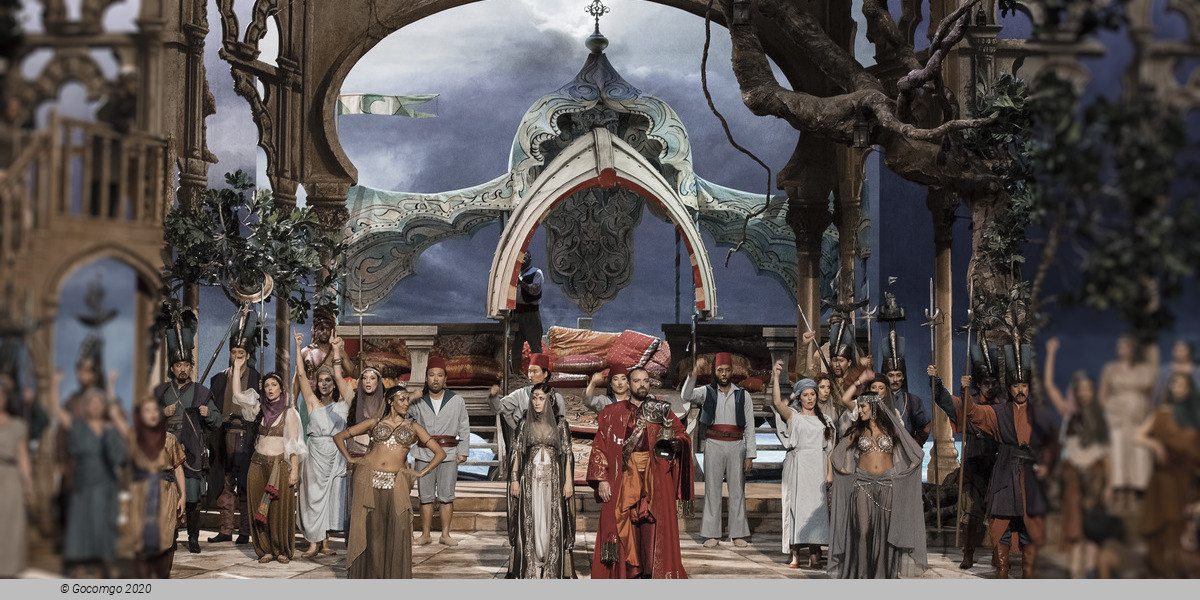
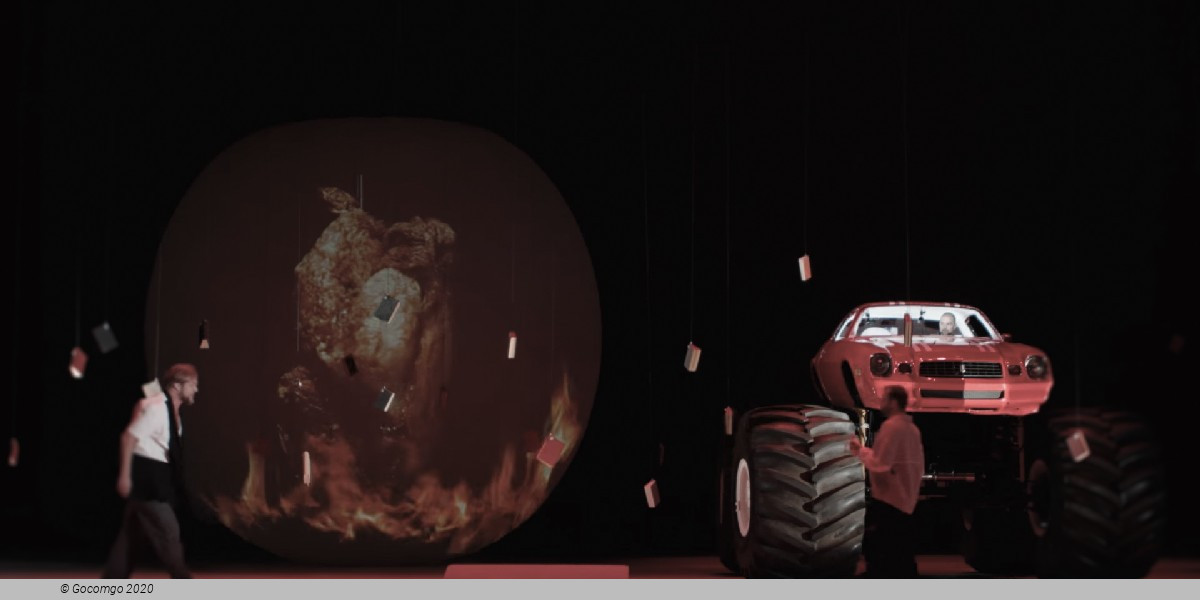
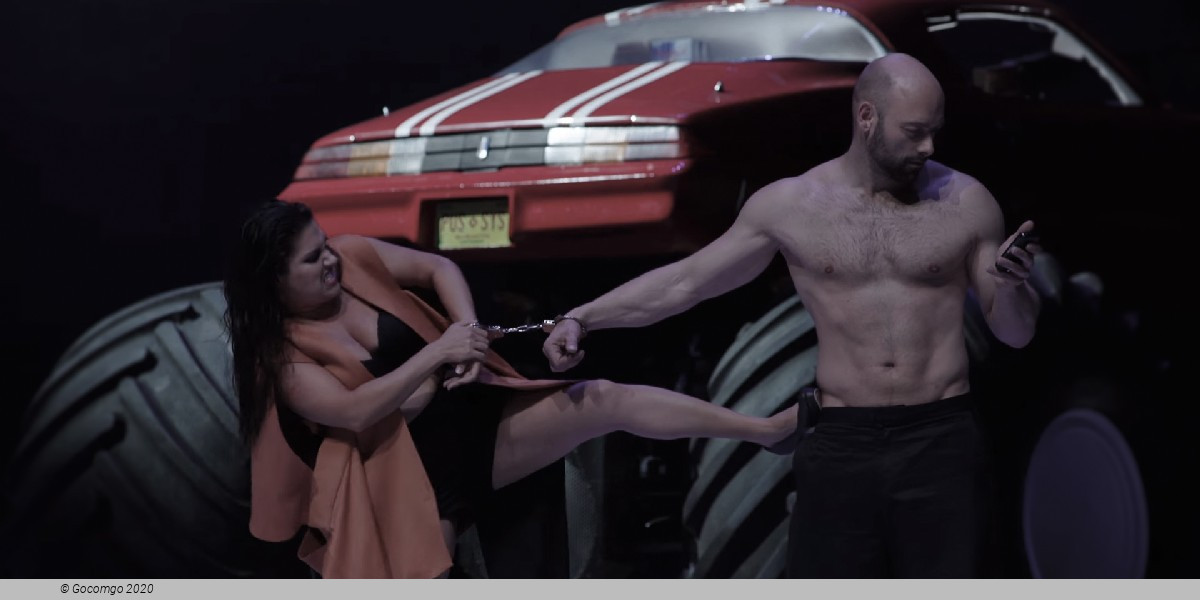
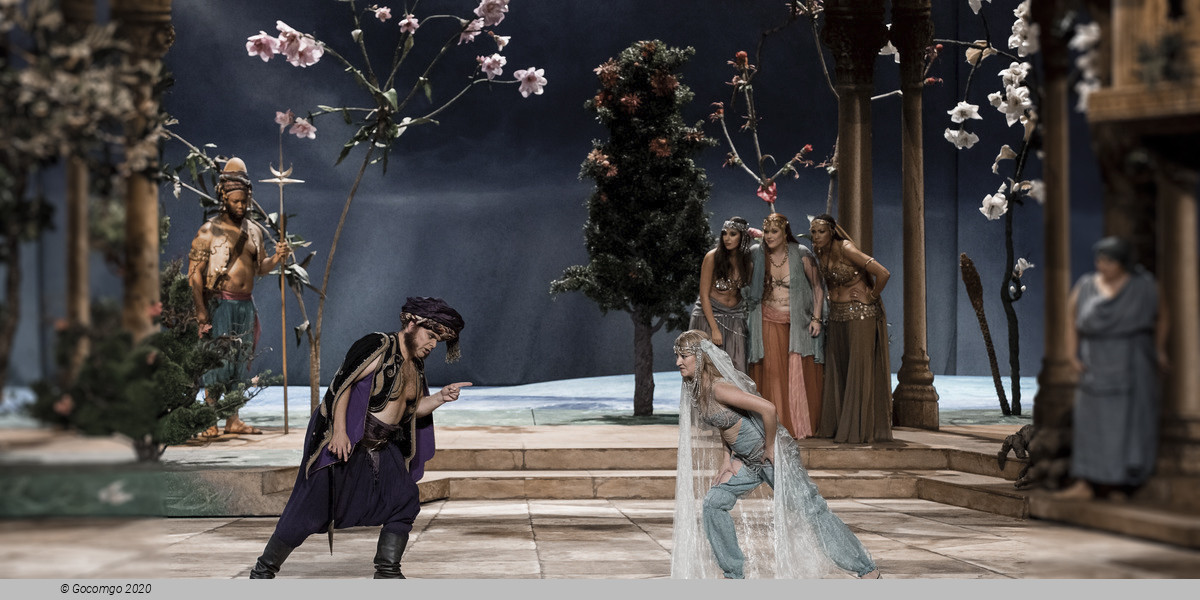
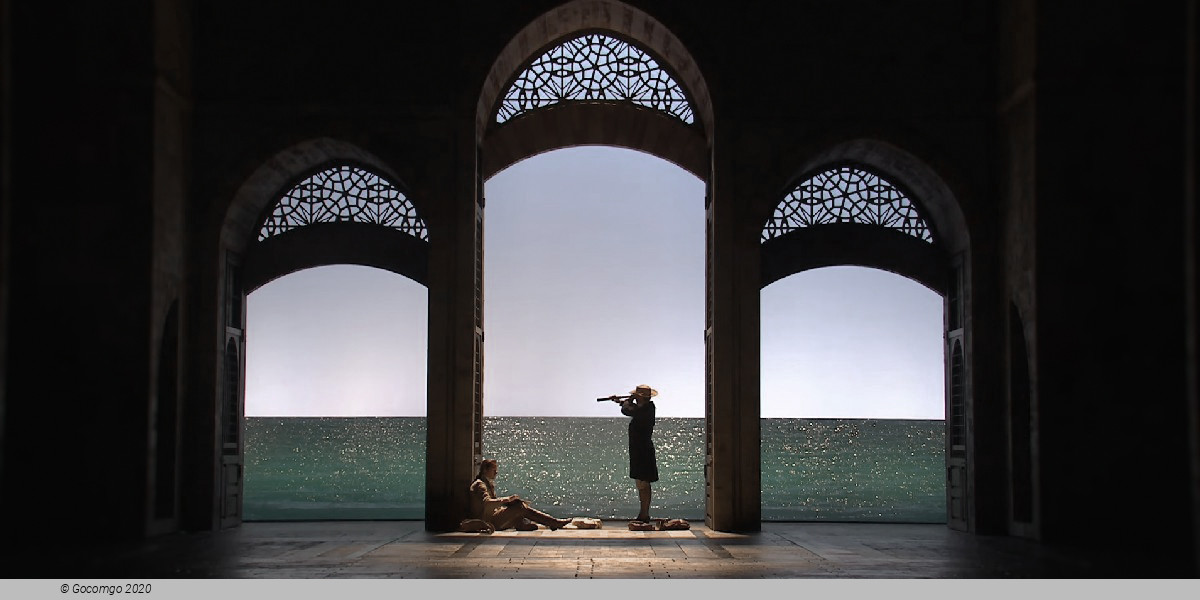
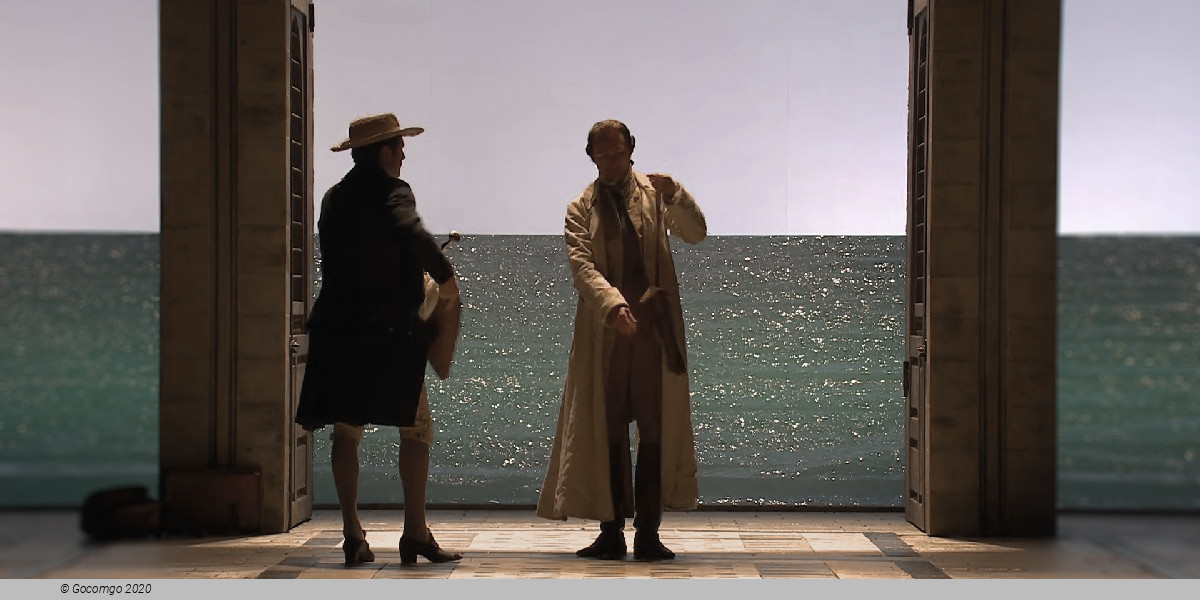
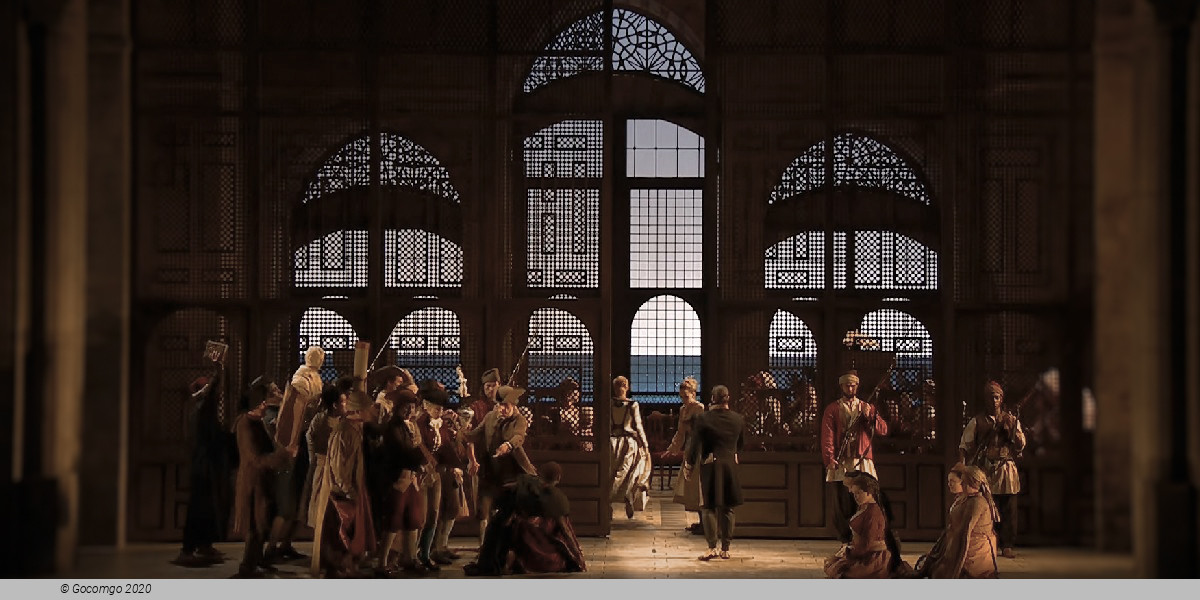
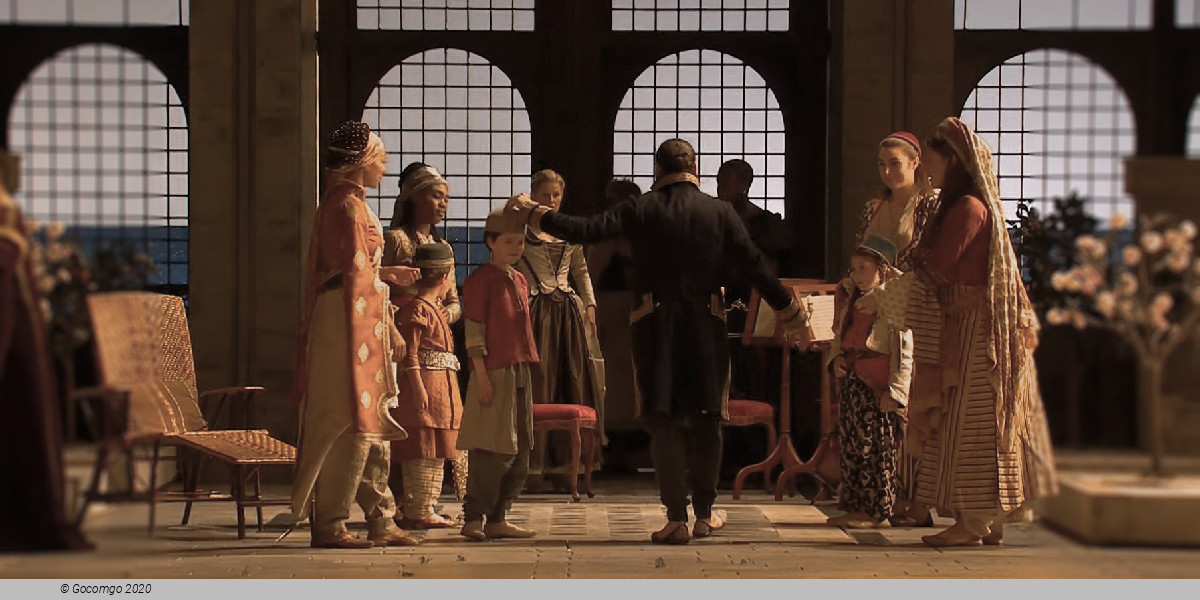
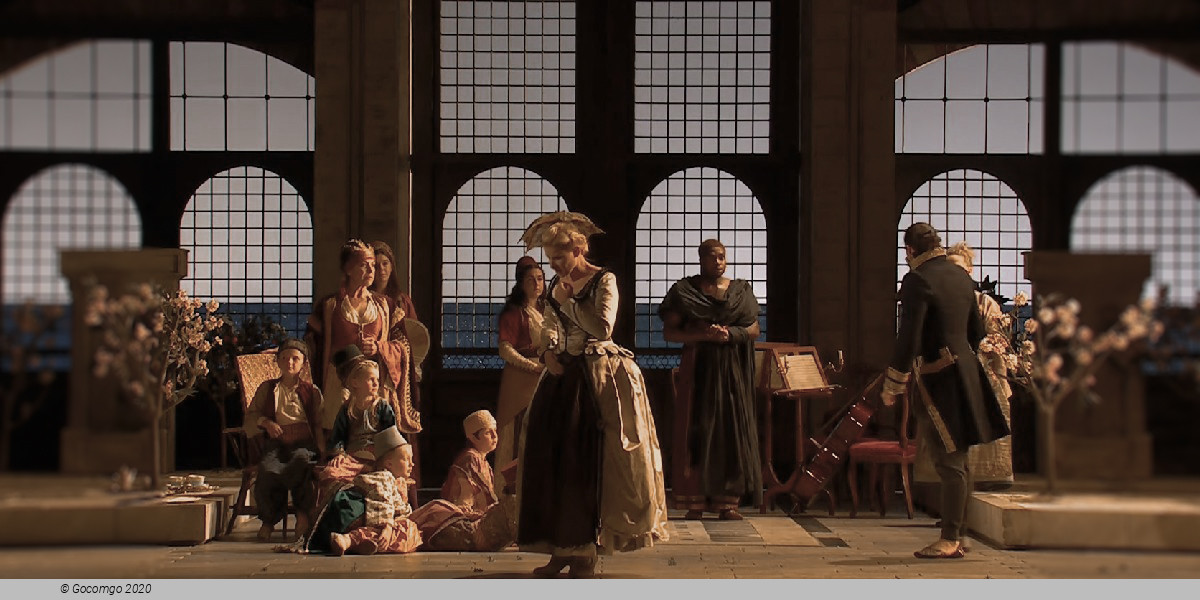
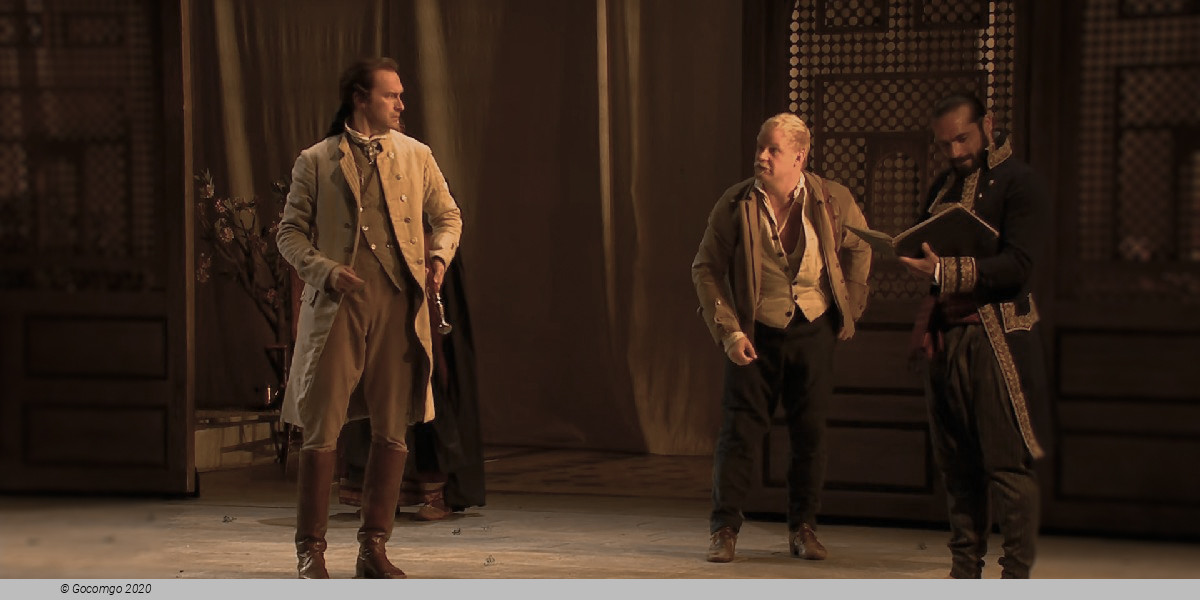
ABDUCTION has inspired a string of accomplished directors to stage the work, especially as its interplay of spoken dialogue and music makes it more tolerant of textual adaptations than through-composed operas are. One of Europe’s most exciting and uncompromising theatre directors came to the Deutsche Oper Berlin, where he had chosen THE ABDUCTION FROM THE SERAGLIO as the piece with which to make his debut in the genre of musical theatre. Argentinian Rodrigo Garcia has been feted internationally for plays such as “Gólgota Picnic”.

The realisation that THE ABDUCTION FROM THE SERAGLIO was a more significant work than the “musical comedy” label suggested was not long in coming. Not only did the commissioner of the piece, Emperor Joseph II, comment with some puzzlement after the 1784 premiere in Vienna that there were “too many notes”; three years later Goethe, too, responded to the success of Mozart’s piece by questioning his own dabblings in German-language musical comedies. ABDUCTION soon came to be seen as the primordial German opera, the first successful attempt to create a qualitatively comparable German alternative to the affective language of Italian opera. This is especially true of the emotional depth of the characters. Setting the story in an alien, exotic country, which severs Belmonte and Konstanze from all external social influences, Mozart is able to express musically the fundamental question of interpersonal relations: am I so in love that I want to spend the rest of my life with this other person? And do I know myself well enough to commit to the relationship with a clean conscience?

History
Premiere of this production: 16 July 1782, Burgtheater, Vienna

Die Entführung aus dem Serail (The Abduction from the Seraglio) is an opera Singspiel in three acts by Wolfgang Amadeus Mozart. The German libretto is by Gottlieb Stephanie, based on Christoph Friedrich Bretzner's Belmont und Constanze, oder Die Entführung aus dem Serail. The plot concerns the attempt of the hero Belmonte, assisted by his servant Pedrillo, to rescue his beloved Konstanze from the seraglio of Pasha Selim. The work premiered on 16 July 1782 at the Vienna Burgtheater, with the composer conducting.

Synopsis

Place: the country house of the Pasha (German "Bassa"), in Turkey
Time: 16th century

Act 1
After a lively overture, Belmonte enters, looking for his betrothed, Konstanze, who with her English servant Blonde has fallen into the hands of pirates and been sold to Pasha Selim (Aria: "Hier soll ich dich denn sehen" – "Here surely I must find her"). Osmin, the Pasha's bad-tempered servant, comes to pluck figs in the garden and contemptuously ignores Belmonte's questions (Aria: "Wer ein Liebchen hat gefunden" – "You may think, you've found a maiden"). Belmonte tries to obtain news of his servant, Pedrillo, who has been captured with the women and is serving as a servant in the Pasha's palace. Osmin replies with insults and abuse (Duet: "Verwünscht seist du samt deinem Liede!" – "The devil take you and your song, sir"). Belmonte leaves in disgust. Pedrillo enters and Osmin rages at him, vowing to get him tortured and killed in many different ways (Aria: "Solche hergelaufne Laffen" – "These young men who go a-spying"). Osmin leaves and Belmonte enters and happily reunites with Pedrillo. Together they resolve to rescue Konstanze and Blonde, who is Pedrillo's fiancée (Aria: "Konstanze, Konstanze, dich wiederzusehen … O wie ängstlich" – "Konstanze, Konstanze, to see thee again … Oh what trembling").

Accompanied by a chorus of Janissaries ("Singt dem großen Bassa Lieder" – "Sing to the mighty Pasha Selim"), Pasha Selim appears with Konstanze, for whose love he strives in vain (Aria of Konstanze: "Ach ich liebte" – "How I loved him"). Pedrillo tricks the Pasha into hiring Belmonte as an architect. When Belmonte and Pedrillo try to enter the palace, Osmin bars their way, but they hurry past him anyway (Terzett: "Marsch! Marsch! Marsch! Trollt euch fort!" – "March! March! March! Clear off!").

Act 2

The Pasha has given Blonde to Osmin, to be his slave; however, she defiantly rebuffs her new master's rough lovemaking attempts (Aria: "Durch Zärtlichkeit und Schmeicheln" – "With smiles and kind caresses"), threatens to scratch out his eyes, and chases him out of the room (Duet: "Ich gehe, doch rate ich dir" – "I'm going, but mark what I say"). Konstanze enters and greets Blonde in distress (Aria: "Welcher Wechsel herrscht in meiner Seele … Traurigkeit ward mir zum Lose" – "Oh what sorrow overwhelms my spirit … Endless grief tortures my spirit"). The Pasha enters, demands her love, and threatens to use force, but she resolutely rejects him. (Aria: "Martern aller Arten" – "Tortures unrelenting") Left alone, he muses on her determination to remain chaste, which increases his desire for her.

Pedrillo informs Blonde that Belmonte has come and is planning to rescue them. Blonde is filled with joy. (Aria: "Welche Wonne, welche Lust" – "Oh, the happy, happy day"). After singing a short ditty to boost his courage (Aria: "Frisch zum Kampfe" – "Now Pedrillo, now for battle!"), Pedrillo invites Osmin to drink (Duet: "Vivat Bacchus! Bacchus lebe!" – "Here's to Bacchus, long live Bacchus"). Despite his religious prohibition against alcoholic beverages, Osmin drinks heavily and falls asleep. Konstanze joins Belmonte who declares his love (Aria: "Wenn der Freude Tränen fließen" – "When tears of joy flow"). The two couples reunite (Quartet, Belmonte, Konstanze, Pedrillo, Blonde: "Ach Belmonte! Ach, mein Leben" – "Ah, Belmonte, ah my dear one!"). After their initial expressions of love and joy, Belmonte and Pedrillo both question anxiously whether their respective fiancees have remained faithful during their forced separation; to their delight the women respond with indignation and dismay, and Blonde slaps Pedrillo's face. The two men apologize for their failure of confidence; the women forgive them for the offensive questions.

Act 3

Belmonte and Pedrillo come to the garden with ladders (Aria, Belmonte: "Ich baue ganz auf deine Stärke" – "Love, only love, can now direct me"). Pedrillo gets the attention of the women by singing a ballad about a rescue similar to the one he is planning (Romanze, Pedrillo: "In Mohrenland gefangen war" – "In Moorish lands a maiden fair"). However, Osmin enters, sees the ladders, and rouses the castle. Osmin exults in the prospect of seeing them all hanged (Aria: "O, wie will ich triumphieren" – "My triumphant hour's approaching"). Belmonte pleads for their lives and tells Pasha Selim that his father is a Spanish Grandee and Governor of Oran, named Lostados, and will pay a generous ransom. Unfortunately, Pasha Selim and Lostados are long-standing enemies. The Pasha rejoices in the opportunity to subject his enemy's son to a horrible death. He leaves Belmonte and Konstanze to bid each other a last farewell; they lovingly assure each other that being tortured to death will be a pleasure, so long as they get tortured to death together (Duet: "Welch ein Geschick! O Qual der Seele.... Weh, du soltest für mich sterben" – "What dreadful fate conspires against us.... Woe, you will die because of me"). However, the Pasha decides that he can make a better point against Lostados by showing mercy and releasing Belmonte and his friends. All are set at liberty – much to the dismay of Osmin, who would prefer to see them all brutally executed (Finale: "Nie werd' ich deine Huld verkennen" – "Your noble mercy passes measure").

Venue Info

Deutsche Oper Berlin - Berlin
Location   Bismarckstraße 35

Venue's Capacity: 1698

The Deutsche Oper Berlin is an opera company located in the Charlottenburg district of Berlin, Germany. The resident building is the country's second-largest opera house and also home to the Berlin State Ballet. Since 2004 the Deutsche Oper Berlin, like the Staatsoper Unter den Linden (Berlin State Opera), the Komische Oper Berlin, the Berlin State Ballet, and the Bühnenservice Berlin (Stage and Costume Design), has been a member of the Berlin Opera Foundation.

The company's history goes back to the Deutsches Opernhaus built by the then independent city of Charlottenburg—the "richest town of Prussia"—according to plans designed by Heinrich Seeling from 1911. It opened on November 7, 1912 with a performance of Beethoven's Fidelio, conducted by Ignatz Waghalter. In 1925, after the incorporation of Charlottenburg by the 1920 Greater Berlin Act, the name of the resident building was changed to Städtische Oper (Municipal Opera).

With the Nazi seizure of power in 1933, the opera was under control of the Reich Ministry of Public Enlightenment and Propaganda. Minister Joseph Goebbels had the name changed back to Deutsches Opernhaus, competing with the Berlin State Opera in Mitte controlled by his rival, the Prussian minister-president Hermann Göring. In 1935, the building was remodeled by Paul Baumgarten and the seating reduced from 2300 to 2098. Carl Ebert, the pre-World War II general manager, chose to emigrate from Germany rather than endorse the Nazi view of music, and went on to co-found the Glyndebourne opera festival in England. He was replaced by Max von Schillings, who acceded to enact works of "unalloyed German character". Several artists, like the conductor Fritz Stiedry and the singer Alexander Kipnis, followed Ebert into emigration. The opera house was destroyed by a RAF air raid on 23 November 1943. Performances continued at the Admiralspalast in Mitte until 1945. Ebert returned as general manager after the war.

After the war, in what was now West Berlin, the company, again called Städtische Oper, used the nearby Theater des Westens; its opening production was Fidelio, on 4 September 1945. Its home was finally rebuilt in 1961 but to a much-changed, sober design by Fritz Bornemann. The opening production of the newly named Deutsche Oper, on 24 September, was Mozart's Don Giovanni.

Past Generalmusikdirektoren (GMD, general music directors) have included Bruno Walter, Kurt Adler, Ferenc Fricsay, Lorin Maazel, Gerd Albrecht, Jesús López-Cobos, and Christian Thielemann. In October 2005, the Italian conductor Renato Palumbo was appointed GMD as of the 2006/2007 season. In October 2007, the Deutsche Oper announced the appointment of Donald Runnicles as their next Generalmusikdirektor, effective August 2009, for an initial contract of five years. Simultaneously, Palumbo and the Deutsche Oper mutually agreed to terminate his contract, effective November 2007.

On the evening of 2 June 1967, Benno Ohnesorg, a student taking part in the German student movement, was shot in the streets around the opera house. He had been protesting against the visit to Germany by the Shah of Iran, who was attending a performance of Mozart's The Magic Flute.

In 1986 the American Berlin Opera Foundation was founded.

In April 2001, the Italian conductor Giuseppe Sinopoli died at the podium while conducting Verdi's Aida, at age 54.

In September 2006, the Deutsche Oper's Intendantin (general manager) Kirsten Harms drew criticism after she cancelled the production of Mozart's opera Idomeneo by Hans Neuenfels, because of fears that a scene in it featuring the severed heads of Jesus, Buddha and Muhammad would offend Muslims, and that the opera house's security might come under threat if violent protests took place. Critics of the decision include German Ministers and the German Chancellor Angela Merkel. The reaction from Muslims has been mixed — the leader of Germany's Islamic Council welcomed the decision, whilst a leader of Germany's Turkish community, criticising the decision, said:

This is about art, not about politics ... We should not make art dependent on religion — then we are back in the Middle Ages.

At the end of October 2006, the opera house announced that performances of Mozart's opera Idomeneo would then proceed. Kirsten Harms, after announcing in 2009 that she would not renew her contract beyond 2011, was bid farewell in July of that year.

Important Info
Type: Opera
City: Berlin, Germany
Starts at: 19:30
Acts: 3
Intervals: 1
Duration:
Sung in: German
Titles in: German,English
Top of page