


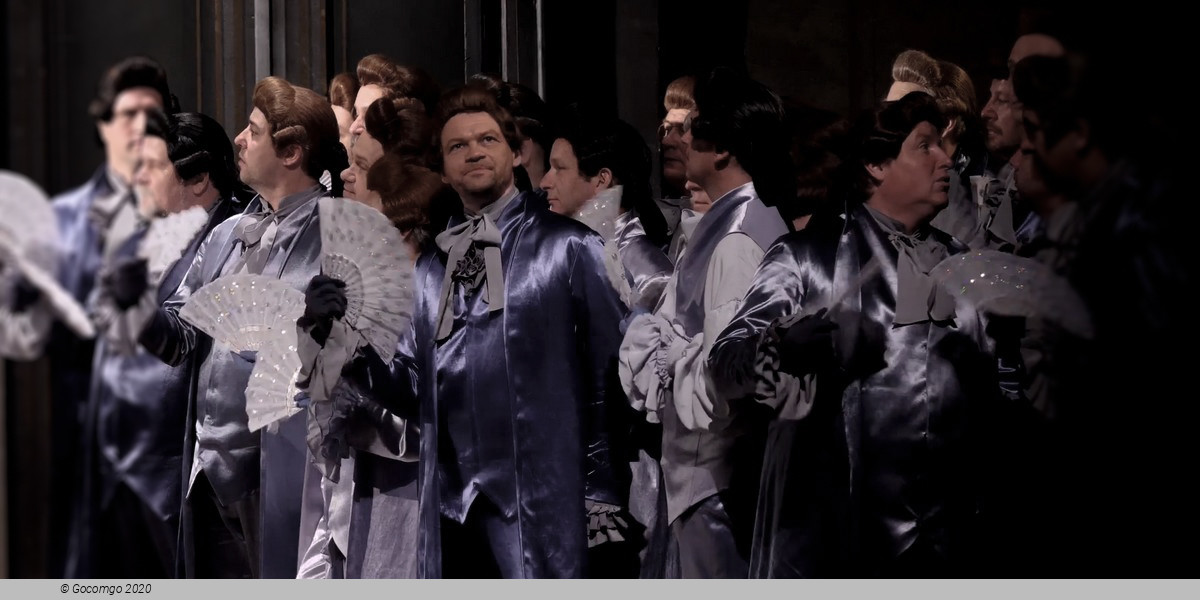
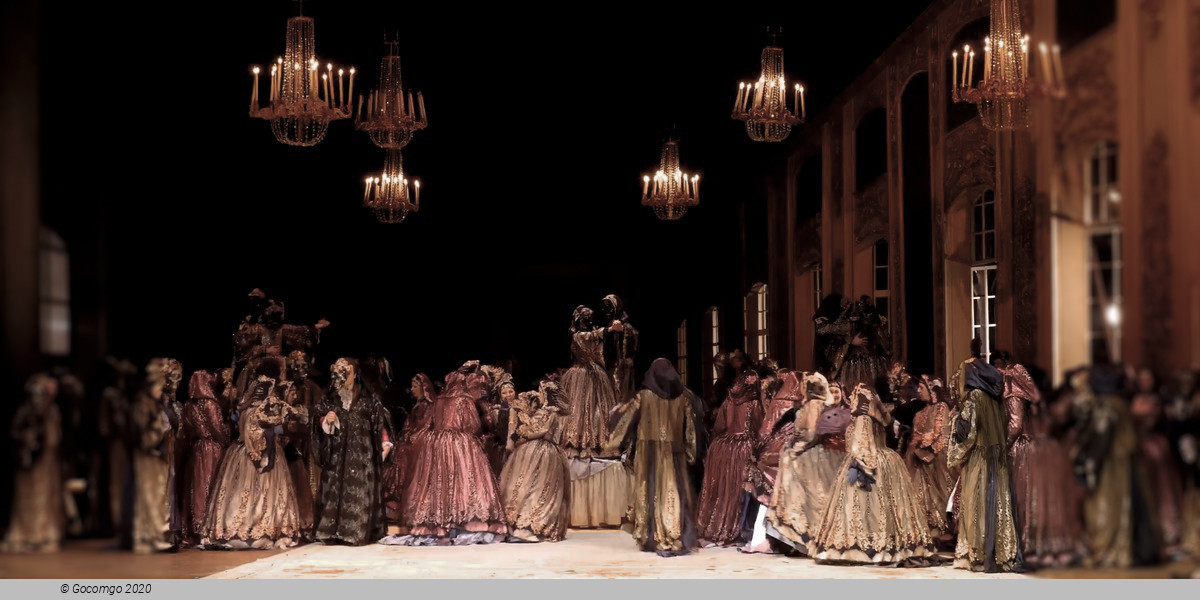
 Bismarckstraße 35
Venue's Capacity: 1698
The Deutsche Oper Berlin is an opera company located in the Charlottenburg district of Berlin, Germany. The resident building is the country's second-largest opera house and also home to the Berlin State Ballet. Since 2004 the Deutsche Oper Berlin, like the Staatsoper Unter den Linden (Berlin State Opera), the Komische Oper Berlin, the Berlin State Ballet, and the Bühnenservice Berlin (Stage and Costume Design), has been a member of the Berlin Opera Foundation.
The company's history goes back to the Deutsches Opernhaus built by the then independent city of Charlottenburg—the "richest town of Prussia"—according to plans designed by Heinrich Seeling from 1911. It opened on November 7, 1912 with a performance of Beethoven's Fidelio, conducted by Ignatz Waghalter. In 1925, after the incorporation of Charlottenburg by the 1920 Greater Berlin Act, the name of the resident building was changed to Städtische Oper (Municipal Opera).
With the Nazi seizure of power in 1933, the opera was under control of the Reich Ministry of Public Enlightenment and Propaganda. Minister Joseph Goebbels had the name changed back to Deutsches Opernhaus, competing with the Berlin State Opera in Mitte controlled by his rival, the Prussian minister-president Hermann Göring. In 1935, the building was remodeled by Paul Baumgarten and the seating reduced from 2300 to 2098. Carl Ebert, the pre-World War II general manager, chose to emigrate from Germany rather than endorse the Nazi view of music, and went on to co-found the Glyndebourne opera festival in England. He was replaced by Max von Schillings, who acceded to enact works of "unalloyed German character". Several artists, like the conductor Fritz Stiedry and the singer Alexander Kipnis, followed Ebert into emigration. The opera house was destroyed by a RAF air raid on 23 November 1943. Performances continued at the Admiralspalast in Mitte until 1945. Ebert returned as general manager after the war.
After the war, in what was now West Berlin, the company, again called Städtische Oper, used the nearby Theater des Westens; its opening production was Fidelio, on 4 September 1945. Its home was finally rebuilt in 1961 but to a much-changed, sober design by Fritz Bornemann. The opening production of the newly named Deutsche Oper, on 24 September, was Mozart's Don Giovanni.
Past Generalmusikdirektoren (GMD, general music directors) have included Bruno Walter, Kurt Adler, Ferenc Fricsay, Lorin Maazel, Gerd Albrecht, Jesús López-Cobos, and Christian Thielemann. In October 2005, the Italian conductor Renato Palumbo was appointed GMD as of the 2006/2007 season. In October 2007, the Deutsche Oper announced the appointment of Donald Runnicles as their next Generalmusikdirektor, effective August 2009, for an initial contract of five years. Simultaneously, Palumbo and the Deutsche Oper mutually agreed to terminate his contract, effective November 2007.
On the evening of 2 June 1967, Benno Ohnesorg, a student taking part in the German student movement, was shot in the streets around the opera house. He had been protesting against the visit to Germany by the Shah of Iran, who was attending a performance of Mozart's The Magic Flute.
In 1986 the American Berlin Opera Foundation was founded.
In April 2001, the Italian conductor Giuseppe Sinopoli died at the podium while conducting Verdi's Aida, at age 54.
In September 2006, the Deutsche Oper's Intendantin (general manager) Kirsten Harms drew criticism after she cancelled the production of Mozart's opera Idomeneo by Hans Neuenfels, because of fears that a scene in it featuring the severed heads of Jesus, Buddha and Muhammad would offend Muslims, and that the opera house's security might come under threat if violent protests took place. Critics of the decision include German Ministers and the German Chancellor Angela Merkel. The reaction from Muslims has been mixed — the leader of Germany's Islamic Council welcomed the decision, whilst a leader of Germany's Turkish community, criticising the decision, said:
This is about art, not about politics ... We should not make art dependent on religion — then we are back in the Middle Ages.
At the end of October 2006, the opera house announced that performances of Mozart's opera Idomeneo would then proceed. Kirsten Harms, after announcing in 2009 that she would not renew her contract beyond 2011, was bid farewell in July of that year.