

Deutsche Oper Berlin: Violanta Tickets | Event Dates & Schedule | GoComGo.com

Violanta Tickets

Deutsche Oper Berlin, Berlin, Germany
All photos (5)
1 / 5
Available Dates: 25 Jan - 13 Feb, 2026 (4 events)
Important Info
Type: Opera
City: Berlin, Germany
Duration: 1h 30min
Acts: 1
Sung in: German
Titles in: German,English

E-tickets: Print at home or at the box office of the event if so specified. You will find more information in your booking confirmation email.

You can only select the category, and not the exact seats.
If you order 2 or 3 tickets: your seats will be next to each other.
If you order 4 or more tickets: your seats will be next to each other, or, if this is not possible, we will provide a combination of groups of seats (at least in pairs, for example 2+2 or 2+3).

Cast
Performers
Choose the date to see the peformers
Creators
Composer: Erich Wolfgang Korngold
Director: David Hermann
Librettist: Hans Müller-Einigen
Overview

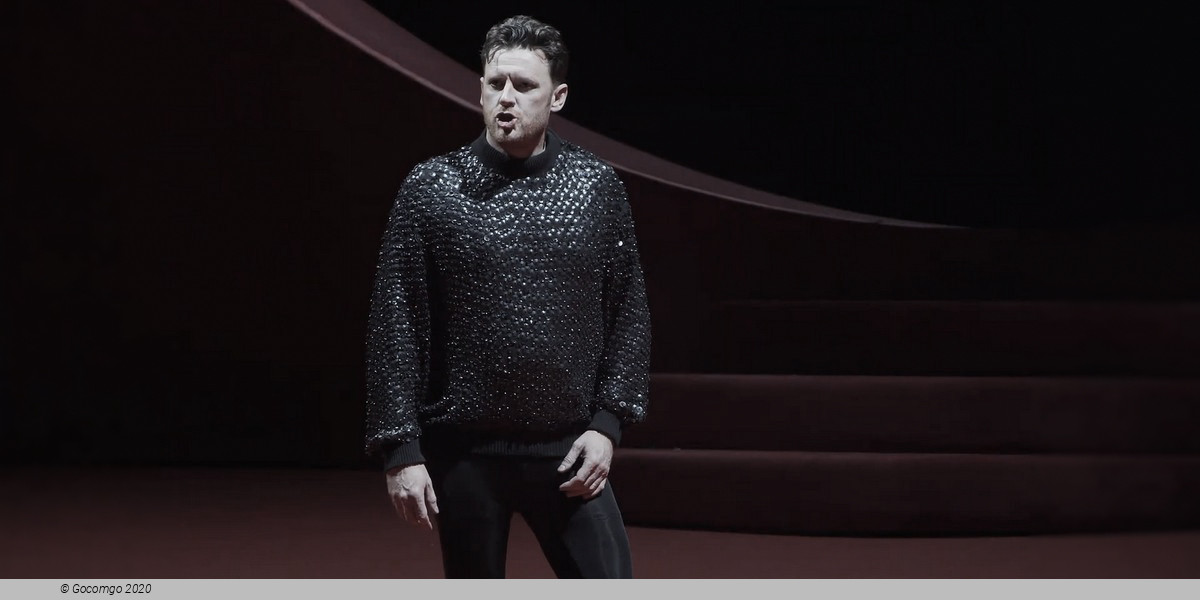
At the Deutsche Oper Berlin, which hosted a much-discussed revival of THE MIRACLE OF HELIANE (likewise to a text by Hans Müller), this new production of VIOLANTA is the result of a collaboration between General Music Director Sir Donald Runnicles and the director David Hermann. The pair have already worked on two other new productions: THE MAKROPULOS AFFAIR and FIDELIO.

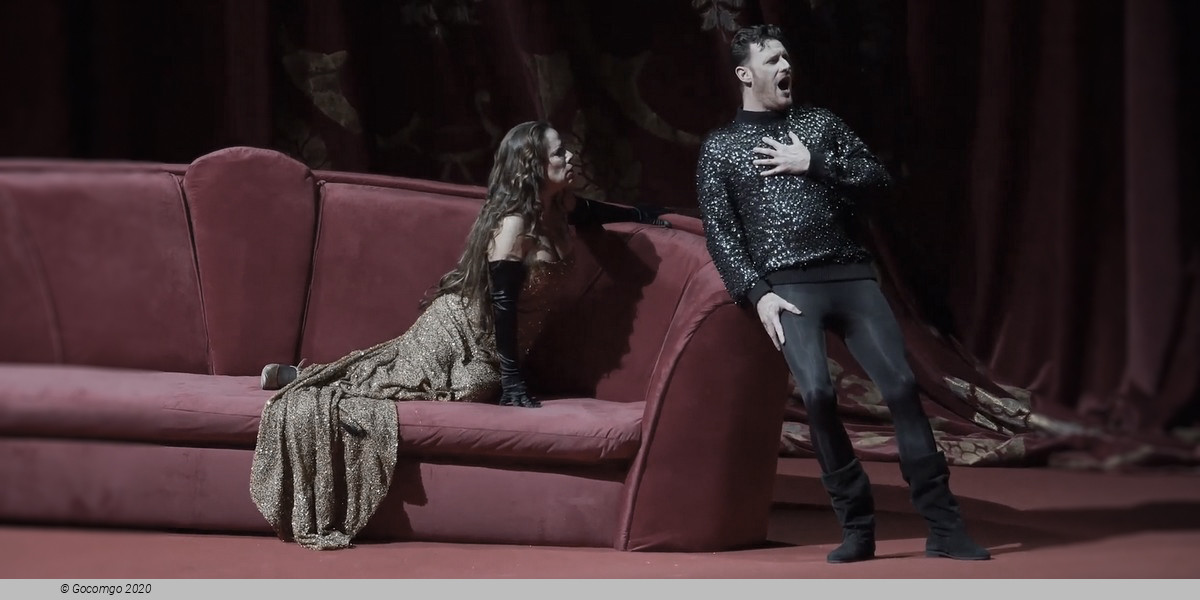
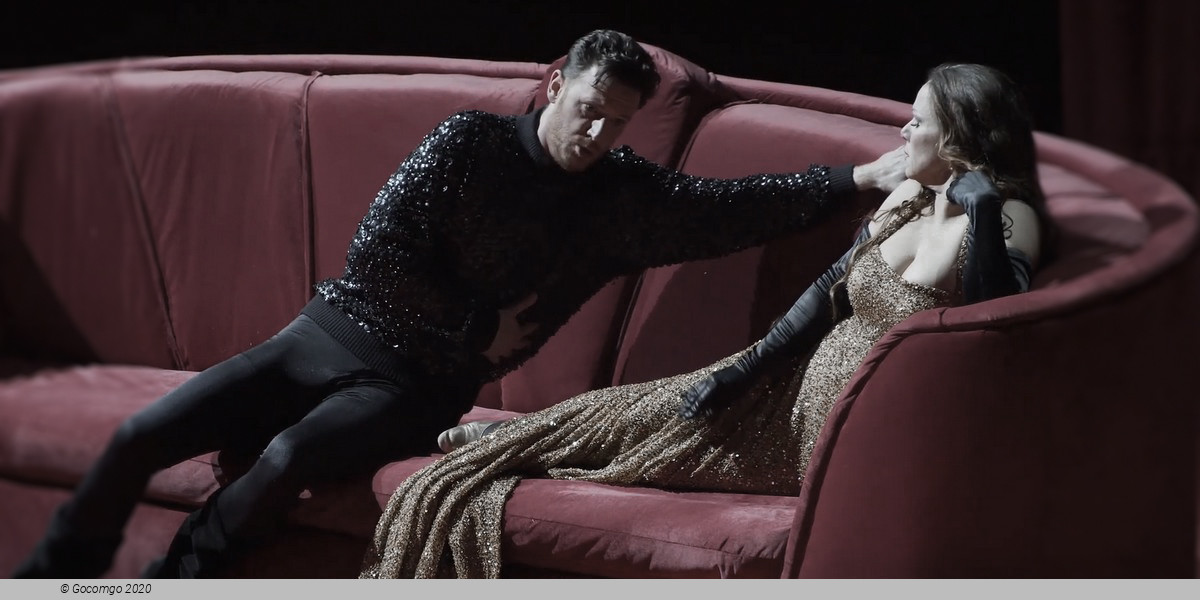
With the world premiere of his one-act opera, VIOLANTA, the 18-year-old Erich Wolfgang Korngold shifted overnight from child prodigy to one of the leading opera composers of his generation. For VIOLANTA not only heralded the arrival of a young maestro who was as independent as he was variegated in his musical palette, who had an unerring feel for how to render his vision on stage, and who could write melodies that were both expressive and catchy to boot; the 75-minute work to a libretto by Hans Müller, later to be known for co-writing THE WHITE HORSE INN, also served notice that Korngold had caught a contemporary Viennese mood that encapsulated Art Nouveau, psychoanalysis and an end-of-days atmosphere, a quintessence framed by Freud, Klimt and Schnitzler – all mirrored perfectly in the storyline: Violanta, the wife of Venice’s governor, plots during Carnival to avenge, through assassination, her sister, who committed suicide after being seduced by Prince Alfonso. When the moment comes, however, she acknowledges her true motive: to snuff out her own desire to abandon herself to passion. She sacrifices herself to free herself from “lust and guilt”.

Spotlight
Laura Wilde’s first contact with the music of Erich Wolfgang Korngold coincided with the start of her career. In 2018 she got the chance to sing the main role in THE RING OF POLYKRATES at the Dallas Opera, the very work that shared a world-premiere tandem with VIOLANTA in 1916. Since then the young soprano from South Dakota has come on in leaps and bounds, appearing at venues such as the Metropolitan Opera, the Staatstheater Stuttgart and the English National Opera. With a repertoire ranging from Mozart to Britten, she has tilted towards German works, taking roles that include Wagner’s Sieglinde and Strauss’s Salome. Now she takes on Violanta, which may well make her the first singer to have featured in both of Korngold’s debut works as a composer of opera.

History
Premiere of this production: 28 March 1916, Nationaltheater München

Violanta is a one-act opera by Erich Wolfgang Korngold. The libretto is by the Austrian playwright Hans Müller-Einigen. It is Korngold's second opera, written when he was only seventeen years old.

Synopsis

The opera is set in 15th-century Venice, at the house of Simone Trovai, military commander of the Venetian Republic.

On the night of the great Carnival, Simone in vain searches his house for his wife Violanta. Ever since her sister Nerina committed suicide (after having been seduced by Alfonso, the Prince of Naples), she has been bent on vengeance. Simone is about to leave for the Carnival with the painter Giovanni Bracca, when Violanta appears. After dismissing Bracca, she reveals to Simone that she has (anonymously) arranged a meeting with Alfonso in their house, where she wants her husband to murder him. Initially Simone is horrified at this plan, but he finally succumbs to Violanta's promises and threats. The plan is that Violanta will receive Alfonso in her room, and once he is disarmed she will sing the Carnival song as a signal that Simone should enter and murder him.

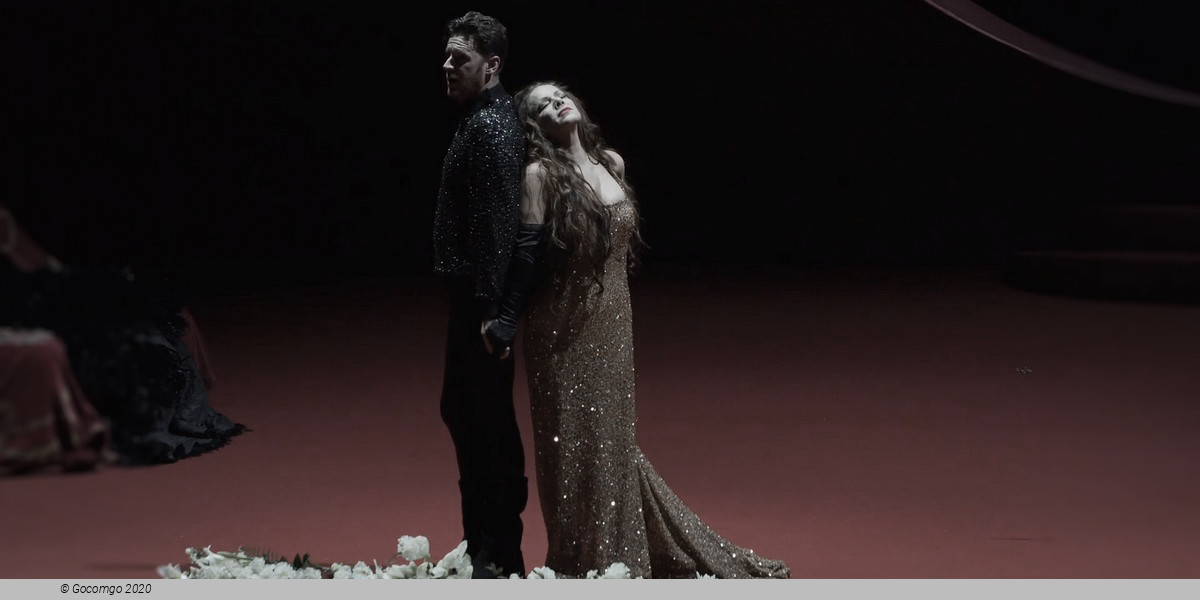
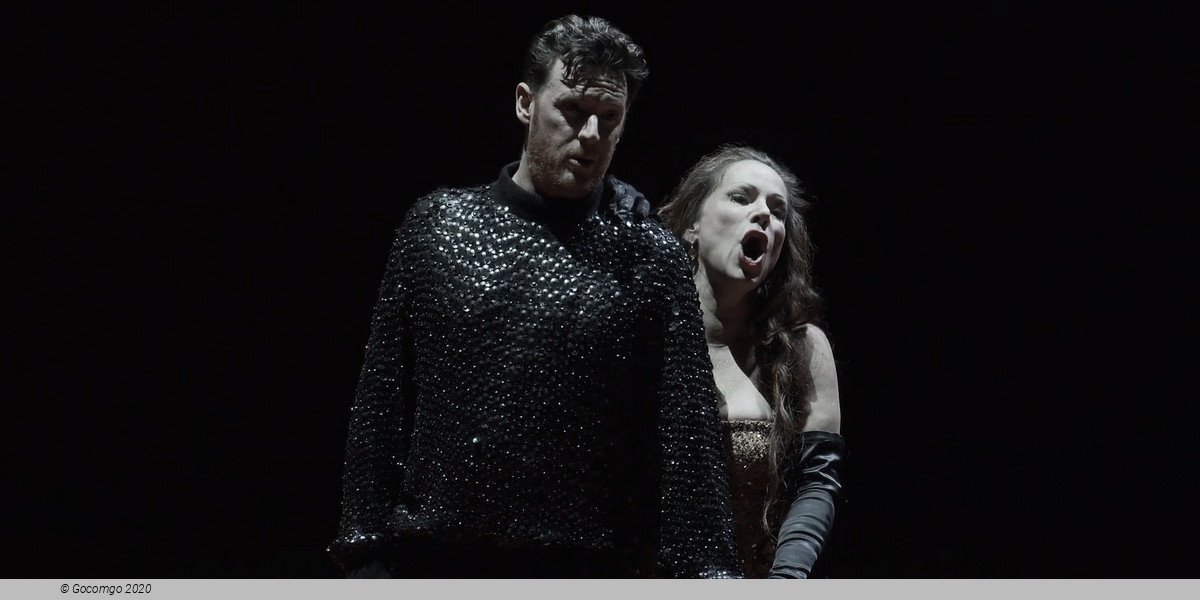
Alfonso arrives. During their meeting Violanta reveals her true identity and her intention to avenge her sister. However, when Alfonso explains to her the course of his life and talks about his longing for death, Violanta realises that she really loves him and refuses to give the signal. Violanta bemoans her fate, but Alfonso implores her to think only of the present moment: they embrace and sing of the sublimity of pure love.

Their ecstatic bliss is interrupted by Simone who calls out to his wife. The lovers realise that their dream is over, and spurred on by Alfonso Violanta sings the fateful song with hysterical abandon. Simone enters and tries to stab Alfonso, but Violanta interposes herself and is mortally wounded. She dies in Simone's arms.

Venue Info

Deutsche Oper Berlin - Berlin
Location   Bismarckstraße 35

The Deutsche Oper Berlin is an opera company located in the Charlottenburg district of Berlin, Germany. The resident building is the country's second-largest opera house and also home to the Berlin State Ballet. Since 2004 the Deutsche Oper Berlin, like the Staatsoper Unter den Linden (Berlin State Opera), the Komische Oper Berlin, the Berlin State Ballet, and the Bühnenservice Berlin (Stage and Costume Design), has been a member of the Berlin Opera Foundation.

The company's history goes back to the Deutsches Opernhaus built by the then independent city of Charlottenburg—the "richest town of Prussia"—according to plans designed by Heinrich Seeling from 1911. It opened on November 7, 1912 with a performance of Beethoven's Fidelio, conducted by Ignatz Waghalter. In 1925, after the incorporation of Charlottenburg by the 1920 Greater Berlin Act, the name of the resident building was changed to Städtische Oper (Municipal Opera).

With the Nazi seizure of power in 1933, the opera was under control of the Reich Ministry of Public Enlightenment and Propaganda. Minister Joseph Goebbels had the name changed back to Deutsches Opernhaus, competing with the Berlin State Opera in Mitte controlled by his rival, the Prussian minister-president Hermann Göring. In 1935, the building was remodeled by Paul Baumgarten and the seating reduced from 2300 to 2098. Carl Ebert, the pre-World War II general manager, chose to emigrate from Germany rather than endorse the Nazi view of music, and went on to co-found the Glyndebourne opera festival in England. He was replaced by Max von Schillings, who acceded to enact works of "unalloyed German character". Several artists, like the conductor Fritz Stiedry and the singer Alexander Kipnis, followed Ebert into emigration. The opera house was destroyed by a RAF air raid on 23 November 1943. Performances continued at the Admiralspalast in Mitte until 1945. Ebert returned as general manager after the war.

After the war, in what was now West Berlin, the company, again called Städtische Oper, used the nearby Theater des Westens; its opening production was Fidelio, on 4 September 1945. Its home was finally rebuilt in 1961 but to a much-changed, sober design by Fritz Bornemann. The opening production of the newly named Deutsche Oper, on 24 September, was Mozart's Don Giovanni.

Past Generalmusikdirektoren (GMD, general music directors) have included Bruno Walter, Kurt Adler, Ferenc Fricsay, Lorin Maazel, Gerd Albrecht, Jesús López-Cobos, and Christian Thielemann. In October 2005, the Italian conductor Renato Palumbo was appointed GMD as of the 2006/2007 season. In October 2007, the Deutsche Oper announced the appointment of Donald Runnicles as their next Generalmusikdirektor, effective August 2009, for an initial contract of five years. Simultaneously, Palumbo and the Deutsche Oper mutually agreed to terminate his contract, effective November 2007.

On the evening of 2 June 1967, Benno Ohnesorg, a student taking part in the German student movement, was shot in the streets around the opera house. He had been protesting against the visit to Germany by the Shah of Iran, who was attending a performance of Mozart's The Magic Flute.

In 1986 the American Berlin Opera Foundation was founded.

In April 2001, the Italian conductor Giuseppe Sinopoli died at the podium while conducting Verdi's Aida, at age 54.

In September 2006, the Deutsche Oper's Intendantin (general manager) Kirsten Harms drew criticism after she cancelled the production of Mozart's opera Idomeneo by Hans Neuenfels, because of fears that a scene in it featuring the severed heads of Jesus, Buddha and Muhammad would offend Muslims, and that the opera house's security might come under threat if violent protests took place. Critics of the decision include German Ministers and the German Chancellor Angela Merkel. The reaction from Muslims has been mixed — the leader of Germany's Islamic Council welcomed the decision, whilst a leader of Germany's Turkish community, criticising the decision, said:

This is about art, not about politics ... We should not make art dependent on religion — then we are back in the Middle Ages.

At the end of October 2006, the opera house announced that performances of Mozart's opera Idomeneo would then proceed. Kirsten Harms, after announcing in 2009 that she would not renew her contract beyond 2011, was bid farewell in July of that year.

Important Info
Type: Opera
City: Berlin, Germany
Duration: 1h 30min
Acts: 1
Sung in: German
Titles in: German,English

E-tickets: Print at home or at the box office of the event if so specified. You will find more information in your booking confirmation email.

You can only select the category, and not the exact seats.
If you order 2 or 3 tickets: your seats will be next to each other.
If you order 4 or more tickets: your seats will be next to each other, or, if this is not possible, we will provide a combination of groups of seats (at least in pairs, for example 2+2 or 2+3).

From
$ 102
Top of page