
Deutsche Oper Berlin tickets 27 June 2026 - Zar und Zimmermann (Tsar and Carpenter) | GoComGo.com

Zar und Zimmermann (Tsar and Carpenter)

Deutsche Oper Berlin, Main Stage, Berlin, Germany
All photos (6)
Select date and time
7:30 PM
From
US$ 100

E-tickets: Print at home or at the box office of the event if so specified. You will find more information in your booking confirmation email.

You can only select the category, and not the exact seats.
If you order 2 or 3 tickets: your seats will be next to each other.
If you order 4 or more tickets: your seats will be next to each other, or, if this is not possible, we will provide a combination of groups of seats (at least in pairs, for example 2+2 or 2+3).

Important Info
Type: Opera
City: Berlin, Germany
Starts at: 19:30
Acts: 3
Intervals: 1
Duration: 2h 45min
Sung in: German
Titles in: German,English

E-tickets: Print at home or at the box office of the event if so specified. You will find more information in your booking confirmation email.

You can only select the category, and not the exact seats.
If you order 2 or 3 tickets: your seats will be next to each other.
If you order 4 or more tickets: your seats will be next to each other, or, if this is not possible, we will provide a combination of groups of seats (at least in pairs, for example 2+2 or 2+3).

Cast
Performers
Conductor: Antonello Manacorda
Baritone: Artur Garbas (Peter the Great)
Chorus: Chorus of the Deutsche Oper Berlin
Soprano: Nadja Mchantaf (Marie)
Ballet company: Opera Ballet of the Deutsche Oper Berlin
Orchestra: Orchestra of the Deutsche Oper Berlin
Tenor: Philipp Kapeller (Peter Ivanov)
Creators
Composer: Albert Lortzing
Director: Martin G. Berger
Overview

Comic opera in three acts

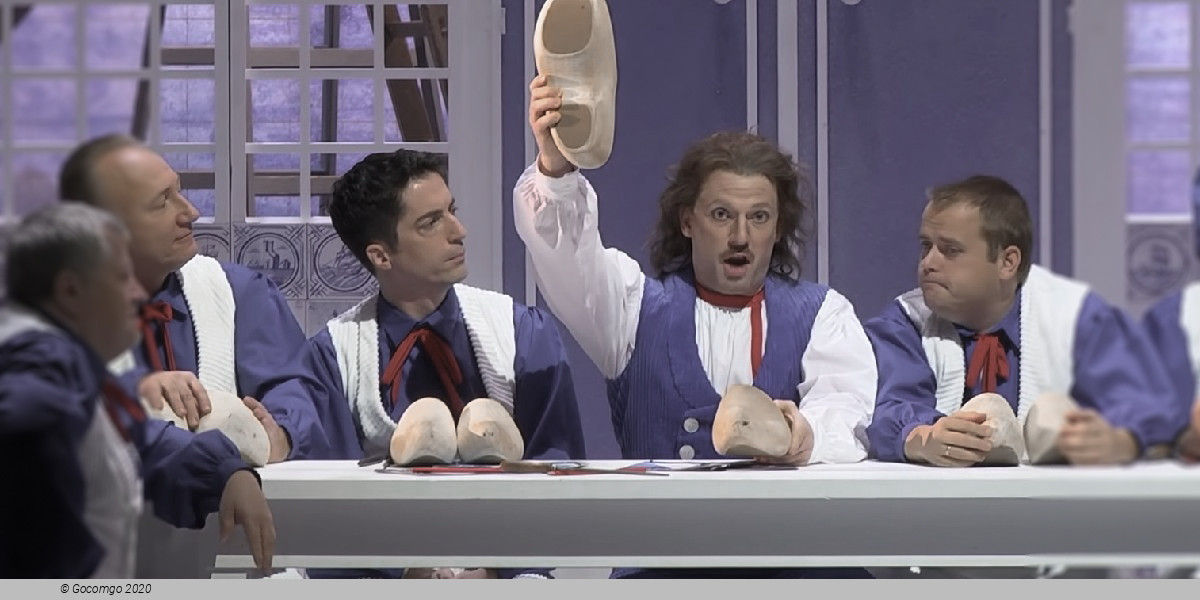
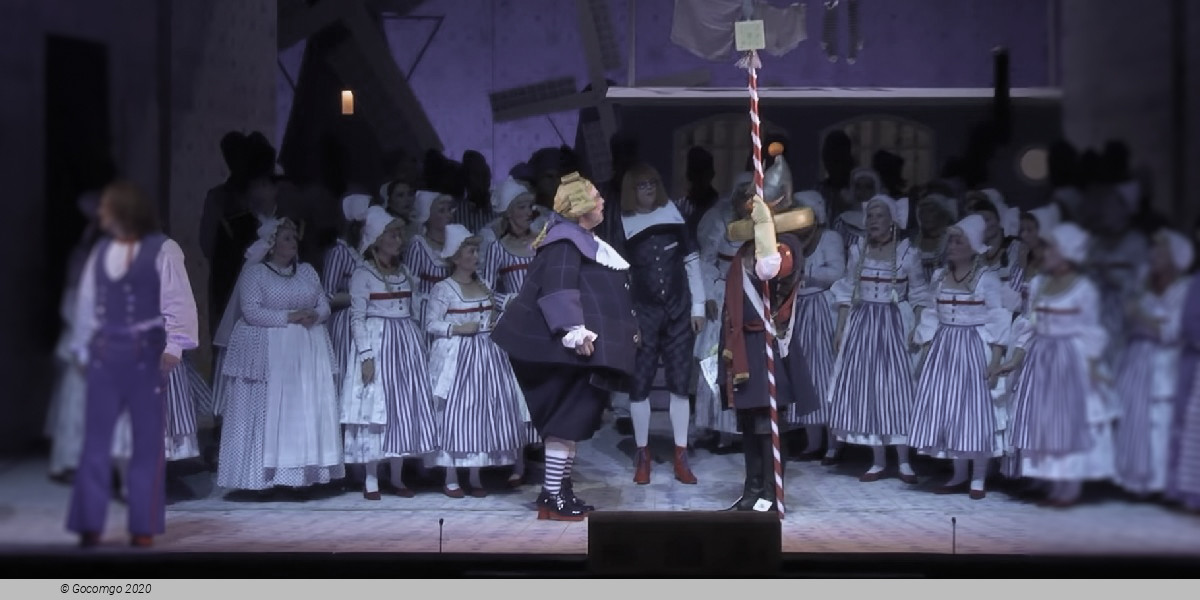
Few works have slipped from the programmes of German-language opera houses to the extent experienced by the operas of Albert Lortzing. Where works such as THE POACHER, THE ARMOURER and UNDINE were still fixtures in the repertoire only thirty years ago, they have now all but vanished from the calendars of theatre venues. Not even Lortzing’s greatest triumph, his comedy of errors CSAR AND CARPENTER (1837), has escaped the neglect – and this despite old chestnuts like the “Clog Dance” and the aria “Lebe wohl, mein flandrisch Mädchen.” Doubly surprising if you consider that this tale of Tsar Peter the Great, who strikes up a friendship with an army deserter with the exact same name while acquiring the skills of a carpenter incognito in a Dutch shipyard, was arguably one of the best musical comedies of its time, with Lortzing’s protagonists retaining all their relatable flaws and yearnings in the face of all their ups and downs. The young deserter, who just wants a quiet life, the feisty Marie, who’s determined to decide her own path, the Tsar with his thinly veiled leanings to violent domination, and van Bett as the mayor and a loveable caricature of a German bigwig… all these characters confer a timeless humanity on the comedy.

Conductor Antonello Manacorda and director Martin G. Berger have now set about showcasing these qualities inherent to Lortzing’s masterpiece at the Deutsche Oper Berlin. In his capacity as long-standing Principal Conductor of the Kammerakademie Potsdam, Manacorda brings to the task his experience of staging period pieces and his knack of timing in Rossini’s comic operas. Berlin director Martin G. Berger, for his part, has made a recent name for himself as one of the most accomplished cross-over practitioners between the opera, operetta and musical genres – often tweaking dialogues himself to add a fresh, modern touch – skills that will doubtless benefit CSAR AND CARPENTER too.

Spotlight
Nadja Mchantaf is a known quantity to Berlin opera fans. Over the last nine years she has become one of the brightest stars in the firmament of the Komische Oper, where she has sung some of the great roles of the lyric soprano fach ranging from Mozart’s heroines to Debussy’s Mélisande and Puccini’s Musetta and Mimì. Quite apart from her voice, her agility as a performer will have raised her game even more: alongside her training as a singer Mchantaf pursued a successful career as a competitive ballroom dancer, with a sideline in classical en pointe ballet as evinced in her debut at the Behrenstrasse opera house as Massenet’s eponymous heroine, Cendrillon. And who can say that this skill set is not also standing her in good stead for the clog dance in CSAR AND CARPENTER?

History
Premiere of this production: 22 December 1837, Stadttheater, Leipzig

Zar und Zimmermann (Tsar and Carpenter) is a comic opera in three acts, music by Albert Lortzing, libretto by the composer after Georg Christian Römer's Der Bürgermeister von Saardam, oder Die zwei Peter, itself based on the French play Le Bourgmestre de Saardam, ou Les deux Pierre by Anne-Honoré-Joseph Duveyrier de Mélésville, Jean-Toussaint Merle, and Eugène Centiran de Boirie. Ultimately, it goes back to the historical Grand Embassy of Peter the Great. Gaetano Donizetti had set the same story in his 1827 opera Il borgomastro di Saardam.

Synopsis

The action takes place in Saardam, Holland, in 1698.

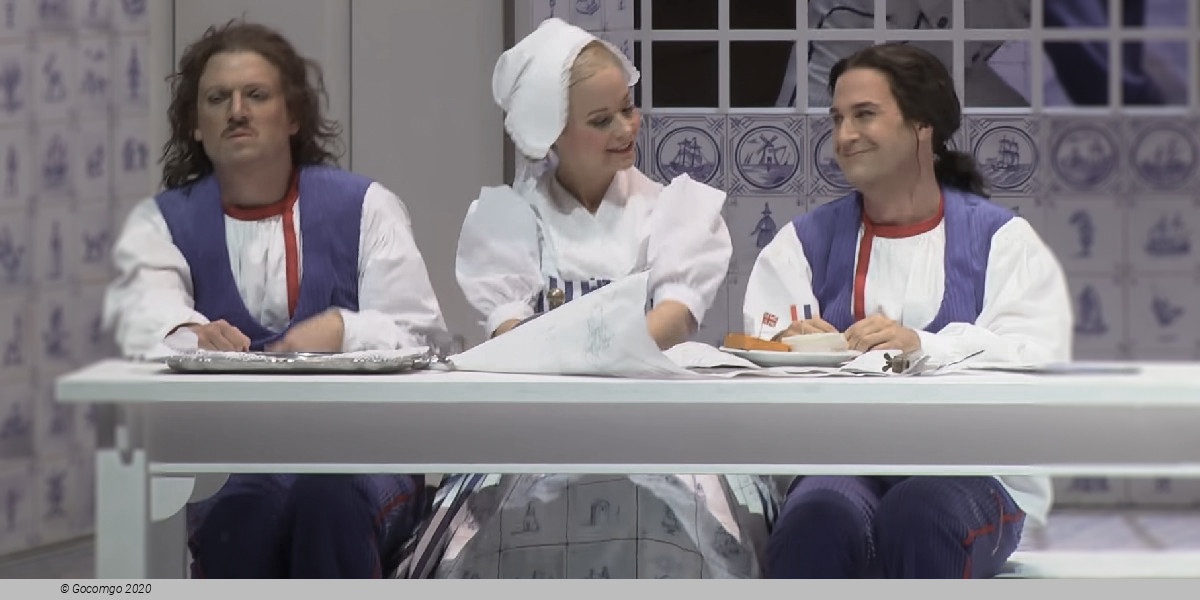
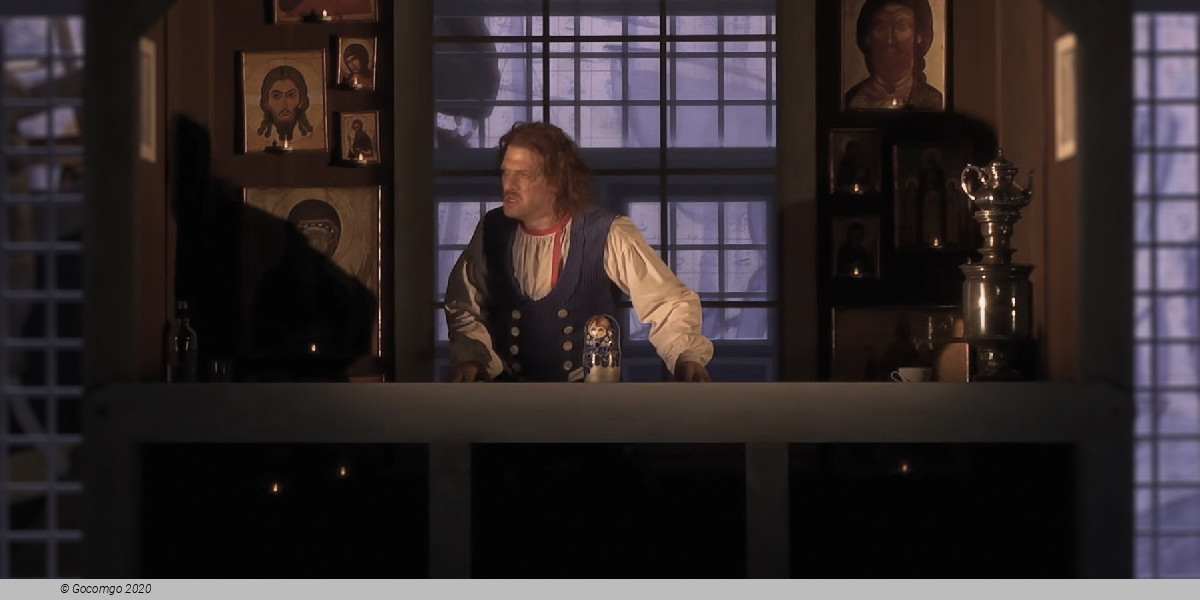
Peter the Great of Russia, disguised as Peter Michaelov, a common laborer, is working in a shipyard in the Dutch town of Saardam, to learn shipbuilding techniques for his navy. He befriends a fellow Russian also working in the yard, Peter Ivanov, a deserter from the Russian army. Peter Ivanov is in love with Marie, the niece of Van Bett, the Burgomaster of Saardam. Tsar Peter is told of trouble in Russia, and decides to return home.

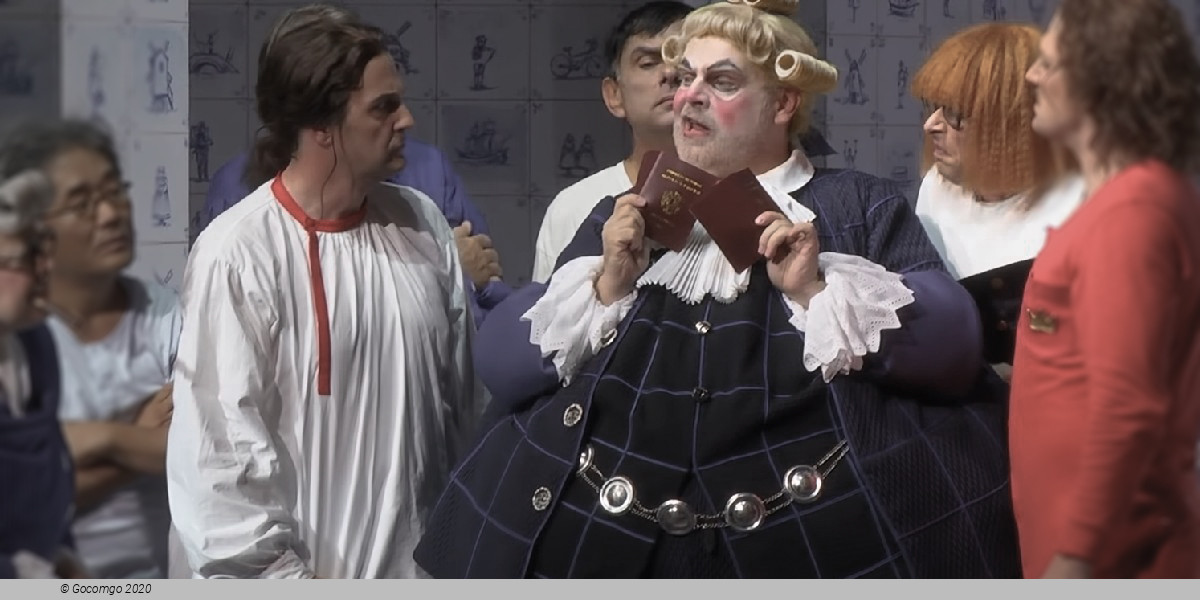
Van Bett has been told to find a foreigner named Peter in the shipyard. The English ambassador, Syndham, and the French ambassador, Chateauneuf, have both heard the rumor of Tsar Peter's disguised presence and are looking for him, which convinces Van Bett that "Peter" is an important man. But in confusion, he identifies the wrong Peter. Chateauneuf recognises the real Tsar, and concludes an alliance with him. Syndham is fooled and presents Peter Ivanov with a passport.

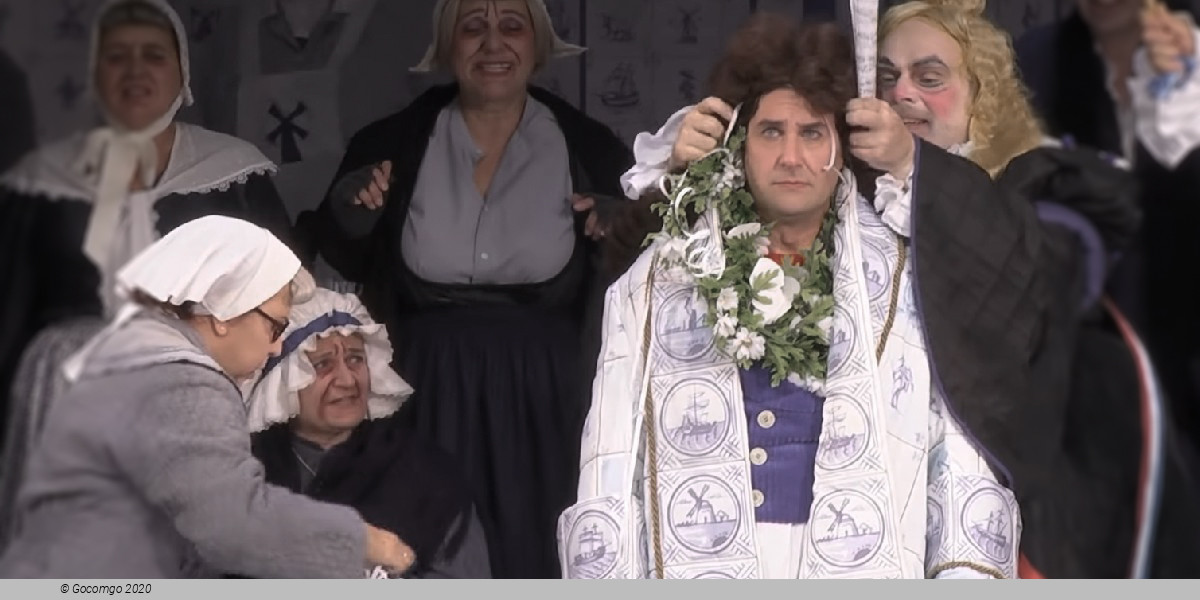
Van Bett, very confused, salutes Peter Ivanov with an elaborate ceremony. Peter Ivanov gives the passport to Tsar Peter, who uses it to leave quietly, having first blessed Peter Ivanov's marriage to Marie, and appointed him to a high office in Russia.

Venue Info

Deutsche Oper Berlin - Berlin
Location   Bismarckstraße 35

Venue's Capacity: 1698

The Deutsche Oper Berlin is an opera company located in the Charlottenburg district of Berlin, Germany. The resident building is the country's second-largest opera house and also home to the Berlin State Ballet. Since 2004 the Deutsche Oper Berlin, like the Staatsoper Unter den Linden (Berlin State Opera), the Komische Oper Berlin, the Berlin State Ballet, and the Bühnenservice Berlin (Stage and Costume Design), has been a member of the Berlin Opera Foundation.

The company's history goes back to the Deutsches Opernhaus built by the then independent city of Charlottenburg—the "richest town of Prussia"—according to plans designed by Heinrich Seeling from 1911. It opened on November 7, 1912 with a performance of Beethoven's Fidelio, conducted by Ignatz Waghalter. In 1925, after the incorporation of Charlottenburg by the 1920 Greater Berlin Act, the name of the resident building was changed to Städtische Oper (Municipal Opera).

With the Nazi seizure of power in 1933, the opera was under control of the Reich Ministry of Public Enlightenment and Propaganda. Minister Joseph Goebbels had the name changed back to Deutsches Opernhaus, competing with the Berlin State Opera in Mitte controlled by his rival, the Prussian minister-president Hermann Göring. In 1935, the building was remodeled by Paul Baumgarten and the seating reduced from 2300 to 2098. Carl Ebert, the pre-World War II general manager, chose to emigrate from Germany rather than endorse the Nazi view of music, and went on to co-found the Glyndebourne opera festival in England. He was replaced by Max von Schillings, who acceded to enact works of "unalloyed German character". Several artists, like the conductor Fritz Stiedry and the singer Alexander Kipnis, followed Ebert into emigration. The opera house was destroyed by a RAF air raid on 23 November 1943. Performances continued at the Admiralspalast in Mitte until 1945. Ebert returned as general manager after the war.

After the war, in what was now West Berlin, the company, again called Städtische Oper, used the nearby Theater des Westens; its opening production was Fidelio, on 4 September 1945. Its home was finally rebuilt in 1961 but to a much-changed, sober design by Fritz Bornemann. The opening production of the newly named Deutsche Oper, on 24 September, was Mozart's Don Giovanni.

Past Generalmusikdirektoren (GMD, general music directors) have included Bruno Walter, Kurt Adler, Ferenc Fricsay, Lorin Maazel, Gerd Albrecht, Jesús López-Cobos, and Christian Thielemann. In October 2005, the Italian conductor Renato Palumbo was appointed GMD as of the 2006/2007 season. In October 2007, the Deutsche Oper announced the appointment of Donald Runnicles as their next Generalmusikdirektor, effective August 2009, for an initial contract of five years. Simultaneously, Palumbo and the Deutsche Oper mutually agreed to terminate his contract, effective November 2007.

On the evening of 2 June 1967, Benno Ohnesorg, a student taking part in the German student movement, was shot in the streets around the opera house. He had been protesting against the visit to Germany by the Shah of Iran, who was attending a performance of Mozart's The Magic Flute.

In 1986 the American Berlin Opera Foundation was founded.

In April 2001, the Italian conductor Giuseppe Sinopoli died at the podium while conducting Verdi's Aida, at age 54.

In September 2006, the Deutsche Oper's Intendantin (general manager) Kirsten Harms drew criticism after she cancelled the production of Mozart's opera Idomeneo by Hans Neuenfels, because of fears that a scene in it featuring the severed heads of Jesus, Buddha and Muhammad would offend Muslims, and that the opera house's security might come under threat if violent protests took place. Critics of the decision include German Ministers and the German Chancellor Angela Merkel. The reaction from Muslims has been mixed — the leader of Germany's Islamic Council welcomed the decision, whilst a leader of Germany's Turkish community, criticising the decision, said:

This is about art, not about politics ... We should not make art dependent on religion — then we are back in the Middle Ages.

At the end of October 2006, the opera house announced that performances of Mozart's opera Idomeneo would then proceed. Kirsten Harms, after announcing in 2009 that she would not renew her contract beyond 2011, was bid farewell in July of that year.

Important Info
Type: Opera
City: Berlin, Germany
Starts at: 19:30
Acts: 3
Intervals: 1
Duration: 2h 45min
Sung in: German
Titles in: German,English
Top of page