

Warsaw Grand Theatre - Polish National Opera (Teatr Wielki) tickets 21 June 2026 - Romeo and Juliet | GoComGo.com

Romeo and Juliet

Warsaw Grand Theatre - Polish National Opera (Teatr Wielki), Moniuszko Auditorium, Warsaw, Poland
All photos (7)
Select date and time
6 PM

E-tickets: Print at home or at the box office of the event if so specified. You will find more information in your booking confirmation email.

You can only select the category, and not the exact seats.
If you order 2 or 3 tickets: your seats will be next to each other.
If you order 4 or more tickets: your seats will be next to each other, or, if this is not possible, we will provide a combination of groups of seats (at least in pairs, for example 2+2 or 2+3).

Important Info
Type: Opera
City: Warsaw, Poland
Starts at: 18:00
Acts: 5
Sung in: French
Titles in: Polish,English

E-tickets: Print at home or at the box office of the event if so specified. You will find more information in your booking confirmation email.

You can only select the category, and not the exact seats.
If you order 2 or 3 tickets: your seats will be next to each other.
If you order 4 or more tickets: your seats will be next to each other, or, if this is not possible, we will provide a combination of groups of seats (at least in pairs, for example 2+2 or 2+3).

Cast
Performers
Conductor: Robert Houssart
Soprano: Amina Edris (Juliette)
Tenor: Bekhzod Davronov (Roméo)
Chorus: Chorus of the Polish National Opera
Orchestra: Orchestra of the Polish National Opera
Creators
Composer: Charles Gounod
Director: Barbara Wysocka
Librettist: Jules Barbier
Librettist: Michel Carré
Overview

In her production created for Semperoper Dresden, Barbara Wysocka demonstrates that the story of Romeo and Juliet is deeply relevant today. She proves how the Shakespearian story resonates with the present-day realities as a tale of two people who desperately look for human connection in a world where love and intimacy are foreign concepts.

Wysocka does not allude to the current political events. She focuses on the failure of the system and the fact that a society does not need a majority to inflict violence. This is a world that promotes conflict, forces individuals to take sides, and takes away people’s privacy. In the midst of it all, two people are on the lookout for love.

The history of Romeo and Juliet is one of the best-known cultural tropes reproduced in theatre, musical, and film. Composers discovered the power of the Verona lovers’ tragedy already in the 19th century. One of them was the prominent French composer Charles Gounod, who wrote sacred music, oratorios, songs, and fared well on the operatic scene. Romeo and Juliet is his most popular work for the stage, alongside Faust. The opera won acclaim immediately after its premiere at the1867 Paris Exposition, quickly gaining renown in Europe as well as the United States.

This was not, however, the first 19th-century opera exploring the Romeo and Juliet trope. The story had earlier inspired Vincenzo Bellini and Hector Berlioz, among others. Penned by Jules Barbier and Michel Carré, the libretto largely remains faithful to the original, although it relies on David Garrick’s edition of the Shakespearian drama. The famous 18th-century actor and playwright rid the play of controversial fragments that were seen as potentially offensive and revised the ending, adding a scene where the two protagonists bid their final farewells before dying. Gounod’s version passes over the social aspect of the doomed relationship: the warring families do not reconcile in the face of the tragedy. Instead, the opera focuses on the lovers’ individual tragedy. The eponymous characters’ solo parts shed light on their personalities: Juliet reveals her vivacious nature through the coloratura waltz aria Je veux vivre, while passionate Romeo pours his heart into the cavatina Ah! lève-toi soleil!. Central to the opera are four love duets, each capturing a different stage of Romeo and Juliet’s relationship. Gounod illustrates their infatuation with a charming minuet, then goes on to chart the development of their relationship, forced break-up, and ultimate end in the face of death. The charming melodies, subtle harmonies, and sophisticated orchestration enable the composer to navigate between tragedy and lyricism.

Production: Semperoper Dresden

History
Premiere of this production: 27 April 1867, Théâtre Lyrique (Théâtre-Lyrique Impérial du Châtelet), Paris

Roméo et Juliette (Romeo and Juliet) is an opera in five acts by Charles Gounod to a French libretto by Jules Barbier and Michel Carré, based on Romeo and Juliet by William Shakespeare. It was first performed at the Théâtre Lyrique (Théâtre-Lyrique Impérial du Châtelet), Paris on 27 April 1867. This opera is notable for the series of four duets for the main characters and the waltz song "Je veux vivre" for the soprano.

Synopsis

The libretto follows the story of Shakespeare's play.

Act 1

Overture prologue:

A short chorus sets the scene of the rival families in Verona.

A masked ball in the Capulets’ palace

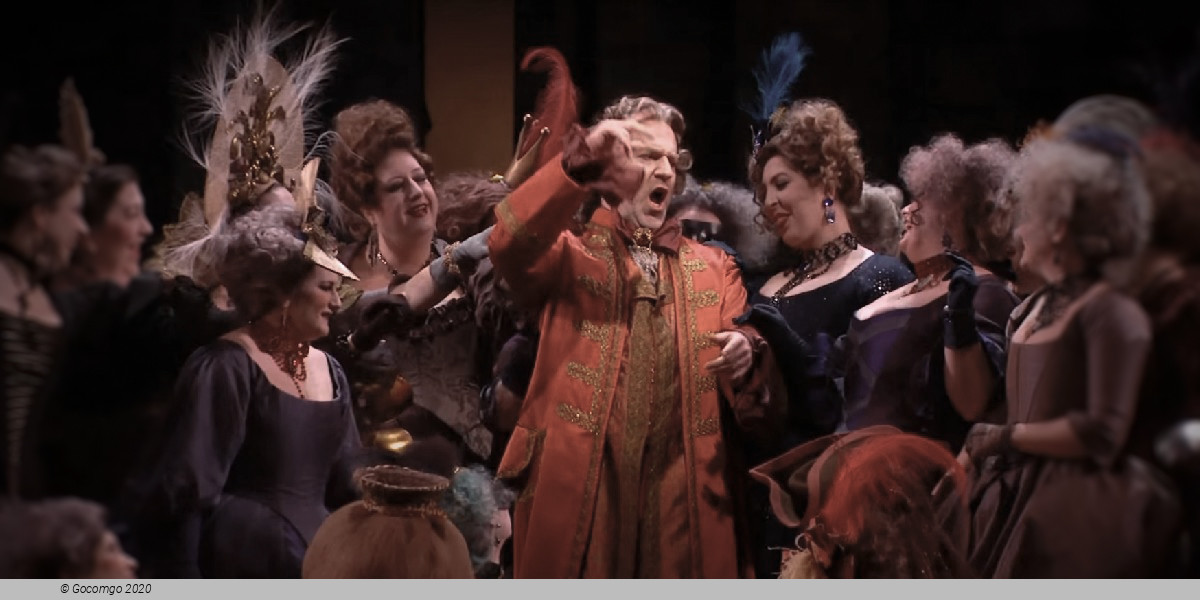
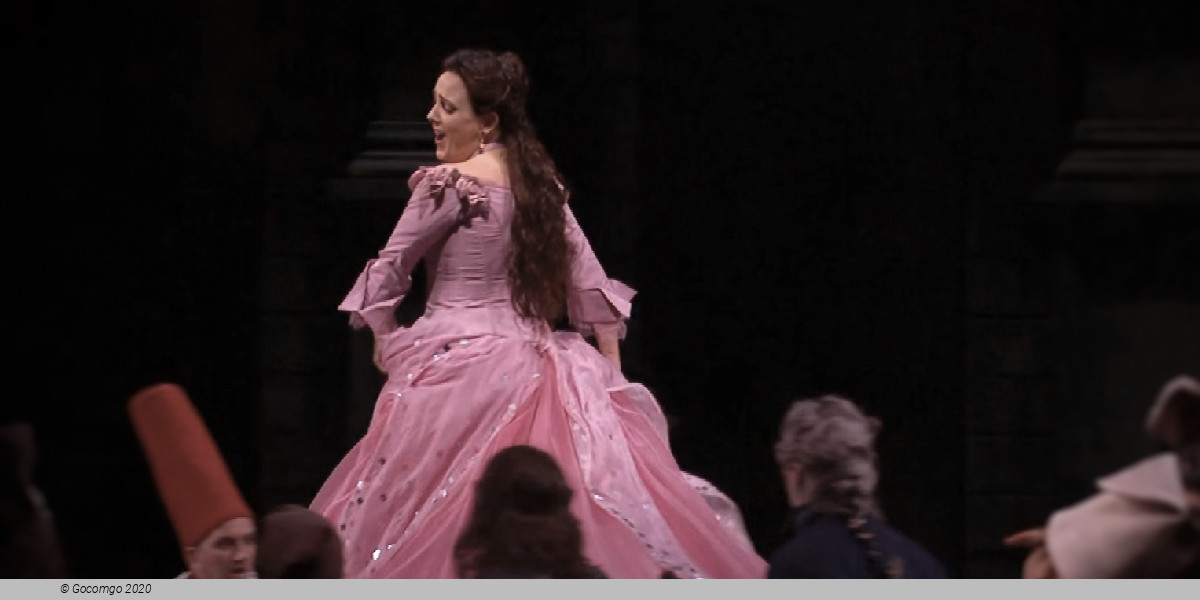
Tybalt talks to Pâris about Juliette, who appears with her father. Roméo, Mercutio, Benvolio and their friends enter, disguised, and Mercutio sings a ballad about Queen Mab, after which Juliette sings a joyful waltz song. The first meeting between Roméo and Juliette takes place, and they fall in love. But Tybalt re-appears and suspects that the hastily re-masked Roméo is his rival. While Tybalt wants immediate revenge, Capulet orders that the ball continue.

Act 2

The Capulets' garden

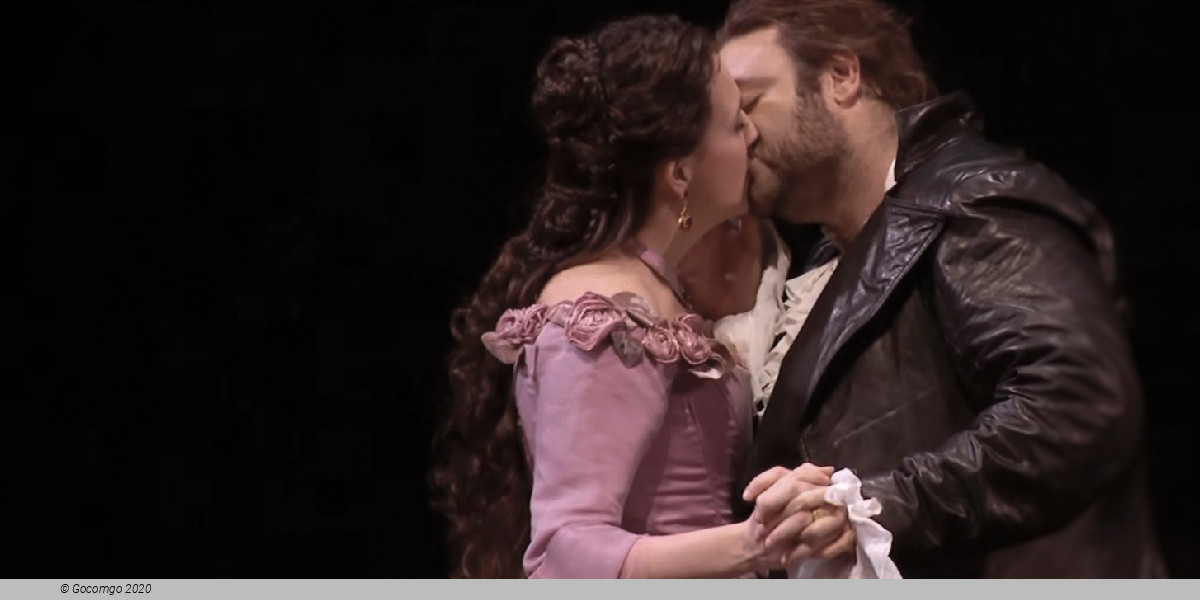
After Roméo's page Stephano has helped his master gain access, he reveals the two young lovers exchanging their vows of love.

Act 3

Press illustration of Act 3, scene 2, as staged in the original production
Scene 1: Laurent's cell

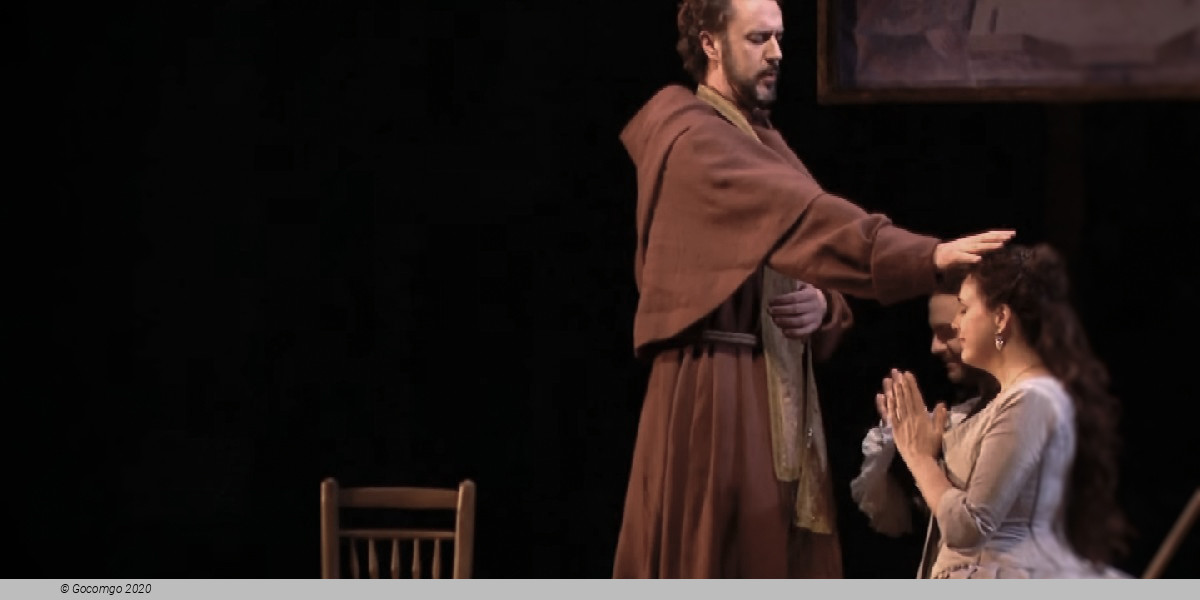
Roméo and Juliette, accompanied by Gertrude, go to the cell, and the wedding takes place. Laurent hopes that reconciliation between the houses of the Montagus and the Capulets may thus take place.

Scene 2: a street near Capulet's palace

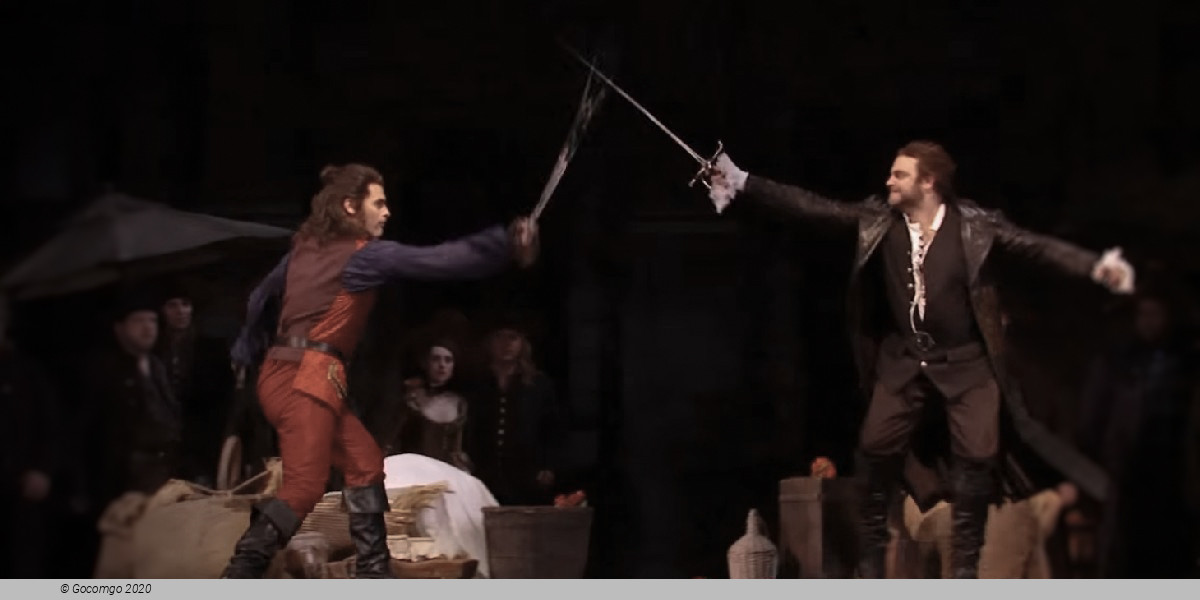
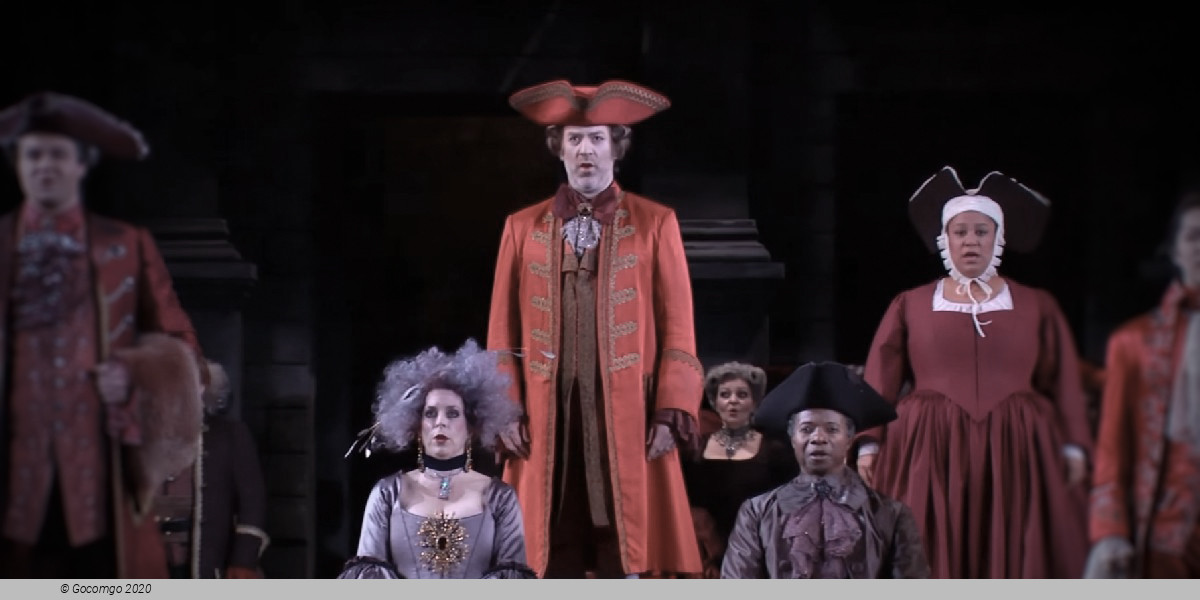
Stephano sings to attract the occupants into the street. Gregoire and Stephano skirmish as men from each family appear. The duel is first between Tybalt and Mercutio, who falls dead, and then between Roméo, determined to avenge his comrade, and Tybalt. Tybalt is killed by Roméo, who is banished by the Duke.

Act 4

Juliet's room at dawn

Roméo and Juliette are together and, after a long duet, Roméo departs for exile. Juliette's father comes to remind her of Tybalt's dying wish for Juliette to marry Count Pâris. The friar gives Juliette a draught which will cause her to sleep, so as to appear as if dead and, after being laid in the family tomb, it is planned that Roméo will awaken her and take her away. 

Act 5

Juliet's tomb

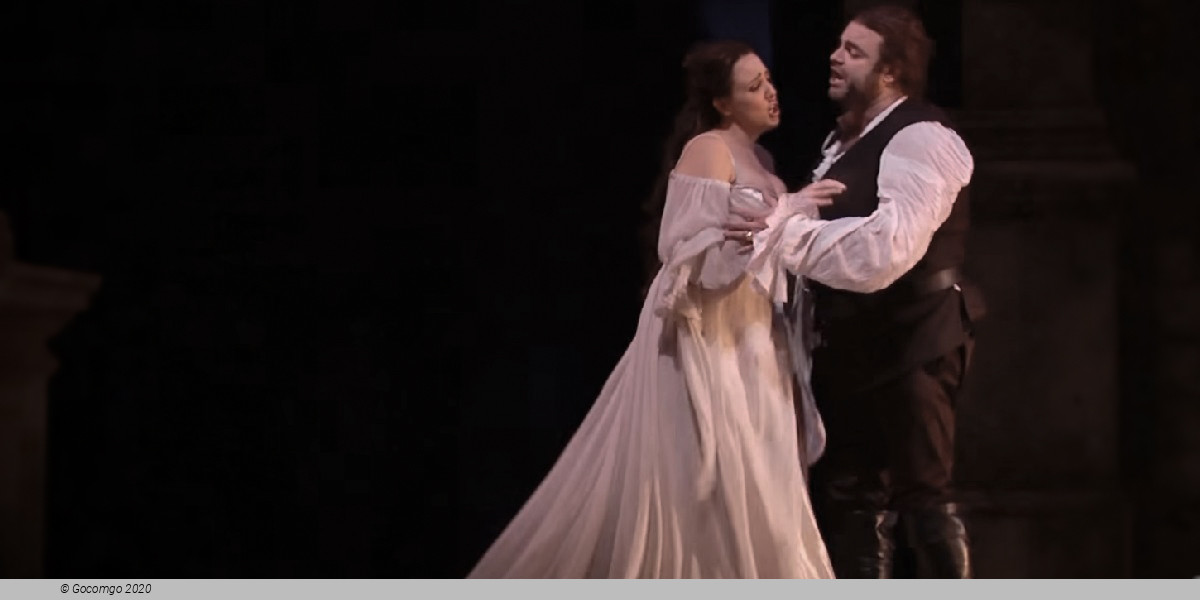
Roméo breaks into the tomb after having taken poison because he believes that Juliette is dead. When she awakes from the friar’s potion, the lovers' last duet is heard before the poison takes effect on Roméo. As her bridegroom weakens Juliette stabs herself, to be united with her lover in death.

Venue Info

Warsaw Grand Theatre - Polish National Opera (Teatr Wielki) - Warsaw
Location   plac Teatralny 1

The Grand Theatre in Warsaw is a theatre and opera complex situated on the historic Theatre Square in central Warsaw. The Warsaw Grand Theatre is home to the Polish National Ballet and is one of the largest theatrical venues in the world.

The Theatre was built on Theatre Square between 1825 and 1833, replacing the former building of Marywil, from Polish classicist designs by the Italian architect Antonio Corazzi of Livorno, to provide a new performance venue for existing opera, ballet and drama companies active in Warsaw. The building was remodeled several times and, in the period of Poland's political eclipse from 1795 to 1918, it performed an important cultural and political role in producing many works by Polish composers and choreographers.

It was in the new theatre that Stanisław Moniuszko's two best-known operas received their premieres: the complete version of Halka (1858), and The Haunted Manor (1865). After Frédéric Chopin, Moniuszko was the greatest figure in 19th-century Polish music, for in addition to producing his own works, he was director of the Warsaw Opera from 1858 until his death in 1872.

While director of the Grand Theatre, Moniuszko composed The Countess, Verbum Nobile, The Haunted Manor and Paria, and many songs that make up 12 Polish Songbooks.

Also, under Moniuszko's direction, the wooden Summer Theatre was built close by in the Saxon Garden. Summer performances were given annually, from the repertories of the Grand and Variety (Rozmaitości) theatres. Józef Szczublewski writes that during this time, even though the country had been partitioned out of political existence by its neighbors, the theatre flourished: "the ballet roused the admiration of foreign visitors; there was no equal troupe of comedians to be found between Warsaw and Paris, and Modrzejewska was an inspiration to drama."

The theatre presented operas by Władysław Żeleński, Ignacy Jan Paderewski, Karol Szymanowski and other Polish composers, as well as ballet productions designed by such choreographers as Roman Turczynowicz, Piotr Zajlich and Feliks Parnell. At the same time, the repertoire included major world opera and ballet classics, performed by the most prominent Polish and foreign singers and dancers. It was also here that the Italian choreographer Virgilius Calori produced Pan Twardowski (1874), which (in the musical arrangement first of Adolf Sonnenfeld and then of Ludomir Różycki) has for years been part of the ballet company's repertoire.

During the 1939 battle of Warsaw, the Grand Theatre was bombed and almost completely destroyed, with only the classical façade surviving. During the Warsaw Uprising of 1944 the Germans shot civilians in the burnt-out ruins. The plaque to the right of the main entrance commemorates the suffering and heroism of the victims of fascism.

Important Info
Type: Opera
City: Warsaw, Poland
Starts at: 18:00
Acts: 5
Sung in: French
Titles in: Polish,English
Top of page