Warsaw Grand Theatre - Polish National Opera (Teatr Wielki) tickets 21 March 2026 - Simon Boccanegra | GoComGo.com

Simon Boccanegra

Warsaw Grand Theatre - Polish National Opera (Teatr Wielki), Moniuszko Auditorium, Warsaw, Poland
All photos (7)
Select date and time
7 PM

E-tickets: Print at home or at the box office of the event if so specified. You will find more information in your booking confirmation email.

You can only select the category, and not the exact seats.
If you order 2 or 3 tickets: your seats will be next to each other.
If you order 4 or more tickets: your seats will be next to each other, or, if this is not possible, we will provide a combination of groups of seats (at least in pairs, for example 2+2 or 2+3).

Important Info
Type: Opera
City: Warsaw, Poland
Starts at: 19:00
Acts: 3
Intervals: 1
Duration: 3h
Sung in: Italian
Titles in: Polish

E-tickets: Print at home or at the box office of the event if so specified. You will find more information in your booking confirmation email.

You can only select the category, and not the exact seats.
If you order 2 or 3 tickets: your seats will be next to each other.
If you order 4 or more tickets: your seats will be next to each other, or, if this is not possible, we will provide a combination of groups of seats (at least in pairs, for example 2+2 or 2+3).

Cast
Performers
Conductor: Paolo Arrivabeni
Chorus: Chorus of the Polish National Opera
Soprano: Gabriela Legun (Amelia)
Orchestra: Orchestra of the Polish National Opera
Bass: Rafal Siwek (Jacopo Fiesco)
Baritone: Sebastian Catana (Simon Boccanegra)
Creators
Composer: Giuseppe Verdi
Director: Agnieszka Smoczyńska
Librettist: Francesco Maria Piave
Overview

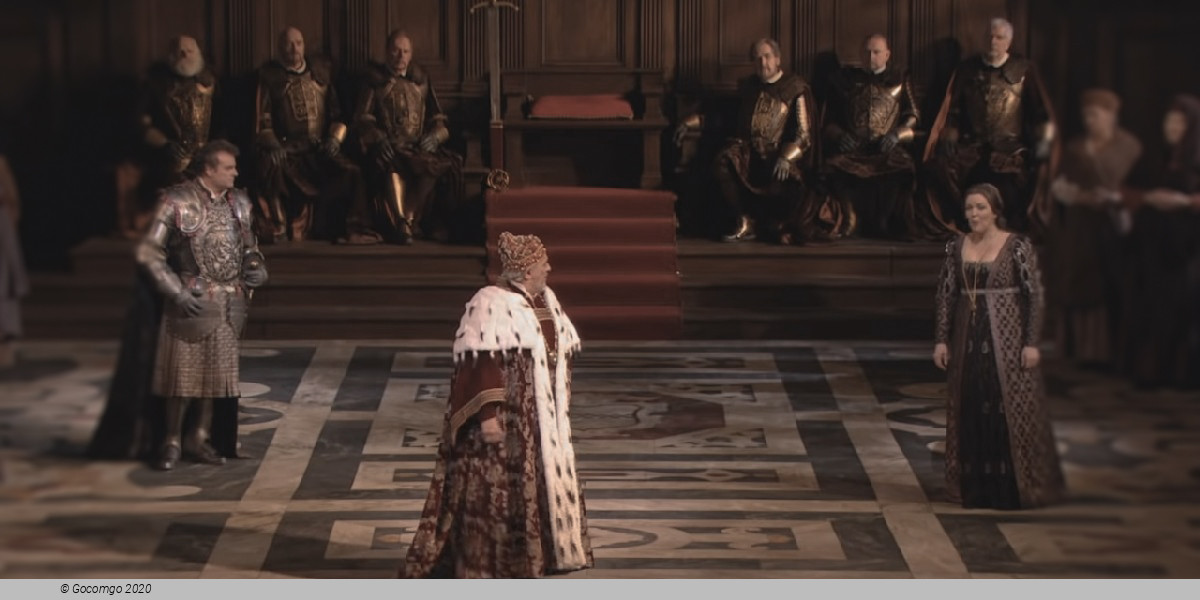
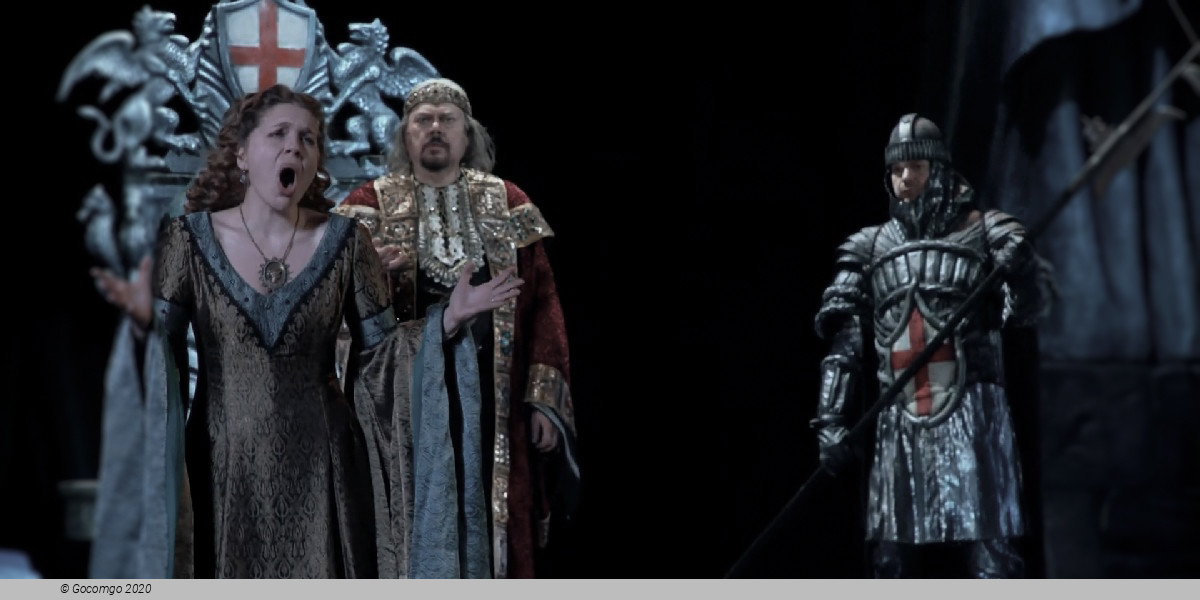
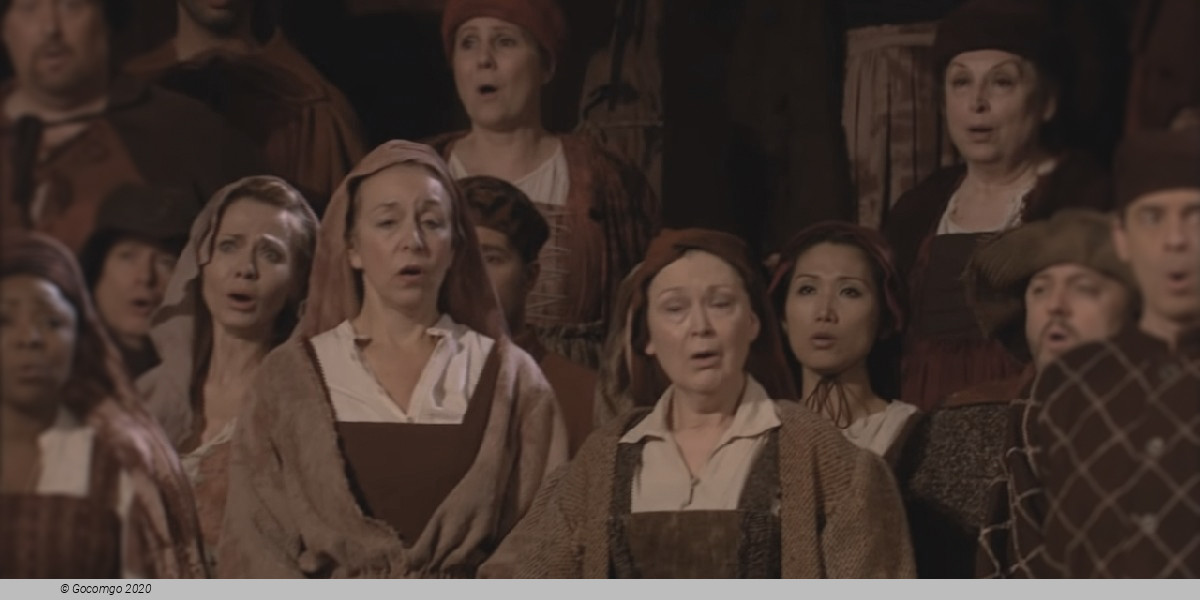
This production of Simon Boccanegra marks the opera debut of film director Agnieszka Smoczyńska. The story is not set in Genoa and is not provide commentary on the disputes between 19th-century political factions on the eve of Italy’s unification.

Instead, Smoczyńska moves the plot to a post-apocalyptic world of the future after the climate disaster. The change foregrounds the main theme of the opera: the symbolic tension between the elites and the ordinary people transported to a period when it becomes a catastrophe of biblical proportions. Is the production a prefiguration or a cautionary tale of the direction the world is heading?

Simon Boccanegra was written in the 1850s, at a time when Giuseppe Verdi, his confidence boosted by his growing fame, decided to challenge the operatic tradition. It is a gloomy opera dominated by low voices, a baritone in the lead male role, and devoid of supporting female characters. Its 1857 world premiere was not well received: nearing the end of his life, Arrigo Boito introduced far-reaching changes to the work together with the composer and it was the altered version completed in 1881 that finally triumphed on the world’s opera stages.

It is not hard at all to lose your way in the complexities meanders of the libretto, as a crucial part of the story that underpins the plot take place before the curtain goes up, while the characters as a result of the circumstances assume multiple identities which are revealed gradually in the course of the opera. At the same time, the story focuses on the universal topics that engaged Verdi’s attention: love, jealousy, longing, loyalty and betrayal.

A pirate commissioned by Genoa, Simon Boccanegra becomes the first doge of the city-state thanks to the support of the plebeians. Going into politics was not his goal in life, but he hopes that the position of power will win him favour with a man he hoped could become his father-in-law but who opposed Boccanegra’s liaison with his patrician daughter because of his low-class background. The story of the rather reluctant social climber has a tragic ending – the former corsair dies poisoned by his erstwhile ally and friend. Before his sad demise the doge manages, however, to find his long-lost daughter and secure her future with a loving man by her side. The finale of this story about the power of romantic and paternal love enmeshed in politics is bitter sweet.

The real Simon Boccanegra was the first doge of Genoa in the 14th century, yet the composer was more interested in the theatrical adaptation of his biography by Antonio García Gutiérrez, whose another play had been the basis of Verdi’s another opera with an equally convoluted plot, Il trovatore. Thanks to Gutiérrez’s drama, Verdi could step away from the characteristic operatic pathos and one-dimensional characters: the play supplied him with the things that he was really interested in: nuanced characters and insightful psychological portrayals. This is especially pronounced in the case of Boccanegra himself, a pirate who rises to the highest office in the city-state, becoming a statesman, a victim of political intrigues, and a character with a human face to him: an anguished lover and a domineering but tender father.

WARNING! Low intesity strobe lights are used during this performance.

History
Premiere of this production: 12 March 1857, La Fenice, Venice

Simon Boccanegra is an opera with a prologue and three acts by Giuseppe Verdi to an Italian libretto by Francesco Maria Piave, based on the play Simón Bocanegra (1843) by Antonio García Gutiérrez, whose play El trovador had been the basis for Verdi's 1853 opera, Il trovatore.

Synopsis

Time: The middle of the 14th century.
Place: In and around Genoa.

Prologue

(Act 1 in the 1857 original)
A piazza in front of the Fieschi palace

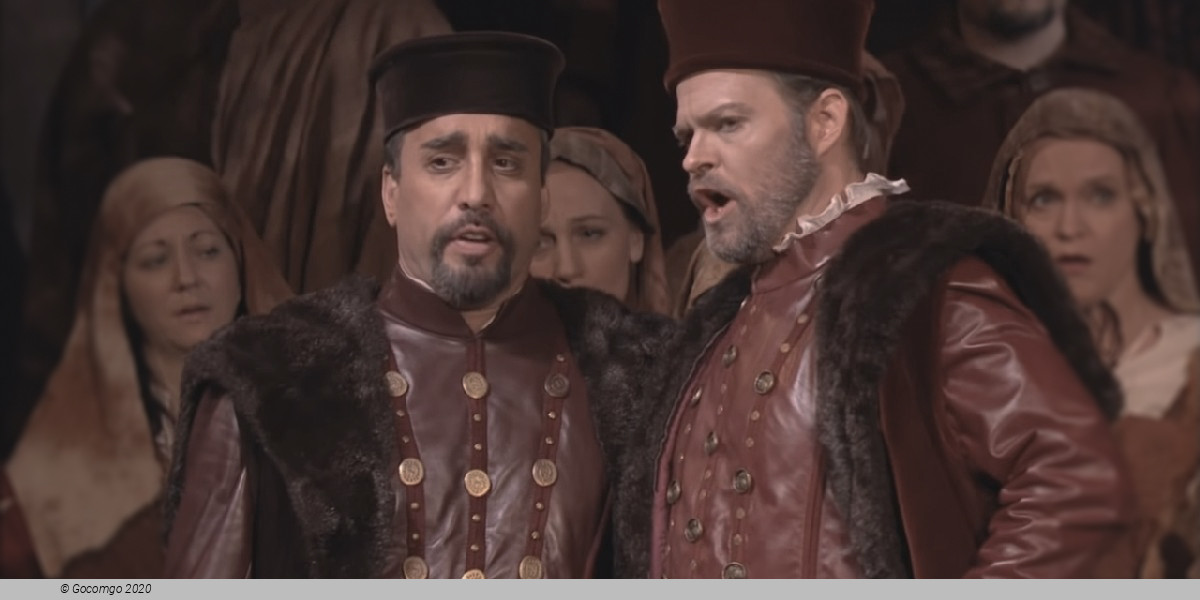
Paolo Albiani, a plebeian, tells his ally Pietro that in the forthcoming election of the Doge, his choice for the plebeian candidate is Simon Boccanegra. Boccanegra arrives and is persuaded to stand when Paolo hints that if Boccanegra becomes Doge, the aristocratic Jacopo Fiesco will surely allow him to wed his daughter Maria. When Boccanegra has gone, Paolo gossips about Boccanegra's love affair with Maria Fiesco – Boccanegra and Maria have had a child, and the furious Fiesco has locked his daughter away in his palace. Pietro rallies a crowd of citizens to support Boccanegra. After the crowd has dispersed, Fiesco comes out of his palace, stricken with grief; Maria has just died (Il lacerato spirito – "The tortured soul of a sad father"). He swears vengeance on Boccanegra for destroying his family. When he meets Boccanegra he does not inform him of Maria's death. Boccanegra offers reconciliation and Fiesco promises clemency only if Boccanegra lets him have his granddaughter. Boccanegra explains he cannot because the child, put in the care of a nurse, has vanished. He enters the palace and finds the body of his beloved just before crowds pour in, hailing him as the new Doge.

Act 1

(Act 2 in the 1857 original)
File:Figlia a tal nome io palpito - Simon Boccanegra.webm

Twenty-five years have passed. Historically the action has moved from 1339, the year of Simon's election in the prologue, forward to 1363, the year of the historical Simone Boccanegra's death – for acts 1, 2 and 3.
The Doge has exiled many of his political opponents and confiscated their property. Among them is Jacopo Fiesco, who has been living in the Grimaldi palace, using the name Andrea Grimaldi to avoid discovery and plotting with Boccanegra's enemies to overthrow the Doge. The Grimaldis have adopted an orphaned child of unknown parentage after discovering her in a convent (she is in fact Boccanegra's child, Maria – known as Amelia – named after her mother, and she is Fiesco's granddaughter). They called her Amelia, hoping that she would be the heir to their family's fortune, their sons having been exiled and their own baby daughter having died. Amelia is now a young woman.
Scene 1: A garden in the Grimaldi palace, before sunrise

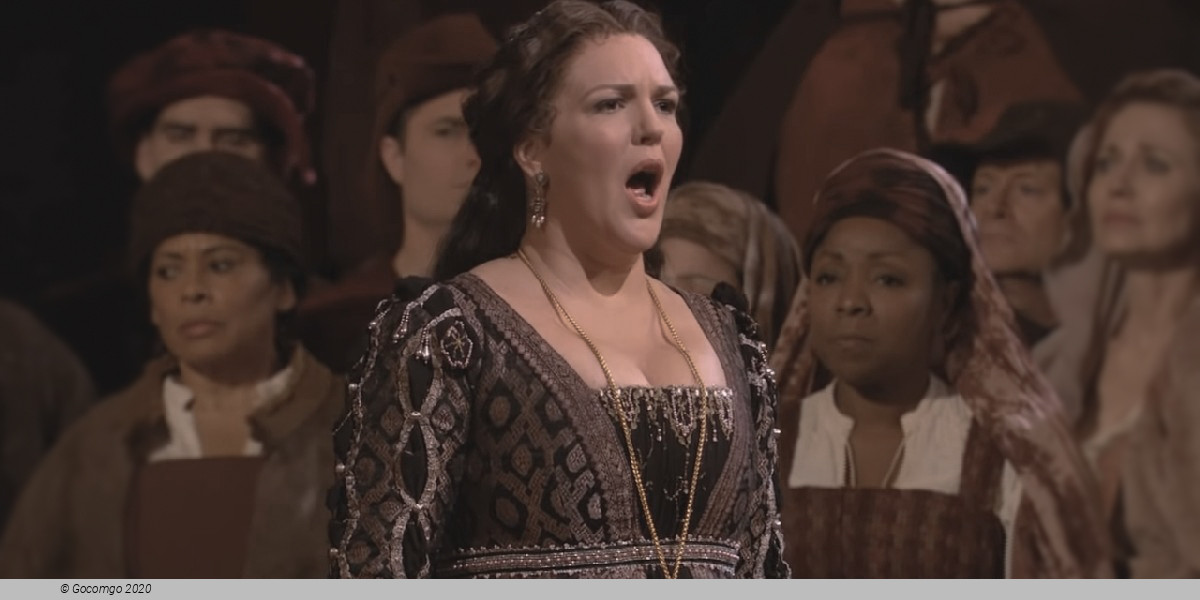
Amelia is awaiting her lover, Gabriele Adorno (Aria:Come in quest'ora bruna – "How in the morning light / The sea and stars shine brightly"). She suspects him of plotting against the Doge and when he arrives she warns him of the dangers of political conspiracy. Word arrives that the Doge is coming. Amelia, fearing that the Doge will force her to marry Paolo, now his councilor, urges Adorno to ask her guardian Andrea (in reality, Fiesco) for permission for them to marry: Sì, sì dell'ara il giubilo / contrasti il fato avverso – "Yes, let the joy of marriage be set against unkind fate".

1857 original version: the duet ended with a cabaletta (set to the same words as the 1881 text) then "a coda and a battery of chords followed by applause."
Fiesco reveals to Adorno that Amelia is not a Grimaldi, but a foundling adopted by the family. When Adorno says that he does not care, Fiesco blesses the marriage. Boccanegra enters and tells Amelia that he has pardoned her exiled brothers. She tells him that she is in love, but not with Paolo, whom she refuses to marry. Boccanegra has no desire to force Amelia into a marriage against her will. She tells him that she was adopted and that she has one souvenir of her mother, a picture in a locket. The two compare Amelia's picture with Boccanegra's, and Boccanegra realizes that she is his long-lost daughter. Finally reunited, they are overcome with joy. Amelia goes into the palace. Soon after, Paolo arrives to find out if Amelia has accepted him. Boccanegra tells him that the marriage will not take place. Furious, Paolo arranges for Amelia to be kidnapped.

Scene 2: The council chamber

1881 revision: This entire scene was added by Verdi and Boito in place of the 1857 scene, which took place in a large square in Genoa.
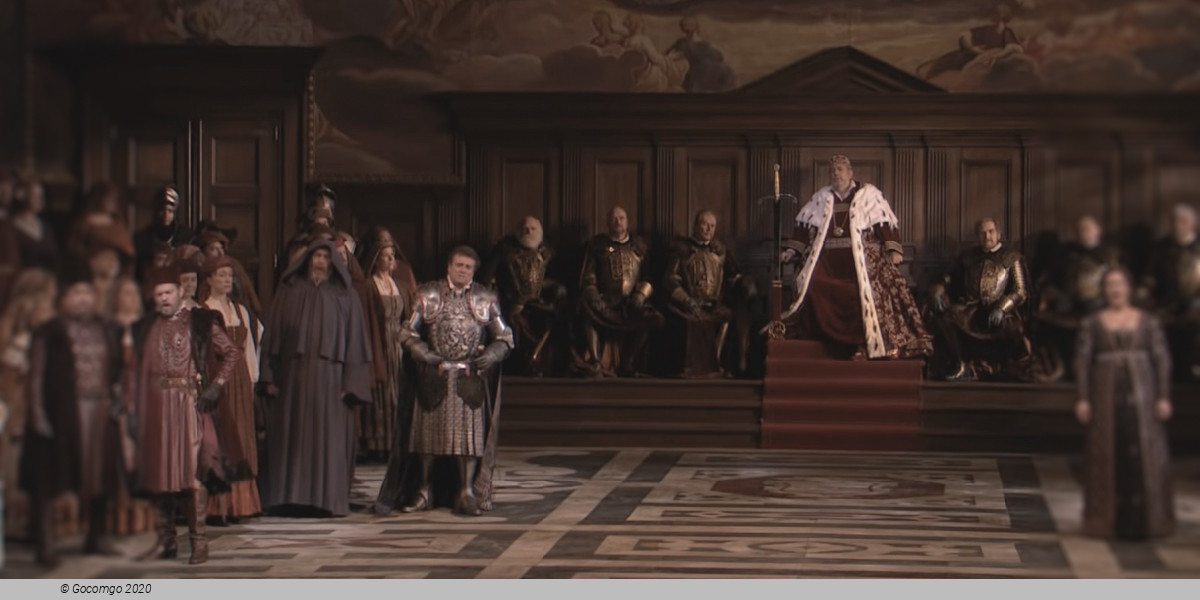
The Doge encourages his councillors to make peace with Venice. He is interrupted by the sounds of a mob calling for blood. Paolo suspects that his kidnapping plot has failed. The Doge prevents anyone leaving the council chamber and orders the doors to be thrown open. A crowd bursts in, chasing Adorno. Adorno confesses to killing Lorenzino, a plebeian, who had kidnapped Amelia, claiming to have done so at the order of a high-ranking official. Adorno incorrectly guesses the official was Boccanegra and is about to attack him when Amelia rushes in and stops him (Aria: Nell'ora soave – "At that sweet hour which invites ecstasy / I was walking alone by the sea"). She describes her abduction and escape. Before she is able to identify her kidnapper, fighting breaks out once more. Boccanegra establishes order and has Adorno arrested for the night (Aria: Plebe! Patrizi! Popolo! – "Plebeians! Patricians! Inheritors / Of a fierce history"). He orders the crowd to make peace and they praise his mercy. Realizing that Paolo is responsible for the kidnapping, Boccanegra places him in charge of finding the culprit. He then makes everyone, including Paolo, utter a curse on the kidnapper.

Act 2

(Act 3 in the 1857 original)
The Doge's apartments

1881 revised version: There are some small adjustments in this act which include expanding Paolo's opening aria, thus giving him greater stature in the work: Me stesso ho maledetto! / "I have cursed myself", the wording of which was originally: O doge ingrato ... ch'io rinunci Amelia e i suoi tesori? / "O ungrateful Doge! ... Must I give up Amelia and her charms".
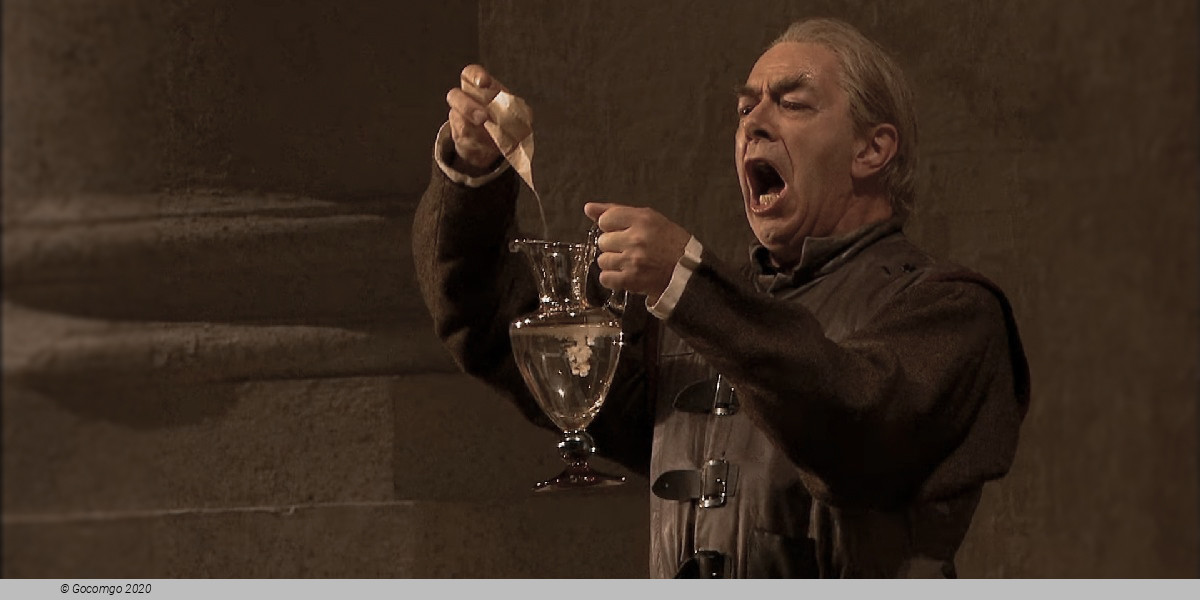
Paolo has imprisoned Fiesco. Determined to kill Boccanegra, Paolo pours a slow-acting poison into the Doge's water, and then tries to convince Fiesco to murder Boccanegra in return for his freedom. Fiesco refuses. Paolo next suggests to Adorno that Amelia is the Doge's mistress, hoping Adorno will murder Boccanegra in a jealous rage. Adorno is furious (Aria: Sento avvampar nell'anima – "I feel a furious jealousy / Setting my soul on fire"). Amelia enters the Doge's apartments, seeming to confirm Adorno's suspicions, and he angrily accuses her of infidelity. She claims only to love him, but cannot reveal her secret – that Boccanegra is her father – because Adorno's family were killed by the Doge. Adorno hides as Boccanegra is heard approaching. Amelia confesses to Boccanegra that she is in love with his enemy Adorno. Boccanegra is angry, but tells his daughter that if the young nobleman changes his ways, he may pardon him. He asks Amelia to leave, and then takes a drink of the poisoned water, which Paolo has placed on the table. He falls asleep. Adorno emerges and is about to kill Boccanegra, when Amelia returns in time to stop him. Boccanegra wakes and reveals to Adorno that Amelia is his daughter. Adorno begs for Amelia's forgiveness (Trio: Perdon, Amelia ... Indomito – "Forgive me, Amelia ... A wild, / Jealous love was mine"). Noises of fighting are heard – Paolo has stirred up a revolution against the Doge. Adorno promises to fight for Boccanegra, who vows that Adorno shall marry Amelia if he can crush the rebels.

Act 3
(Act 4 in the 1857 original)
1857 original version: Act 4 opened with a double male voice chorus, and a confused dialogue involving references to details in the original play.
Inside the Doge's palace

The uprising against the Doge has been put down. Paolo has been condemned to death for fighting with the rebels against the Doge. Fiesco is released from prison by the Doge's men. On his way to the scaffold, Paolo boasts to Fiesco that he has poisoned Boccanegra. Fiesco is deeply shocked. He confronts Boccanegra, who is now dying from Paolo's poison. Boccanegra recognizes his old enemy and tells Fiesco that Amelia is his granddaughter. Fiesco feels great remorse and tells Boccanegra about the poison. Adorno and Amelia, newly married, arrive to find the two men reconciled. Boccanegra tells Amelia that Fiesco is her grandfather and, before he dies, names Adorno his successor. The crowd mourns the death of the Doge.


Venue Info

Warsaw Grand Theatre - Polish National Opera (Teatr Wielki) - Warsaw
Location   plac Teatralny 1

The Grand Theatre in Warsaw is a theatre and opera complex situated on the historic Theatre Square in central Warsaw. The Warsaw Grand Theatre is home to the Polish National Ballet and is one of the largest theatrical venues in the world.

The Theatre was built on Theatre Square between 1825 and 1833, replacing the former building of Marywil, from Polish classicist designs by the Italian architect Antonio Corazzi of Livorno, to provide a new performance venue for existing opera, ballet and drama companies active in Warsaw. The building was remodeled several times and, in the period of Poland's political eclipse from 1795 to 1918, it performed an important cultural and political role in producing many works by Polish composers and choreographers.

It was in the new theatre that Stanisław Moniuszko's two best-known operas received their premieres: the complete version of Halka (1858), and The Haunted Manor (1865). After Frédéric Chopin, Moniuszko was the greatest figure in 19th-century Polish music, for in addition to producing his own works, he was director of the Warsaw Opera from 1858 until his death in 1872.

While director of the Grand Theatre, Moniuszko composed The Countess, Verbum Nobile, The Haunted Manor and Paria, and many songs that make up 12 Polish Songbooks.

Also, under Moniuszko's direction, the wooden Summer Theatre was built close by in the Saxon Garden. Summer performances were given annually, from the repertories of the Grand and Variety (Rozmaitości) theatres. Józef Szczublewski writes that during this time, even though the country had been partitioned out of political existence by its neighbors, the theatre flourished: "the ballet roused the admiration of foreign visitors; there was no equal troupe of comedians to be found between Warsaw and Paris, and Modrzejewska was an inspiration to drama."

The theatre presented operas by Władysław Żeleński, Ignacy Jan Paderewski, Karol Szymanowski and other Polish composers, as well as ballet productions designed by such choreographers as Roman Turczynowicz, Piotr Zajlich and Feliks Parnell. At the same time, the repertoire included major world opera and ballet classics, performed by the most prominent Polish and foreign singers and dancers. It was also here that the Italian choreographer Virgilius Calori produced Pan Twardowski (1874), which (in the musical arrangement first of Adolf Sonnenfeld and then of Ludomir Różycki) has for years been part of the ballet company's repertoire.

During the 1939 battle of Warsaw, the Grand Theatre was bombed and almost completely destroyed, with only the classical façade surviving. During the Warsaw Uprising of 1944 the Germans shot civilians in the burnt-out ruins. The plaque to the right of the main entrance commemorates the suffering and heroism of the victims of fascism.

Important Info
Type: Opera
City: Warsaw, Poland
Starts at: 19:00
Acts: 3
Intervals: 1
Duration: 3h
Sung in: Italian
Titles in: Polish
Top of page