
Hungarian State Opera House tickets 1 January 2027 - New Year's at the Opera House | GoComGo.com

New Year's at the Opera House

Hungarian State Opera House, Opera House, Budapest, Hungary
All photos (1)
Select date and time
8 PM
From
US$ 114

E-tickets: Print at home or at the box office of the event if so specified. You will find more information in your booking confirmation email.

You can only select the category, and not the exact seats.
If you order 2 or 3 tickets: your seats will be next to each other.
If you order 4 or more tickets: your seats will be next to each other, or, if this is not possible, we will provide a combination of groups of seats (at least in pairs, for example 2+2 or 2+3).

Important Info
Type: Classical Concert
City: Budapest, Hungary
Starts at: 20:00
Duration: 2h 20min

E-tickets: Print at home or at the box office of the event if so specified. You will find more information in your booking confirmation email.

You can only select the category, and not the exact seats.
If you order 2 or 3 tickets: your seats will be next to each other.
If you order 4 or more tickets: your seats will be next to each other, or, if this is not possible, we will provide a combination of groups of seats (at least in pairs, for example 2+2 or 2+3).

Cast
Performers
Conductor: Gabor Hontvari
Mezzo-Soprano: Atala Schöck
Tenor: István Kovácsházi
Bass: Krisztián Cser
Soprano: Lilla Horti
Creators
Composer: Ludwig van Beethoven
Composer: Joseph Haydn
Programme
Ludwig van Beethoven : Coriolan overture, Op.62
Joseph Haydn: Cello Concerto no. 1 in C major, Hob VIIb:1
Ludwig van Beethoven : Symphony no. 9 in D minor "Choral", Op.125
Overview

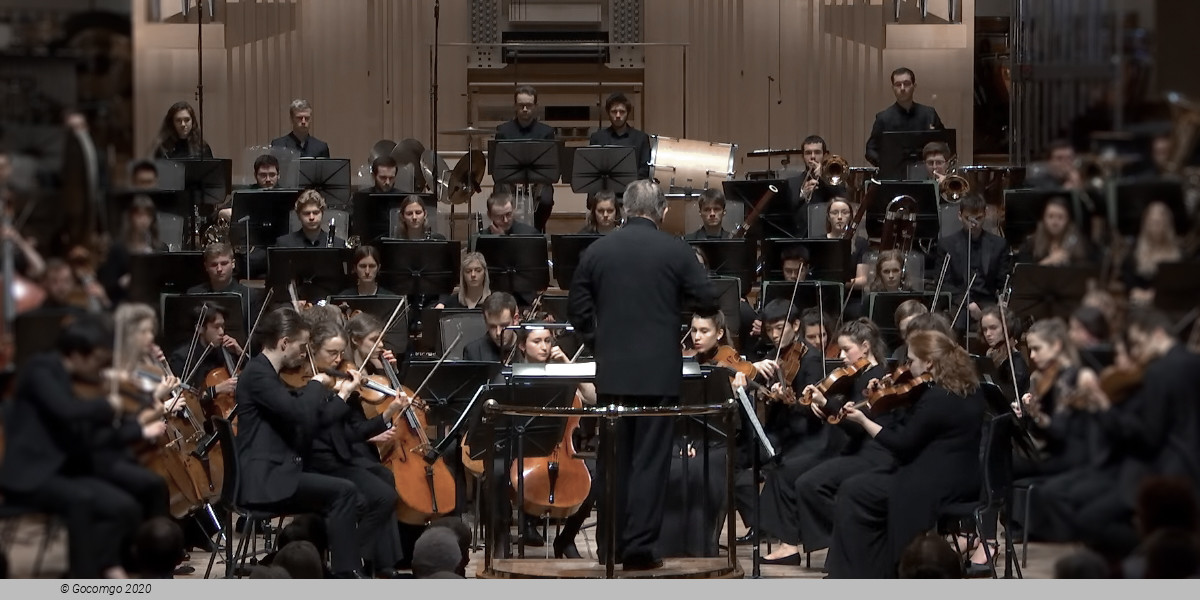
For the 14th time, the performance of the famous Symphony No. 9 will dominate the OPERA’s New Year celebrations. In 2027, the programme will be completed by two further classical works: Beethoven’s overture, also enhanced by Mahler, and a cello concerto by Haydn, the latter of course featuring an OPERA soloist.

For more than a decade, the performance of the famous Symphony No. 9 has introduced the New Year at the Hungarian State Opera. Back in the day, its Hungarian premiere was directed by the same Ferenc Erkel who was also the OPERA’s first music director. What makes the performance even more special – as it was so in the last couple of years – is that it includes the 28 pages of Mahler’s notes that reaffirm Beethoven’s score in a number of points.

On 7 May 1824, Ludwig van Beethoven experienced something that can be dubbed the greatest public success of his career. On that very day, the audience at the could not only hear the Viennese premiere of the abbreviated version of Missa Solemnis but the world premiere of the Symphony No. 9 as well. The monumental piece was well received, and, according to one of the most touching accounts, the composer, who by this time had completely lost his hearing, could no longer hear the thundering applause of his admirers, so one of the soloists turned him towards the audience so that he could see the hundreds of clapping hands.

The success of the symphony is unbroken to this day, it is a hallmark of many festive occasions, the melody of Ode to Joy in the closing movement is a hit, and serves as the theme of many films, signals, and even the anthem of the European Union. All of this is as uplifting and touching as it is problematic and thought-provoking. This work, which conveys the deepest artistic expression of a lonely man, rises above every holiday, the EU anthem, and occasion. It is a truly epoch-making, unconventional piece of music, in which the composer struggled with his own overflowing message.

Venue Info

Hungarian State Opera House - Budapest
Location   Andrássy út 22

The Hungarian State Opera House (Hungarian: Magyar Állami Operaház) is a neo-Renaissance opera house located in central Budapest, on Andrássy út. The Hungarian State Opera House is the main opera house of the country and the second largest opera house in Budapest and in Hungary. Today, the opera house is home to the Budapest Opera Ball, a society event dating back to 1886. The Theatre was designed by Miklós Ybl, a major figure of 19th-century Hungarian architecture.

Construction began in 1875, funded by the city of Budapest and by Emperor Franz Joseph I of Austria-Hungary, and the new house opened to the public on the 27 September 1884. Before the closure of the "Népszínház" in Budapest, it was the third largest opera building in the city; today it is the second largest opera house in Budapest and in Hungary.

Touring groups had performed operas in the city from the early 19th century, but as Legány notes, "a new epoch began after 1835 when part of the Kasa National Opera and Theatrical Troupe arrived in Buda". They took over the Castle Theatre and, in 1835, were joined by another part of the troupe, after which performances of operas were given under conductor Ferenc Erkel. By 1837 they had established themselves at the Magyar Színház (Hungarian Theatre) and by 1840, it had become the "Nemzeti Színház" (National Theatre). Upon its completion, the opera section moved into the Hungarian Royal Opera House, with performances quickly gaining a reputation for excellence in a repertory of about 45 to 50 operas and about 130 annual performances. 

Many important artists were guests here including the composer Gustav Mahler, who was director in Budapest from 1888 to 1891 and Otto Klemperer, who was music director for three years from 1947 to 1950.

It is a richly decorated building and is considered one of the architect's masterpieces. It was built in neo-Renaissance style, with elements of Baroque. Ornamentation includes paintings and sculptures by leading figures of Hungarian art including Bertalan Székely, Mór Than, and Károly Lotz. Although in size and capacity it is not among the greatest, in beauty and the quality of acoustics the Budapest Opera House is considered to be amongst the finest opera houses in the world.

The auditorium holds 1,261 people. It is horseshoe-shaped and – according to measurements done in the 1970s by a group of international engineers – has the third best acoustics in Europe after La Scala in Milan and the Palais Garnier in Paris. Although many opera houses have been built since the Budapest Opera House is still among the best in terms of acoustics.

In front of the building are statues of Ferenc Erkel and Franz Liszt. Liszt is the best-known Hungarian composer. Erkel composed the Hungarian national anthem, and was the first music director of the Opera House; he was also the founder of the Budapest Philharmonic Orchestra.

Each year the season lasts from September to the end of June and, in addition to opera performances, the House is home to the Hungarian National Ballet.

There are guided tours of the building in six languages (English, German, Spanish, French, Italian, and Hungarian) almost every day.

Important Info
Type: Classical Concert
City: Budapest, Hungary
Starts at: 20:00
Duration: 2h 20min
Top of page