
Hungarian State Opera House: Evening of Modern Ballet "Dancingly Yours": Sad Case. Trois Gnossiennes. Whirling. Études Tickets | Event Dates & Schedule | GoComGo.com

Evening of Modern Ballet "Dancingly Yours": Sad Case. Trois Gnossiennes. Whirling. Études Tickets

Hungarian State Opera House, Budapest, Hungary
All photos (3)
1 / 3
Available Dates: 12 - 20 Sep, 2026 (5 events)
Important Info
Type: Modern Ballet
City: Budapest, Hungary
Duration: 2h 30min

E-tickets: Print at home or at the box office of the event if so specified. You will find more information in your booking confirmation email.

You can only select the category, and not the exact seats.
If you order 2 or 3 tickets: your seats will be next to each other.
If you order 4 or more tickets: your seats will be next to each other, or, if this is not possible, we will provide a combination of groups of seats (at least in pairs, for example 2+2 or 2+3).

Cast
Performers
Choose the date to see the peformers
Creators
Choreographer: Paul Lightfoot
Choreographer: Sol León
Composer: Carl Czerny
Composer: Erik Satie
Composer: Philip Glass
Choreographer: András Lukács
Choreographer: Hans van Manen
Choreographer: Harald Lander
Overview

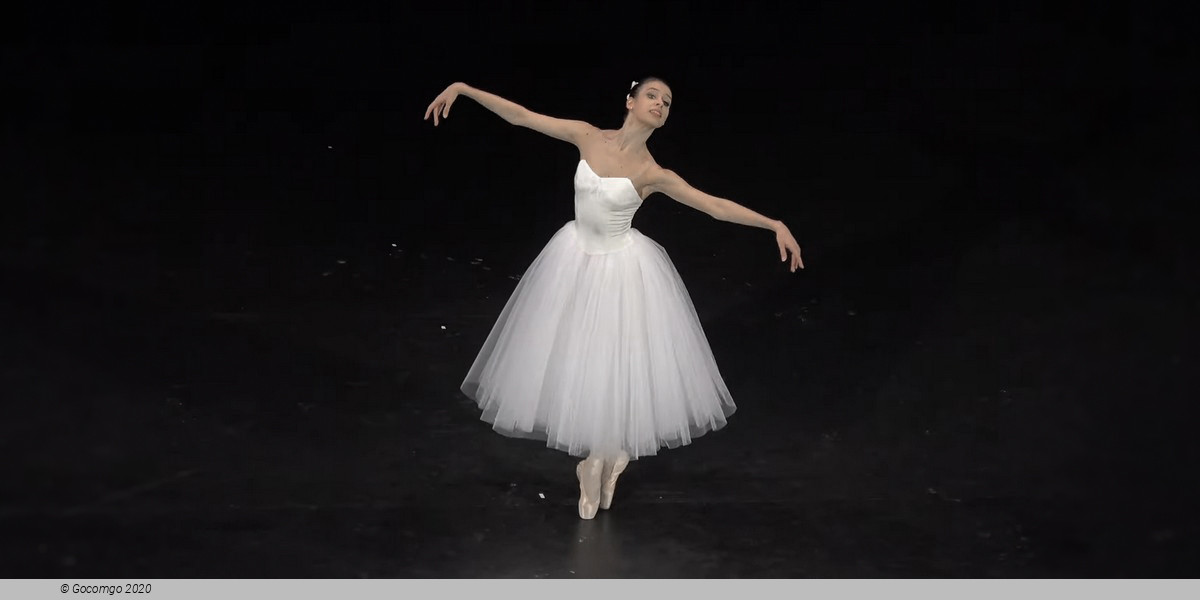
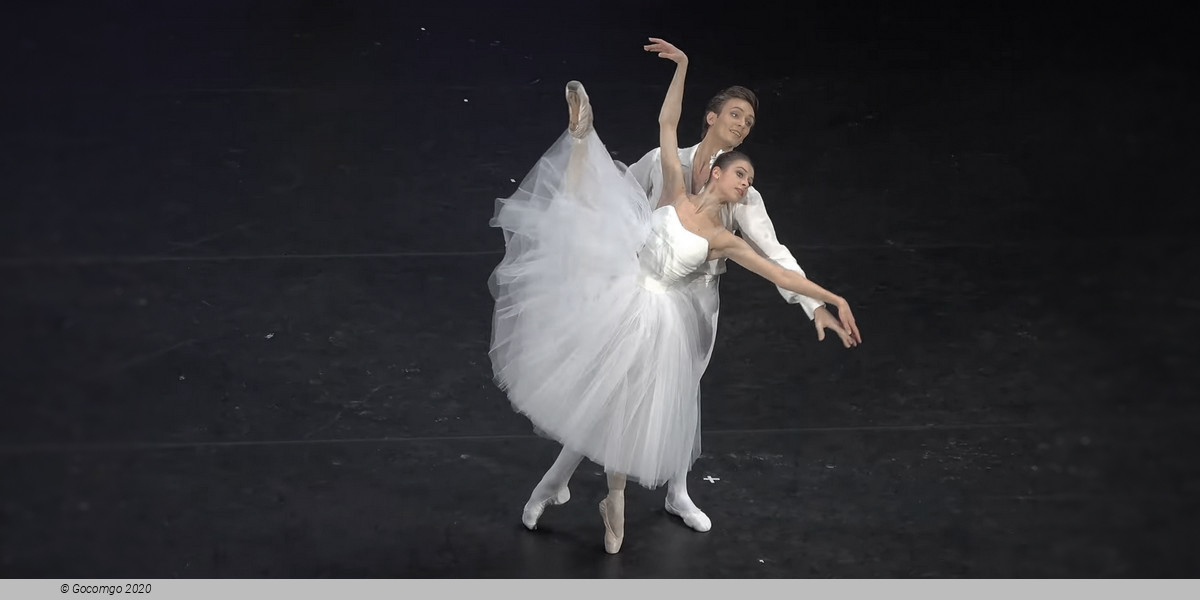
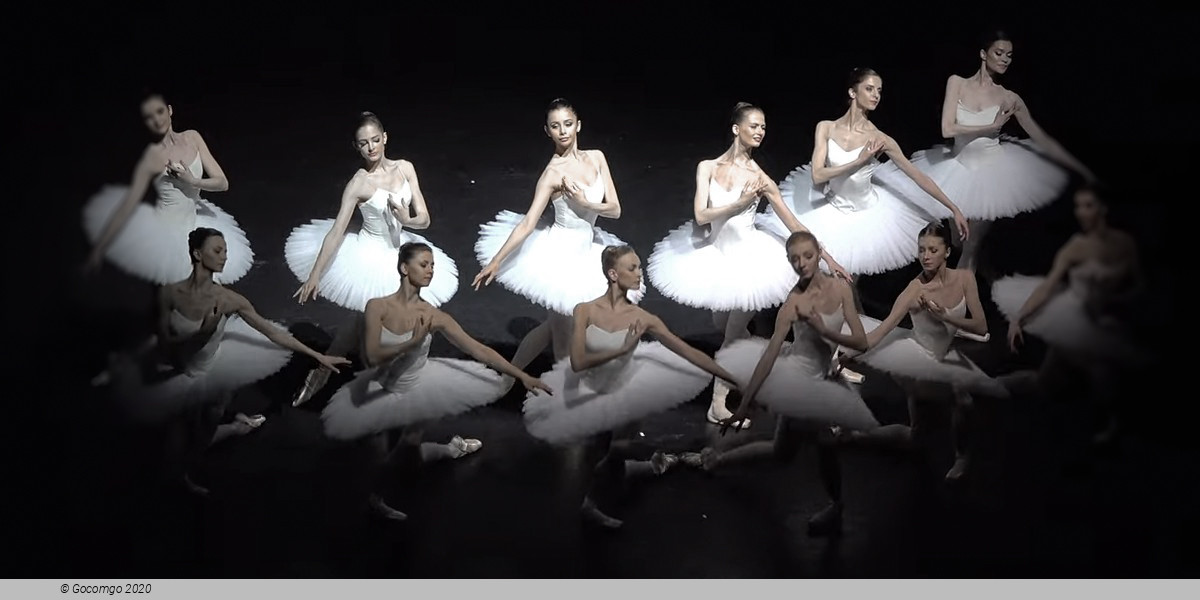
At its programme entitled Dancingly Yours, the ballet company of the Hungarian State Opera presents a selection of the most popular contemporary one-act works.

The works by outstanding creators of the dance world, demanding breathtaking technique, portray the relationship and interdependence of men and women, offer a glimpse into an exciting yet unknown future, and depict finding your path on stage, where ballet itself also becomes a protagonist. With the combination of classical and contemporary, intimate and spectacular, melancholic and uplifting, the Hungarian National Ballet remains “Dancingly Yours”.

Sad Case

“Now in hindsight we realise that energy is everything. When we created Sad Case in 1998, so far in to Sol’s pregnancy, the hormones were jumping and emotions were high.  It is these hormones of laughter, madness and the trepidation of the unknown ahead that are the umbilical chord of this work,” says the British Paul Lightfoot, thinking back to the origin of the ballet. He and his partner, the Spanish Sol León share credit for the performance’s choreography and set and costume designs. Up until 2020, León worked as artistic consultant and Lightfoot as artistic director for the Nederlands Dans Theater (NDT), where they were responsible for bringing about sixty creations, including Sad Case, which is undoubtedly one of the pillars of their work. In it, surprising movements set to Mexican mambo music reflect the ongoing search for the tension between the satirical and the serious. The OPERA had long planned the staging of this irresistible modern piece for Hungarian audiences – and by way of it, the art of the world-famous Lightfoot.

Trois Gnossiennes

Built around the magically beautiful music of Erik Satie, Hans van Manen’s Trois Gnossiennes draws a picture of a unique relationship. This double portrait painted with sensitive brushstrokes flashes with images of trust, submission and dominance, and relativity and interdependence. Masterfully alternating between lyrical and grotesque elements and weaving together memorable human traits, van Manen depicts monologues and dialogue, as well as symbolic moments of a relationship rich in intimate profundities. The bravura elevation of simple poses to the level of acrobatics and the enigmatic and fantastic play with a living body that goes limp make this short but dense work an unforgettable one.

Whirling

Whirling, a pas de deux by András Lukács, a former soloist with the Hungarian National Ballet is set to the second movement of Tirol Concerto by Philip Glass's, one of the greatest masters of repetitive music. The nearly fluid movement, the infinite harmony among the dancers and the unique style of choreography make the scene both quite exhausting and complicated. In 2010, the Hungarian National Ballet commissioned Lukács to create an expanded version for nine pairs. Tastefully and thrillingly combining elements based on classical techniques with modern devices, Lukács primarily creates plotless choreographies that are highly expressive. In Whirling, along with the music, the spiralling movements of the dancing superbly illustrate a vortex of water: the water into which the suicidal Virginia Woolf casts herself to music once again by Philip Glass in the film The Hours.

Études

Études is a one-act ballet which poses a great challenge to ballet companies because its subject is the technique of classical ballet itself: the school, the everyday training and the assessment of understanding and skill. Perhaps this is why the famous American dance critic Arlene Croce dubbed this work an “anti-ballet”. Because, in a ballet, the perfection of skill in dance is traditionally presented to the audience through the content, and the arduous everyday practise usually remains hidden from the viewers. The dancer’s everyday work takes place in the ballet studio, where the “vocabulary” of dance is formulated inside each dancer’s body, which will later become the base for the performance of choreographies on the stage. The audience sees only the outcome. Danish choreographer Harald Lander, however, decided to initiate the viewer by presenting on the stage how a ballet exercise is constructed, and how the pure beauty of classical movements and steps triumph over even the laws of physics. Since the rediscovery of Études in Budapest, it has represented a tremendous opportunity for the company’s soloists and provided enjoyable, spectacular entertainment for the audience.


History
Premiere of this production: 15 January 1948, Royal Danish Theatre in Copenhagen

Études is a one-act ballet choreographed by Danish dancer and choreographer Harald Lander to piano studies by Carl Czerny arranged for orchestra by Knudåge Riisager. It is considered Lander's most famous choreographic work and brought him international fame. The work premiered on 15 January 1948 at the Royal Danish Theatre in Copenhagen with the Royal Danish Ballet, with scenery and costumes by Rolf Gerard and lighting by Nananne Porcher.

Venue Info

Hungarian State Opera House - Budapest
Location   Andrássy út 22

The Hungarian State Opera House (Hungarian: Magyar Állami Operaház) is a neo-Renaissance opera house located in central Budapest, on Andrássy út. The Hungarian State Opera House is the main opera house of the country and the second largest opera house in Budapest and in Hungary. Today, the opera house is home to the Budapest Opera Ball, a society event dating back to 1886. The Theatre was designed by Miklós Ybl, a major figure of 19th-century Hungarian architecture.

Construction began in 1875, funded by the city of Budapest and by Emperor Franz Joseph I of Austria-Hungary, and the new house opened to the public on the 27 September 1884. Before the closure of the "Népszínház" in Budapest, it was the third largest opera building in the city; today it is the second largest opera house in Budapest and in Hungary.

Touring groups had performed operas in the city from the early 19th century, but as Legány notes, "a new epoch began after 1835 when part of the Kasa National Opera and Theatrical Troupe arrived in Buda". They took over the Castle Theatre and, in 1835, were joined by another part of the troupe, after which performances of operas were given under conductor Ferenc Erkel. By 1837 they had established themselves at the Magyar Színház (Hungarian Theatre) and by 1840, it had become the "Nemzeti Színház" (National Theatre). Upon its completion, the opera section moved into the Hungarian Royal Opera House, with performances quickly gaining a reputation for excellence in a repertory of about 45 to 50 operas and about 130 annual performances. 

Many important artists were guests here including the composer Gustav Mahler, who was director in Budapest from 1888 to 1891 and Otto Klemperer, who was music director for three years from 1947 to 1950.

It is a richly decorated building and is considered one of the architect's masterpieces. It was built in neo-Renaissance style, with elements of Baroque. Ornamentation includes paintings and sculptures by leading figures of Hungarian art including Bertalan Székely, Mór Than, and Károly Lotz. Although in size and capacity it is not among the greatest, in beauty and the quality of acoustics the Budapest Opera House is considered to be amongst the finest opera houses in the world.

The auditorium holds 1,261 people. It is horseshoe-shaped and – according to measurements done in the 1970s by a group of international engineers – has the third best acoustics in Europe after La Scala in Milan and the Palais Garnier in Paris. Although many opera houses have been built since the Budapest Opera House is still among the best in terms of acoustics.

In front of the building are statues of Ferenc Erkel and Franz Liszt. Liszt is the best-known Hungarian composer. Erkel composed the Hungarian national anthem, and was the first music director of the Opera House; he was also the founder of the Budapest Philharmonic Orchestra.

Each year the season lasts from September to the end of June and, in addition to opera performances, the House is home to the Hungarian National Ballet.

There are guided tours of the building in six languages (English, German, Spanish, French, Italian, and Hungarian) almost every day.

Important Info
Type: Modern Ballet
City: Budapest, Hungary
Duration: 2h 30min

E-tickets: Print at home or at the box office of the event if so specified. You will find more information in your booking confirmation email.

You can only select the category, and not the exact seats.
If you order 2 or 3 tickets: your seats will be next to each other.
If you order 4 or more tickets: your seats will be next to each other, or, if this is not possible, we will provide a combination of groups of seats (at least in pairs, for example 2+2 or 2+3).

From
$ 91
Top of page