
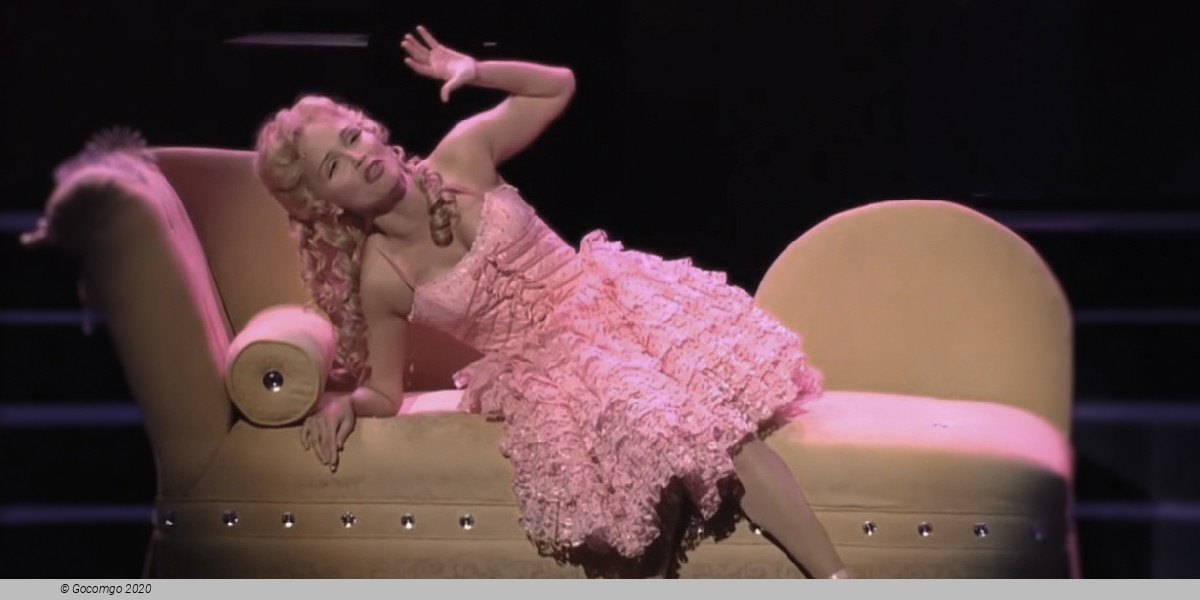
Komische Oper Berlin 18 October 2019 - Candide | GoComGo.com

Candide

Komische Oper Berlin, Berlin, Germany
All photos (3)
Select date and time
7:30 PM
Request for Tickets
Important Info
Type: Operetta
City: Berlin, Germany
Starts at: 19:30
Acts: 2
Intervals: 1
Duration:
Sung in: German

E-tickets: Print at home or at the box office of the event if so specified. You will find more information in your booking confirmation email.

You can only select the category, and not the exact seats.
If you order 2 or 3 tickets: your seats will be next to each other.
If you order 4 or more tickets: your seats will be next to each other, or, if this is not possible, we will provide a combination of groups of seats (at least in pairs, for example 2+2 or 2+3).

Overview

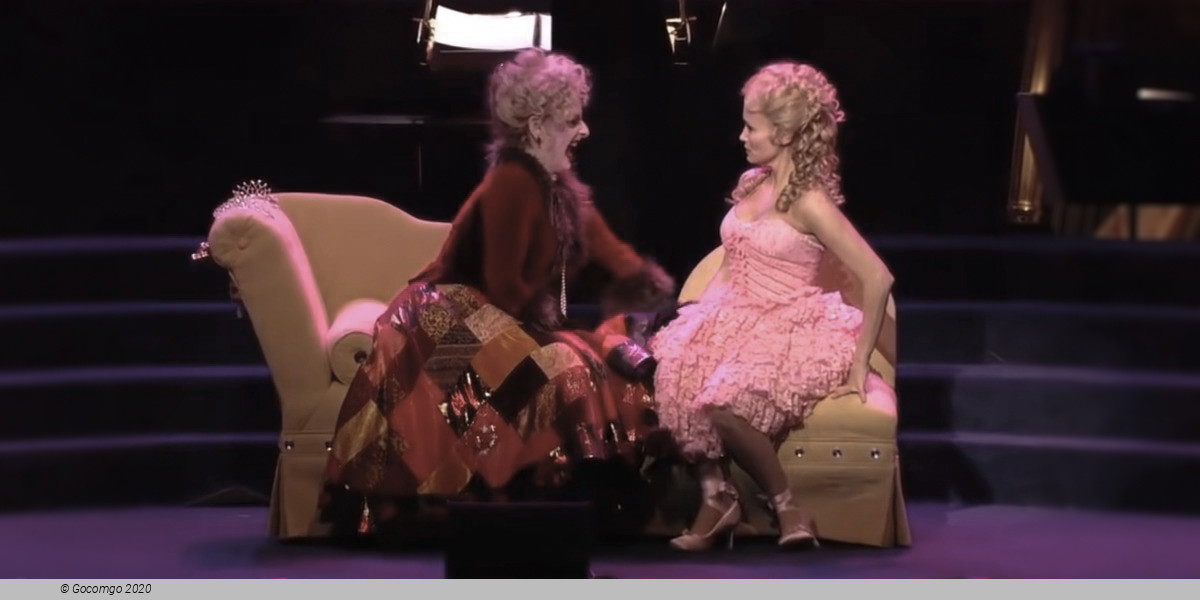
Following the overwhelming success of his raw and powerful production of West Side Story, director Barrie Kosky brings Leonard Bernstein’s lesser known comic operetta Candide to the stage, a work that truly seems to defy categorization. The fast-paced Voltaire opera musical centers around the question "Why do bad things happen to good people?" and is at once a wild road trip, satirical philosophy lesson, and declaration of love for the history of European music.

The iconic French philosopher Voltaire penned the satirical novella Candide ou l’Optimisme in 1759, creating a milestone in the European Enlightenment. With his sharp tongue and keen eye, Voltaire criticized the world-affirming doctrines of German philosophers Gottfried Wilhelm Leibniz and Christian Wolff. Exceptionally difficult material for a musical, which Leonard Bernstein took on directly after his first Broadway success in 1953. While West Side Story – composed nearly at the same time – is American to the core, Candide is considered to be an expression of Bernstein’s love for European music. Having gone through many variations, a version of the comic operetta from the late 1990s captures Voltaire’s incisive humor and brings Bernstein’s electrifying music to fruition. Barrie Kosky’s production, with over 800 costumes on a nearly empty stage, draws a wild parallel between the Enlightenment and the present day. Bittersweet, irresistible entertainment – more relevant than ever!


History
Premiere of this production: 01 December 1956, Martin Beck Theatre, Broadway

Candide is an operetta with music composed by Leonard Bernstein, based on the 1759 novella of the same name by Voltaire. The operetta was first performed in 1956 with a libretto by Lillian Hellman; but since 1974 it has been generally performed with a book by Hugh Wheeler which is more faithful to Voltaire's novel. The primary lyricist was the poet Richard Wilbur. Other contributors to the text were John Latouche, Dorothy Parker, Lillian Hellman, Stephen Sondheim, John Mauceri, John Wells, and Bernstein himself. Maurice Peress and Hershy Kay contributed orchestrations. Although unsuccessful at its premiere, Candide has now overcome the unenthusiastic reaction of early audiences and critics and achieved enormous popularity. It is very popular among major music schools as a student show because of the quality of its music and the opportunities it offers to student singers.

Synopsis

After the exposure of his illicit love affair with the baroness Cunegonde, the not quite noble-born Candide is abruptly obliged to quit the place of his birth. Unfazed and unsuspecting, he begins a journey around the world inspired by Dr. Pangloss’s straightforward motto: this world is the only world and therefore the best of all possible worlds. Nevertheless, while travelling from Bulgaria to Lisbon and Paraguay to Venice, Candide encounters nothing but hair-raising atrocities and natural disasters: war, prostitution, slavery, earthquakes, and an assortment of murders. From the stabbing of a promiscuous grand inquisitor, to the hanging and resurrection of a philosopher, Candide’s path is strewn with the bizarre characters, both dead and undead, that make up his miraculous journey. Yet driven by an invincible optimism, nothing will bring him to stray from his belief in the good and love for Cunegonde. Finally, after countless adventures around the globe, Candide is reunited with his sweetheart – but after everything he’s experienced, what remains of his once starry-eyed love?

Venue Info

Komische Oper Berlin - Berlin
Location   Behrenstraße 55-57

The Komische Oper Berlin is a German opera company based in Berlin. The company produces opera, operetta and musicals.

The opera house is located on Behrenstraße, just a few steps from Unter den Linden. Since 2004, the Komische Oper Berlin, along with the Berlin State Opera, the Deutsche Oper Berlin, the Berlin State Ballet, and the Bühnenservice Berlin (Stage and Costume Design), has been a member of the Berlin Opera Foundation.

The theatre was built between 1891 and 1892 by architects Ferdinand Fellner and Hermann Helmer for a private society. It first opened on 24 September 1892 as "Theater Unter den Linden" with Adolf Ferron's operetta Daphne and Gaul and Haßreiter's ballet Die Welt in Bild und Tanz.

The theatre was primarily a vehicle for operetta, but was also used for various other events and balls. Around 800 people could be seated in the stalls, and the balconies and various en-suite dinner rooms housed about a further 1,700 seats. Its directors went bankrupt in 1896 and the theatre was forced to close its doors.

On 3 September 1898 the theatre was reopened as Metropol-Theater with Julius Freund's revue Paradies der Frauen. It then grew to become one of Berlin's most famous and successful variety theatres. During the 1920s and early 1930s, it was leased by the brothers Alfred and Fritz Rotter. Under their management, it saw the premieres of two operettas by Franz Lehár - Friederike (opera) in 1928 and Das Land des Lächelns in 1929, both starring Richard Tauber. However, due to a decline of variety and music hall entertainment the theatre was again closed in 1933.

In 1934 the theatre was nationalised and renamed Staatliches Operettentheater. It operated as part of the Nazi Kraft durch Freude entertainment and leisure programmes. During World War II, the auditorium was damaged by Allied bombing on 7 May 1944. The façade, entrance hall, and auditorium ceiling murals were destroyed by bombs on 9 March 1945.

After the war, the theatre was in East Germany, being that the building was in the eastern part of Berlin. Following repair works and provisional rebuilding, the theatre reopened on 23 December 1947, as the Komische Oper with Johann Strauss's operetta Die Fledermaus.

The 1950s saw various further alterations and extensions. The theatre was completely rebuilt in 1965/1966 by Architektenkollektiv Kunz Nierade, adding functional extensions and giving the theatre a completely new exterior. The theatre reopened again on 4 December 1966, with Mozart's Don Giovanni. The auditorium underwent further restoration in 1986, and the stage technology was further modernised by 1989. Today the theatre seats 1,270.

In 1947, Walter Felsenstein founded and led the resident opera company, the Komische Oper, until his death in 1975. Götz Friedrich was an assistant to Felsenstein at the company. Joachim Herz became general director after Felsenstein's death and served until 1981. Subsequently, Harry Kupfer directed the company for 21 seasons, until 2002. The company specializes in German language productions of opera, operetta and musicals. In 2007 the company won, jointly with Oper Bremen, the "Opera house of the year" award by the German magazine Opernwelt. From 2002 to 2012, the company's chief director and Intendant was Andreas Homoki. In June 2008, the company announced the appointment of Barrie Kosky to succeed Homoki as its next Intendant, as of the 2012/2013 season. In October 2014, his contract with the company was extended through 2022. Since 2005, the company's managing director has been Susanne Moser.

From 1966 to 2004, the theatre was also home to a resident ballet company – first as the "Tanztheater der Komischen Oper", and then from 1999 as "BerlinBallett – Komische Oper". In 2004, due to budgetary problems, the separate ballet companies of Berlin's three opera houses were merged into a single company called the Staatsballett Berlin.

Past General Music Directors (GMD) of the company have included Kurt Masur, Rolf Reuter, Yakov Kreizberg, Kirill Petrenko, Carl St.Clair, and Patrick Lange. Since 2012, the GMD of the company is Henrik Nánási. Nánási is scheduled to conclude his tenure at the end of the 2017-2018 season. In May 2017, the company announced the appointment of Ainārs Rubiķis as its next GMD, effective with the 2018-2019 season, with an initial contract of 3 seasons.

Important Info
Type: Operetta
City: Berlin, Germany
Starts at: 19:30
Acts: 2
Intervals: 1
Duration:
Sung in: German
Top of page