
Komische Oper Berlin 9 October 2022 - Falstaff | GoComGo.com

Falstaff

Komische Oper Berlin, Main Stage, Berlin, Germany
All photos (6)
Select date and time
6 PM
Request for Tickets
Important Info
Type: Opera
City: Berlin, Germany
Starts at: 18:00
Acts: 3
Sung in: Italian

E-tickets: Print at home or at the box office of the event if so specified. You will find more information in your booking confirmation email.

You can only select the category, and not the exact seats.
If you order 2 or 3 tickets: your seats will be next to each other.
If you order 4 or more tickets: your seats will be next to each other, or, if this is not possible, we will provide a combination of groups of seats (at least in pairs, for example 2+2 or 2+3).

Overview

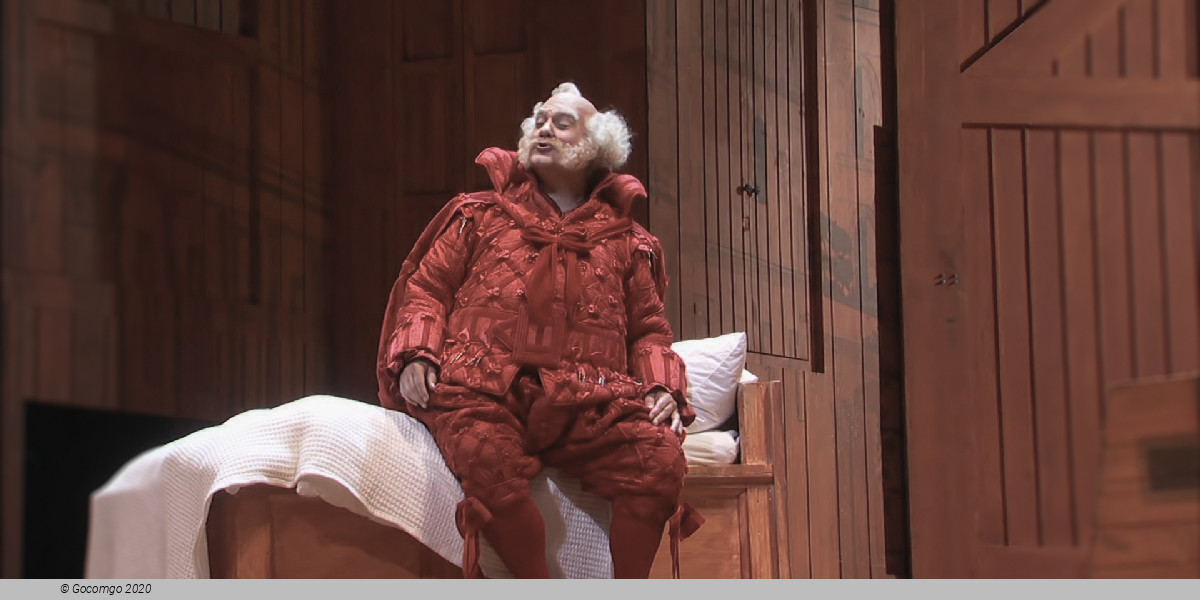
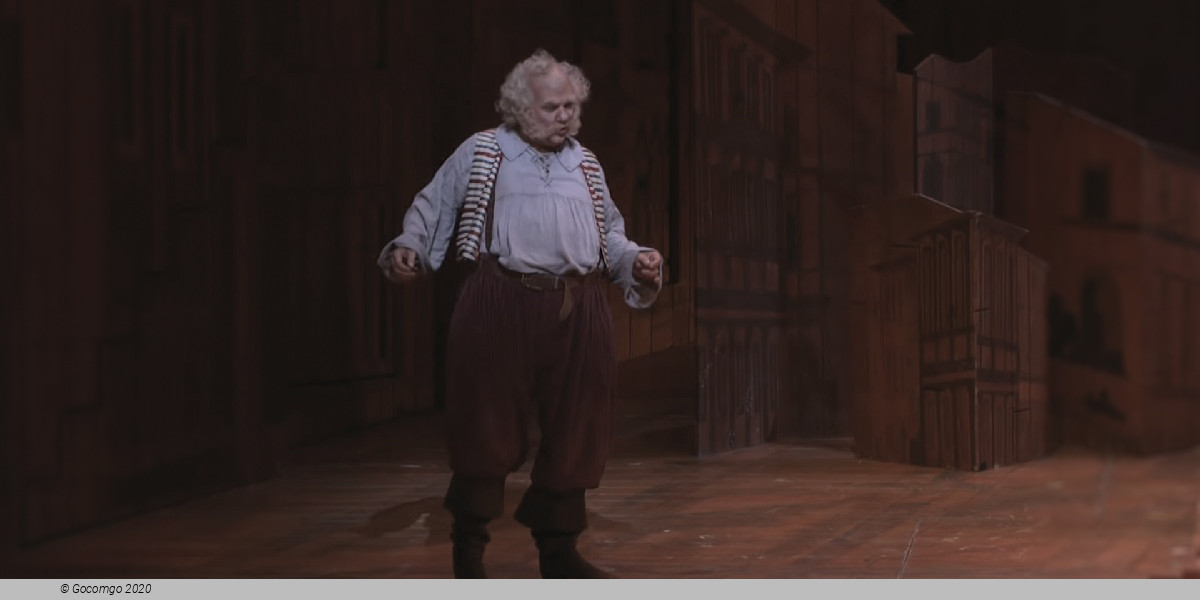
Grandiose joie de vivre comes together with a quest for meaning—Giuseppe Verdi’s last masterpiece, written when he was nearly 80, not only breathed new life into the genre of Italian opera-comedy, but spontaneously revolutionised the genre and brought it into the 20th century. Exceptional baritone and "stage animal" Scott Hendricks returns to the Komische Oper Berlin in the title role, while audience favourite Günter Papendell makes his debut as the aggrieved husband, Ford.

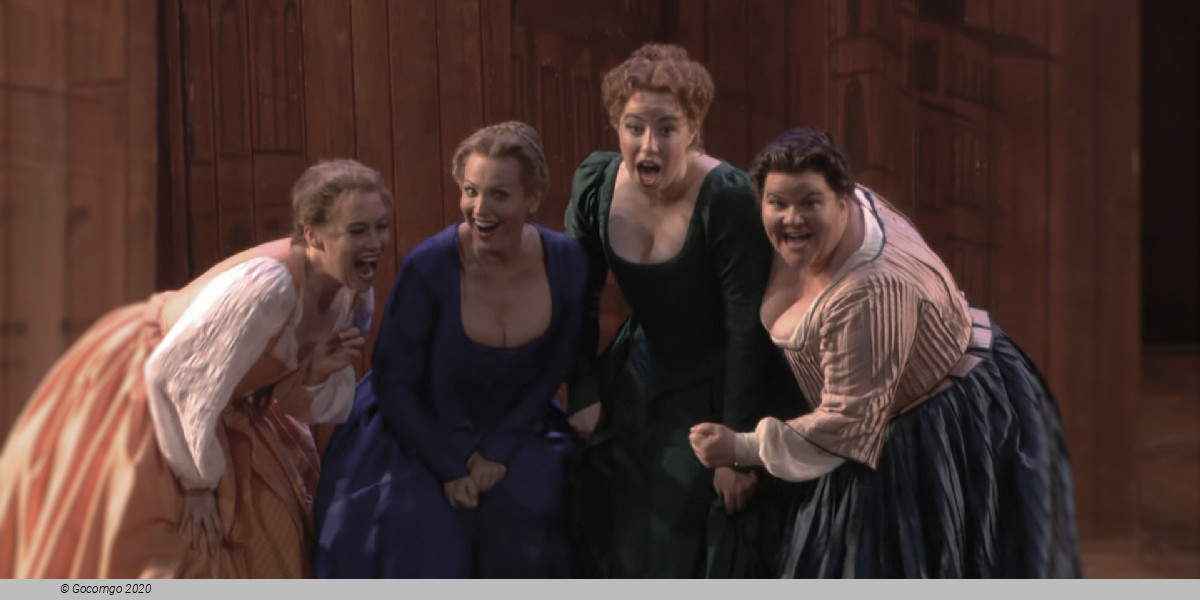
Faced with his precarious financial situation and convinced of his virility, Sir John Falstaff tries to woo two wealthy women—Alice Ford and Meg Page—simultaneously, with two identical love letters. Unfortunately for him, the two friends discern Falstaff’s motives and decide to teach him a lesson …

The impermanence of man has shaped Western culture: Both our search for meaning and joie de vivre originate and end in mortality. In this respect, it is both surprising and not surprising that Verdi ended his career as an opera composer with Falstaff. To this day, his second comic opera ever is a milestone of the genre, paving the way for works such as Gianni Schicchi or Der Rosenkavalier. In the hands of Verdi and his librettist Arrigo Boito, the character Falstaff, derived from Shakespeare's drama Henry IV and his comedy The Merry Wives of Windsor, embodies the contradictions of human existence: joie de vivre and melancholy, pragmatism and bravado, unbridled pleasure and philosophical musing.

New production by the Festival d'Aix-en-Provence, in co-production with Komische Oper Berlin and Opéra National de Lyon

History
Premiere of this production: 09 February 1893, La Scala, Milan

Falstaff is a comic opera in three acts by the Italian composer Giuseppe Verdi. The libretto was adapted by Arrigo Boito from Shakespeare's The Merry Wives of Windsor and scenes from Henry IV, parts 1 and 2. The work premiered on 9 February 1893 at La Scala, Milan.

Synopsis

Time: The reign of Henry IV, 1399 to 1413
Place: Windsor, England

Act 1

A room at the Garter Inn

Falstaff and his servants, Bardolfo and Pistola, are drinking at the inn. Dr Caius bursts in and accuses Falstaff of burgling his house and Bardolfo of picking his pocket. Falstaff laughs at him; he leaves, vowing only to go drinking with honest, sober companions in future. When the innkeeper presents a bill for the wine, Falstaff tells Bardolfo and Pistola that he needs more money, and plans to obtain it by seducing the wives of two rich men, one of whom is Ford. Falstaff hands Bardolfo a love-letter to one of the wives (Alice Ford), and hands Pistola an identical letter addressed to the other (Meg). Bardolfo and Pistola refuse to deliver the letters, claiming that honour prevents them from obeying him. Falstaff loses his temper and rants at them, saying that "honour" is nothing but a word, with no meaning (Monologue: L'onore! Ladri ... ! / "Honour! You rogues ... !") Brandishing a broom, he chases them out of his sight.

Ford's garden

Alice and Meg have received Falstaff's letters. They compare them, see that they are identical and, together with Mistress Quickly and Nannetta Ford, resolve to punish Falstaff. Meanwhile, Bardolfo and Pistola warn Ford of Falstaff's plan. Ford resolves to disguise himself and visit Falstaff and set a trap for him.

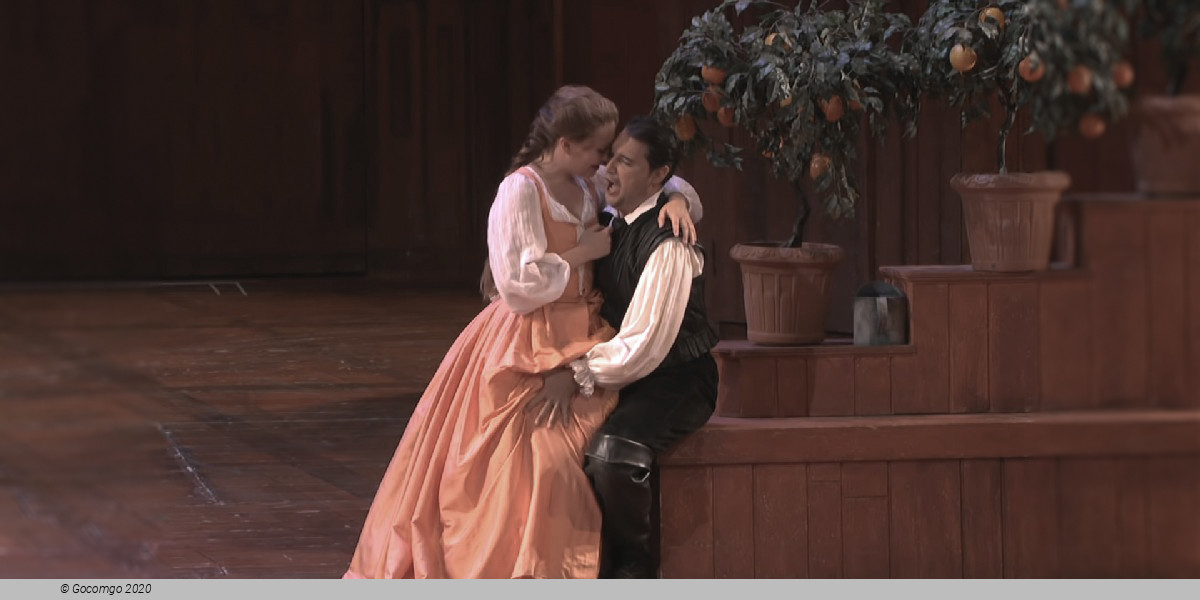
A young, handsome fellow called Fenton is in love with Ford's daughter Nannetta, but Ford wants her to marry Dr. Caius, who is wealthy and respected. Fenton and Nannetta enjoy a moment of privacy, but are interrupted by the return of Alice, Meg and Mistress Quickly. The act ends with an ensemble in which the women and the men separately plan revenge on Falstaff, the women gleefully anticipating an enjoyable prank, while the men angrily mutter dire threats.

Act 2
A room at the Garter Inn

Falstaff is alone at the inn. Bardolfo and Pistola, now in the pay of Ford, enter and beg Falstaff to allow them to re-enter his service, secretly planning to spy on him for Ford. Mistress Quickly enters and tells him that Alice is in love with him and will be alone in Ford's home that afternoon, from two o'clock until three o'clock, just time for an amorous dalliance. Falstaff celebrates his potential success ("Va, vecchio John" / "Go, old Jack, go your own way").

Ford arrives, masquerading as a wealthy stranger, using the false name "Signor Fontana". He tells Falstaff that he is in love with Alice, but she is too virtuous to entertain him. He offers to pay Falstaff to use his impressive title and (alleged) charms to seduce her away from her virtuous convictions, after which he ("Fontana") might have a better chance of seducing her himself. Falstaff, delighted at the prospect of being paid to seduce the wealthy and beautiful woman, agrees, and reveals that he already has a rendezvous arranged with Alice for two o'clock – the hour when Ford is always absent from home. Ford is consumed with jealousy, but conceals his feelings. Falstaff withdraws to a private room to change into his finest clothes, and Ford, left alone, reflects on the evil of an uncertain marriage and vows to have revenge (È sogno o realtà? / "Is it a dream or reality?"). When Falstaff returns in his finery, they leave together with elaborate displays of mutual courtesy.

A room in Ford's house

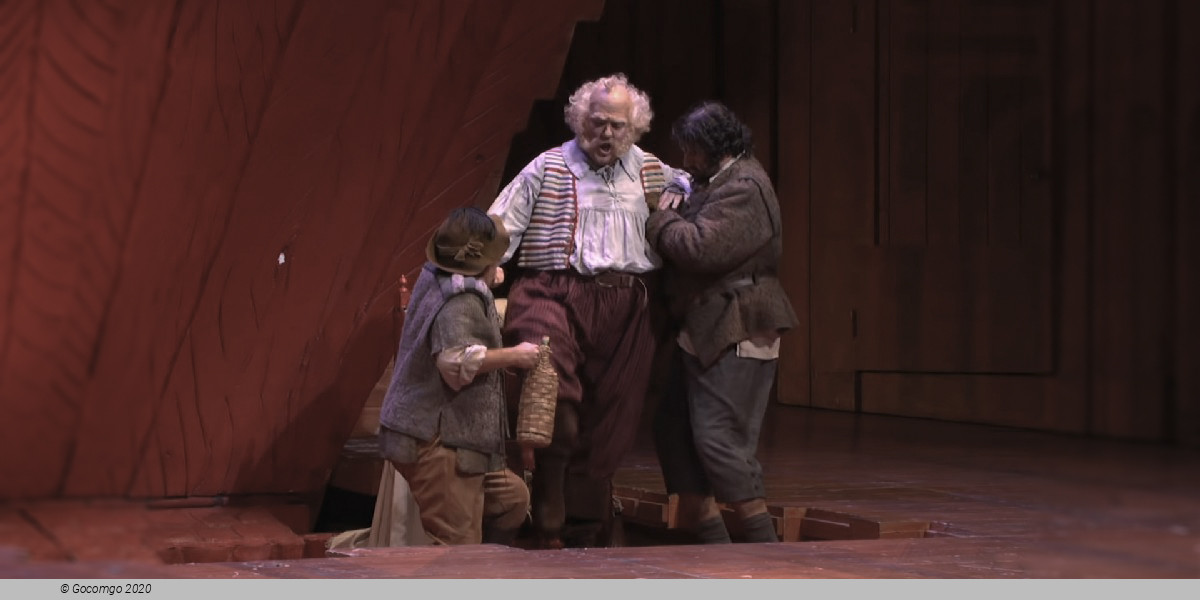
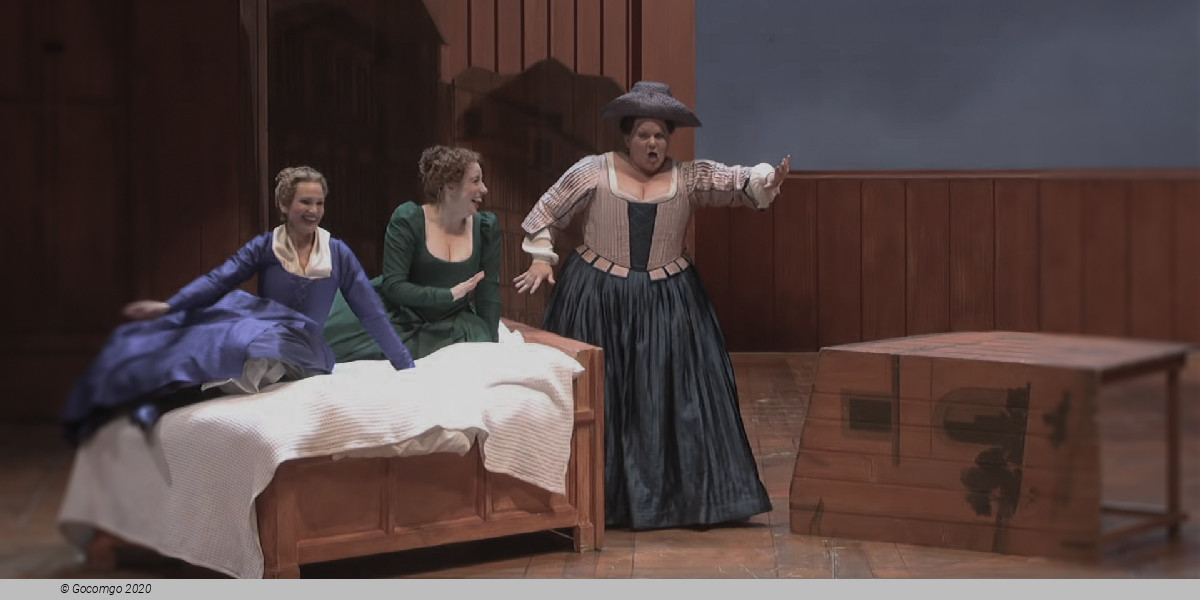
The three women plot their strategy ("Gaie Comari di Windsor" / "Merry wives of Windsor, the time has come!"). Alice notices that Nannetta is too unhappy and anxious to share their gleeful anticipation. This is because Ford plans to marry her to Dr Caius, a man old enough to be her grandfather; the women reassure her that they will prevent it. Mistress Quickly announces Falstaff's arrival, and Mistress Ford has a large laundry basket and a screen placed in readiness. Falstaff attempts to seduce Alice with tales of his past youth and glory ("Quand'ero paggio del Duca di Norfolk" / "When I was page to the Duke of Norfolk I was slender"). Mistress Quickly rushes in, shouting that Ford has returned home unexpectedly with a retinue of henchmen to catch his wife's lover. Falstaff hides first behind the screen, but realizes that Ford will likely look for him there. The women urge him to hide in the laundry basket, which he does. In the meantime Fenton and Nannetta hide behind the screen for another moment of privacy. Ford and his men storm in and search for Falstaff, and hear the sound of Fenton and Nannetta kissing behind the screen. They assume it is Falstaff with Alice, but instead they find the young lovers. Ford orders Fenton to leave. Badly cramped and almost suffocating in the laundry hamper, Falstaff moans with discomfort while the men resume the search of the house. Alice orders her servants to throw the laundry basket through the window into the River Thames, where Falstaff endures the jeers of the crowd. Ford, seeing that Alice had never intended to betray him, smiles happily.

Act 3
Before the inn

Falstaff, cold and discouraged, glumly curses the sorry state of the world. Some mulled wine soon improves his mood. Mistress Quickly arrives and delivers another invitation to meet Alice. Falstaff at first wants nothing to do with it, but she persuades him. He is to meet Alice at midnight at Herne's Oak in Windsor Great Park dressed up as the ghost of Herne the Hunter who, according to local superstition, haunts the area near the tree, and appears there at midnight with a band of supernatural spirits. He and Mistress Quickly go inside the inn. Ford has realized his error in suspecting his wife, and they and their allies have been watching secretly. They now concoct a plan for Falstaff's punishment: dressed as supernatural creatures, they will ambush and torment him at midnight. Ford draws Dr. Caius aside and privately proposes a separate plot to marry him to Nannetta: Nannetta will be disguised as Queen of the Fairies, Caius will wear a monk's costume, and Ford will join the two of them with a nuptial blessing. Mistress Quickly overhears and quietly vows to thwart Ford's scheme.

Herne's Oak in Windsor Park on a moonlit midnight

Fenton arrives at the oak tree and sings of his happiness ("Dal labbro il canto estasiato vola" / "From my lips, a song of ecstasy flies") ending with "Lips that are kissed lose none of their allure." Nannetta enters to finish the line with "Indeed, they renew it, like the moon." The women arrive and disguise Fenton as a monk, telling him that they have arranged to spoil Ford's and Caius's plans. Nannetta, as the Fairy Queen, instructs her helpers ("Sul fil d'un soffio etesio" / "On the breath of a fragrant breeze, fly, nimble spirits") before all the characters arrive on the scene. Falstaff's attempted love scene with Alice is interrupted by the announcement that witches are approaching, and the men, disguised as elves and fairies, soundly thrash Falstaff. In the middle of the beating, he recognizes Bardolfo in disguise. The joke is over, and Falstaff acknowledges that he has received his due. Ford announces that a wedding shall ensue. Caius and the Queen of the Fairies enter. A second couple, also in masquerade, ask Ford to deliver the same blessing for them as well. Ford conducts the double ceremony. Caius finds that instead of Nannetta, his bride is the disguised Bardolfo, and Ford has unwittingly blessed the marriage of Fenton and Nannetta. Ford accepts the fait accompli with good grace. Falstaff, pleased to find himself not the only dupe, proclaims that all the world is folly, and all are figures of fun (Tutto nel mondo è burla ... Tutti gabbati!...Ma ride ben chi ride La risata final. / "Everything in the world is a jest ... but he laughs well who laughs the final laugh"). The entire company repeats his proclamation in a bewildering ten-voice fugue.

Venue Info

Komische Oper Berlin - Berlin
Location   Behrenstraße 55-57

The Komische Oper Berlin is a German opera company based in Berlin. The company produces opera, operetta and musicals.

The opera house is located on Behrenstraße, just a few steps from Unter den Linden. Since 2004, the Komische Oper Berlin, along with the Berlin State Opera, the Deutsche Oper Berlin, the Berlin State Ballet, and the Bühnenservice Berlin (Stage and Costume Design), has been a member of the Berlin Opera Foundation.

The theatre was built between 1891 and 1892 by architects Ferdinand Fellner and Hermann Helmer for a private society. It first opened on 24 September 1892 as "Theater Unter den Linden" with Adolf Ferron's operetta Daphne and Gaul and Haßreiter's ballet Die Welt in Bild und Tanz.

The theatre was primarily a vehicle for operetta, but was also used for various other events and balls. Around 800 people could be seated in the stalls, and the balconies and various en-suite dinner rooms housed about a further 1,700 seats. Its directors went bankrupt in 1896 and the theatre was forced to close its doors.

On 3 September 1898 the theatre was reopened as Metropol-Theater with Julius Freund's revue Paradies der Frauen. It then grew to become one of Berlin's most famous and successful variety theatres. During the 1920s and early 1930s, it was leased by the brothers Alfred and Fritz Rotter. Under their management, it saw the premieres of two operettas by Franz Lehár - Friederike (opera) in 1928 and Das Land des Lächelns in 1929, both starring Richard Tauber. However, due to a decline of variety and music hall entertainment the theatre was again closed in 1933.

In 1934 the theatre was nationalised and renamed Staatliches Operettentheater. It operated as part of the Nazi Kraft durch Freude entertainment and leisure programmes. During World War II, the auditorium was damaged by Allied bombing on 7 May 1944. The façade, entrance hall, and auditorium ceiling murals were destroyed by bombs on 9 March 1945.

After the war, the theatre was in East Germany, being that the building was in the eastern part of Berlin. Following repair works and provisional rebuilding, the theatre reopened on 23 December 1947, as the Komische Oper with Johann Strauss's operetta Die Fledermaus.

The 1950s saw various further alterations and extensions. The theatre was completely rebuilt in 1965/1966 by Architektenkollektiv Kunz Nierade, adding functional extensions and giving the theatre a completely new exterior. The theatre reopened again on 4 December 1966, with Mozart's Don Giovanni. The auditorium underwent further restoration in 1986, and the stage technology was further modernised by 1989. Today the theatre seats 1,270.

In 1947, Walter Felsenstein founded and led the resident opera company, the Komische Oper, until his death in 1975. Götz Friedrich was an assistant to Felsenstein at the company. Joachim Herz became general director after Felsenstein's death and served until 1981. Subsequently, Harry Kupfer directed the company for 21 seasons, until 2002. The company specializes in German language productions of opera, operetta and musicals. In 2007 the company won, jointly with Oper Bremen, the "Opera house of the year" award by the German magazine Opernwelt. From 2002 to 2012, the company's chief director and Intendant was Andreas Homoki. In June 2008, the company announced the appointment of Barrie Kosky to succeed Homoki as its next Intendant, as of the 2012/2013 season. In October 2014, his contract with the company was extended through 2022. Since 2005, the company's managing director has been Susanne Moser.

From 1966 to 2004, the theatre was also home to a resident ballet company – first as the "Tanztheater der Komischen Oper", and then from 1999 as "BerlinBallett – Komische Oper". In 2004, due to budgetary problems, the separate ballet companies of Berlin's three opera houses were merged into a single company called the Staatsballett Berlin.

Past General Music Directors (GMD) of the company have included Kurt Masur, Rolf Reuter, Yakov Kreizberg, Kirill Petrenko, Carl St.Clair, and Patrick Lange. Since 2012, the GMD of the company is Henrik Nánási. Nánási is scheduled to conclude his tenure at the end of the 2017-2018 season. In May 2017, the company announced the appointment of Ainārs Rubiķis as its next GMD, effective with the 2018-2019 season, with an initial contract of 3 seasons.

Important Info
Type: Opera
City: Berlin, Germany
Starts at: 18:00
Acts: 3
Sung in: Italian
Top of page