
Komische Oper Berlin 14 May 2023 - Hamlet | GoComGo.com

Hamlet

Komische Oper Berlin, Main Stage, Berlin, Germany
All photos (5)
Select date and time
6 PM
Request for Tickets
Important Info
Type: Opera
City: Berlin, Germany
Starts at: 18:00
Acts: 5
Duration: 3h
Sung in: French

E-tickets: Print at home or at the box office of the event if so specified. You will find more information in your booking confirmation email.

You can only select the category, and not the exact seats.
If you order 2 or 3 tickets: your seats will be next to each other.
If you order 4 or more tickets: your seats will be next to each other, or, if this is not possible, we will provide a combination of groups of seats (at least in pairs, for example 2+2 or 2+3).

Overview

William Shakespeare’s tragedy Hamlet, a late 19th-century French opera that is as poetic as it is grandiose, takes an intimate look into the inner turmoil of its main characters, Hamlet and Ophélie.

Just two weeks after the king dies, the widow Gertrude marries the late king’s brother Claudius. Hamlet, son of the king, refuses to attend the festivities, upset that his mother has remarried so soon. Ophélie, his lover, is disturbed by his inconsistent behavior. Is he going mad? Does he no longer love her? The ghost of his deceased father reveals to Hamlet that the new king, Claudius, was actually his murderer. Whipped into a frenzy by thoughts of revenge, Hamlet defies the power structure of the court.

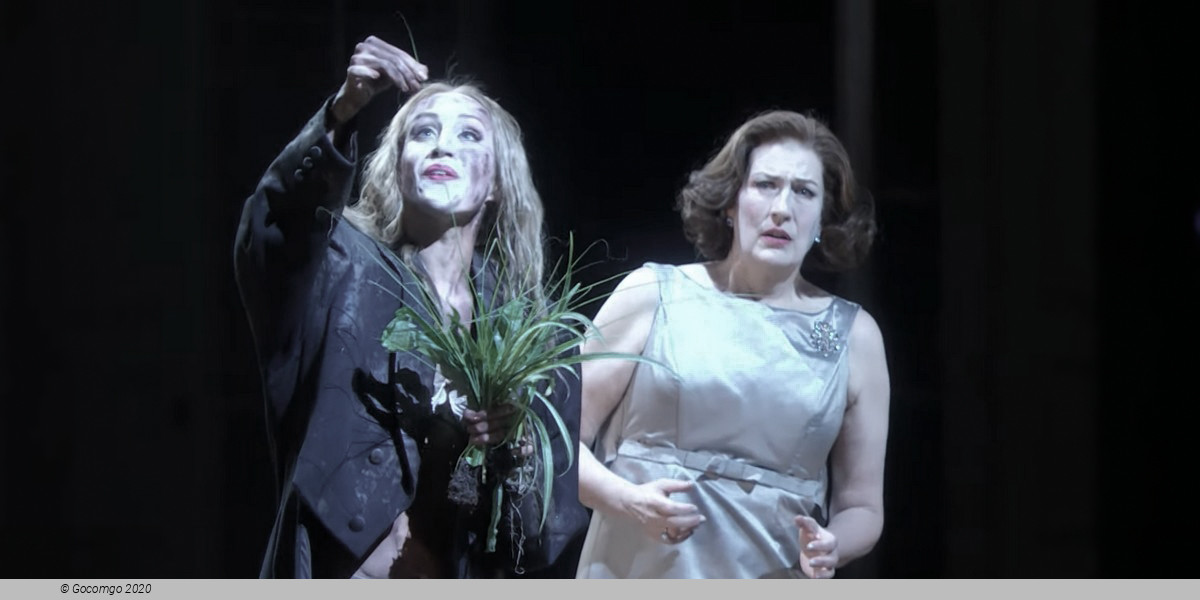
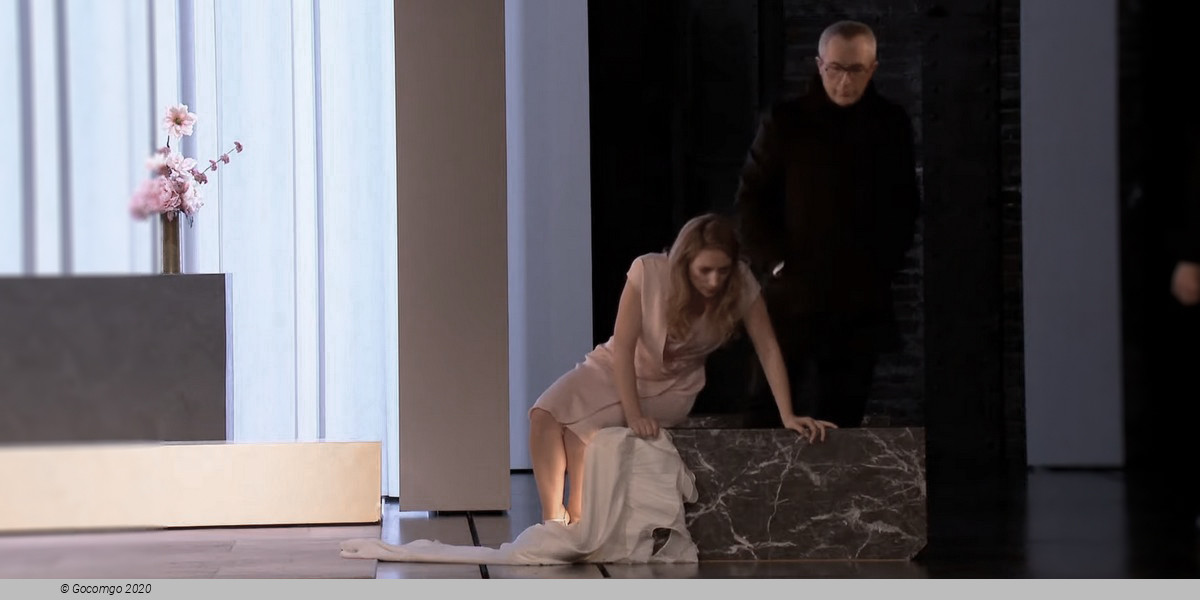
Ambroise Thomas’ lyrical drama Hamlet explores the souls of the characters, with a poetic and complex musical language, culminating in the aria expressing Ophélie’s madness. Director Nadja Loschky stages this opera, which offers everything from eerie graveyard encounters, to pleasurable dances, to intimate and musically graceful scenes, with great musical sensitivity as a finely tuned study of society.

William Shakespeare’s dramas have been interpreted by numerous composers over the centuries. More of them can be experienced in the symphony concert “To be or not to be?”

History
Premiere of this production: 09 March 1868, Paris Opéra (Salle Le Peletier)

Hamlet is a grand opera in five acts of 1868 by the French composer Ambroise Thomas, with a libretto by Michel Carré and Jules Barbier based on a French adaptation by Alexandre Dumas, père, and Paul Meurice of William Shakespeare's play Hamlet.

Synopsis

Place: Denmark at Elsinore Castle.

Act 1
Scene 1: The Coronation Hall

The royal Danish court is celebrating the coronation of Queen Gertrude who has married Claudius, brother of the late King Hamlet. Claudius places the crown on Gertrude's head. All leave, and Prince Hamlet, son of the late King and Gertrude, enters. He is upset that his mother has remarried so soon. Ophélie enters, and they sing a love duet. Laërte, Ophélie's brother, enters. He is being sent to Norway and gives his farewells. He entrusts Ophélie to the care of Hamlet. Hamlet refuses to join Laërte and Ophélie as they leave to join the banquet, and goes off in another direction. Courtiers and soldiers, on their way to the banquet, enter the hall. Horatio and Marcellus tell the soldiers that they have seen the ghost of Hamlet's father on the ramparts of the castle the previous night and go off to tell Hamlet.

Scene 2: The Ramparts

Horatio and Marcellus meet Hamlet on the ramparts. The Ghost appears, Horatio and Marcellus leave, and the Ghost tells his son that Claudius murdered him with poison. The Ghost commands Hamlet to take vengeance on Claudius, but Gertrude must be spared. The Ghost withdraws. Hamlet draws his sword and swears to avenge his father.

Act 2
Scene 1: The Gardens

Ophélie, reading a book, is concerned at Hamlet's new indifference. Hamlet appears in the distance, but leaves without speaking. The Queen enters. Ophélie says she would like to leave the court, but the Queen insists she should stay. Ophélie leaves the garden and King Claudius enters. Gertrude suspects that Hamlet now knows about the murder of his father, but Claudius says he does not. Hamlet enters and feigns madness. He rejects all overtures of friendship from Claudius, then announces he has engaged a troupe of actors to perform a play that evening. Claudius and Gertrude leave, and the players enter. Hamlet asks them to mime the play The Murder of Gonzago and then sings a drinking song, playing the fool, so as not to arouse suspicion.

Scene 2: The Play

The King and Queen and the other guests assemble in the castle hall where the stage has been set up. The play begins, and Hamlet narrates. The play tells a story similar to the murder of Hamlet's father. After the "poison" is administered, the "assassin" places the "crown" on his head. Claudius turns pale, rises abruptly, and commands the play to stop and the actors to leave. Hamlet accuses Claudius of the murder of his father, and snatches Claudius' crown from his head. The entire assembly reacts in a grand septet with chorus.

Act 3
Closet Scene

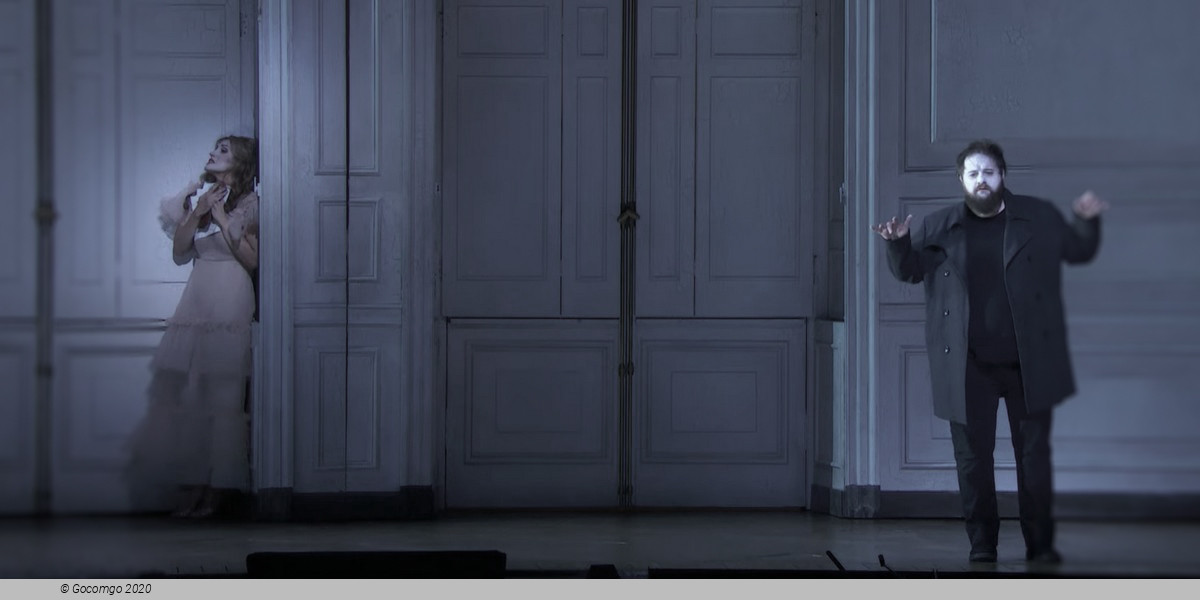
In the Queen's chambers Hamlet delivers the monologue "To be or not to be", then hides behind a tapestry. Claudius enters and prays aloud of his remorse. Hamlet, deciding Claudius' soul may be saved, if he is killed while praying, delays yet again. Polonius enters and in his conversation with Claudius reveals his own complicity. The King and Polonius leave, Hamlet emerges, and Gertrude enters with Ophélie. The Queen tries to persuade Hamlet to marry Ophélie, but Hamlet, realizing he can no longer marry the daughter of the guilty Polonius, refuses. Ophélie returns her ring to Hamlet and leaves. Hamlet tries to force Gertrude to confront her guilt, but she resists. As Hamlet threatens her, he sees the Ghost, who reminds him he must spare his mother.

Act 4
The Mad Scene

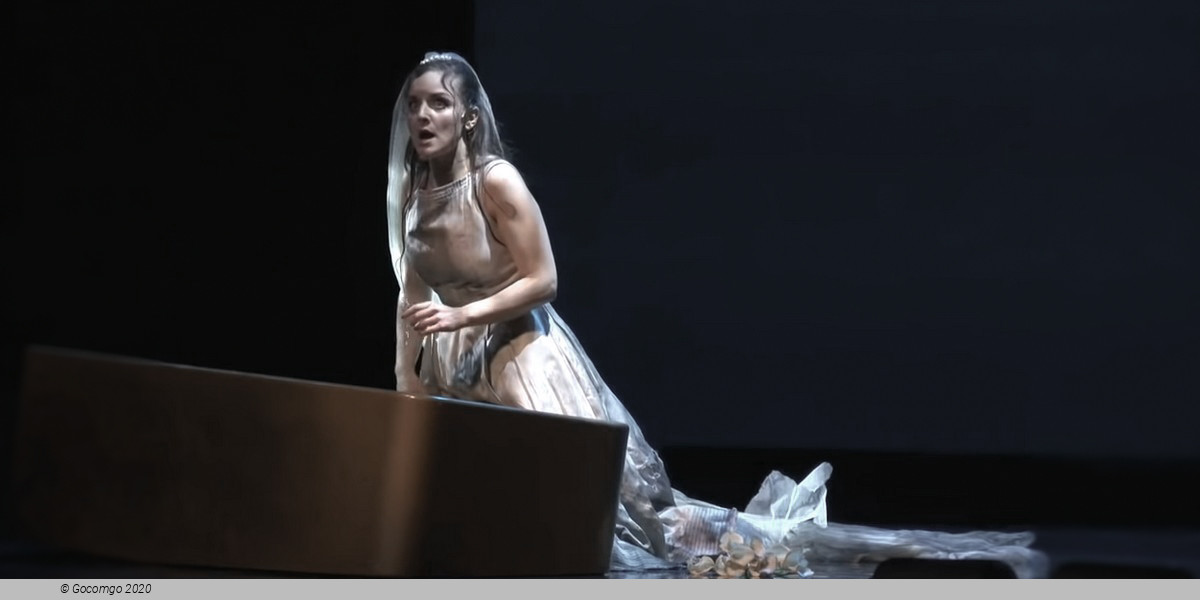
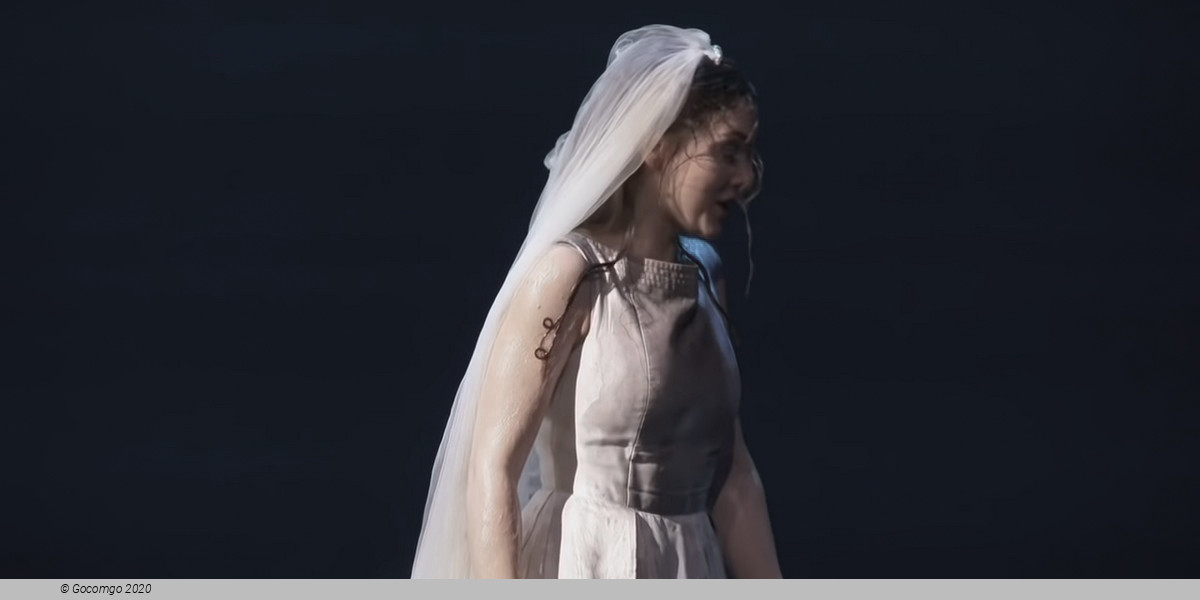
After Hamlet's rejection, Ophélie has gone mad and drowns herself in the lake.

Act 5
Gravediggers Scene

Hamlet comes upon two gravediggers digging a new grave. He asks who has died, but they do not know. He sings of remorse for his ill treatment of Ophélie. Laërte, who has returned from Norway and learned of his sister's death and Hamlet's role in it, enters and challenges Hamlet to a duel. They fight, and Hamlet is wounded, but Ophélie's funeral procession interrupts the duel. Hamlet finally realizes she is dead. The Ghost appears again and exhorts Hamlet to kill Claudius, which Hamlet does, avenging his father's death. The Ghost affirms Claudius' guilt and Hamlet's innocence. Hamlet, still in despair, is proclaimed King to cries of "Long live Hamlet! Long live the King!".

[In the much shorter "Covent Garden" ending the ghost does not appear, and, after Hamlet finally attacks and kills Claudius, he embraces Ophélie's body and dies. This version had apparently never been used until recently].

Venue Info

Komische Oper Berlin - Berlin
Location   Behrenstraße 55-57

The Komische Oper Berlin is a German opera company based in Berlin. The company produces opera, operetta and musicals.

The opera house is located on Behrenstraße, just a few steps from Unter den Linden. Since 2004, the Komische Oper Berlin, along with the Berlin State Opera, the Deutsche Oper Berlin, the Berlin State Ballet, and the Bühnenservice Berlin (Stage and Costume Design), has been a member of the Berlin Opera Foundation.

The theatre was built between 1891 and 1892 by architects Ferdinand Fellner and Hermann Helmer for a private society. It first opened on 24 September 1892 as "Theater Unter den Linden" with Adolf Ferron's operetta Daphne and Gaul and Haßreiter's ballet Die Welt in Bild und Tanz.

The theatre was primarily a vehicle for operetta, but was also used for various other events and balls. Around 800 people could be seated in the stalls, and the balconies and various en-suite dinner rooms housed about a further 1,700 seats. Its directors went bankrupt in 1896 and the theatre was forced to close its doors.

On 3 September 1898 the theatre was reopened as Metropol-Theater with Julius Freund's revue Paradies der Frauen. It then grew to become one of Berlin's most famous and successful variety theatres. During the 1920s and early 1930s, it was leased by the brothers Alfred and Fritz Rotter. Under their management, it saw the premieres of two operettas by Franz Lehár - Friederike (opera) in 1928 and Das Land des Lächelns in 1929, both starring Richard Tauber. However, due to a decline of variety and music hall entertainment the theatre was again closed in 1933.

In 1934 the theatre was nationalised and renamed Staatliches Operettentheater. It operated as part of the Nazi Kraft durch Freude entertainment and leisure programmes. During World War II, the auditorium was damaged by Allied bombing on 7 May 1944. The façade, entrance hall, and auditorium ceiling murals were destroyed by bombs on 9 March 1945.

After the war, the theatre was in East Germany, being that the building was in the eastern part of Berlin. Following repair works and provisional rebuilding, the theatre reopened on 23 December 1947, as the Komische Oper with Johann Strauss's operetta Die Fledermaus.

The 1950s saw various further alterations and extensions. The theatre was completely rebuilt in 1965/1966 by Architektenkollektiv Kunz Nierade, adding functional extensions and giving the theatre a completely new exterior. The theatre reopened again on 4 December 1966, with Mozart's Don Giovanni. The auditorium underwent further restoration in 1986, and the stage technology was further modernised by 1989. Today the theatre seats 1,270.

In 1947, Walter Felsenstein founded and led the resident opera company, the Komische Oper, until his death in 1975. Götz Friedrich was an assistant to Felsenstein at the company. Joachim Herz became general director after Felsenstein's death and served until 1981. Subsequently, Harry Kupfer directed the company for 21 seasons, until 2002. The company specializes in German language productions of opera, operetta and musicals. In 2007 the company won, jointly with Oper Bremen, the "Opera house of the year" award by the German magazine Opernwelt. From 2002 to 2012, the company's chief director and Intendant was Andreas Homoki. In June 2008, the company announced the appointment of Barrie Kosky to succeed Homoki as its next Intendant, as of the 2012/2013 season. In October 2014, his contract with the company was extended through 2022. Since 2005, the company's managing director has been Susanne Moser.

From 1966 to 2004, the theatre was also home to a resident ballet company – first as the "Tanztheater der Komischen Oper", and then from 1999 as "BerlinBallett – Komische Oper". In 2004, due to budgetary problems, the separate ballet companies of Berlin's three opera houses were merged into a single company called the Staatsballett Berlin.

Past General Music Directors (GMD) of the company have included Kurt Masur, Rolf Reuter, Yakov Kreizberg, Kirill Petrenko, Carl St.Clair, and Patrick Lange. Since 2012, the GMD of the company is Henrik Nánási. Nánási is scheduled to conclude his tenure at the end of the 2017-2018 season. In May 2017, the company announced the appointment of Ainārs Rubiķis as its next GMD, effective with the 2018-2019 season, with an initial contract of 3 seasons.

Important Info
Type: Opera
City: Berlin, Germany
Starts at: 18:00
Acts: 5
Duration: 3h
Sung in: French
Top of page