
Komische Oper Berlin 3 October 2022 - Intolleranza 1960 | GoComGo.com

Intolleranza 1960

Komische Oper Berlin, Small Stage, Berlin, Germany
All photos (3)
Select date and time
4 PM
Request for Tickets
Important Info
Type: Opera
City: Berlin, Germany
Starts at: 16:00
Acts: 2
Sung in: German

E-tickets: Print at home or at the box office of the event if so specified. You will find more information in your booking confirmation email.

You can only select the category, and not the exact seats.
If you order 2 or 3 tickets: your seats will be next to each other.
If you order 4 or more tickets: your seats will be next to each other, or, if this is not possible, we will provide a combination of groups of seats (at least in pairs, for example 2+2 or 2+3).

Overview

Pessimism of the mind, optimism of the will.

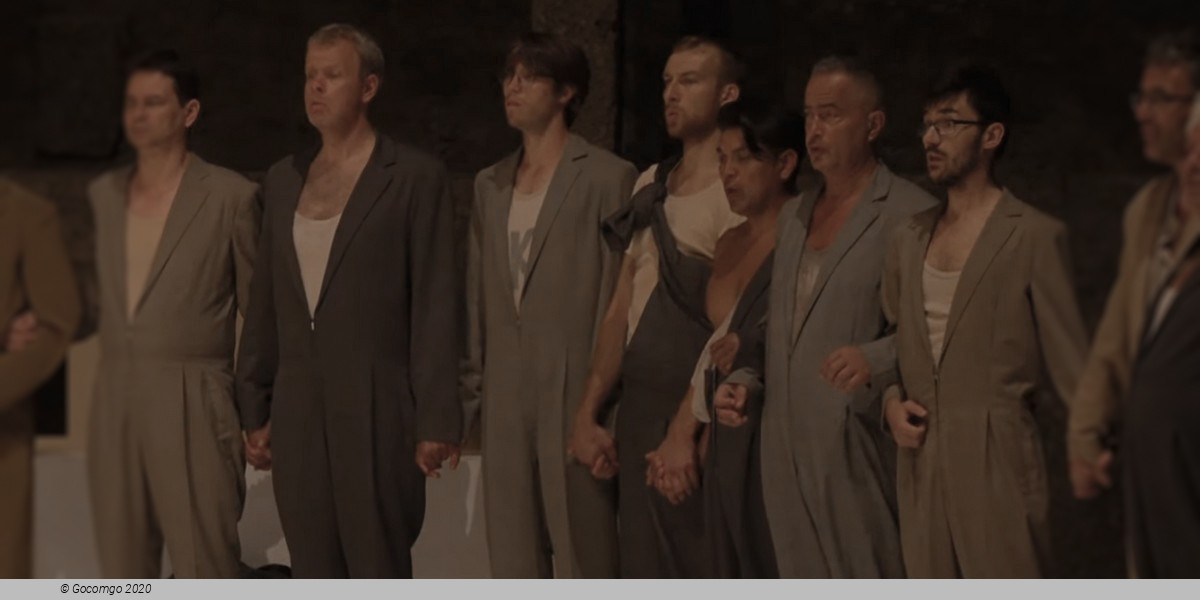
Great political Music Theatre! Composer Luigi Nono’s belief in the power of art was great, and worth examining — especially in our times. An encouragement to raise our voices against that which we do not want to put up with.

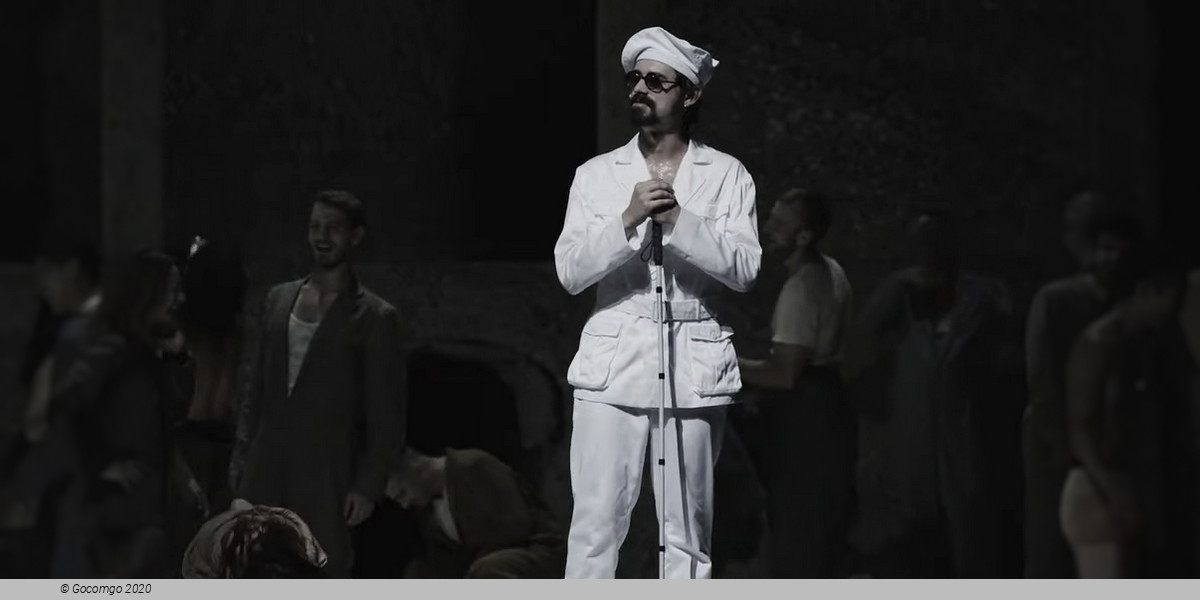
A migrant worker flees the calamities of a miners’ settlement, leaving his uncomprehending wife behind. Trying to find his way home, he gets caught up in political unrest, is interrogated without reason, tortured and locked up in a concentration camp. He experiences brutality and senselessness, but also solidarity. He is able to escape, wants to fight against injustice, and finds support in the love of a companion. Finally, he is stranded in a village that is swept away by a flood. The last words of the chorus come from Bertolt Brecht's poem To Those Who Follow in Our Wake: “...But you, when at last the time comes/ That man can aid his fellow man,/ Should think upon us/ with leniency.”

Musically, Nono employs a freely handled seriality that retains tremendous color and emotive permeability in its high level of complexity. Framed by two large contemplative choruses, the composer vehemently points out the ills of a dysfunctional society. The final flood seems today, even more than at the time of its composition, a frighteningly plausible consequence of human inadequacy.

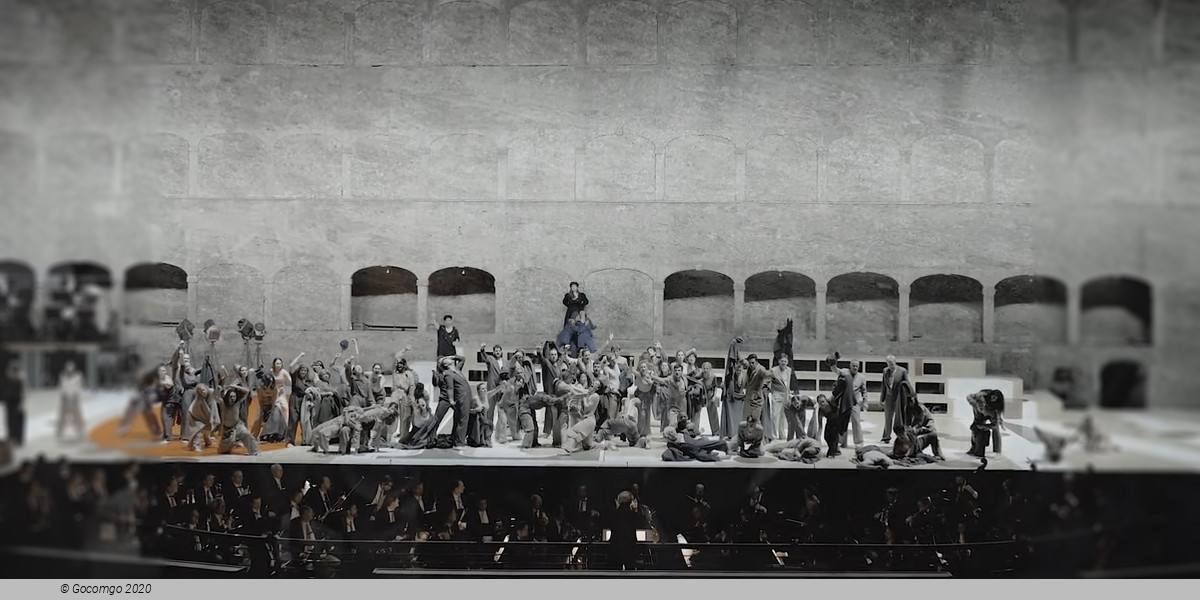
Director Marco Štorman displays the plot beyond illustrative images: The real battles rage within. Márton Ágh's stage design, which takes up the entire stage house, draws the audience into the middle of the action and makes tangible what may come when the flood has gone: silence.

Don't miss it. Stage designer Márton Ágh leaves no stone unturned, transforming the opera house into a desert of ice. You won't recognize the stage and auditorium!

History
Premiere of this production: 13 April 1961, La Fenice, Venice

Intolleranza 1960 (Intolerance 1960) is a one-act opera in two parts by Luigi Nono, and is dedicated to his father-in-law, Arnold Schoenberg. The plot concerns a migrant, who travels from Southern Italy looking for work. Along the way, he encounters protests, arrests and torture. He ends up in a concentration camp, where he experiences the gamut of human emotions. He reaches a river, and realises that everywhere is his home. The opera premiered on 13 April 1961 at the Teatro La Fenice in Venice.

Synopsis

Setting: Fictional place in the present

Part one

Opening chorus (Coro iniziale)

Instead of an overture, a large-scale a cappella chorus, "Live and be vigilant", is heard from behind a closed curtain.

1st scene: In a mining village

A migrant is tired of the hard work in the mines in a foreign land. He is consumed by desire to return to his homeland from which he once fled.

2nd scene: A woman rushes in

A woman who had given the stranger in the mining village warmth and peace and love, tries to persuade him to stay. When she realizes that her lover is determined to go, she insults him and swears revenge. Nevertheless, she leaves with the migrant.

3rd scene: In a city

He has reached a city while a large unauthorized peace demonstration is taking place. The police intervene and arrest some demonstrators, including the migrant, although he was not participating in the rally. His attempt to defend himself remains unsuccessful.

4th scene: in a police station

Four police officers set to work to force the prisoners to confess. The man, however, stands firm to his story that he was on the way to his home, which goes through the city, and he therefore had nothing to confess.

5th scene: The torture

All those arrested are brought to torture. The chorus of the tortured cries to the audience, asking whether it was deaf and would behave just like cattle in the pen of shame.

6th scene: In a concentration camp

The chorus of prisoners desperately cries for freedom. The four policemen taunt their victims. The hero makes friends with another prisoner from Algeria. They plan to escape together.

7th scene: After the escape

The migrant manages to escape with the Algerians from the concentration camp. While originally it had been only his wish to see his home, now his heart burns only with the desire for freedom.

Part two

1st scene: Some absurdities of contemporary life

From all sides voices press upon the hero, voices which not only disturb and confuse him, but almost overpower him. The absurdities of contemporary life, such as the bureaucracy – for example, "registration required", "Documents are the soul of the state", "certify, authenticate, notarize" – and sensational newspaper headlines like "mother of thirteen children was a man" increase, and the scene ends with a big explosion.

2nd scene: a meeting between a refugee and his companion

A silent crowd suffers from the impression of the slogans and the explosion. When a woman begins to speak out against war and disaster, it appears to the emigrant as a source of hope in his solitude. Henceforth, the two want to fight together for a better world.

3rd scene: Projections of episodes of terror and fanaticism

To the hero appears the woman he has left in the mining village, and this confuses him. Together with his companion (compagna) he sends her away. Then the woman transforms herself along with a group of fanatics into ghosts and shadows. In the dream, she sees the migrant, the mine, the mocking slogan "Arbeit macht frei" over the entrance of the camp, and she sees the nightmares of the intolerance he holds with his companion, "Never, never again". The choir sings Mayakovsky's "Our march".

4th scene: In the vicinity of a village on the banks of a great river

The hero and his companion have reached the great river, which forms the border of his native country. It is flooding; its level increases more and more. The deluge swallows roads, broken bridges, barracks, and crushes houses. Even the migrant and his companion are unable to save themselves. They die an agonizing death.

Final chorus (Coro finale) set to excerpts from Brecht's poem "To Posterity", again without orchestral accompaniment.

Venue Info

Komische Oper Berlin - Berlin
Location   Behrenstraße 55-57

The Komische Oper Berlin is a German opera company based in Berlin. The company produces opera, operetta and musicals.

The opera house is located on Behrenstraße, just a few steps from Unter den Linden. Since 2004, the Komische Oper Berlin, along with the Berlin State Opera, the Deutsche Oper Berlin, the Berlin State Ballet, and the Bühnenservice Berlin (Stage and Costume Design), has been a member of the Berlin Opera Foundation.

The theatre was built between 1891 and 1892 by architects Ferdinand Fellner and Hermann Helmer for a private society. It first opened on 24 September 1892 as "Theater Unter den Linden" with Adolf Ferron's operetta Daphne and Gaul and Haßreiter's ballet Die Welt in Bild und Tanz.

The theatre was primarily a vehicle for operetta, but was also used for various other events and balls. Around 800 people could be seated in the stalls, and the balconies and various en-suite dinner rooms housed about a further 1,700 seats. Its directors went bankrupt in 1896 and the theatre was forced to close its doors.

On 3 September 1898 the theatre was reopened as Metropol-Theater with Julius Freund's revue Paradies der Frauen. It then grew to become one of Berlin's most famous and successful variety theatres. During the 1920s and early 1930s, it was leased by the brothers Alfred and Fritz Rotter. Under their management, it saw the premieres of two operettas by Franz Lehár - Friederike (opera) in 1928 and Das Land des Lächelns in 1929, both starring Richard Tauber. However, due to a decline of variety and music hall entertainment the theatre was again closed in 1933.

In 1934 the theatre was nationalised and renamed Staatliches Operettentheater. It operated as part of the Nazi Kraft durch Freude entertainment and leisure programmes. During World War II, the auditorium was damaged by Allied bombing on 7 May 1944. The façade, entrance hall, and auditorium ceiling murals were destroyed by bombs on 9 March 1945.

After the war, the theatre was in East Germany, being that the building was in the eastern part of Berlin. Following repair works and provisional rebuilding, the theatre reopened on 23 December 1947, as the Komische Oper with Johann Strauss's operetta Die Fledermaus.

The 1950s saw various further alterations and extensions. The theatre was completely rebuilt in 1965/1966 by Architektenkollektiv Kunz Nierade, adding functional extensions and giving the theatre a completely new exterior. The theatre reopened again on 4 December 1966, with Mozart's Don Giovanni. The auditorium underwent further restoration in 1986, and the stage technology was further modernised by 1989. Today the theatre seats 1,270.

In 1947, Walter Felsenstein founded and led the resident opera company, the Komische Oper, until his death in 1975. Götz Friedrich was an assistant to Felsenstein at the company. Joachim Herz became general director after Felsenstein's death and served until 1981. Subsequently, Harry Kupfer directed the company for 21 seasons, until 2002. The company specializes in German language productions of opera, operetta and musicals. In 2007 the company won, jointly with Oper Bremen, the "Opera house of the year" award by the German magazine Opernwelt. From 2002 to 2012, the company's chief director and Intendant was Andreas Homoki. In June 2008, the company announced the appointment of Barrie Kosky to succeed Homoki as its next Intendant, as of the 2012/2013 season. In October 2014, his contract with the company was extended through 2022. Since 2005, the company's managing director has been Susanne Moser.

From 1966 to 2004, the theatre was also home to a resident ballet company – first as the "Tanztheater der Komischen Oper", and then from 1999 as "BerlinBallett – Komische Oper". In 2004, due to budgetary problems, the separate ballet companies of Berlin's three opera houses were merged into a single company called the Staatsballett Berlin.

Past General Music Directors (GMD) of the company have included Kurt Masur, Rolf Reuter, Yakov Kreizberg, Kirill Petrenko, Carl St.Clair, and Patrick Lange. Since 2012, the GMD of the company is Henrik Nánási. Nánási is scheduled to conclude his tenure at the end of the 2017-2018 season. In May 2017, the company announced the appointment of Ainārs Rubiķis as its next GMD, effective with the 2018-2019 season, with an initial contract of 3 seasons.

Important Info
Type: Opera
City: Berlin, Germany
Starts at: 16:00
Acts: 2
Sung in: German
Top of page