
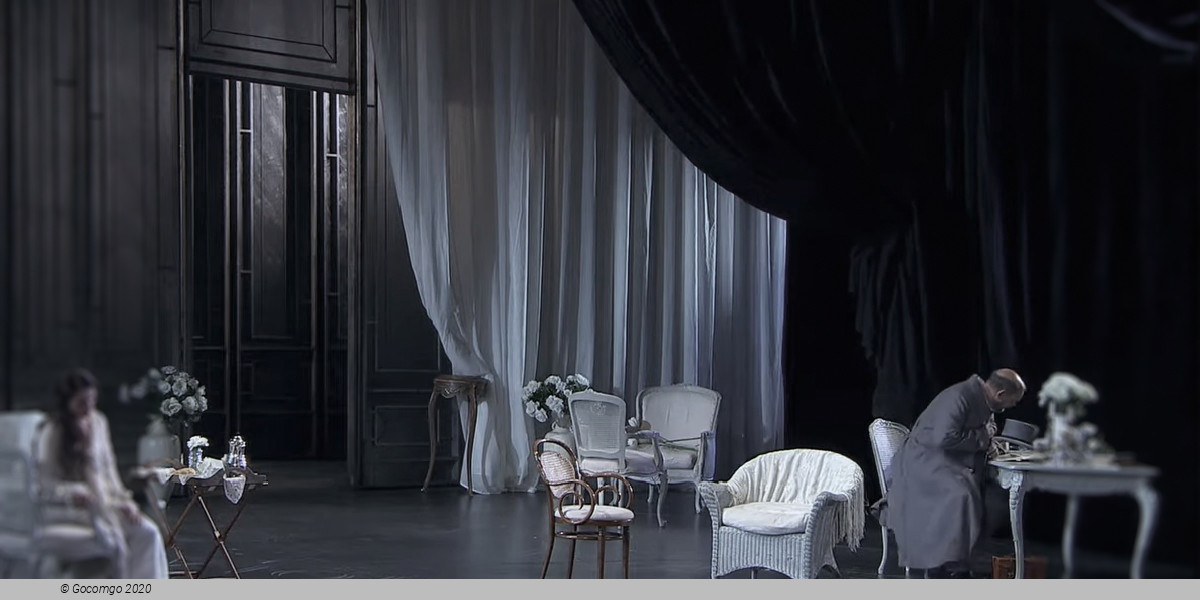
Komische Oper Berlin 1 December 2019 - La traviata | GoComGo.com

La traviata

Komische Oper Berlin, Berlin, Germany
All photos (7)
Select date and time
6 PM
Request for Tickets
Important Info
Type: Opera
City: Berlin, Germany
Starts at: 18:00
Acts: 3
Duration:
Sung in: Italian

E-tickets: Print at home or at the box office of the event if so specified. You will find more information in your booking confirmation email.

You can only select the category, and not the exact seats.
If you order 2 or 3 tickets: your seats will be next to each other.
If you order 4 or more tickets: your seats will be next to each other, or, if this is not possible, we will provide a combination of groups of seats (at least in pairs, for example 2+2 or 2+3).

Overview

Premiere

A world-wide success – Giuseppe Verdi’s masterpiece from 1853 asks the big questions of modern life concerning freedom and love in the face of hypocritical morality and the brevity of human existence. His triumphal march across the stages of the world continues to this day, making La traviatta a true classic. Under Ainārs Rubiķis‘ musical direction, Komische Oper ensemble member Nadja Mchantaf reels as Violetta Valéry through heart rending states that swing between scandalousness and the joys of love.

She’s worshipped and hotly desired – just don’t get too close! Violetta Valéry, high society courtesan, stands at the center of Parisian nightlife, but is herself a complete outsider. At a party in her salon, Alfredo falls in love with this woman who proclaims she’ll never love. Her father forbids the relationship. Out of longing, jealousy and rage Violetta and Alfredo battle with love … and death.
Based on Alexandre Dumas’ novel Camille the librettist Francesco Maria Piave and Giuseppe Verdi created a masterpiece for the stage. With this production, director Nicola Raab will be making her debut at the Komische Oper. She is particularly interested in the present relevance of this story concerning the will to freedom and self-determination. To what lengths will an independent woman go who is determined to retain control over her life until the end?

La Dame aux Camélias (literally The Lady with the Camellias, commonly known in English as Camille) is a novel by Alexandre Dumas fils, first published in 1848 and subsequently adapted by Dumas for the stage. La Dame aux Camélias premiered at the Théâtre du Vaudeville in Paris, France on February 2, 1852. The play was an instant success, and Giuseppe Verdi immediately set about putting the story to music. His work became the 1853 opera La traviata, with the female protagonist, Marguerite Gautier, renamed Violetta Valéry.

In the English-speaking world, La Dame aux Camélias became known as Camille and 16 versions have been performed at Broadway theatres alone. The title character is Marguerite Gautier, who is based on Marie Duplessis, the real-life lover of author Dumas, fils.

Written by Alexandre Dumas fils (1824–1895) when he was 23 years old, and first published in 1848, La Dame aux Camélias is a semi-autobiographical novel based on the author's brief love affair with a courtesan, Marie Duplessis. Set in mid-19th-century France, the novel tells the tragic love story between fictional characters Marguerite Gautier, a demimondaine or courtesan suffering from consumption, and Armand Duval, a young bourgeois. Marguerite is nicknamed la dame aux camélias (French for 'the lady of the camellias') because she wears a red camellia when she is menstruating and unavailable for making love and a white camelia when she is available to her lovers.

Armand falls in love with Marguerite and ultimately becomes her lover. He convinces her to leave her life as a courtesan and to live with him in the countryside. This idyllic existence is interrupted by Armand's father, who, concerned with the scandal created by the illicit relationship, and fearful that it will destroy Armand's sister's chances of marriage, convinces Marguerite to leave. Up until Marguerite's death, Armand believes that she left him for another man. Marguerite's death is described as an unending agony, during which Marguerite, abandoned by everyone, regrets what might have been.

The story is narrated after Marguerite's death by two male narrators, Armand and an unnamed frame narrator. Some scholars believe that Marguerite's illness and Duplessis's publicized cause of death, "consumption", was a 19th-century euphemism for syphilis (as opposed to the more common meaning of tuberculosis). Dumas, fils, is careful to paint a favourable portrait of Marguerite, who despite her past is rendered virtuous by her love for Armand, and the suffering of the two lovers, whose love is shattered by the need to conform to the morals of the times, is rendered touchingly. In contrast the Chevalier des Grieux's love for Manon in Manon Lescaut (1731), a French novel by Abbé Prévost referenced at the beginning of La Dame aux Camélias, Armand's love is for a woman who is ready to sacrifice her riches and her lifestyle for him, but who is thwarted by the arrival of Armand's father. The novel is also marked by the description of Parisian life during the 19th century and the fragile world of the courtesan.

History
Premiere of this production: 06 March 1853, Teatro La Fenice, Venice

La traviata is an opera in three acts by Giuseppe Verdi set to an Italian libretto by Francesco Maria Piave. It is based on La Dame aux camélias (1852), a play adapted from the novel by Alexandre Dumas fils. The opera was originally titled Violetta, after the main character. It was first performed on 6 March 1853 at the La Fenice opera house in Venice.

Synopsis

Set in and around Paris in about 1850.

Act I

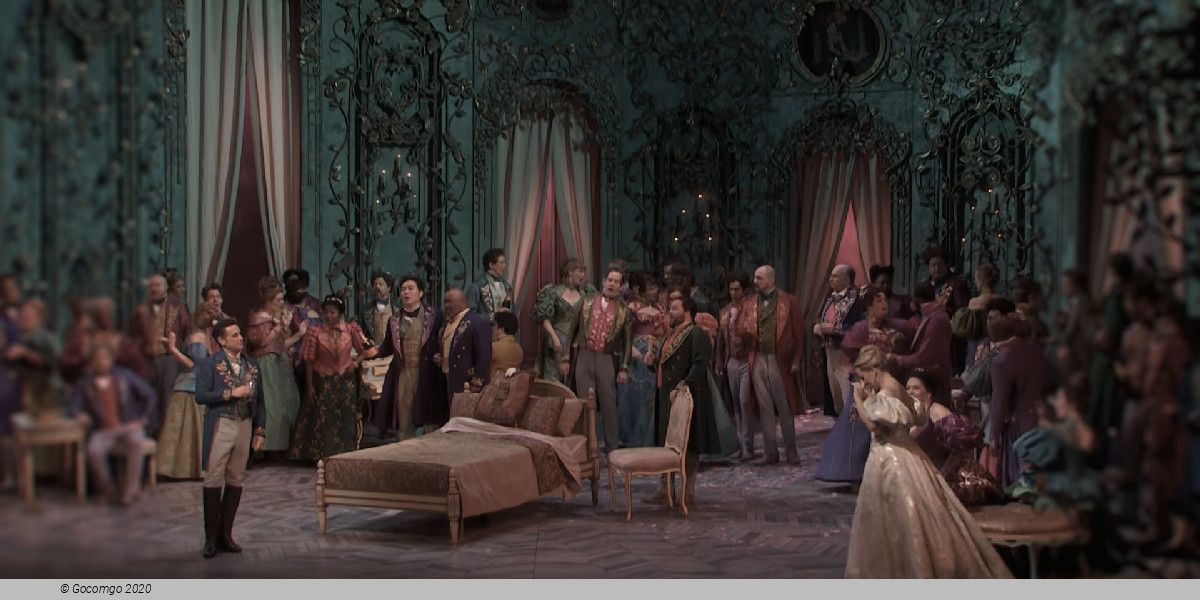
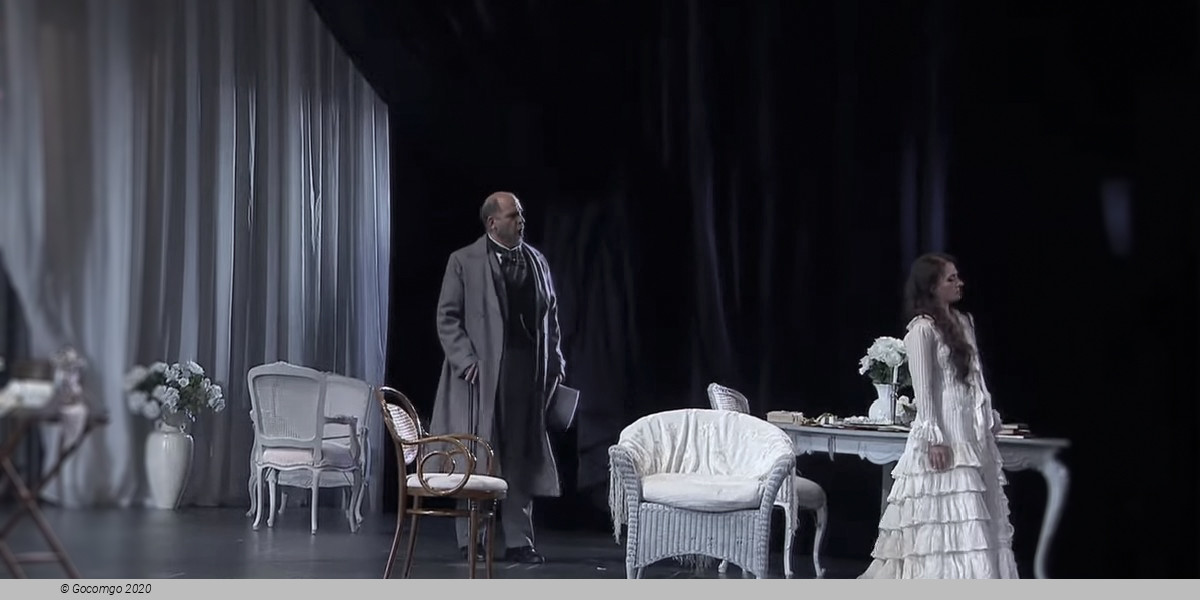
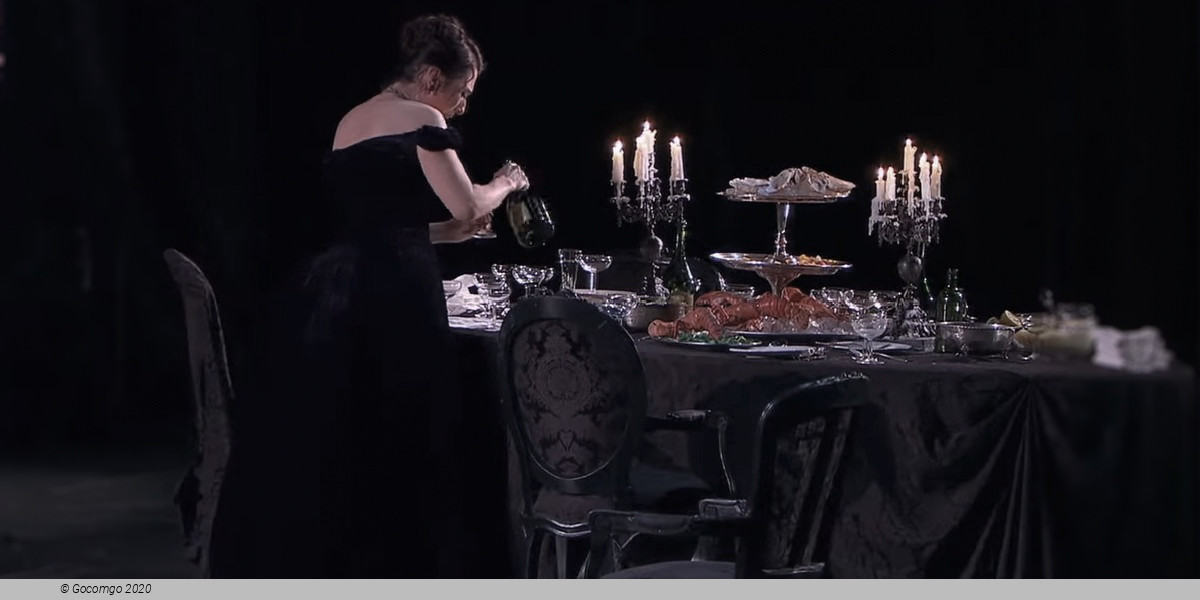
Violetta Valéry, a Parisian courtesan, greets the guests at her salon. Among them are Flora Bervoix, the Marchese D’Obigny, Baron Douphol and Gastone, who introduces Violetta to a new admirer of hers, Alfredo Germont. The young Germont, who has been admiring her from afar, joins her in a drinking song. An orchestra strikes up in an adjacent room, inviting the guests to dance. As the guests make their way to the ballroom, Violetta, who is suffering from consumption, feels faint; she therefore sends the guests on ahead and retires to her boudoir to recover. Alfredo enters and, realising that they are alone, admits his love for her. She replies that love means nothing to her. She
is, however, touched by the young man’s sincerity and promises to meet him the following day.
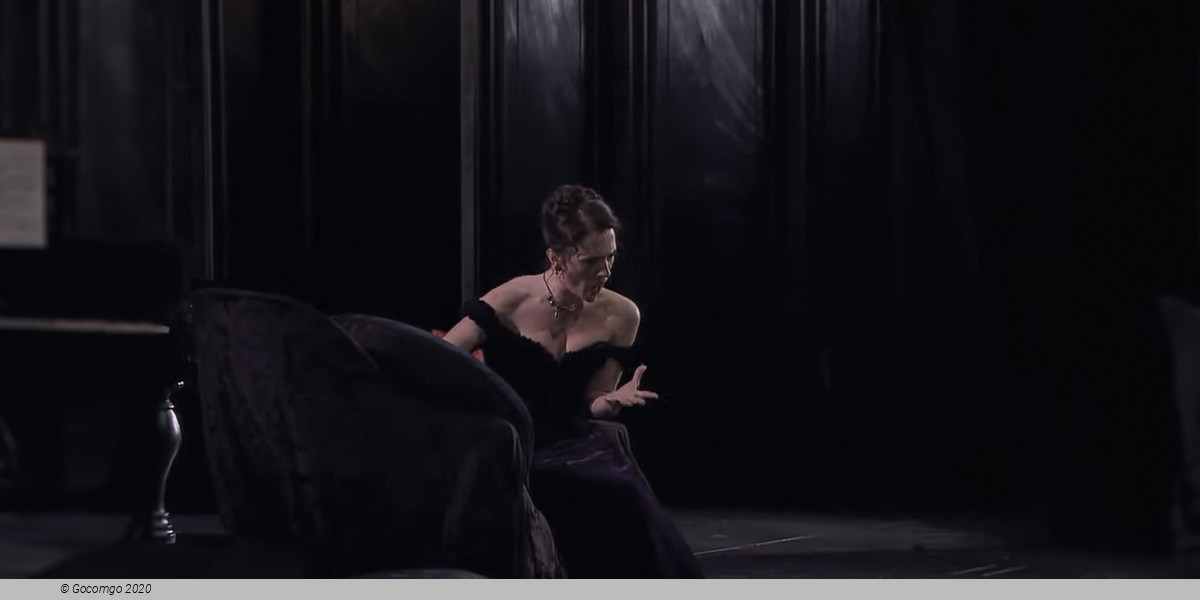
When the guests have departed, she asks herself whether Alfredo is the man she could love. Despite
the strains of Alfredo’s love song drifting in from outside, she decides she prefers her freedom.

Act II

scene 1
A few months later: Alfredo and Violetta have set up house together in the country, outside Paris. Alfredo says how happy they are, but when Violetta’s maid Annina lets on that Violetta has been selling her belongings to pay for the house, he hastens into town to raise the money himself. Violetta comes in search of him and discovers an invitation from her friend Flora to a soirée that very night. Violetta has no intention of returning to her former life, but she is forced to reconsider
on encountering Alfredo’s father. He is very taken with Violetta and her civilised manners but orders her to renounce Alfredo: his son’s scandalous liaison with Violetta is threatening his daughter’s forthcoming marriage. Violetta considers his demand unreasonable, but before long Germont succeeds in persuading her. Alone and desolate, Violetta sends a reply to Flora accepting her invitation and sits down to write a farewell letter to Alfredo. His return takes her by surprise, and she can barely restrain herself as she passionately reminds him how much she loves him before
rushing out. As the maid brings him Violetta’s farewell letter, Germont returns to console his son and reminds him of life in their family home in Provence. Alfredo spots Flora’s invitation and suspects that Violetta has left him for another man. In a rage, he decides to confront her at the soirée.

scene 2
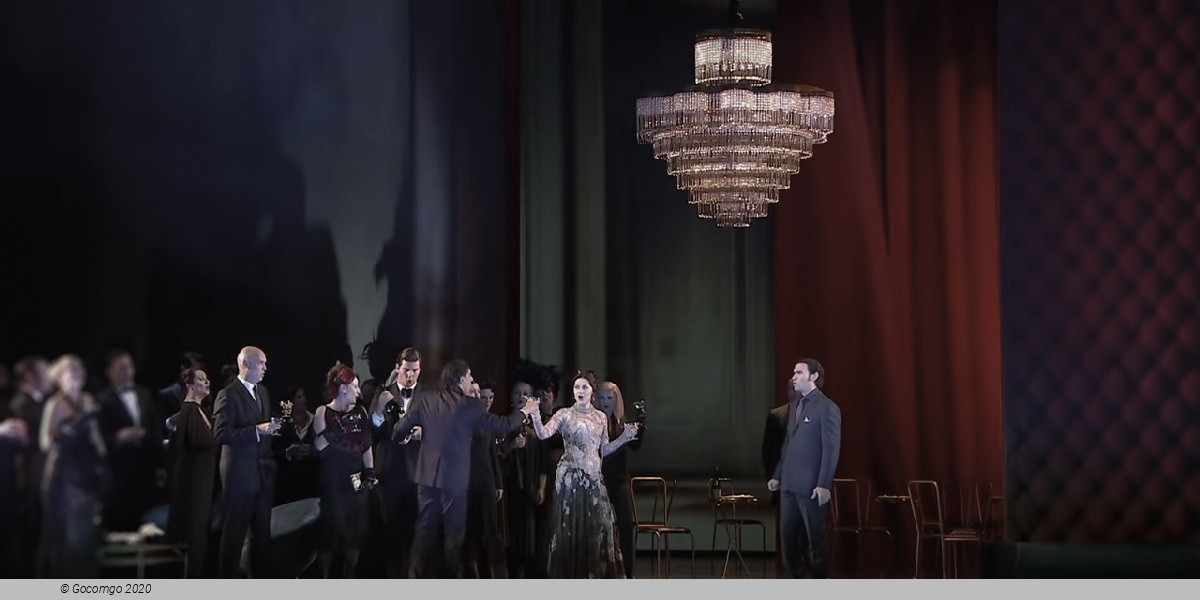
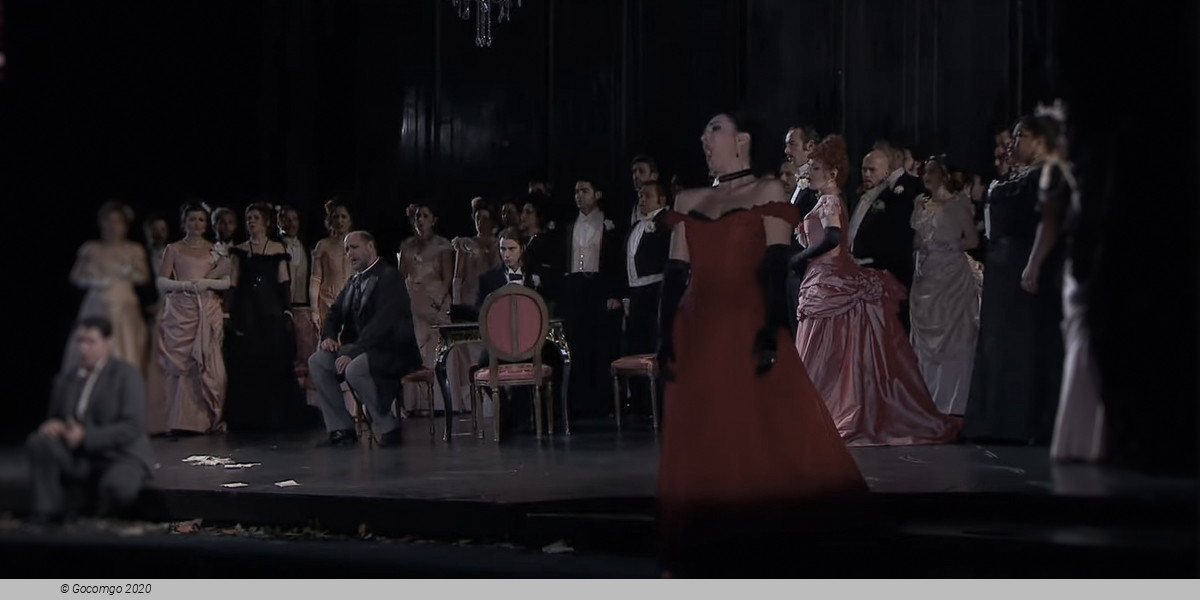
At the soirée, Flora hears from the Marchese that Violetta and Alfredo have parted. Flora asks the guests to make way for a visiting troupe of performing gypsies. They are followed by matadors and a song about Piquillo and his sweetheart. Alfredo rushes in and delivers some bitter comments about love and gambling. Violetta appears on the arm of Baron Douphol, who challenges Alfredo to a game of cards and loses a small fortune to him. As the guests go in to supper, Violetta asks to have a word with Alfredo in private. She is afraid the Baron will be enraged by his loss and urges Alfredo to leave. Alfredo misunderstands her and orders her to admit she loves the Baron. Disappointed by Alfredo’s reaction, Violetta lies and confesses that yes, she does. Alfredo calls the other guests to gather round in order to denounce his former beloved in public and throws the money he has won at her feet. Germont, arriving at that very moment, expresses his disapproval of his son’s behaviour. The guests likewise rebuke Alfredo and Douphol challenges him to a duel.

Act III

Violetta’s bedroom, six months later. Dr Grenvil tells Annina that her mistress has not long to live –
the consumption has taken its toll. Alone, Violetta rereads a letter from Germont saying that the Baron was only slightly wounded in his duel with Alfredo, that Alfredo has heard the truth and is
coming to beg her pardon. But Violetta realises it is too late. It is carnival time in Paris and, the sounds of the revellers having passed, Annina rushes in to announce Alfredo. The lovers ecstatically plan to leave Paris. Germont enters with the doctor just as Violetta rises from her bed with the last of her strength. Feeling a sudden rush of life, she sways and falls dead at her lover’s feet.

Venue Info

Komische Oper Berlin - Berlin
Location   Behrenstraße 55-57

The Komische Oper Berlin is a German opera company based in Berlin. The company produces opera, operetta and musicals.

The opera house is located on Behrenstraße, just a few steps from Unter den Linden. Since 2004, the Komische Oper Berlin, along with the Berlin State Opera, the Deutsche Oper Berlin, the Berlin State Ballet, and the Bühnenservice Berlin (Stage and Costume Design), has been a member of the Berlin Opera Foundation.

The theatre was built between 1891 and 1892 by architects Ferdinand Fellner and Hermann Helmer for a private society. It first opened on 24 September 1892 as "Theater Unter den Linden" with Adolf Ferron's operetta Daphne and Gaul and Haßreiter's ballet Die Welt in Bild und Tanz.

The theatre was primarily a vehicle for operetta, but was also used for various other events and balls. Around 800 people could be seated in the stalls, and the balconies and various en-suite dinner rooms housed about a further 1,700 seats. Its directors went bankrupt in 1896 and the theatre was forced to close its doors.

On 3 September 1898 the theatre was reopened as Metropol-Theater with Julius Freund's revue Paradies der Frauen. It then grew to become one of Berlin's most famous and successful variety theatres. During the 1920s and early 1930s, it was leased by the brothers Alfred and Fritz Rotter. Under their management, it saw the premieres of two operettas by Franz Lehár - Friederike (opera) in 1928 and Das Land des Lächelns in 1929, both starring Richard Tauber. However, due to a decline of variety and music hall entertainment the theatre was again closed in 1933.

In 1934 the theatre was nationalised and renamed Staatliches Operettentheater. It operated as part of the Nazi Kraft durch Freude entertainment and leisure programmes. During World War II, the auditorium was damaged by Allied bombing on 7 May 1944. The façade, entrance hall, and auditorium ceiling murals were destroyed by bombs on 9 March 1945.

After the war, the theatre was in East Germany, being that the building was in the eastern part of Berlin. Following repair works and provisional rebuilding, the theatre reopened on 23 December 1947, as the Komische Oper with Johann Strauss's operetta Die Fledermaus.

The 1950s saw various further alterations and extensions. The theatre was completely rebuilt in 1965/1966 by Architektenkollektiv Kunz Nierade, adding functional extensions and giving the theatre a completely new exterior. The theatre reopened again on 4 December 1966, with Mozart's Don Giovanni. The auditorium underwent further restoration in 1986, and the stage technology was further modernised by 1989. Today the theatre seats 1,270.

In 1947, Walter Felsenstein founded and led the resident opera company, the Komische Oper, until his death in 1975. Götz Friedrich was an assistant to Felsenstein at the company. Joachim Herz became general director after Felsenstein's death and served until 1981. Subsequently, Harry Kupfer directed the company for 21 seasons, until 2002. The company specializes in German language productions of opera, operetta and musicals. In 2007 the company won, jointly with Oper Bremen, the "Opera house of the year" award by the German magazine Opernwelt. From 2002 to 2012, the company's chief director and Intendant was Andreas Homoki. In June 2008, the company announced the appointment of Barrie Kosky to succeed Homoki as its next Intendant, as of the 2012/2013 season. In October 2014, his contract with the company was extended through 2022. Since 2005, the company's managing director has been Susanne Moser.

From 1966 to 2004, the theatre was also home to a resident ballet company – first as the "Tanztheater der Komischen Oper", and then from 1999 as "BerlinBallett – Komische Oper". In 2004, due to budgetary problems, the separate ballet companies of Berlin's three opera houses were merged into a single company called the Staatsballett Berlin.

Past General Music Directors (GMD) of the company have included Kurt Masur, Rolf Reuter, Yakov Kreizberg, Kirill Petrenko, Carl St.Clair, and Patrick Lange. Since 2012, the GMD of the company is Henrik Nánási. Nánási is scheduled to conclude his tenure at the end of the 2017-2018 season. In May 2017, the company announced the appointment of Ainārs Rubiķis as its next GMD, effective with the 2018-2019 season, with an initial contract of 3 seasons.

Important Info
Type: Opera
City: Berlin, Germany
Starts at: 18:00
Acts: 3
Duration:
Sung in: Italian
Top of page