

Komische Oper Berlin 12 May 2023 - Xerxes | GoComGo.com

Xerxes

Komische Oper Berlin, Main Stage, Berlin, Germany
All photos (6)
Select date and time
7:30 PM
Request for Tickets
Important Info
Type: Opera
City: Berlin, Germany
Starts at: 19:30
Acts: 3
Intervals: 1
Duration: 3h 20min
Sung in: German

E-tickets: Print at home or at the box office of the event if so specified. You will find more information in your booking confirmation email.

You can only select the category, and not the exact seats.
If you order 2 or 3 tickets: your seats will be next to each other.
If you order 4 or more tickets: your seats will be next to each other, or, if this is not possible, we will provide a combination of groups of seats (at least in pairs, for example 2+2 or 2+3).

Overview

Baroque picture magic.

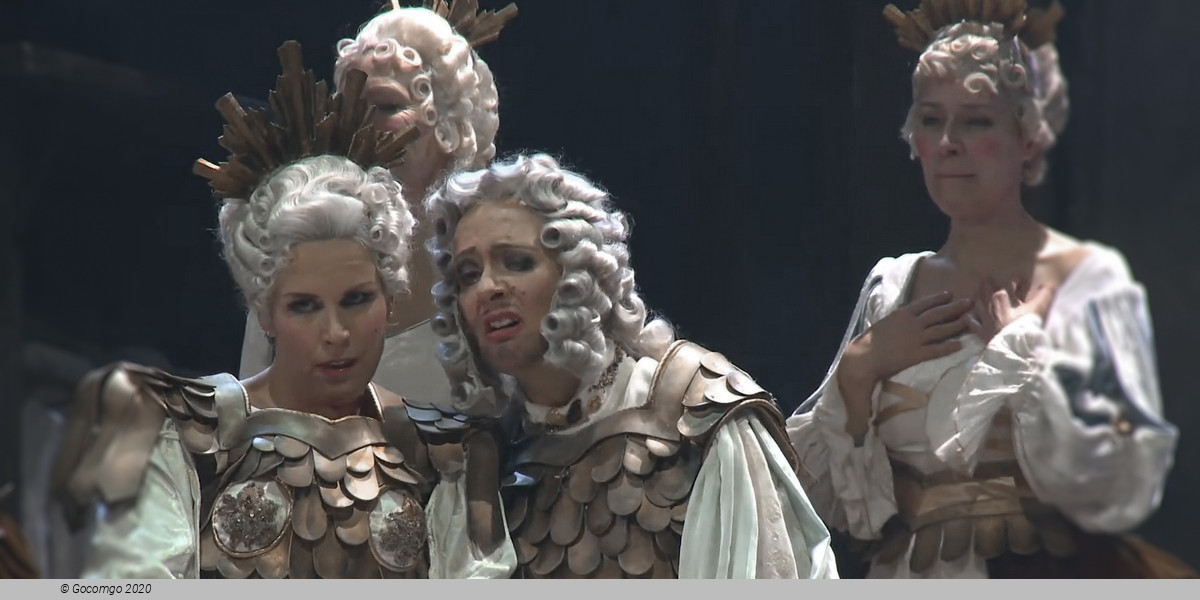
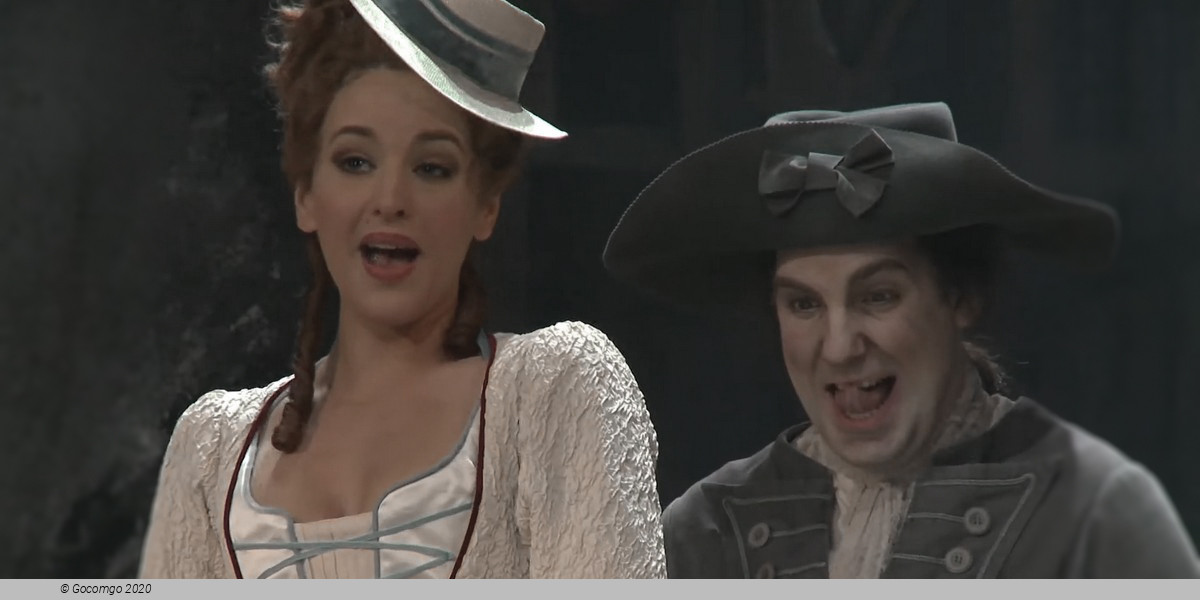
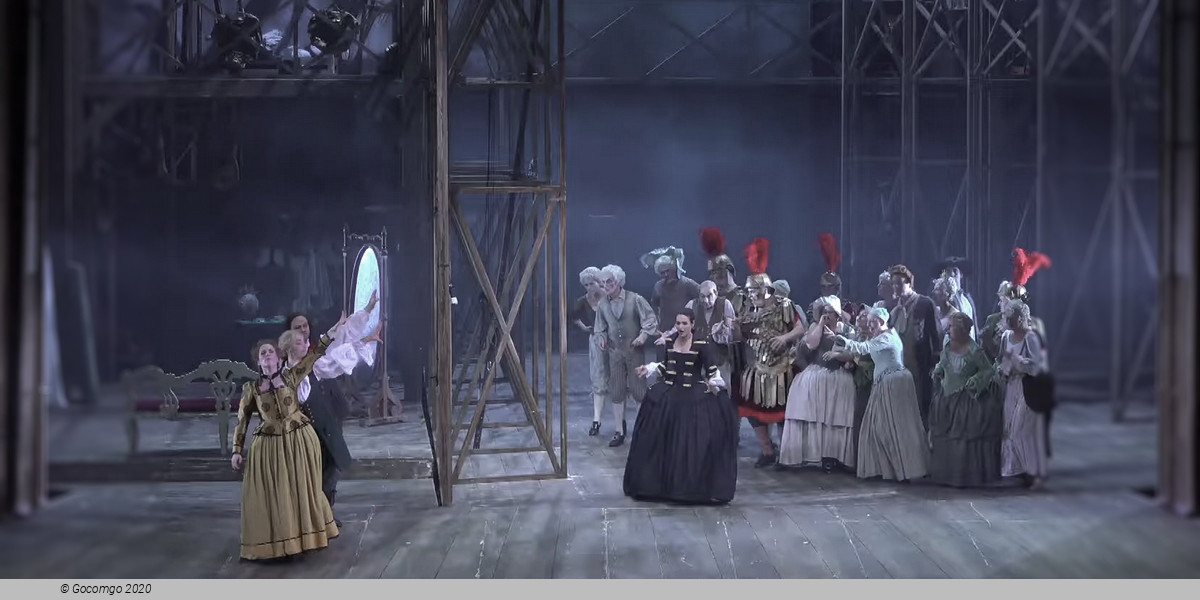
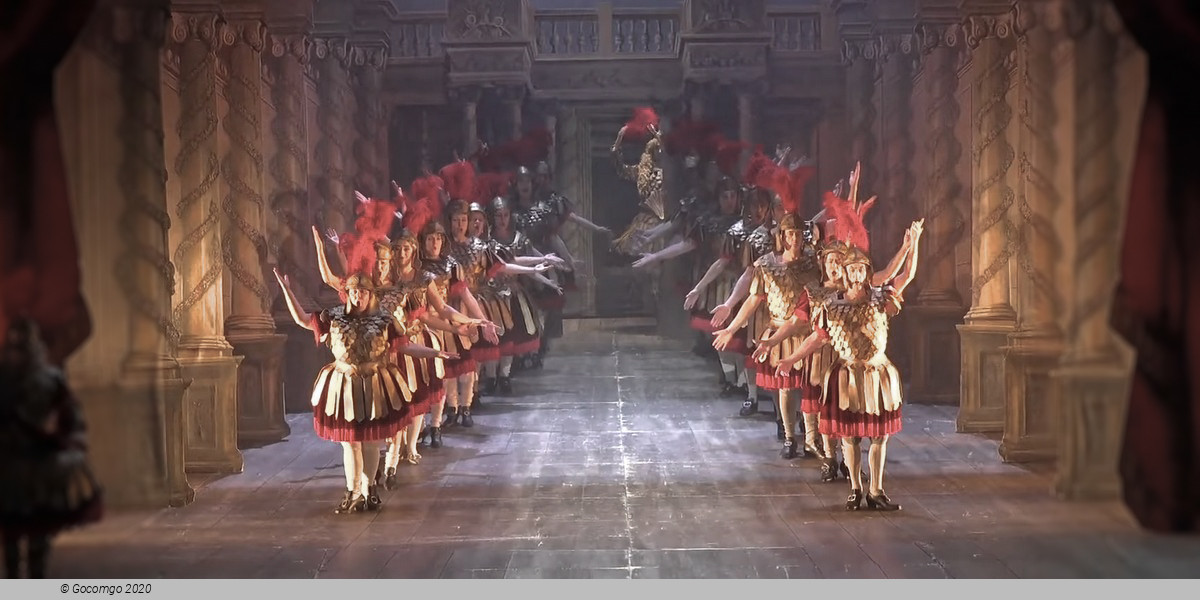
The magnificent magic of Baroque theatre on the stage of the Komische Oper Berlin: In the acclaimed production by Norwegian theatre magician Stefan Herheim, under the musical direction of Baroque specialist Konrad Junghänel, Handel's opera Xerxes becomes a feast for the eyes, ears and all the senses.
With great opulence and attention to detail, Herheim tells the story of the powerful Persian king Xerxes, who though powerful in body, remains powerless in love. A humorous play on performance conventions that is filled with the spirit of Handel's time and yet relevant for our times. "A theatrical miracle that proves how education and complex, historically aware thinking can increase our capacity for pleasure” [FAZ].

History
Premiere of this production: 15 April 1738, King's Theatre Haymarket, London

Serse (Xerxes) is an opera seria in three acts by George Frideric Handel. It was first performed in London on 15 April 1738. The Italian libretto was adapted by an unknown hand from that by Silvio Stampiglia for an earlier opera of the same name by Giovanni Bononcini in 1694. Stampiglia's libretto was itself based on one by Nicolò Minato that was set by Francesco Cavalli in 1654. The opera is set in Persia (modern-day Iran) about 470 BC and is very loosely based upon Xerxes I of Persia. Serse, originally sung by a mezzo soprano castrato, is now usually performed by a mezzo-soprano or counter-tenor.

Synopsis

Place: Abydos, Persia
Time: about 470 BC

Act 1
A garden with a large plane tree and a summerhouse on the side

The King of Persia, Serse, gives effusive, loving thanks to the plane tree for furnishing him with shade.(Arioso:Ombra mai fu). His brother Arsamene, with his buffoonish servant Elviro, enters, looking for Arsamene's sweetheart Romilda. They stop as they hear her singing from the summerhouse. Romilda is making gentle fun of Serse with her song. He is in love with a tree, but the tree does not return his affection. Serse does not know that his brother is in love with the singer, and entranced by her music, Serse announces that he wants her to be his. Arsamene is horrified when Serse orders him to tell Romilda of his love. Arsamene warns Romilda of what Serse wants - this encourages Atalanta, Romilda's sister, who is secretly in love with Arsamene also and hopes that Romilda will be Serse's and then she can have Arsamene.

Serse tells Romilda that he wants her for his queen and when Arsamene remonstrates Serse banishes him. Romilda is determined to remain faithful to the man she loves, Arsamene.

Outside the palace

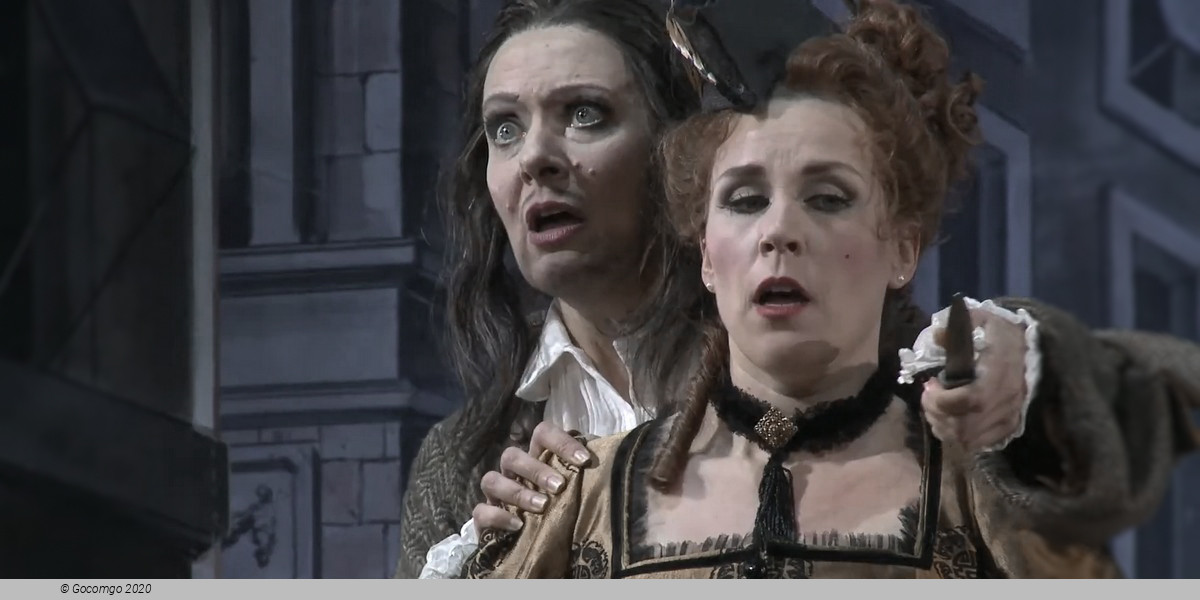
Princess Amastre now arrives, disguised as a man. She was engaged to Serse but he jilted her and she is furiously determined to be revenged.

Ariodate, general to Serse and father of Romilda and Atalanta, enters with news of a great military victory he has won. Serse is grateful to him and promises that as a reward his daughter Romilda will marry a man equal in rank to the King himself.

Arsamene gives Elviro a letter for Romilda, telling her how distressed he is at their forced separation and pledging to try to visit her in secret. Romilda's sister Atalanta, hoping to secure Arsamene for herself, tells Romilda that Arsamene is in love with another girl, but Romilda does not believe it.

Act 2
A square in the city

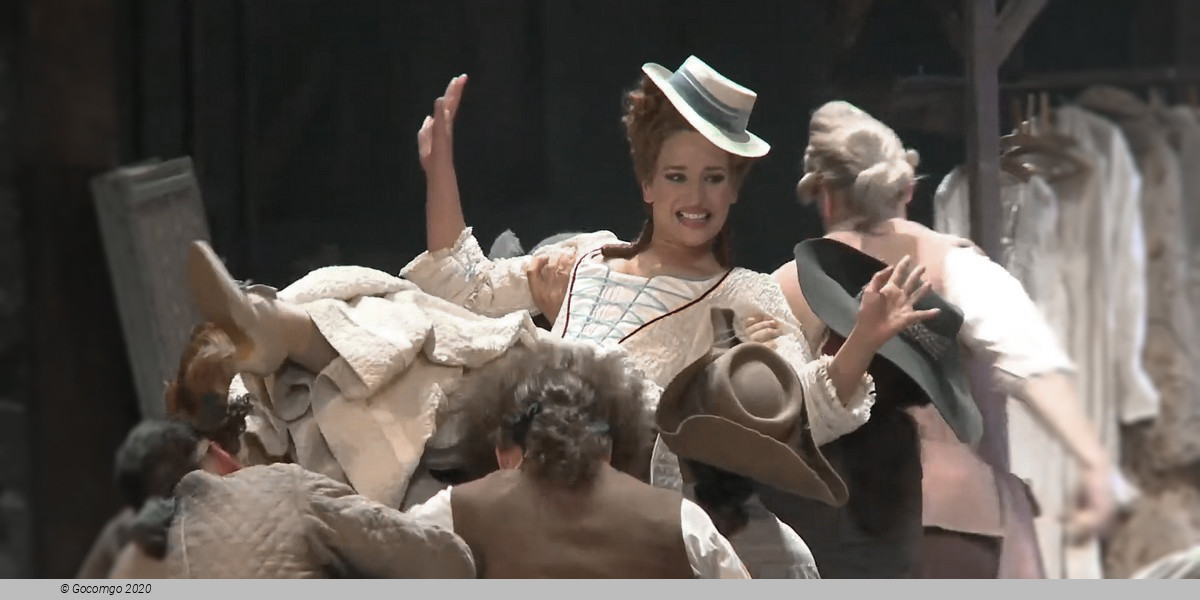
Elviro has disguised himself as a flower-seller in order to deliver his master Arsamene's letter to Romilda, and is also putting on a rural accent. He does not approve of the King's desire to marry a mere subject such as Romilda and makes this clear. Princess Amastre, in her disguise as a man, hears Elviro expressing this and she is aghast at the King's plan to marry another when he promised to be hers (Aria:Or che siete speranze tradite).

Amastre leaves in despair and rage and Atalanta enters. Elviro tells her he has a letter for her sister and Atalanta takes it, promising to give it to Romilda. Instead she mischievously shows the letter to the King, telling him that Arsamene sent it to her and no longer loves Romilda. Serse takes the letter and shows it to Romilda, telling her Arsamene is now in love with Atalanta, not her. Romilda is shaken (Aria:E’ Gelosia).

Princess Amastre has decided to kill herself but Elviro arrives in time to stop her. She resolves to confront the King with his ill-treatment of her. Elviro tells Amastre that Romilda now loves Serse: Amastre is devastated (Aria:Anima infida).

By the newly-constructed bridge spanning the Hellespont and thus uniting Asia and Europe

Sailors hail the completion of the bridge, constructed under Serse's orders, and Serse orders his general Ariodate to cross the bridge with his army and invade Europe.

Serse encounters his heart-broken brother Arsamene and tells him to cheer up, he can marry the woman he now loves, Atalanta, no problem. Arsamene is confused and insists he loves Romilda, not Atalanta. Hearing this, the King advises Atalanta to forget about Arsamene, but she says that is impossible.

Elviro watches as a violent storm threatens to destroy the new bridge. He calms his nerves with drink.

Outside the city in a garden

Serse and Arsamene are both suffering from jealousy and the tribulations of the love lorn. Serse again implores Romilda to marry him but she remains firm in her refusal. The violently furious Amastre appears and draws a sword on the King but Romilda intervenes. Amastre says Romilda should not be forced to marry a man she does not love, and Romilda praises those who are true to their hearts (Aria:Chi cede al furore).

Act 3
A gallery

Romilda and Arsamene are having a lovers' spat about that letter, but calm down when Atalanta appears and admits her deception. She has decided she will have to find another boyfriend somewhere else.

Serse again implores Romilda to marry him and she tells him to seek her father's permission, if he consents, she will. Arsamenes bitterly reproaches her for this(Aria:Amor, tiranno Amor).

Serse once more asks Ariodate if he is happy for his daughter Romilda to marry someone equal in rank to the King. Ariodate thinks Serse means Arsamene and happily gives his consent. Serse tells Romilda that her father has agreed to their marriage but Romilda, trying to put him off, tells him that Arsamene loves her and in fact he has kissed her. Serse, furious, orders his brother to be put to death.

Amastre asks Romilda to take a letter to the King, telling her that this will help her. Amastre bewails her plight, having been abandoned by Serse, who promised to be hers (Aria:Cagion son io).

Arsamene blames Romilda for the fact that he has been sentenced to death, and the lovers again quarrel (Duet:Troppo oltraggi la mia fede).

The temple of the sun

Arsamene and Romilda have been summoned to the temple and they come in, still quarreling, but they are amazed and overjoyed when Ariodate tells them that Serse has agreed to their wedding and he marries them then and there.

Serse enters, ready to marry Romilda, and is enraged when he discovers that it is too late, Ariodate has married his daughter to Arsamene. Serse bitterly denounces Ariodate for that and is even more enraged when a letter arrives, apparently from Romilda, accusing him of faithlessness. When he discovers that the letter is actually from his previous fiance Amastre, whom he jilted, his fury only increases (Aria:Crude Furie degl' orridi abissi).

Serse takes his sword and orders Arsamene to kill Romilda with it; but Amastre interrupts this and asks Serse if he truly wants treachery and infidelity to be punished. Serse says he does whereupon Amastre reveals her true identity as Serse's betrothed. Serse, abashed, admits his fault - he will marry Amastre as he promised, he wishes his brother Arsamene and Romilda happiness in their marriage, and all celebrate the fortunate outcome of events (Chorus:Ritorna a noi la calma).

Venue Info

Komische Oper Berlin - Berlin
Location   Behrenstraße 55-57

The Komische Oper Berlin is a German opera company based in Berlin. The company produces opera, operetta and musicals.

The opera house is located on Behrenstraße, just a few steps from Unter den Linden. Since 2004, the Komische Oper Berlin, along with the Berlin State Opera, the Deutsche Oper Berlin, the Berlin State Ballet, and the Bühnenservice Berlin (Stage and Costume Design), has been a member of the Berlin Opera Foundation.

The theatre was built between 1891 and 1892 by architects Ferdinand Fellner and Hermann Helmer for a private society. It first opened on 24 September 1892 as "Theater Unter den Linden" with Adolf Ferron's operetta Daphne and Gaul and Haßreiter's ballet Die Welt in Bild und Tanz.

The theatre was primarily a vehicle for operetta, but was also used for various other events and balls. Around 800 people could be seated in the stalls, and the balconies and various en-suite dinner rooms housed about a further 1,700 seats. Its directors went bankrupt in 1896 and the theatre was forced to close its doors.

On 3 September 1898 the theatre was reopened as Metropol-Theater with Julius Freund's revue Paradies der Frauen. It then grew to become one of Berlin's most famous and successful variety theatres. During the 1920s and early 1930s, it was leased by the brothers Alfred and Fritz Rotter. Under their management, it saw the premieres of two operettas by Franz Lehár - Friederike (opera) in 1928 and Das Land des Lächelns in 1929, both starring Richard Tauber. However, due to a decline of variety and music hall entertainment the theatre was again closed in 1933.

In 1934 the theatre was nationalised and renamed Staatliches Operettentheater. It operated as part of the Nazi Kraft durch Freude entertainment and leisure programmes. During World War II, the auditorium was damaged by Allied bombing on 7 May 1944. The façade, entrance hall, and auditorium ceiling murals were destroyed by bombs on 9 March 1945.

After the war, the theatre was in East Germany, being that the building was in the eastern part of Berlin. Following repair works and provisional rebuilding, the theatre reopened on 23 December 1947, as the Komische Oper with Johann Strauss's operetta Die Fledermaus.

The 1950s saw various further alterations and extensions. The theatre was completely rebuilt in 1965/1966 by Architektenkollektiv Kunz Nierade, adding functional extensions and giving the theatre a completely new exterior. The theatre reopened again on 4 December 1966, with Mozart's Don Giovanni. The auditorium underwent further restoration in 1986, and the stage technology was further modernised by 1989. Today the theatre seats 1,270.

In 1947, Walter Felsenstein founded and led the resident opera company, the Komische Oper, until his death in 1975. Götz Friedrich was an assistant to Felsenstein at the company. Joachim Herz became general director after Felsenstein's death and served until 1981. Subsequently, Harry Kupfer directed the company for 21 seasons, until 2002. The company specializes in German language productions of opera, operetta and musicals. In 2007 the company won, jointly with Oper Bremen, the "Opera house of the year" award by the German magazine Opernwelt. From 2002 to 2012, the company's chief director and Intendant was Andreas Homoki. In June 2008, the company announced the appointment of Barrie Kosky to succeed Homoki as its next Intendant, as of the 2012/2013 season. In October 2014, his contract with the company was extended through 2022. Since 2005, the company's managing director has been Susanne Moser.

From 1966 to 2004, the theatre was also home to a resident ballet company – first as the "Tanztheater der Komischen Oper", and then from 1999 as "BerlinBallett – Komische Oper". In 2004, due to budgetary problems, the separate ballet companies of Berlin's three opera houses were merged into a single company called the Staatsballett Berlin.

Past General Music Directors (GMD) of the company have included Kurt Masur, Rolf Reuter, Yakov Kreizberg, Kirill Petrenko, Carl St.Clair, and Patrick Lange. Since 2012, the GMD of the company is Henrik Nánási. Nánási is scheduled to conclude his tenure at the end of the 2017-2018 season. In May 2017, the company announced the appointment of Ainārs Rubiķis as its next GMD, effective with the 2018-2019 season, with an initial contract of 3 seasons.

Important Info
Type: Opera
City: Berlin, Germany
Starts at: 19:30
Acts: 3
Intervals: 1
Duration: 3h 20min
Sung in: German
Top of page