
Komische Oper Berlin 27 November 2020 - The Grand Duchess of Gerolstein | GoComGo.com

The Grand Duchess of Gerolstein

Komische Oper Berlin, Berlin, Germany
All photos (6)
Select date and time
7:30 PM
Important Info
Type: Opera
City: Berlin, Germany
Starts at: 19:30
Acts: 3
Sung in: German

E-tickets: Print at home or at the box office of the event if so specified. You will find more information in your booking confirmation email.

You can only select the category, and not the exact seats.
If you order 2 or 3 tickets: your seats will be next to each other.
If you order 4 or more tickets: your seats will be next to each other, or, if this is not possible, we will provide a combination of groups of seats (at least in pairs, for example 2+2 or 2+3).

Overview

Barrie Kosky – following La belle Hélène at the Komische Oper Berlin in 2014 and the highly acclaimed production of Orpheus in the Underworld at the 2019 Salzburg Festival – tackles yet another hit by the masterful craftsman Jacques Offenbach. Kosky sparks off an amusing play on gender roles and double-dealing etiquette centered on the resolute Grand Duchess.

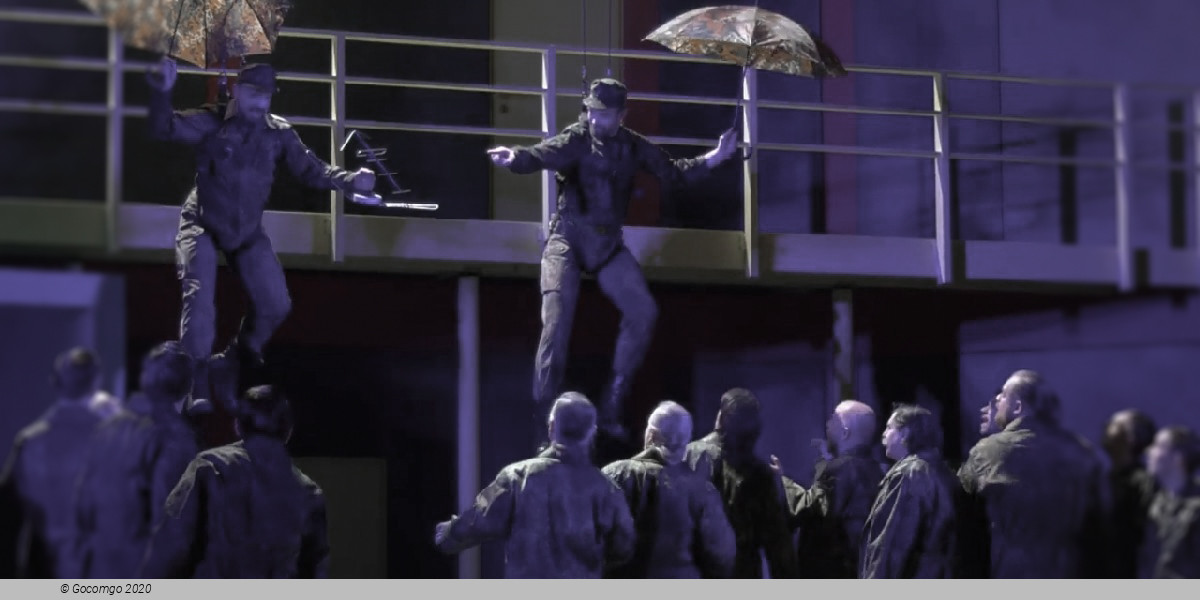
Offenbach’s 1867 operetta premiered in Paris during the second International Exposition. The lead part was written for Hortense Schneider, a forceful and outspoken anti-diva who captivated the audiences of her time and who had become famous through her role as belle Hélène. For the current production, Tom Erik Lie and Philipp Meierhöfer – a duo of thoroughbred comedians with audacious wit – will alternatingly take on the grand ducal role. With a virtuosic ensemble of eight singers and two dancers in a double line-up, Barrie Kosky lights off Offenbach’s satirical firework display about political intrigues, favoritism and militarism.

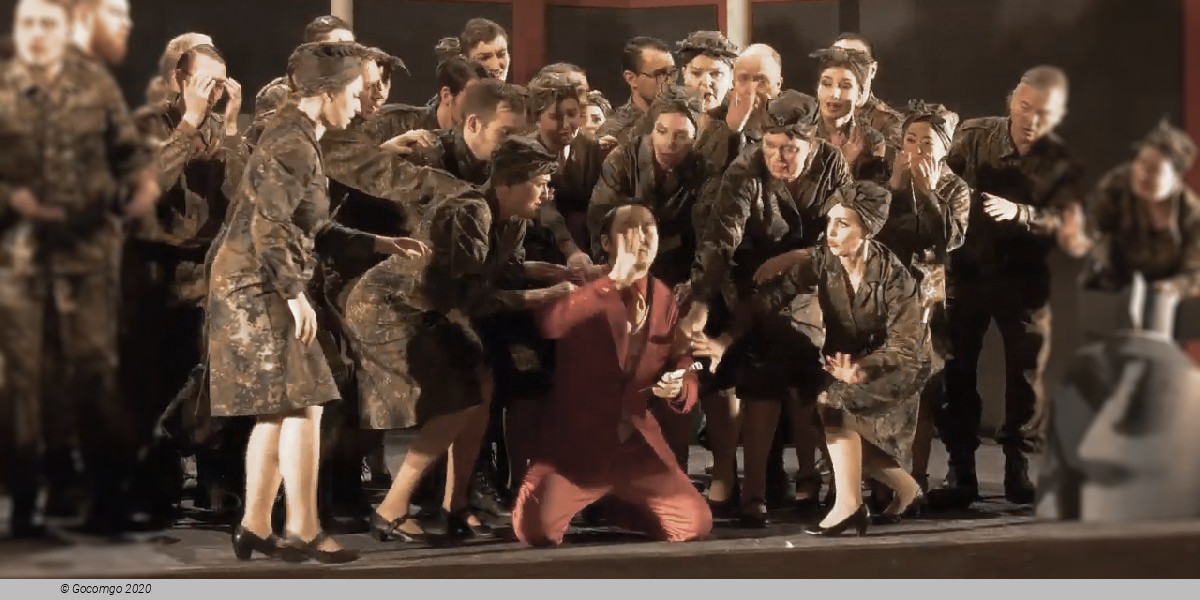
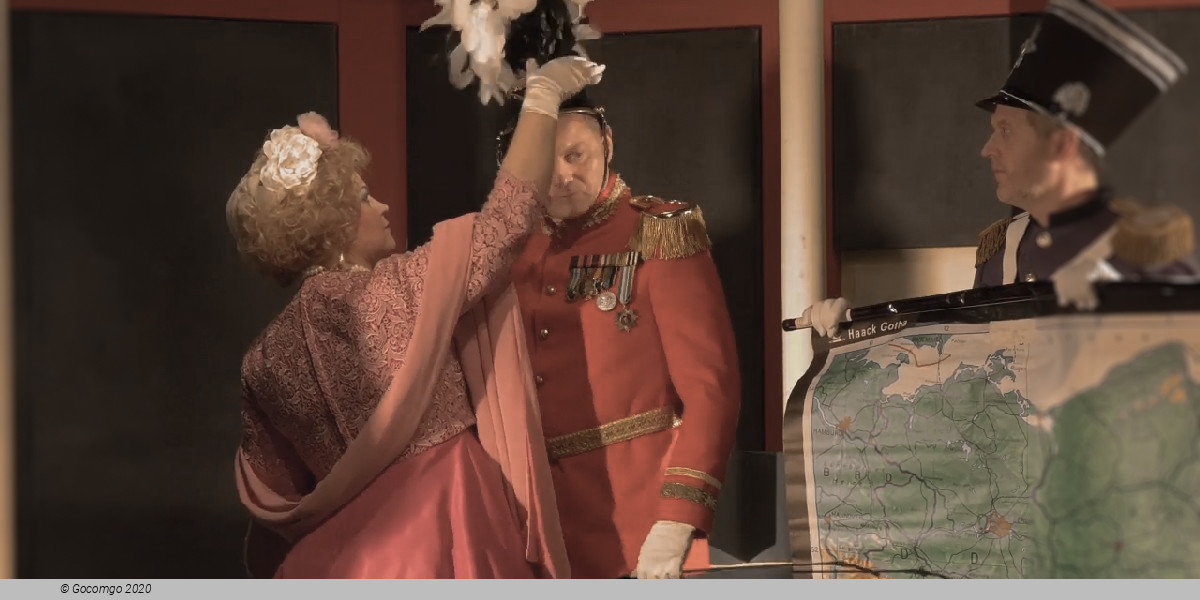
In order to keep the Grand Duchess from getting stupid ideas, her subordinates Baron Puck and General Bumm try to keep her busy. For example, with plans for a grand ducal wedding. Or with a petty war against a neighboring country. But she still gets stupid ideas. Her fiancé, Prince Paul, is too boring for her. She takes an interest in the common solider Fritz and simply promotes him to General. Paul, Puck and Bumm are incensed and want to do away with their rival. Fritz, on the other hand, is in love with the peasant girl Wanda and for that reason the Grand Duchess – despite Fritz’s triumphantly winning a battle without any losses – demotes him again about as quickly as she’d promoted him. And worse yet: The Grand Duchess’s wounded pride leads her to join the conspiracy against the unsuspecting Fritz…

History

Opera bouffe, in three acts and four tableaux by Jacques Offenbach to an original French libretto by Henri Meilhac and Ludovic Halevy. The story is a satirical critique of unthinking militarism and concerns a spoiled and tyrannical young Grand Duchess who learns that she cannot always get her way.

Synopsis

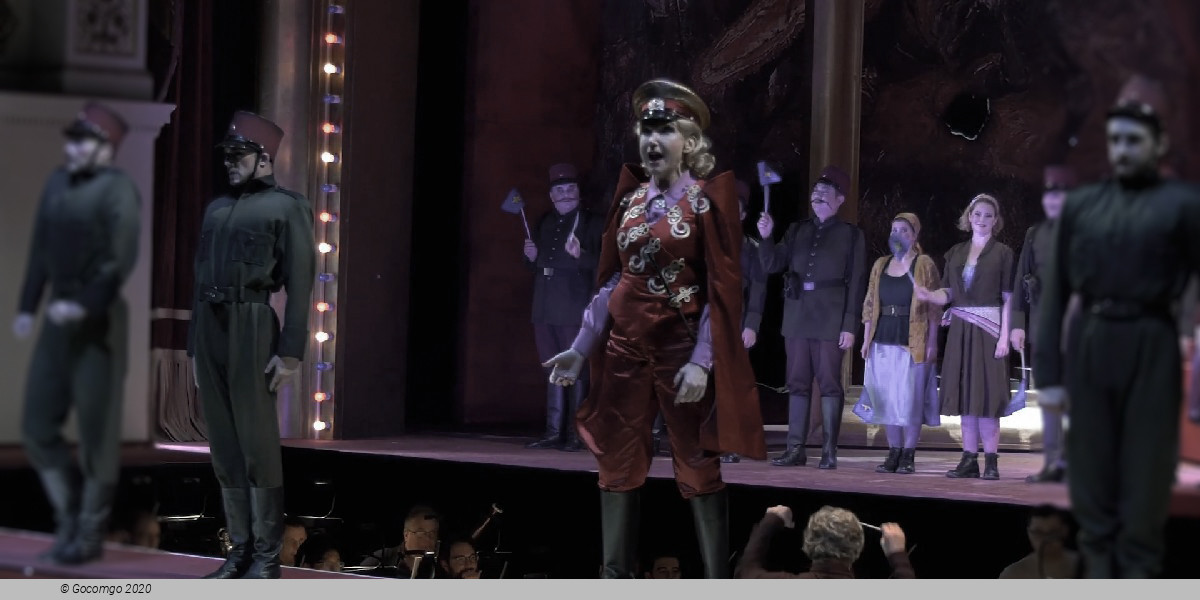
The Grand Duchess of Gerolstein loves men in smart uniforms. Although her duchy is really much too insignificant to get caught up in war, the Grand Duchess loves to blow the trumpet to ready her strapping soldiers for attack. She is particularly fond of the simple soldier Fritz, whom she quickly promotes from private to general – but, just as fast, he slips back down the ducal career ladder. Jacques Offenbach’s "The Grand Duchess of Gerolstein" was the hit of the Paris World Exhibition of 1867. And this cheeky comedy, which pokes fun at militarism, nepotism and opportunism, has over the years lost none of its drive and wit. This staging at the Semperoper is by director Josef E. Köpplinger, a specialist for entertaining musical theatre.

Act one
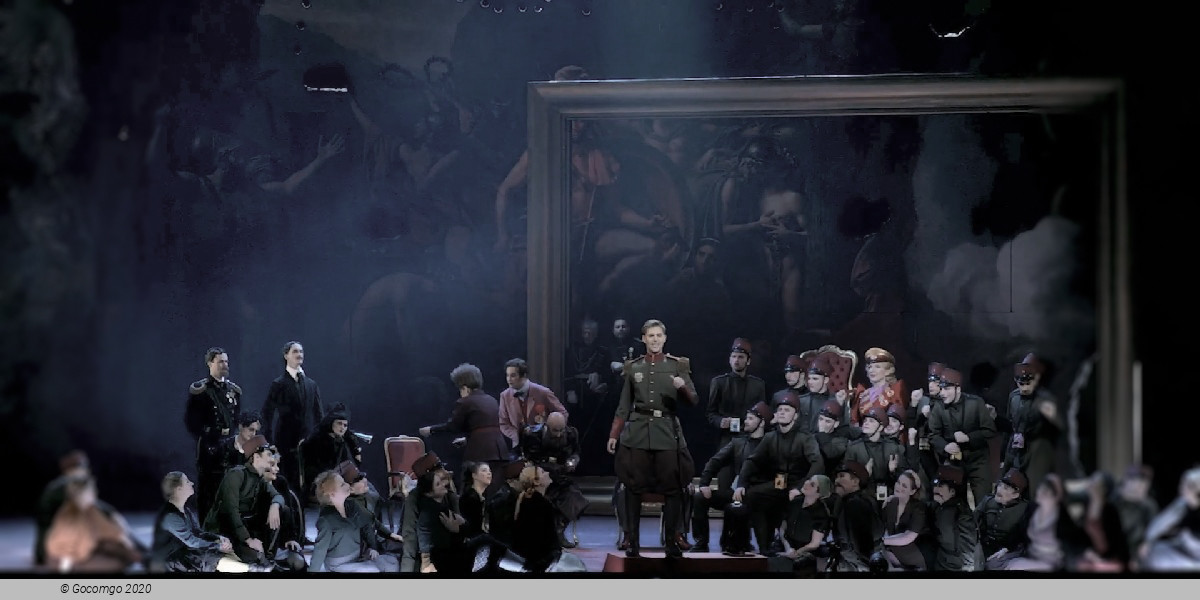
In the tiny Duchy of Gerolstein, the army leads a peaceful life because there are never any wars in this small state as it is strategically unimportant. For years, the courtiers arrange pretend wars to allow the Grand Duchess to pursue her passionate interest in attractive soldiers. One of these soldiers is Fritz, who loves the goose maiden Wanda. Commander-in-chief General Boum, the minister Baron Puck and the lady-in-waiting Erusine von Nepumukka are starting to worry: it seems likely that with advancing age, the Grand Duchess might devote all her passion to one single soldier and dismiss her previous confidantes at court. In order to prevent this, Baron Puck declares war on one of the neighbouring states. – The Grand Duchess reviews her troops. This time round, soldier Fritz particularly catches her eye. To the fawning coutiers’ horror, she rapidly promotes him through the ranks until he is captain of the cavalry. Prince Paul, an heir to a foreign throne to whom the Grand Duchess has been betrothed by his father and the Gerolstein ministers, arrives with his tutor Baron Grog. He pleads with the regent to set a date for their wedding at last, but she rejects the Prince. General Boum wants to explain the plans for the coming war to the Grand Duchess, but she insists on referring to her new cavalry captain for his opinion. When General Boum objects to taking advice from someone of a lower rank, the Grand Duchess simply promotes Fritz to general, too. Erusine and Puck placate the insulted Boum: why not let the naive Fritz lead the war! Boum resigns, and the Grand Duchess presents the new general to the troops. The fact that he insists on saying goodbye to his beloved Wanda makes the Grand Duchess quite nervous indeed. However, she then gives him her father's rapier to bring him luck in battle – and off he goes to war!

Act two
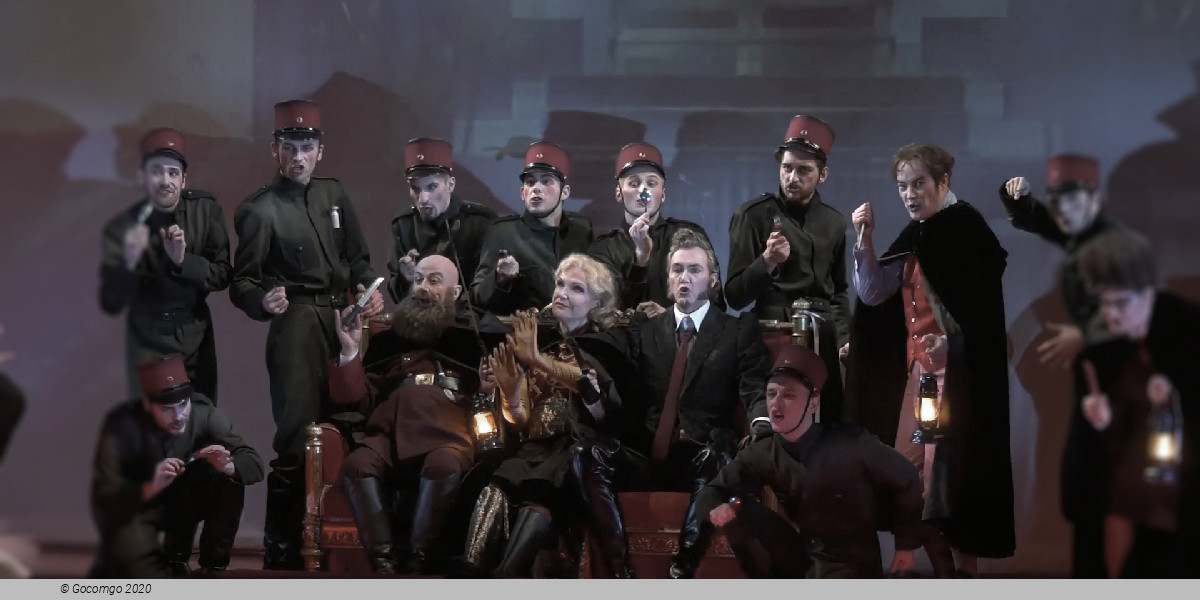
The women are excitedly waiting for the soldiers to return. To the horror of Erusine, Puck and Boum, Fritz really has managed to find an enemy and has actually won the war. The Grand Duchess remains alone with Fritz and confesses her love to him in code. However, poor Fritz doesn't understand a thing. Erusine, Puck and Boum have teamed up with the rebuked Prince Paul and decide to do away with Fritz. They meet in a corridor of the palace in front of the Red Chamber, where political murders are traditionally committed in Gerolstein. However, the Grand Duchess surprises them. She is beside herself: Fritz has asked Wanda to marry him. She immediately drops her favourite and joins the conspiracy.

Act three
The conspirators prepare the murder of General Fritz. However, the Grand Duchess has now transferred her affections to Baron Grog, who in turn promises her certain favours if she would only marry Prince Paul at last. The Grand Duchess has the murder conspiracy called off and prepares for her wedding. – In the meantime, Fritz has married his Wanda. However, they are constantly interrupted on their wedding night just at the wrong moment, not least by Puck and General Boum, who sends his successor into battle again. The Grand Duchess celebrates her wedding with Prince Paul in the hope that Baron Grog will at last return her affection. Fritz complains bitterly that he has been lured into a trap: instead of being sent into battle, he has been put inside a barrel and rolled away. The Grand Duchess demotes her general back to ordinary foot soldier, which actually makes him very happy. The Grand Duchess now wants to appoint Baron Grog as her new general and highest-ranking minister, but when she learns that he in fact has a wife and seven children, she leaves everything as it is. With Prince Paul by her side, she still has her troops to comfort her, after all. 

Venue Info

Komische Oper Berlin - Berlin
Location   Behrenstraße 55-57

The Komische Oper Berlin is a German opera company based in Berlin. The company produces opera, operetta and musicals.

The opera house is located on Behrenstraße, just a few steps from Unter den Linden. Since 2004, the Komische Oper Berlin, along with the Berlin State Opera, the Deutsche Oper Berlin, the Berlin State Ballet, and the Bühnenservice Berlin (Stage and Costume Design), has been a member of the Berlin Opera Foundation.

The theatre was built between 1891 and 1892 by architects Ferdinand Fellner and Hermann Helmer for a private society. It first opened on 24 September 1892 as "Theater Unter den Linden" with Adolf Ferron's operetta Daphne and Gaul and Haßreiter's ballet Die Welt in Bild und Tanz.

The theatre was primarily a vehicle for operetta, but was also used for various other events and balls. Around 800 people could be seated in the stalls, and the balconies and various en-suite dinner rooms housed about a further 1,700 seats. Its directors went bankrupt in 1896 and the theatre was forced to close its doors.

On 3 September 1898 the theatre was reopened as Metropol-Theater with Julius Freund's revue Paradies der Frauen. It then grew to become one of Berlin's most famous and successful variety theatres. During the 1920s and early 1930s, it was leased by the brothers Alfred and Fritz Rotter. Under their management, it saw the premieres of two operettas by Franz Lehár - Friederike (opera) in 1928 and Das Land des Lächelns in 1929, both starring Richard Tauber. However, due to a decline of variety and music hall entertainment the theatre was again closed in 1933.

In 1934 the theatre was nationalised and renamed Staatliches Operettentheater. It operated as part of the Nazi Kraft durch Freude entertainment and leisure programmes. During World War II, the auditorium was damaged by Allied bombing on 7 May 1944. The façade, entrance hall, and auditorium ceiling murals were destroyed by bombs on 9 March 1945.

After the war, the theatre was in East Germany, being that the building was in the eastern part of Berlin. Following repair works and provisional rebuilding, the theatre reopened on 23 December 1947, as the Komische Oper with Johann Strauss's operetta Die Fledermaus.

The 1950s saw various further alterations and extensions. The theatre was completely rebuilt in 1965/1966 by Architektenkollektiv Kunz Nierade, adding functional extensions and giving the theatre a completely new exterior. The theatre reopened again on 4 December 1966, with Mozart's Don Giovanni. The auditorium underwent further restoration in 1986, and the stage technology was further modernised by 1989. Today the theatre seats 1,270.

In 1947, Walter Felsenstein founded and led the resident opera company, the Komische Oper, until his death in 1975. Götz Friedrich was an assistant to Felsenstein at the company. Joachim Herz became general director after Felsenstein's death and served until 1981. Subsequently, Harry Kupfer directed the company for 21 seasons, until 2002. The company specializes in German language productions of opera, operetta and musicals. In 2007 the company won, jointly with Oper Bremen, the "Opera house of the year" award by the German magazine Opernwelt. From 2002 to 2012, the company's chief director and Intendant was Andreas Homoki. In June 2008, the company announced the appointment of Barrie Kosky to succeed Homoki as its next Intendant, as of the 2012/2013 season. In October 2014, his contract with the company was extended through 2022. Since 2005, the company's managing director has been Susanne Moser.

From 1966 to 2004, the theatre was also home to a resident ballet company – first as the "Tanztheater der Komischen Oper", and then from 1999 as "BerlinBallett – Komische Oper". In 2004, due to budgetary problems, the separate ballet companies of Berlin's three opera houses were merged into a single company called the Staatsballett Berlin.

Past General Music Directors (GMD) of the company have included Kurt Masur, Rolf Reuter, Yakov Kreizberg, Kirill Petrenko, Carl St.Clair, and Patrick Lange. Since 2012, the GMD of the company is Henrik Nánási. Nánási is scheduled to conclude his tenure at the end of the 2017-2018 season. In May 2017, the company announced the appointment of Ainārs Rubiķis as its next GMD, effective with the 2018-2019 season, with an initial contract of 3 seasons.

Important Info
Type: Opera
City: Berlin, Germany
Starts at: 19:30
Acts: 3
Sung in: German
Top of page