
Komische Oper Berlin 16 June 2020 - The Wizard of Oz | GoComGo.com

The Wizard of Oz

Komische Oper Berlin, Berlin, Germany
All photos (8)
Select date and time
11 AM
Request for Tickets
Important Info
Type: Opera
City: Berlin, Germany
Starts at: 11:00
Acts: 2
Intervals: 1
Duration: 2h
Sung in: German

E-tickets: Print at home or at the box office of the event if so specified. You will find more information in your booking confirmation email.

You can only select the category, and not the exact seats.
If you order 2 or 3 tickets: your seats will be next to each other.
If you order 4 or more tickets: your seats will be next to each other, or, if this is not possible, we will provide a combination of groups of seats (at least in pairs, for example 2+2 or 2+3).

Overview

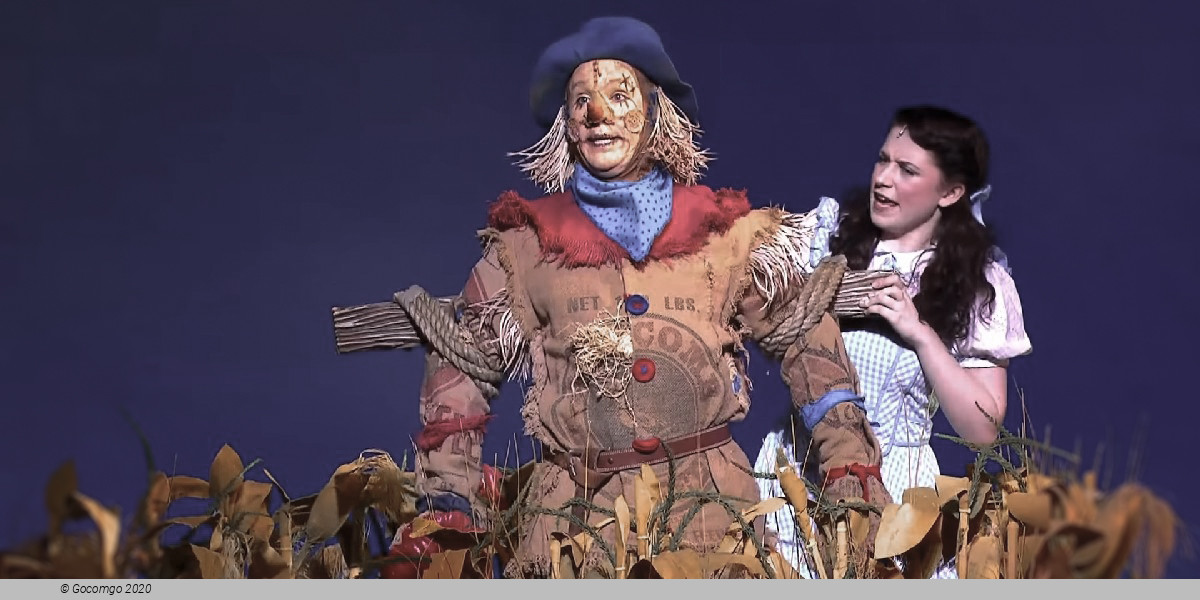
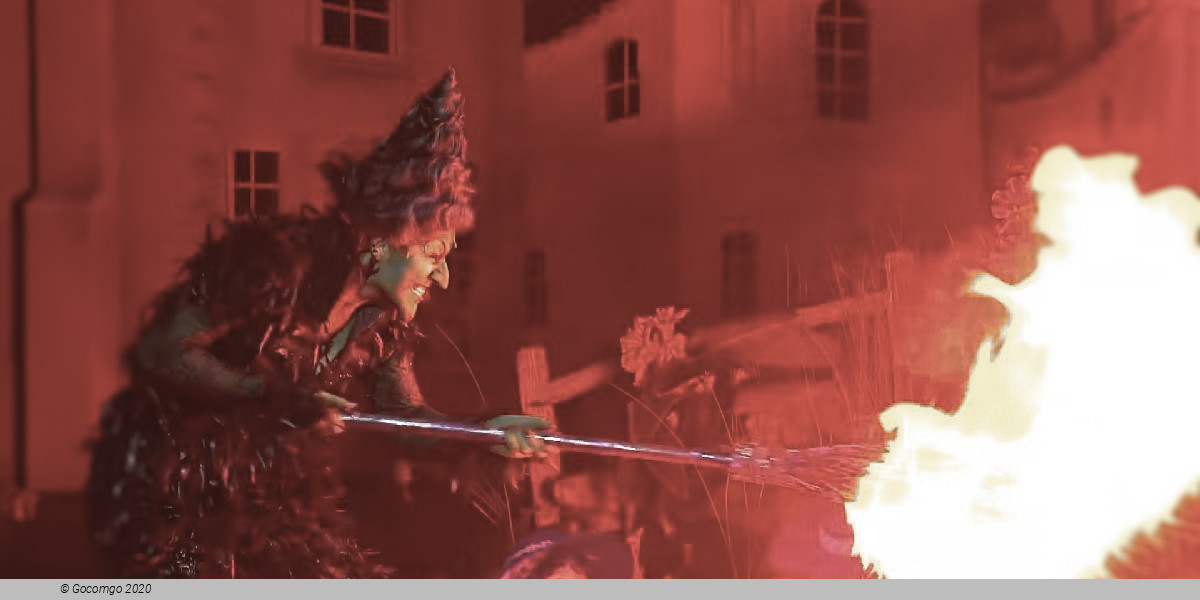
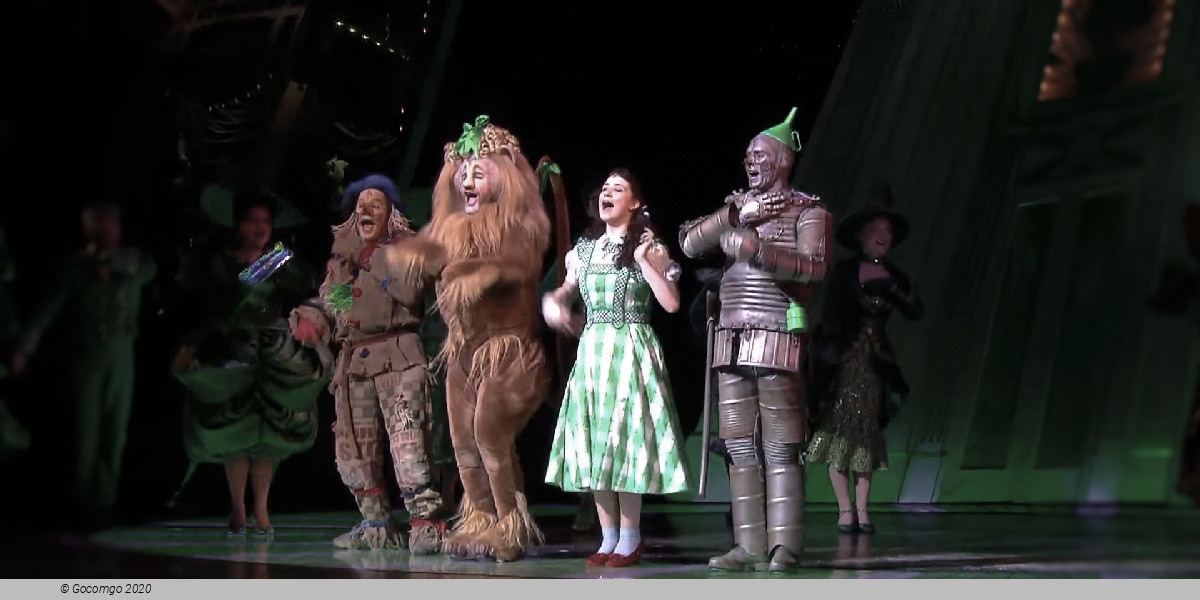
The world-famous fairytale as an exciting musical adventure for the whole family, in a vivid production by Felix Seiler. A tornado in Kansas carries away Dorothy and her dog Toto to the magical land of Oz – but will she ever make it home? With plenty of wit, heart, and courage and the help of her three new friends –scarecrow, tinman, and cowardly lion – Dorothy makes it through the perils of Oz. "The Komische Oper gives children a lot of credit!" [Berliner Zeitung]

After Pinocchio and The Snow Queen, Pierangelo Valtinoni’s The Wizard of Oz marks the third time that a work by this Italian composer graces the stage of the Komische Oper Berlin – with orchestral music ranging from jazz to grand opera, children’s choir ensembles and truly fairytale-like "magic moments"!

German translation by Hanna Francesconi.


History
Premiere of this production: 16 June 1902, Grand Opera House, Chicago

The Wizard of Oz was a 1902 musical extravaganza based on the 1900 novel The Wonderful Wizard of Oz by L. Frank Baum. The main plot of the show, as recounted in newspapers of the time, is Pastoria's attempts to regain the throne from the Wizard of Oz. The original protagonists' search for the Wizard puts them on the wrong side of the law.

Synopsis

A cyclone on the plains of Kansas carries away the house containing little Dorothy and her dog Toto to the far-off land of Oz. This is the home of talking mice, flying monkeys, good and wicked witches, and a mysterious wizard. It is said that only he can show Dorothy the way back home to Kansas. In her magic shoes and accompanied by her three strange and lovable new friends, Dorothy makes her way to the legendary Emerald City. Will the wizard help and truly grant the greatest wishes of the four friends? Will he finally give the cheeky scarecrow a brain, the tin man a loving heart, and the cowardly lion his long-yearned-for courage? And does the wizard really know the way back home to Dorothy’s aunt and uncle? On their journey to the Emerald City, the companions face trials and great dangers that can only be overcome together by true friends.

Act One: The Storm
A young girl named Dorothy Gale lives on the great Kansas prairie with her Aunt Em, Uncle Henry, and cow, Imogene. One day, while she is playing with her pet cow, Imogene, a fierce whirlwind appears. Dorothy and Imogene take shelter in the farmhouse, which is carried far away into the clouds.

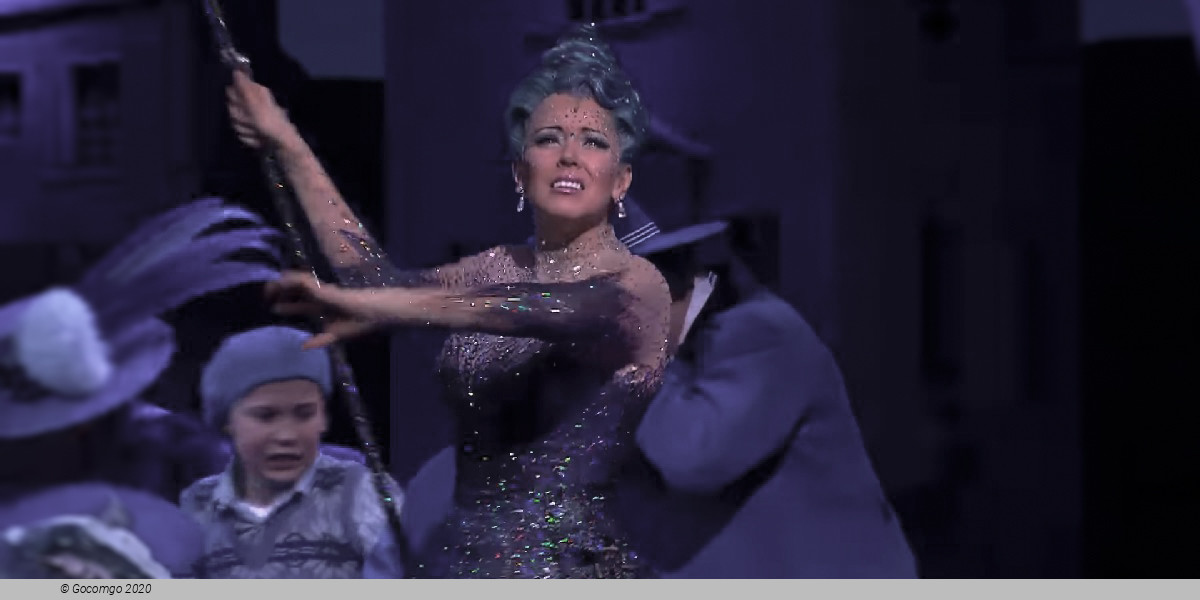
Meanwhile, in the hamlet of Center Munch, the little Munchkins dance around their maypole, not noticing that Dorothy's house has fallen to Earth and killed the Wicked Witch of the East. Dorothy opens the front door and marvels at the strange Land of Oz. The Good Witch of the North awards her with a magic ring that grants her three wishes and can summon Glinda the Good Witch of the South at any time. The Good Witch then waves her wand and a pair of beautiful shoes appear on Dorothy's feet. She tells Dorothy that if she wants to get home, she must ask the Wizard of Oz to help her.

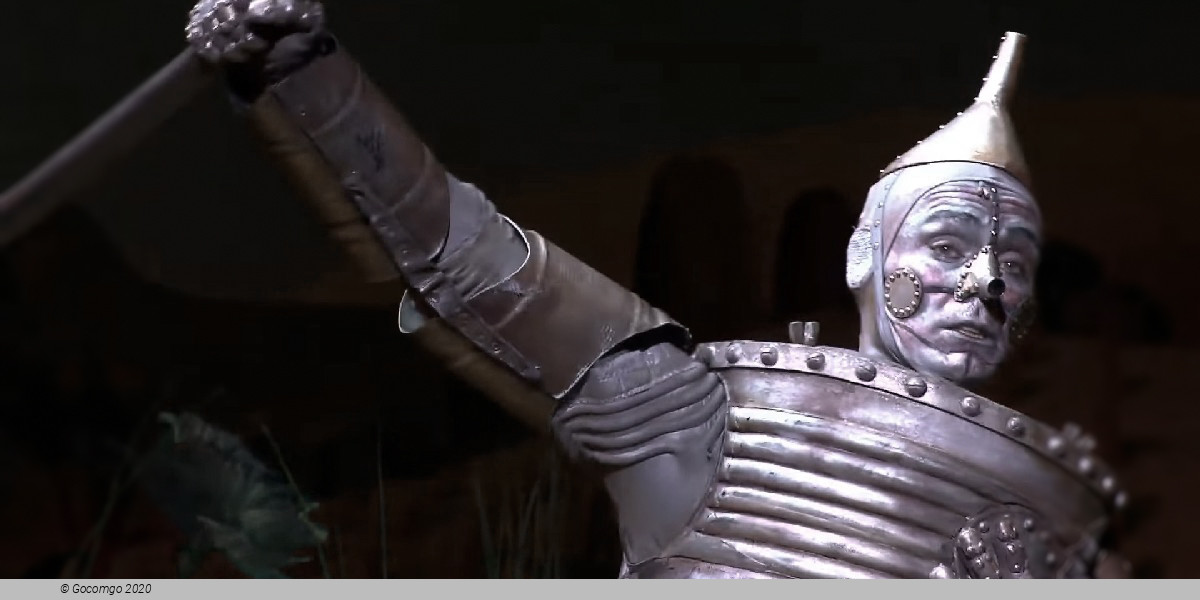
After a while everyone exits, and Dorothy is left alone with a Scarecrow hung on a pole. She wishes she had someone to talk to, and he comes to life. He gets down from the pole and complains that he has no brain. Dorothy suggests that he join her on the road to the Emerald City, and he sings "Alas for the Man Without Brains." They come upon the Tin Woodman, who has rusted playing his piccolo. As it turns out, his real name is Niccolo Chopper. He explains that the Wicked Witch of the West took his heart, so he cannot love his girlfriend, Cynthia. He joins them in the hope of receiving a heart from the Wizard, so that he can return to Cynthia.

Act Two: The Emerald City
The Keeper of the Gates patrols outside the Emerald City. Sir Wiley Gyle enters, a mad old inventor who has scorned magic since his mother died. He is sent to prison for murdering his wife. The travelers enter the Emerald City.

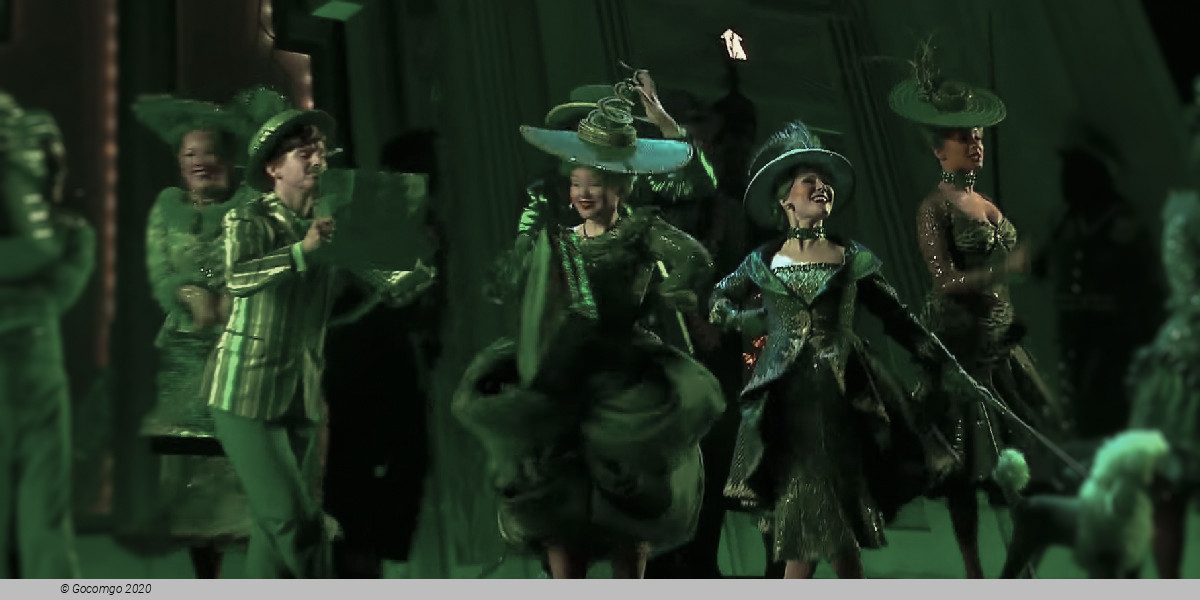
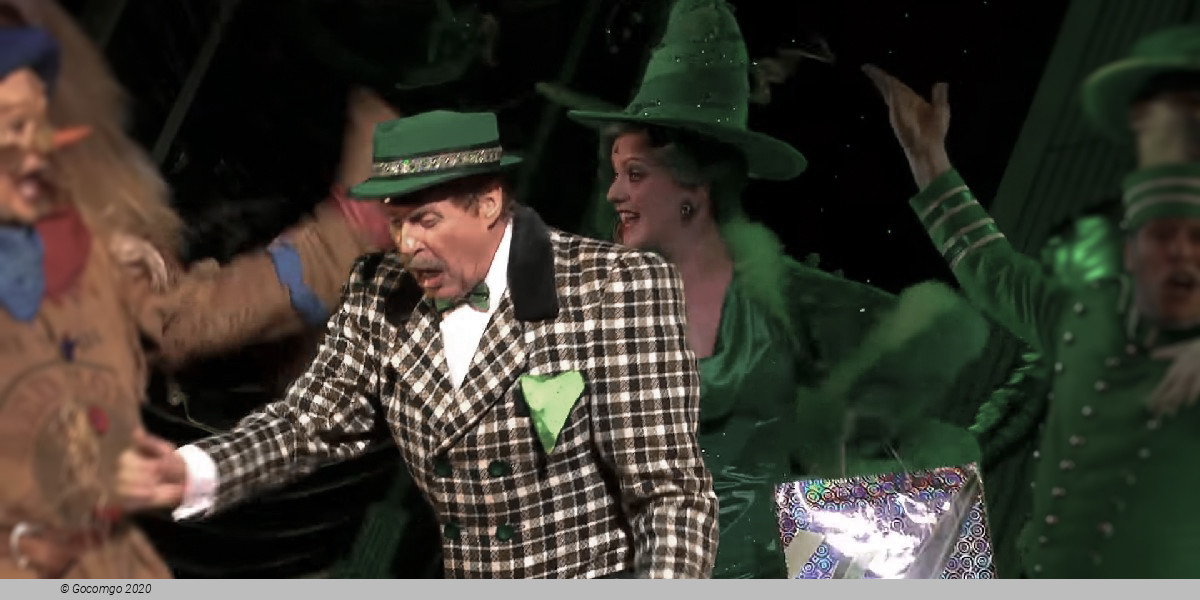
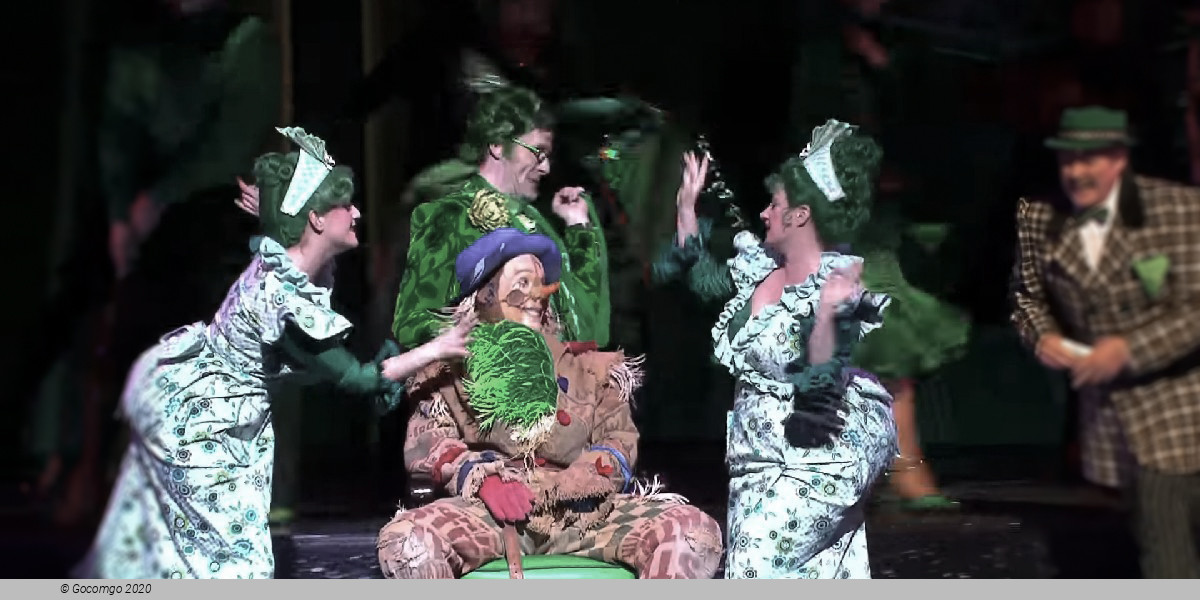
The Wizard gives the Scarecrow a brain and the Tin Woodman a heart. He declares this the greatest of all his achievements and calls for a celebration. The Ball of All Nations is thrown, in which up to twelve songs are sung by various characters. The Wizard performs a basket trick in which King Pastoria is the mark. In the middle of it Pastoria claims his right to the throne and overthrows the Wizard. A great commotion breaks out, with the Wizard escaping in a hot air balloon. Dorothy, still longing to get home, sets off with her companions to the castle of Glinda, the Good Witch of the South.

Act Three: Glinda's Palace
Dorothy and her friends arrive at Glinda's palace and are welcomed. There are great celebrations, with Glinda promising to send Dorothy home. The whole cast rushes out from the wings and sings the finale.

Venue Info

Komische Oper Berlin - Berlin
Location   Behrenstraße 55-57

The Komische Oper Berlin is a German opera company based in Berlin. The company produces opera, operetta and musicals.

The opera house is located on Behrenstraße, just a few steps from Unter den Linden. Since 2004, the Komische Oper Berlin, along with the Berlin State Opera, the Deutsche Oper Berlin, the Berlin State Ballet, and the Bühnenservice Berlin (Stage and Costume Design), has been a member of the Berlin Opera Foundation.

The theatre was built between 1891 and 1892 by architects Ferdinand Fellner and Hermann Helmer for a private society. It first opened on 24 September 1892 as "Theater Unter den Linden" with Adolf Ferron's operetta Daphne and Gaul and Haßreiter's ballet Die Welt in Bild und Tanz.

The theatre was primarily a vehicle for operetta, but was also used for various other events and balls. Around 800 people could be seated in the stalls, and the balconies and various en-suite dinner rooms housed about a further 1,700 seats. Its directors went bankrupt in 1896 and the theatre was forced to close its doors.

On 3 September 1898 the theatre was reopened as Metropol-Theater with Julius Freund's revue Paradies der Frauen. It then grew to become one of Berlin's most famous and successful variety theatres. During the 1920s and early 1930s, it was leased by the brothers Alfred and Fritz Rotter. Under their management, it saw the premieres of two operettas by Franz Lehár - Friederike (opera) in 1928 and Das Land des Lächelns in 1929, both starring Richard Tauber. However, due to a decline of variety and music hall entertainment the theatre was again closed in 1933.

In 1934 the theatre was nationalised and renamed Staatliches Operettentheater. It operated as part of the Nazi Kraft durch Freude entertainment and leisure programmes. During World War II, the auditorium was damaged by Allied bombing on 7 May 1944. The façade, entrance hall, and auditorium ceiling murals were destroyed by bombs on 9 March 1945.

After the war, the theatre was in East Germany, being that the building was in the eastern part of Berlin. Following repair works and provisional rebuilding, the theatre reopened on 23 December 1947, as the Komische Oper with Johann Strauss's operetta Die Fledermaus.

The 1950s saw various further alterations and extensions. The theatre was completely rebuilt in 1965/1966 by Architektenkollektiv Kunz Nierade, adding functional extensions and giving the theatre a completely new exterior. The theatre reopened again on 4 December 1966, with Mozart's Don Giovanni. The auditorium underwent further restoration in 1986, and the stage technology was further modernised by 1989. Today the theatre seats 1,270.

In 1947, Walter Felsenstein founded and led the resident opera company, the Komische Oper, until his death in 1975. Götz Friedrich was an assistant to Felsenstein at the company. Joachim Herz became general director after Felsenstein's death and served until 1981. Subsequently, Harry Kupfer directed the company for 21 seasons, until 2002. The company specializes in German language productions of opera, operetta and musicals. In 2007 the company won, jointly with Oper Bremen, the "Opera house of the year" award by the German magazine Opernwelt. From 2002 to 2012, the company's chief director and Intendant was Andreas Homoki. In June 2008, the company announced the appointment of Barrie Kosky to succeed Homoki as its next Intendant, as of the 2012/2013 season. In October 2014, his contract with the company was extended through 2022. Since 2005, the company's managing director has been Susanne Moser.

From 1966 to 2004, the theatre was also home to a resident ballet company – first as the "Tanztheater der Komischen Oper", and then from 1999 as "BerlinBallett – Komische Oper". In 2004, due to budgetary problems, the separate ballet companies of Berlin's three opera houses were merged into a single company called the Staatsballett Berlin.

Past General Music Directors (GMD) of the company have included Kurt Masur, Rolf Reuter, Yakov Kreizberg, Kirill Petrenko, Carl St.Clair, and Patrick Lange. Since 2012, the GMD of the company is Henrik Nánási. Nánási is scheduled to conclude his tenure at the end of the 2017-2018 season. In May 2017, the company announced the appointment of Ainārs Rubiķis as its next GMD, effective with the 2018-2019 season, with an initial contract of 3 seasons.

Important Info
Type: Opera
City: Berlin, Germany
Starts at: 11:00
Acts: 2
Intervals: 1
Duration: 2h
Sung in: German
Top of page