

Komische Oper Berlin 17 November 2019 - West Side Story | GoComGo.com

West Side Story

Komische Oper Berlin, Berlin, Germany
All photos (7)
Select date and time
7 PM
Request for Tickets
Important Info
Type: Musical
City: Berlin, Germany
Starts at: 19:00
Intervals: 1
Duration: 2h 45min
Sung in: German

E-tickets: Print at home or at the box office of the event if so specified. You will find more information in your booking confirmation email.

You can only select the category, and not the exact seats.
If you order 2 or 3 tickets: your seats will be next to each other.
If you order 4 or more tickets: your seats will be next to each other, or, if this is not possible, we will provide a combination of groups of seats (at least in pairs, for example 2+2 or 2+3).

Overview

Musical in German and English.

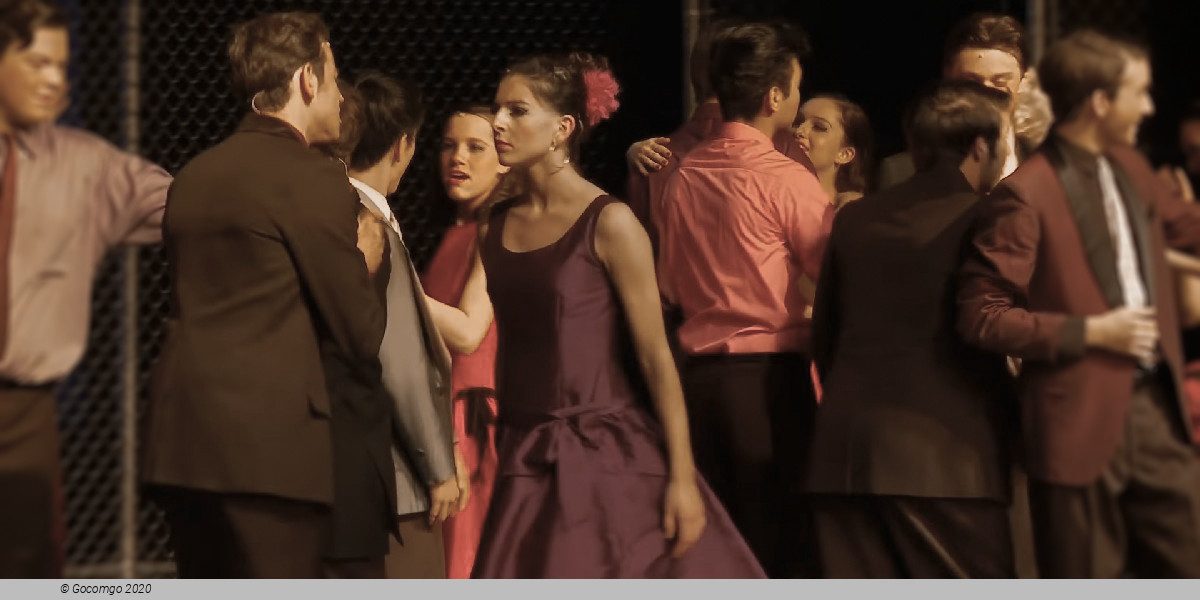
It has finally returned! "Barrie Kosky's breath-taking production gives Bernstein's old West Side Story back its hardness and explosive power" [Berliner Zeitung] Along with Bernstein’s unique music as conducted by Koen Shoots, it is not least thanks to Otto Pichler's "truly contemporary choreography: raw, unpolished, virile, full of testosterone" [Berliner Morgenpost] that this production has always sold out in previous seasons. A disturbingly topical yet deeply touching musical that powerfully demands tolerance and the right to a great love that shatters all boundaries! "Unhappy ending, thunderous applause at the première." [Der Tagesspiegel]

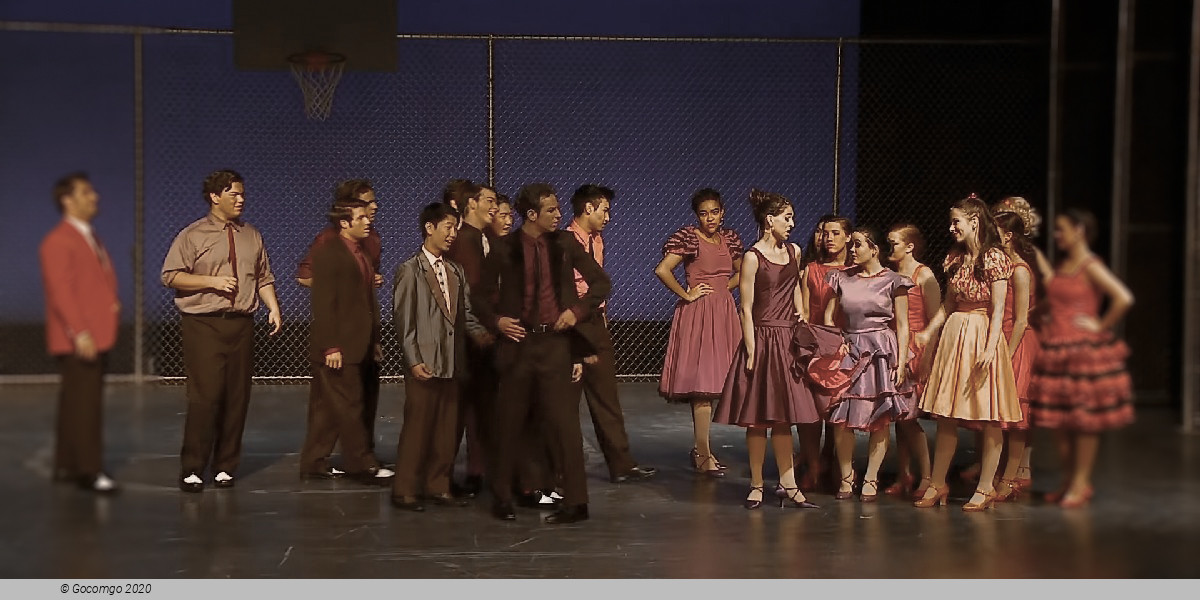
Two rival gangs who are fundamentally no different from each other. And yet for certain young people who have nothing more to lose except their reputation, belonging to one of these gangs is the sole justification for existence. So when a boy and girl dare to ignore the bitterly defended lines of demarcation between gangs, this means more than a little scrap. Because by doing so they are questioning the social order, and they can’t get away with that …

After tryouts in Washington, D.C. and Philadelphia beginning in August 1957, the original Broadway production opened at the Winter Garden Theatre on September 26, 1957, to positive reviews. 

The production was directed and choreographed by Jerome Robbins, orchestrated by Sid Ramin and Irwin Kostal, and produced by Robert E. Griffith and Harold Prince, with lighting designed by Jean Rosenthal. The cast starred Larry Kert as Tony, Carol Lawrence as Maria, Chita Rivera as Anita and David Winters as Baby John. The other notable cast members in the original production were: Riff: Michael Callan, A-Rab: Tony Mordente, Big Deal: Martin Charnin, Gee-Tar: Tommy Abbott, Chino: Jamie Sanchez, Rosalia: Marilyn Cooper, Consuela: Reri Grist and Doc: Art Smith. The production closed on June 27, 1959, after 732 performances. Robbins won the Tony Award for Best Choreographer, and Oliver Smith won the Tony for Best Scenic Designer. Also nominated were Carol Lawrence as Best Actress in a Supporting Role in a Musical, Max Goberman as Best Musical Director and Conductor, and Irene Sharaff for Best Costume Design. Carol Lawrence received the 1958 Theatre World Award.

The production's national tour was launched on July 1, 1959, in Denver and then played in Los Angeles, San Francisco, Chicago, Detroit, Cincinnati, Cleveland, Baltimore, Philadelphia, and Boston. It returned to the Winter Garden Theater in New York in April 1960 for another 249 performance engagement, closing in December.

History
Premiere of this production: 26 September 1957, Winter Garden Theatre

West Side Story is a musical with book by Arthur Laurents, music by Leonard Bernstein and lyrics by Stephen Sondheim. It was inspired by William Shakespeare's play Romeo and Juliet.

Synopsis

Act 1

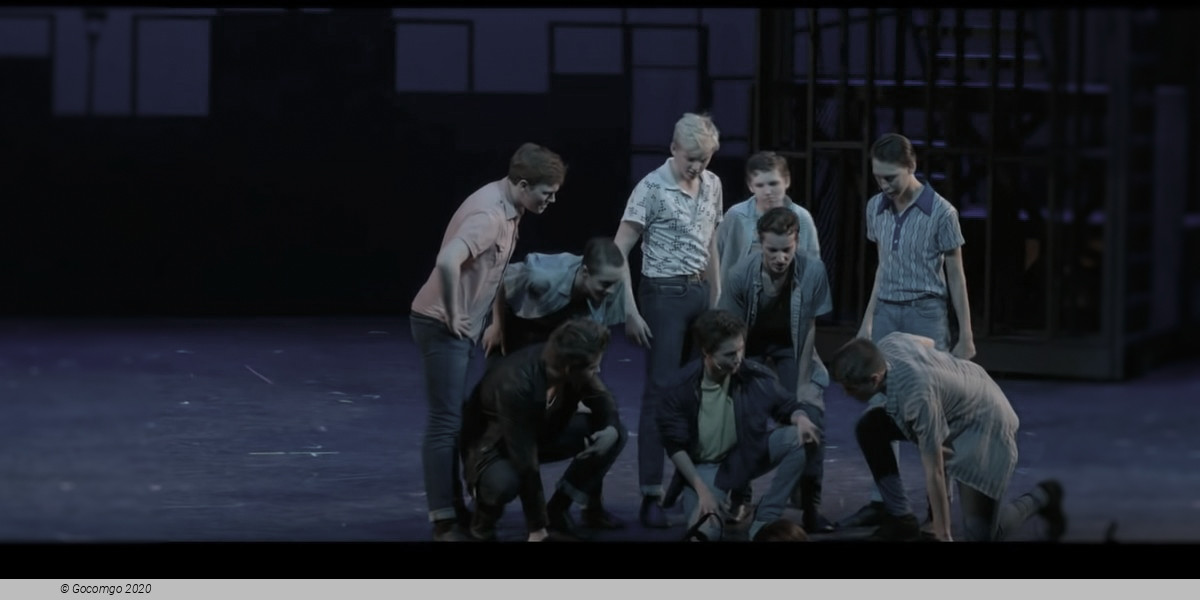
Two rival teenage gangs, the Jets (White Americans) and the Sharks (Puerto Rican Americans), struggle for control of their neighborhood on the Upper West Side of New York City (Prologue). They are warned by police officers Krupke and Lt. Schrank to stop fighting on their beat. The police chase the Sharks off, and then the Jets plan how they can assure their continued dominance of the street. The Jets' leader, Riff, suggests setting up a rumble with the Sharks. He plans to make the challenge to Bernardo, the Sharks' leader, that night at the neighborhood dance. Riff wants to convince his friend and former member of the Jets, Tony, to meet the Jets at the dance. Some of the Jets are unsure of his loyalty, but Riff is adamant that Tony is still one of them ("Jet Song"). Riff meets Tony while he's working at Doc's Drugstore to persuade him to come. Tony initially refuses, but Riff wins him over. Tony is convinced that something important is round the corner ("Something's Coming").

Maria works in a bridal shop with Anita, the girlfriend of her brother, Bernardo. Maria has just arrived from Puerto Rico for her arranged marriage to Chino, a friend of Bernardo's. Maria confesses to Anita that she is not in love with Chino. Anita makes Maria a dress to wear to the neighborhood dance.

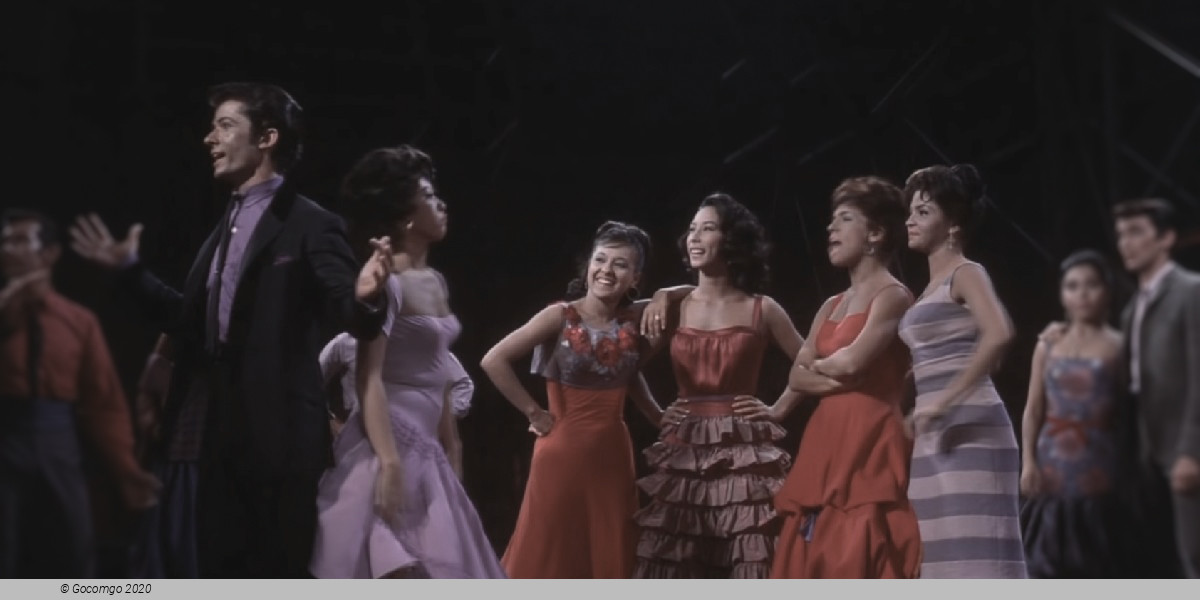
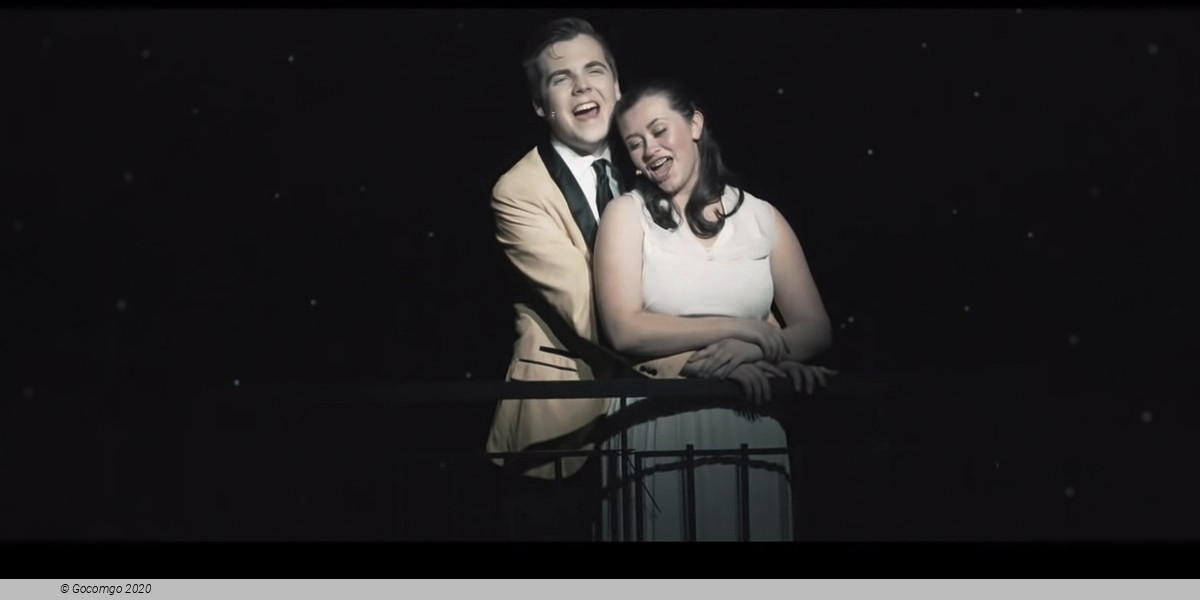
At the dance, after introductions, the teenagers begin to dance; soon a challenge dance is called ("Dance at the Gym"), during which Tony and Maria (who aren't taking part in the challenge dance) see each other across the room and are drawn to each other. They dance together, forgetting the tension in the room, and fall in love, but Bernardo pulls his sister from Tony and sends her home. Riff and Bernardo agree to meet for a War Council at Doc's, a drug store which is considered neutral ground, but meanwhile, an infatuated and happy Tony finds Maria's building and serenades her outside her bedroom ("Maria"). She appears on her fire escape, and the two profess their love for one another ("Tonight"). Meanwhile, Anita, Rosalia, and the other Shark girls discuss the differences between the territory of Puerto Rico and the mainland United States of America, with Anita defending America, and Rosalia yearning for Puerto Rico ("America").

The Jets get antsy while waiting for the Sharks inside Doc's Drugstore. Riff helps them let out their aggression ("Cool"). The Sharks arrive to discuss weapons to use in the rumble. Tony suggests "a fair fight" (fists only), which the leaders agree to, despite the other members' protests. Bernardo believes that he will fight Tony, but must settle for fighting Diesel, Riff's second-in-command, instead. This is followed by a monologue by the ineffective Lt. Schrank trying to find out the location of the rumble. Tony tells Doc about Maria. Doc is worried for them while Tony is convinced that nothing can go wrong; he is in love.

The next day, Maria is in a very happy mood at the bridal shop, as she anticipates seeing Tony again. However, she learns about the upcoming rumble from Anita and is dismayed. When Tony arrives, Maria asks him to stop the fight altogether, which he agrees to do. Before he goes, they dream of their wedding ("One Hand, One Heart"). Tony, Maria, Anita, Bernardo and the Sharks, and Riff and the Jets all anticipate the events to come that night ("Tonight Quintet"). The gangs meet under the highway and, as the fight between Bernardo and Diesel begins, Tony arrives and tries to stop it. Though Bernardo taunts and provokes Tony, ridiculing his attempt to make peace, Tony keeps his composure. When Bernardo pushes Tony, Riff punches him in Tony's defense. The two draw their switchblades and get in a fight ("The Rumble"). Tony attempts to intervene, inadvertently leading to Riff being fatally stabbed by Bernardo. Tony kills Bernardo in a fit of rage, which in turn provokes an all-out fight like the fight in the Prologue. The sound of approaching police sirens is heard, and everyone scatters, except Tony, who stands in shock at what he has done. The tomboy Anybodys, who stubbornly wishes that she could become a Jet, tells Tony to flee from the scene at the last moment and flees with the knives. Only the bodies of Riff and Bernardo remain.

Act 2

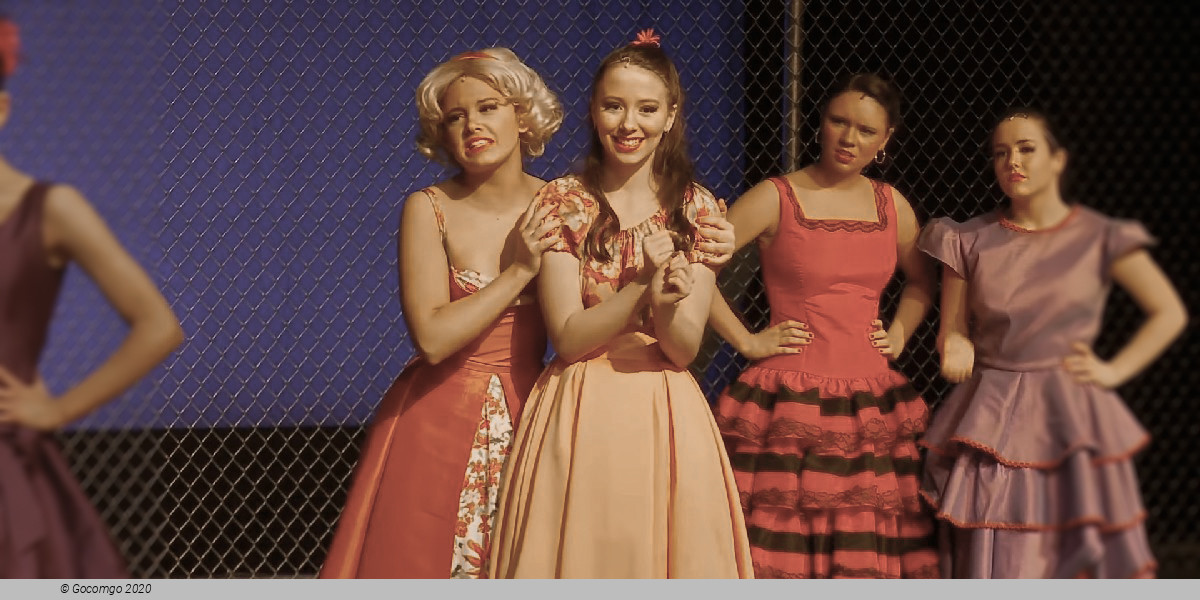
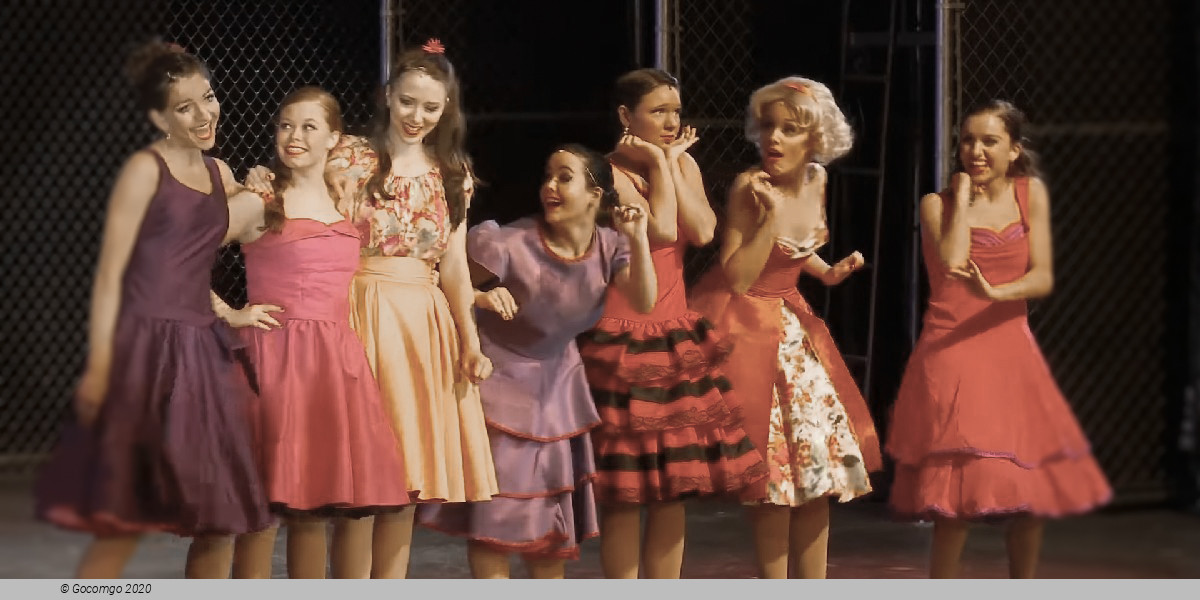
Blissfully unaware of the gangs' plans for that night, Maria daydreams with her friends, Rosalia, Consuelo, Teresita and Francisca, about seeing Tony ("I Feel Pretty"). Later, as Maria dances on the roof happily because she has seen Tony and believes he went to stop the rumble, Chino brings the news that Tony has killed Bernardo. Maria flees to her bedroom, praying that Chino is lying. Tony arrives to see Maria and she initially pounds on his chest with rage, but she still loves him. They plan to run away together. As the walls of Maria's bedroom disappear, they find themselves in a dreamlike world of peace ("Somewhere").

Two of the Jets, A-Rab and Baby John, are set on by Officer Krupke, but they manage to escape him. They meet the rest of the gang. To cheer themselves up, they lampoon Officer Krupke, and the other adults who don't understand them ("Gee, Officer Krupke"). Anybodys arrives and tells the Jets she has been spying on the Puerto Ricans; she has discovered that Chino is looking for Tony with a gun. The gang separates to find Tony. Action has taken charge; he accepts Anybodys into the Jets and includes her in the search.

A grieving Anita arrives at Maria's apartment. As Tony leaves, he tells Maria to meet him at Doc's so they can run away to the country. In spite of her attempts to conceal it, Anita sees that Tony has been with Maria, and launches an angry tirade against him ("A Boy Like That"). Maria counters by telling Anita how powerful love is ("I Have a Love"), and Anita realizes that Maria loves Tony as much as she had loved Bernardo. She admits that Chino has a gun and is looking for Tony. Lt. Schrank arrives to question Maria about her brother's death, and Anita agrees to go to Doc's to tell Tony to wait. Unfortunately, the Jets, who have found Tony, have congregated at Doc's, and they taunt Anita with racist slurs and eventually simulate rape. Doc arrives and stops them. Anita is furious, and in anger spitefully delivers the wrong message, telling the Jets that Chino has shot Maria dead.

Doc relates the news to Tony, who has been dreaming of heading to the countryside to have children with Maria. Feeling there is no longer anything to live for, Tony leaves to find Chino, begging for him to shoot him as well. Just as Tony sees Maria alive, Chino arrives and shoots Tony. The Jets, Sharks, and adults flock around the lovers. Maria holds Tony in her arms (and sings a quiet, brief reprise of "Somewhere") as he dies. Angry at the death of another friend, the Jets move towards the Sharks but Maria takes Chino's gun and tells everyone that "all of them" killed Tony and the others because of their hate for each other, and, "Now I can kill too, because now I have hate!" she yells. However, she is unable to bring herself to fire the gun and drops it, crying in grief. Gradually, all the members of both gangs assemble on either side of Tony's body, showing that the feud is over. The Jets and Sharks form a procession, and together carry Tony away, with Maria the last one in the procession.

Venue Info

Komische Oper Berlin - Berlin
Location   Behrenstraße 55-57

The Komische Oper Berlin is a German opera company based in Berlin. The company produces opera, operetta and musicals.

The opera house is located on Behrenstraße, just a few steps from Unter den Linden. Since 2004, the Komische Oper Berlin, along with the Berlin State Opera, the Deutsche Oper Berlin, the Berlin State Ballet, and the Bühnenservice Berlin (Stage and Costume Design), has been a member of the Berlin Opera Foundation.

The theatre was built between 1891 and 1892 by architects Ferdinand Fellner and Hermann Helmer for a private society. It first opened on 24 September 1892 as "Theater Unter den Linden" with Adolf Ferron's operetta Daphne and Gaul and Haßreiter's ballet Die Welt in Bild und Tanz.

The theatre was primarily a vehicle for operetta, but was also used for various other events and balls. Around 800 people could be seated in the stalls, and the balconies and various en-suite dinner rooms housed about a further 1,700 seats. Its directors went bankrupt in 1896 and the theatre was forced to close its doors.

On 3 September 1898 the theatre was reopened as Metropol-Theater with Julius Freund's revue Paradies der Frauen. It then grew to become one of Berlin's most famous and successful variety theatres. During the 1920s and early 1930s, it was leased by the brothers Alfred and Fritz Rotter. Under their management, it saw the premieres of two operettas by Franz Lehár - Friederike (opera) in 1928 and Das Land des Lächelns in 1929, both starring Richard Tauber. However, due to a decline of variety and music hall entertainment the theatre was again closed in 1933.

In 1934 the theatre was nationalised and renamed Staatliches Operettentheater. It operated as part of the Nazi Kraft durch Freude entertainment and leisure programmes. During World War II, the auditorium was damaged by Allied bombing on 7 May 1944. The façade, entrance hall, and auditorium ceiling murals were destroyed by bombs on 9 March 1945.

After the war, the theatre was in East Germany, being that the building was in the eastern part of Berlin. Following repair works and provisional rebuilding, the theatre reopened on 23 December 1947, as the Komische Oper with Johann Strauss's operetta Die Fledermaus.

The 1950s saw various further alterations and extensions. The theatre was completely rebuilt in 1965/1966 by Architektenkollektiv Kunz Nierade, adding functional extensions and giving the theatre a completely new exterior. The theatre reopened again on 4 December 1966, with Mozart's Don Giovanni. The auditorium underwent further restoration in 1986, and the stage technology was further modernised by 1989. Today the theatre seats 1,270.

In 1947, Walter Felsenstein founded and led the resident opera company, the Komische Oper, until his death in 1975. Götz Friedrich was an assistant to Felsenstein at the company. Joachim Herz became general director after Felsenstein's death and served until 1981. Subsequently, Harry Kupfer directed the company for 21 seasons, until 2002. The company specializes in German language productions of opera, operetta and musicals. In 2007 the company won, jointly with Oper Bremen, the "Opera house of the year" award by the German magazine Opernwelt. From 2002 to 2012, the company's chief director and Intendant was Andreas Homoki. In June 2008, the company announced the appointment of Barrie Kosky to succeed Homoki as its next Intendant, as of the 2012/2013 season. In October 2014, his contract with the company was extended through 2022. Since 2005, the company's managing director has been Susanne Moser.

From 1966 to 2004, the theatre was also home to a resident ballet company – first as the "Tanztheater der Komischen Oper", and then from 1999 as "BerlinBallett – Komische Oper". In 2004, due to budgetary problems, the separate ballet companies of Berlin's three opera houses were merged into a single company called the Staatsballett Berlin.

Past General Music Directors (GMD) of the company have included Kurt Masur, Rolf Reuter, Yakov Kreizberg, Kirill Petrenko, Carl St.Clair, and Patrick Lange. Since 2012, the GMD of the company is Henrik Nánási. Nánási is scheduled to conclude his tenure at the end of the 2017-2018 season. In May 2017, the company announced the appointment of Ainārs Rubiķis as its next GMD, effective with the 2018-2019 season, with an initial contract of 3 seasons.

Important Info
Type: Musical
City: Berlin, Germany
Starts at: 19:00
Intervals: 1
Duration: 2h 45min
Sung in: German
Top of page