
London Coliseum 5 April 2023 - Akhnaten | GoComGo.com

Akhnaten

London Coliseum, London, Great Britain
All photos (6)
Select date and time
7:30 PM

E-tickets: Print at home or at the box office of the event if so specified. You will find more information in your booking confirmation email.

You can only select the category, and not the exact seats.
If you order 2 or 3 tickets: your seats will be next to each other.
If you order 4 or more tickets: your seats will be next to each other, or, if this is not possible, we will provide a combination of groups of seats (at least in pairs, for example 2+2 or 2+3).

Important Info
Type: Opera
City: London, Great Britain
Starts at: 19:30
Acts: 3
Duration: 2h 55min

E-tickets: Print at home or at the box office of the event if so specified. You will find more information in your booking confirmation email.

You can only select the category, and not the exact seats.
If you order 2 or 3 tickets: your seats will be next to each other.
If you order 4 or more tickets: your seats will be next to each other, or, if this is not possible, we will provide a combination of groups of seats (at least in pairs, for example 2+2 or 2+3).

Overview

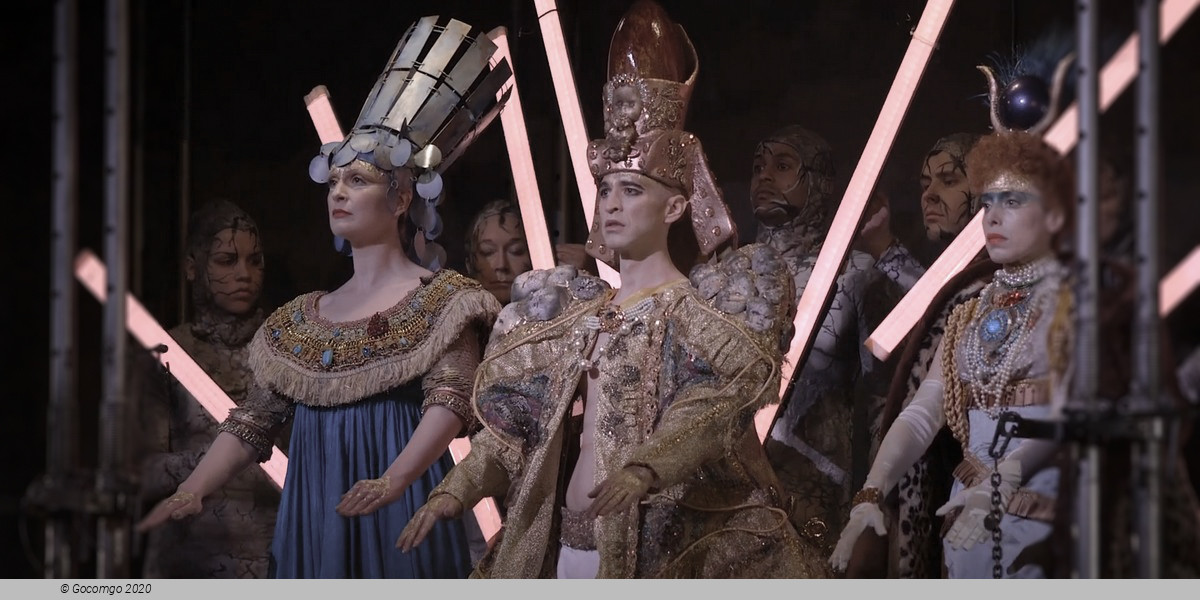
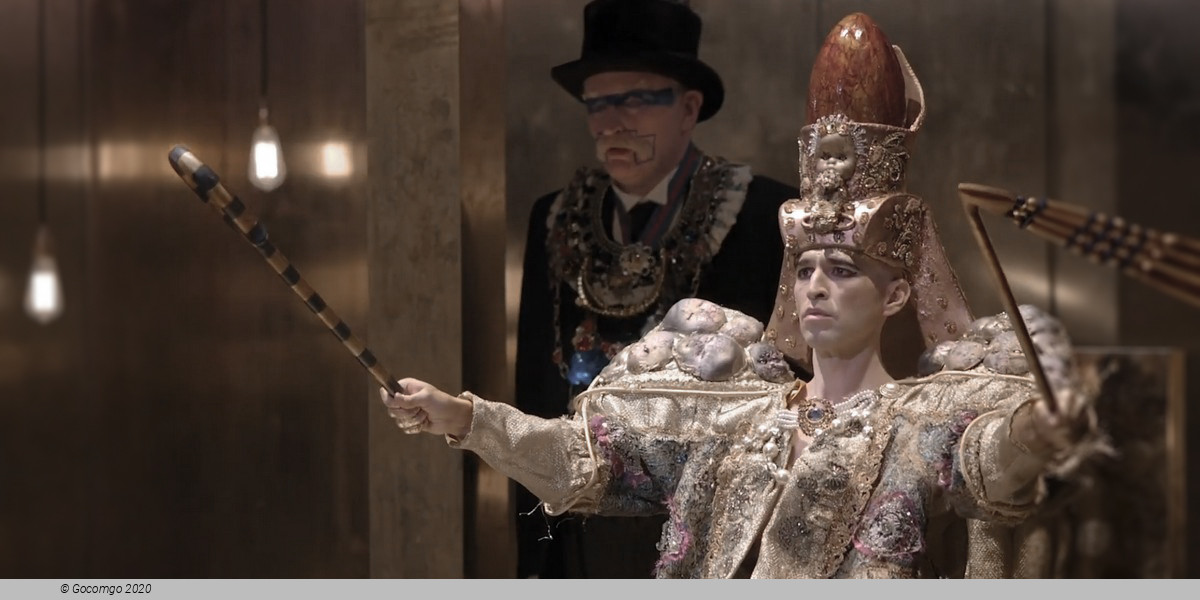
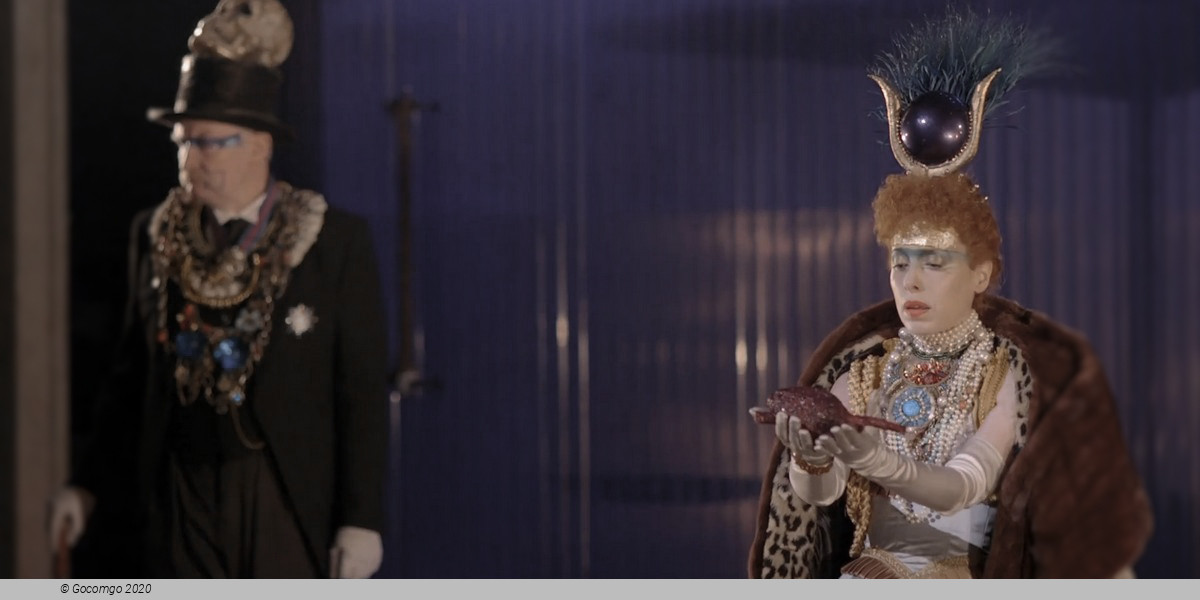
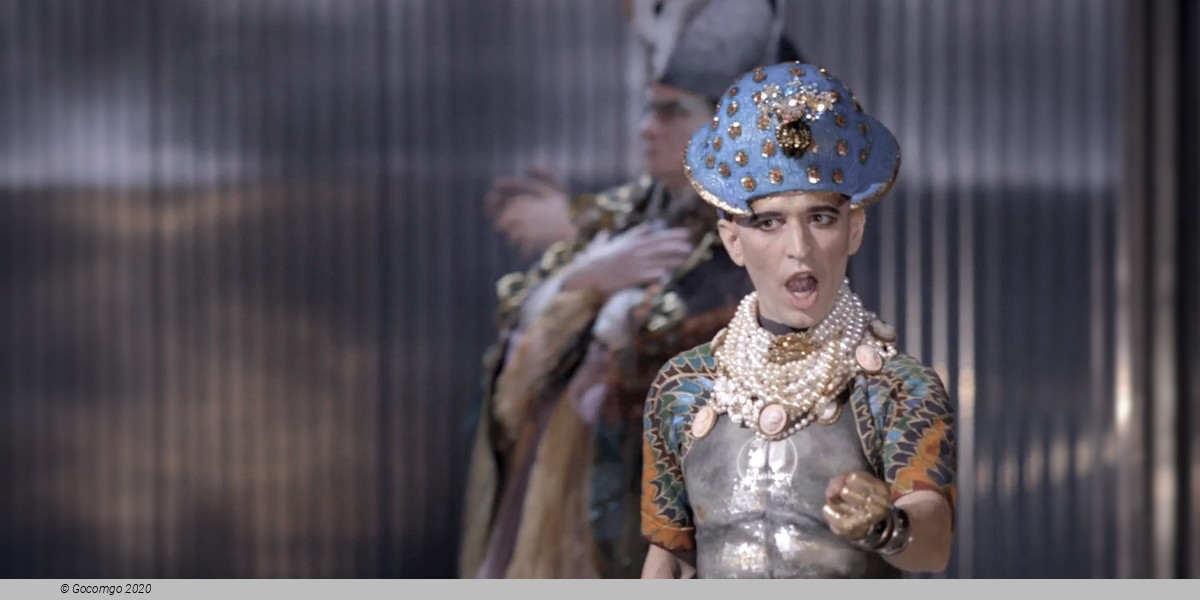
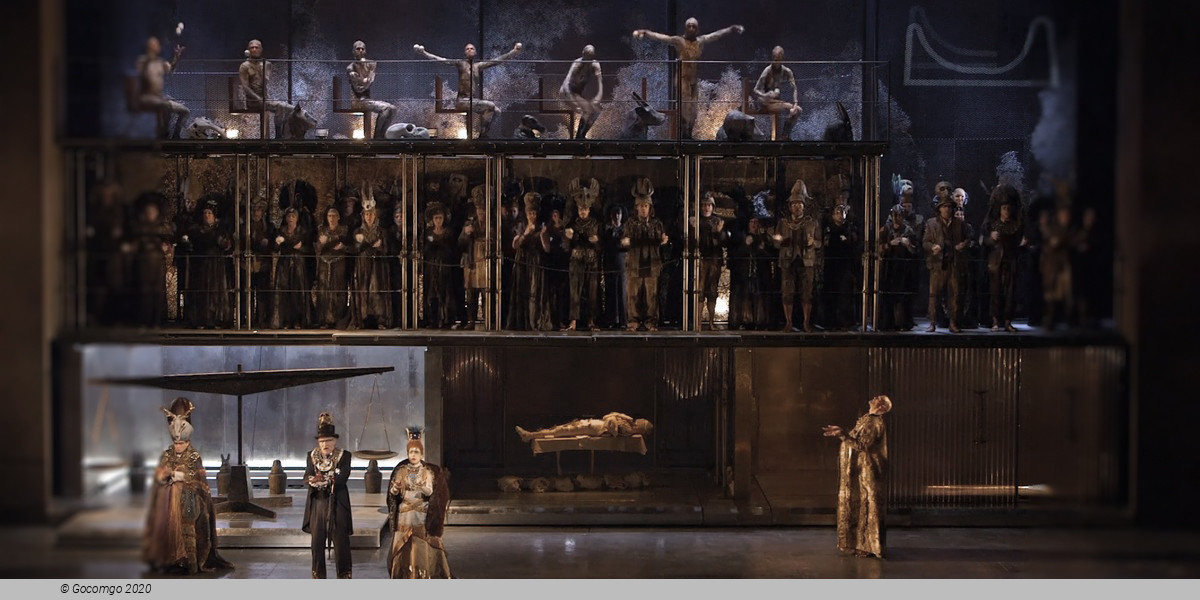
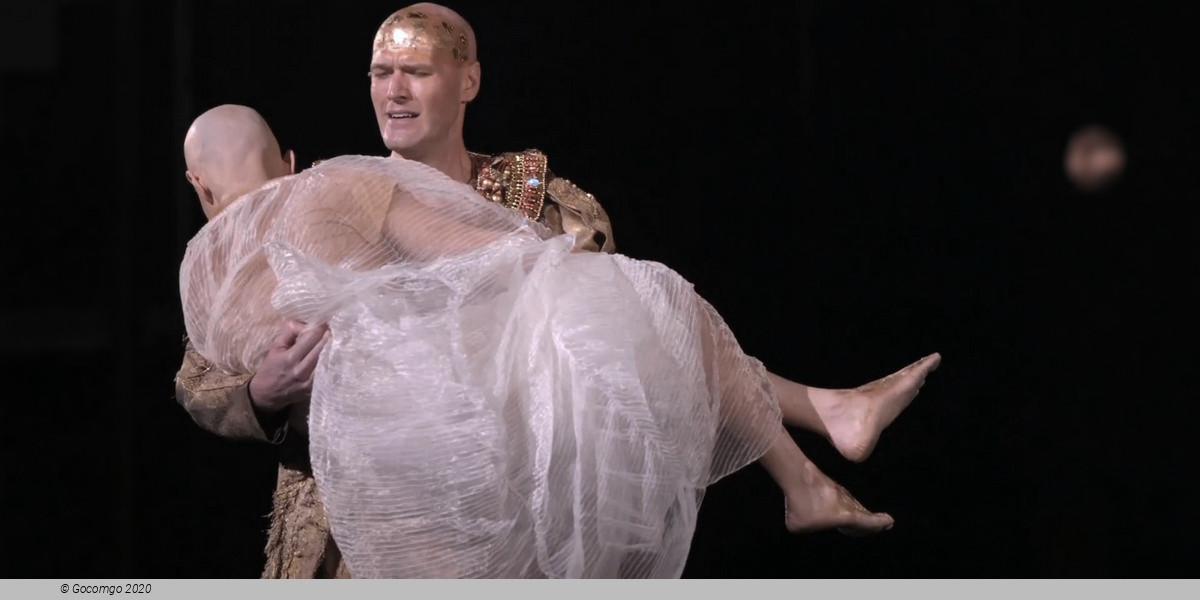
Behold, the power of the Pharaoh. Phelim McDermott’s Olivier Award-winning production of Philip Glass’s Akhnaten returns to the ENO, following sell-out runs at the London Coliseum.

Akhnaten is a mesmerising work whose text draws on ancient hymns, prayers and inscriptions sung in their original Egyptian, Hebrew and Akkadian. The opera’s unique mood transports audiences to this ancient world through Glass’s music (conducted by the returning Karen Kamensek) that combines his characteristic minimalist voice with stylised movement and choreographed juggling to visualise the rhythms of his score.

A mesmerising spectacle, Akhnaten tells the story of one of the world’s most influential figures – the Pharaoh Akhnaten, the first Pharaoh to switch from worshipping a pantheon of gods to just one: the Sun.

Award-winning countertenor Anthony Roth Costanzo returns to the title role, alongside Chrystal E. Williams as Nefertiti, Haegee Lee as Queen Tye, Keel Watson returning to the role of Aye and Zachary James returning to the role of Scribe.

Co-production with LA Opera. Collaboration with Improbable.

Sung in Egyptian, Hebrew and Akkadian with no surtitles.

History
Premiere of this production: 24 March 1984, Staatstheater Stuttgart

Akhnaten is an opera in three acts based on the life and religious convictions of the Egyptian pharaoh Akhenaten (Amenhotep IV), written by the American composer Philip Glass in 1983.

Synopsis

Act 1: Year 1 of Akhnaten's Reign in Thebes

Thebes, 1370 BC

Prelude, verse 1, verse 2, verse 3

Set in the key of A minor, the strings introduce a ground bass theme, with following variations. (A passacaglia). The scribe recites funeral texts from the pyramids. "Open are the double doors of the horizon; unlocked are its bolts."

Scene 1: Funeral of Akhnaten's father Amenhotep III

Heralded by hammering drums, Aye and a small male chorus chant a funeral hymn in Egyptian, later joined by the full chorus. The music is basically a march, based on the chords of A major and F♯ minor (with added major sixth), and grows to ecstatic intensity towards the end.

Scene 2: The Coronation of Akhnaten

After a lengthy orchestral introduction, during which Akhnaten appears, heralded by a solo trumpet, the High Priest, Aye, and Horemhab sing a ritual text. After that, the Narrator recites a list of royal titles bestowed upon Akhnaten, while he is crowned. After the coronation, the chorus repeats the ritual text from the beginning of the scene. Again, the main key is A minor.

Scene 3: The Window of Appearances

After an introduction in A minor, dominated by tubular bells, Akhnaten sings a praise to the Creator (in Egyptian) at the window of public appearances. This is the first time he actually sings, after he has already been on stage for 20 minutes (and 40 minutes into the opera) and the effect of his countertenor voice (which in 1983 was even more rare than nowadays) is startling. He is joined by Nefertiti, who actually sings lower notes than he, and later by Queen Tye, whose soprano soars high above the intertwining voices of the royal couple.

Act 2: Years 5 to 15 in Thebes and Akhetaten

Scene 1: The Temple

The scene opens again in A minor, with the High Priest and a group of priests singing a hymn to Amun, principal god of the old order, in his temple. The music becomes increasingly dramatic, as Akhnaten, together with Queen Tye and his followers, attack the temple. This scene has only wordless singing. The harmonies grow very chromatic, finally reaching A♭ major and E minor. The temple roof is removed and the sun god Aten's rays invade the temple, thus ending Amun's reign and laying the foundation for the worship of the only god Aten.

Scene 2: Akhnaten and Nefertiti

Two solo celli introduce a "love theme". Accompanied by a solo trombone while the harmony switches to H(sus), the Narrator recites a prayer-like poem to the sun god. The strings softly take over the music in E minor, and the same poem is recited again, this time actually as a love poem from Akhnaten to Nefertiti. Then Akhnaten and Nefertiti sing the same text to each other (in Egyptian), as an intimate love duet. After a while, the trumpet associated with Akhnaten joins them as the highest voice, turning the duet into a trio.

Scene 3: The City – Dance

The Narrator speaks a text taken from the boundary stones of the new capital of the empire, Akhet-Aten (The Horizon of Aten), describing the construction of the city, with large, light-filled spaces. After a brass fanfare, the completion of the city is celebrated in a light-hearted dance, contrasting with the stark, ritualistic music with which this act began. (In the Stuttgart premiere, the dance actually described the construction of the city.) The dance scene was omitted from the UK premiere production and its 1987 revival.

Scene 4: Hymn

What now follows is a hymn to the only god Aten, a long aria (alternating between A minor and A major) by Akhnaten, and the central piece of the opera. Notably, it is the only text sung in the language of the audience, praising the sun giving life to everything. After the aria, an off-stage chorus sings Psalm 104 in Hebrew, dating some 400 years later, which has strong resemblances to Akhnaten's Hymn, thus emphasizing Akhnaten as the first founder of a monotheistic religion.

Act 3: Year 17 and the Present

Akhnaten, 1358 BC

Scene 1: The Family

Two oboes d'amore play the "love theme" from act 2. Akhnaten, Nefertiti and their six daughters, sing wordlessly in contemplation, they are oblivious of what happens outside of the palace. As the music switches from E minor to F minor, the Narrator reads letters from Syrian vassals, asking for help against their enemies. Since the king does not send troops, his land is being seized and plundered by their enemies. The scene focuses again on Akhnaten and his family, still oblivious to the country falling apart.

Scene 2: The Attack and Fall of the City

The music moves again to a vigorous F minor. Horemhab, Aye and the High Priest of Aten instigate the people (as the chorus), singing part of the vassal's letters (in their original Akkadian language) until finally the palace is attacked, the royal family killed, and the city of the sun destroyed.

Scene 3: The Ruins

The music of the very beginning of the opera returns. The scribe recites an inscription on Aye's tomb, praising the death of "the heretic" and the new reign of the old gods. He then describes the restoration of Amun's temple by Akhnaten's son Tutankhamun. The Prelude music grows stronger and the scene moves to present-day Egypt, to the ruins of Amarna, the former capital Akhet-Aton. The Narrator appears as a modern tourist guide and speaks a text from a guide book, describing the ruins. "There is nothing left of this glorious city of temples and palaces".

Scene 4: Epilogue

The ghosts of Akhnaten, Nefertiti and Queen Tye appear, singing wordlessly amongst the ruins. The funeral procession from the beginning of the opera appears on the horizon, and they join it. The music introduces a bass line from the beginning of Einstein on the Beach, the first part of Glass's "portrait" trilogy (The second one being Satyagraha and the third one Akhnaten), thus providing a musical bracket for the whole trilogy.

Venue Info

London Coliseum - London
Location   St Martin’s Lane

The London Coliseum (also known as the Coliseum Theatre) is a theatre in St Martin's Lane, Westminster, built as one of London's largest and most luxurious "family" variety theatres.

Opened on 24 December 1904 as the London Coliseum Theatre of Varieties, it was designed by the theatrical architect Frank Matcham for the impresario Oswald Stoll. Their ambition was to build the largest and finest music hall, described as the "people's palace of entertainment" of its age.

The London Coliseum was built by the theatrical architect Frank Matcham who intended it to be one of London's largest and most luxurious "family" variety theatres. Construction began in 1903 and the venue opened on 24 December the following year as the London Coliseum Theatre of Varieties. It is located in St Martin's Lane, London.

Matcham built the theatre for the theatrical impresario Sir Oswald Stoll and had the ambition of it being the largest and finest "People’s palace of entertainment" of the age.

Matcham wanted a Theatre of Variety – not a music hall but equally not highbrow entertainment. The resulting programme was a mix of music hall and variety theatre, with one act - a full scale revolving chariot race - requiring the stage to revolve. The theatre's original slogan was PRO BONO PUBLICO (For the public good). It was opened in 1904 and the inaugural performance was a variety bill on 24 December that year.

English Heritage, in its description of the theatre when it was given listed status in 1960 notes that it is "exuberant Free Baroque ambitious design, the Edwardian "Theatre de Luxe of London" with richly decorated interiors and a vast and grandiose auditorium." The description continues: "Lavish foyer and circulation areas with marble facings, culminating in vast 3-tier auditorium with wealth of eclectic classical detail of Byzantine opulence, some motifs such as the squat columns dividing the lowest tier of slip boxes, backing the stalls, almost Sullivanesque; pairs of 2-tiered bow fronted boxes with domed canopies at gallery level and semi-domed, Ionic-columned pairs of 2 tiered orchestra boxes, contained in arched and pedimented frames surmounted by sculptural groups with lion-drawn chariots. Great, semi-circular, blocked architrave proscenium arch with cartouche- trophy keystone."

The inaugural performance was a variety bill on 24 December 1904, but it "was a total failure and closed down completely only two years after opening in 1906 and remained closed until December of 1907 when it was reopened and at last became successful." In 1908, the London Coliseum was host to a cricket match between Middlesex and Surrey. In 1911, dramatist W. S. Gilbert produced his last play here, The Hooligan.

The theatre changed its name from the London Coliseum to the Coliseum Theatre between 1931 and 1968 when a run of 651 performances of the musical comedy White Horse Inn began on 8 April 1931. Additionally, Arthur Lewis notes that:

Pantomimes began in 1936 with Cinderella and continued regularly until 1946. In 1947 the musical Annie Get Your Gun was staged at the Coliseum and had a staggeringly successful run for the time, of 1,304 performances and three continuous years which was the longest run in theatrical history. There then followed a long run of major American hits beginning with Kiss Me, Kate in 1951, Guys And Dolls in 1953, Pajama Game in 1955, and Damn Yankees in 1957. But this exceptional period did at last come to an end in 1957 when the production of The Bells Are Ringing failed to enthrall anyone.
The Coliseum reverted to the original name when the Sadler's Wells Opera Company moved there in 1968 and, in 1974, the Company changed its name to become the English National Opera; it bought the freehold of the building for £12.8 million in 1992. The Coliseum hosted both the 2004 and 2006 Royal Variety Performances and is also the London base for performances by English National Ballet, which perform regular seasons throughout the year when not on tour.

The Who performed there and recorded their concert, on 14 December 1969.

Important Info
Type: Opera
City: London, Great Britain
Starts at: 19:30
Acts: 3
Duration: 2h 55min
Top of page