
London Coliseum 1 March 2023 - The Rhinegold | GoComGo.com

The Rhinegold

London Coliseum, London, Great Britain
All photos (9)
Select date and time
7:30 PM

E-tickets: Print at home or at the box office of the event if so specified. You will find more information in your booking confirmation email.

You can only select the category, and not the exact seats.
If you order 2 or 3 tickets: your seats will be next to each other.
If you order 4 or more tickets: your seats will be next to each other, or, if this is not possible, we will provide a combination of groups of seats (at least in pairs, for example 2+2 or 2+3).

Important Info
Type: Opera
City: London, Great Britain
Starts at: 19:30
Duration: 2h 45min
Sung in: English

E-tickets: Print at home or at the box office of the event if so specified. You will find more information in your booking confirmation email.

You can only select the category, and not the exact seats.
If you order 2 or 3 tickets: your seats will be next to each other.
If you order 4 or more tickets: your seats will be next to each other, or, if this is not possible, we will provide a combination of groups of seats (at least in pairs, for example 2+2 or 2+3).

Overview

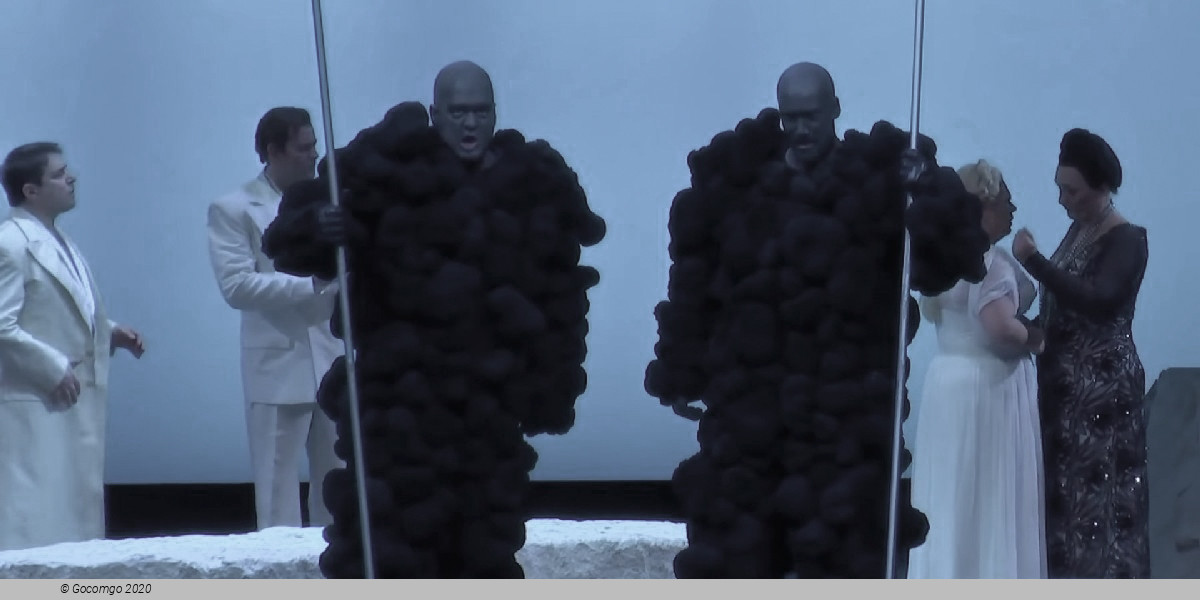
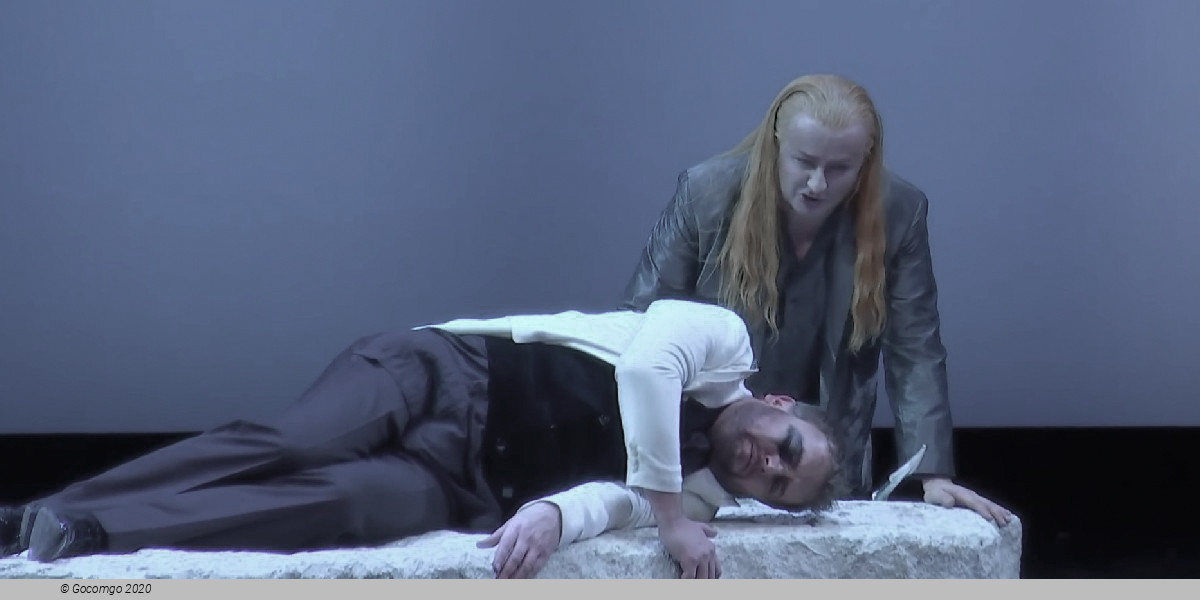
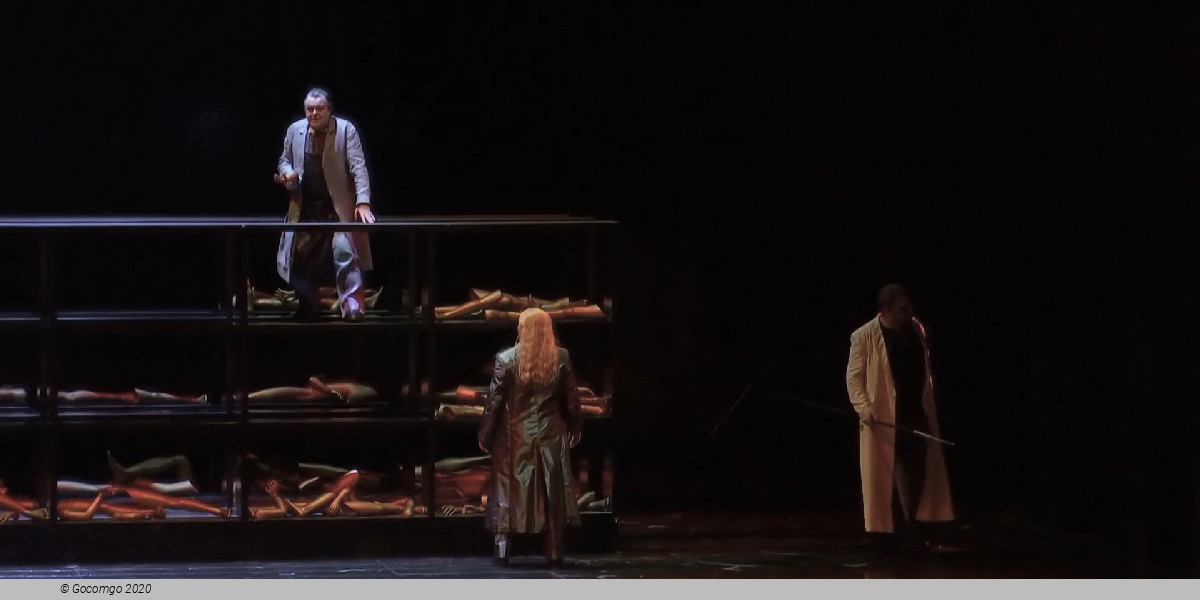
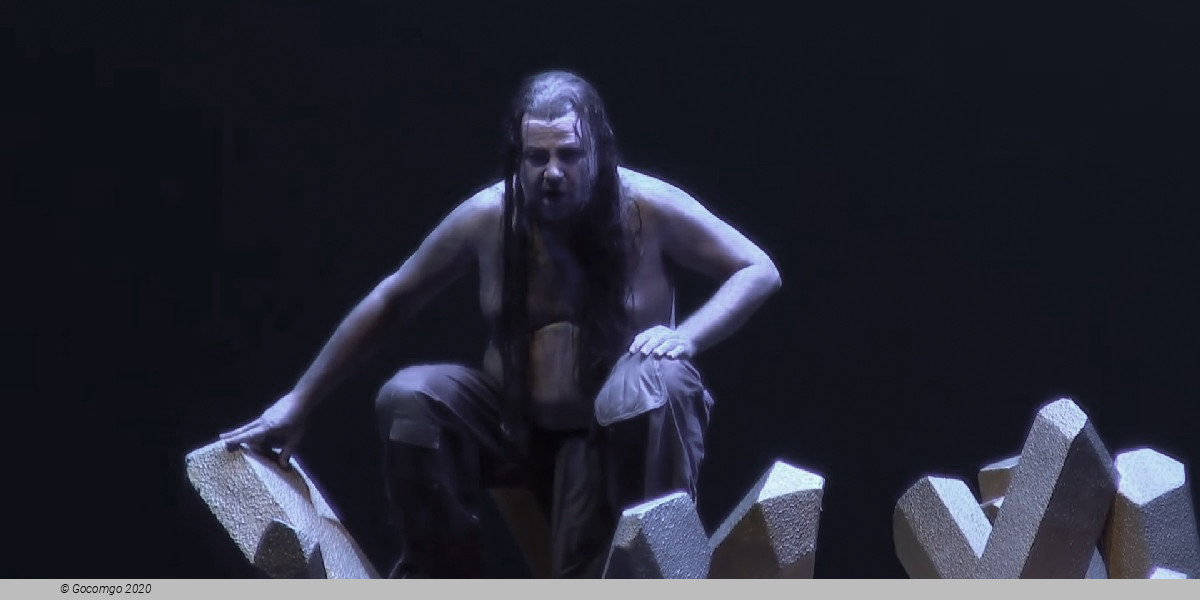
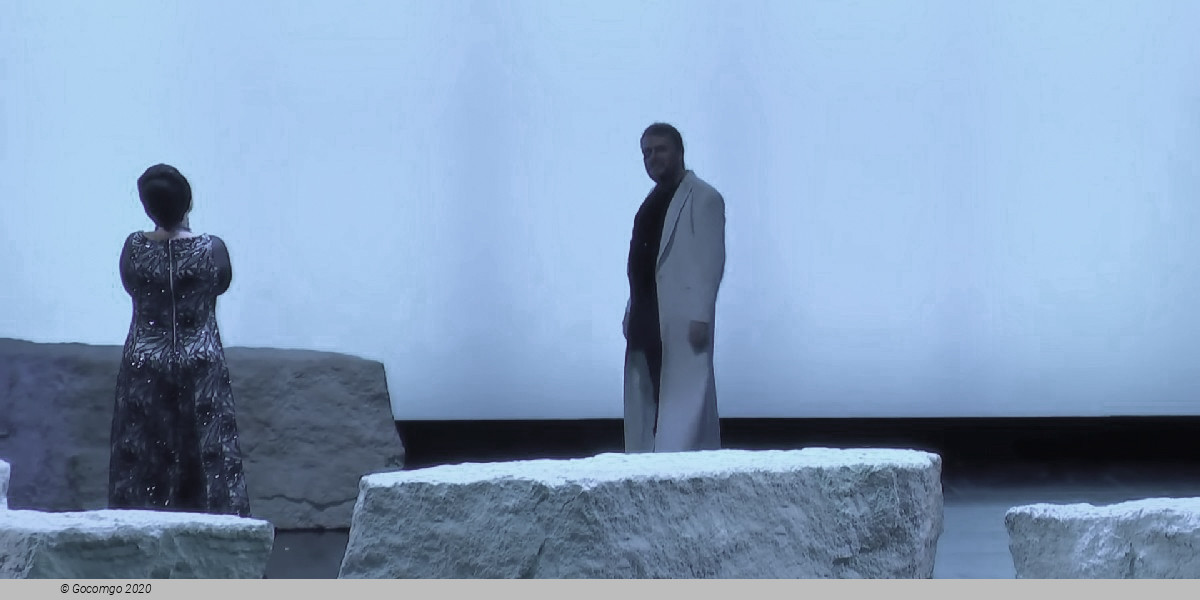
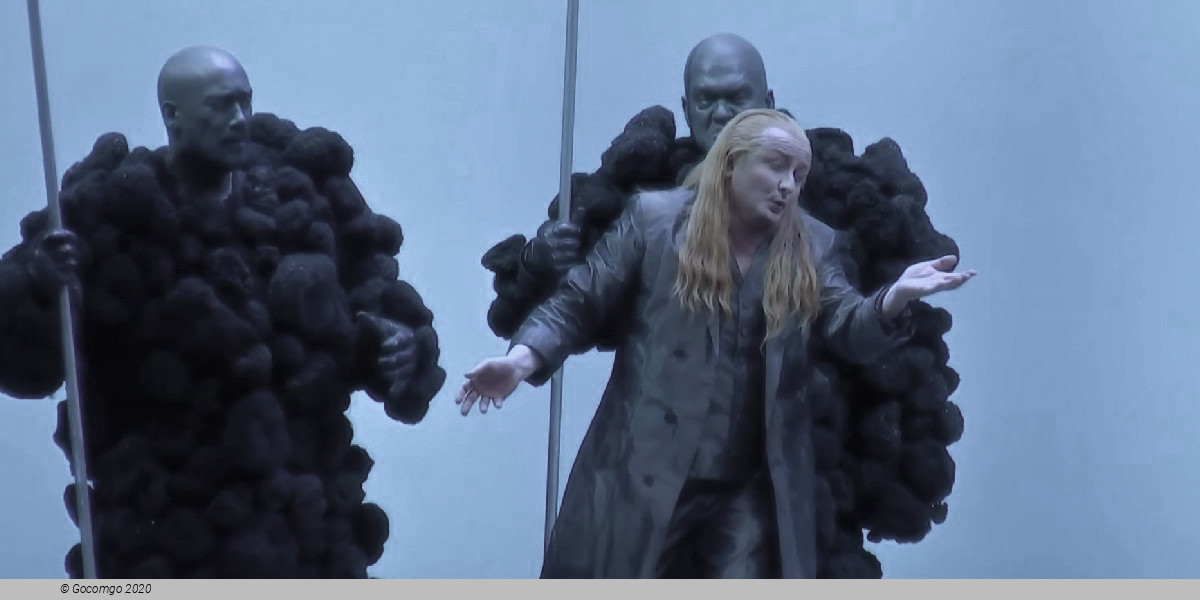
Greedy. Jealous. Lustful. The gods are all-too-human. When the forging of a prophesied ring of the Rhine proves more problematic than you’d possibly think, the realms of gods and men prove all the more chaotic for it. Giants, dwarfs, nymphs and deities quarrel and clash, with the fate of the nine worlds in the balance.

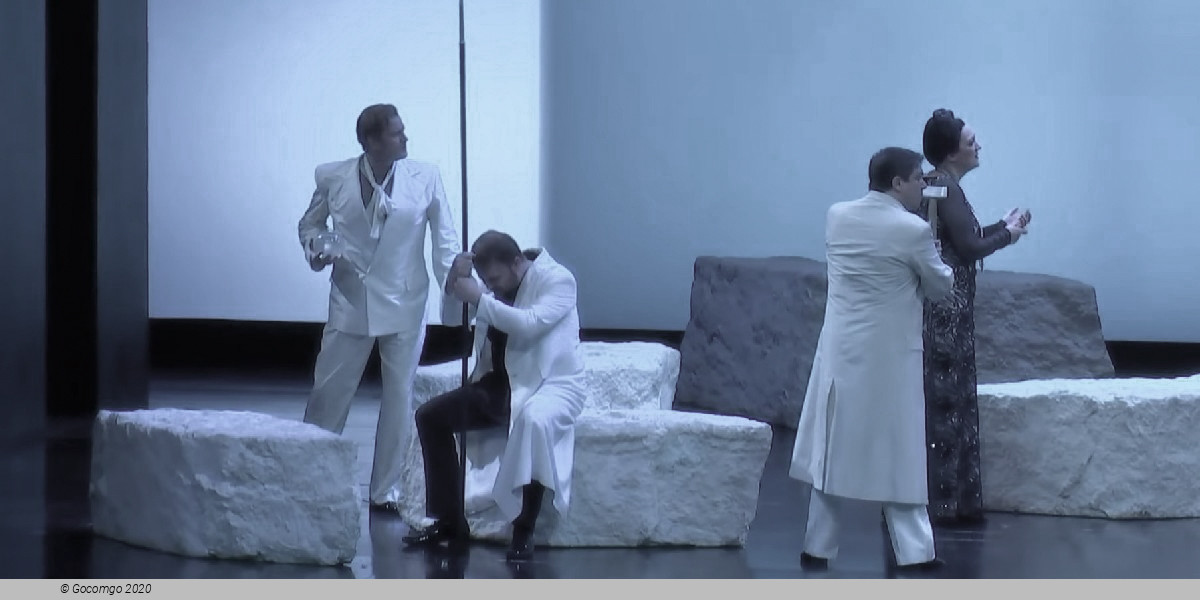
Olivier Award-winning director Richard Jones returns from 2021’s ‘powerful’ (Evening Standard) production of The Valkyrie in ENO’s ongoing Ring Cycle, performing all four epics as part of a five-year collaboration bringing Wagner’s magnum opus to the London Coliseum.

ENO Music Director Martyn Brabbins channels Wagner’s tempestuous score in conducting the ENO Orchestra. Wotan, played by John Relyea, is accompanied by Frederick Ballentine (Loge), former Harewood Artist Madeleine Shaw (Fricka), Christine Rice (Erda), Leigh Melrose (Alberich) and James Cresswell (Fafner), amongst others. 

Book your opera tickets to witness the start of a saga, in Wagner’s The Rhinegold, and experience the power of Wagner’s music live at the London Coliseum.

History
Premiere of this production: 22 September 1869, National Theatre Munich

Das Rheingold is the first of the four music dramas that constitute Richard Wagner's Der Ring des Nibelungen, (English: The Ring of the Nibelung). It was performed, as a single opera, at the National Theatre Munich on 22 September 1869, and received its first performance as part of the Ring cycle at the Bayreuth Festspielhaus, on 13 August 1876.

Synopsis

Scene 1

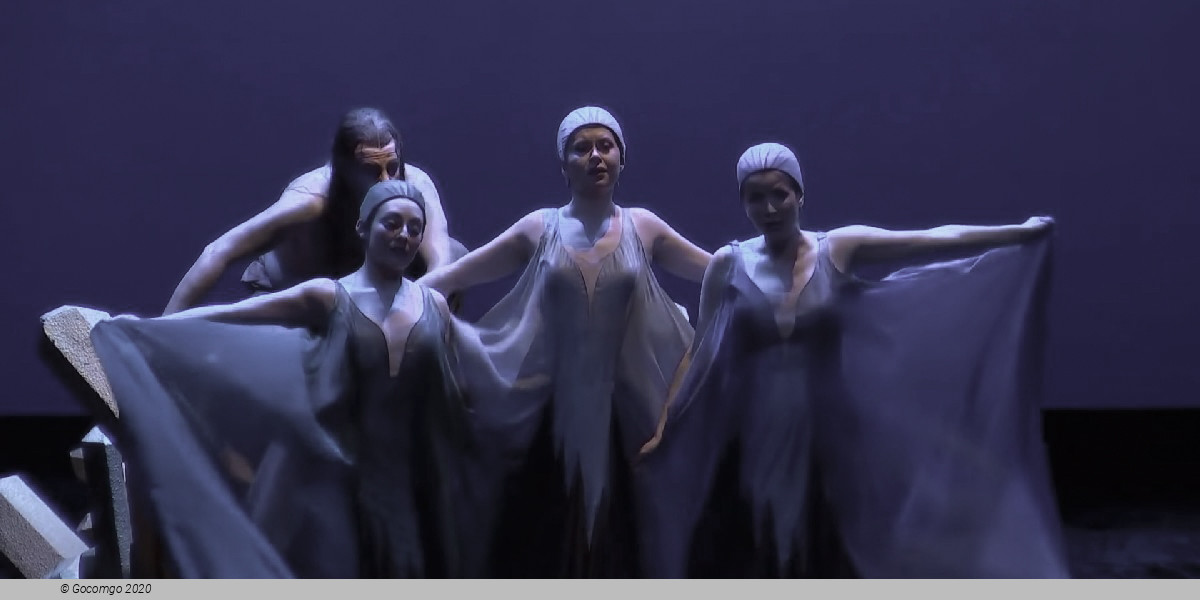
At the bottom of the Rhine, the three Rhinemaidens, Woglinde, Wellgunde, and Floßhilde, play together. Alberich, a Nibelung dwarf, appears from a deep chasm and tries to woo them. The maidens mock his advances and he grows angry – he chases them, but they elude, tease and humiliate him. A sudden ray of sunshine pierces the depths, to reveal the Rhinegold. The maidens rejoice in the gold's gleam. Alberich asks what it is. They explain that the gold, which their father has ordered them to guard, can be made into a magic ring which gives power to rule the world, if its bearer first renounces love. The maidens think they have nothing to fear from the lustful dwarf, but Alberich, embittered by their mockery, curses love, seizes the gold and returns to his chasm, leaving them screaming in dismay.

Scene 2

Wotan, ruler of the gods, is asleep on a mountaintop, with a magnificent castle behind him. His wife, Fricka, wakes Wotan, who salutes their new home. Fricka reminds him of his promise to the giants Fasolt and Fafner, who built the castle, that he would give them Fricka's sister Freia, the goddess of youth and beauty, as payment. Fricka is worried for her sister, but Wotan is confident that Loge, the demigod of fire, will find an alternative payment.

Freia enters in a panic, followed by Fasolt and Fafner. Fasolt demands that Freia be given up. He points out that Wotan's authority is sustained by the treaties carved into his spear, including his contract with the giants, which Wotan therefore cannot violate. Donner, god of thunder, and Froh, god of sunshine, arrive to defend Freia, but Wotan cannot permit the use of force to break the agreement. Hoping that Loge will arrive with the alternative payment he has promised, Wotan tries to stall.

When Loge arrives, his initial report is discouraging: nothing is more valuable to men than love, so, there is apparently no possible alternative payment besides Freia. Loge was able to find only one instance where someone willingly gave up love for something else: Alberich the Nibelung has renounced love, stolen the Rhine gold and made a powerful magic ring out of it. A discussion of the ring and its powers ensues, and everyone finds good reasons for wanting to own it. Fafner makes a counter-offer: the giants will accept the Nibelung's treasure in payment, instead of Freia. When Wotan tries to haggle, the giants depart, taking Freia with them as hostage and threatening to keep her forever unless the gods ransom her by obtaining, and giving them, the Nibelung's gold, by the end of the day.

Freia's golden apples had kept the gods eternally young, but in her absence they begin to age and weaken. In order to redeem Freia, Wotan resolves to travel with Loge to Alberich's subterranean kingdom to obtain the gold.

Scene 3

In Nibelheim, Alberich has enslaved the rest of the Nibelung dwarves with the power of the ring. He has forced his brother Mime, a skillful smith, to create a magic helmet, the Tarnhelm. Alberich demonstrates the Tarnhelm's power by making himself invisible, the better to torment his subjects.

Wotan and Loge arrive and happen upon Mime, who tells them of the dwarves' misery under Alberich's rule. Alberich returns, driving his slaves to pile up a huge mound of gold. He boasts to the visitors about his plans to conquer the world using the power of the ring. Loge asks how he can protect himself against a thief while he sleeps. Alberich replies the Tarnhelm will hide him, by allowing him to turn invisible or change his form. Loge expresses doubt and requests a demonstration. Alberich complies by transforming himself into a giant snake; Loge acts suitably impressed, and then asks whether Alberich can also reduce his size, which would be very useful for hiding. Alberich transforms himself into a toad. Wotan and Loge seize him, tie his hands, and drag him up to the surface.

Scene 4

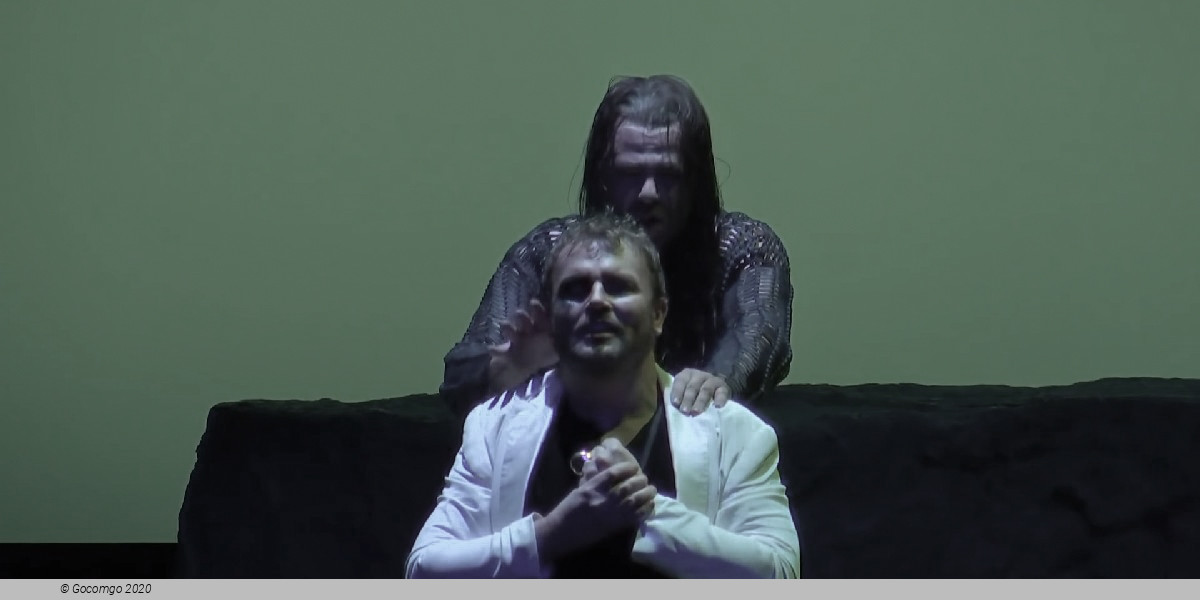
Back on the mountaintop, Wotan and Loge force Alberich to exchange his wealth for his freedom. He summons the Nibelungen, who bring up the hoard of gold. He then asks for the return of the Tarnhelm, but Loge says that it is part of his ransom. Alberich still hopes he can keep the ring, but Wotan demands it, and when Alberich refuses, Wotan tears it from Alberich's hand and puts it on his own finger. Crushed by his loss, Alberich lays a curse on the ring: until it should return to him, whoever possesses it will live in anxiety, and will eventually be robbed of it and killed.

The gods reconvene. Fasolt and Fafner return with Freia. Fasolt, reluctant to release her, insists that the gold be piled high enough to hide her from view. Wotan is forced to relinquish the Tarnhelm, to help cover Freia completely. However, Fasolt spots a remaining crack in the gold, through which one of Freia's eyes can be seen. Loge says that there is no more gold, but Fafner, who has noticed the ring on Wotan's finger, demands that Wotan add it to the pile, to block the crack. Loge protests that the ring belongs to the Rheinmaidens, and Wotan angrily declares that he intends to keep it for his own. As the giants seize Freia and start to leave, Erda, the earth goddess, appears and warns Wotan of impending doom, urging him to give up the cursed ring. Troubled, Wotan calls the giants back and surrenders the ring. The giants release Freia and begin dividing the treasure, but they quarrel over the ring itself. Fafner clubs Fasolt to death. Wotan, horrified, realizes that Alberich's curse has terrible power.

Donner summons a thunderstorm to clear the air, after which Froh creates a rainbow bridge that stretches to the gate of the castle. Wotan leads the gods across the bridge to the castle, which he names Valhalla. Loge does not follow; he says in an aside that he is tempted to destroy the treacherous gods by fire – he will think it over. Far below, the Rhine maidens mourn the loss of their gold, and condemn the gods as false and cowardly.

Venue Info

London Coliseum - London
Location   St Martin’s Lane

The London Coliseum (also known as the Coliseum Theatre) is a theatre in St Martin's Lane, Westminster, built as one of London's largest and most luxurious "family" variety theatres.

Opened on 24 December 1904 as the London Coliseum Theatre of Varieties, it was designed by the theatrical architect Frank Matcham for the impresario Oswald Stoll. Their ambition was to build the largest and finest music hall, described as the "people's palace of entertainment" of its age.

The London Coliseum was built by the theatrical architect Frank Matcham who intended it to be one of London's largest and most luxurious "family" variety theatres. Construction began in 1903 and the venue opened on 24 December the following year as the London Coliseum Theatre of Varieties. It is located in St Martin's Lane, London.

Matcham built the theatre for the theatrical impresario Sir Oswald Stoll and had the ambition of it being the largest and finest "People’s palace of entertainment" of the age.

Matcham wanted a Theatre of Variety – not a music hall but equally not highbrow entertainment. The resulting programme was a mix of music hall and variety theatre, with one act - a full scale revolving chariot race - requiring the stage to revolve. The theatre's original slogan was PRO BONO PUBLICO (For the public good). It was opened in 1904 and the inaugural performance was a variety bill on 24 December that year.

English Heritage, in its description of the theatre when it was given listed status in 1960 notes that it is "exuberant Free Baroque ambitious design, the Edwardian "Theatre de Luxe of London" with richly decorated interiors and a vast and grandiose auditorium." The description continues: "Lavish foyer and circulation areas with marble facings, culminating in vast 3-tier auditorium with wealth of eclectic classical detail of Byzantine opulence, some motifs such as the squat columns dividing the lowest tier of slip boxes, backing the stalls, almost Sullivanesque; pairs of 2-tiered bow fronted boxes with domed canopies at gallery level and semi-domed, Ionic-columned pairs of 2 tiered orchestra boxes, contained in arched and pedimented frames surmounted by sculptural groups with lion-drawn chariots. Great, semi-circular, blocked architrave proscenium arch with cartouche- trophy keystone."

The inaugural performance was a variety bill on 24 December 1904, but it "was a total failure and closed down completely only two years after opening in 1906 and remained closed until December of 1907 when it was reopened and at last became successful." In 1908, the London Coliseum was host to a cricket match between Middlesex and Surrey. In 1911, dramatist W. S. Gilbert produced his last play here, The Hooligan.

The theatre changed its name from the London Coliseum to the Coliseum Theatre between 1931 and 1968 when a run of 651 performances of the musical comedy White Horse Inn began on 8 April 1931. Additionally, Arthur Lewis notes that:

Pantomimes began in 1936 with Cinderella and continued regularly until 1946. In 1947 the musical Annie Get Your Gun was staged at the Coliseum and had a staggeringly successful run for the time, of 1,304 performances and three continuous years which was the longest run in theatrical history. There then followed a long run of major American hits beginning with Kiss Me, Kate in 1951, Guys And Dolls in 1953, Pajama Game in 1955, and Damn Yankees in 1957. But this exceptional period did at last come to an end in 1957 when the production of The Bells Are Ringing failed to enthrall anyone.
The Coliseum reverted to the original name when the Sadler's Wells Opera Company moved there in 1968 and, in 1974, the Company changed its name to become the English National Opera; it bought the freehold of the building for £12.8 million in 1992. The Coliseum hosted both the 2004 and 2006 Royal Variety Performances and is also the London base for performances by English National Ballet, which perform regular seasons throughout the year when not on tour.

The Who performed there and recorded their concert, on 14 December 1969.

Important Info
Type: Opera
City: London, Great Britain
Starts at: 19:30
Duration: 2h 45min
Sung in: English
Top of page