
Vienna State Opera: Gianni Schicchi Tickets | Event Dates & Schedule | GoComGo.com

Gianni Schicchi Tickets

Vienna State Opera, Vienna, Austria
Important Info
Type: Opera
City: Vienna, Austria

E-tickets: Print at home or at the box office of the event if so specified. You will find more information in your booking confirmation email.

You can only select the category, and not the exact seats.
If you order 2 or 3 tickets: your seats will be next to each other.
If you order 4 or more tickets: your seats will be next to each other, or, if this is not possible, we will provide a combination of groups of seats (at least in pairs, for example 2+2 or 2+3).

Cast
Performers
Choose the date to see the peformers
Overview

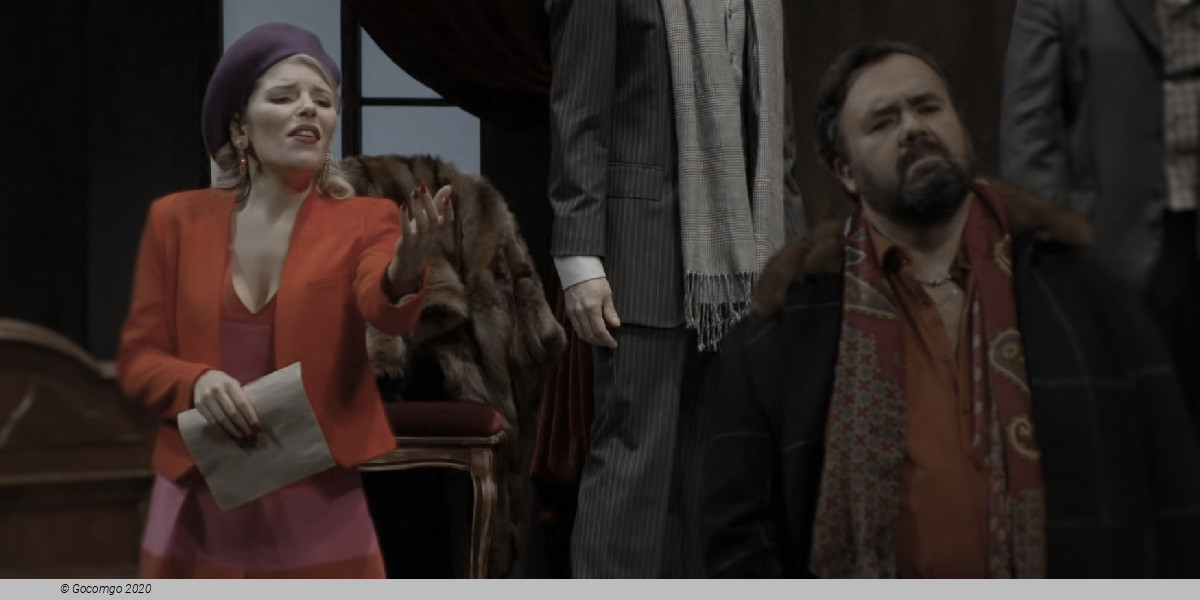
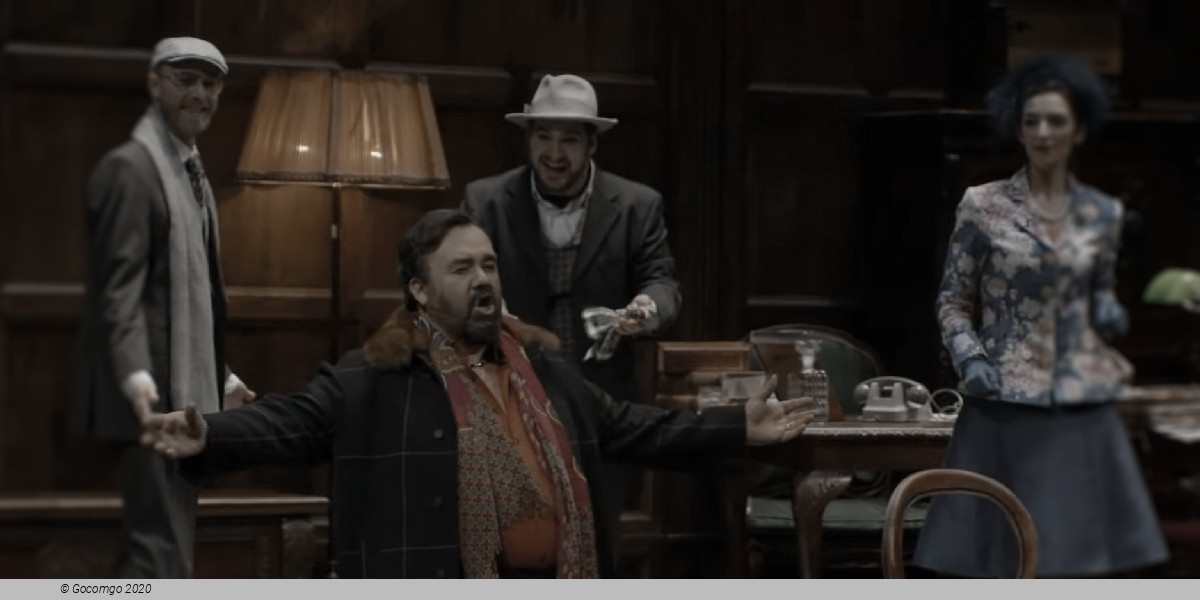
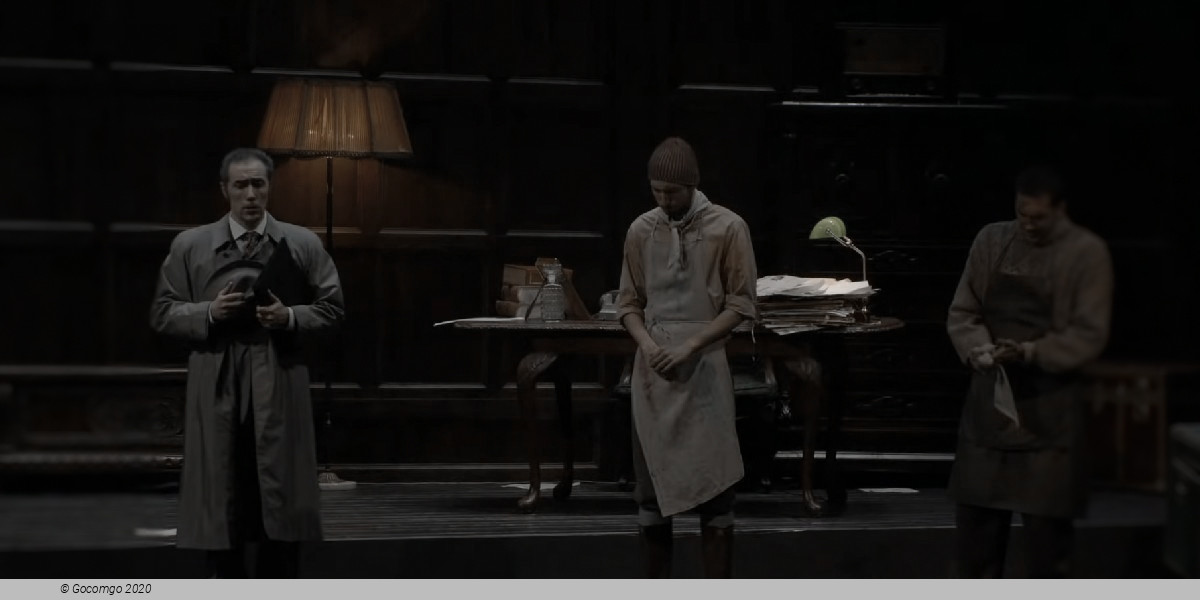
For the comic third part, Gianni Schicchi, Forzano again adapted a short episode from Dante's Inferno: In order to obtain the inheritance of the rich Florentine Buoso Donati, his relatives instruct Gianni Schicchi to take his place and - as a supposedly dying man - dictate a will in their favor.

History
Premiere of this production: 14 December 1918, Metropolitan Opera

Gianni Schicchi is a comic opera in one act by Giacomo Puccini to an Italian libretto by Giovacchino Forzano, composed in 1917–18. The libretto is based on an incident mentioned in Dante's Divine Comedy. The work is the third and final part of Puccini's Il trittico (The Triptych)—three one-act operas with contrasting themes, originally written to be presented together. Although it continues to be performed with one or both of the other trittico operas, Gianni Schicchi is now more frequently staged either alone or with short operas by other composers. The aria "O mio babbino caro" is one of Puccini's best known, and one of the most popular arias in opera.

Synopsis

Place: Florence
Time: 1299

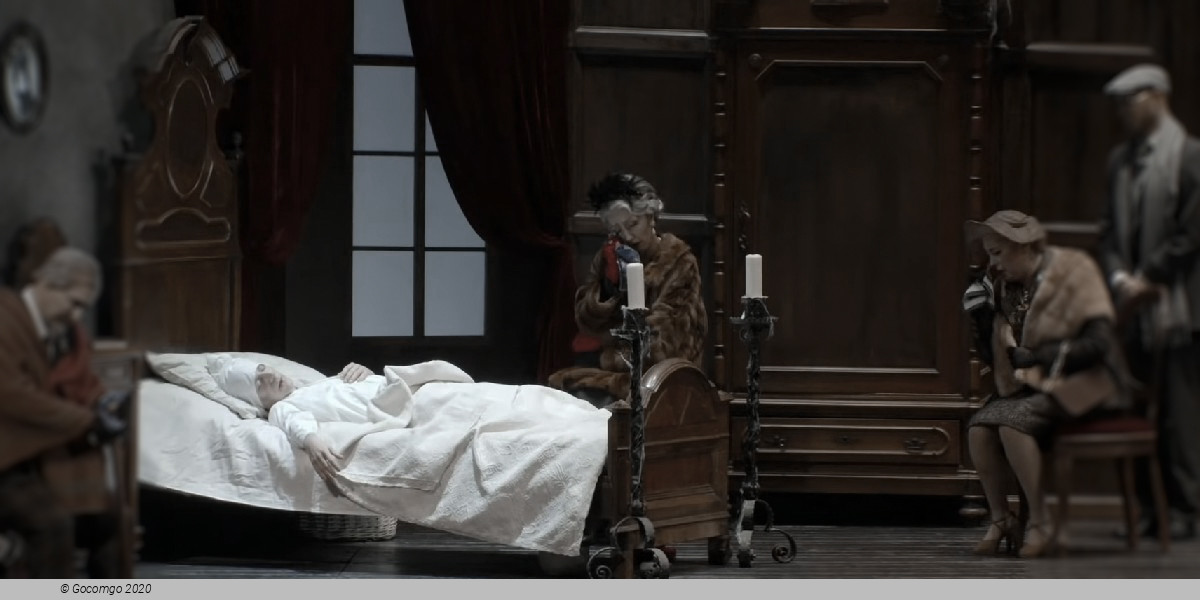
As Buoso Donati lies dead in his curtained four-poster bed, his relatives gather round to mourn his passing, but are really more interested in learning the contents of his will. Among those present are his cousins Zita and Simone, his poor-relation brother-in-law Betto, and Zita's nephew Rinuccio. Betto mentions a rumour he has heard that Buoso has left everything to a monastery; this disturbs the others and precipitates a frantic search for the will. The document is found by Rinuccio, who is confident that his uncle has left him plenty of money. He withholds the will momentarily and asks Zita to allow him to marry Lauretta, daughter of Gianni Schicchi, a newcomer to Florence. Zita replies that if Buoso has left them rich, he can marry whom he pleases; she and the other relatives are anxious to begin reading the will. A happy Rinuccio sends little Gherardino to fetch Schicchi and Lauretta.

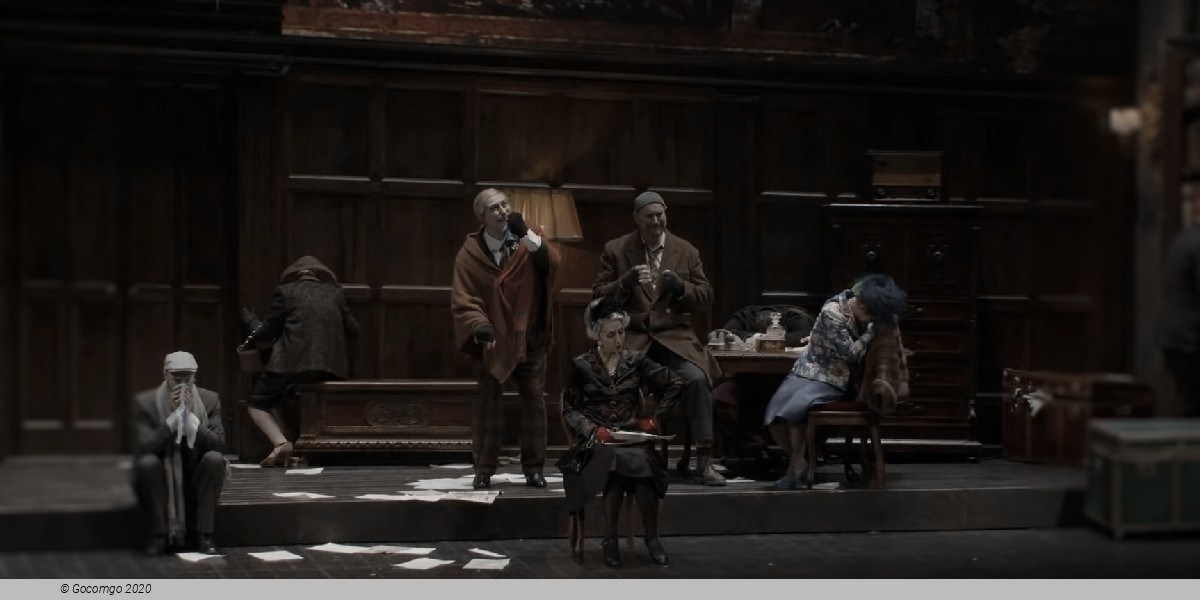
As they read, the relatives' worst fears are soon realised; Buoso has indeed bequeathed his fortune to the monastery. They break out in woe and indignation and turn to Simone, the oldest present and a former mayor of Fucecchio, but he can offer no help. Rinuccio suggests that only Gianni Schicchi can advise them what to do, but this is scorned by Zita and the rest, who sneer at Schicchi's humble origins and now say that marriage to the daughter of such a peasant is out of the question. Rinuccio defends Schicchi in an aria "Avete torto" (You're mistaken), after which Schicchi and Lauretta arrive. Schicchi quickly grasps the situation, and Rinuccio begs him for help, but Schicchi is rudely told by Zita to "be off" and take his daughter with him. Rinuccio and Lauretta listen in despair as Schicchi announces that he will have nothing to do with such people. Lauretta makes a final plea to him with "O mio babbino caro" (Oh, my dear papa), and he agrees to look at the will. After twice scrutinizing it and concluding that nothing can be done, an idea occurs to him. He sends his daughter outside so that she will be innocent of what is to follow.

First, Schicchi establishes that no one other than those present knows that Buoso is dead. He then orders the body removed to another room. A knock announces the arrival of the doctor, Spinelloccio. Schicchi conceals himself behind the bed curtains, mimics Buoso's voice and declares that he's feeling better; he asks the doctor to return that evening. Boasting that he has never lost a patient, Spinelloccio departs. Schicchi then unveils his plan in the aria "Si corre dal notaio" (Run to the notary); having established in the doctor's mind that Buoso is still alive, Schicchi will disguise himself as Buoso and dictate a new will. All are delighted with the scheme, and importune Schicchi with personal requests for Buoso's various possessions, the most treasured of which are "the mule, the house and the mills at Signa". A funeral bell rings, and everyone fears that the news of Buoso's death has emerged, but it turns out that the bell is tolling for the death of a neighbour's Moorish servant. The relatives agree to leave the disposition of the mule, the house and the mills to Schicchi, though each in turn offers him a bribe. The women help him to change into Buoso's clothes as they sing the lyrical trio "Spogliati, bambolino" (Undress, little boy). Before taking his place in the bed, Schicchi warns the company of the grave punishment for those found to have falsified a will: exile from Florence together with the loss of a hand.

The notary arrives, and Schicchi starts to dictate the new will, declaring any prior will null and void. To general satisfaction he allocates the minor bequests, but when it comes to the mule, the house and the mills, he orders that these be left to "my devoted friend Gianni Schicchi". Incredulous, the family can do nothing while the lawyer is present, especially when Schicchi slyly reminds them of the penalties that discovery of the ruse will bring. Their outrage when the notary leaves is accompanied by a frenzy of looting as Schicchi chases them out of what is now his house.

Meanwhile, Lauretta and Rinuccio are rapt in a love duet, "Lauretta mia" - there is no bar to their marriage since Schicchi can provide a respectable dowry. Schicchi, returning, stands moved at the sight of the two lovers. He turns to the audience and asks them to agree that no better use could be found for Buoso's wealth: although the poet Dante has condemned him to hell for this trick, Schicchi asks the audience to forgive him in light of "extenuating circumstances."

Venue Info

Vienna State Opera - Vienna
Location   Opernring 2

The Vienna State Opera is one of the leading opera houses in the world. Its past is steeped in tradition. Its present is alive with richly varied performances and events. Each season, the schedule features 350 performances of more than 60 different operas and ballets. The members of the Vienna Philharmonic are recruited from the Vienna State Opera's orchestra. The building is also the home of the Vienna State Ballet, and it hosts the annual Vienna Opera Ball during the carnival season.

The 1,709-seat Renaissance Revival venue was the first major building on the Vienna Ring Road. It was built from 1861 to 1869 following plans by August Sicard von Sicardsburg and Eduard van der Nüll, and designs by Josef Hlávka. The opera house was inaugurated as the "Vienna Court Opera" (Wiener Hofoper) in the presence of Emperor Franz Joseph I and Empress Elisabeth of Austria. It became known by its current name after the establishment of the First Austrian Republic in 1921. The Vienna State Opera is the successor of the Vienna Court Opera, the original construction site chosen and paid for by Emperor Franz Joseph in 1861.

The opera house was the first major building on the Vienna Ringstrasse commissioned by the Viennese "city expansion fund". Work commenced on the house in 1861 and was completed in 1869, following plans drawn up by architects August Sicard von Sicardsburg and Eduard van der Nüll. It was built in the Neo-Renaissance style by the renowned Czech architect and contractor Josef Hlávka.

Gustav Mahler was one of the many conductors who have worked in Vienna. During his tenure (1897–1907), Mahler cultivated a new generation of singers, such as Anna Bahr-Mildenburg and Selma Kurz, and recruited a stage designer who replaced the lavish historical stage decors with sparse stage scenery corresponding to modernistic, Jugendstil tastes. Mahler also introduced the practice of dimming the lighting in the theatre during performances, which was initially not appreciated by the audience. However, Mahler's reforms were maintained by his successors.

Herbert von Karajan introduced the practice of performing operas exclusively in their original language instead of being translated into German. He also strengthened the ensemble and regular principal singers and introduced the policy of predominantly engaging guest singers. He began a collaboration with La Scala in Milan, in which both productions and orchestrations were shared. This created an opening for the prominent members of the Viennese ensemble to appear in Milan, especially to perform works by Wolfgang Amadeus Mozart and Richard Strauss.

Ballet companies merge

At the beginning of the 2005–2006 season, the ballet companies of the Staatsoper and the Vienna Volksoper were merged under the direction of Gyula Harangozó.

From the 2010–2011 season a new company was formed called Wiener Staatsballet, Vienna State Ballet, under the direction of former Paris Opera Ballet principal dancer Manuel Legris. Legris eliminated Harangozós's policy of presenting nothing but traditional narrative ballets with guest artists in the leading roles, concentrated on establishing a strong in-house ensemble and restored evenings of mixed bill programs, featuring works of George Balanchine, Jerome Robbins, Jiří Kylián, William Forsythe, and many contemporary choreographers, as well as a reduced schedule of the classic ballets.

Opera ball

For many decades, the opera house has been the venue of the Vienna Opera Ball. It is an internationally renowned event, which takes place annually on the last Thursday in Fasching. Those in attendance often include visitors from around the world, especially prominent names in business and politics. The opera ball receives media coverage from a range of outlets.

Important Info
Type: Opera
City: Vienna, Austria

E-tickets: Print at home or at the box office of the event if so specified. You will find more information in your booking confirmation email.

You can only select the category, and not the exact seats.
If you order 2 or 3 tickets: your seats will be next to each other.
If you order 4 or more tickets: your seats will be next to each other, or, if this is not possible, we will provide a combination of groups of seats (at least in pairs, for example 2+2 or 2+3).

Top of page