

London Coliseum 1 March 2022 - The Cunning Little Vixen | GoComGo.com

The Cunning Little Vixen

London Coliseum, London, Great Britain
All photos (6)
Select date and time
7:30 PM

E-tickets: Print at home or at the box office of the event if so specified. You will find more information in your booking confirmation email.

You can only select the category, and not the exact seats.
If you order 2 or 3 tickets: your seats will be next to each other.
If you order 4 or more tickets: your seats will be next to each other, or, if this is not possible, we will provide a combination of groups of seats (at least in pairs, for example 2+2 or 2+3).

Important Info
Type: Opera
City: London, Great Britain
Starts at: 19:30
Duration: 2h
Sung in: English

E-tickets: Print at home or at the box office of the event if so specified. You will find more information in your booking confirmation email.

You can only select the category, and not the exact seats.
If you order 2 or 3 tickets: your seats will be next to each other.
If you order 4 or more tickets: your seats will be next to each other, or, if this is not possible, we will provide a combination of groups of seats (at least in pairs, for example 2+2 or 2+3).

Overview

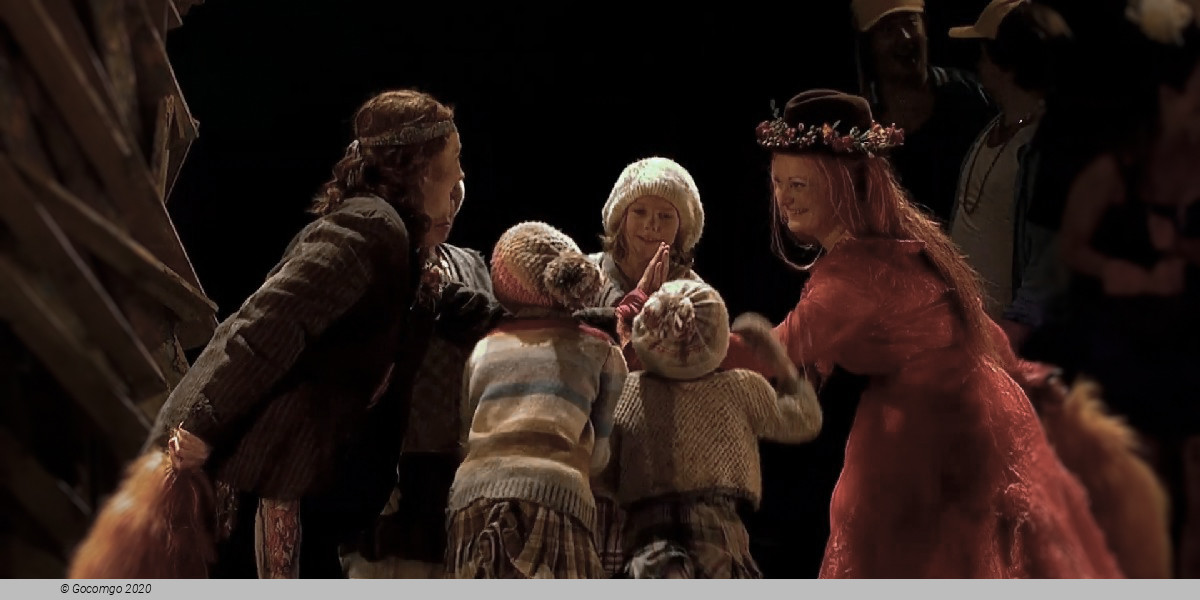
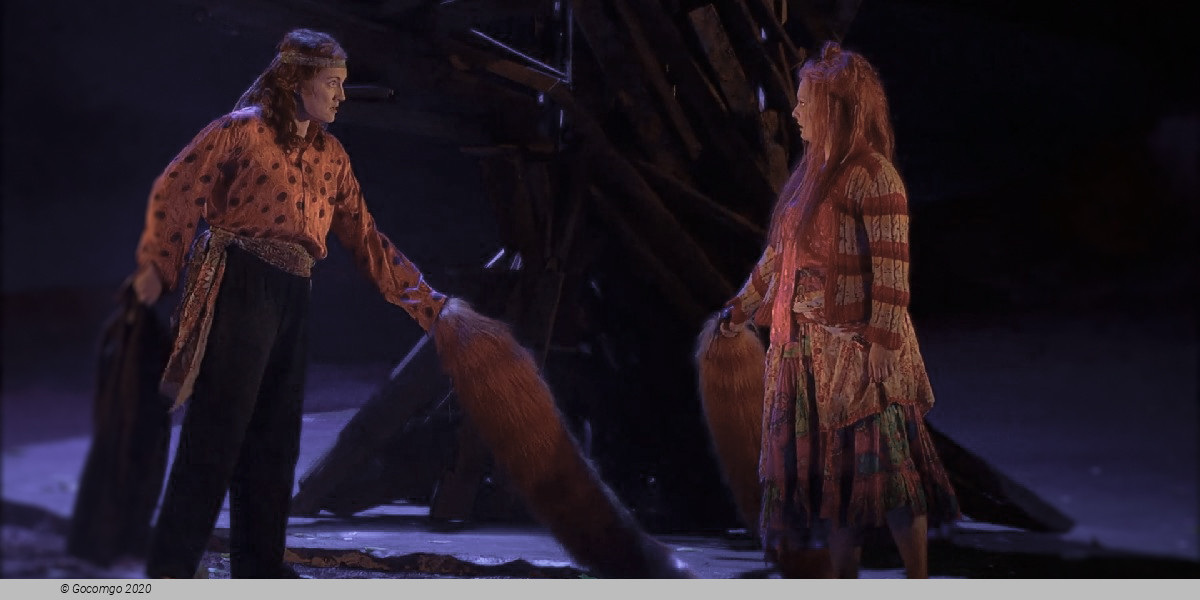
The Cunning Little Vixen tells the tale of a clever vixen named Sharp Ears. Captured by a local Forester when she is young, she later manages to escape his clutches, but he is forever haunted by her memory.

Exploring man’s relationship with nature, Janáček’s opera moves through the contrasting worlds of the Vixen and the Forester, showing how one chance meeting can forever change the lives of both.

This new production is directed by up-and-coming director Jamie Manton, following his acclaimed stagings of Paul Bunyan and The Day After for ENO’s talent development programme Studio Live.

Incorporating elements of Moravian folk music, Janáček’s dramatic score is conducted by ENO Music Director Martyn Brabbins. An outstanding cast includes soprano Sally Matthews as the Vixen, soprano Pumeza Matshikiza as the Fox, baritone Lester Lynch as the Forester, bass Clive Bayley as the Priest, with ENO Harewood Artists Claire Barnett-Jones (Dog), John Findon (Innkeeper), and Alexandra Oomens (Pepik and Woodpecker).

History
Premiere of this production: 06 November 1924, National Theatre Brno

The Cunning Little Vixen (Czech: Příhody lišky Bystroušky; alternative English title: Tales of Vixen Sharp-Ears) is a Czech-language opera by Leoš Janáček, composed in 1921 to 1923. Its libretto was adapted by the composer from a 1920 serialized novella, Liška Bystrouška, by Rudolf Těsnohlídek, which was first published in the newspaper Lidové noviny (with illustrations by Stanislav Lolek).

Synopsis

Act 1
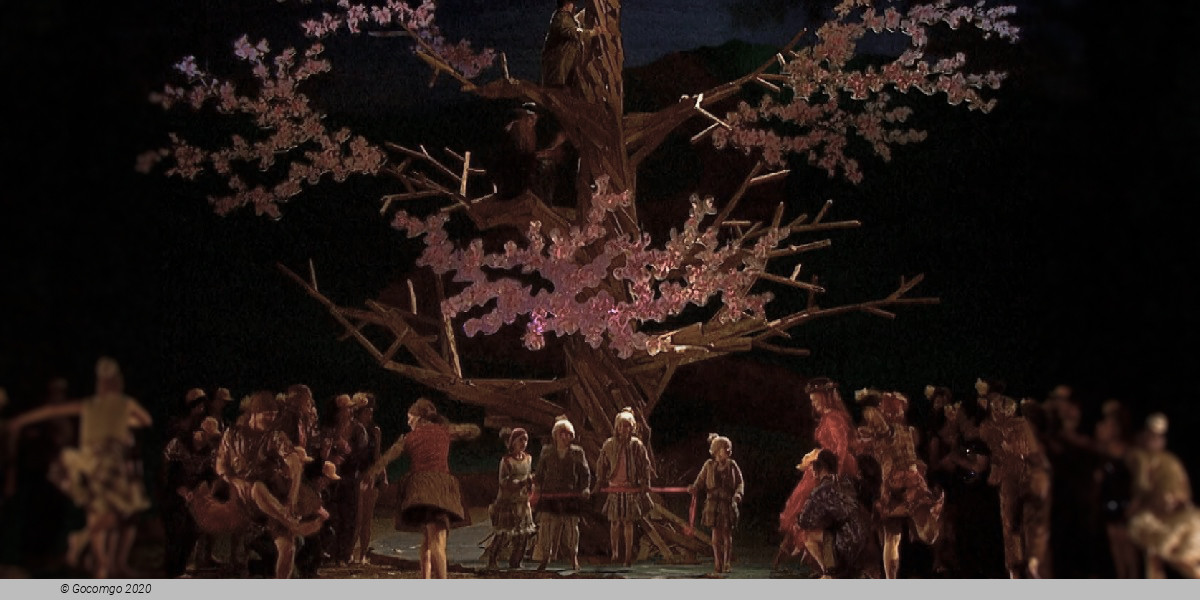
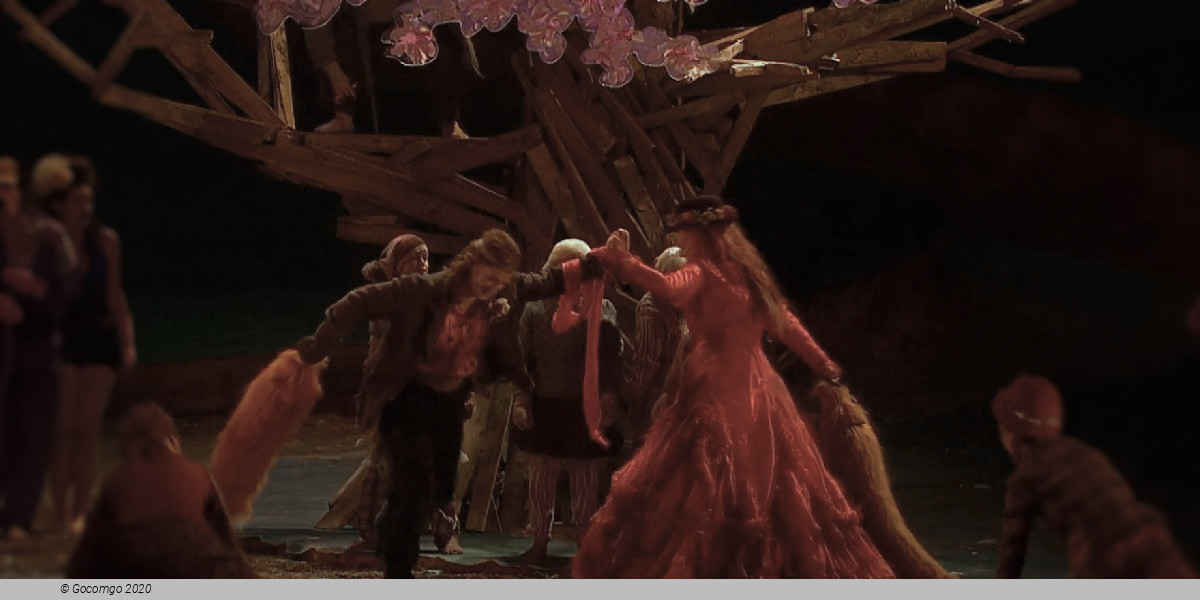
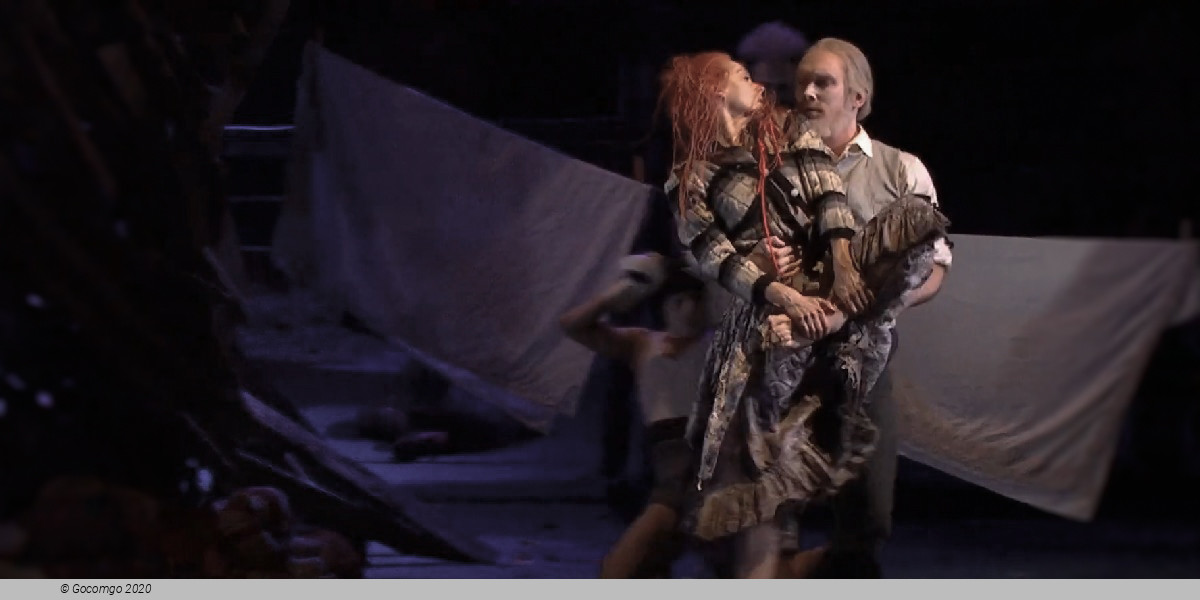
In the forest, the animals and insects are playing and dancing. The Forester enters and lies down against a tree for a nap. A curious Vixen Cub (usually sung by a young girl), inquisitively chases a frog right into the lap of the surprised forester who forcibly takes the vixen home as a pet. Time passes (in the form of an orchestral interlude) and we see the Vixen, now grown up into a young adult (and sung by a soprano), tied up in the forester's yard with the conservative old dachshund. Fed up with life in confinement, the vixen chews through her rope, attacks the Cock and Chocholka the hen, kills the other chickens, jumps over the fence and runs off to freedom.

Act 2
The vixen takes over a badger's home and kicks him out. In the inn, the pastor, the forester, and the schoolmaster drink and talk about their mutual infatuation with the gypsy girl Terynka. The drunken schoolmaster leaves the inn and mistakes a sunflower behind which the vixen is hiding for Terynka and confesses his devotion to her. The forester, also on his way home, sees the vixen and fires two shots at her, sending her running. Later, the vixen, coming into her womanhood, meets a charming boy fox, and they retire to the badger's home. An unexpected pregnancy and a forest full of gossipy creatures necessitates their marriage, which rounds out the act.

Act 3
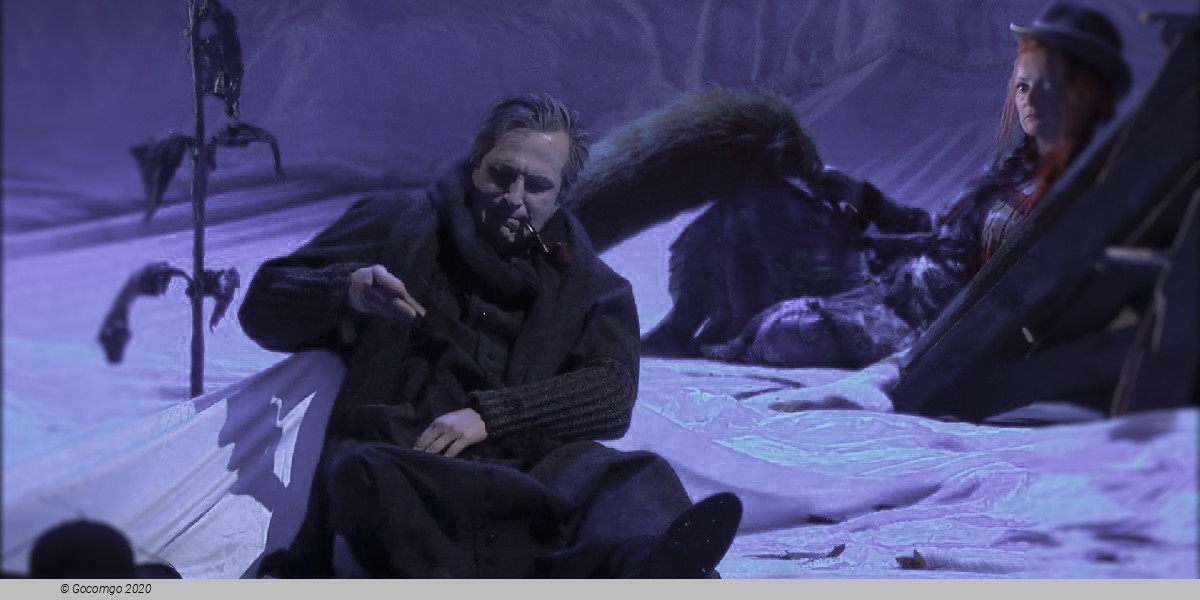
The poacher Harasta is engaged to Terynka and is out hunting in preparation for their marriage. He sets a fox trap, which the numerous fox and vixen cubs mock. Harasta, watching from a distance, shoots and kills the vixen, sending her children running. At Harasta's wedding, the forester sees the vixen's fur, which Harasta gave to Terynka as a wedding present, and flees to the forest to reflect. He returns to the place where he met the vixen, and sits at the tree grieving the loss of both the vixen and Terynka. His grief grows until, just as in the beginning of the opera, a frog unexpectedly jumps in his lap, the grandson of the one who did so in Act 1. This reassurance of the cycle of death leading to new life gives his heart a deep peace.

Venue Info

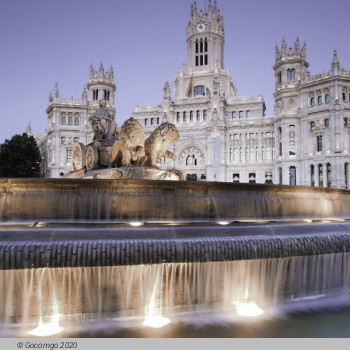
London Coliseum - London
Location   St Martin’s Lane

The London Coliseum (also known as the Coliseum Theatre) is a theatre in St Martin's Lane, Westminster, built as one of London's largest and most luxurious "family" variety theatres.

Opened on 24 December 1904 as the London Coliseum Theatre of Varieties, it was designed by the theatrical architect Frank Matcham for the impresario Oswald Stoll. Their ambition was to build the largest and finest music hall, described as the "people's palace of entertainment" of its age.

The London Coliseum was built by the theatrical architect Frank Matcham who intended it to be one of London's largest and most luxurious "family" variety theatres. Construction began in 1903 and the venue opened on 24 December the following year as the London Coliseum Theatre of Varieties. It is located in St Martin's Lane, London.

Matcham built the theatre for the theatrical impresario Sir Oswald Stoll and had the ambition of it being the largest and finest "People’s palace of entertainment" of the age.

Matcham wanted a Theatre of Variety – not a music hall but equally not highbrow entertainment. The resulting programme was a mix of music hall and variety theatre, with one act - a full scale revolving chariot race - requiring the stage to revolve. The theatre's original slogan was PRO BONO PUBLICO (For the public good). It was opened in 1904 and the inaugural performance was a variety bill on 24 December that year.

English Heritage, in its description of the theatre when it was given listed status in 1960 notes that it is "exuberant Free Baroque ambitious design, the Edwardian "Theatre de Luxe of London" with richly decorated interiors and a vast and grandiose auditorium." The description continues: "Lavish foyer and circulation areas with marble facings, culminating in vast 3-tier auditorium with wealth of eclectic classical detail of Byzantine opulence, some motifs such as the squat columns dividing the lowest tier of slip boxes, backing the stalls, almost Sullivanesque; pairs of 2-tiered bow fronted boxes with domed canopies at gallery level and semi-domed, Ionic-columned pairs of 2 tiered orchestra boxes, contained in arched and pedimented frames surmounted by sculptural groups with lion-drawn chariots. Great, semi-circular, blocked architrave proscenium arch with cartouche- trophy keystone."

The inaugural performance was a variety bill on 24 December 1904, but it "was a total failure and closed down completely only two years after opening in 1906 and remained closed until December of 1907 when it was reopened and at last became successful." In 1908, the London Coliseum was host to a cricket match between Middlesex and Surrey. In 1911, dramatist W. S. Gilbert produced his last play here, The Hooligan.

The theatre changed its name from the London Coliseum to the Coliseum Theatre between 1931 and 1968 when a run of 651 performances of the musical comedy White Horse Inn began on 8 April 1931. Additionally, Arthur Lewis notes that:

Pantomimes began in 1936 with Cinderella and continued regularly until 1946. In 1947 the musical Annie Get Your Gun was staged at the Coliseum and had a staggeringly successful run for the time, of 1,304 performances and three continuous years which was the longest run in theatrical history. There then followed a long run of major American hits beginning with Kiss Me, Kate in 1951, Guys And Dolls in 1953, Pajama Game in 1955, and Damn Yankees in 1957. But this exceptional period did at last come to an end in 1957 when the production of The Bells Are Ringing failed to enthrall anyone.
The Coliseum reverted to the original name when the Sadler's Wells Opera Company moved there in 1968 and, in 1974, the Company changed its name to become the English National Opera; it bought the freehold of the building for £12.8 million in 1992. The Coliseum hosted both the 2004 and 2006 Royal Variety Performances and is also the London base for performances by English National Ballet, which perform regular seasons throughout the year when not on tour.

The Who performed there and recorded their concert, on 14 December 1969.

Important Info
Type: Opera
City: London, Great Britain
Starts at: 19:30
Duration: 2h
Sung in: English
Top of page