A storybook kingdom. Pandolfe, a country gentleman, has married Madame de la Haltière, an imperious countess. She and her daughters, Noémie and Dorothée, bully Pandolfe’s daughter from his first marriage, Lucette—known as Cendrillon.
ACT I
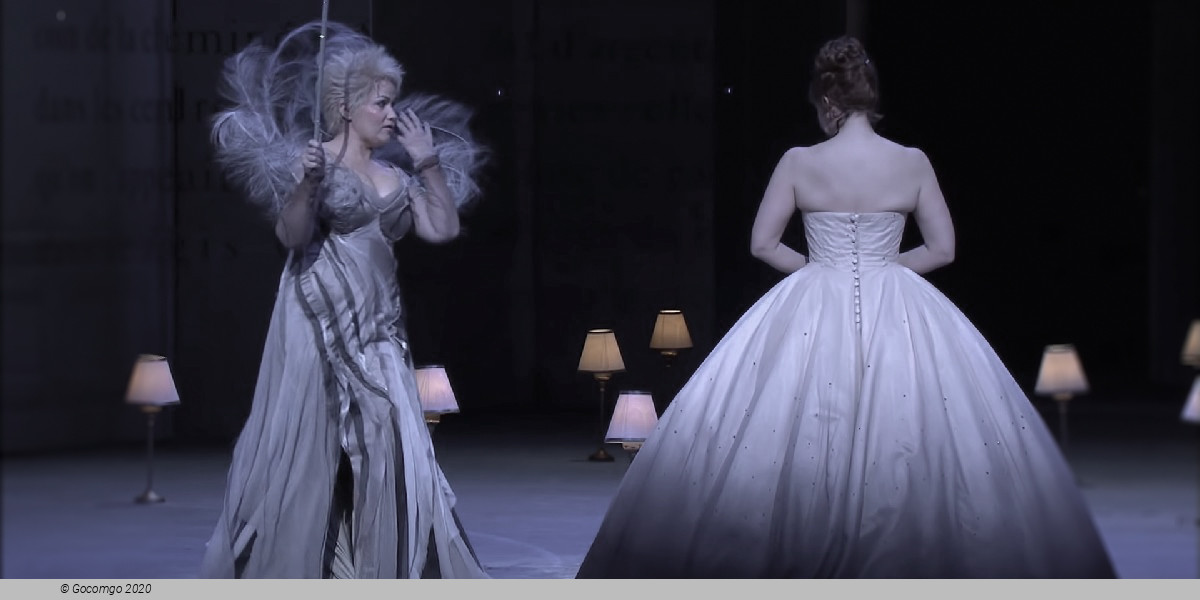
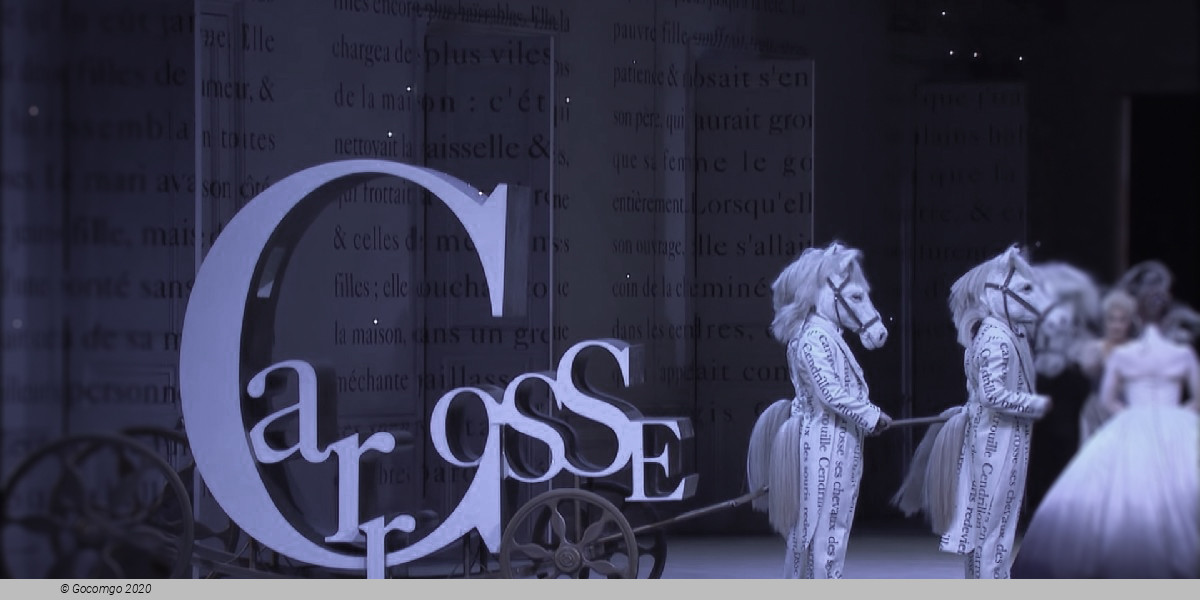
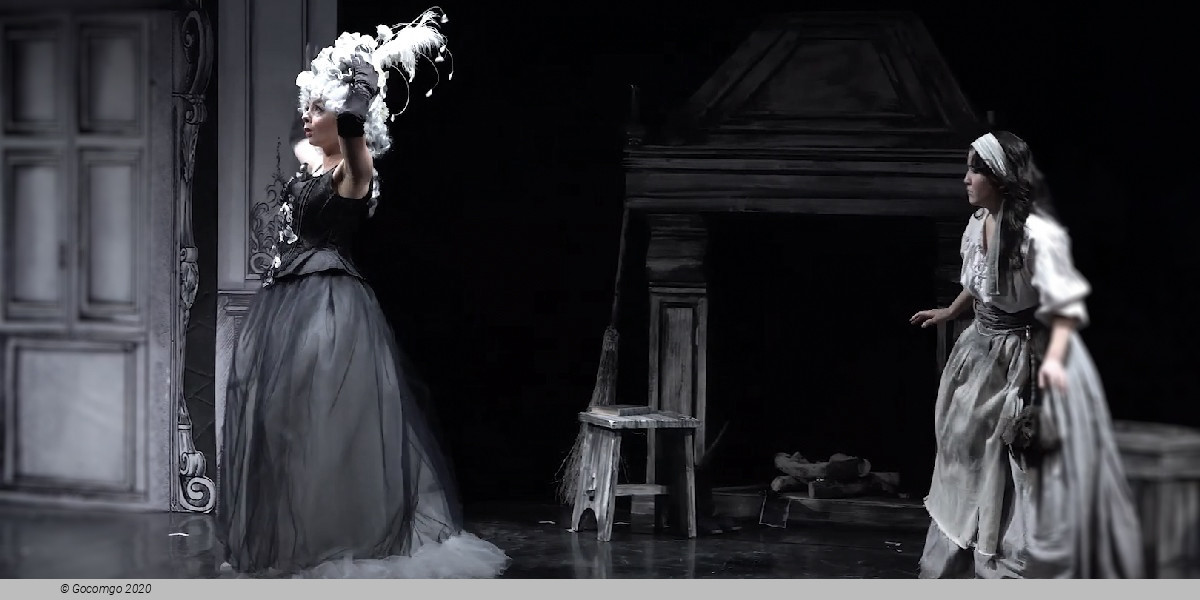
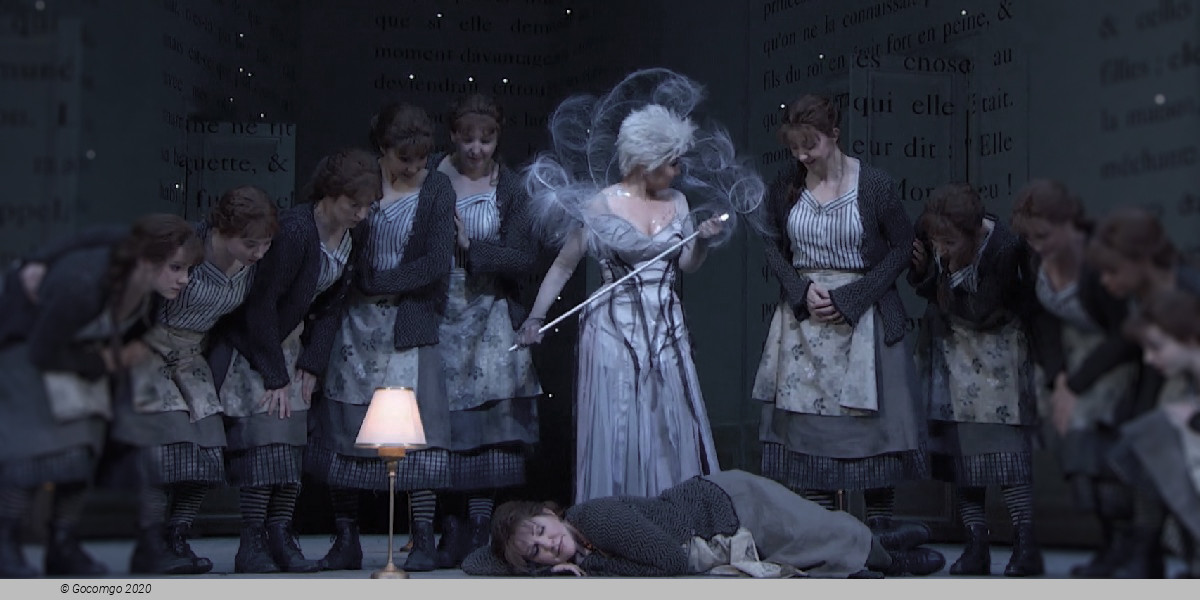
The household prepares for a ball to be given at the Court that evening. Pandolfe bemoans his lot: married to a nagging wife who ill-treats his daughter. Madame de la Haltière instructs her daughters on how to behave at the ball. She refuses to let Cendrillon attend the festivities or to let her father say goodbye to her. After her family has left, Cendrillon sits by the fire and dreams of the ball. Cendrillon’s Fairy Godmother appears and conjures her a coach, horses, a beautiful gown, and glass slippers. She tells Cendrillon that she can go to the ball but must leave before midnight, and that the glass slippers will prevent Cendrillon’s family from recognizing her.
ACT II
The royal ballroom is full of guests enjoying themselves, but Prince Charming is in a melancholy mood. The King orders his son to find a wife, and several princesses dance for the Prince. An unknown beauty, Cendrillon in all her finery, enters the room to general surprise. The whole court—except Madame de la Haltière and her daughters—are charmed by the stranger, and the Prince immediately falls in love with her. Left alone with Cendrillon, he tells her of his feelings. Cendrillon is equally taken with the Prince, but at the first stroke of midnight she hurries away, remembering the Fairy Godmother’s words.
ACT III
Cendrillon has returned home, crestfallen at having had to leave the Prince behind. She remembers her frightening journey from the royal palace and how she lost one of her glass slippers as she left the ball. Madame de la Haltière and her daughters enter, abusing Pandolfe. Madame de la Haltière then describes to Cendrillon the “unknown stranger” who appeared at the King’s ball, telling her that the Prince spoke contemptuously of the girl, and that the Court regarded her with disdain. When Pandolfe tells his wife to be quiet, she turns on him again. Pandolfe has finally had enough and sends Madame de la Haltière, Noémie, and Dorothée out of the room. He suggests to Cendrillon that they leave town and return together to his country estate. Cendrillon agrees, and Pandolfe goes to prepare for their journey. Alone, Cendrillon decides that she is too sad to continue living. She bids farewell to her home and leaves, determined to go off and die in the forest. Spirits are dancing in the forest. Prince Charming and Cendrillon enter, looking for each other. They pray to the Fairy Godmother to ease their pain. Hearing each other’s voices, they reaffirm their love, and Cendrillon tells the Prince her true name, Lucette. The Fairy Godmother allows the pair to see each other. They embrace and fall into an enchanted sleep.
ACT IV
Pandolfe has found Cendrillon in the forest and has been caring for her at home. He tells her that she had been talking during her illness of her adventures at the ball and of Prince Charming. Cendrillon begins to believe that the whole episode was a dream. Trying to be brave, she greets the spring with her father. Madame de la Haltière, Noémie, and Dorothée enter excitedly. They tell Cendrillon and Pandolfe that the King has summoned maidens from all over the land in the hope that one of them is the unknown beauty whom the Prince met at the ball. Madame de la Haltière is sure that the Prince must mean one of her daughters and is determined to go to the palace. A herald announces that the Prince is insisting that each woman who appears at court must try on the glass slipper left behind by the unknown beauty, for it will only fit perfectly upon her foot. Cendrillon resolves to go to the palace as well. The Prince is desperately searching for his beloved among the young women summoned to the palace. Having not found her, he despairs, until Cendrillon and the Fairy Godmother arrive. The Prince immediately recognizes Cendrillon, and the pair declare their love to the court. Pandolfe and the rest of Cendrillon’s family enter. Everyone rejoices and hails Cendrillon as their future queen.
A prologue in front of the curtain, suppressed before the premiere, introduced the characters and invited the audience to enjoy the fairy-tale "to escape from dark realities (pour échapper à des réalités sombres)" and to believe in the "fabulous (fabuleux)". The final words of the prologue are repeated at the end of the opera.
Act 1
Chez Madame de la Haltière
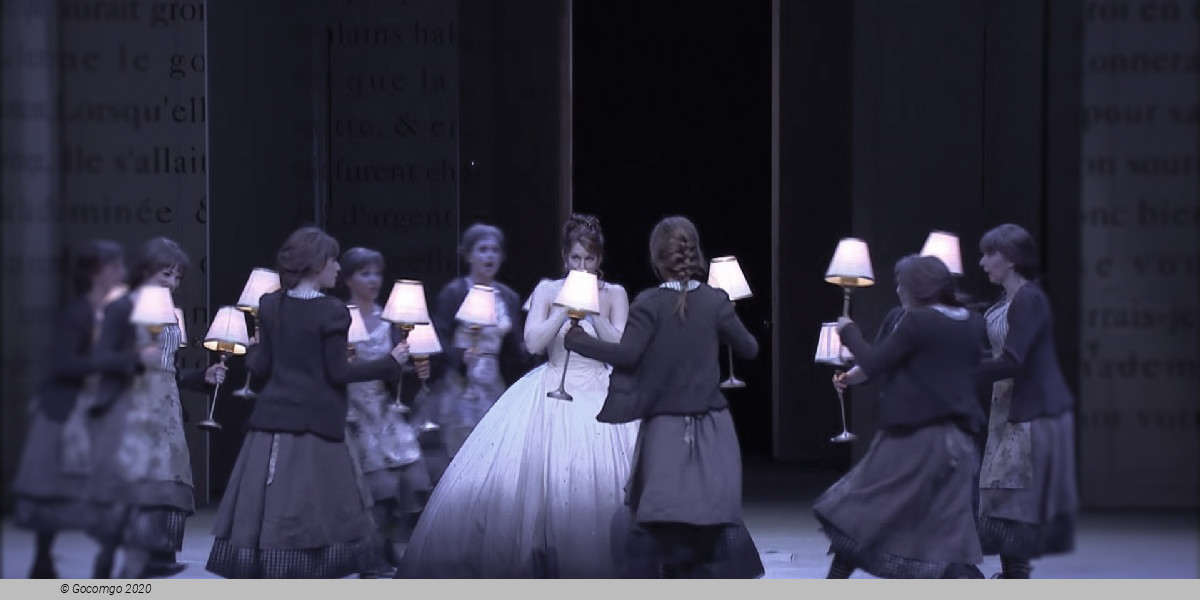
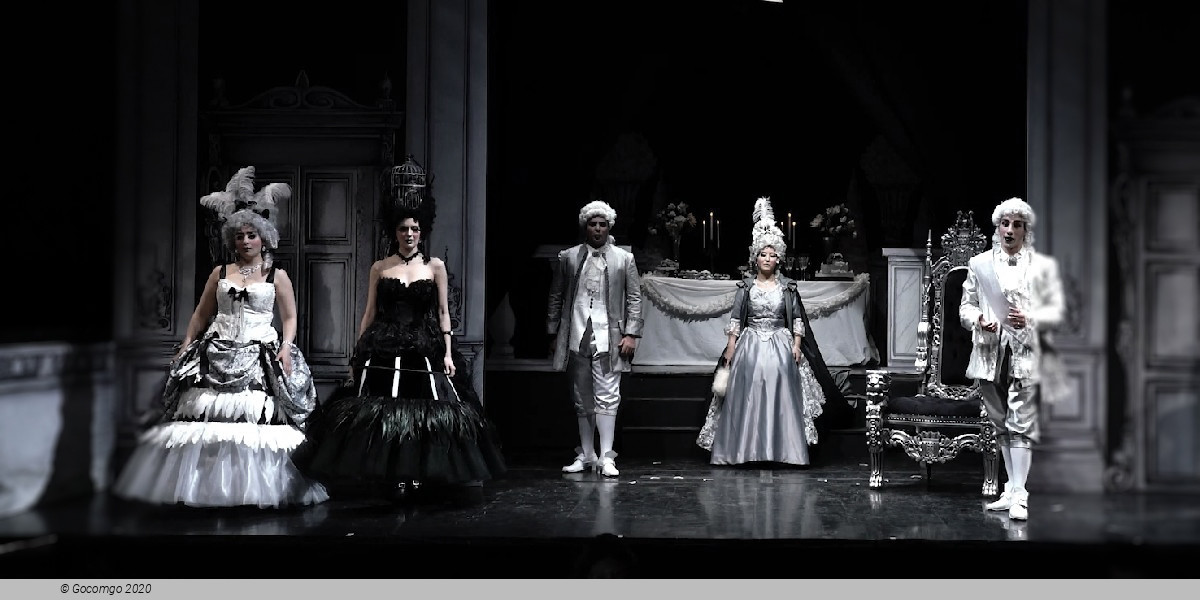
A large room in the house of Madame de la Haltière with a chimney grate. Servants are busy preparing for the ball. Pandolfe, the second husband of Madame de la Haltière, wonders why he forsook the calm of his country home to marry a selfish countess with her two daughters, and pities the lot of his own loving daughter Lucette (Cendrillon). Madame de la Haltière and her daughters Noémie and Dorothée dress while the mother tells them how to attract the prince's attention at the ball. Late in leaving, Pandolfe resigns himself to accompanying them. Cendrillon enters, singing of how she wishes she could also have gone to the ball. After completing her chores she falls asleep by the warm chimney hearth. The Fairy Godmother and her attendants come in, transform Cendrillon into magnificent clothes for the ball, but warn the girl that their spell will only last until midnight, and that the glass slippers will protect her from being recognized by her family. Cendrillon promises to return at midnight, and sets off for the ball.
Act 2
The royal palace
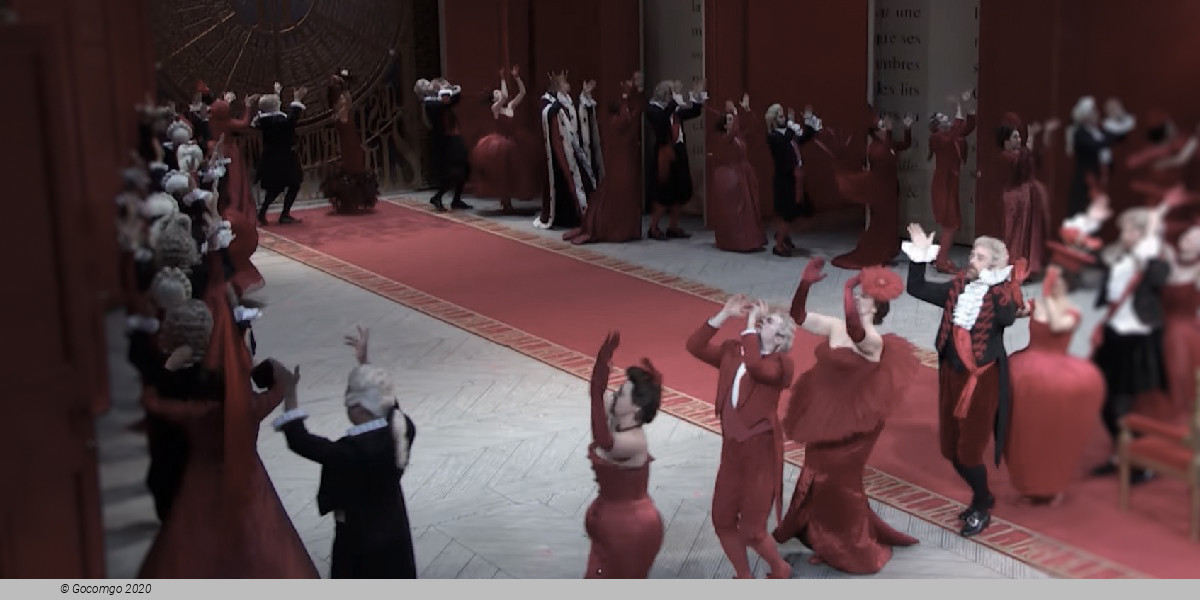
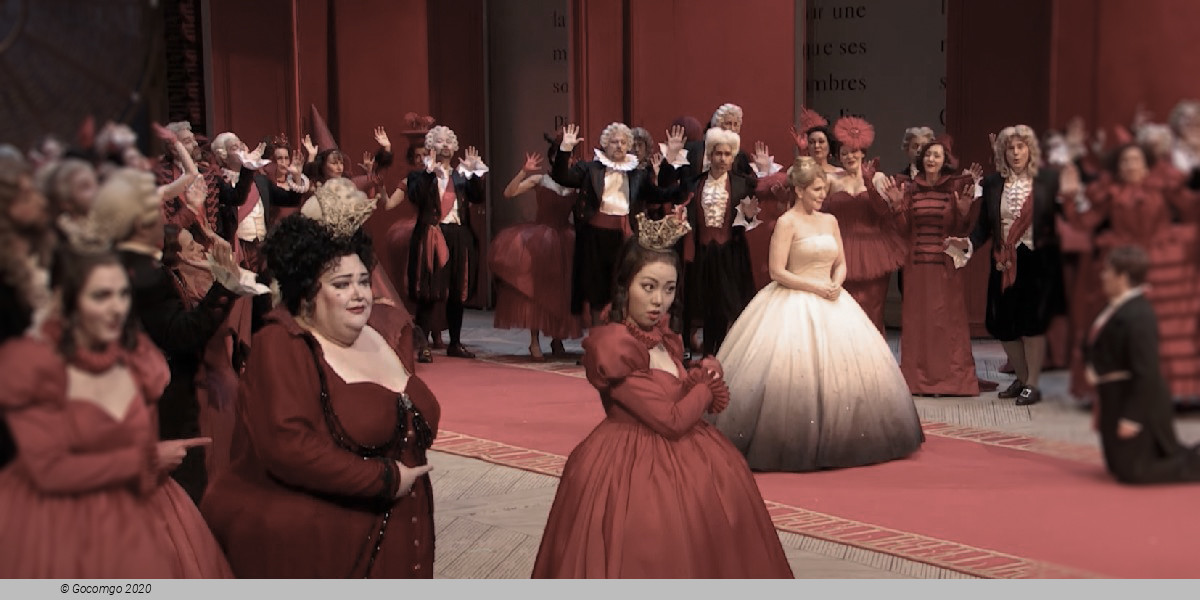
At the royal hall, all is excitement, except for the prince who is melancholy. The king reminds him that he must choose a wife. After five ballet entrées where the eligible princesses present themselves to the prince, a heavenly unknown beauty (Cendrillon) enters and enchants everyone—except for Madame de la Haltière and the two step-sisters. The prince and Cendrillon fall in love at first sight but when the clock strikes midnight Cendrillon runs off, as the stunned prince looks on.
Act 3
First tableau: The return from the ball
Cendrillon returns to the house, having lost one of her glass slippers in her flight, and relives the charm of the ball. Her fine gown has changed back into a plain dress. She hears the returning family carriage and hides in her room. Madame de la Haltière and her daughters insist that the prince rejected the unknown beauty. Cendrillon is on the point of fainting, when her father angrily sends the other women from the room. Tenderly he promises Cendrillon that they will return to his country home. When he has left, she recalls her mother's death, and to prevent her father any more pain, Cendrillon flees into the night, to die on her own.
Second Tableau: The Fairies' Oak
Under a magic oak tree in an enchanted forest, the prince and Cendrillon are drawn together by the fairies. An enchanted arbour of flowers blocks their view of each other but they recognize each other's voice and sing of their love. The prince offers his heart to see his beloved. The flowers disappear and the lovers, surrounded by the spirits, fall into a slumber in each other's arms.
Act 4
First Tableau: The terrace chez Cendrillon
Back in Cendrillon's home, Pandolfe watches over his sleeping daughter, who was found months previously by a stream. Cendrillon awakes and her father relates how in her delirium she spoke to him about the prince, the oak and the slipper. Pandolfe convinces her that it was all a dream. Madame de la Haltière and her daughters appear with the news about an assembly of all eligible princesses at the King's palace. As a royal herald summons the princesses to go and try on the glass slipper, Cendrillon realizes that her dream was true. During the march of the princesses, the scene changes.
Second Tableau: A great hall in the palace
Back at the ballroom in the palace the prince recognizes Cendrillon among the princesses. The lovers are reunited and acclaimed by all present, even Madame de la Haltière. All turn to the audience and, out of character, sing that the piece is over and they have done their best to send the audience through "les beaux pays bleus (the beautiful blue countries)".




 30 Lincoln Center