
Royal Danish Theatre tickets 22 September 2026 - Macbeth | GoComGo.com

Macbeth

Royal Danish Theatre, The Opera House - Main Stage, Copenhagen, Denmark
All photos (7)
Select date and time
7 PM
From
US$ 125

E-tickets: Print at home or at the box office of the event if so specified. You will find more information in your booking confirmation email.

You can only select the category, and not the exact seats.
If you order 2 or 3 tickets: your seats will be next to each other.
If you order 4 or more tickets: your seats will be next to each other, or, if this is not possible, we will provide a combination of groups of seats (at least in pairs, for example 2+2 or 2+3).

Important Info
Type: Opera
City: Copenhagen, Denmark
Starts at: 19:00
Intervals: 1
Duration: 2h 50min
Sung in: Italian
Titles in: English,Dutch

E-tickets: Print at home or at the box office of the event if so specified. You will find more information in your booking confirmation email.

You can only select the category, and not the exact seats.
If you order 2 or 3 tickets: your seats will be next to each other.
If you order 4 or more tickets: your seats will be next to each other, or, if this is not possible, we will provide a combination of groups of seats (at least in pairs, for example 2+2 or 2+3).

Cast
Performers
Choir: The Royal Danish Opera Chorus
Creators
Composer: Giuseppe Verdi
Librettist: Andrea Maffei
Director: Benedict Andrews
Librettist: Francesco Maria Piave
Opera Company: The Royal Danish Opera Academy
Author: William Shakespeare
Overview

One of Italy’s greatest composers embraces one of Shakespeare’s most iconic tragedies. Dark, blood-soaked and unrelenting – and essential viewing for any opera lover.

Giuseppe Verdi was captivated by Shakespeare throughout his life. Even early in his career, he recognised that the English playwright’s tragic universes were ideally suited to his own increasingly dramatic musical language.

Drama abounds in Macbeth, composed relatively early in Verdi’s career and marking his first full encounter with Shakespeare’s opulent poetic world. Here, power is not bestowed – it is seized. Yet power comes at a cost. Macbeth learns this after murdering King Duncan, as he is consumed by guilt and haunted by a darkening conscience. To his wife, Lady Macbeth, such weakness is intolerable. Driven by ruthless ambition, she is prepared to destroy everything – and everyone – in pursuit of the crown.

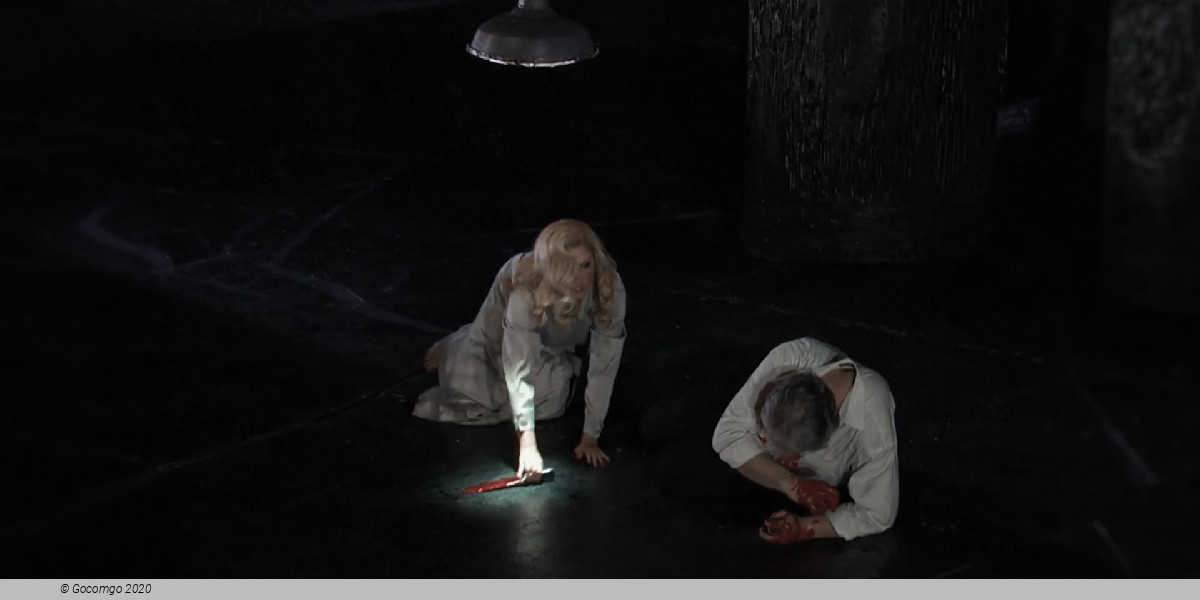
In Macbeth, Verdi fuses Shakespeare’s shadowed tragedy with music of searing intensity and brooding atmosphere. Nowhere is this more striking than in the portrayal of Lady Macbeth, who in the opera’s final moments becomes the embodiment of catastrophe itself, descending into madness as she desperately attempts to wash the imagined blood from her hands.

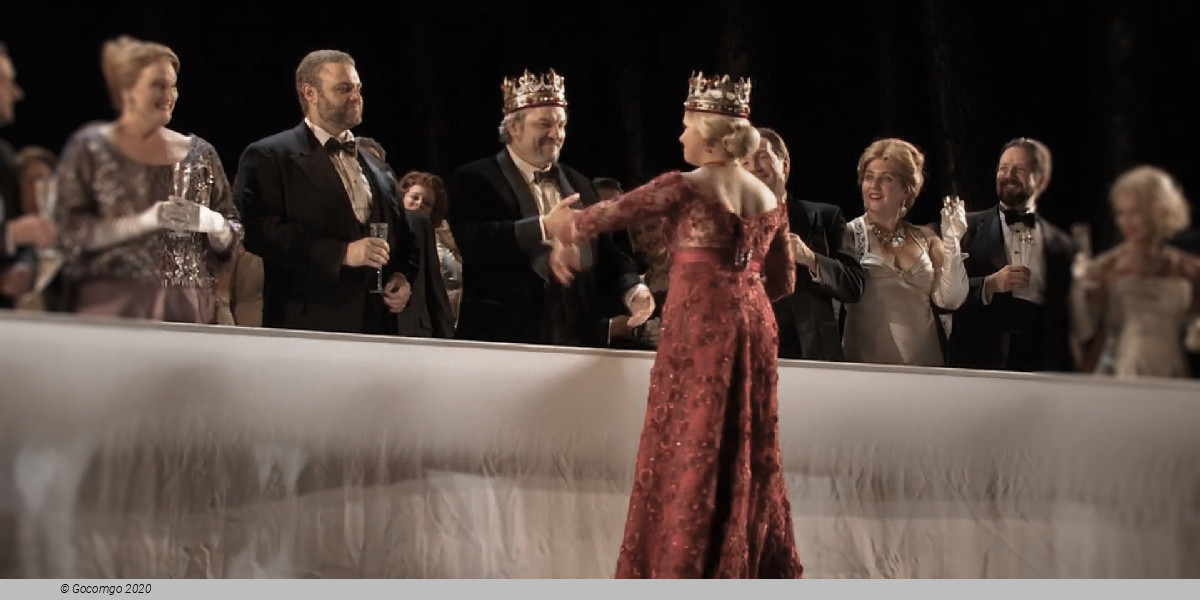
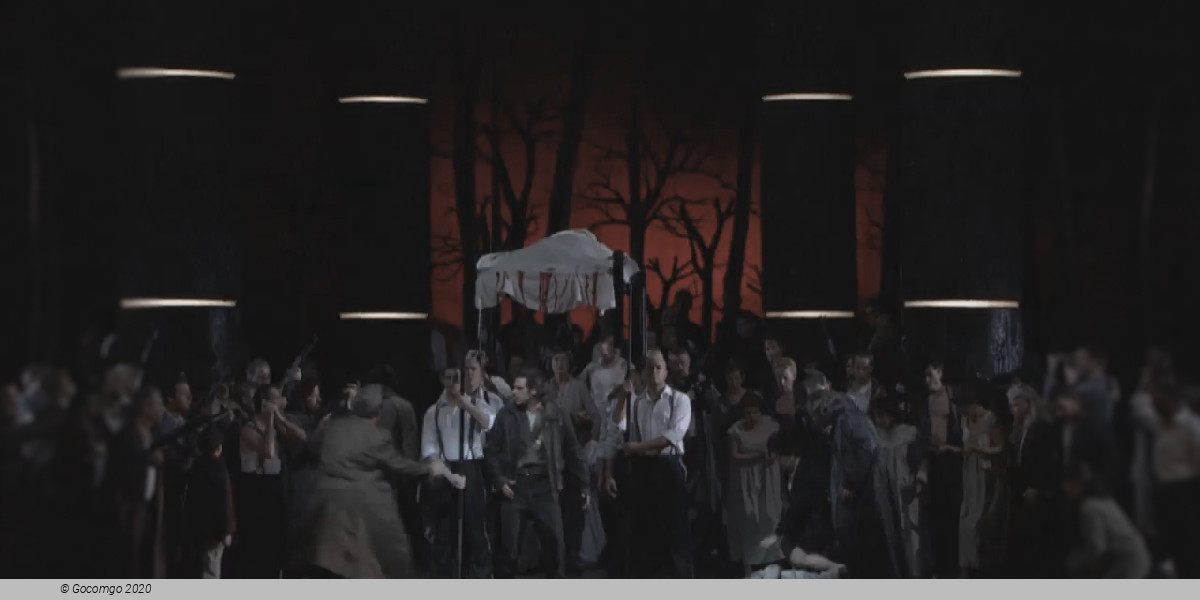
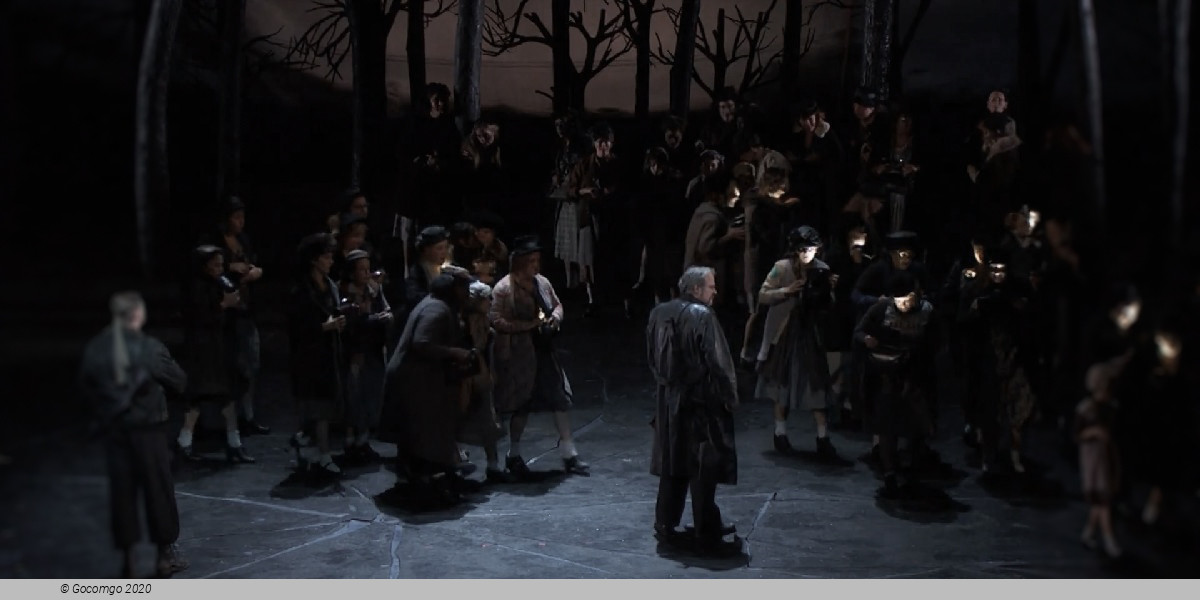
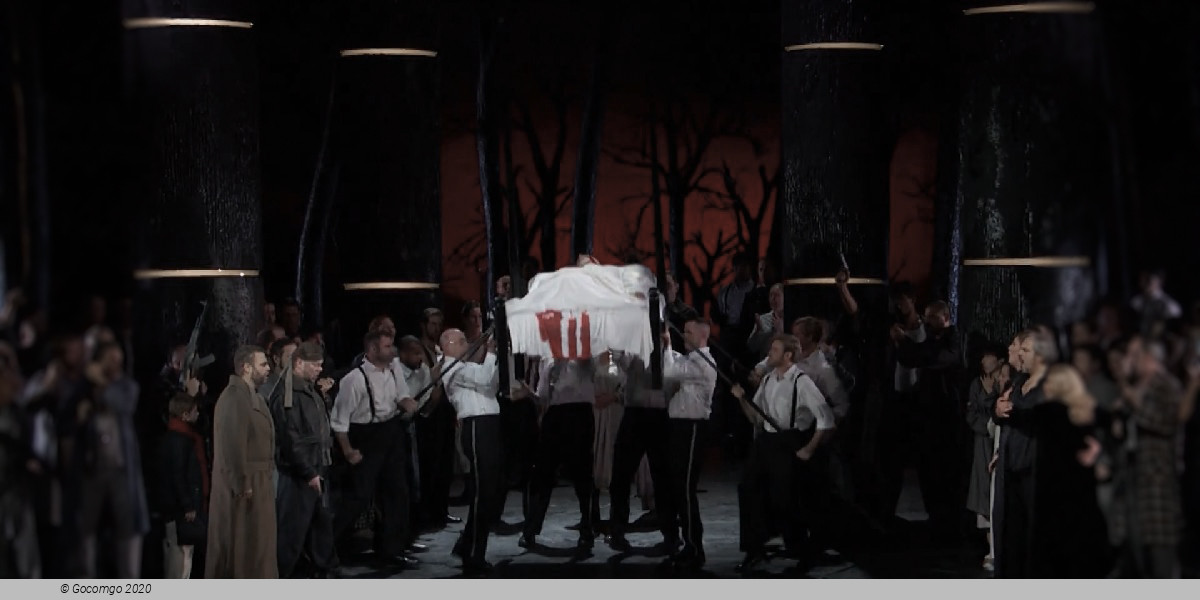
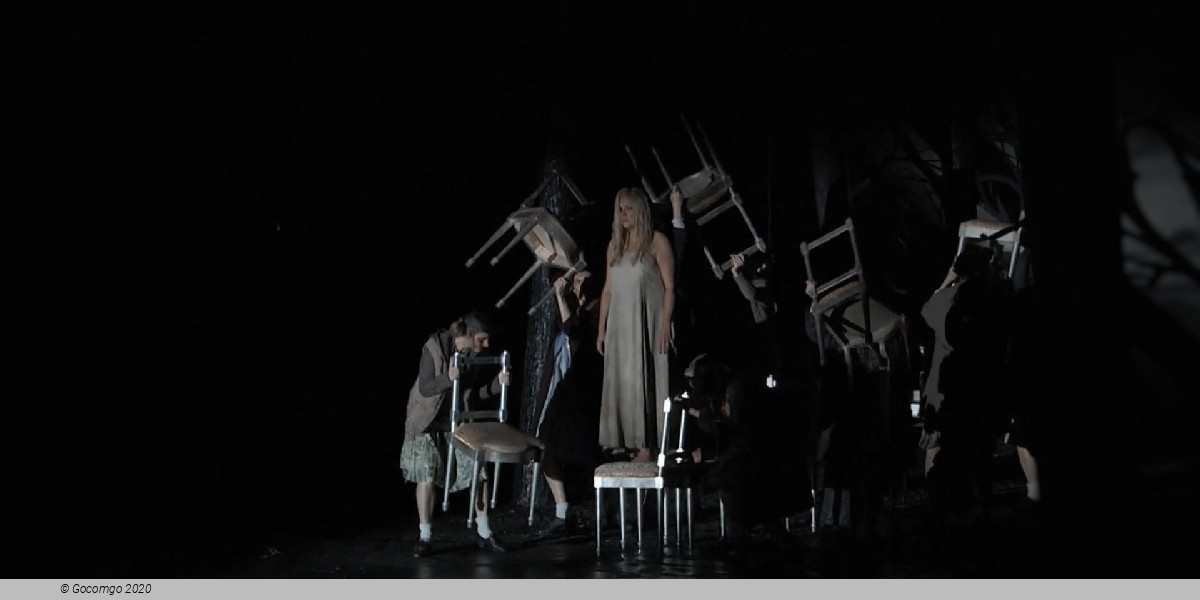
In Australian director Benedict Andrews’ 2013 production, the symbiotic and destructive dynamic between the Macbeths forms the axis of a stark staging that lays bare the work’s brutality. Set designer Ashley Martin-Davis creates a world at once seductive and savage, stripping the characters to their core, while Victoria Behr’s costumes draw them ever deeper into the nightmare.

This season, Jens Søndergaard of the Royal Danish Opera’s soloist ensemble celebrates his 25th stage anniversary with his role debut as the tormented Macbeth. Opposite him, soprano Marigona Qerkezi – who last season delivered a gripping and dramatic Tosca – returns as Lady Macbeth.

History
Premiere of this production: 18 March 1847, Teatro della Pergola, Florence

Macbeth is an opera in four acts by Giuseppe Verdi, with an Italian libretto by Francesco Maria Piave and additions by Andrea Maffei, based on William Shakespeare's play of the same name. Written for the Teatro della Pergola in Florence, it was Verdi's tenth opera and premiered on 14 March 1847. Macbeth was the first Shakespeare play that Verdi adapted for the operatic stage. Almost twenty years later, Macbeth was revised and expanded in a French version and given in Paris on 19 April 1865.

Synopsis

Place: Scotland
Time: 11th century

Act 1

Scene 1: A heath

Groups of witches gather in a wood beside a battlefield, exchanging stories of the "evils" they have done. The victorious generals Macbeth and Banco enter. The witches hail Macbeth as Thane of Glamis (a title he already holds by inheritance), Thane of Cawdor, and king "hereafter." Banco is greeted as "lesser than Macbeth, but greater", never a king himself, but the progenitor of a line of future kings. The witches vanish, and messengers from the king appear naming Macbeth Thane of Cawdor. Macbeth protests that the holder of that title is still alive, but the messengers reply that the former Thane has been executed as a traitor. Banco, mistrusting the witches, is horrified to find that they have spoken the truth. In a duet, Macbeth and Banco muse that the first of the witches' prophecies has been fulfilled. Macbeth ponders how close he is to the throne, and whether fate will crown him without his taking action, yet dreams of blood and treachery: while Banco ponders on whether the minions of Hell will sometimes reveal an honest truth in order to lead one to future damnation.

Scene 2: Macbeth's castle

Lady Macbeth reads a letter from her husband telling of the encounter with the witches. She is determined to propel Macbeth to the throne - by fair means or foul.

Lady Macbeth is advised that King Duncan will stay in the castle that night; she is determined to see him killed (Or tutti, sorgete / "Arise now, all you ministers of hell"). When Macbeth returns she urges him to take the opportunity to kill the King. The King and the nobles arrive and Macbeth is emboldened to carry out the murder (Mi si affaccia un pugnal? / "Is this a dagger which I see before me?"), but afterwards is filled with horror. Disgusted at his cowardice, Lady Macbeth completes the crime, incriminating the sleeping guards by smearing them with Duncan's blood and planting on them Macbeth's dagger. Macduff arrives for an appointment with the King, while Banco stands guard, only for Macduff instead to discover the murder. He rouses the castle while Banco also bears witness to the fact of Duncan's murder. The chorus calls on God to avenge the killing (Schiudi, inferno, . . / "Open wide thy gaping maw, O Hell").

Act 2

Scene 1: A room in the castle

Macbeth is now king: Duncan's son Malcolm has fled the country, suspicion having conveniently fallen on him for his father's murder: but Macbeth is still disturbed by the prophecy that Banco, not he, will found a great royal line. To prevent this he tells his wife that he will have both Banco and his son murdered as they come to a banquet.

Scene 2: Outside the castle

A gang of murderers lie in wait. Banco, sensing danger shares his misgivings with his son. (Come dal ciel precipita / "O, how the darkness falls from heaven"). The murderers attack and stab him to death, but his son escapes.

Scene 3: A dining hall in the castle

Macbeth receives the guests and Lady Macbeth sings a brindisi (Si colmi il calice / "Fill up the cup"). The assassination is reported to Macbeth, but when he returns to the table the ghost of Banco is sitting in his place. Macbeth raves at the ghost and the horrified guests believe he has gone mad. Lady Macbeth manages to calm the situation once - and even mocks it by calling for a toast to the absent Banco (whose death is not yet public knowledge), only for the ghost to appear a second time and terrify Macbeth into insanity again. Macduff resolves to leave the country, saying it is ruled by a cursed hand and only the wicked may remain: the other guests are terrified by Macbeth's talk of ghosts, phantoms and witches. The banquet ends abruptly with their hurried, frightened departure.

Act 3

The witches' cave

The witches gather around a cauldron in a dark cave. Macbeth enters and they conjure up three apparitions for him. The first advises him to beware of Macduff. The second tells him that he cannot be harmed by a man 'born of woman'. The third that he cannot be conquered till Birnam Wood marches against him. (Macbeth: O lieto augurio / "O, happy augury! No wood has ever moved by magic power")

Macbeth is then shown the ghost of Banco and his descendants, eight future Kings of Scotland, verifying the original prophecy. (Macbeth: Fuggi regal fantasima / "Begone, royal phantom that reminds me of Banco"). He collapses, but regains consciousness in the castle.

The act ends with Macbeth recovering and resolving to assert his authority: Vada in fiamme, e in polve cada / "Macduff's lofty stronghold shall / Be set fire....".

Act 4

Scene 1: Near the border between England and Scotland

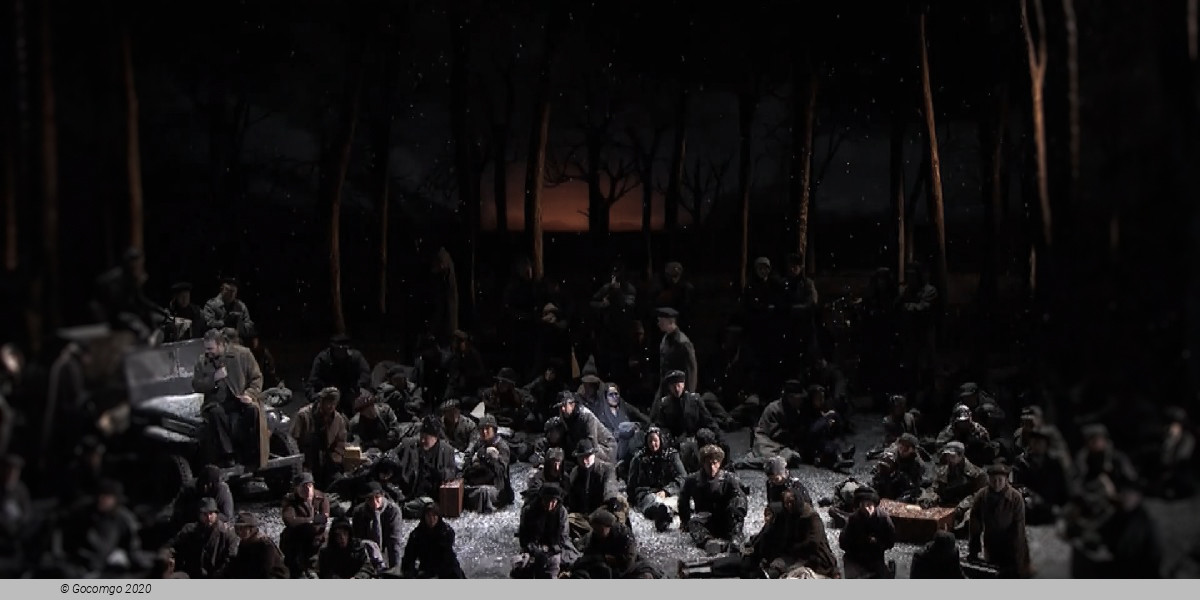
Scottish refugees stand near the English border (Chorus: Patria oppressa / "Down-trodden country"):
While each version uses the same libretto, the music of this chorus is different. It begins with a less ominous, much shorter orchestral introduction and is sung straight through by the entire chorus.

In the distance lies Birnam Wood. Macduff is determined to avenge the deaths of his wife and children at the hands of the tyrant (Ah, la paterna mano / "Ah, the paternal hand"). He is joined by Malcolm, the son of King Duncan, and the English army. Malcolm orders each soldier to cut a branch from a tree in Birnam Wood and carry it as they attack Macbeth's army. They are determined to liberate Scotland from tyranny (Chorus: La patria tradita / "Our country betrayed").

Scene 2: Macbeth's castle

A doctor and a servant observe the Queen as she walks in her sleep, wringing her hands and attempting to clean them of blood (Una macchia è qui tuttora! / "Yet here's a spot"). She raves about the deaths of both Duncan and Banco, and even about the deaths of Macduff's family, and that all the perfumes of Arabia would not clean the blood off her hands: all are things that the horrified witnesses would never dare to repeat to any living man.

Scene 3: The battlefield

Macbeth has learned that an army of Scottish rebels backed by England is advancing against him, but is reassured by remembering the words of the apparitions, that no man born of woman can harm him. However, in an aria (Pietà, rispetto, amore / "Compassion, honour, love") he contemplates the fact that he is already hated and feared: there will be no compassion, honour and love for him in his old age even if he wins this battle, nor kind words on a royal tomb, only curses and hatred. He receives the news of the Queen's death with indifference. Rallying his troops he learns that Birnam Wood has indeed come to his castle. Battle is joined.

Macduff pursues and fights Macbeth who falls. He tells Macbeth that he was not "born of woman" but "ripped" from his mother's womb. Fighting continues. Mortally wounded, Macbeth, in a final aria - Mal per me che m'affidai / "Trusting in the prophecies of Hell" - proclaims that trusting in these prophecies has caused his downfall. He dies on stage, while Macduff's men proclaim Malcolm to be the new King.

Venue Info

Royal Danish Theatre - Copenhagen
Location   August Bournonvilles Passage 2-8

The Royal Danish Theatre is the major opera house in Denmark. It has been located at Kongens Nytorv in Copenhagen since 1748, originally designated as the king's theatre but with public access. The theatre presents opera, the Royal Danish Ballet, classical music concerts (by the Royal Danish Orchestra, which dates back to 1448), and drama in several locations.

The Royal Danish Theatre organization is under the control of the Danish Ministry of Culture, and its objectives are to ensure the staging of outstanding performances that do justice to the various stages that it controls.

The first edifice on the site was designed by court architect Nicolai Eigtved, who also masterminded Amalienborg Palace. In 1774, the old theatre seating 800 theatergoers were reconstructed by architect C.F. Harsdorff to accommodate a larger audience.

During the theatre's first seasons the staffing was modest. Originally, the ensemble consisted of eight actors, four actresses, two male dancers, and one female dancer. Gradually over the following decades, the Royal Danish Theatre established itself as the kind of multi-theatre we know today, home to drama, opera, ballet, and concerts – all under the same roof and management.

An important prerequisite for the theatre's artistic development is its schools. The oldest is the ballet school, established at the theatre in 1771. Two years later, a vocal academy was established as a forerunner for the opera academy. A number of initiatives were considered regarding a drama school, which was established much later.

King Frederik VI, who ascended the throne in 1808, is probably the monarch who most actively took part in the management of the Royal Danish Theatre, not as an arbiter of taste but as its supreme executive chef.

The theatre's bookkeeping accounts of these years show numerous endorsements where the king took personal decisions on everything from wage increases and bonuses to the purchase of shoelaces for the ballerinas. Indeed, the Royal Danish Theatre became the preoccupation of an introverted nation, following the English Wars had suffered a state bankruptcy. "In Denmark, there is only one city and one theatre," as philosopher Søren Kierkegaard put it.

This was the theatre to which the 14-year-old fairytale storyteller Hans Christian Andersen devoted his early ambition. This was also the theatre that became the social and artistic focal point of the many brilliant artists of Denmark's Golden Age.

After the abolition of absolute monarchy in 1849, the Royal Danish Theatre's status as "the city's theatre" fell into decline. No longer enjoying a monopoly within the performing arts, the Royal Danish Theatre was now required by its new owner, the state, to serve the entire nation. The dilapidated building at Kongens Nytorv also found it hard to compete with the splendor of the new popular stage that was rapidly emerging across town. The solution was to construct a brand new theatre building. It was designed in the Historicist style of the times by architects William Dahlerup and Ove Pedersen and situated alongside the old theatre, which was subsequently demolished.

The inauguration of what we today call the Old Stage took place on 15 October 1874. Here opera and ballet were given ample scope. But due to the scale of the building, the auditorium was less suited for spoken drama, which is why a new playhouse was required.

The Royal Danish Theatre has over the past decade undergone the most extensive transformation ever in its over 250-year history. The Opera House in Copenhagen was inaugurated in January 2005, donated by the AP Møller and Chastine Mc-Kinney Møller Foundation, and designed by architect Henning Larsen. And the Royal Danish Playhouse was completed in 2008. Located by Nyhavn Canal across from the Opera House, the playhouse is designed by architects Boje Lundgaard and Lene Tranberg.

Today, the Royal Danish Theatre comprises the Old Stage, located by Kongens Nytorv, the Opera House, and the Royal Danish Playhouse. 

Important Info
Type: Opera
City: Copenhagen, Denmark
Starts at: 19:00
Intervals: 1
Duration: 2h 50min
Sung in: Italian
Titles in: English,Dutch
Top of page