
Grosses Festspielhaus: Il Tabarro Tickets | Event Dates & Schedule | GoComGo.com

Il Tabarro Tickets

Grosses Festspielhaus, Salzburg, Austria
All photos (4)
1 / 4
Available Dates: 5 - 18 Mar, 2027 (6 events)
Important Info
Type: Opera
City: Salzburg, Austria
Acts: 1

E-tickets: Print at home or at the box office of the event if so specified. You will find more information in your booking confirmation email.

You can only select the category, and not the exact seats.
If you order 2 or 3 tickets: your seats will be next to each other.
If you order 4 or more tickets: your seats will be next to each other, or, if this is not possible, we will provide a combination of groups of seats (at least in pairs, for example 2+2 or 2+3).

Cast
Performers
Choose the date to see the peformers
Creators
Composer: Giacomo Puccini
Poet: Dante Alighieri
Librettist: Giovacchino Forzano
Librettist: Giuseppe Adami
Director: Richard Jones
History
Premiere of this production: 14 December 1918, Metropolitan Opera

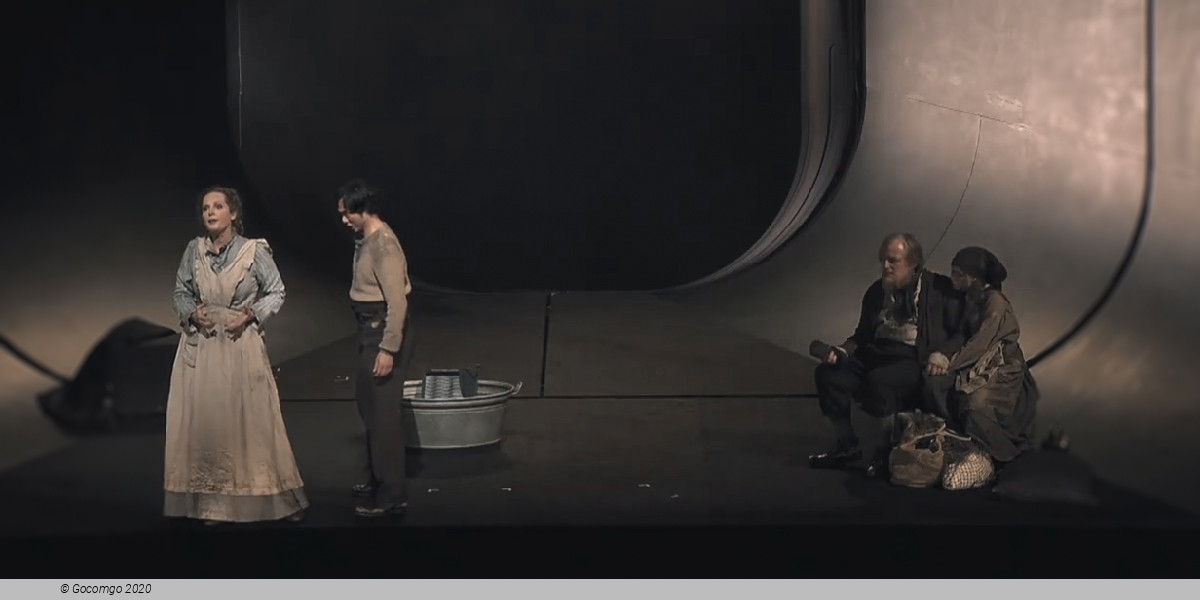
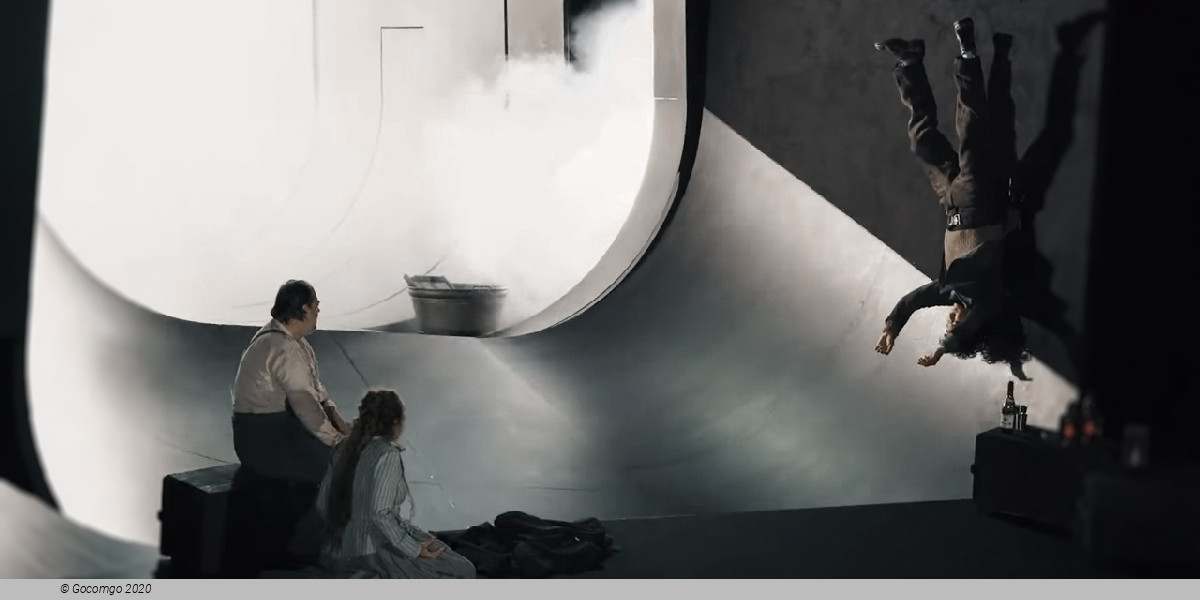
Il tabarro (The Cloak) is an opera in one act by Giacomo Puccini to an Italian libretto by Giuseppe Adami, based on Didier Gold's play La houppelande. It is the first of the trio of operas known as Il trittico. The first performance was given on 14 December 1918 at the Metropolitan Opera in New York City.

Synopsis

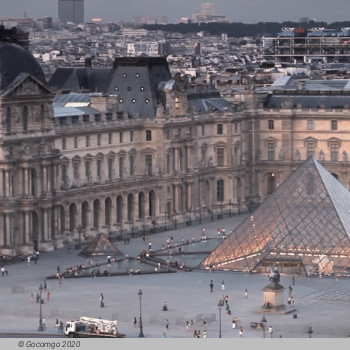
Place: A barge on the Seine in Paris.
Time: 1910.

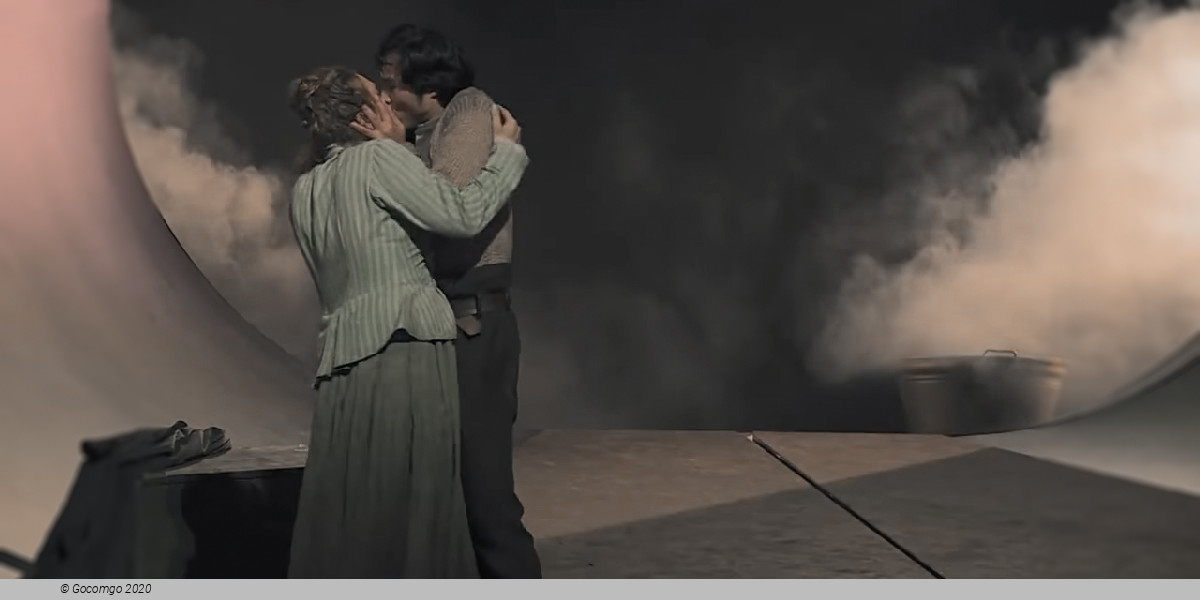
It is close to sundown in Paris, and the stevedores work unloading Michele's barge. Giorgetta, Michele's wife, asks her husband if she can bring wine to the workers. He agrees but does not join them because she refuses his kiss. The stevedores start dancing to the music of a nearby organ grinder and one of them steps on Giorgetta's foot. Luigi, a stevedore, dances with her, and it is evident that there is something between them. Upon hearing of Michele's return the stevedores' gathering breaks up.

Work is getting scarce and Giorgetta and Michele discuss which of the stevedores should be dismissed; she prefers that it be anyone other than Luigi despite him being Michele's first choice. Soon the conversation turns into a fight. La Frugola enters, looking for Talpa, her husband and one of the stevedores. She shows everyone the fruits of her scavenging in Paris and scolds the men for their drinking. Luigi laments his lot in life, and La Frugola sings of her wish to one day buy a house in the country where she and her husband can retire. Giorgetta and Luigi sing a duet about the town where they were both born.

The stevedores depart except for Luigi, who asks Michele to dismiss him and let him off in Rouen, but Michele convinces him against this, saying there is not enough work in Rouen. When they are alone, Giorgetta asks Luigi why he requested to be dismissed; the pair acknowledge their love. They plan to meet later that evening upon the signal of a match being lit on board. By now Luigi seems determined to kill Michele and flee with Giorgetta.

Michele later reminisces with Giorgetta of the days before their child died and how he could cover the two of them under his cloak. He is distressed about being twice her age; she comforts him but she still will not kiss him, and goes off.

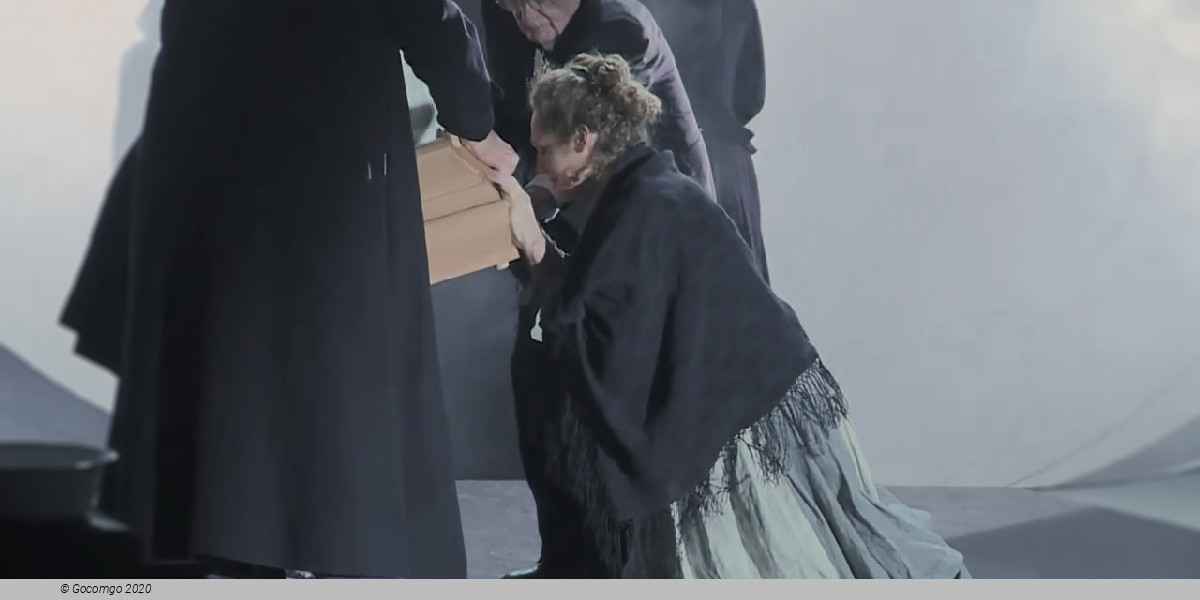
Michele wonders aloud if Giorgetta is still faithful to him and ponders who might have changed her so much. He reviews the list of men who have shared in their lives but dismisses each of them as improbable. Michele lights his pipe and Luigi, seeing it from afar, thinks that it is Giorgetta's signal. He returns to the barge and is confronted by Michele. In the ensuing fight, Michele gets the upper hand and forces Luigi to confess his affair before killing him and hiding the body under his cloak. Giorgetta returns to the barge, feigning remorse, and Michele opens wide the cloak to reveal her dead lover.

Venue Info

Grosses Festspielhaus - Salzburg
Location   Hofstallgasse 1

The plans for a Grosses Festspielhaus (Large Festival Hall), where the former archiepiscopal princely stables were located, were drawn up primarily by the architect Clemens Holzmeister; Herbert von Karajan also made many suggestions for the building project, in particular regarding the design of the theatre hall. Every effort was made and no expense spared so as to “insert” between the three-centuries-old façade of the former court stables and the Mönchsberg a theatre with an opera stage whose structure and technical equipment would still meet highest international demands after fifty years. Between autumn 1956 and the early summer of 1960, 55,000 cubic metres of rock were blasted away to create the relevant space. The building was largely financed from the state budget and as a result the Republic of Austria is the owner of the Grosses Festspielhaus.

The Grosses Festspielhaus was opened on 26 July 1960 with a festive ceremony and the performance of Der Rosenkavalier by Richard Strauss conducted by Herbert von Karajan. Even though the new stage was undoubtedly impressive in its dimensions, voices were raised even then expressing regret that it would hardly be suitable for staging operas by Mozart which require a more intimate setting. The ground plan of the auditorium is almost square, nearly 35 metres long and from the stalls as well as from the circle offers ideal acoustic conditions and sight-lines for 2,179 seats. The iron stage curtain weighs 34 tonnes and in the middle is one metre thick. The ground steel plates were created by Rudolf Hoflehner; the main curtain behind it was designed by Leo Wollner.

The décor for the concert hall was renewed in 1993 by Richard Peduzzi. Five bronze doors with handles designed by Toni Schneider-Manzell allow the public access from the Hofstallgasse. The façade is ornamented by a Latin inscription by the Benedictine monk Professor Thomas Michels (Order of St. Benedict): Sacra camenae domus concitis carmine patet quo nos attonitos numen ad auras ferat (The holy house of the muse is open for lovers of the arts, may divine power inspire us and raise us to the heights).

Mostly local materials were used for fitting out the Grosses Festspielhaus: the reinforced concrete columns in the entrance foyer were covered with the conglomerate rock removed from the wall of the Mönchsberg; the floor is made of Adnet marble. Low beam lighting in the sloping ceiling and panel dishes made of glass from Murano create a solid lighting design. Two sculptures created by Wander Bertoni in Carrara marble represent music and drama. The four large-scale paintings in the form of crosses on the theme Dreams with the Wrong Solutions, which were bought by the Austrian patron of the arts and collector Karlheinz Essl and made available on loan to the Salzburg Festival, are by the New York painter and sculptor Robert Longo (1993).

The interval hall adjoining the entrance foyer is largely based on the original ground plan of the archiepiscopal princely stables. The floor of green serpentine is new and contains mosaics of horses by Kurt Fischer. On the wall is a steel relief by Rudolf Hochlehner entitled Homage to Anton von Webern. Through the arch built by Fischer von Erlach one can look out onto the horse statue and fountain and the Schüttkasten which was acquired by the Salzburg Festival in 1987. A separate access on the left of the interval foyer leads via an escalator and steps to the underground car park for the old town centre of Salzburg.

The furnishings for a Patrons’ Lounge on the first floor of the Grosses Festspielhaus were financed by the American patrons of the arts Donald and Jeanne Kahn, who later became major sponsors of the Salzburg Festival. Since 1995 it has served as a reception area for patrons, sponsors as well as their guests and is also used for press conferences and various other functions in connection with the Salzburg Festival.

Important Info
Type: Opera
City: Salzburg, Austria
Acts: 1

E-tickets: Print at home or at the box office of the event if so specified. You will find more information in your booking confirmation email.

You can only select the category, and not the exact seats.
If you order 2 or 3 tickets: your seats will be next to each other.
If you order 4 or more tickets: your seats will be next to each other, or, if this is not possible, we will provide a combination of groups of seats (at least in pairs, for example 2+2 or 2+3).

From
$ 104
Top of page