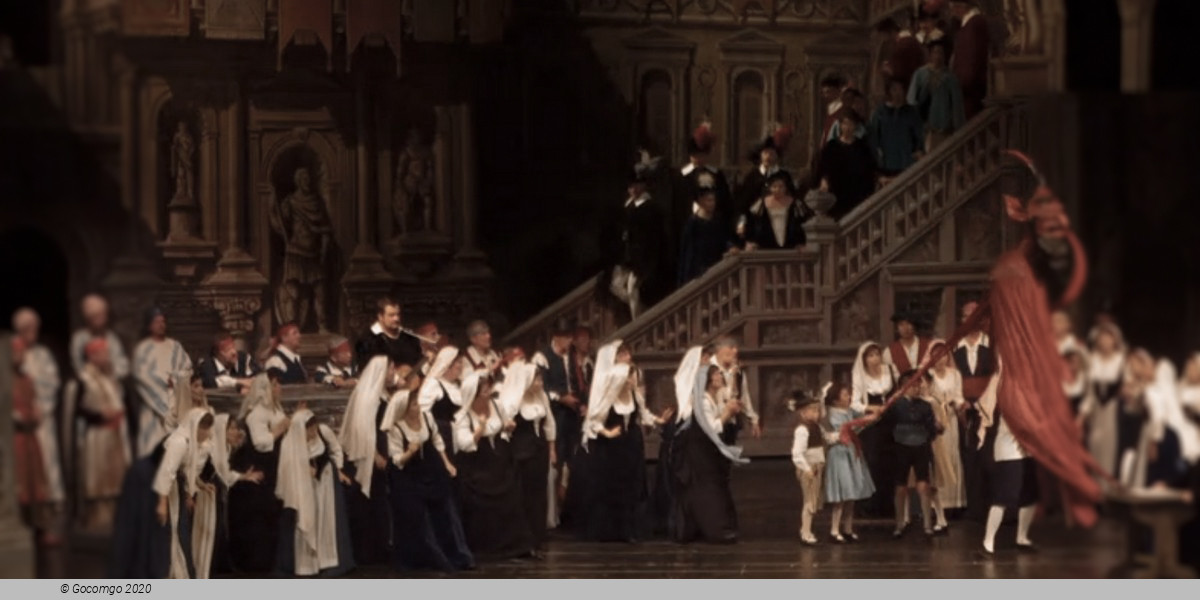
Royal Opera House (Covent Garden) tickets 29 April 2027 - Premiere La Gioconda with Anna Netrebko | GoComGo.com

Premiere
La Gioconda with Anna Netrebko

Royal Opera House (Covent Garden), Main Stage, London, Great Britain
All photos (10)
Select date and time
6:45 PM
From
US$ 107

E-tickets: Print at home or at the box office of the event if so specified. You will find more information in your booking confirmation email.

You can only select the category, and not the exact seats.
If you order 2 or 3 tickets: your seats will be next to each other.
If you order 4 or more tickets: your seats will be next to each other, or, if this is not possible, we will provide a combination of groups of seats (at least in pairs, for example 2+2 or 2+3).

Important Info
Type: Opera
City: London, Great Britain
Starts at: 18:45
Sung in: Italian
Titles in: English

E-tickets: Print at home or at the box office of the event if so specified. You will find more information in your booking confirmation email.

You can only select the category, and not the exact seats.
If you order 2 or 3 tickets: your seats will be next to each other.
If you order 4 or more tickets: your seats will be next to each other, or, if this is not possible, we will provide a combination of groups of seats (at least in pairs, for example 2+2 or 2+3).

Cast
Performers
Soprano: Anna Netrebko (Gioconda)
Conductor: Sir Antonio Pappano
Mezzo-Soprano: Agnieszka Rehlis (La Cieca)
Mezzo-Soprano: Eve-Maud Hubeaux (Laura Adorno)
Baritone: Gabriele Viviani (Barnaba)
Chorus: Royal Opera Chorus
Tenor: Stefan Pop (Enzo Grimaldo)
Bass: Tareq Nazmi (Alvise Badoero)
Creators
Composer: Amilcare Ponchielli
Librettist: Arrigo Boito
Director: Oliver Mears
Overview

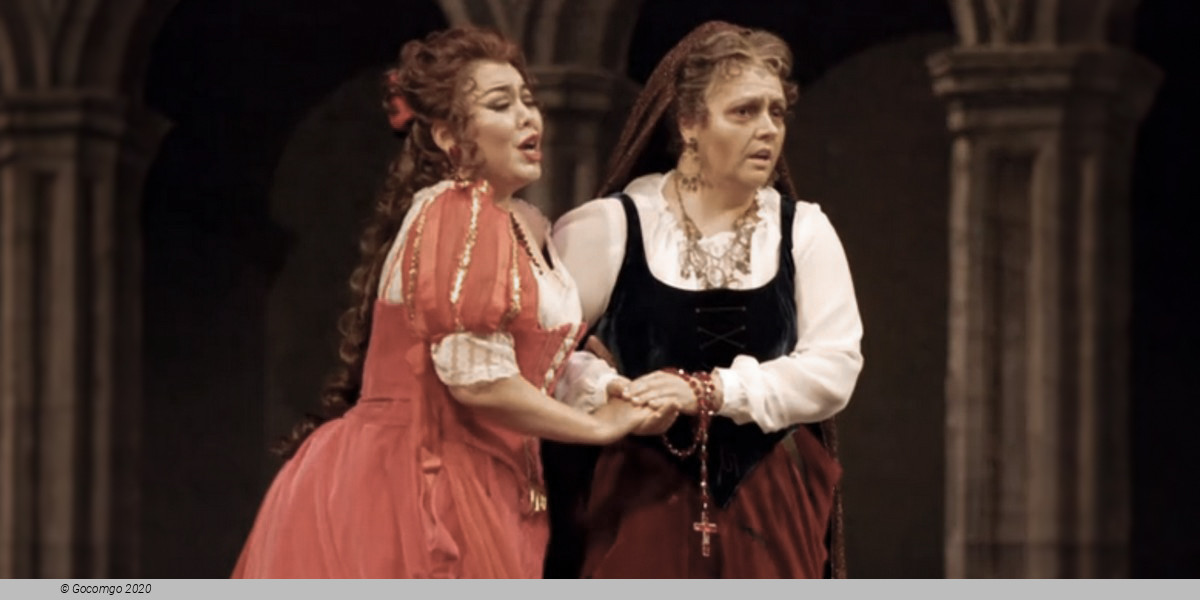
Raised in poverty, street singer Gioconda has always craved security. But now she craves something more. Oliver Mears's new staging transports the action to modern-day Venice. Antonio Pappano conducts a star cast including Anna Netrebko and Stefan Pop. 

The Opera is situated in 17th century Venice. La Gioconda, singer in a traveling troupe, falls in love with the young noble Enzo, who is respectively in love with Laura, the wife of the inquisitor Alvise Badoero. The emotional entanglement grows even more complex with the numerous intrigues of Barnabà the spy who loves and desires Gioconda and tries to win the singer over by all means. Torn between her love for Enzo and her care of her blind old mother who always travels with her, she is caught up in Barnabà´s web of hatred and passion that entraps her ever more tightly; ultimately, there is no escape. After Enzo has overcome various obstacles and managed to escape with Laura, disappearing from her life, Gioconda sees no way out. Barnabà who believes that his desire is about to be fulfilled cannot prevent her from ending her life.

Amilcare Ponchielli, born in 1834 in Paderno Fasolaro near Cremona, died 1886 in Milano, became famous mainly for his LA GIOCONDA, although he had written twelve other operas. Love, passion, hatred, you name it- there is everything in the story of the singer Gioconda that a lover of the great Italian opera would expect. Arrigo Boito who years later was to write the libretti for OTELLO und FALSTAFF, the final two masterpieces by Verdi had no real reason for writing the text of La Gioconda under the pseudonym of Tobia Gorrio. He transposed Victor Hugo´s novel, “Angelo, tyrant of Padua“ into a comprehensive operatic text full of suspense and effects. Here you will encounter luscious melodies, moving rustic scenes on the stage and above all the decor characterized by its opulence, with some original pieces from the opera period. This ensures a glamorous event that will enchant you with every performance.

History
Premiere of this production: 08 April 1876, Teatro alla Scala, Milan

La Gioconda is an opera in four acts by Amilcare Ponchielli set to an Italian libretto by Arrigo Boito (as Tobia Gorrio), based on Angelo, Tyrant of Padua, a play in prose by Victor Hugo, dating from 1835. (This is the same source as Gaetano Rossi had used for his libretto for Mercadante's Il giuramento in 1837).

Synopsis

The opera's title translates as The Happy Woman, but is usually given in English as The Ballad Singer. However, as this fails to convey the irony inherent in the original, the Italian is usually used. Each act of La Gioconda has a title.

Place: Venice
Time: 17th century
The story revolves around a woman, Gioconda, who so loves her mother that when Laura, her rival in love for the heart of Enzo, saves her mother's life, Gioconda puts aside her own romantic love to repay her. The villain Barnaba tries to seduce Gioconda, but she prefers death.

Act 1 The Lion's Mouth

The courtyard of the Doge's Palace

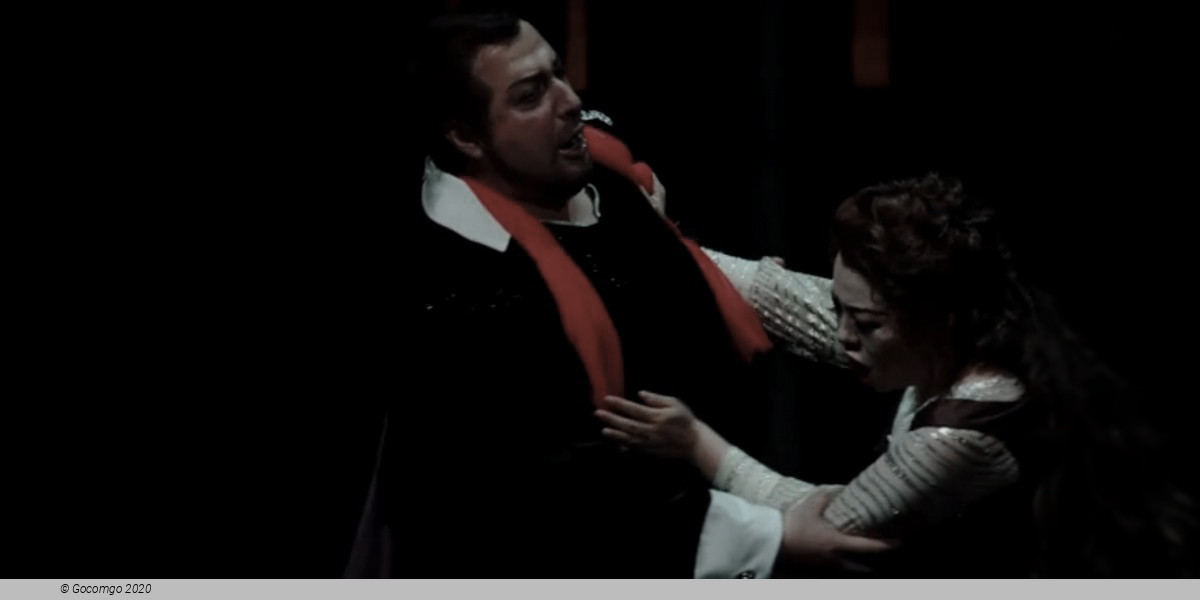
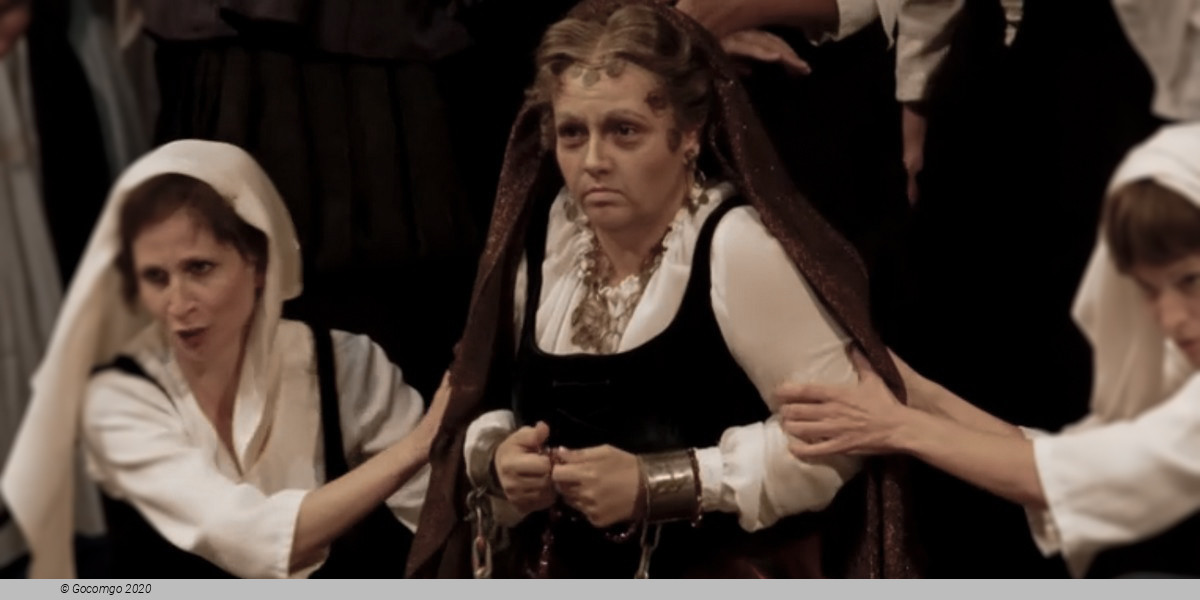
During Carnival celebrations before Lent, while everyone else is preoccupied with a regatta, Barnaba, a state spy, lustfully watches La Gioconda as she leads her blind mother, La Cieca, across the Square. When his amorous advances are firmly rejected, he exacts his revenge by denouncing the old lady as a witch whose evil powers influenced the outcome of the gondola race. It is only the intervention of a young sea captain that keeps the angry mob at bay.

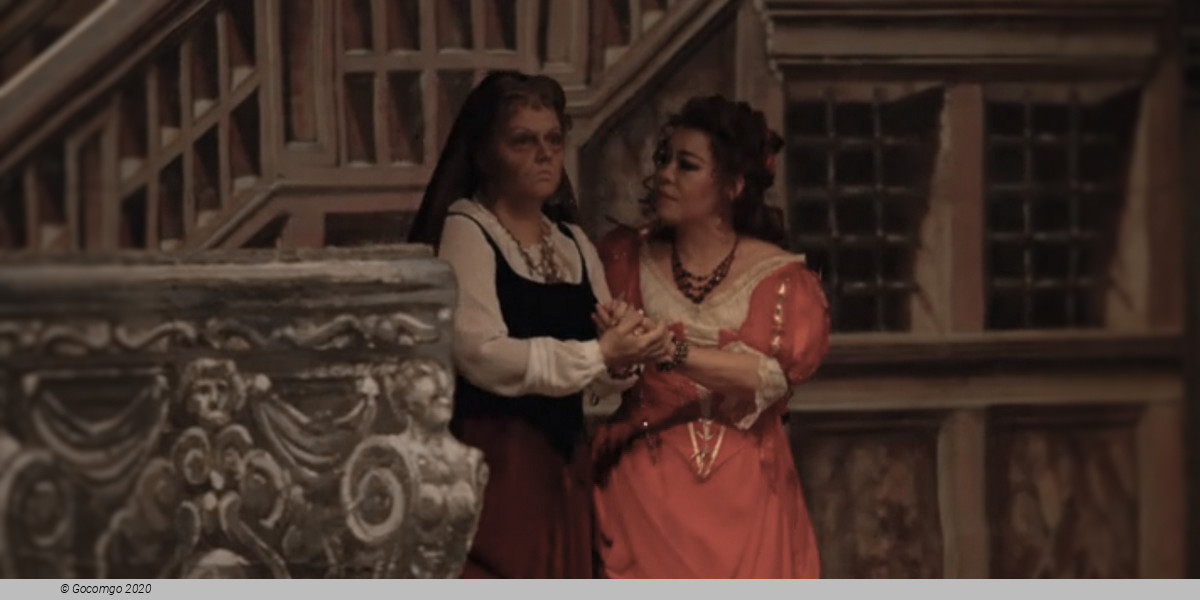
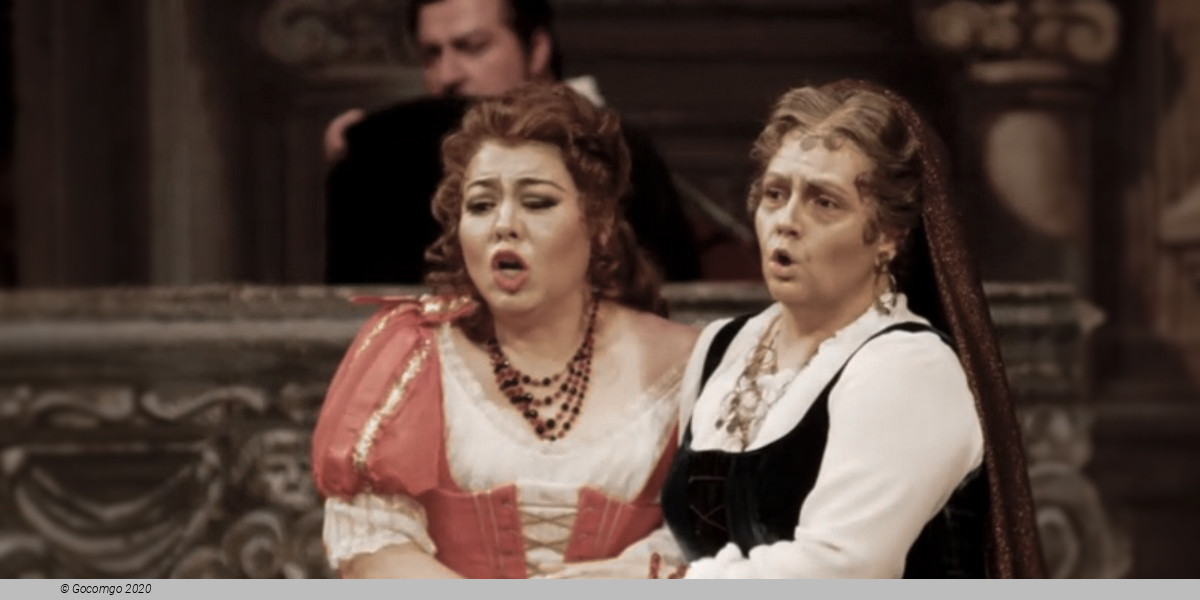
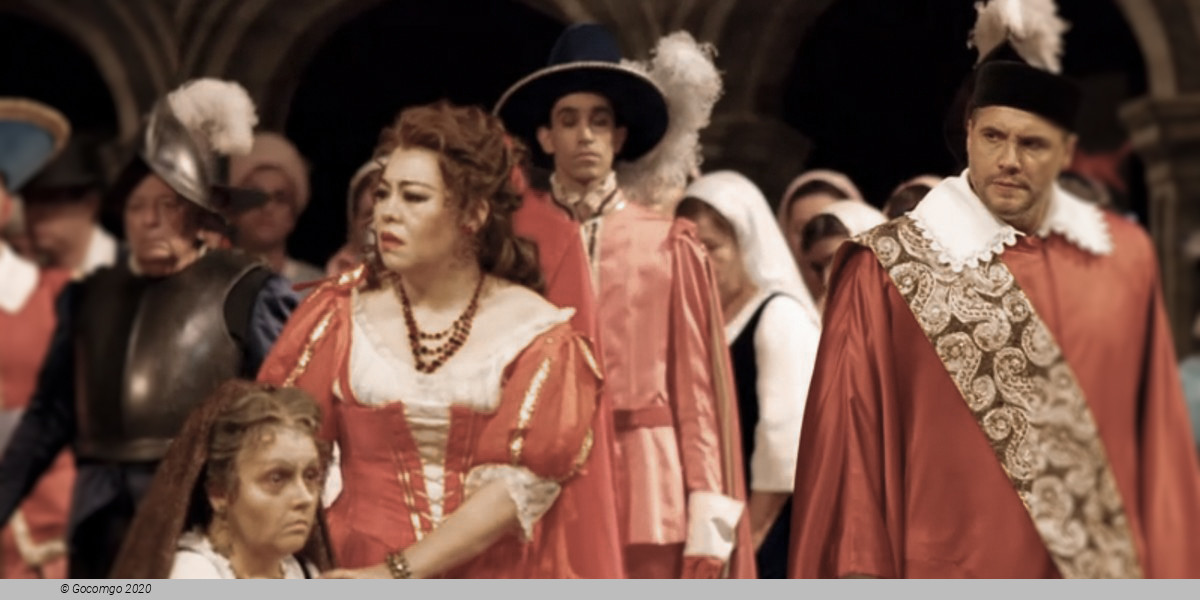
Calm is restored at the approach of Alvise Badoero, a member of the Venetian Inquisition, and his wife, Laura. Laura places La Cieca under her personal protection, and in gratitude the old woman presents her with her most treasured possession, a rosary. The sharp-eyed Barnaba notices furtive behaviour between Laura and the sea captain indicating a secret relationship. Recalling that Laura was engaged to the now banished nobleman Enzo Grimaldo before her forced marriage to Alvise, Barnaba realises that the sea captain is Enzo in disguise.

Barnaba confronts Enzo, who admits his purpose in returning to Venice is to take Laura and begin a new life elsewhere. Barnaba knows that Gioconda is also infatuated with Enzo and he sees an opportunity to improve his chances with her by assisting Enzo with his plan of elopement.

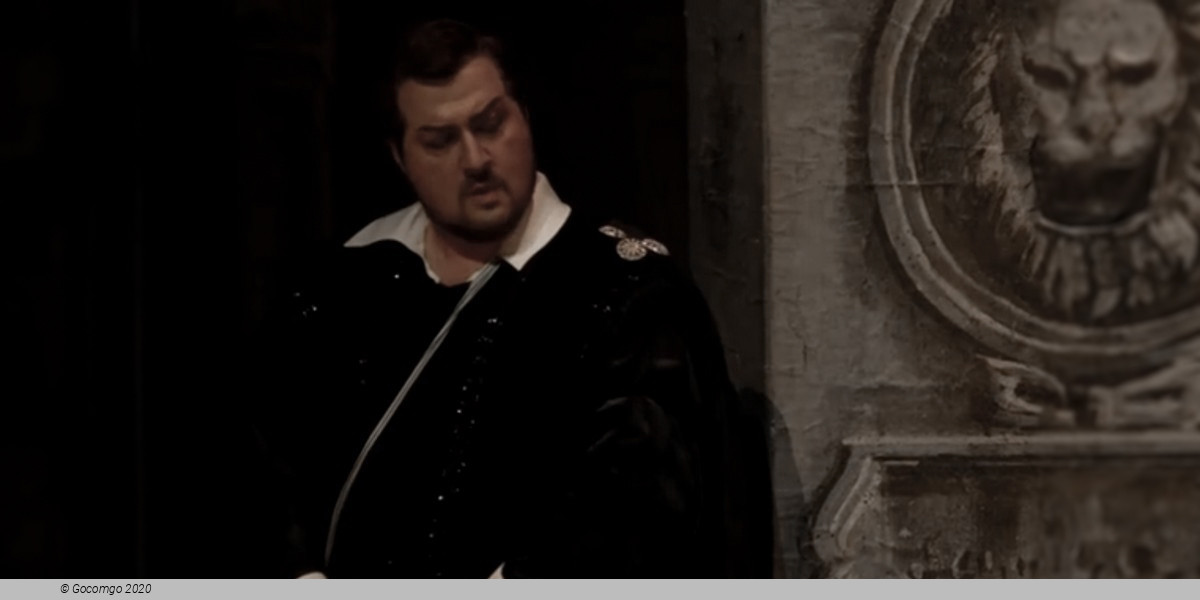
When Enzo has gone, Barnaba dictates a letter to Alvise revealing his wife's infidelity and the lovers' plan of escape. He is unaware that he has been overheard by Gioconda. The act ends with Barnaba dropping the letter into the Lion's Mouth, where all secret information for the Inquisition is posted, while Gioconda laments Enzo's perceived treachery, and the crowd returns to its festivities.

Act 2 The Rosary

The deck of Enzo's ship

Enzo waits for Barnaba to row Laura out from the city to his vessel. Their joyful reunion is overshadowed by Laura's fears as she does not trust Barnaba. Gradually Enzo is able to reassure her, and he leaves her on deck while he goes to prepare for their departure.

La Gioconda has been following Laura with the intention of exacting revenge from her rival. Alvise and his armed men are also in hot pursuit, but as Gioconda is about to stab Laura she sees her mother's rosary hanging round her neck and has an instant change of heart. She hurries Laura into her boat so that she can evade her pursuers.

Enzo returns to the deck to find that Laura has fled leaving Gioconda triumphant. Furthermore, Alvise's men are rapidly approaching. He sets fire to the ship rather than let it fall into the hands of his enemies before diving into the lagoon.

Act 3 The Ca' d'Oro (House of Gold)

Alvise's palace

Laura has been captured, and her vengeful husband insists she must die by poisoning herself (effectively committing suicide and condemning herself to Hell). Once again Gioconda has followed and has found her way into the palace, this time with the intention of saving her rival. Finding Laura alone Gioconda replaces the phial of poison with a powerful drug which creates the appearance of death. The second scene begins with Alvise welcoming his fellow members of the nobility to the palace; Barnaba and Enzo are amongst those present. Lavish entertainment is provided and the act ends with the famous ballet Dance of the Hours. The mood of revelry is shattered as a funeral bell begins to toll and the body of Laura is revealed awaiting burial. A distraught Enzo flings off his disguise and is promptly seized by Alvise's men.

Act 4 The Orfano Canal

A crumbling ruin on the island of Giudecca

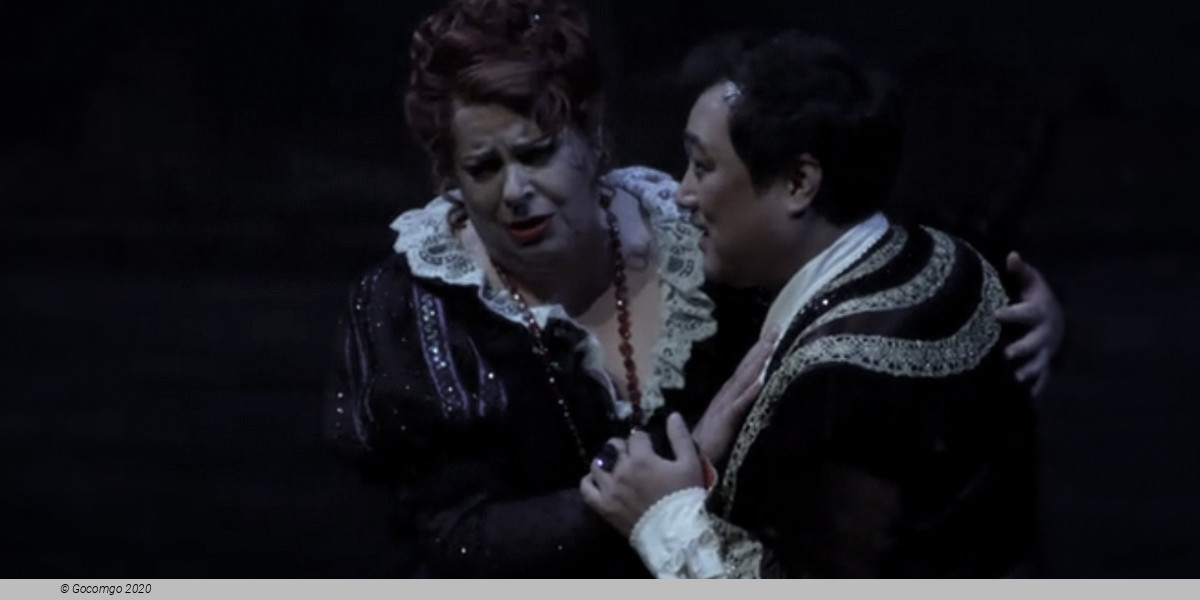
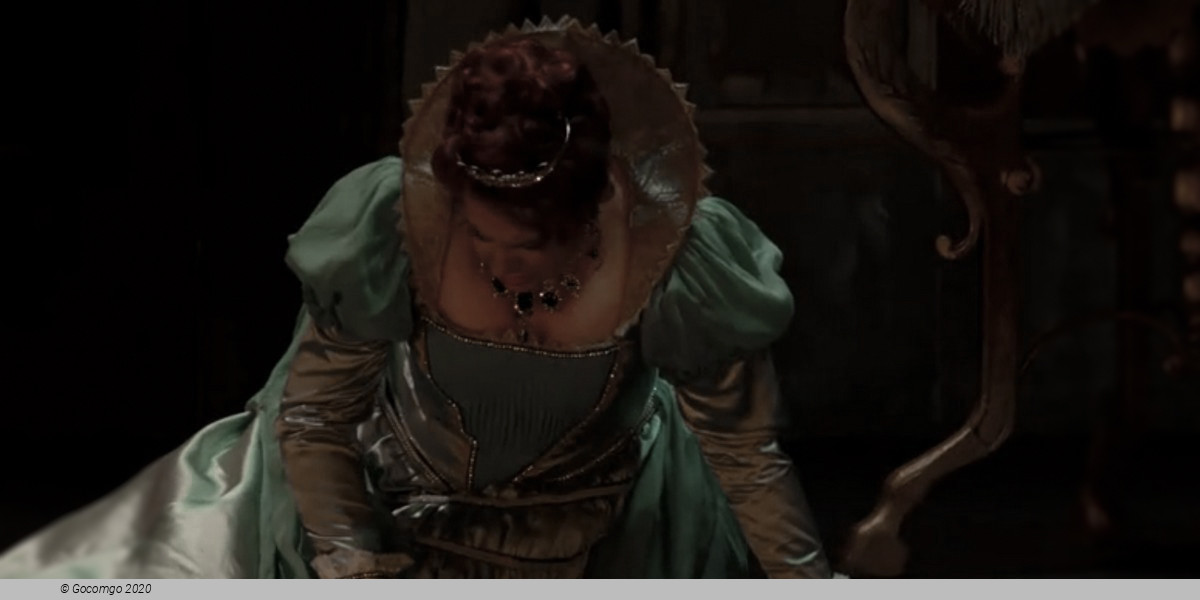
In exchange for Enzo's release from prison, La Gioconda has agreed to give herself to Barnaba. When Enzo is brought in, he is initially furious when Gioconda reveals that she has had Laura's body brought from its tomb. He is about to stab her when Laura's voice is heard and Gioconda's part in reuniting the lovers becomes clear. Enzo and Laura make their escape, leaving La Gioconda to face the horrors awaiting her with Barnaba. The gondoliers' voices are heard in the distance telling that there are corpses floating in the city. When Gioconda tries to leave, she is caught by Barnaba. She then pretends to welcome his arrival, but under cover of decking herself in her jewellery, seizes a dagger and stabs herself to death. In frustrated rage Barnaba tries to perpetrate one last act of evil, screaming at the lifeless body "Last night your mother offended me. I drowned her!"

Famous arias and excerpts
"Voce di donna o d'angelo" (La Cieca)
"O monumento" (Barnaba)
"Cielo e mar" (Enzo)
"Stella del Marinar" (Laura)
"E un anatema!... L'amo come il fulgor creato" (duet Gioconda with Laura)
"Si! Morir ella de!" (Alvise)
Dance of the Hours
"Suicidio!" (Gioconda)
"Ora posso morir... Vo' farmi più gaia" (final duet Gioconda with Barnaba)

Venue Info

Royal Opera House (Covent Garden) - London
Location   Bow St, Covent Garden

The Royal Opera House (ROH) is an opera house and major performing arts venue in London and Great Britain. It is the home of The Royal Opera, The Royal Ballet, and the Orchestra of the Royal Opera House.

The large building is often referred to as simply "Covent Garden", after a previous use of the site of the opera house's original construction in 1732. It is the home of The Royal Opera, The Royal Ballet, and the Orchestra of the Royal Opera House. Originally called the Theatre Royal, it served primarily as a playhouse for the first hundred years of its history. In 1734, the first ballet was presented. A year later, Handel's first season of operas began. Many of his operas and oratorios were specifically written for Covent Garden and had their premieres there.

The current building is the third theatre on the site following disastrous fires in 1808 and 1856. The façade, foyer, and auditorium date from 1858, but almost every other element of the present complex dates from an extensive reconstruction in the 1990s. The main auditorium seats 2,256 people, making it the third largest in London, and consists of four tiers of boxes and balconies and the amphitheatre gallery. The proscenium is 12.20 m wide and 14.80 m high. The main auditorium is a Grade I listed building.

The Royal Opera, under the direction of Antonio Pappano, is one of the world’s leading opera companies. Based in the iconic Covent Garden theatre, it is renowned both for its outstanding performances of traditional opera and for commissioning new works by today’s leading opera composers, such as Harrison Birtwistle, Mark-Anthony Turnage and Thomas Adès.

The Royal Ballet is one of the world’s greatest ballet companies. Under the directorship of Kevin O’Hare, the Company unites tradition and innovation in world-class performances at our Covent Garden home.

The Company’s extensive repertory embraces 19th-century classics, the singular legacy of works by Founder Choreographer Frederick Ashton and Principal Choreographer Kenneth MacMillan and a compelling new canon by Resident Choreographer Wayne McGregor and Artistic Associate Christopher Wheeldon.

The Orchestra performs in concerts of their own, including performances at the Royal Opera House with Antonio Pappano. They have also performed at venues worldwide including Symphony Hall (Birmingham), Cadogan Hall, the Vienna Konzerthaus and on tour with The Royal Opera.

Members of the Orchestra play an active role in events across the Royal Opera House, including working with the Learning and Participation teams. The Orchestra accompanies performances that are streamed all over the world, including through cinema screenings and broadcasts. They appear on many CDs and DVDs including Pappano’s acclaimed studio recording of Tristan und Isolde with Plácido Domingo and Nina Stemme.

The Orchestra of the Royal Opera House was founded in 1946 when the Royal Opera House reopened after World War II.

Important Info
Type: Opera
City: London, Great Britain
Starts at: 18:45
Sung in: Italian
Titles in: English
Top of page