
Royal Opera House (Covent Garden) tickets 11 March 2027 - Landmarks: Unmissable Ashton | GoComGo.com

Landmarks: Unmissable Ashton

Royal Opera House (Covent Garden), London, Great Britain
All photos (4)
Select date and time
7:30 PM
From
US$ 91

E-tickets: Print at home or at the box office of the event if so specified. You will find more information in your booking confirmation email.

You can only select the category, and not the exact seats.
If you order 2 or 3 tickets: your seats will be next to each other.
If you order 4 or more tickets: your seats will be next to each other, or, if this is not possible, we will provide a combination of groups of seats (at least in pairs, for example 2+2 or 2+3).

Important Info
Type: Ballet
City: London, Great Britain
Starts at: 19:30

E-tickets: Print at home or at the box office of the event if so specified. You will find more information in your booking confirmation email.

You can only select the category, and not the exact seats.
If you order 2 or 3 tickets: your seats will be next to each other.
If you order 4 or more tickets: your seats will be next to each other, or, if this is not possible, we will provide a combination of groups of seats (at least in pairs, for example 2+2 or 2+3).

Overview

Landmarks: Unmissable Ashton brings together three landmark works by Frederick Ashton: Les Rendezvous, Symphonic Variations, and Daphnis and Chloë.

Spanning three decades, the programme showcases Ashton’s signature blend of musicality, elegance, and expressive depth—offering a vivid portrait of one of ballet’s greatest masters.

Landmarks: Unmissable Ashton celebrates three milestone works by Frederick Ashton, the Founder Choreographer whose vision shaped the identity of British ballet in the 20th century. Spanning three decades of creativity, this programme reveals the evolution of Ashton’s distinctive style—marked by musical sensitivity, refined lyricism, and an unparalleled sense of elegance.

The evening brings together Les Rendezvous, Symphonic Variations, and Daphnis and Chloë—three works that stand as landmarks in his choreographic legacy. From the youthful charm and wit of Les Rendezvous to the pure, abstract beauty of Symphonic Variations, and the lush, expressive storytelling of Daphnis and Chloë, the programme showcases Ashton’s extraordinary range.

Together, these ballets offer a journey through shifting moods and aesthetics, highlighting Ashton’s deep connection to music and his ability to create movement that is both technically intricate and emotionally resonant. Landmarks: Unmissable Ashton is a tribute to a choreographer whose artistry continues to define and inspire the language of classical ballet.

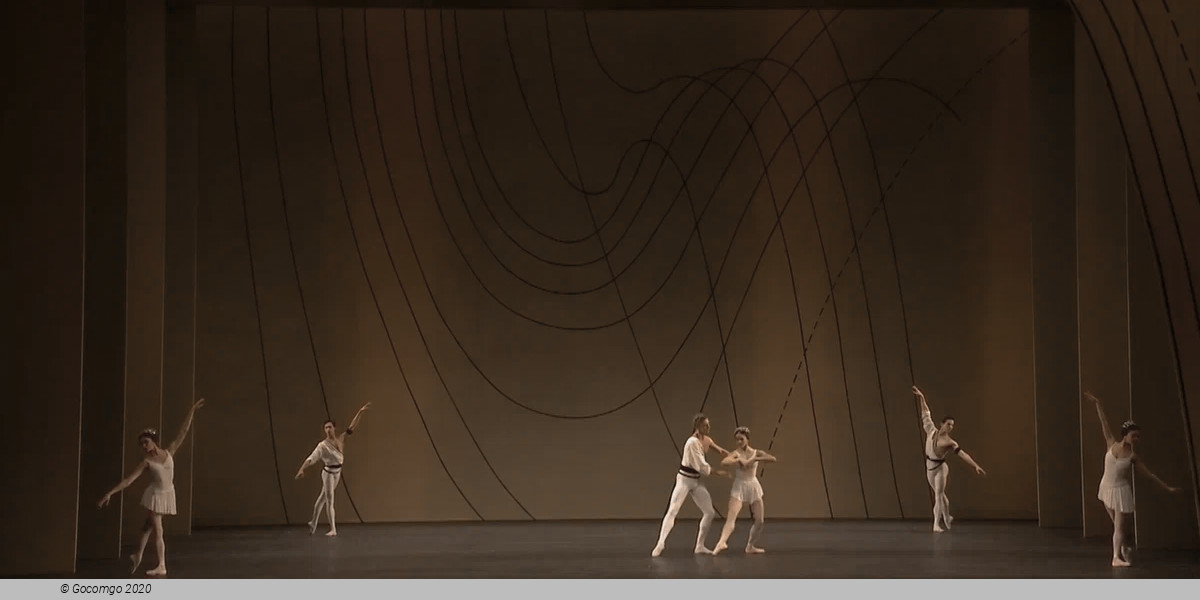
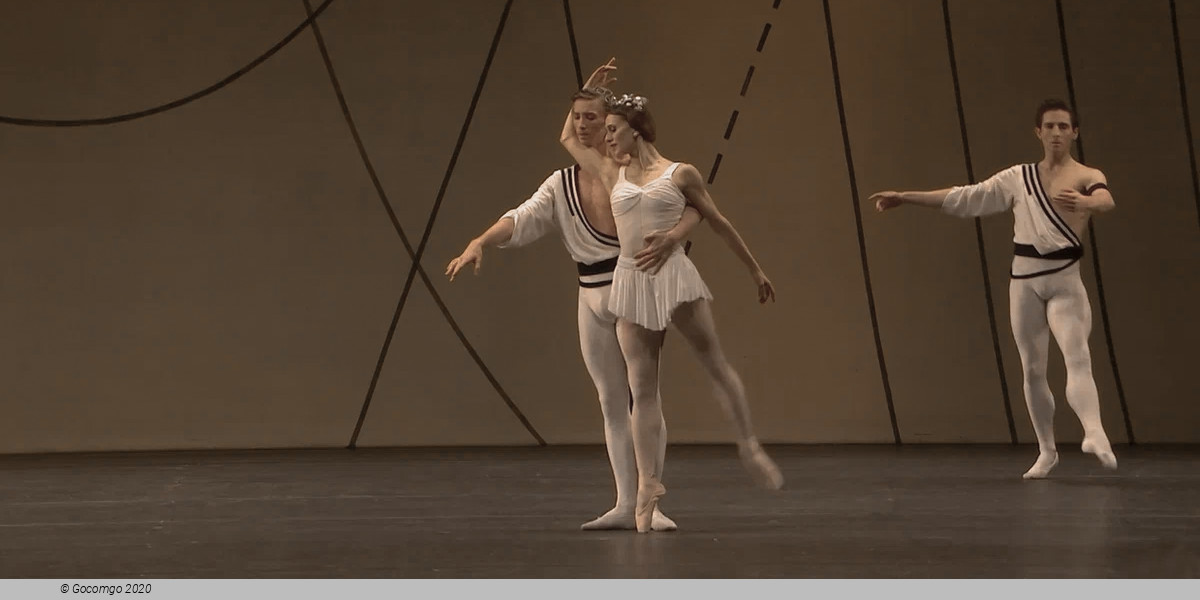
Symphonic Variations (1946) by Frederick Ashton is a landmark of “pure dance,” created in the post-war period.

Serene and elegantly structured, the ballet achieves a perfect harmony between movement and music, and remains a timeless tour de force of classical choreography.

Symphonic Variations (1946) stands as one of the defining achievements of Frederick Ashton, created in the immediate aftermath of the Second World War. Conceived as a celebration of renewal and artistic clarity, the ballet embodies Ashton’s vision of “pure dance,” free from narrative and focused entirely on the relationship between movement and music.

Set to César Franck’s luminous score, the choreography unfolds with serene balance and architectural precision. Six dancers move in harmonious patterns, their lines interweaving with a sense of calm inevitability, creating a living expression of musical form. The work’s restrained elegance and emotional poise reflect both the fragility and the hope of its historical moment.

With its seamless fusion of musicality and movement, Symphonic Variations remains a radiant testament to Ashton’s craftsmanship—an enduring tour de force that continues to captivate audiences with its timeless purity and quiet intensity.

Daphnis and Chloë by Frederick Ashton is a lyrical and atmospheric ballet inspired by an ancient pastoral love story.

Set to music by Maurice Ravel, the work blends expressive choreography with rich musical colour, capturing the innocence and passion of young love.

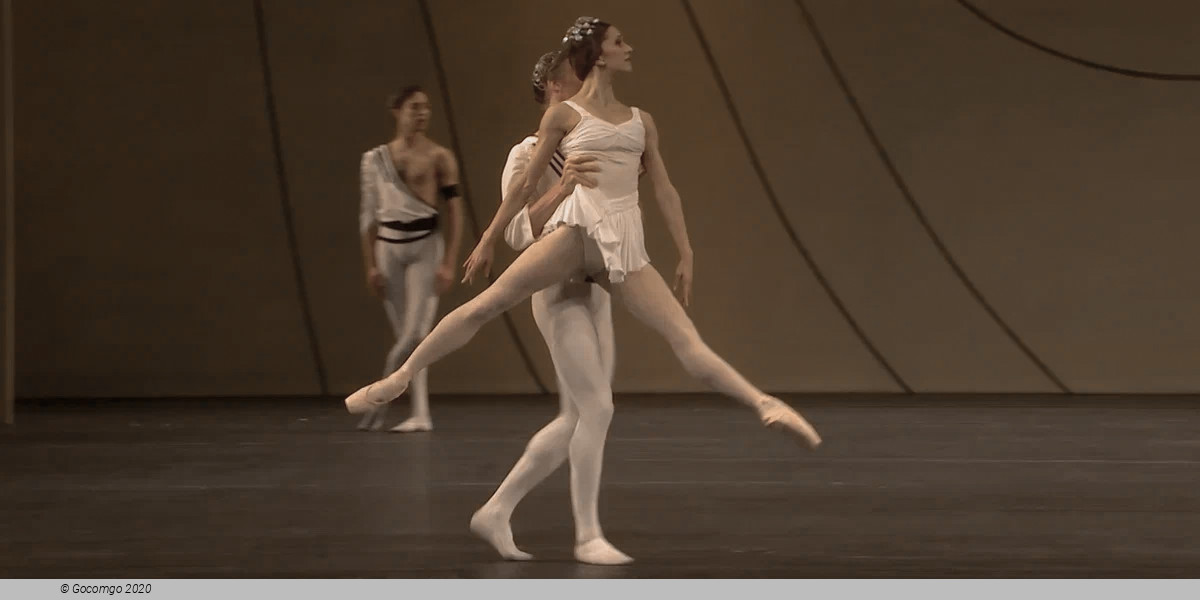
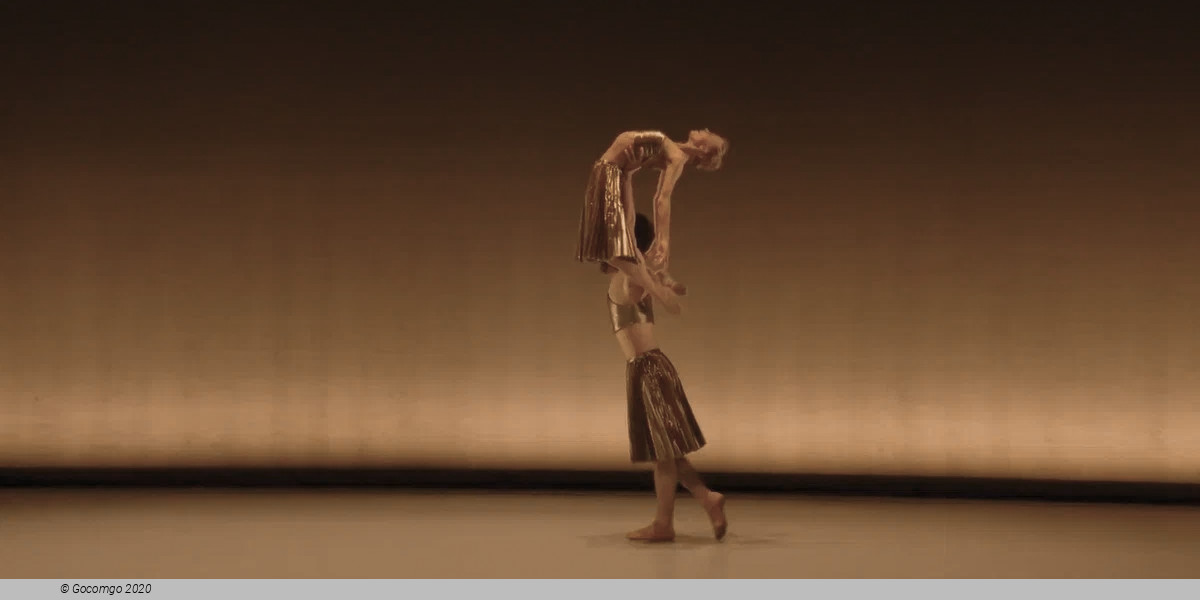
Daphnis and Chloë by Frederick Ashton is a richly evocative work that transforms an ancient pastoral tale into a sensuous and atmospheric ballet. Drawing on the story of two young lovers in an idyllic landscape, Ashton shapes a choreography of fluid lyricism and sculptural beauty, capturing both the innocence of first love and the awakening of desire.

Set to the radiant and expansive score by Maurice Ravel, the ballet unfolds in a series of sweeping, impressionistic scenes. Ashton responds to the music’s shifting colours with movement that is both intricate and expressive, blending classical technique with a softer, more organic physicality. The result is a world of luminous textures, where dance, music, and atmosphere merge seamlessly.

Balancing narrative suggestion with abstract beauty, Daphnis and Chloë reveals Ashton’s mastery of mood and musicality. It stands as a testament to his ability to create works that are at once intimate and expansive, rooted in classical tradition yet alive with poetic imagination.

History
Premiere of this production: 05 December 1933, Sadler's Wells Theatre, London

Les Rendezvous is a plotless one-act ballet created in 1933, with choreography by Frederick Ashton to the music of Daniel Auber (the ballet music from his opera L'enfant prodigue) arranged by Constant Lambert and with designs by William Chappell. It was the first major ballet created by Ashton for the Vic-Wells company.

Venue Info

Royal Opera House (Covent Garden) - London
Location   Bow St, Covent Garden

The Royal Opera House (ROH) is an opera house and major performing arts venue in London and Great Britain. It is the home of The Royal Opera, The Royal Ballet, and the Orchestra of the Royal Opera House.

The large building is often referred to as simply "Covent Garden", after a previous use of the site of the opera house's original construction in 1732. It is the home of The Royal Opera, The Royal Ballet, and the Orchestra of the Royal Opera House. Originally called the Theatre Royal, it served primarily as a playhouse for the first hundred years of its history. In 1734, the first ballet was presented. A year later, Handel's first season of operas began. Many of his operas and oratorios were specifically written for Covent Garden and had their premieres there.

The current building is the third theatre on the site following disastrous fires in 1808 and 1856. The façade, foyer, and auditorium date from 1858, but almost every other element of the present complex dates from an extensive reconstruction in the 1990s. The main auditorium seats 2,256 people, making it the third largest in London, and consists of four tiers of boxes and balconies and the amphitheatre gallery. The proscenium is 12.20 m wide and 14.80 m high. The main auditorium is a Grade I listed building.

The Royal Opera, under the direction of Antonio Pappano, is one of the world’s leading opera companies. Based in the iconic Covent Garden theatre, it is renowned both for its outstanding performances of traditional opera and for commissioning new works by today’s leading opera composers, such as Harrison Birtwistle, Mark-Anthony Turnage and Thomas Adès.

The Royal Ballet is one of the world’s greatest ballet companies. Under the directorship of Kevin O’Hare, the Company unites tradition and innovation in world-class performances at our Covent Garden home.

The Company’s extensive repertory embraces 19th-century classics, the singular legacy of works by Founder Choreographer Frederick Ashton and Principal Choreographer Kenneth MacMillan and a compelling new canon by Resident Choreographer Wayne McGregor and Artistic Associate Christopher Wheeldon.

The Orchestra performs in concerts of their own, including performances at the Royal Opera House with Antonio Pappano. They have also performed at venues worldwide including Symphony Hall (Birmingham), Cadogan Hall, the Vienna Konzerthaus and on tour with The Royal Opera.

Members of the Orchestra play an active role in events across the Royal Opera House, including working with the Learning and Participation teams. The Orchestra accompanies performances that are streamed all over the world, including through cinema screenings and broadcasts. They appear on many CDs and DVDs including Pappano’s acclaimed studio recording of Tristan und Isolde with Plácido Domingo and Nina Stemme.

The Orchestra of the Royal Opera House was founded in 1946 when the Royal Opera House reopened after World War II.

Important Info
Type: Ballet
City: London, Great Britain
Starts at: 19:30
Top of page