
Royal Theatre of La Monnaie 2 July 2022 - Les Huguenots | GoComGo.com

Les Huguenots

Royal Theatre of La Monnaie, Main Auditorium, Brussels, Belgium
All photos (10)
Select date and time
6 PM

E-tickets: Print at home or at the box office of the event if so specified. You will find more information in your booking confirmation email.

You can only select the category, and not the exact seats.
If you order 2 or 3 tickets: your seats will be next to each other.
If you order 4 or more tickets: your seats will be next to each other, or, if this is not possible, we will provide a combination of groups of seats (at least in pairs, for example 2+2 or 2+3).

Important Info
Type: Opera
City: Brussels, Belgium
Starts at: 18:00
Acts: 5
Sung in: French
Titles in: Dutch,French

E-tickets: Print at home or at the box office of the event if so specified. You will find more information in your booking confirmation email.

You can only select the category, and not the exact seats.
If you order 2 or 3 tickets: your seats will be next to each other.
If you order 4 or more tickets: your seats will be next to each other, or, if this is not possible, we will provide a combination of groups of seats (at least in pairs, for example 2+2 or 2+3).

Overview

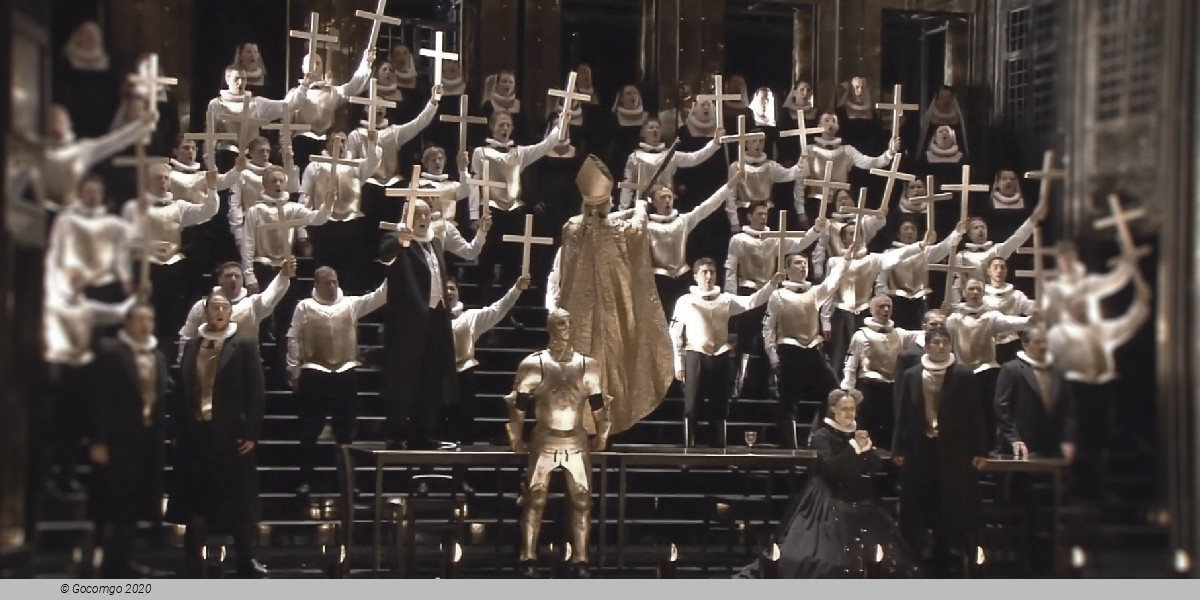
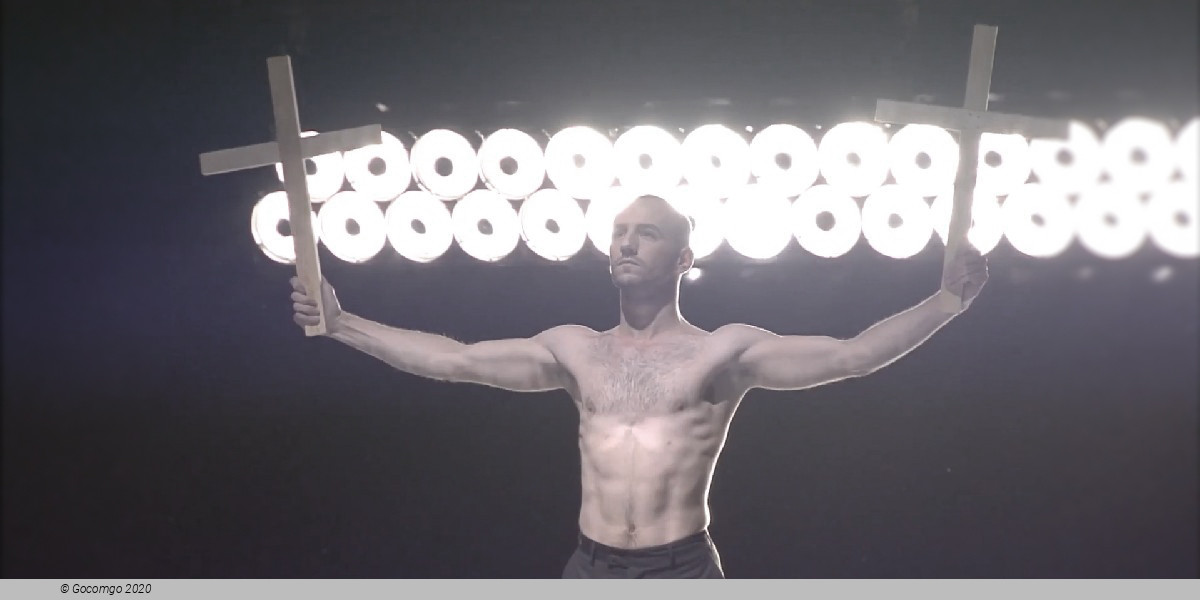
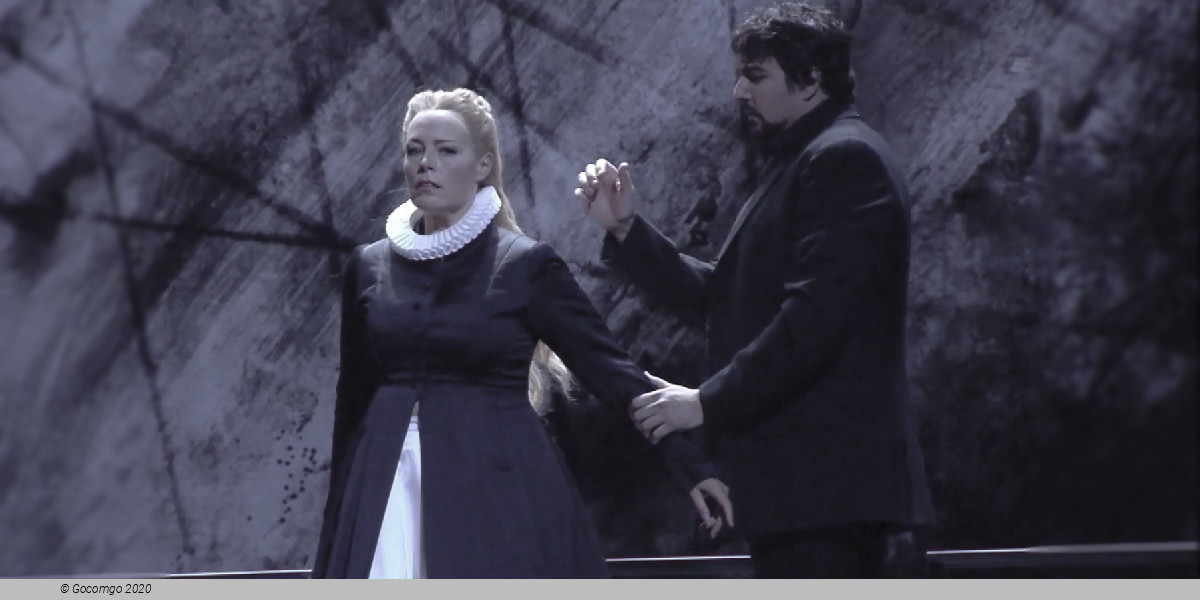
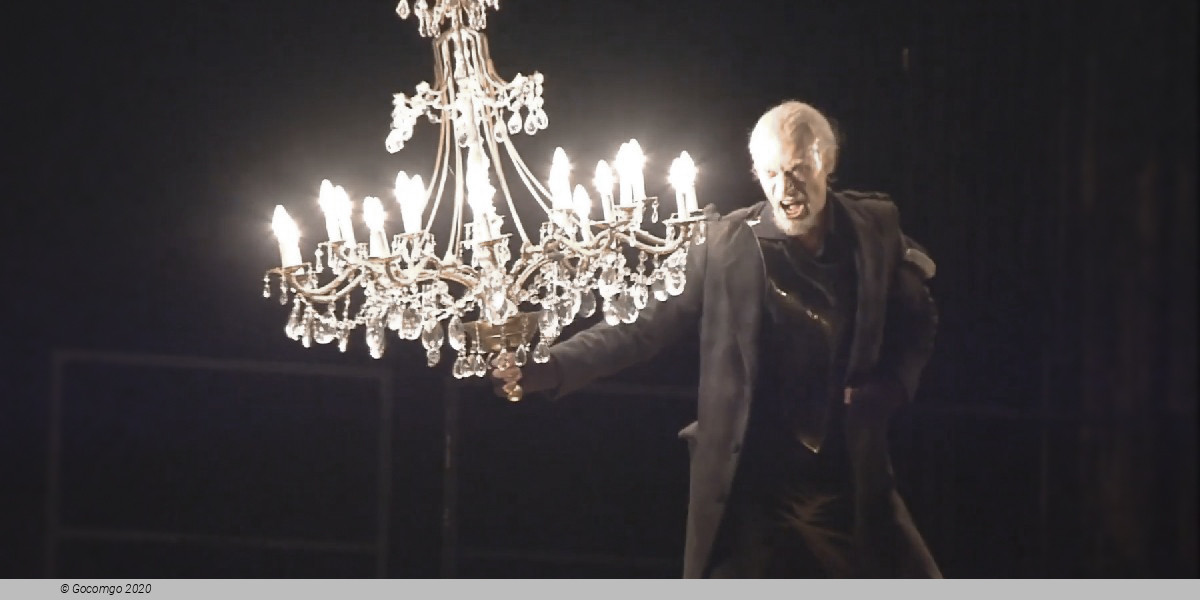
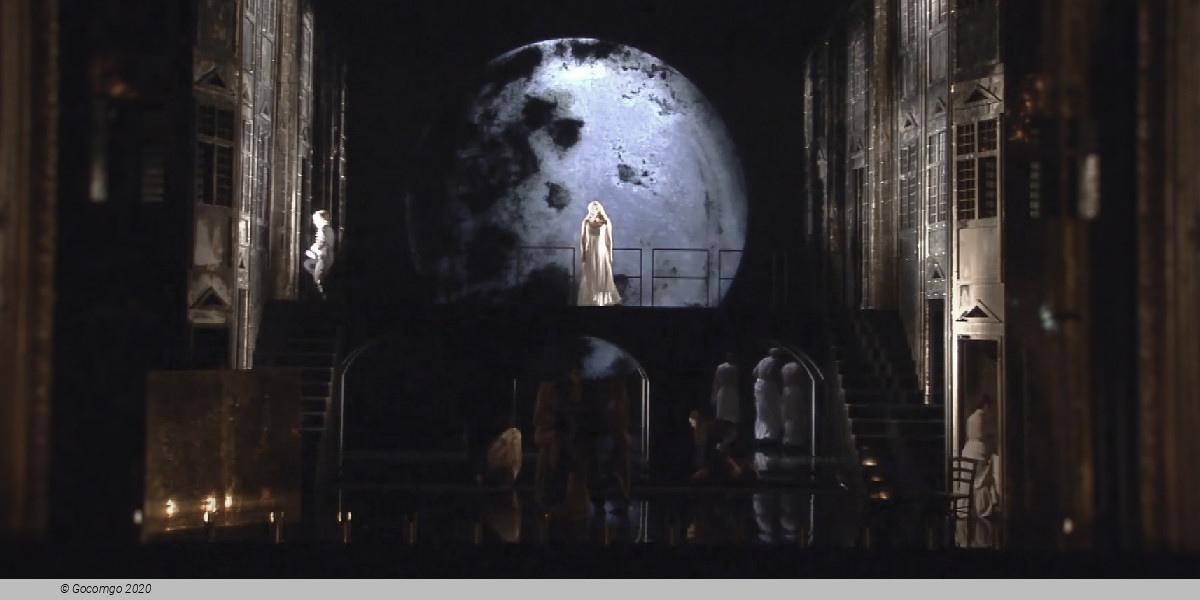
As much a historical panorama as an intimate drama, Les Huguenots tells the story of the impossible love between a Catholic and a Protestant in the context of the religious wars that set France ablaze in the sixteenth century, reaching a bloody climax with the St Bartholomew’s day massacre. The 2011 La Monnaie production was a major event, presenting the score in all its extravagance, rich in dramatic contrasts, and altering perceptions of the length of the performance. It helped to usher in a return to the international music scene of ‘French grand opera’, a key musical genre that was omnipresent for much of the nineteenth century. More than a decade after he first offered his vision of the work, the director Olivier Py will bring his influential production back to life with an entirely new cast. Following his success in our production of Robert le Diable in 2019, the conductor Evelino Pidò will lead the La Monnaie Symphony Orchestra.

History
Premiere of this production: 29 February 1836, Salle Le Peletier, Paris

Les Huguenots is a French opera by Giacomo Meyerbeer, one of the most popular and spectacular examples of the style of grand opera. The story culminates in the historical St. Bartholomew's Day Massacre in 1572 in which thousands of French Huguenots (Protestants) were slaughtered by Catholics in an effort to rid France of Protestant influence.

Synopsis

Act 1

The stage represents the chateau of the Count of Nevers, in Touraine. In the background, large open windows show gardens and a lawn, on which several lords play ball; on the right, a door leading into the inner apartments; at left, a window closed by a curtain and which is supposed to lead to a prayer room; at the front of the stage, other lords are playing dice, cup and ball,etc. Nevers, Tavannes, Cossé, Retz, Thoré, Méru and other Catholic lords look at them and talk to each other.

The Catholic Count of Nevers is entertaining his fellow noblemen. Their host informs them that before they can go to dinner, they must await the arrival of Raoul, a young Huguenot sent to them from the King in an effort to reconcile Protestant and Catholic. Raoul enters, very impressed with the surroundings and to be in the company of the noblemen. Lavish dishes of food and copious supplies of wine are brought in and the nobles encourage Raoul to drink ( L’orgie: "Bonheur de la table"). The Count of Nevers announces that he has just become engaged and that he must now give up his mistresses. However, he invites his guests to describe the ones they are in love with and asks the latest arrival, Raoul de Nangis. Raoul then tells how he rescued a girl from an attack on her in the street. Although he does not know her name or her origins, he immediately fell in love (Romance: "Plus blanche que la blanche hermine"). (With a daring and unusual stroke of orchestration, Meyerbeer accompanies this aria with a solo viola d'amore). Raoul's Protestant servant Marcel enters and the old man is shocked to see his master in such wicked company enjoying games, drinking and tales of love. Marcel sings a hearty Protestant prayer (to the tune of 'Ein feste Burg') while the Catholic lords toast their mistresses. One of the Catholics recognises the old man from a battle they fought and asks him to have a drink with him to bury any grudge. Marcel refuses, and then, at the Catholics' request,he sings a Huguenot battle song from the siege of La Rochelle, calling for the extermination of Catholics (Chanson huguenote: "Piff, paff, piff, paff"). The Catholics are merely amused by this.

A valet of the Count of Nevers informs his master that a mysterious woman wishes to speak to him. The count goes out to meet the stranger. Catholic lords wonder about the identity of the unknown woman and try to see her. They invite Raoul to do the same. Recognizing the young woman he saved and fell in love with, the young Huguenot, believing she is one of the mistresses of the Count of Nevers he has been boasting about, swears never to see her again. In fact she is Nevers' intended bride, Valentine (daughter of St. Bris), instructed by the Queen to break off her engagement. The page Urbain enters with a secret message for Raoul, daring him to come blindfolded to a secret rendezvous with an unnamed woman ( Cavatina: "Une dame noble et sage"). The Catholics recognize the seal on the letter as belonging to the Queen of Navarre and drink to Raoul's health as he is led away.

Act 2

The castle and gardens at the Château de Chenonceaux. The river meanders to the middle of the stage, disappearing from time to time behind clumps of green trees. On the right, a wide staircase by which we descend from the castle into the gardens.

Queen Marguerite looks into a mirror held by her enamoured page Urbain, and sings a virtuoso pastorale (O beau pays de la Touraine). She hopes to avoid the religious strife plaguing France by remaining in the beautiful countryside (Cabaletta: A ce mot seul s’anime et renaît la nature).Valentine enters and reports that Nevers has agreed to break the engagement, which delights Marguerite as, knowing that Valentine has fallen in love with Raoul de Nangis, she is sure that she will be able to persuade Valentine's father, the Catholic Saint-Bris, to allow his daughter to marry the young Protestant as a step towards ending sectarian strife. Marguerite's entourage of ladies enter dressed for bathing. This leads to a ballet during which the page Urbain attempts to spy on the scantily clad ladies as they frolic in the water. Urbain laughingly describes the journey of Raoul, blindfolded, to the castle (Rondeau: "Non, non, non, vous n’avez jamais, je gage") He enters and the Queen tells her ladies to leave him alone with her. With his sight restored,Raoul is amazed by the beauty of his surroundings as well as that of the young woman who stands before him, while she is tempted to try to keep the charming young man for herself rather than have him marry Valentine as she had planned (Duet: "Beauté divine enchanteresse").The lords and ladies of the court, including Nevers and Saint-Bris enter, and the Queen orders everyone to swear friendship and peace, which all aver, except for Marcel, who disapproves of his master mixing with Catholics (Oath:Par l’honneur, par le nom que portaient). The Queen presents Valentine to Raoul as the girl he loves and will marry to cement relations between the Protestant and Catholic factions. In a complex final ensemble, Raoul, who believes Valentine is the mistress of Nevers, refuses to comply with the Queen's command. The nobles then swear revenge, Valentine is devastated by this insult to her honour, the Queen does not understand Raoul's reason for rejecting the marriage and Marcel reproaches Raoul for consorting with Catholics.

Act 3

Paris, the 'Pré aux clercs' on the left bank of the Seine, at sunset. On the left, a tavern where Catholic students sit with girls; on the right, another tavern in front of which Huguenot soldiers drink and play dice. In the background, on the left, the entrance to a chapel. In the middle, a huge tree shading the meadow. At the front of the stage, clerics from La Basoche and grisettes sit on chairs and chat between themselves. Others are walking around. Workers, merchants,traveling musicians, monks, and middle-class townspeople. It is six o'clock in the evening, in the month of August.

Citizens enjoy a stroll on a beautiful Sunday evening (Entracte et chœur: C’est le jour de dimanche). The Huguenot soldiers sing a blood-thirsty war song in praise of the Protestant Admiral Coligny (Couplets militaires: "Prenant son sabre de bataille"). A procession of Catholic girls crosses the scene on the way to the chapel where Valentine and Nevers are about to be married, chanting praise to the Virgin (Litanies :" Vierge Marie, soyez bénie !") Marcel enters with a letter from Raoul to Saint-Bris and interrupts the procession, seeking to know Saint-Bris's whereabouts. The Catholics are outraged by Marcel's sacrilege but the Huguenot soldiers defend him. Tension is rising when a band of gypsies enter, dancing and telling fortunes, and calm things down (Ronde bohémienne: "Venez ! – Vous qui voulez savoir d’avance" and gypsy dance). Valentine has just married Nevers, but remains in the chapel to pray. Marcel delivers a challenge from Raoul. Saint-Bris decides to kill Raoul, but is overheard by Valentine. The town crier declares curfew (the scene anticipating a similar one in Wagner's Die Meistersinger) and the crowds disperse. Valentine, in disguise, tells Marcel of the plot by her father and others to murder Raoul (Duet:Dans la nuit où seul je veille). Valentine realises that despite the public humiliation inflicted on her by Raoul she still loves him and returns to the chapel. Raoul, Saint-Bris and their witnesses arrive for the duel, each confident of success (Septet: "En mon bon droit j’ai confiance"). Marcel calls for assistance from the Huguenot soldiers in the tavern on the right and Saint-Bris to the Catholic students in the tavern on the left and a near-riot ensues. Only the arrival of the Queen, on horseback, stems the chaos. Raoul realises that Valentine has saved him and that his suspicions of her were unfounded. However, now she is married to his enemy and indeed at that moment an illuminated barge appears on the river with wedding guests serenading the newly wedded couple (Wedding chorus:"Au banquet où le ciel leur apprête"). Nevers leads her away in a splendid procession as Catholics and Protestants loudly proclaim their murderous hatred of each other (Chorus of fighters:"Non, plus de paix ni trêve").

Act 4

A room in Nevers' Parisian town-house. Family portraits decorate the walls. In the background, a large door and a large Gothic cross. On the left, a door that leads to Valentine's bedroom. On the right, a big chimney, and near the chimney the entrance to a room closed by a tapestry. On the right, and in the foreground, a window overlooking the street.

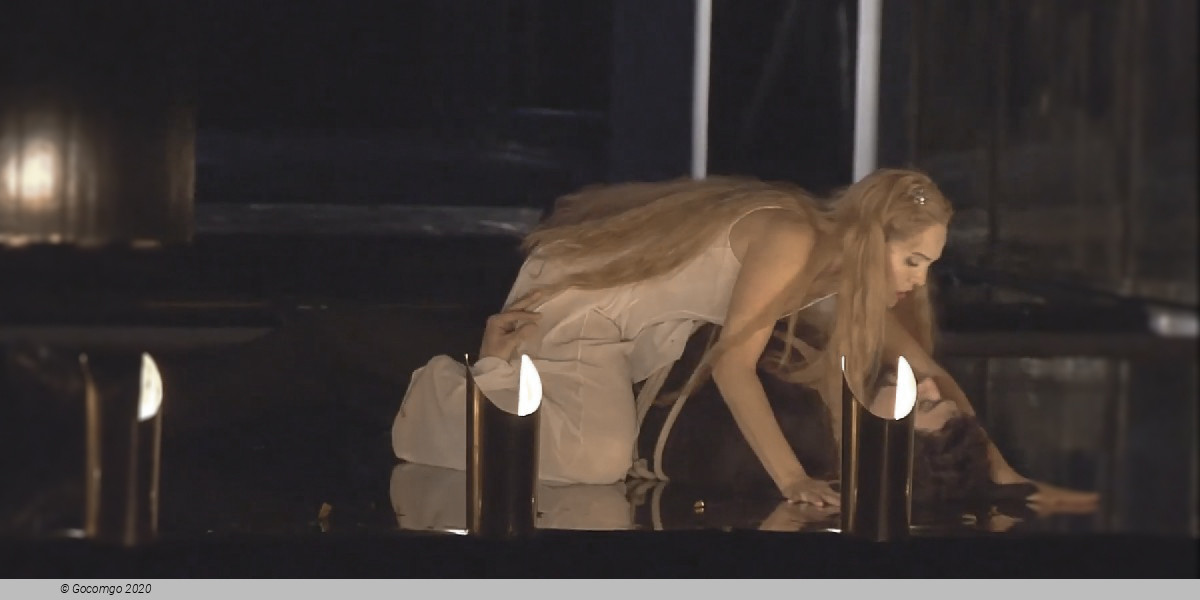
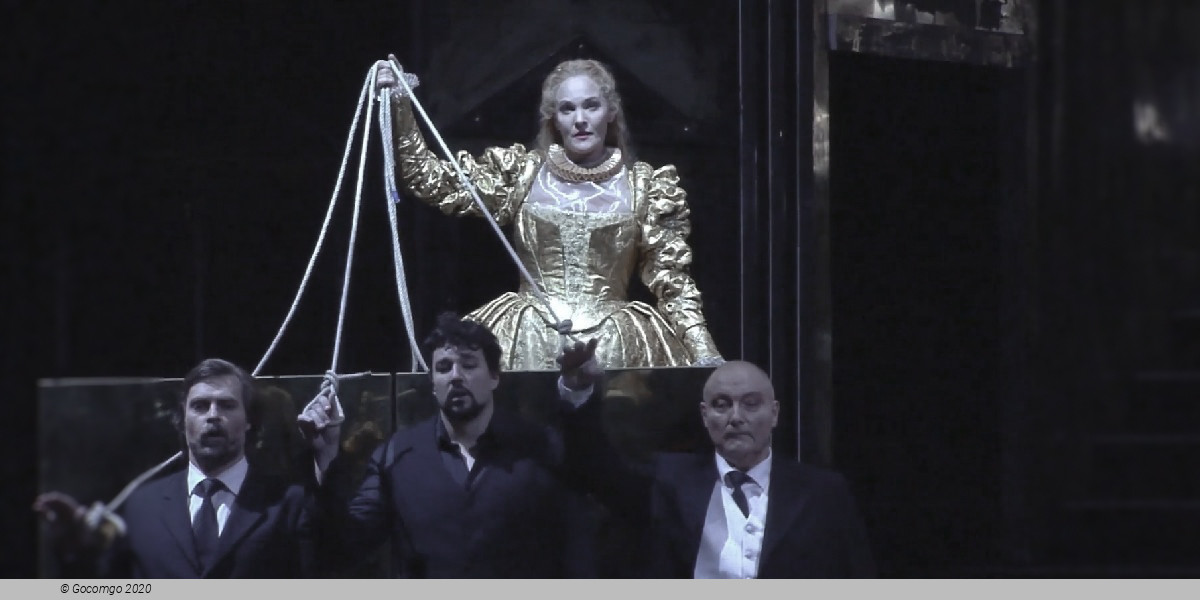
Valentine, alone, expresses her sorrow at being married to Nevers when she is really in love with Raoul (Air: "Parmi les pleurs mon rêve se ranime"). She is surprised by Raoul who wishes to have one last meeting with her. The sound of approaching people leads Raoul to hide behind a curtain, where he hears the Catholic nobles pledge to murder the Huguenots. They are accompanied by three monks, who bless the swords and daggers to be used in the massacre, declaring it to be God's will that the heretics be killed. Only Nevers does not join in the oath (Conjuration:"Des troubles renaissants"). This scene is generally judged the most gripping in the opera, and is accompanied by some of its most dramatic music. When the nobles have departed, Raoul re-appears and is torn between warning his fellows and staying with Valentine (Duet:"Ô ciel! où courez-vous ?"). Valentine is desperate to prevent him from meeting death by going to the assistance of his fellow Protestants and admits she loves him, which sends Raoul into raptures. However they hear the bell of Saint-Germain-l'Auxerrois ringing, the signal for the massacre to begin,and Valentine faints as Raoul leaps out the window to join his co-religionists.

Act 5

Scene 1: A beautifully lit ballroom in the Hôtel de Nesle

The Protestants are celebrating the marriage of the Queen to Henry of Navarre. The tolling of a bell interrupts the dancing and festivities, as does the entrance of Raoul, in torn clothing covered in blood, who informs the assembly that the second stroke was the signal for the Catholic massacre of the Huguenots. Admiral Coligny has been assassinated, Raoul tells them, and Protestant men, women and children are being slaughtered in the street by the thousands. The women flee, panic-stricken, as the Protestant men prepare to defend themselves.

Scene 2: A cemetery: in the background, a Protestant church whose stained glass windows are visible. On the left, a small door that leads into the interior of the church. On the right, a gate that overlooks a crossroads

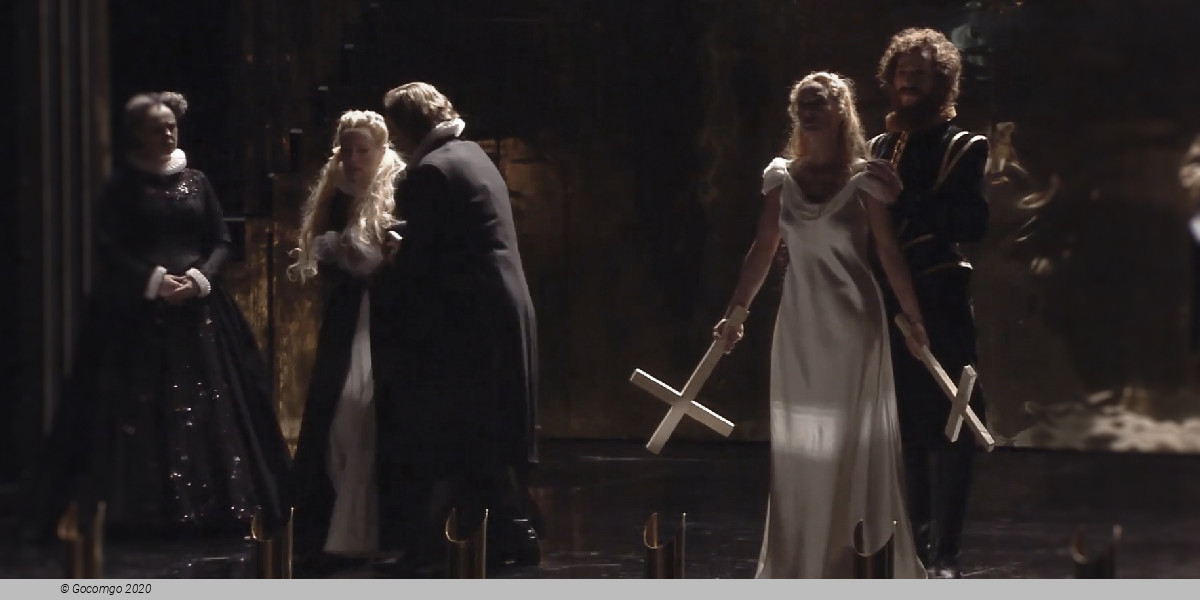
Under the leadership of Marcel, Protestant women take refuge with their children in the church. It is there that Raoul finds his old servant, who, resigned, prepares to die. Valentine arrives and tells Raoul that his life will be saved if he agrees to wear a white scarf around his arm, indicating that he is Catholic. She also informs the young man that she is now free, Nevers having been killed after having defended Protestants. Raoul seems to hesitate but finally refuses Valentine's proposal to pass as Catholic. She immediately decides to share the fate of the one she loves by abjuring the Catholic faith. She asks Marcel to bless her. Marcel does so and declares the couple married in the sight of God (Trio: "Savez-vous qu’en joignant vos mains"). Meanwhile, the Protestants who barricaded themselves in the church intone Luther's hymn "Ein feste Burg". Suddenly, the singing inside the church is interrupted. The Catholics have broken down the door of the church and threaten to kill all the Protestant women and children if they do not renounce their faith. After refusing, the Protestants resume their singing, interrupted several times by musket shots. Finally, the song is no longer heard: all were massacred. At the height of exaltation, Marcel thinks he hears the march of angels leading the martyrs to God. Valentine and Raoul share this vision of heaven 'with six harps'. (Trio:"Ah ! voyez ! Le ciel s’ouvre et rayonne !"). Catholic soldiers enter the cemetery, seize Raoul, Valentine and Marcel and drag them away,wounding all three, after they refuse to abjure their faith.

Scene 3: A street in Paris, on the night of August 23 to 24, 1572

Wounded, they are finally murdered by St. Bris and his men, he realising only too late that he has killed his own daughter. (Cf. the closing scene of Fromental Halévy's opera, La Juive, libretto also by Scribe, produced a year earlier than Les Huguenots). It is at this moment that Marguerite's litter appears. She also recognizes Valentine and tries to stop the massacre, to no avail. A chorus of soldiers,hunting for more Protestants to murder and singing 'God wants blood!', brings the opera to a close.

Venue Info

Royal Theatre of La Monnaie - Brussels
Location   5, Place de la Monnaie

The Théâtre Royal de la Monnaie (or la Monnaie) in French, or The Koninklijke Muntschouwburg (or de Munt) in Dutch, is a leading opera house in Brussels. Both of its names translate as Royal Theatre of the Coin. Today the National Opera of Belgium, a federal institution, takes the name of the theatre in which it is housed - La Monnaie or De Munt refers both to the building as well as the opera company.

History

In the last three decades la Monnaie has reclaimed its place amongst the foremost opera houses in Europe thanks to the efforts of the successive directors Gerard Mortier and Bernard Foccroulle and music directors Sylvain Cambreling and Antonio Pappano.

The current edifice is the third theatre on the site. The façade dates from 1818 with major alterations made in 1856 and 1986. The foyer and auditorium date from 1856, but almost every other element of the present building was extensively renovated in the 1980s.

The theatre of Gio-Paolo Bombarda, 1700 to 1818

The first permanent public theatre for opera performances of the court and city of Brussels was built between 1695 and 1700 by the Venetian architects Paolo and Pietro Bezzi, as part of a rebuilding plan following the bombardment of Brussels. It was built on the site of a building that had served to mint coins. The name of this site la Monnaie ("the Mint") remained attached to the theatre for the centuries to come. The construction of the theatre had been ordered by Maximilian II Emanuel, Elector of Bavaria, at that time Governor of the Habsburg Netherlands. The Elector had charged his "trésorier", the Italian Gio-Paolo Bombarda, with the task of financing and supervising the enterprise. The date of the first performance in 1700 remains unknown.

The first performance mentioned in the local newspaper was Jean-Baptiste Lully's, Atys, which was given on 19 November 1700. The French operatic repertoire would dominate the Brussels stage throughout the following century, although performances of Venetian operas and other non-French repertoire were performed on a regular basis. Until the middle of the 19th century, plays were performed along with opera, ballet and concerts.

By the 18th century la Monnaie was considered the second French-speaking stage after the most prominent theatres in Paris. Under the rule of Prince Charles Alexander of Lorraine, who acted as a very generous patron of the arts, the theatre greatly flourished. At that time it housed an opera company, a ballet and an orchestra. The splendour of the performances diminished during the last years of the Austrian rule, due to the severe politics of the Austrian Emperor Joseph II.

After 1795, when the French revolutionary forces occupied the Belgian provinces, the theatre became a French Departmental institution.

Amongst other cuts in its expenses, the theatre had to abolish its Corps de Ballet. During this period many famous French actors and singers gave regular performances in the theatre during their tour of the provinces of the Empire. Still a consul, Napoleon on his visit to Brussels judged the old theatre too dilapidated for one of the most prestigious cities of his Empire. He ordered plans to replace the old building by a new and more monumental edifice, but nothing was done during the Napoleonic rule. Finally, the plans were carried out under the auspices of the new United Kingdom of the Netherlands and the Bombarda building was demolished in 1818.

The theatre of Louis Damesme, 1818 to 1855

The old theatre was replaced by a new Neo-classical building designed by the French architect Louis Damesme. Unlike the Bombarda building, which was situated along the street and completely surrounded by other buildings, the new theatre was placed in the middle of a newly constructed square. This gave it a more monumental appearance, but it was primarily the result of safety concerns since it was more accessible to firemen, reducing the chance that fire would spread to surrounding buildings. The new auditorium was inaugurated on 25 May 1819 with the opera La Caravane du Caire by the Belgian composer André Ernest Modeste Grétry.

As the most important French theatre of the newly established United Kingdom of the Netherlands, la Monnaie had national and international significance. The theatre came under the supervision of the city of Brussels, which had the right to appoint a director charged with the management its management. In this period famous actors like François Joseph Talma and singers like Maria Malibran performed at la Monnaie. The Corps de Ballet was reintroduced and came under the supervision of the dancer and choreographer Jean-Antoine Petipa, father of the famous Marius Petipa.

La Monnaie would play a prominent role in the formation of the Kingdom of Belgium. Daniel Auber's opera La Muette de Portici was scheduled in August 1830 after it had been banned from the stage by King William I, fearing its inciting content. At a performance of this opera on the evening of 25 August 1830, a riot broke out which became the signal for the Belgian Revolution and which led to Belgian independence. The Damesme building continued to serve for more than two decades as Belgium's principal theatre and opera house until it burnt to the ground on 21 January 1855 leaving only the outside walls and portico.

The theatre of Joseph Poelaert, since 1856

After the fire of January 1855, the theatre was reconstructed after the designs of Joseph Poelaert within a period of fourteen months. The auditorium (with 1,200 seats) and the foyer were decorated in a then-popular Eclectic Style; a mixture of Neo-Baroque, Neo-Rococo and Neo-Renaissance Styles. The lavish decoration made excessive use of gilded "carton-pierre" decorations and sculptures, red velvet and brocade. The auditorium was lit by the huge crystal chandelier that today still hangs in the centre of the domed ceiling. It is made of gilded bronze and venetian crystals. The original dome painting – representing "Belgium Protecting the Arts" – was painted in the Parisian workshop of François-Joseph Nolau (Paris 1804-1883) and Auguste Alfred Rubé (Paris, 1815-1899), two famous decorators of the Parisian Opera House. In 1887 this dome painting was completely repainted by Auguste-Alfred Rubé (Paris, 1815-1899) himself and his new associate Philippe-Marie Chaperon (Paris, 1826–1907), because it was mostly tainted by the CO2 emissions from the chandelier. This dome painting stayed untouched until 1985, when it was taken down during extensive rebuilding activities and replaced by a bad copy, painted by the Belgian painter Xavier Crolls. From 1988 until 1998 the dome painting of Rubé and Chaperon was in restoration. In 1999, it was reinstated and decorates today one of the most beautiful opera houses of Europe. The sober whitewashed exterior we see today was done many decades later. Poelaert never intended to whitewash these outer walls. In 1856, the exterior did not have any whitewashing at all, which is proved by many photographs of that time.

The new Théâtre Royal de la Monnaie opened on 25 March 1856 with Fromental Halévy’s Jaguarita l'Indienne. In the middle of the 19th century the repertoire was dominated by the popular French composers such as Halévy, Daniel Auber, and Giacomo Meyerbeer, and the Italian composers, Gioachino Rossini, Gaetano Donizetti, Vincenzo Bellini and Giuseppe Verdi who had considerable success in Paris.

The opera house in the 20th century

Renovations on the Poelaert building were required shortly after the opening due to faulty foundation work; the early 20th century saw an additional story added; and in the 1950s, a new stage building was added. By 1985 it was determined that complete renovation was needed. Features such as raising the roofline by 4 metres and scooping out the stage building area - in addition to creating a steel frame to strengthen the load-bearing walls and increasing backstage space - characterized this two-year project. However, the red and gold auditorium remained basically the same. The canvas of the ceiling painting was temporarily removed for restoration and only put back in 1999. It was temporarily replaced by a copy in much brighter colors that was painted directly on the stucco ceiling.

The entrance hall and the grand staircase underwent a radical makeover, although original features such as the monument by Belgian sculptor Paul Du Bois honouring manager and musical director Dupont (1910), and a number of monumental paintings (1907-1933) by Emile Fabry were preserved. The Liège architect Charles Vandenhove created a new architectural concept for the entrance in 1985-86. He asked two American artists to make a contribution: Sol LeWitt designed a fan-shaped floor in black and white marble, while Sam Francis painted a triptych mounted to the ceiling. Vandenhove also designed a new interior decoration for the Salon Royal, a reception room connected to the Royal box. For this project he collaborated with the French artist Daniel Buren.

Now seating 1,125, the renovated opera house was inaugurated on 12 November 1986 with a performance of Beethoven’s Symphony No. 9.

In 1998 the major part of the vacant Vanderborght Department Store building (c. 20,000 m2) and a neo-classical mansion, both situated directly behind the opera house, were acquired by la Monnaie. The edifices were renovated and adapted to house the technical and administrative facilities of la Monnaie, previously spread all over the city. The building also contains large rehearsal halls for opera, the Malibran, and orchestra, the Fiocco. They can also be adapted for presenting public performances.

La Monnaie in the 21st century

The opera house was renovated again from May 2015 to September 2017: the stage was levelled, a new fly system was put in place and two scene lifts were installed. This allowed the opera house to stage more technically-demanding productions. Although most of the renovations took place backstage, the opera house used this opportunity to replace all of its worn out seats with new velour seats.

Dadaocheng Theater

No. 21, Section 1, Dihua St, Datong District

Dadaocheng Theatre is a small theater that focuses on the performance and development of traditional Taiwanese opera. Originally, it occupied one floor of Yongle Tower; it now has expanded to two floors, with a performance hall that can hold 506 audience members.

Important Info
Type: Opera
City: Brussels, Belgium
Starts at: 18:00
Acts: 5
Sung in: French
Titles in: Dutch,French
Top of page