Teatro del Maggio Musicale Fiorentino 18 October 2022 - Alcina | GoComGo.com

Alcina

Teatro del Maggio Musicale Fiorentino, Auditorium, Florence, Italy
All photos (5)
Select date and time
8 PM

E-tickets: Print at home or at the box office of the event if so specified. You will find more information in your booking confirmation email.

You can only select the category, and not the exact seats.
If you order 2 or 3 tickets: your seats will be next to each other.
If you order 4 or more tickets: your seats will be next to each other, or, if this is not possible, we will provide a combination of groups of seats (at least in pairs, for example 2+2 or 2+3).

Important Info
Type: Opera
City: Florence, Italy
Starts at: 20:00
Intervals: 1
Duration: 4h 45min

E-tickets: Print at home or at the box office of the event if so specified. You will find more information in your booking confirmation email.

You can only select the category, and not the exact seats.
If you order 2 or 3 tickets: your seats will be next to each other.
If you order 4 or more tickets: your seats will be next to each other, or, if this is not possible, we will provide a combination of groups of seats (at least in pairs, for example 2+2 or 2+3).

Overview

Handel's Alcina debuted at London's Covent Garden on April 16, 1735, enjoying enormous success.

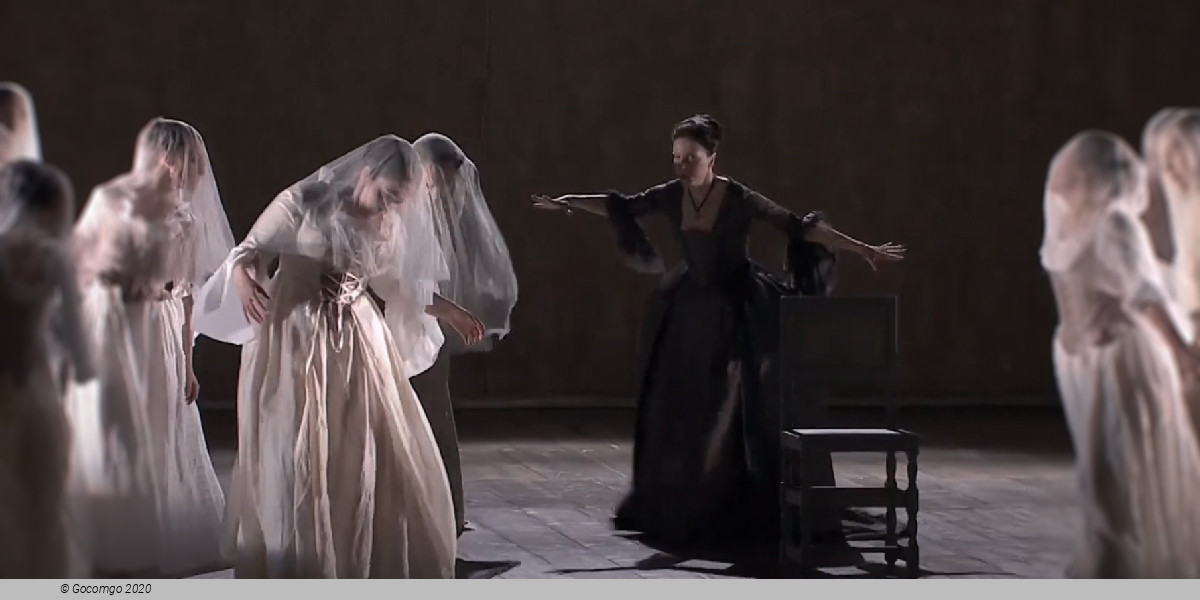
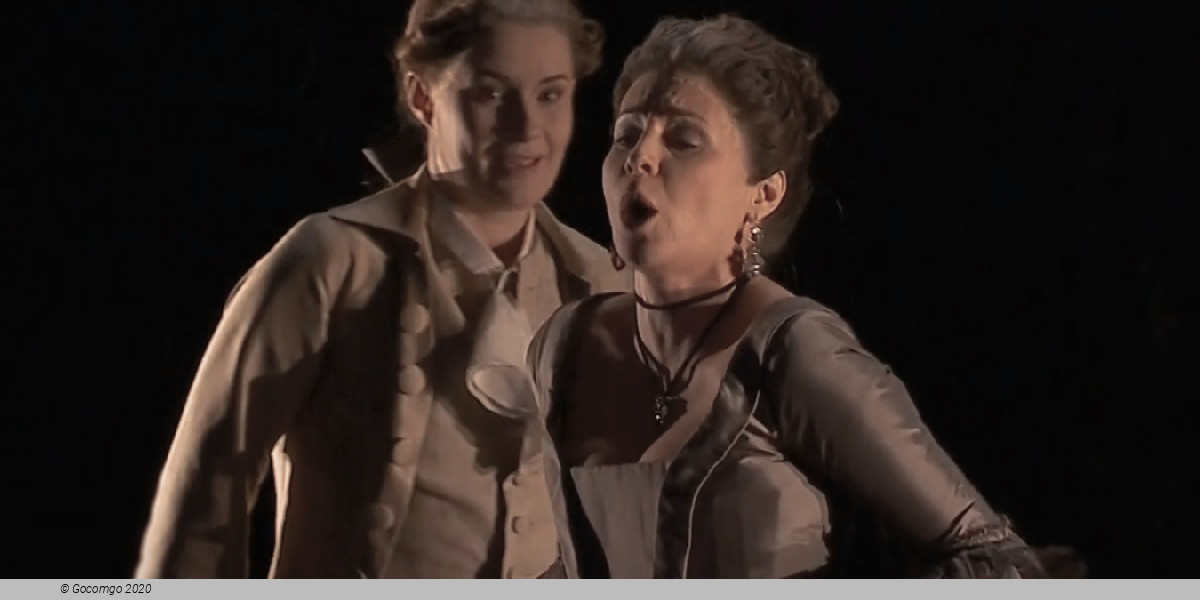
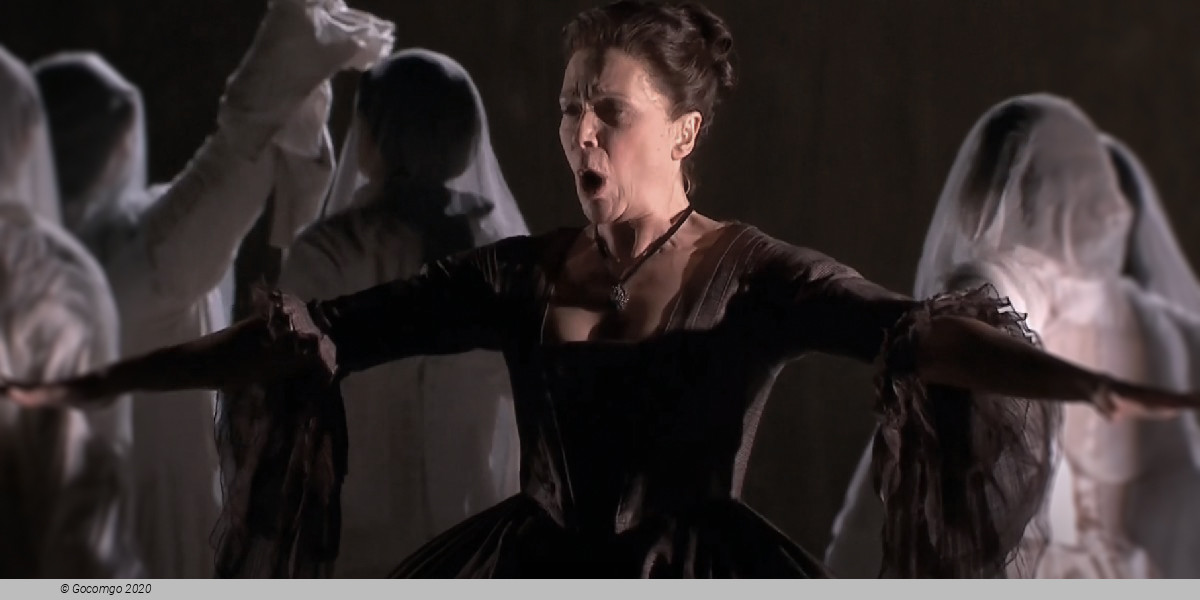
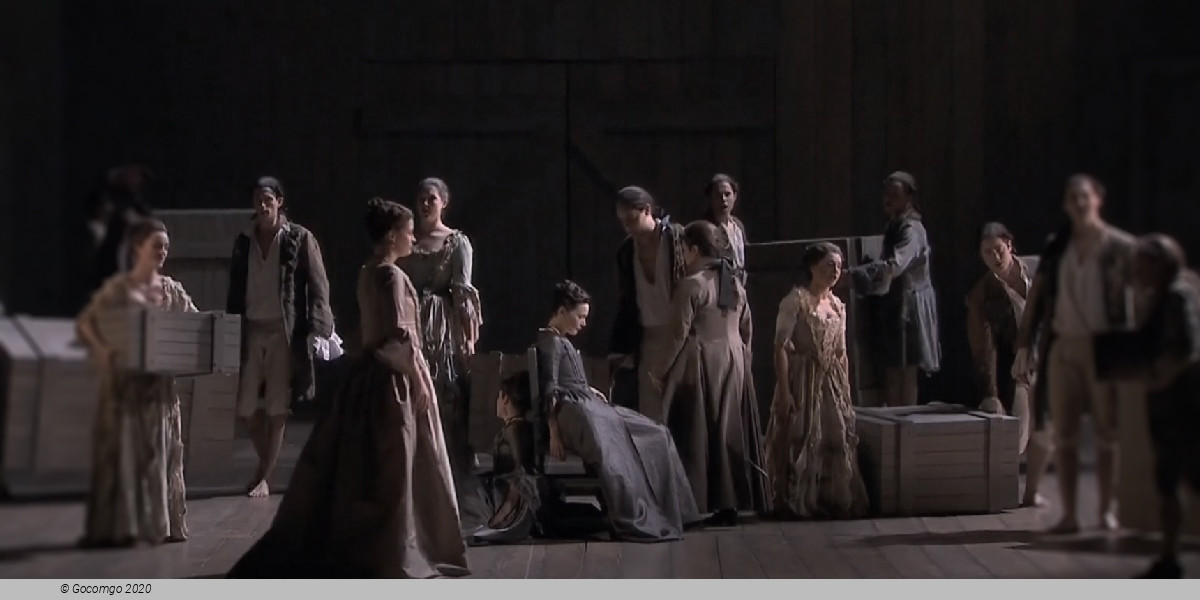
Two years earlier, the composer had had to leave the King's Theater, taken over by a rival company, to move to the new London theater. There he gave life to his last works, including Alcina, born with the intention of excelling over the productions of the rival company and therefore particularly refined and sumptuous in the preparations. At Covent Garden, Handel was also able to have a corps de ballet, which is why he supplemented the score with dance numbers and choral episodes along the lines of French opera. The anonymous libretto of the opera - which focuses on the theme of the enchantment of love - was inspired by canto VII of Orlando furioso and L’isola di Alcina, a work by Riccardo Broschi. The sorceress Alcina, thanks to a spell, keeps the knight Ruggiero tied to her in an enchanted island, but thanks to the intervention of Bradamante Ruggiero she will regain consciousness and abandon the sorceress in her desperation. Among apparitions, magic, disguises and changes of scene on sight obviously the arias of the soloists stand out, the real beating heart of Baroque opera. For the sorceress and her beloved, the composer created some of the most popular arias such as "Ombre pallide", sung by Alcina or "Verdi meadows, selve amene", sung by Ruggiero.

Staging by Salzburger Pfingstfestspiele

History
Premiere of this production: 16 April 1735, Theatre Royal, Covent Garden, London

Alcina - opera seria by George Frideric Handel. Handel used the libretto of L'isola di Alcina, an opera that was set in 1728 in Rome by Riccardo Broschi, which he acquired the year after during his travels in Italy. Partly altered for better conformity, the story was originally taken from Ludovico Ariosto's Orlando furioso (like those of the Handel operas Orlando and Ariodante), an epic poem. The opera contains several musical sequences with opportunity for dance: these were composed for dancer Marie Sallé.

Synopsis

Prologue
The background of the opera comes from the poem Orlando Furioso. The heroic knight Ruggiero is destined to a short but glorious life, and a benevolent magician is always whisking him away from the arms of his fiancée, Bradamante. Bradamante is not the type to put up with the constant disappearance of her lover, and she spends vast portions of the poem in full armor chasing after him. Just before the opera begins she has rescued him from an enchanted castle, only to have her flying horse (a hippogriff) take a fancy to Ruggiero and fly off with him. Ruggiero and the hippogriff land on an island in the middle of the ocean. As the hippogriff begins to eat the leaves of a myrtle bush, Ruggiero is startled to hear the bush begin to speak. The bush reveals that it was once a living soul named Sir Astolfo, and the island belongs to the sister sorceresses Alcina and Morgana. The beautiful Alcina seduces every knight that lands on her isle, but soon tires of her lovers and changes them into stones, animals, plants, or anything that strikes her fancy. Despite Astolfo's warning, Ruggiero strides off to meet this sorceress – and falls under her spell.

Act 1
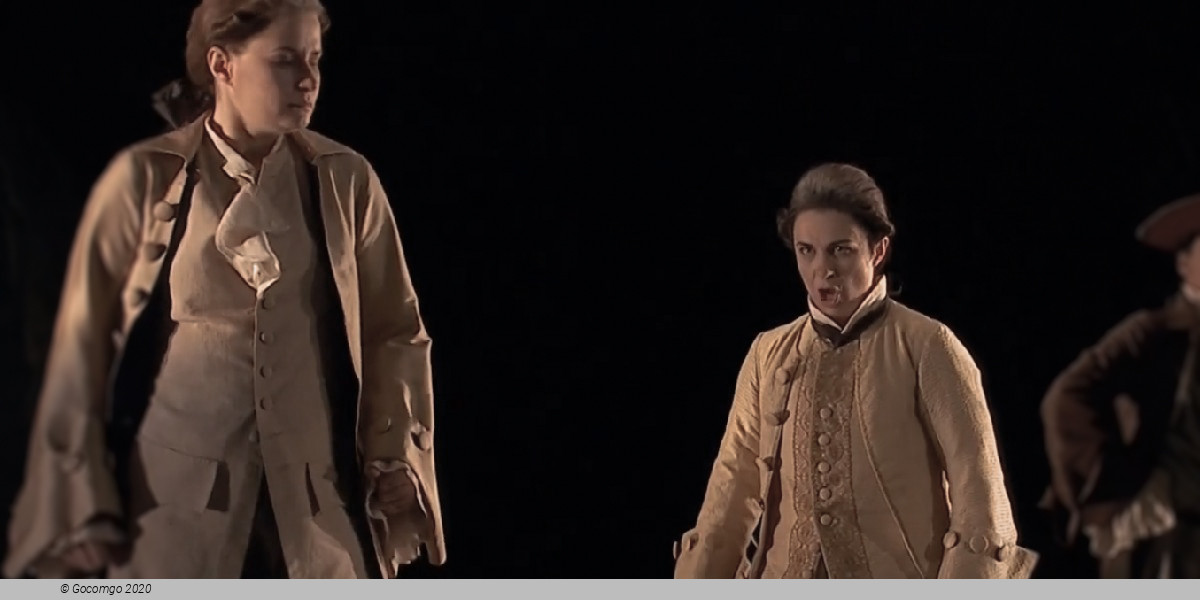
Bradamante, again searching for her lover, arrives on Alcina's island with Ruggiero's former tutor, Melisso. Dressed in armor, Bradamante looks like a young man and goes by the name of her own brother, Ricciardo. She and Melisso possess a magic ring which enables the wearer to see through illusion, which they plan to use to break Alcina's spells and release her captives.

The first person they meet is the sorceress Morgana. Barely human and with no understanding of true love, she immediately abandons her own lover Oronte for the handsome 'Ricciardo.' Morgana conveys the visitors to Alcina's court, where Bradamante is dismayed to discover that Ruggiero is besotted with Alcina and in a state of complete amnesia about his previous life. Also at Alcina's court is a boy, Oberto, who is looking for his father, Astolfo, who was last seen heading toward this island. Bradamante guesses that Astolfo is now transformed into something, but she holds her peace and concerns herself with Ruggiero. Bradamante and Melisso rebuke Ruggiero for his desertion, but he can't think of anything except Alcina.

Meanwhile, Oronte discovers that Morgana has fallen in love with 'Ricciardo,' and challenges 'him' to a duel. Morgana stops the fight, but Oronte is in a foul mood and takes it out on Ruggiero. He tells the young man exactly how Alcina treats her former lovers and adds that, as far as he can tell, Alcina has fallen in love with the newcomer, Ricciardo (Semplicetto! A donna credi? Nr. 12). Ruggiero is horrified and overwhelms Alcina with his jealous fury. Things get even worse when 'Ricciardo' enters and pretends to admire Alcina. Alcina calms Ruggiero (Sì, son quella Nr. 13), but Bradamante is so upset at seeing her fiancé wooed before her very eyes that she reveals her true identity to Ruggiero (La bocca vaga, quell'occhio nero Nr. 14). Melisso hastily contradicts her and Ruggiero becomes very confused.


Alcina tells Morgana that she plans to turn Ricciardo into an animal, just to show Ruggiero how much she really loves him. Morgana begs Ricciardo to escape the island and Alcina's clutches, but 'he' says he'd rather stay, as he loves another. Morgana believes that this other person is herself, and the act ends with Morgana's aria "Tornami a vagheggiar". (In some productions, this aria is sung by Alcina.)

Act 2
Melisso recalls Ruggiero to reason and duty by letting him wear the magic ring: under its influence, Ruggiero sees the island as it really is—a desert, peopled with monsters. Appalled, he realizes he must leave, and sings the famous aria "Verdi prati" ("Green meadows") where he admits that even though he knows the island and Alcina are mere illusion, their beauty will haunt him for the rest of his life.

Melisso warns Ruggiero that he cannot just leave; Alcina still wields immense power, and he should cover his escape by telling her that he wishes to go hunting. Ruggiero agrees, but, thoroughly bewildered by the magic and illusion surrounding him, he refuses to believe his eyes when he at last sees Bradamante as herself, believing that she may be another of Alcina's illusions. Bradamante is in despair, as is Alcina. Convinced of Ruggiero's indifference, she enters to turn Ricciardo into an animal, and Ruggiero has to pull himself together quickly and convince the sorceress that he does not need any proof of her love. It is at this point that the audience realises that Alcina genuinely loves Ruggiero; from now until the end of the opera, she is depicted sympathetically.


Oronte realizes that Ricciardo, Melisso and Ruggiero are in some sort of alliance, and Morgana and Alcina realise they are being deceived. But it is too late: Alcina's powers depend on illusion and, as true love enters her life, her magic powers slip away. As the act ends, Alcina tries to call up evil spirits to stop Ruggiero from leaving her, but her magic fails her.

Act 3
After this the opera finishes swiftly. Morgana and Oronte try to rebuild their relationship; she returns to him and he rebuffs her but (once she is offstage) admits he loves her still. Ruggiero returns to his proper heroic status and sings an aria accompanied by high horns; Oberto is introduced to a lion, to whom he feels strangely attached, and Alcina sings a desolate aria in which she longs for oblivion.

Bradamante and Ruggiero decide that they need to destroy the source of Alcina's magic, usually represented as an urn. Alcina pleads with them, but Ruggiero is deaf to her appeals and smashes the urn. As he does so, everything is both ruined and restored. Alcina's magic palace crumbles to dust and she and Morgana sink into the ground, but Alcina's lovers are returned to their proper selves. The lion turns into Oberto's father, Astolfo, and other people stumble on, "I was a rock," says one, "I a tree" says another, and "I a wave in the ocean..." All the humans sing of their relief and joy, and Alcina is forgotten.


Venue Info

Teatro del Maggio Musicale Fiorentino - Florence
Location   Piazza Vittorio Gui, 1

Teatro del Maggio Musicale Fiorentino is a major opera house in Florence and the main concert venue of the international festival "Maggio Musicale Fiorentino".

The white marble veined with green of the Baptistery of San Giovanni, the brickwork of the dome of Santa Maria del Fiore and finally the dazzling gold of the precious paintings that have made the city of Tuscany one of the world capitals of art: the materials and colors of the Renaissance they meet at the Teatro del Maggio to celebrate the power of music, and the enchantment of melodrama, right in the city where this exceptional form of theater was born. Conceived by the architect Paolo Desideri of the ABDR studio, the “new house” of the Maggio Musicale Fiorentino rises at the meeting point between the monumental center and the Parco delle Cascine, the green lung of the city.

An important connective function also reaffirmed by the vast system of open areas that can be reached through the two areas of the city and the different volumes of the building. Moreover, the proximity to the Stazione Leopolda helps to create a cultural pole of European importance.

Above a sort of wide base, a sloping skirting, there are the large music rooms and the enigmatic volume of the 35 meter high stage tower. Three rooms, which can work simultaneously: the 1800-seat opera theater, distributed between the stalls, boxes and gallery, an outdoor 2000-seat auditorium and finally an auditorium, dedicated to maestro Zubin Mehta, which varies its capacity from 500 to 1000 spectators.

As in a great musical instrument, the walls of the main hall are covered in pear wood to guarantee perfect acoustics. A dense network of thin copper chains also helps to transport the sound without distortion. The stage has a depth doubled compared to the average of Italian and foreign theaters and, thanks to its flexibility, is able to accommodate in its side pockets up to two sets ready to be moved during the intervals. The Cavea is positioned in the theater’s roof to complement and conclude the extensive system of squares, terraces and belvedere.

Its usability is therefore not limited to representations only, but is extended to the entire day to turn its stone steps into real urban salons. Inaugurated on December 21, 2011 with the Ninth Symphony of Ludwig van Beethoven directed by Zubin Mehta, the Teatro del Maggio is the permanent venue of the Orchestra and Chorus of the Maggio Musicale Fiorentino and has already hosted Masters such as Claudio Abbado, Riccardo Muti, Gustavo Dudamel , Daniele Gatti, Fabio Luisi, leading groups such as the Berliner Philharmoniker, the St. Petersburg Philharmonic Orchestra and the National de France Orchestras. Among the many artists who performed there are Alessandra Ferri, Mariella Devia, Sumi Jo, Anja Harteros, Aldo Ciccolini, Uto Ughi, Maurizio Pollini, Krystian Zimerman, Gregory Kunde, Ambrogio Maestri. In 2014 he received the National Award for the best architectural work made in Italy in the last 5 years.

Important Info
Type: Opera
City: Florence, Italy
Starts at: 20:00
Intervals: 1
Duration: 4h 45min
Top of page