The opera contains two prologues, an intermezzo, and three scenes.
Symphonia
Orchestral introduction: Easter Vespers and Augurs of Spring. The orchestra begins with bell imitations; later the chorus, behind the curtain, sings the single word: "Pax".
The poet speaks
In front of the curtain the poet speaks to the spectators explaining why he abandoned his earlier ideas of using Merlin and Don Juan as subject matter in favor of Faust. This spoken introduction emphasizes the play's origins in puppet theater. (This section is often omitted.)
Prologue 1
Wittenberg, Germany, during the Middle Ages.
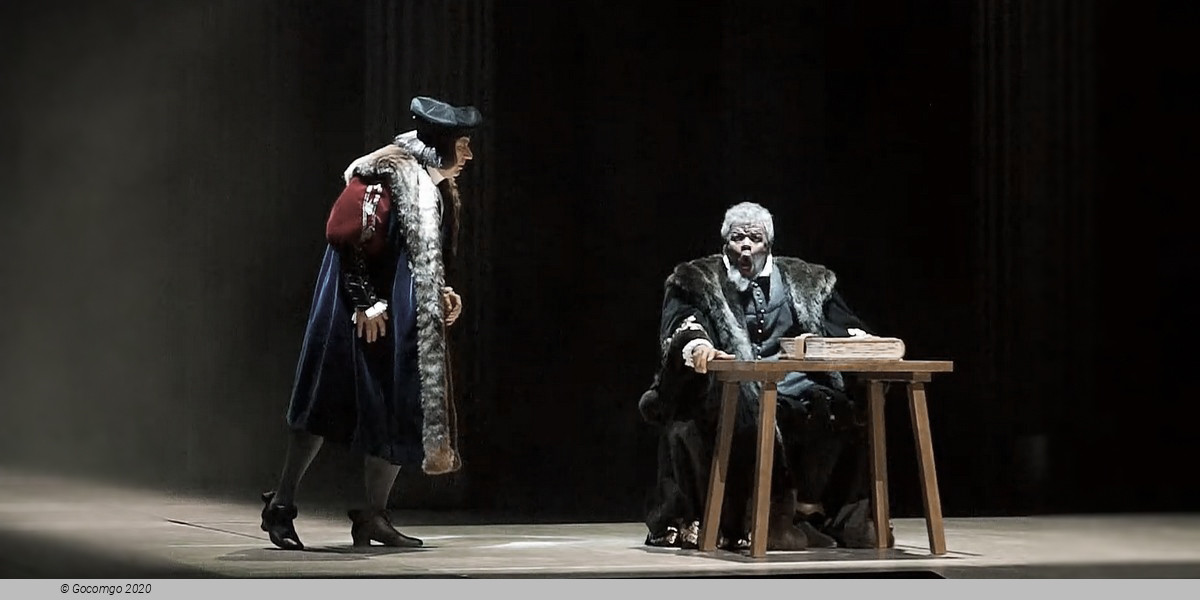
Faust is Rector Magnificus of the university. While he is working on an experiment in his laboratory, Wagner, his pupil, brings word of three students from Kraków, who have arrived unannounced to give Faust a book on black magic, Clavis Astartis Magica (The Key to the Magic of Astarte). Faust reflects on the power that will soon be his. The students come on stage, and tell him that this book is for him. When Faust asks what he must give in return, they say only "Later". He then asks whether he will see them again, and they respond "Perhaps." They then depart. Wagner reappears, and after questioning from Faust, tells his teacher that he saw no one enter or leave. Faust concludes that these visitors were supernatural.
Prologue 2
Midnight that same evening.
Faust opens the book and follows its directions. He makes a circle on the floor, steps into it and calls upon Lucifer to appear. A pale light is seen around the room, and then unseen voices materialize. Faust then wishes, as his 'Will', for spirits at his beck and call. Five flames appear, servants of Lucifer, but Faust is not impressed at their claims of speed. The sixth flame/voice, Mephistopheles, claims that "I am as swift as the thoughts of man" ("als wie des Menschen Gedanke"). Faust then accepts Mephistopheles as a servant. He demands that all his wishes be granted, to have all knowledge and the power of genius. Mephistopheles, in return, says that Faust must serve him after death, which Faust recoils from at first. Mephistopheles reminds Faust that his creditors and enemies are at the door. With Faust's approval, Mephistopheles causes them to fall, dead. Then, with the chorus in the distance singing a 'Credo' on Easter morning, Faust signs the pact in blood, wondering what has become of his 'Will'. He faints upon realizing that he has forfeited his soul. Mephistopheles gleefully takes the contract in hand.
Intermezzo
By this point, Faust has seduced the maiden Gretchen. At a chapel, her brother, a soldier, prays to find and punish the violator of his sister's honour. Mephistopheles points out the soldier to Faust, who wants to kill him, but not with his own hands. Mephistopheles disguises himself as a monk and offers to hear the Soldier's confession. A military patrol, surreptitiously directed by Mephistopheles, enters and kills the Soldier, claiming that the soldier had murdered their captain. The soldier's death is then to weigh on Faust's conscience.
Hauptspiel [Principal Action]
Scene 1
The Ducal Park of Parma, Italy
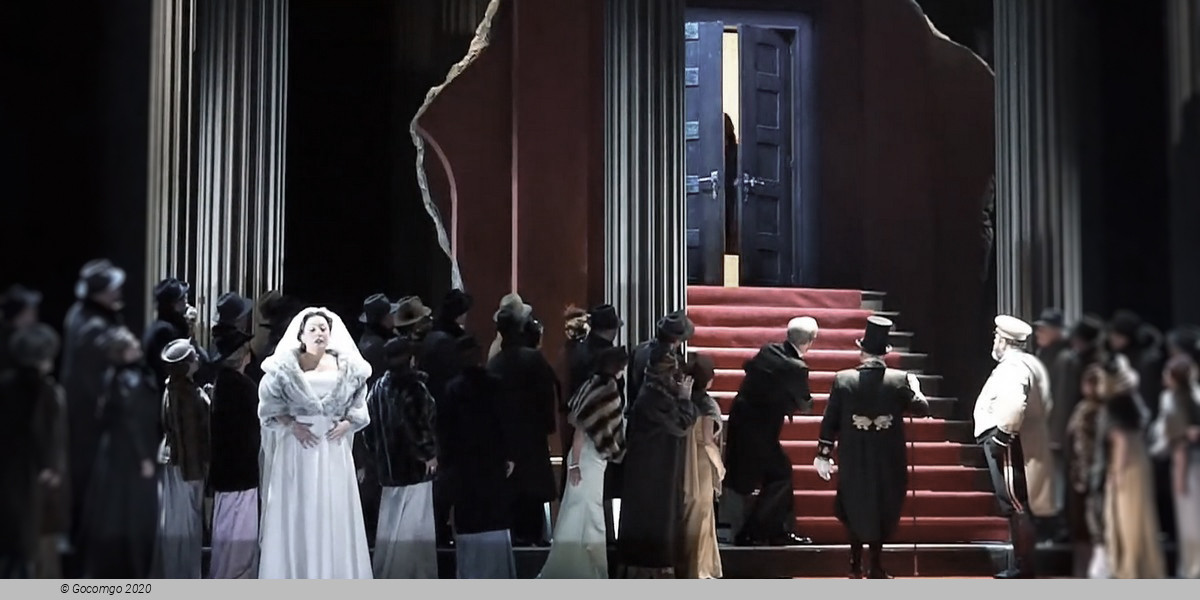
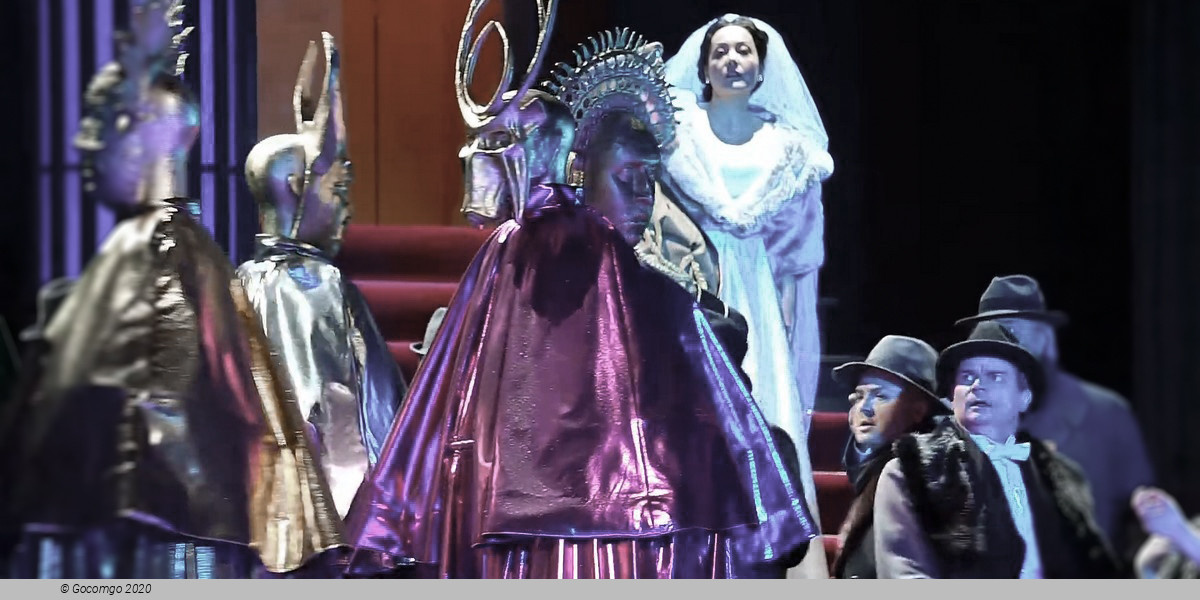
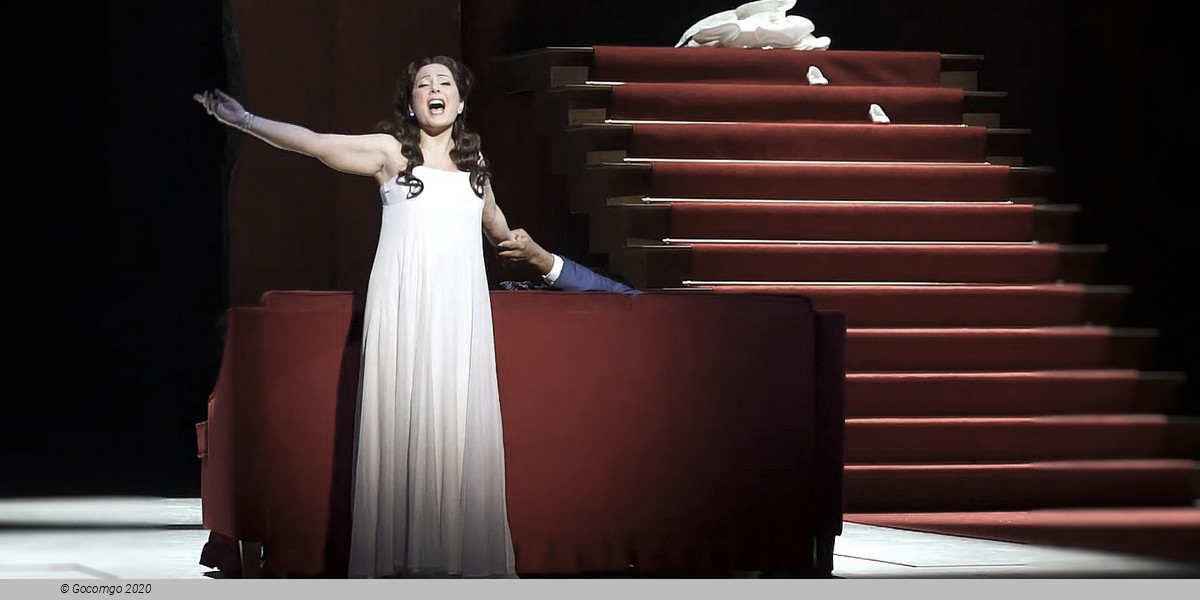
The wedding ceremony for the Duke and Duchess of Parma is in process. The Master of Ceremonies announces a guest, the famous magician Dr. Faust. Faust enters with his herald (Mephistopheles). The Duchess is immediately smitten with Faust; the Duke surmises that "Hell has sent him here." Faust alters the atmosphere to night to be able to perform his magic feats. The first, at the Duchess' request, is vision of King Solomon and Queen Balkis, who respectively resemble Faust and the Duchess. Second is Samson and Delilah. Third is John the Baptist with Salome. An Executioner (looking like the Duke) threatens the Baptist (resembling Faust), but the Duchess cries out that the Baptist must be saved. In an aside, Faust asks the Duchess to run off with him, but she is hesitant, if willing. The Duke declares the magic show concluded and announces supper. Mephistopheles warns Faust to flee, since the food is poisoned. The Duchess returns to tell Faust that she will accompany him. Mephistopheles, disguised as a court chaplain, returns with the Duke and advises him against chasing down Faust and the Duchess. Instead, he advises the Duke to marry the sister of the Duke of Ferrara, who is threatening war on the Duke of Parma.
Symphonic intermezzo
In modo d'una Sarabanda [In the style of a Sarabande]
Scene 2
At a tavern in Wittenberg
Some students talk of Plato and metaphysics, with Faust present. After Faust has responded to a question by saying that "Nothing is proven, and nothing is provable", with a citation of Martin Luther, the Catholic and Protestant students break into quarrel. Once that has subsided, Faust recalls his affair with the Duchess. Mephistopheles, disguised as a courier, brings the news that she has died and sent a gift to Faust. This is a baby's corpse, and Mephistopheles tosses it at Faust's feet. Mephistopheles tells the students of Faust's seduction of the Duchess, and subsequent abandonment. Mephistopheles then changes the dead infant into a bundle of straw and sets fire to it, from which comes a vision of Helen of Troy. The students recoil, and Mephistopheles departs. Faust attempts to embrace the vision, but it eludes him. In her place instead, the three Kraków students materialize, to demand the return of the magic book. Faust tells them that he has destroyed it. The students then tell him that he will die at the stroke of midnight.
Scene 3
A Wittenberg street, in the snow, outside the church.
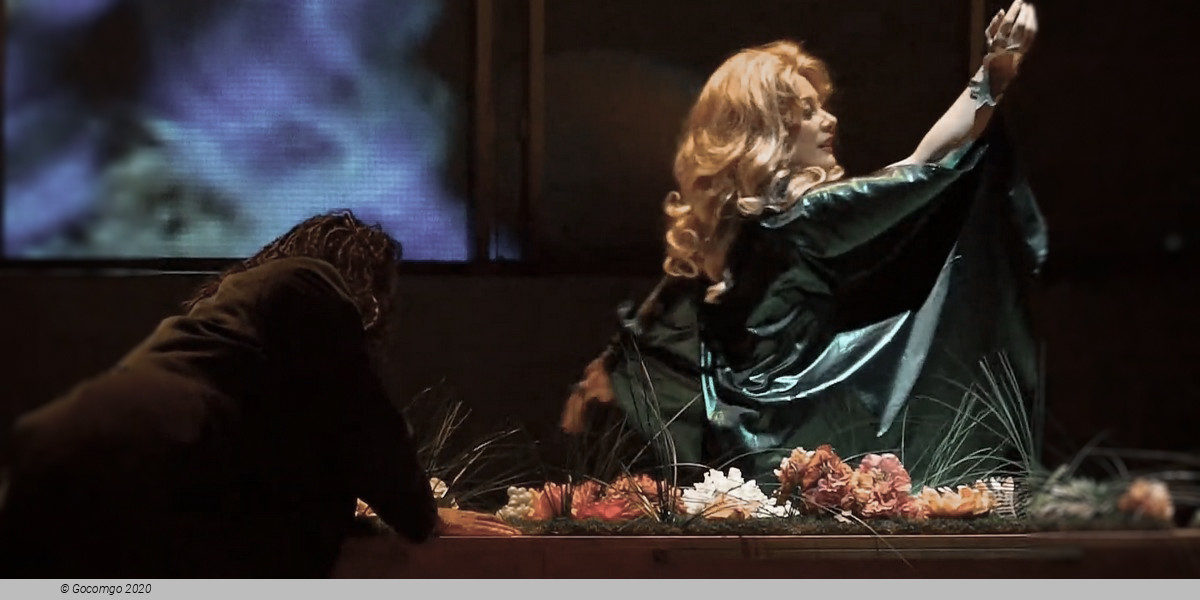
Mephistopheles, in disguise as a Night Watchman, announces that it is eleven o'clock. Wagner, the successor to Faust as university Rector and now resident in Faust's former home, says good-night to a group of students. Faust enters, alone, and sees his old home. Voices from the church sing of judgment and salvation. Faust wants to try to redeem himself with one final good deed. He sees a beggar woman with a child, and realizes that she is the Duchess. She hands him the child, tells him that there is still time to complete his work before midnight, then vanishes. Faust then tries to enter the church, but the Soldier (from the Intermezzo) materializes to block his path. Faust tries to pray, but cannot remember the words. From the light of the Night Watchman's lamp, Faust sees the figure of the crucified Christ metamorphose into that of Helen of Troy. "Gibt es keine Gnade?" ["Is there no mercy?"], he sings. (At this point in the Beaumont version Faust sings "Euch zum Trotze ... die wir nennen böse.... An dieser hohen Einsicht meiner Reife bricht sich nun eure Bosheit und in der mir errungnen Freiheit erlischt Gott und Teufel zugleich." ["I defy you ... whom we call evil.... Your malice breaks on the superior insight of my maturity, and in the freedom gained by me, God and the Devil together cease to exist."]) In parallel with Prologue I, Faust forms a circle on the ground. He then steps into it with the child's body and, with one last supreme effort, he transfers his life-force to the child. The Night Watchman calls out the midnight hour; Faust falls dead; a naked youth arises with a blossoming branch in his right hand and steps forth into the night. The Night Watchman, now revealed as Mephistopheles, sees Faust's body on the ground, and asks "Sollte dieser Mann verunglückt sein?"["Has this man met with some misfortune?"]. In the Beaumont ending Mephistopheles throws Faust's body onto his shoulders and walks off; distant voices repeat Faust's final words: "Blut meines Blutes, Glied meines Gliedes, dir vermach' ich mein Leben, ich, Faust, ich, Faust, ein ewiger Wille." ["Blood of my blood, limb of my limb, I bequeath to thee my life, I, Faust, I, Faust, one eternal will."]
Epilogue
The poet speaks to the spectators. This section is often omitted.


 Piazza Vittorio Gui, 1