
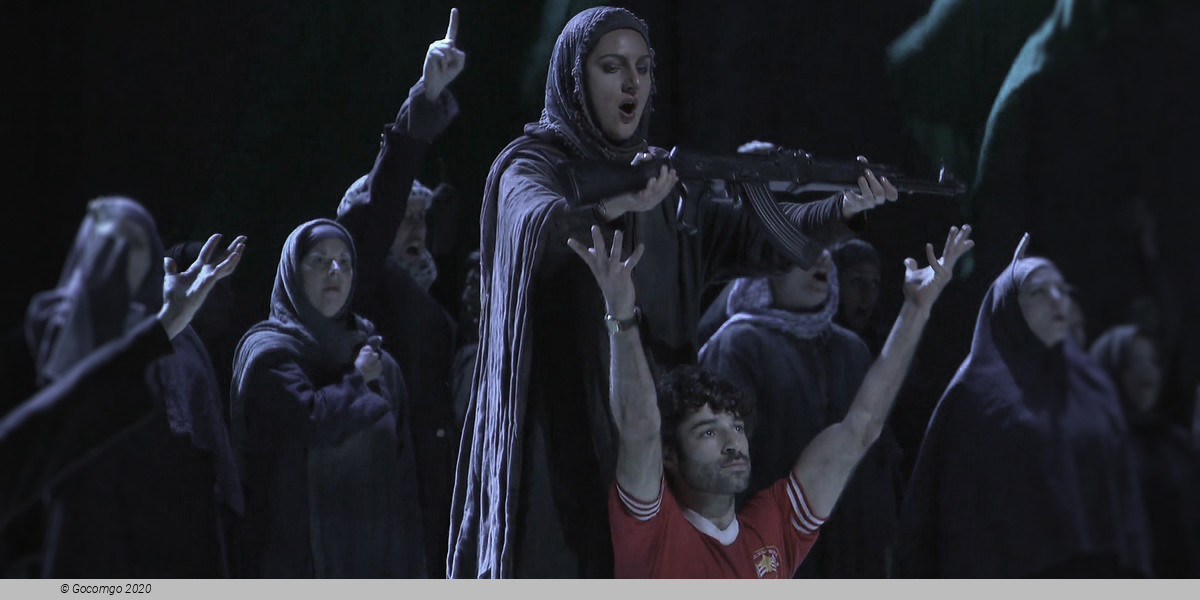
Teatro del Maggio Musicale Fiorentino tickets 19 April 2026 - Premiere The Death of Klinghoffer | GoComGo.com

Premiere
The Death of Klinghoffer

Teatro del Maggio Musicale Fiorentino, Sala Grande, Florence, Italy
All photos (11)
Select date and time
5 PM
From
US$ 102

E-tickets: Print at home or at the box office of the event if so specified. You will find more information in your booking confirmation email.

You can only select the category, and not the exact seats.
If you order 2 or 3 tickets: your seats will be next to each other.
If you order 4 or more tickets: your seats will be next to each other, or, if this is not possible, we will provide a combination of groups of seats (at least in pairs, for example 2+2 or 2+3).

Important Info
Type: Opera
City: Florence, Italy
Starts at: 17:00
Duration: 2h 30min

E-tickets: Print at home or at the box office of the event if so specified. You will find more information in your booking confirmation email.

You can only select the category, and not the exact seats.
If you order 2 or 3 tickets: your seats will be next to each other.
If you order 4 or more tickets: your seats will be next to each other, or, if this is not possible, we will provide a combination of groups of seats (at least in pairs, for example 2+2 or 2+3).

Cast
Performers
Bass-Baritone: Daniel Okulitch (The Captain)
Bass-Baritone: Laurent Naouri (Leon Klinghoffer)
Conductor: Lawrence Renes
Bass: Andreas Mattersberger (The First Officer)
Choir: Chorus of the Maggio Musicale Fiorentino
Baritone: Levent Bakirci (Mamoud)
Mezzo-Soprano: Marina Comparato (Swiss Grandmother)
Orchestra: Orchestra of the Maggio Musicale Fiorentino
Tenor: Roy Cornelius Smith (Molqi)
Creators
Composer: John Adams
Librettist: Alice Goodman
Director: Luca Guadagnino
Overview

An opera never performed before in Florence. On the podium Lawrence Renes, a great promoter of Adams’ music who has frequently directed and recorded.

The direction and the scenes are by Luca Guadagnino, for the first time at the Maggio Musicale Fiorentino. The Death of Klinghoffer questions, from its very first appearance, the profound complexity of conflicts that are rooted in myth and then burst into history” – comments director Luca Guadagnino, who also signs the sets - “The sublime purity of John Adams’ music and Alice Goodman’s libretto will be my firm guide in staging this immense opera at the Maggio Fiorentino, which I am honored to open in the 2026 season”.

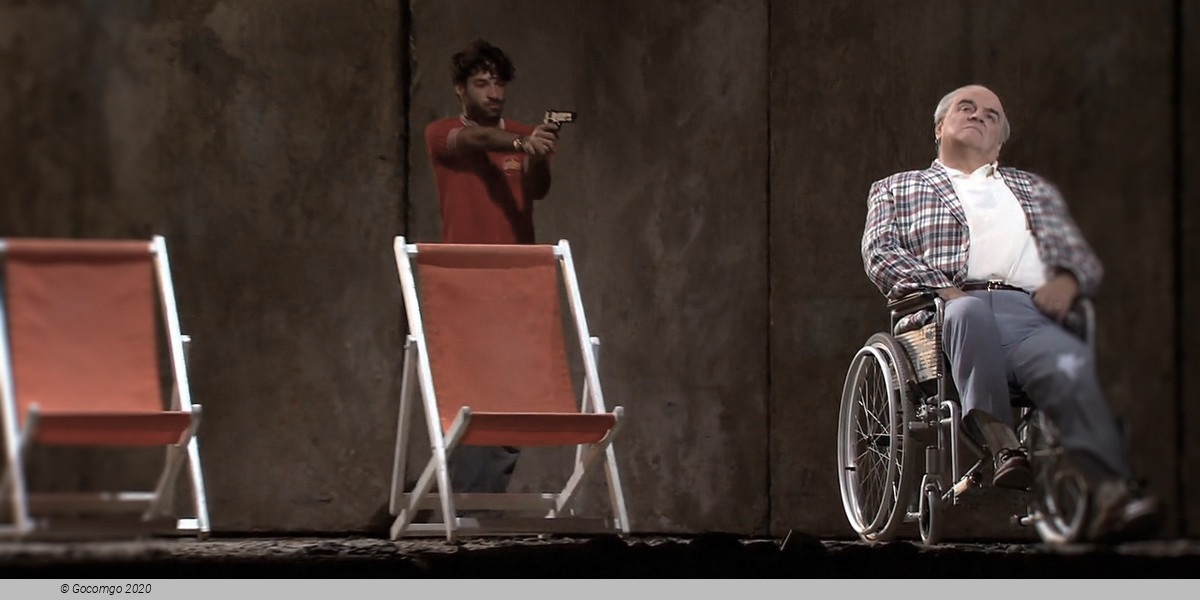
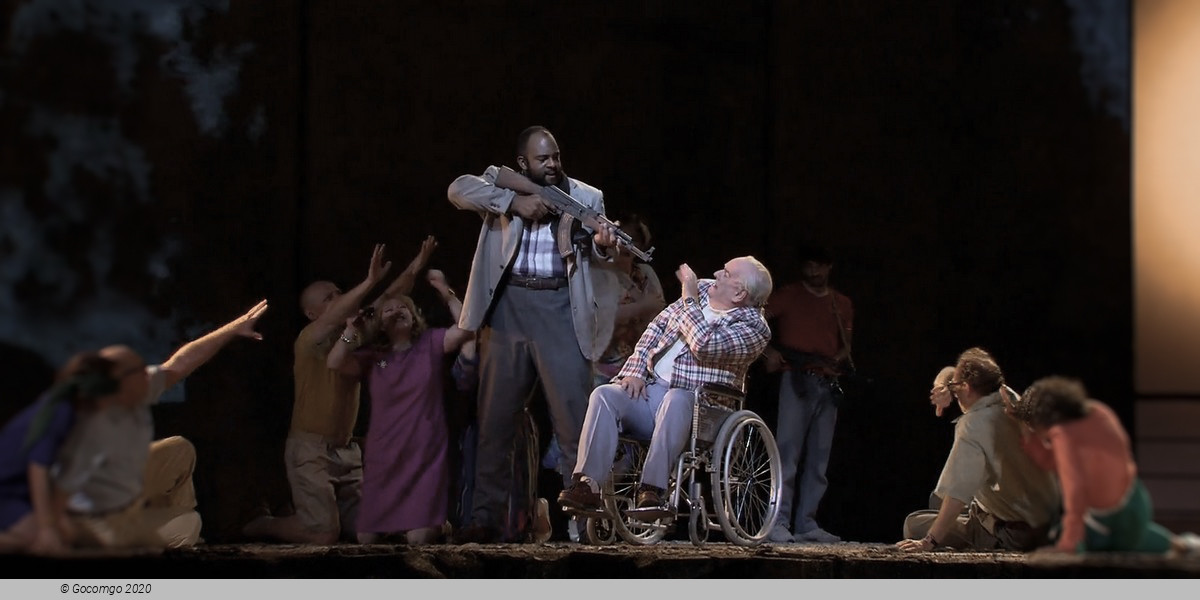
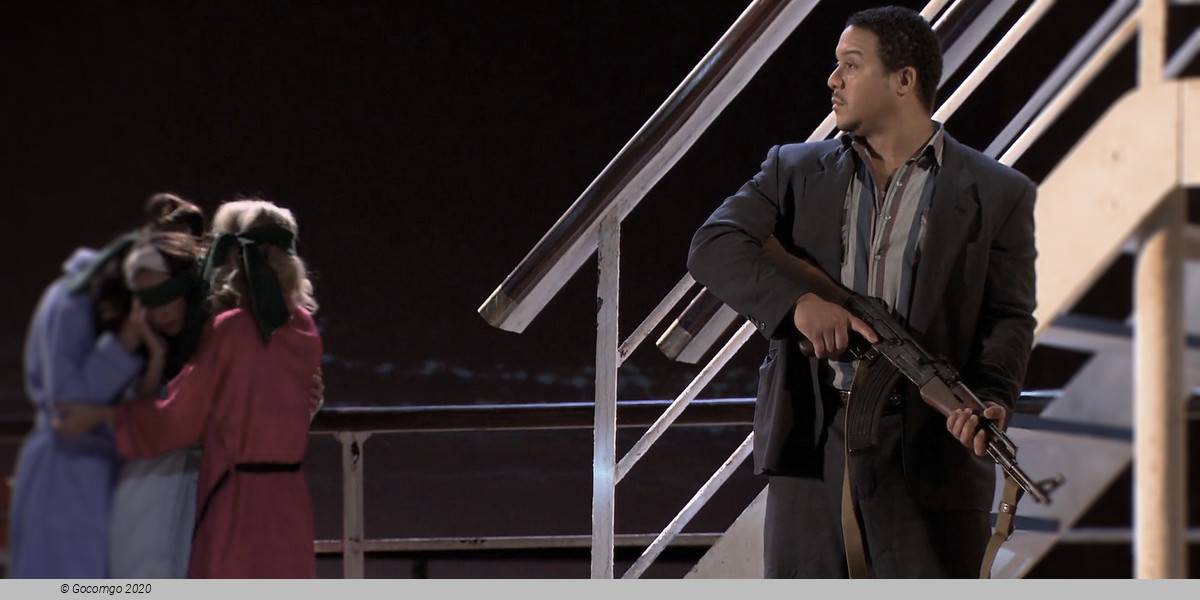
The Death of Klinghoffer is an opera in a prologue and two acts by composer John Adams with a libretto by poet Alice Goodman, which was first performed in Brussels at the Théâtre de la Monnaie in 1991. In Italy it was only performed in 2002 in Ferrara and Modena. The opera is inspired by the sensational news event of October 1985: the seizure and hijacking of the Italian cruise ship Achille Lauro by terrorists from the Palestine Liberation Front. The incident, which attracted worldwide attention, ended with the murder of one of the passengers, Leonard Klinghoffer, a Jewish American citizen who was confined to a wheelchair, and whose body was then thrown into the sea by the terrorists.

New staging
First time in Florence

History
Premiere of this production: 19 March 1991, Théatre Royal de la Monnaie, Brussels, Belgium

The Death of Klinghoffer is an American opera, with music by John Adams to an English-language libretto by Alice Goodman. First produced in Brussels and New York in 1991, the opera is based on the hijacking of the passenger liner Achille Lauro by the Palestinian Liberation Front in 1985, and the hijackers' murder of a 69-year-old Jewish-American wheelchair-using passenger, Leon Klinghoffer.

Synopsis

The prologue consists of two choruses, the "Chorus of Exiled Palestinians" and the "Chorus of Exiled Jews", each of which is a general reflection about the respective peoples and their history.

Act 1
Scene 1

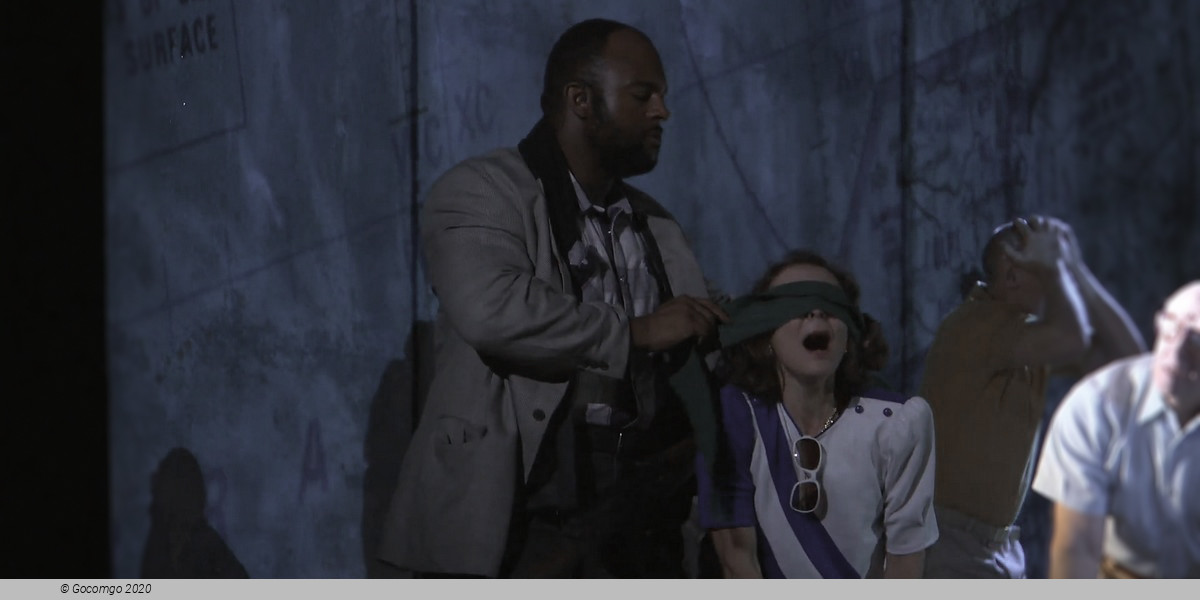
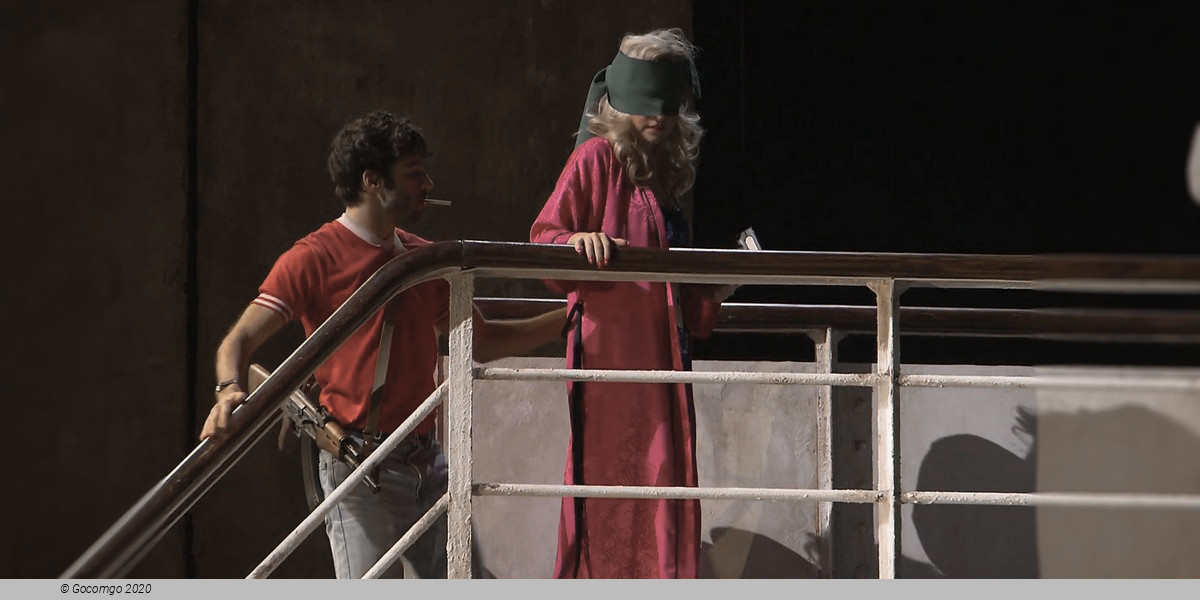
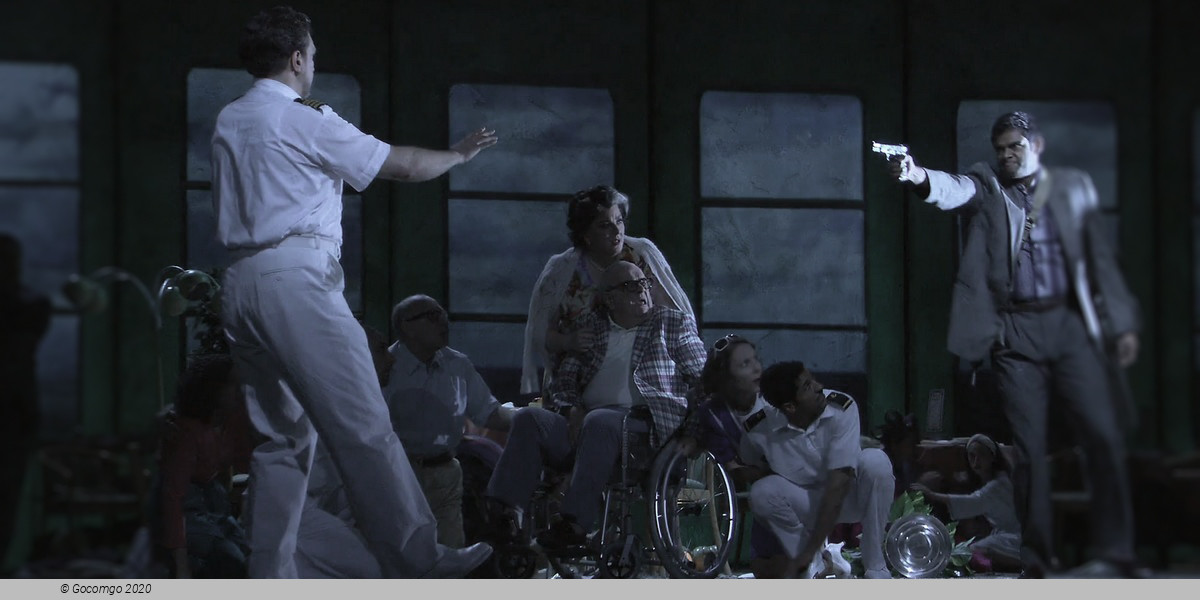
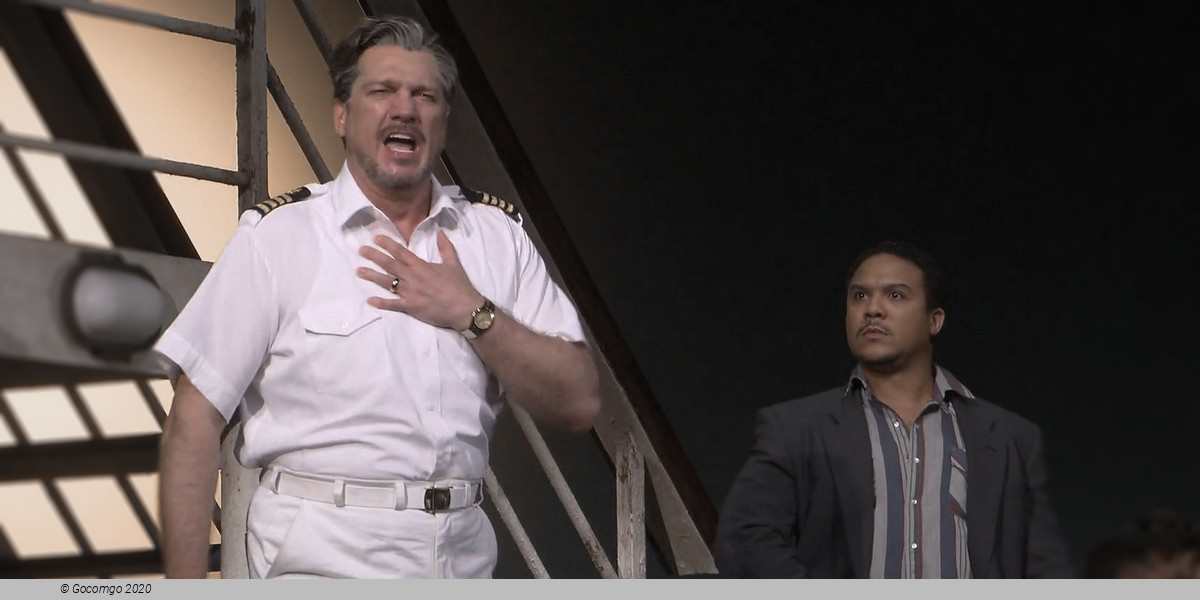
The unnamed captain of the MS Achille Lauro recalls the events of the hijacking. Prior to that, most of the passengers had disembarked in Egypt for a tour of the Pyramids, and the ship set out to sea to return later for the touring passengers. The hijackers had boarded during the disembarkation. When the hijackers commandeer the ship, the passengers still on board are collected in the ship's restaurant. The narrative shifts to a Swiss grandmother, traveling with her grandson while the boy's parents are touring the pyramids. The ship's first officer, given the fictitious name of Giordano Bruno, informs the Captain that terrorists are on the ship and one waiter has been wounded. The Captain and First Officer try to keep the passengers calm. Molqi, one of the hijackers, explains the situation to the passengers at gunpoint. The Captain and Molqi have an encounter, where the Captain orders food and drink to be brought, and offers to let Molqi choose the food for the Captain to eat.

Scene 2

Following the "Ocean Chorus", another hijacker, Mamoud, keeps guard over the Captain. Mamoud recalls his youth and songs he listened to on the radio. The Captain and Mamoud have a dialogue, in which the Captain pleads that individuals on the two sides of the Palestinian–Israeli conflict could meet and try to understand each other. Mamoud dismisses this idea. During this scene is a passenger narrative by the Austrian Woman, who locked herself in her cabin and remained hidden throughout the hijacking. Act 1 ends with the "Night Chorus."

Act 2
The "Hagar Chorus", relating to the Islamic story of Hagar and the Angel and the Biblical story of Hagar and Ishmael is sung. It represents the beginnings of Arab–Israeli tension, of which the hijacking is one historical result.

Scene 1

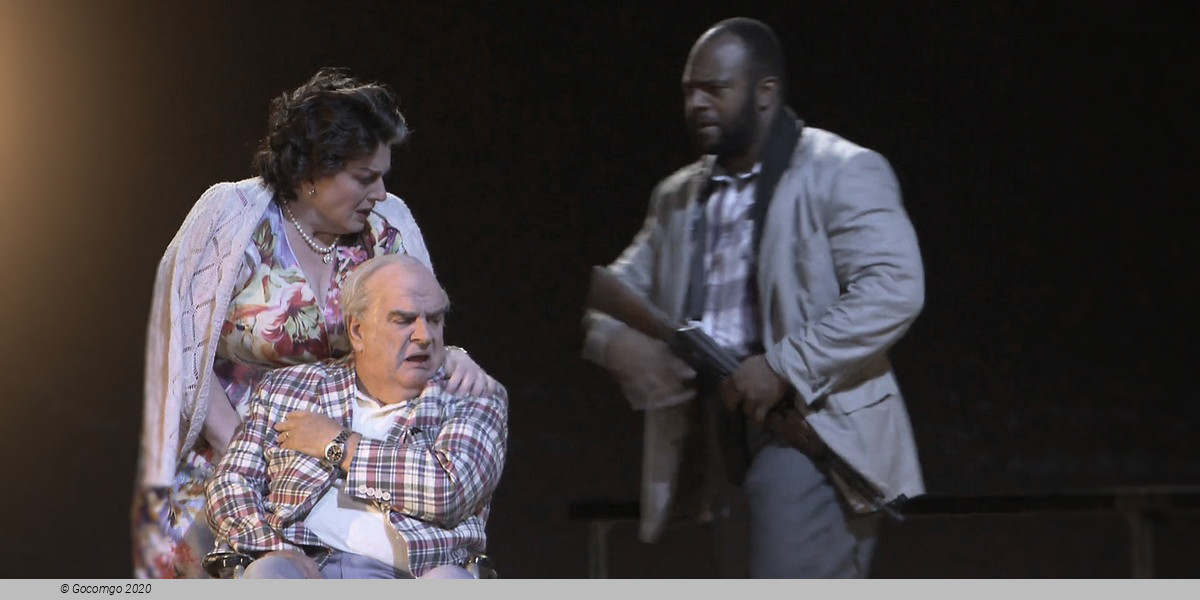
Molqi is frustrated that he has received no reply to his demands. Mamoud threatens all of the passengers with death. Leon Klinghoffer sings, saying that he normally likes to avoid trouble and live simply and decently, but going on to denounce the hijackers. Another hijacker, called "Rambo", responds in harsh terms about Jews and Americans. The passenger, the British Dancing Girl, recalls how well the fourth hijacker, Omar, treated her and the other passengers, for example, letting them have cigarettes. Omar sings of his desire for martyrdom for his cause. At the end of the scene, Omar and Molqi have a dispute, and Molqi takes Klinghoffer away. The "Desert Chorus" follows.

Scene 2

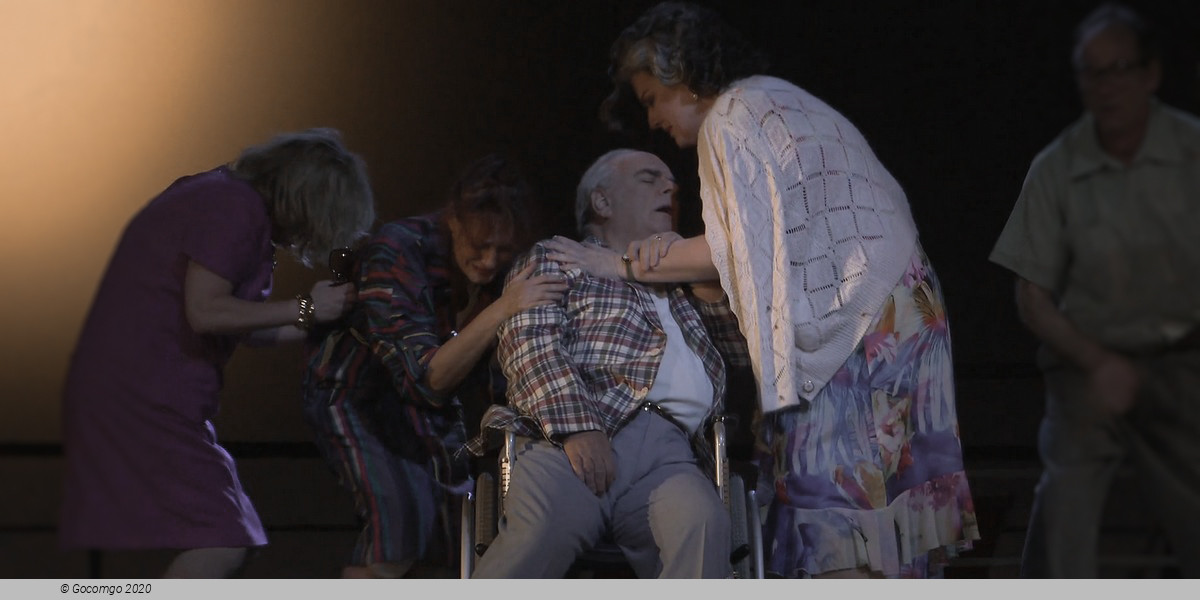
Marilyn Klinghoffer talks about disability, illness, and death. She thinks that her husband Leon was taken to the ship's hospital, but he was shot, off-stage. The hijackers have ordered the Captain to say they will kill another passenger every fifteen minutes. Instead, the Captain offers himself as the sole next person to be killed. Molqi appears and says that Leon Klinghoffer is dead. The "Aria of the Falling Body (Gymnopédie)", sung by Klinghoffer, follows.

The "Day Chorus" links scene 2 to scene 3.

Scene 3

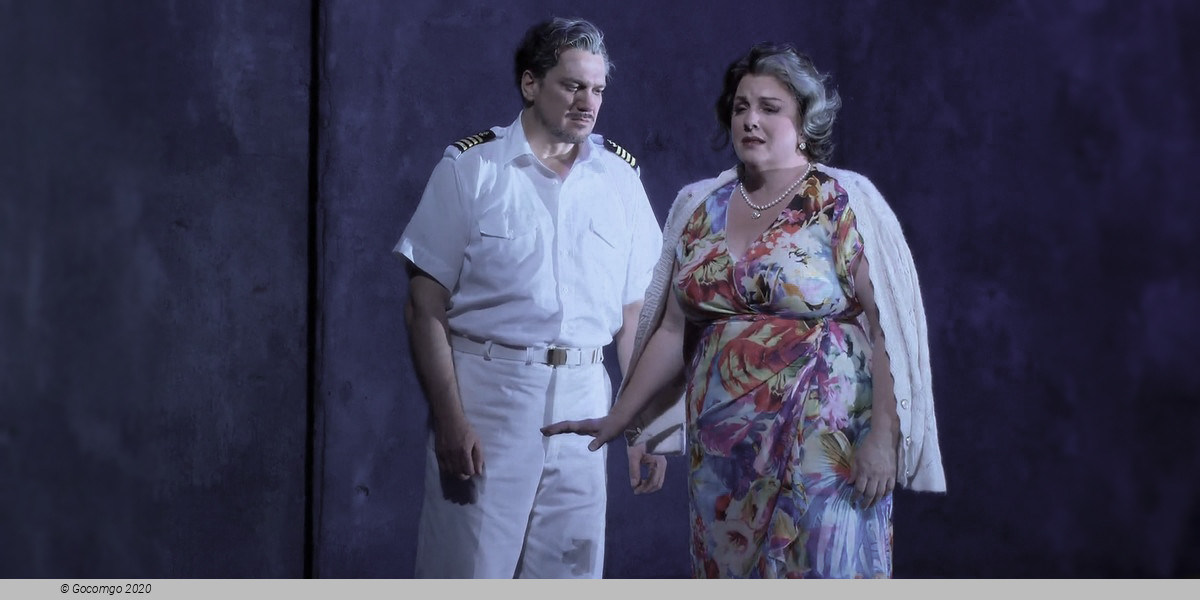
After the hijackers have surrendered and the surviving passengers have disembarked safely in port, the Captain remains to tell Marilyn Klinghoffer about her husband's death. She reacts with sorrow and rage toward the Captain, for what she sees as his accommodation of the hijackers. Her final sentiment is that she wished that she could have died in her husband's place.

Venue Info

Teatro del Maggio Musicale Fiorentino - Florence
Location   Piazza Vittorio Gui, 1

Teatro del Maggio Musicale Fiorentino is a major opera house in Florence and the main concert venue of the international festival "Maggio Musicale Fiorentino".

The white marble veined with green of the Baptistery of San Giovanni, the brickwork of the dome of Santa Maria del Fiore and finally the dazzling gold of the precious paintings that have made the city of Tuscany one of the world capitals of art: the materials and colors of the Renaissance they meet at the Teatro del Maggio to celebrate the power of music, and the enchantment of melodrama, right in the city where this exceptional form of theater was born. Conceived by the architect Paolo Desideri of the ABDR studio, the “new house” of the Maggio Musicale Fiorentino rises at the meeting point between the monumental center and the Parco delle Cascine, the green lung of the city.

An important connective function also reaffirmed by the vast system of open areas that can be reached through the two areas of the city and the different volumes of the building. Moreover, the proximity to the Stazione Leopolda helps to create a cultural pole of European importance.

Above a sort of wide base, a sloping skirting, there are the large music rooms and the enigmatic volume of the 35 meter high stage tower. Three rooms, which can work simultaneously: the 1800-seat opera theater, distributed between the stalls, boxes and gallery, an outdoor 2000-seat auditorium and finally an auditorium, dedicated to maestro Zubin Mehta, which varies its capacity from 500 to 1000 spectators.

As in a great musical instrument, the walls of the main hall are covered in pear wood to guarantee perfect acoustics. A dense network of thin copper chains also helps to transport the sound without distortion. The stage has a depth doubled compared to the average of Italian and foreign theaters and, thanks to its flexibility, is able to accommodate in its side pockets up to two sets ready to be moved during the intervals. The Cavea is positioned in the theater’s roof to complement and conclude the extensive system of squares, terraces and belvedere.

Its usability is therefore not limited to representations only, but is extended to the entire day to turn its stone steps into real urban salons. Inaugurated on December 21, 2011 with the Ninth Symphony of Ludwig van Beethoven directed by Zubin Mehta, the Teatro del Maggio is the permanent venue of the Orchestra and Chorus of the Maggio Musicale Fiorentino and has already hosted Masters such as Claudio Abbado, Riccardo Muti, Gustavo Dudamel , Daniele Gatti, Fabio Luisi, leading groups such as the Berliner Philharmoniker, the St. Petersburg Philharmonic Orchestra and the National de France Orchestras. Among the many artists who performed there are Alessandra Ferri, Mariella Devia, Sumi Jo, Anja Harteros, Aldo Ciccolini, Uto Ughi, Maurizio Pollini, Krystian Zimerman, Gregory Kunde, Ambrogio Maestri. In 2014 he received the National Award for the best architectural work made in Italy in the last 5 years.

Important Info
Type: Opera
City: Florence, Italy
Starts at: 17:00
Duration: 2h 30min
Top of page