
Teatro del Maggio Musicale Fiorentino 12 March 2023 - The Rake's Progress | GoComGo.com

The Rake's Progress

Teatro del Maggio Musicale Fiorentino, Auditorium, Florence, Italy
All photos (8)
Select date and time
8 PM

E-tickets: Print at home or at the box office of the event if so specified. You will find more information in your booking confirmation email.

You can only select the category, and not the exact seats.
If you order 2 or 3 tickets: your seats will be next to each other.
If you order 4 or more tickets: your seats will be next to each other, or, if this is not possible, we will provide a combination of groups of seats (at least in pairs, for example 2+2 or 2+3).

Important Info
Type: Opera
City: Florence, Italy
Starts at: 20:00
Intervals: 1
Duration: 3h

E-tickets: Print at home or at the box office of the event if so specified. You will find more information in your booking confirmation email.

You can only select the category, and not the exact seats.
If you order 2 or 3 tickets: your seats will be next to each other.
If you order 4 or more tickets: your seats will be next to each other, or, if this is not possible, we will provide a combination of groups of seats (at least in pairs, for example 2+2 or 2+3).

Overview

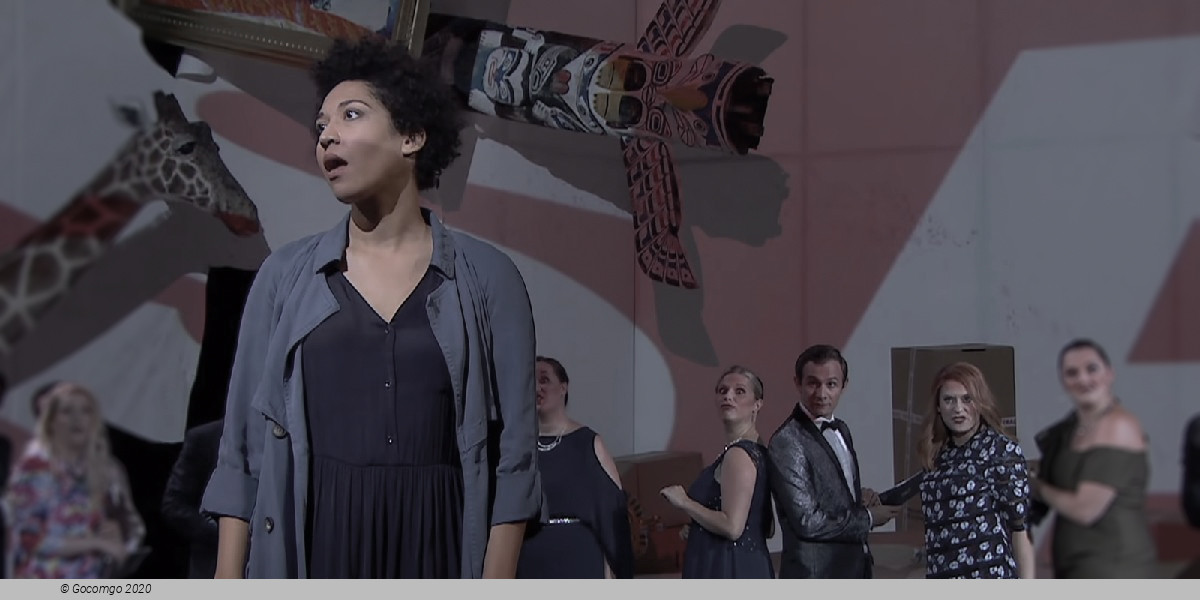
The Rake's Progress debuted at the Teatro La Fenice in Venice on 11 September 1951 with the same author on the podium for the world premiere. Organized in arias, recitatives, choirs and ensembles in line with the eighteenth-century theatrical scheme, the work shows a decidedly retrospective character and represents the last stage of Stravinsky's 'neoclassical' period. And if the declared reference model is the theater of Mozart and Da Ponte - in particular the Cosi fan tutte - in Rake's Progress numerous citations and references to different eras and authors are piled up, underlining once again the ability of Stravinsky to assimilate in a way organic every element of the musical tradition.

After moving to the United States in 1939, Igor Stravinsky toyed with the idea of ​​writing an opera in English. The project took shape only after a few years when in 1947 the composer was struck by the cycle of canvases by William Hogarth exhibited at the Chicago Art Institute, which described the rise and fall of Tom Rakewell, a spendthrift who senselessly squanders his possessions and ends his days in an asylum. Stravinsky immediately thought of making it into an opera and turned to the British poet Wystan Hugh Auden for the writing of the libretto, who will also be joined by Chester Kallmann. In March 1948 the libretto was ready, while Stravinsky took more time for the music, finishing the score only three years later.

New staging

History
Premiere of this production: 11 September 1951, Teatro La Fenice, Venice

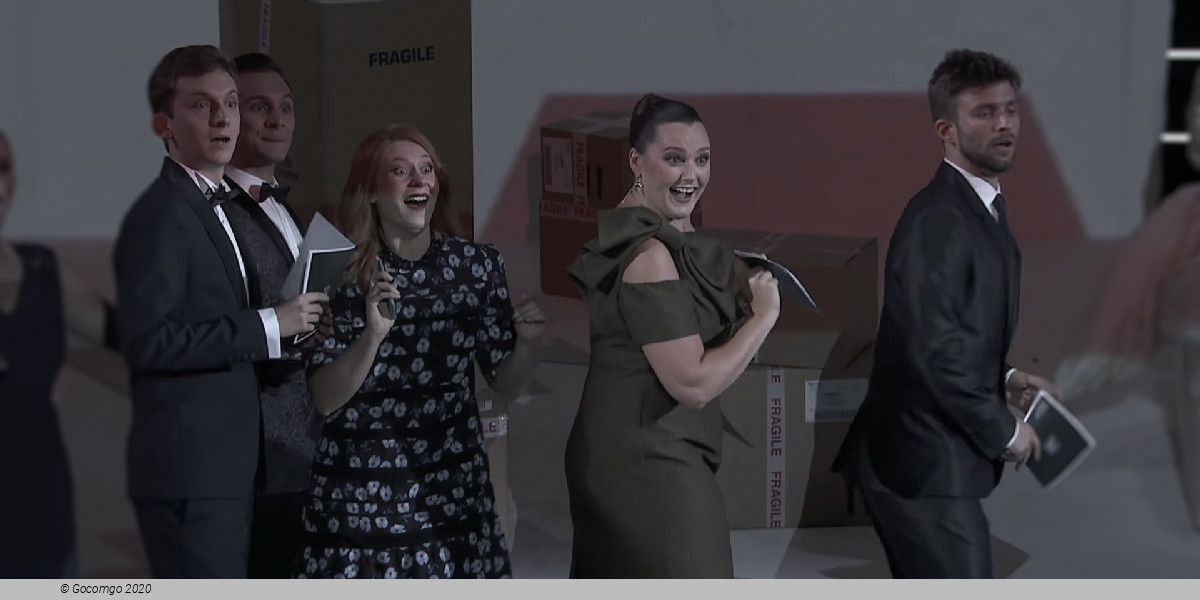
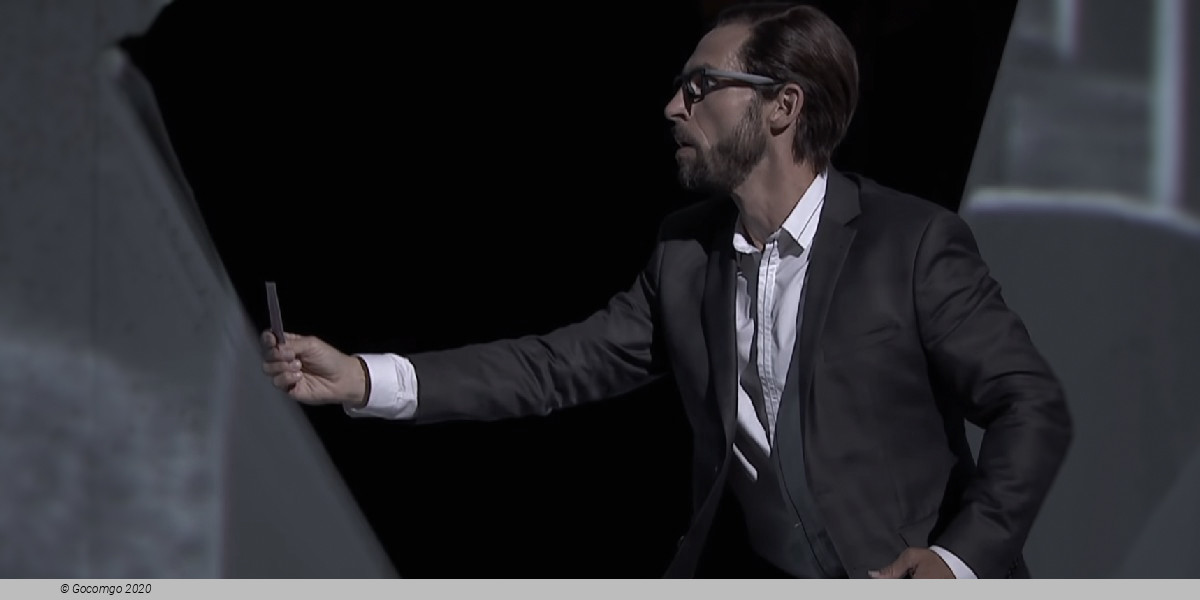
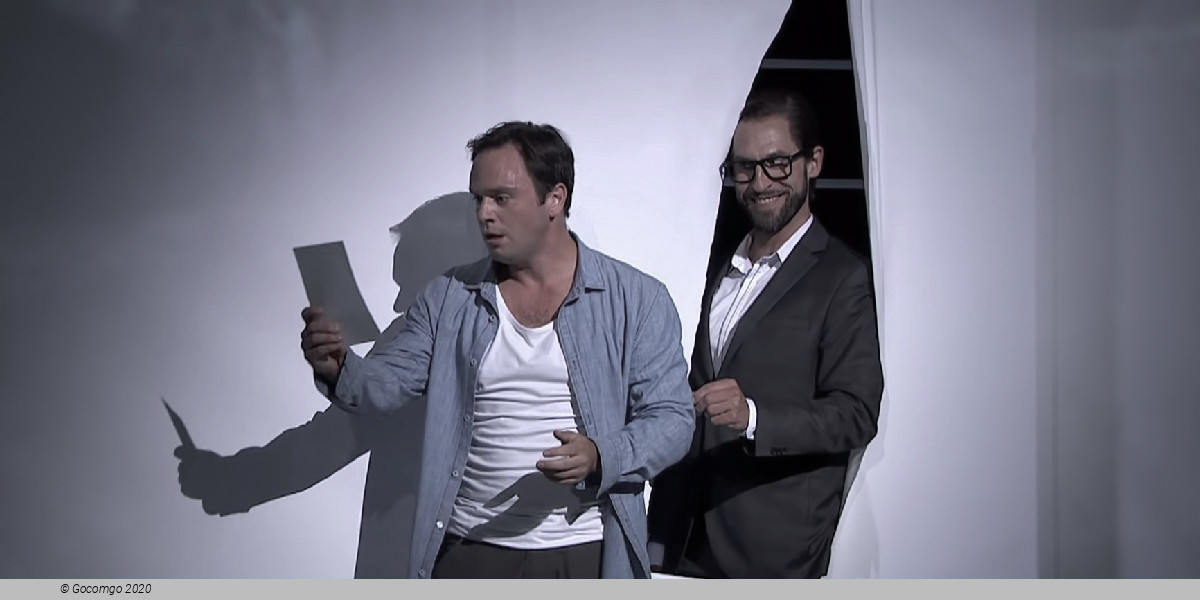
The Rake's Progress is an English-language opera in three acts and an epilogue by Igor Stravinsky. The story concerns the decline and fall of one Tom Rakewell, who deserts Anne Trulove for the delights of London in the company of Nick Shadow, who turns out to be the Devil. After several misadventures, all initiated by the devious Shadow, Tom ends up in Bedlam, a hospital for the 'insane' at that time situated in the City of London. The moral of the tale is: "For idle hearts and hands and minds the Devil finds work to do."

Synopsis

Act 1

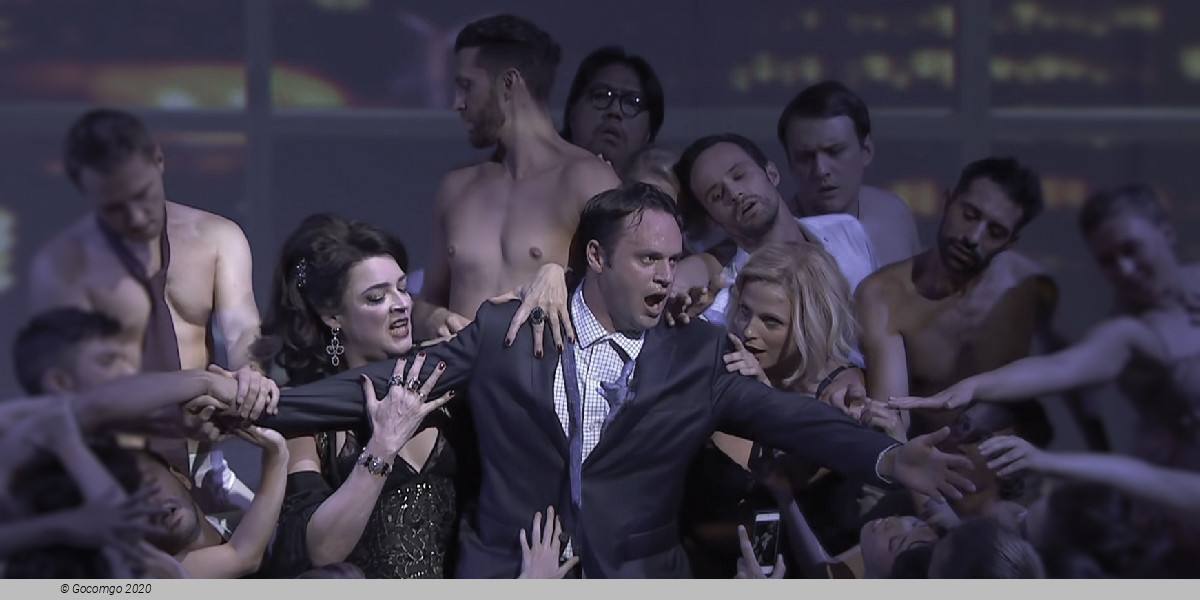
Tom Rakewell is courting Anne Trulove outside her father's house in the country. Trulove has doubts about his daughter's proposed marriage and tries to arrange a regular job for Tom; but Tom resists the idea and, left on his own, declares his intention to "live by my wits and trust to my luck." When Tom expresses his wish for money, Nick Shadow appears and tells him that an unknown uncle has left him a substantial fortune. He then invites Tom to employ him as a servant and accompany Tom to London to sort out the inheritance. The second scene, set in Mother Goose's brothel, shows Shadow introducing his new master to the sleazy aspects of London life. But Tom is uneasy and laments his betrayal of love, yet accepts Mother Goose's invitation to spend the night with her. Meanwhile, back in the country, Anne wonders why she has not heard from Tom. She knows somehow that he is in danger, and sets out for London to aid him.

Act 2

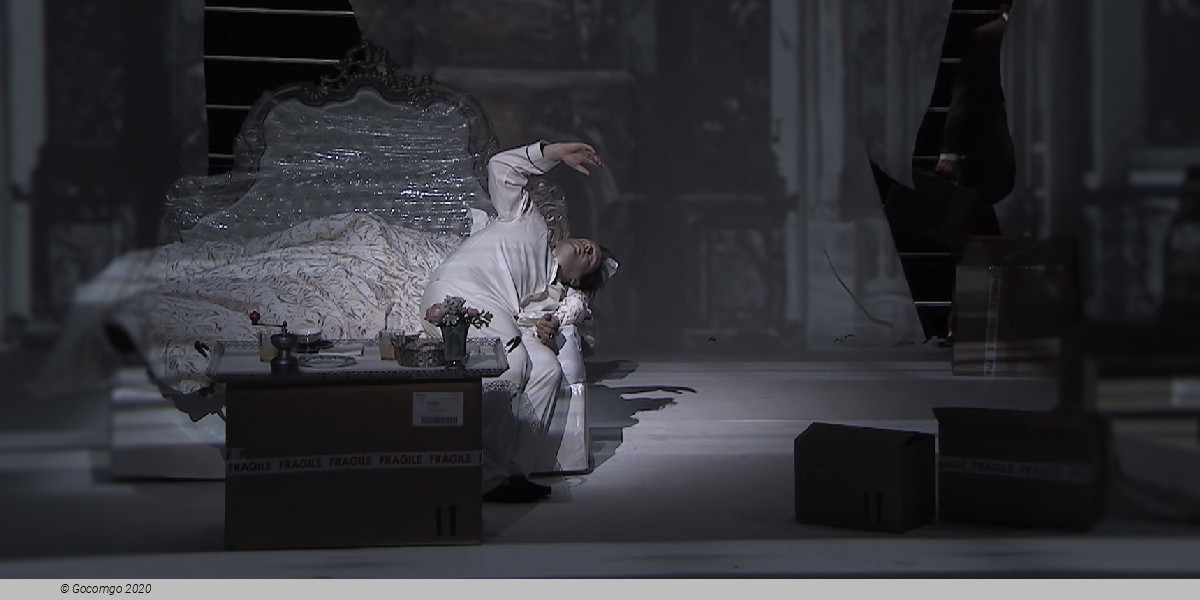
Tom is bored with his dissolute life. He utters his second crucial wish, for happiness, whereupon Nick makes the odd suggestion that he demonstrate his freedom by marrying Baba the Turk, the famous bearded lady. Soon afterwards Anne finds Tom's London house, only to see him emerge from a sedan chair which also contains Baba, whom he has just married. Tom tells Anne to leave, yet genuinely regrets what has happened. In the next scene Tom is clearly finding his eccentric marriage intolerable, as Baba is a chatterbox with a fiery temper. He silences her by throwing his wig over her face, then falls asleep. Nick enters with a "fantastic Baroque Machine" and demonstrates how, through the use of a hidden compartment in the machine, it appears to turn stones into bread. Tom cries out in his sleep that he wishes it were true, and waking, finds the machine he has dreamt of. Nick hints that if such machines were mass-produced Tom could become a saviour of mankind and Tom sets out to market the machine, not knowing it is a sham.

Act 3

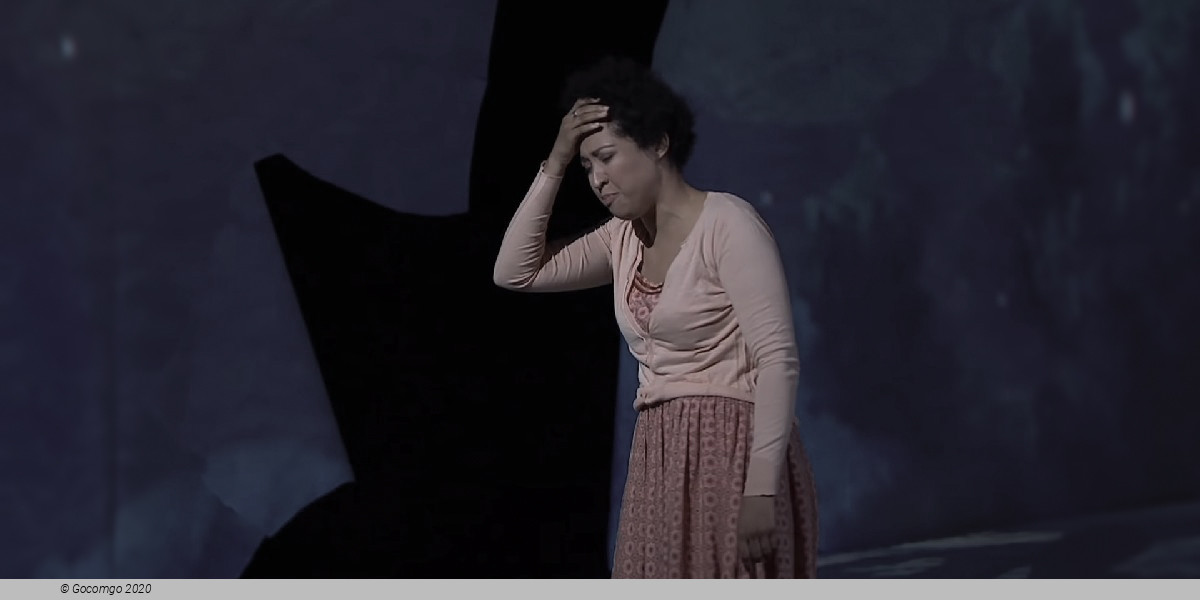
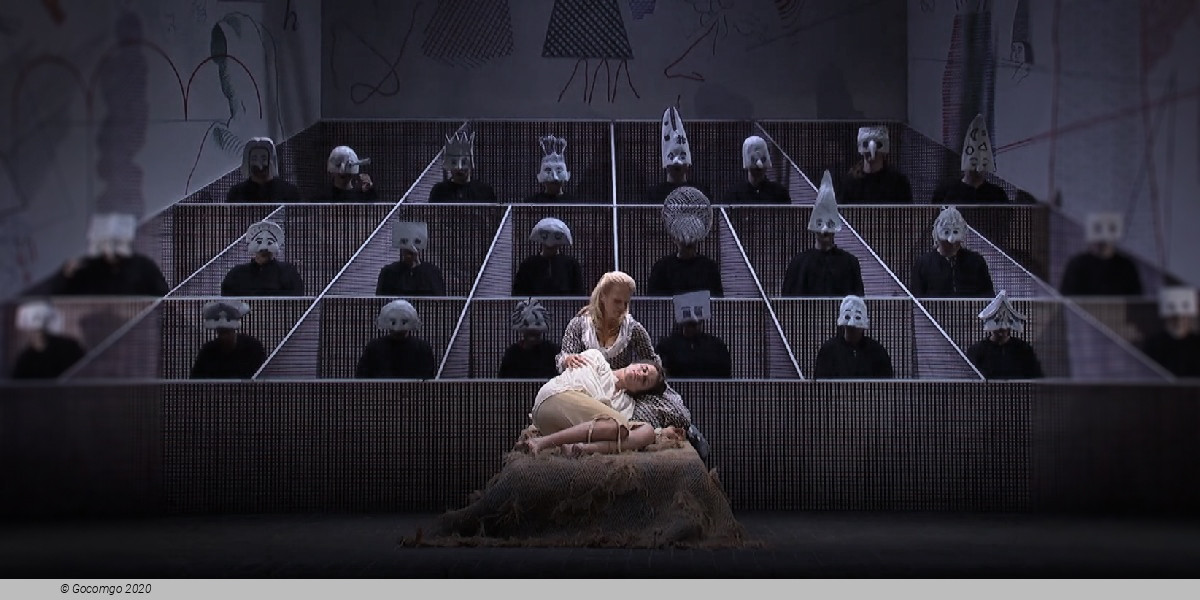
The plan has failed – the act starts with the auction of the ruined Tom's property by the maniac auctioneer Sellem. The objects for sale include Baba, who has remained immobile since being silenced by the wig. When unwrapped, she resumes her tantrum, now directed at the auction-goers for disturbing her belongings, but calms down when Anne enters. Baba advises her to find Tom and "set him right", and warns her against Nick Shadow. She announces her intent to return to her life on the stage. In a graveyard, Nick reveals his identity and demands payment from Tom, in the form of his soul; but as midnight strikes, Nick offers him an escape in the form of a game of cards, which Tom wins, thanks to the benign influence of Anne. Defeated, Nick sinks into the ground, condemning Tom to insanity as he goes. Consigned to Bedlam, Tom believes he is Adonis. Anne ("Venus") visits him, sings him to sleep, then quietly leaves him. When he realises she has gone, he dies.

In an epilogue, each of the principal characters gives a moral drawn from their scenes in the opera, and then come together to ascribe a final joint moral, "for idle hands, and hearts and minds, the Devil finds a work to do."

Venue Info

Teatro del Maggio Musicale Fiorentino - Florence
Location   Piazza Vittorio Gui, 1

Teatro del Maggio Musicale Fiorentino is a major opera house in Florence and the main concert venue of the international festival "Maggio Musicale Fiorentino".

The white marble veined with green of the Baptistery of San Giovanni, the brickwork of the dome of Santa Maria del Fiore and finally the dazzling gold of the precious paintings that have made the city of Tuscany one of the world capitals of art: the materials and colors of the Renaissance they meet at the Teatro del Maggio to celebrate the power of music, and the enchantment of melodrama, right in the city where this exceptional form of theater was born. Conceived by the architect Paolo Desideri of the ABDR studio, the “new house” of the Maggio Musicale Fiorentino rises at the meeting point between the monumental center and the Parco delle Cascine, the green lung of the city.

An important connective function also reaffirmed by the vast system of open areas that can be reached through the two areas of the city and the different volumes of the building. Moreover, the proximity to the Stazione Leopolda helps to create a cultural pole of European importance.

Above a sort of wide base, a sloping skirting, there are the large music rooms and the enigmatic volume of the 35 meter high stage tower. Three rooms, which can work simultaneously: the 1800-seat opera theater, distributed between the stalls, boxes and gallery, an outdoor 2000-seat auditorium and finally an auditorium, dedicated to maestro Zubin Mehta, which varies its capacity from 500 to 1000 spectators.

As in a great musical instrument, the walls of the main hall are covered in pear wood to guarantee perfect acoustics. A dense network of thin copper chains also helps to transport the sound without distortion. The stage has a depth doubled compared to the average of Italian and foreign theaters and, thanks to its flexibility, is able to accommodate in its side pockets up to two sets ready to be moved during the intervals. The Cavea is positioned in the theater’s roof to complement and conclude the extensive system of squares, terraces and belvedere.

Its usability is therefore not limited to representations only, but is extended to the entire day to turn its stone steps into real urban salons. Inaugurated on December 21, 2011 with the Ninth Symphony of Ludwig van Beethoven directed by Zubin Mehta, the Teatro del Maggio is the permanent venue of the Orchestra and Chorus of the Maggio Musicale Fiorentino and has already hosted Masters such as Claudio Abbado, Riccardo Muti, Gustavo Dudamel , Daniele Gatti, Fabio Luisi, leading groups such as the Berliner Philharmoniker, the St. Petersburg Philharmonic Orchestra and the National de France Orchestras. Among the many artists who performed there are Alessandra Ferri, Mariella Devia, Sumi Jo, Anja Harteros, Aldo Ciccolini, Uto Ughi, Maurizio Pollini, Krystian Zimerman, Gregory Kunde, Ambrogio Maestri. In 2014 he received the National Award for the best architectural work made in Italy in the last 5 years.

Important Info
Type: Opera
City: Florence, Italy
Starts at: 20:00
Intervals: 1
Duration: 3h
Top of page