
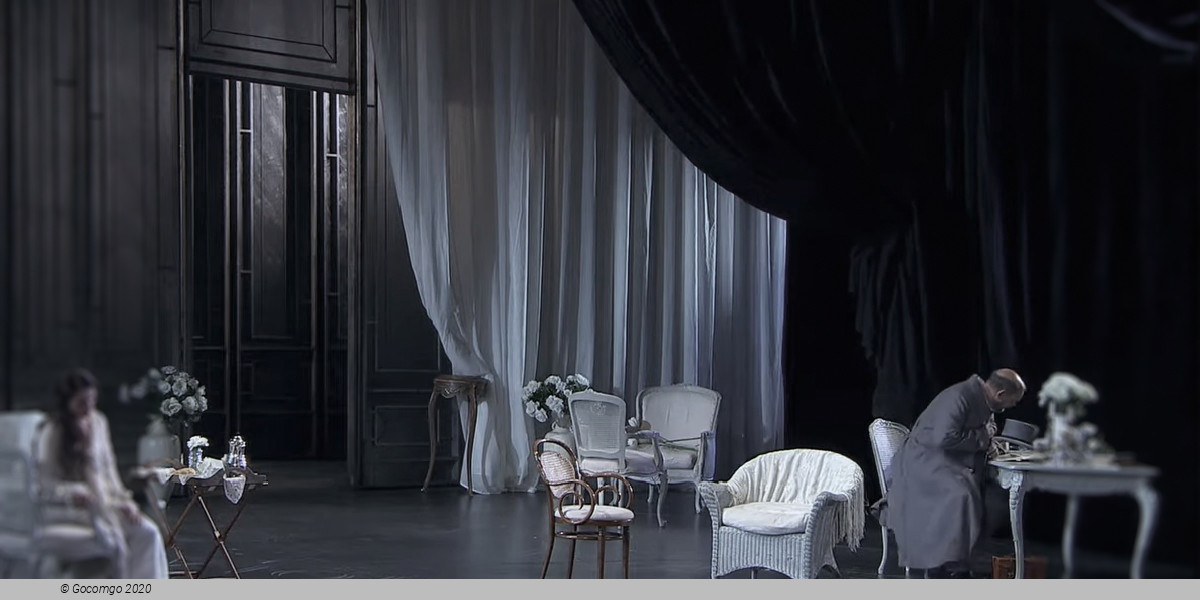
Teatro Flaiano 24 April 2022 - La Traviata | GoComGo.com

La Traviata

Teatro Flaiano, Rome, Italy
All photos (7)
Select date and time
8 PM
Request for Tickets
Important Info
Type: Opera
City: Rome, Italy
Starts at: 20:00
Duration: 2h 30min

E-tickets: Print at home or at the box office of the event if so specified. You will find more information in your booking confirmation email.

You can only select the category, and not the exact seats.
If you order 2 or 3 tickets: your seats will be next to each other.
If you order 4 or more tickets: your seats will be next to each other, or, if this is not possible, we will provide a combination of groups of seats (at least in pairs, for example 2+2 or 2+3).

Overview

Don't miss the world's most famous opera performed in the Eternal City.

Celebrated soloists will perform accompanied by chorus and orchestra. This is a unique and unforgettable experience inside Rome's beautiful Flaiano Theatre, a historic theatre in the heart of Rome, which has been a meeting place for artists and intellectuals for years.

History
Premiere of this production: 06 March 1853, Teatro La Fenice, Venice

La traviata is an opera in three acts by Giuseppe Verdi set to an Italian libretto by Francesco Maria Piave. It is based on La Dame aux camélias (1852), a play adapted from the novel by Alexandre Dumas fils. The opera was originally titled Violetta, after the main character. It was first performed on 6 March 1853 at the La Fenice opera house in Venice.

Synopsis

Set in and around Paris in about 1850.

Act I

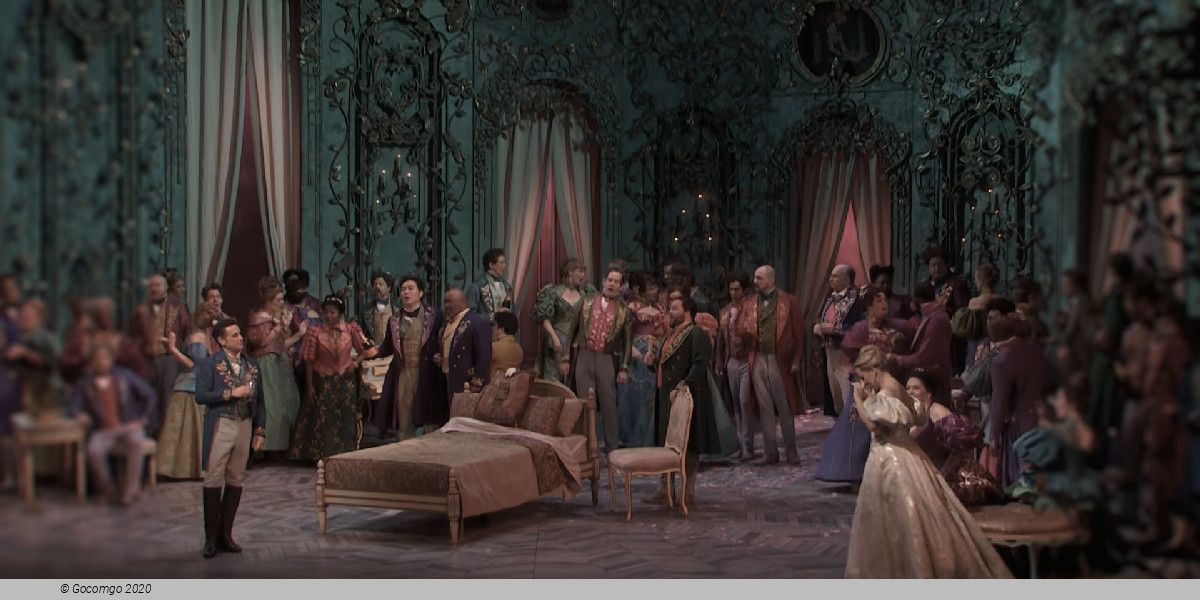
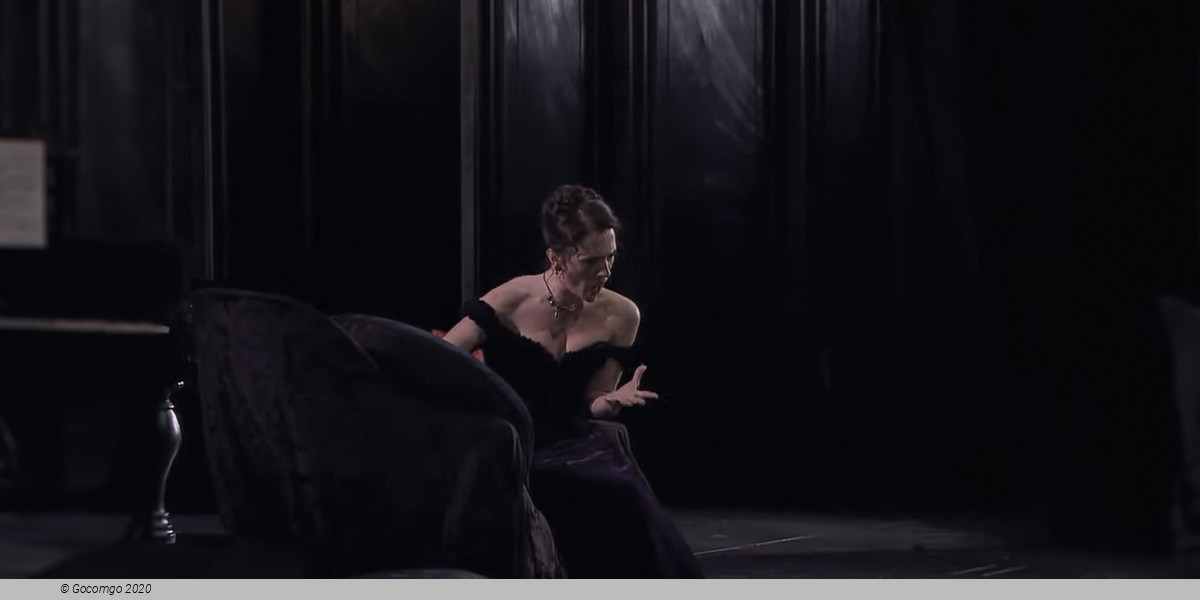
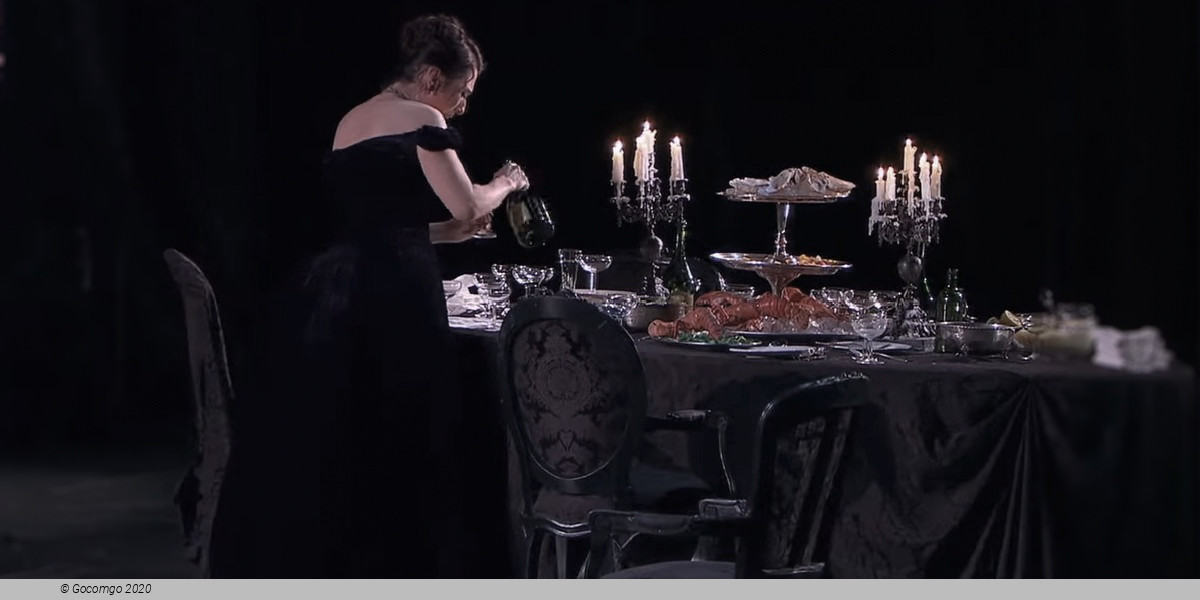
Violetta Valéry, a Parisian courtesan, greets the guests at her salon. Among them are Flora Bervoix, the Marchese D’Obigny, Baron Douphol and Gastone, who introduces Violetta to a new admirer of hers, Alfredo Germont. The young Germont, who has been admiring her from afar, joins her in a drinking song. An orchestra strikes up in an adjacent room, inviting the guests to dance. As the guests make their way to the ballroom, Violetta, who is suffering from consumption, feels faint; she therefore sends the guests on ahead and retires to her boudoir to recover. Alfredo enters and, realising that they are alone, admits his love for her. She replies that love means nothing to her. She
is, however, touched by the young man’s sincerity and promises to meet him the following day.
When the guests have departed, she asks herself whether Alfredo is the man she could love. Despite
the strains of Alfredo’s love song drifting in from outside, she decides she prefers her freedom.

Act II

scene 1
A few months later: Alfredo and Violetta have set up house together in the country, outside Paris. Alfredo says how happy they are, but when Violetta’s maid Annina lets on that Violetta has been selling her belongings to pay for the house, he hastens into town to raise the money himself. Violetta comes in search of him and discovers an invitation from her friend Flora to a soirée that very night. Violetta has no intention of returning to her former life, but she is forced to reconsider
on encountering Alfredo’s father. He is very taken with Violetta and her civilised manners but orders her to renounce Alfredo: his son’s scandalous liaison with Violetta is threatening his daughter’s forthcoming marriage. Violetta considers his demand unreasonable, but before long Germont succeeds in persuading her. Alone and desolate, Violetta sends a reply to Flora accepting her invitation and sits down to write a farewell letter to Alfredo. His return takes her by surprise, and she can barely restrain herself as she passionately reminds him how much she loves him before
rushing out. As the maid brings him Violetta’s farewell letter, Germont returns to console his son and reminds him of life in their family home in Provence. Alfredo spots Flora’s invitation and suspects that Violetta has left him for another man. In a rage, he decides to confront her at the soirée.

scene 2
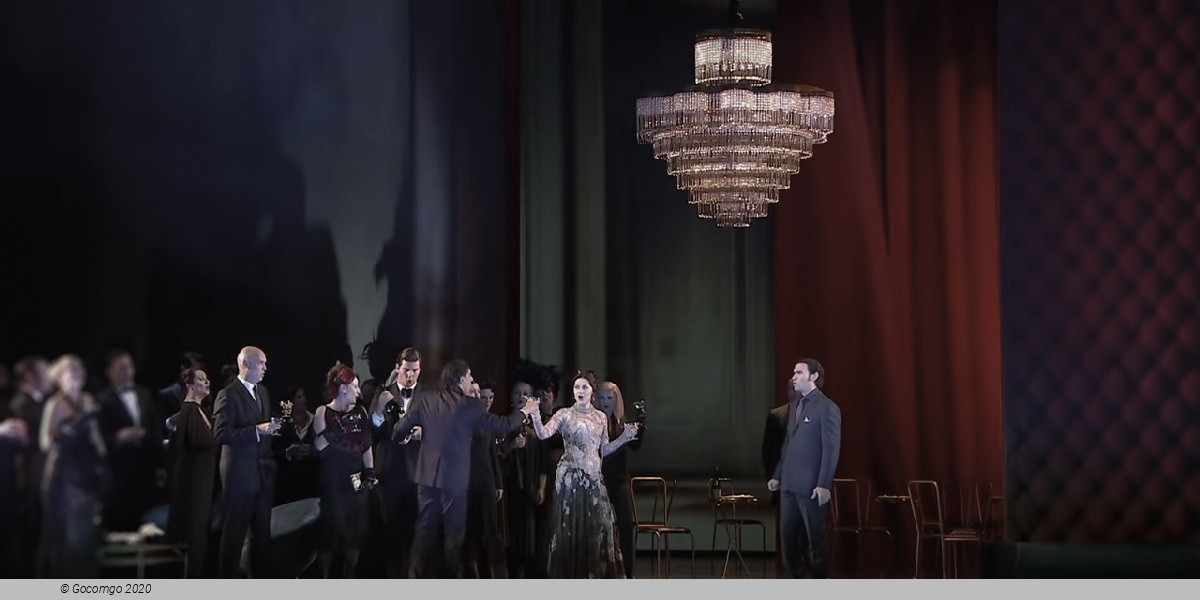
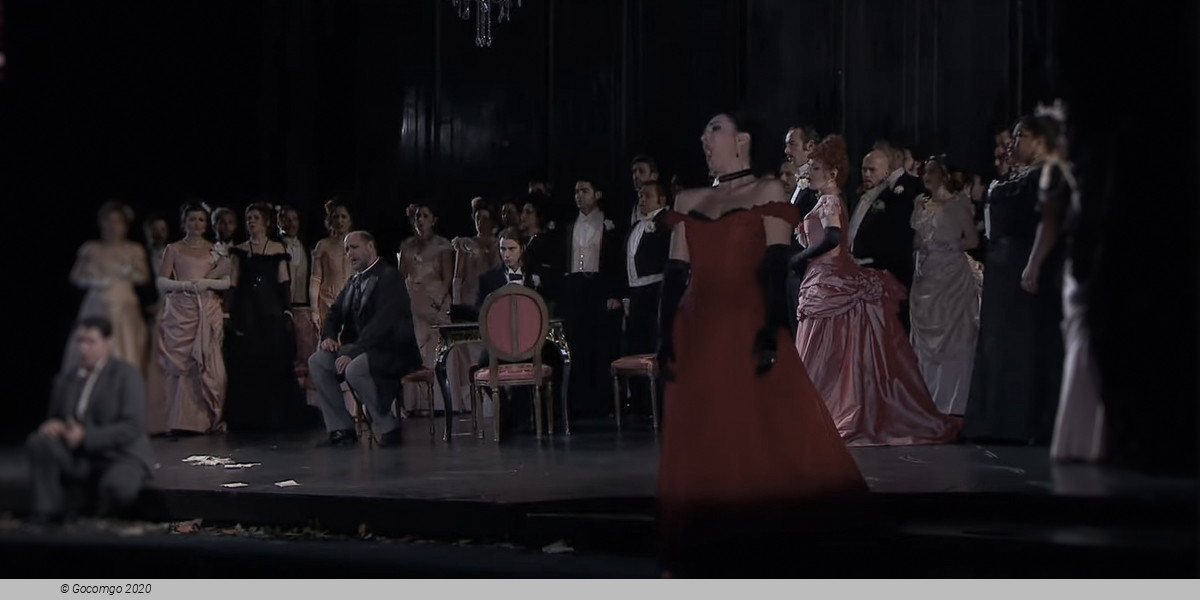
At the soirée, Flora hears from the Marchese that Violetta and Alfredo have parted. Flora asks the guests to make way for a visiting troupe of performing gypsies. They are followed by matadors and a song about Piquillo and his sweetheart. Alfredo rushes in and delivers some bitter comments about love and gambling. Violetta appears on the arm of Baron Douphol, who challenges Alfredo to a game of cards and loses a small fortune to him. As the guests go in to supper, Violetta asks to have a word with Alfredo in private. She is afraid the Baron will be enraged by his loss and urges Alfredo to leave. Alfredo misunderstands her and orders her to admit she loves the Baron. Disappointed by Alfredo’s reaction, Violetta lies and confesses that yes, she does. Alfredo calls the other guests to gather round in order to denounce his former beloved in public and throws the money he has won at her feet. Germont, arriving at that very moment, expresses his disapproval of his son’s behaviour. The guests likewise rebuke Alfredo and Douphol challenges him to a duel.

Act III

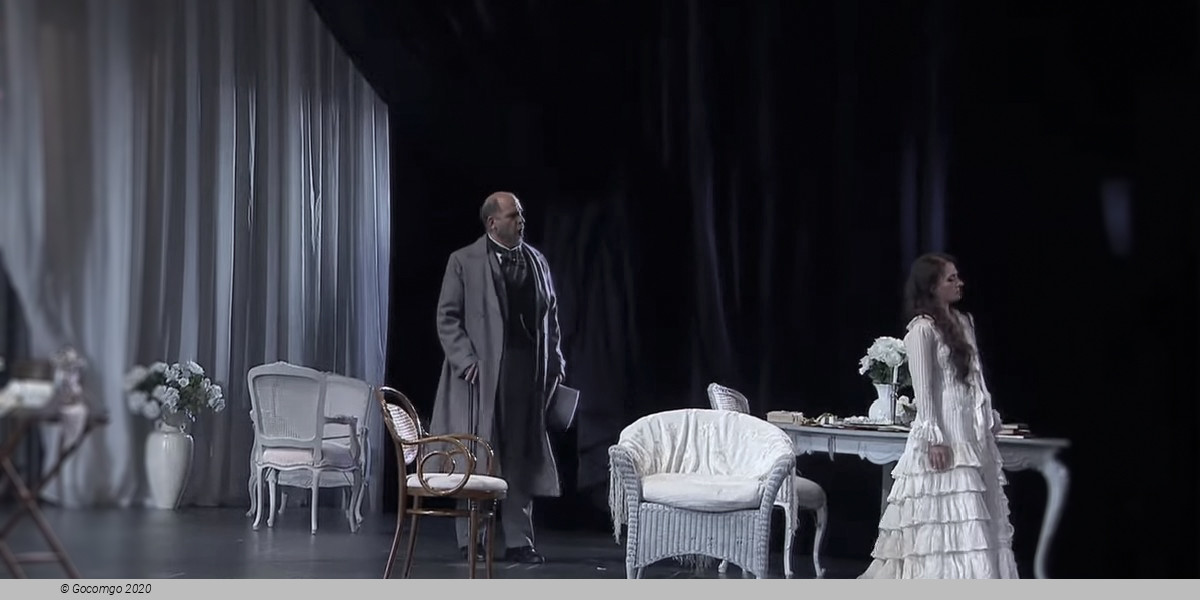
Violetta’s bedroom, six months later. Dr Grenvil tells Annina that her mistress has not long to live –
the consumption has taken its toll. Alone, Violetta rereads a letter from Germont saying that the Baron was only slightly wounded in his duel with Alfredo, that Alfredo has heard the truth and is
coming to beg her pardon. But Violetta realises it is too late. It is carnival time in Paris and, the sounds of the revellers having passed, Annina rushes in to announce Alfredo. The lovers ecstatically plan to leave Paris. Germont enters with the doctor just as Violetta rises from her bed with the last of her strength. Feeling a sudden rush of life, she sways and falls dead at her lover’s feet.

Venue Info

Teatro Flaiano - Rome
Location   Via di Santo Stefano del Cacco, 15

In the historic center, a few steps from the Pantheon, L.go Argentina and P.zza Venezia, in the ancient Rione Pigna, in the same Via di S. Stefano del Cacco where in 43 BC the Temple of Isis and Serapis was built, is located the ENNIO FLAIANO THEATER, originally called Teatro dei Fanciulli and later Teatro Arlecchino.

Inaugurated in November 1928 under the name Teatro dei Fanciulli by Cavalier Gioacchino Flamini, president of the Savoia club, it was run by his wife since 1934. The shows that were performed there were titled Cinderella, Little Red Riding Hood, Puss in Boots, The Shepherdess Princess.

In 1944 it changed its name to become the Arlecchino Theater, a meeting place for artists and intellectuals such as Anna Magnani, Valentina Cortese, Luchino Visconti, Vittorio Caprioli, Gianrico Tedeschi, Bice Valori, Monica Vitti, Valeria Moriconi, Gianni Agus and Raffaele Pisu. After a period of routine it will be Aldo Fabrizi who will give him new life and a new look.

In 1969 it became Teatro Ennio Flaiano (in homage to the writer from Pescara who represented here, together with other intellectuals of the time, his "pocket theater"). In 1990 the management of the theater passed from the theater of Rome to Theater and Society in the person of Pietro Mezzasoma who completely restructured it and managed it until 1996 when the artistic direction was entrusted to Maurizio Costanzo, in these years artists such as Valeria will alternate Moriconi, Anna Proclemer, Glauco Mauri, Ottavia Piccolo, Paolo Poli, Piera Degli Esposti, Sandro Massimini, Maurizio Micheli, Lucia Poli, Giorgio Albertazzi, Franco Graziosi, Leopoldo Mastelloni.

In 1997, he was taken over by Pro.s.i.t. by Gabriella Callea who entrusts the artistic direction to Rossana Siclari. In recent years, the theater has tried to identify its own path and physiognomy that stood out, even with its productions, adopting a series of courageous and innovative initiatives such as the project of the Piccola lirica (large famous works reduced to an hour and a half, represented with singers, live music, sets, costumes) rewarded by the great consensus of critics and the public. The private management, even if more problematic, allows a careful choice of hospitality, aimed above all at debuts and unconventional performances, with an eye to contemporary dramaturgy that turns with irony to the great classics or to original and universal situations.

Among those who have performed in recent seasons, we remember the humor of the Donati-Olesen Company, the inventions of Stefano Benni with Lucia Poli, generous with caustic portraits of women's literature of all times, the superstitious way of a musician like Sergio Cammariere, the poetry by Yves Lebreton, the Tofanesca mask by Pino Strabioli, the pure fun of the musical Nunsense of the Compagnia della Rancia by Saverio Marconi, the priceless grace of the actor Quince in the role of Marlene Dietrich and the same Ennio Flaiano played by Roberto Antonelli in the show- tribute Perhaps over time knowing each other worse, written by Gianna Volpi with Rosetta Flaiano, directed by Rossana Siclari and awarded in 2002 with an award from the President of the Republic, Carlo Azeglio Ciampi. From the 2018/2019 season to date, the artistic director is Antonello Avallone.

Important Info
Type: Opera
City: Rome, Italy
Starts at: 20:00
Duration: 2h 30min
Top of page