Teatro Massimo 14 December 2024 - Premiere The Nutcracker | GoComGo.com

Premiere
The Nutcracker

Teatro Massimo, Palermo, Italy
All photos (1)
Select date and time
8 PM

E-tickets: Print at home or at the box office of the event if so specified. You will find more information in your booking confirmation email.

You can only select the category, and not the exact seats.
If you order 2 or 3 tickets: your seats will be next to each other.
If you order 4 or more tickets: your seats will be next to each other, or, if this is not possible, we will provide a combination of groups of seats (at least in pairs, for example 2+2 or 2+3).

Important Info
Type: Ballet
City: Palermo, Italy
Starts at: 20:00
Acts: 2
Duration: 2h

E-tickets: Print at home or at the box office of the event if so specified. You will find more information in your booking confirmation email.

You can only select the category, and not the exact seats.
If you order 2 or 3 tickets: your seats will be next to each other.
If you order 4 or more tickets: your seats will be next to each other, or, if this is not possible, we will provide a combination of groups of seats (at least in pairs, for example 2+2 or 2+3).

Overview

Pëtr Il’ič Čajkovskij
THE NUTCRACKER
(Lo schiaccianoci)

Conductor Mojca Lavrenčič
Coreographer Jean-Sébastien Colau e Vincenzo Veneruso
Scene Designs  Renzo Milan
Costume Designs  Cécile Flamand
Lighting Designs  Maureen Sizun Vom Dorp
A Teatro Massimo Production

Cast

Maria Holly Dorger* (14, 15)
Dario Jonathan Chmelensky* (14, 15)
Teatro Massimo Ballet, Orchestra and Youth Chorus
Ballet Director Jean-Sébastien Colau

History
Premiere of this production: 06 December 1892, Imperial Mariinsky Theatre in Saint Petersburg

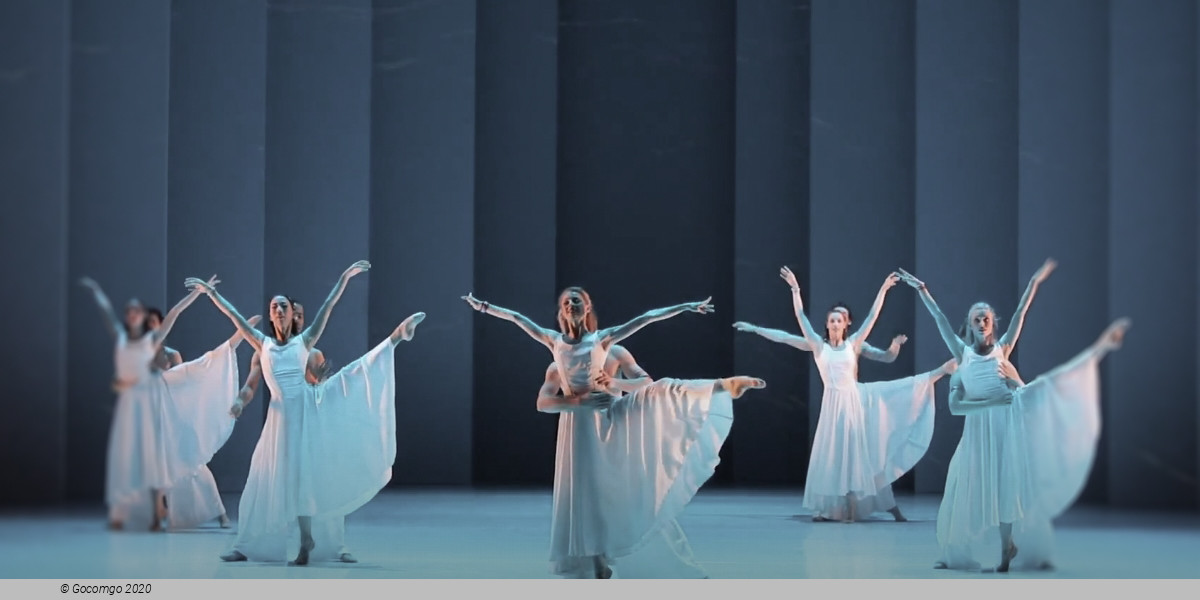
The Nutcracker (Russian: Shchelkunchik, Balet-feyeriya About this soundlisten is a two-act ballet, originally choreographed by Marius Petipa and Lev Ivanov with a score by Pyotr Ilyich Tchaikovsky (Op. 71). The libretto is adapted from E. T. A. Hoffmann's story "The Nutcracker and the Mouse King".

Although the original production was not a success, the 20-minute suite that Tchaikovsky extracted from the ballet was. However, the complete Nutcracker has enjoyed enormous popularity since the late 1960s and is now performed by countless ballet companies, primarily during the Christmas season, especially in North America. Major American ballet companies generate around 40% of their annual ticket revenues from performances of The Nutcracker. The ballet's score has been used in several film adaptations of Hoffmann's story.

Tchaikovsky's score has become one of his most famous compositions. Among other things, the score is noted for its use of the celesta, an instrument that the composer had already employed in his much lesser known symphonic ballad The Voyevoda.

Synopsis

Act I
On Christmas Eve, young Clara attends a festive party at her family’s home, where the mysterious toymaker Drosselmeyer gives her a nutcracker doll. After the guests leave and the house grows quiet, Clara returns to the tree and falls into a magical dream. The room transforms, the Christmas tree grows to enormous size, and toys come alive. A fierce battle erupts between the Nutcracker and the Mouse King, ending with the Nutcracker’s victory. He transforms into a Prince and leads Clara through the snowy forest, where the Snow Queen and her shimmering Snowflakes dance in a swirling winter landscape.

Act II
Clara and the Prince arrive in the radiant Kingdom of Sweets, ruled by the Sugar Plum Fairy. In their honor, dancers from many lands perform enchanting divertissements, each representing sweets or treats from around the world. The celebration culminates in the grand pas de deux of the Sugar Plum Fairy and her Cavalier. As the festivities conclude, Clara’s magical journey fades, and she awakens back at home, unsure whether her adventure was a dream — or something wonderfully real.

Venue Info

Teatro Massimo - Palermo
Location   Piazza Verdi

The Teatro Massimo Vittorio Emanuele is an opera house and opera company located on the Piazza Verdi in Palermo, Sicily. It was dedicated to King Victor Emanuel II. It is the biggest in Italy, and one of the largest of Europe (the third after the Opéra National de Paris and the K. K. Hof-Opernhaus in Vienna), renowned for its perfect acoustics.

The Teatro Massimo Vittorio Emanuele in Palermo opened its doors to the public on the evening of 16 May 1897, twenty-two years after the solemn public ceremony of the laying of the first stone. 
This took place on 12 January 1875, and ended a chequered series of vicissitudes with interminable squabbles lasting over ten years.
The international competition for the project and realisation of the opera house had been announced by Palermo Council in 1864, and its prime mover was the mayor, Antonio Starrabba di Rudini. 
For a long time there had been talk of building a big new theatre in Palermo, worthy of the second biggest city in southern Italy after Naples. 
Palermo, in the second half of the nineteenth century, was engaged in getting itself a new identity in the light of the new national unity. 
Cultural life was influenced by the new Italian State and the positive consequences of the activity of enlightened entrepreneurs like the Florios, who also made generous donations to the building of the opera house and for some years were also its no less enlightened managers. 
Intense commercial relations led to the convergence and development in Palermo of interests with a European dimension and brought the city to be continually in touch with different cultural models than its own. This was the start of the Belle Epoque, a time of cultural and economic rebirth for Palermo which would in turn become almost mythical for the future generations and was only to be interrupted by the outbreak of World War I.

The opening night happened on May 16 1897: Giuseppe Verdi's Falstaff was the inaugural opera. The conductor was Leopoldo Mugnone. A ticket in the boxes would then cost 80 liras, one in the gallery just 3. At the time of its first opening, thanks to its surface of 7,730 square metres, the Teatro Massimo was the third in Europe, after the opera houses in Paris and Wien.

From the opening in 1897 to 1935 the opera seasons were put together by private firms, often a different one each year, that would organize the performances.

In 1935 the theatre was officially designated with a Decree from the Italian Ministry of Culture "Ente Teatrale Autonomo", and thus recognized as a public theatre.

In 1974 the theatre was closed for reconstruction works that were supposed to be finished in a relatively short time. It remained closed for 23 years and was reopened with the concert on May 12 1997, conducted by Franco Mannino in the first part and by Claudio Abbado in the second, with the Berliner Philharmoniker.

Important Info
Type: Ballet
City: Palermo, Italy
Starts at: 20:00
Acts: 2
Duration: 2h
Top of page