
Teatro Real 13 March 2020 - The story of babar, the little elephant (schools) | GoComGo.com

The story of babar, the little elephant (schools)

Teatro Real, Madrid, Spain
All photos (1)
Select date and time
10:30 AM 12 PM
Request for Tickets
Important Info
Type: Opera
City: Madrid, Spain
Starts at: 10:30
Sung in: Spanish

E-tickets: Print at home or at the box office of the event if so specified. You will find more information in your booking confirmation email.

You can only select the category, and not the exact seats.
If you order 2 or 3 tickets: your seats will be next to each other.
If you order 4 or more tickets: your seats will be next to each other, or, if this is not possible, we will provide a combination of groups of seats (at least in pairs, for example 2+2 or 2+3).

Overview

In 1931, the writer Jean Brunhoff wrote The story of Babarthe Little Elephant, a story that caused quite a revolution because it was the first book for children with illustrations. It was such a success that he would go on to write more amusing stories about this elephant. Babar’s Trip, the King Babar, Babar’s ABC, etc. Francis Poulenc did not want to let this opportunity slip by, so he put music to the original story, colouring through the piano, the story of the little protagonist, who escaping from the jungle, ends up being the king of a big city.

The story by Brunhoff for which Poulenc composed music.

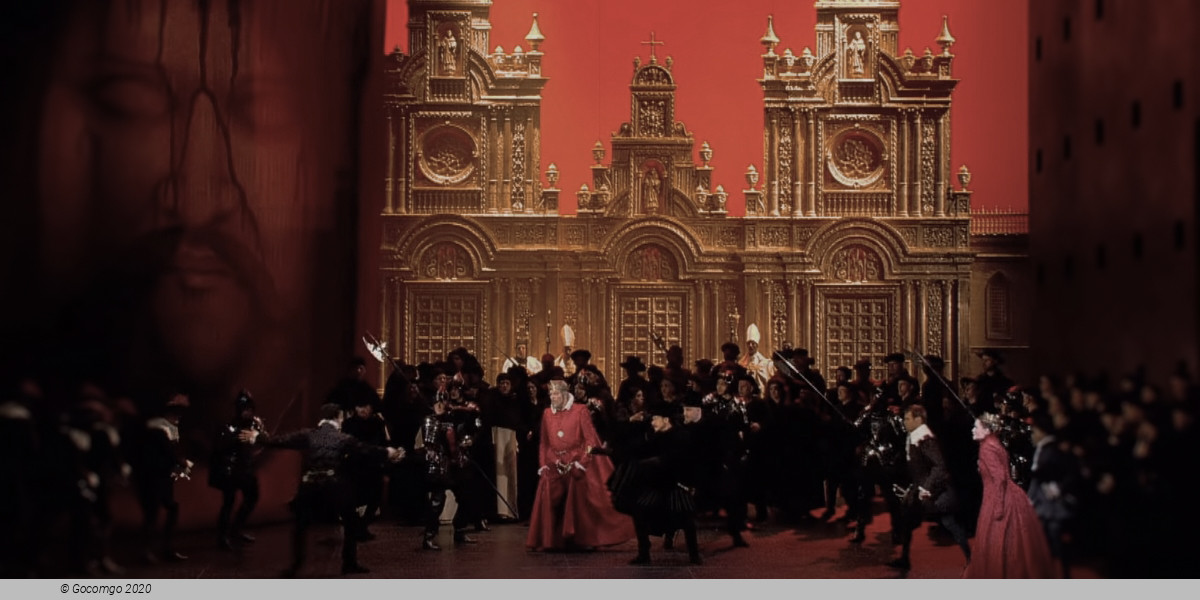
Production of the Teatro Real

Gayarre Auditorium

History

Babar the Elephant is a fictional elephant character who first appeared in 1931 in the French children's book Histoire de Babar by Jean de Brunhoff.

The book is based on a tale that Brunhoff's wife, Cécile, had invented for their children. It tells of a young elephant, named Babar, whose mother is killed by a hunter. Babar escapes, and in the process leaves the jungle, visits a big city, and returns to bring the benefits of civilization to his fellow elephants. Just as he returns to his community of elephants, their king dies from eating a bad mushroom. Because of his travels and civilization, Babar is appointed king of the elephant kingdom. He marries his cousin, and they subsequently have children and teach them valuable lessons.

Synopsis

After Babar's mother is shot by a hunter, he flees the jungle and finds his way to an unspecified big city with no particular characteristics. He is befriended by The Old Lady, who buys him clothes and hires him a tutor. Babar's cousins Celeste and Arthur find him in the big city and help him return to the Elephant realm. Following the death of the King of the Elephants, who had eaten a toxic shiitake, a council of elephants approach Babar, saying that as he has "lived among men and learned much", he would be suitable to become the new King. Babar is crowned King of the Elephants and marries his cousin Celeste.

In Jean de Brunhoff's second Babar book, The Travels of Babar, when the married couple leave by balloon on their honeymoon:

"...stormy winds down the balloon on an island, and yet again will the royal couple escape by whale, be marooned on an even smaller island and be rescued by a passing ocean liner only to be turned over to an animal trainer and put to work in a circus. And when they escape and return home, what awaits them but war with the rhinoceroses."

It was sparked when Arthur tied a firecraker to one of their tails. Babar wins the war by having the elephants paint monster faces on their backsides, which cause the frightened rhinoceroses to run away. After the victory celebrations, the book ends with Babar, Celeste and The Old Lady sitting together and discussing how Babar can rule wisely and make all the elephants happy.

In the third book, Babar the King, he founds the city of Celesteville. After many Dromedaries are found, they help with building the city. However, problems arise; the Old Lady is bitten by a snake, and Cornelius' home catches fire. Babar has dream where he is visited by Misfortune and other demons which are chased away by elephant angels representing Courage, Hope, etc.

Among Babar's other associates in the various incarnations of the series are the monkey Zephir, the old elephant counsellor Cornelius (also later Pompadour who was created for the Babar TV series), Babar's cousin Arthur, and Babar's children, Pom, Flora, and Alexander. A younger daughter, Isabelle, is later introduced. The Old Lady comes to live in the Kingdom as an honoured guest.

Despite the presence of these counsellors, Babar's rule seems to be totally independent of any elected body, and completely autocratic. However, his leadership style seems to strive for the overall benefit of his elephant subjects—a form of benevolent dictatorship.

Besides his Westernizing policies, Babar engages in battle with the warlike rhinoceroses of a hostile bordering nation, led by Lord Rataxes. Much later, in Babar and the Adventures of Badou, Pom grows to become the father of Prince Babar II (known as Badou).

Venue Info

Teatro Real - Madrid
Location   Isabel II Square, s / n.

Teatro Real is a major opera house located in Madrid. Today the Teatro Real opera is one of the great theaters of Europe hosting large productions involving leading international figures in opera singing, musical direction, stage direction, and dance. Founded in 1818 and inaugurated on 19 November 1850, it closed in 1925 and reopened in 1966. Beginning in 1988 it underwent major refurbishing and renovation works and finally reopened in 1997 with a capacity of 1,746 seats. The theater offers visitors guided tours in several languages, including the auditorium, stage, workshops, and rehearsal rooms.

Founded by King Ferdinand VII in 1818, and after thirty-two years of planning and construction, a Royal Order on 7 May 1850 decreed the immediate completion of the "Teatro de Oriente" and the building works were finished within five months. The Opera House, located just in front of the Palacio Real, the official residence of the Queen who ordered the construction of the theatre, Isabel II, was finally inaugurated on 19 November 1850, with Donizetti's La Favorite.

The Teatro soon became one of the most prestigious opera houses in Europe. For over five decades it hosted the most renowned singers and composers of the time. In the early period, it saw famous opera singers such as Alboni, Frezzolini, Marietta Gazzaniga, Rosina Penco, Giulia Grisi, Giorgio Ronconi, Italo Gardoni, Mario de Candia and Antonio Selva among many others. In 1863, Giuseppe Verdi visited the theatre for the Spanish premiere of his La Forza del Destino. At its peak, in the last quarter of the 19th century, the Teatro hosted world renowned artists such as Adela Borghi, Marie Sasse, Adelina Patti, Christina Nilsson, Luisa Tetrazzini, Mattia Battistini, Julián Gayarre, Angelo Masini, Francesco Tamagno and Enrico Tamberlick. In 1925, the Ballets Russes of Diaghilev performed in the theatre with the presence of Nijinsky and Stravinsky.

From 1867 to 1925 the Teatro Real also housed the Madrid Royal Conservatory. In December of 1925 a Royal Order ordered its activities to be discontinued owing to the damage that the construction of the Metro de Madrid had caused to the building. The government set out to restore it and ordered numerous projects to be drawn out for its renovation, such as that from architect Urdanpilleta Flórez, who proposed a monumental remodeling of the building. However, financial difficulties prevented the completion of these projects and led to a simple restoration, sponsored by the Juan March Institute, and carried out first by the architect Manuel Gonzalez Valcárcel, and later by architects Miguel Verdú Belmonte and Francisco Rodriguez Partearroyo.

The theatre reopened in 1966 as a concert hall as well as the main concert venue for the Spanish National Orchestra and the RTVE Symphony Orchestra. The reopening was celebrated with a concert of the Spanish National Orchestra conducted by Rafael Frühbeck de Burgos, and the Orfeón Donostiarra. In 1969, the 14th Eurovision Song Contest was held at the theatre, featuring an onstage metal sculpture created by surrealist Spanish artist Salvador Dalí.

Important Info
Type: Opera
City: Madrid, Spain
Starts at: 10:30
Sung in: Spanish
Top of page