
Teatro Real 4 December 2023 - Il ritorno d'Ulisse in patria (concert version) | GoComGo.com

Il ritorno d'Ulisse in patria (concert version)

Teatro Real, Main Auditorium, Madrid, Spain
All photos (6)
Select date and time
7:30 PM

E-tickets: Print at home or at the box office of the event if so specified. You will find more information in your booking confirmation email.

You can only select the category, and not the exact seats.
If you order 2 or 3 tickets: your seats will be next to each other.
If you order 4 or more tickets: your seats will be next to each other, or, if this is not possible, we will provide a combination of groups of seats (at least in pairs, for example 2+2 or 2+3).

Important Info
Type: Opera
City: Madrid, Spain
Starts at: 19:30
Acts: 3

E-tickets: Print at home or at the box office of the event if so specified. You will find more information in your booking confirmation email.

You can only select the category, and not the exact seats.
If you order 2 or 3 tickets: your seats will be next to each other.
If you order 4 or more tickets: your seats will be next to each other, or, if this is not possible, we will provide a combination of groups of seats (at least in pairs, for example 2+2 or 2+3).

Overview

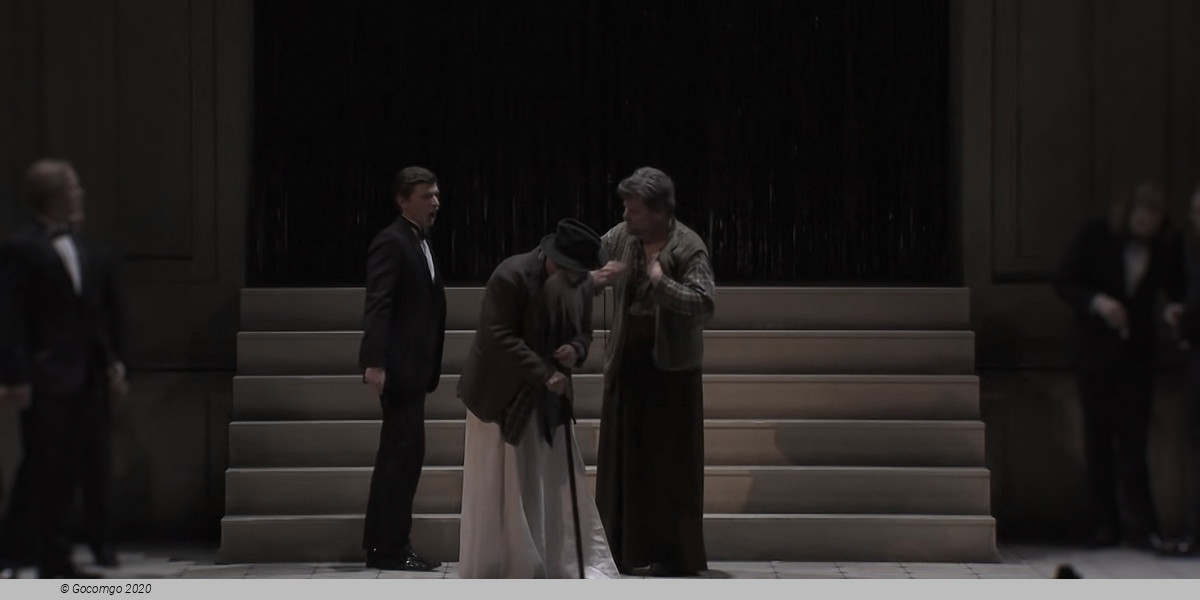
Following in the wake of L'Orfeo last season, and after almost 15 years, another of the key titles in Monteverdi's production about human fragility, subject to powers such as Fortune, the Love and Time. Using singing as a dramatic resource, Monteverdi adapts the adventures and misadventures of Ulysses narrated by Homer in his Odyssey of him.

Odysseus is the hero whose destiny is to fight—with hostile gods, with hostile monsters, with hostile men—and fight against irrational and superhuman powers to restore something as basic as family unity or his own identity. It is also a complex myth insofar as we cannot separate his story from many others: the hope of his son Telemachus, the impatience of his nurse Euryclea, the fidelity of his swineherd Eumete or —above all— the indecision of his wife Penelope, on which the knot of the plot is wound and on which its outcome ultimately depends.

Written when the composer was in his seventies, his score is a compendium of Monteverdian art in which the persuasive eloquence of L'Orfeo resonates , the bellicose effects of Il combattimento di Tancredi e Clorinda and the lyricism of his Scherzi musicali.

It also includes the first clearly buffo character —the "parasite" Iro— in the history of opera, but it is also the first to represent in musical terms and in all their human complexity the thorny psychological processes of its protagonists.

History
Premiere of this production: 30 November 1638, Carnival season Teatro Santi Giovanni e Paolo, Venice

Il ritorno d'Ulisse in patria (The Return of Ulysses to his Homeland) is an opera consisting of a prologue and five acts (later revised to three), set by Claudio Monteverdi to a libretto by Giacomo Badoaro. The opera was first performed at the Teatro Santi Giovanni e Paolo in Venice during the 1639–1640 carnival season.

Synopsis

The action takes place on and around the island of Ithaca, ten years after the Trojan Wars. English translations used in the synopsis are from Geoffrey Dunn's version, based on Raymond Leppard's 1971 edition, and from Hugh Ward-Perkins's interpretation issued with Sergio Vartolo's 2006 recording for Brilliant Classics. Footnotes provide the original Italian.

Prologue
The spirit of human frailty (l'humana Fragilità) is mocked in turn by the gods of time (il Tempo), fortune (la Fortuna) and love (l'Amore). Man, they claim, is subject to their whims: "From Time, ever fleeting, from Fortune's caresses, from Love and its arrows...No mercy from me!" They will render man "weak, wretched, and bewildered."

Act 1
In the palace at Ithaca, Penelope mourns the long absence of Ulysses: "The awaited one does not return, and the years pass by." Her grief is echoed by her nurse, Ericlea. As Penelope leaves, her attendant Melanto enters with Eurimaco, a servant to Penelope's importunate suitors. The two sing passionately of their love for each other ("You are my sweet life"). The scene changes to the Ithacan coast, where the sleeping Ulisse is brought ashore by the Phaecians (Faeci), whose action is in defiance of the wishes of gods Giove and Nettuno. The Phaecians are punished by the gods who turn them and their ship to stone. Ulysses awakes, cursing the Phaecians for abandoning him: "To your sails, falsest Phaeacians, may Boreas be ever hostile!" From the goddess Minerva, who appears disguised as a shepherd boy, Ulisse learns that he is in Ithaca, and is told of "the unchanging constancy of the chaste Penelope", in the face of the persistent importunings of her evil suitors. Minerva promises to lead Ulisse back to the throne if he follows her advice; she tells him to disguise himself so that he can penetrate the court secretly. Ulisse goes to seek out his loyal servant Eumete, while Minerva departs to search for Telemaco, Ulisse's son who will help his father reclaim the kingdom. Back at the palace, Melanto tries vainly to persuade Penelope to choose one of the suitors: "Why do you disdain the love of living suitors, expecting comfort from the ashes of the dead?" In a wooded grove Eumete, banished from court by the suitors, revels in the pastoral life, despite the mockery of Iro, the suitors' parasitic follower, who sneers: "I live among kings, you here among the herds." After Iro is chased away, Ulisse enters disguised as a beggar, and assures Eumete that his master the king is alive, and will return. Eumete is overjoyed: "My long sorrow will fall, vanquished by you."

Act 2
Minerva and Telemaco return to Ithaca in a chariot. Telemaco is greeted joyfully by Eumete and the disguised Ulisse in the woodland grove: "O great son of Ulysses, you have indeed returned!" After Eumete goes to inform Penelope of Telemaco's arrival a bolt of fire descends on Ulisse, removing his disguise and revealing his true identity to his son. The two celebrate their reunion before Ulisse sends Telemaco to the palace, promising to follow shortly. In the palace, Melanto complains to Eurimaco that Penelope still refuses to choose a suitor: "In short, Eurymachus, the lady has a heart of stone." Soon afterwards Penelope receives the three suitors (Antinoo, Pisandro, Anfinomo), and rejects each in turn despite their efforts to enliven the court with singing and dancing: "Now to enjoyment, to dance and song!" After the suitors' departure Eumete tells Penelope that Telemaco has arrived in Ithaca, but she is doubtful: "Such uncertain things redouble my grief." Eumete's message is overheard by the suitors, who plot to kill Telemaco. However, they are unnerved when a symbolic eagle flies overhead, so they abandon their plan and renew their efforts to capture Penelope's heart, this time with gold. Back in the woodland grove, Minerva tells Ulisse that she has organised a means whereby he will be able to challenge and destroy the suitors. Resuming his beggar's disguise, Ulisse arrives at the palace, where he is challenged to a fight by Iro, ("I will pluck out the hairs of your beard one by one!"), a challenge he accepts and wins. Penelope now states that she will accept the suitor who is able to string Ulisse's bow. All three suitors attempt the task unsuccessfully. The disguised Ulisse then asks to try though renouncing the prize of Penelope's hand, and to everyone's amazement he succeeds. He then angrily denounces the suitors and, summoning the names of the gods, kills all three with the bow: "This is how the bow wounds! To death, to havoc, to ruin!"

Act 3
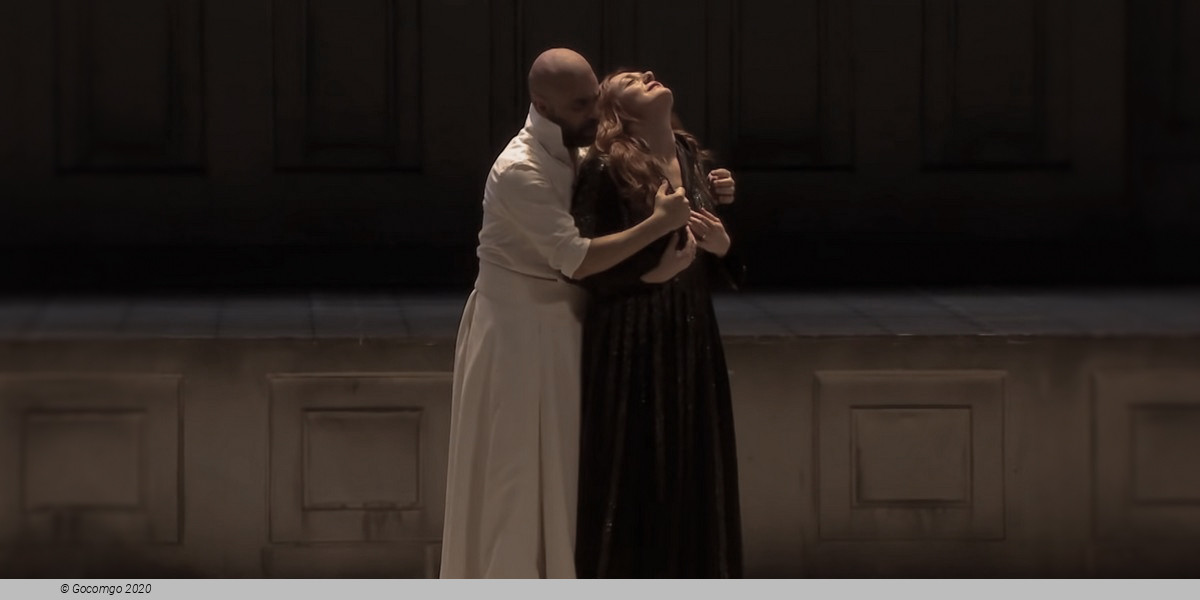
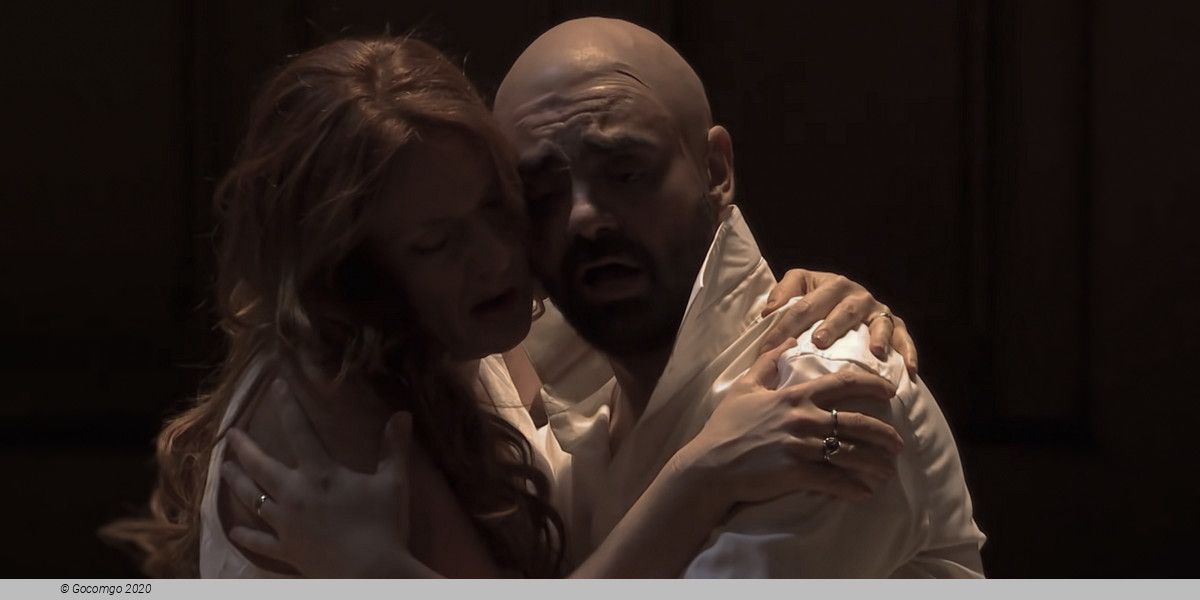
Deprived of the suitors' patronage, Iro commits suicide after a doleful monologue ("O grief, O torment that saddens the soul!") Melanto, whose lover Eurimaco was killed with the suitors, tries to warn Penelope of the new danger represented by the unidentified slayer, but Penelope is unmoved and continues to mourn for Ulisse. Eumete and Telemaco now inform her that the beggar was Ulisse in disguise, but she refuses to believe them: "Your news is persistent and your comfort hurtful." The scene briefly transfers to the heavens, where Giunone, having been solicited by Minerva, persuades Giove and Nettune that Ulisse should be restored to his throne. Back in the palace the nurse Ericlea has discovered Ulisse's identity by recognising a scar on his back, but does not immediately reveal this information: "Sometimes the best thing is a wise silence." Penelope continues to disbelieve, even when Ulisse appears in his true form and when Ericlea reveals her knowledge of the scar. Finally, after Ulisse describes the pattern of Penelope's private bedlinen, knowledge that only he could possess, she is convinced. Reunited, the pair sing rapturously to celebrate their love: "My sun, long sighed for! My light, renewed!"

Venue Info

Teatro Real - Madrid
Location   Isabel II Square, s / n.

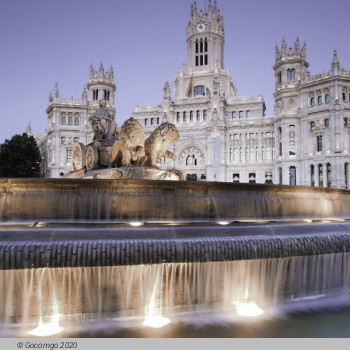
Teatro Real is a major opera house located in Madrid. Today the Teatro Real opera is one of the great theaters of Europe hosting large productions involving leading international figures in opera singing, musical direction, stage direction, and dance. Founded in 1818 and inaugurated on 19 November 1850, it closed in 1925 and reopened in 1966. Beginning in 1988 it underwent major refurbishing and renovation works and finally reopened in 1997 with a capacity of 1,746 seats. The theater offers visitors guided tours in several languages, including the auditorium, stage, workshops, and rehearsal rooms.

Founded by King Ferdinand VII in 1818, and after thirty-two years of planning and construction, a Royal Order on 7 May 1850 decreed the immediate completion of the "Teatro de Oriente" and the building works were finished within five months. The Opera House, located just in front of the Palacio Real, the official residence of the Queen who ordered the construction of the theatre, Isabel II, was finally inaugurated on 19 November 1850, with Donizetti's La Favorite.

The Teatro soon became one of the most prestigious opera houses in Europe. For over five decades it hosted the most renowned singers and composers of the time. In the early period, it saw famous opera singers such as Alboni, Frezzolini, Marietta Gazzaniga, Rosina Penco, Giulia Grisi, Giorgio Ronconi, Italo Gardoni, Mario de Candia and Antonio Selva among many others. In 1863, Giuseppe Verdi visited the theatre for the Spanish premiere of his La Forza del Destino. At its peak, in the last quarter of the 19th century, the Teatro hosted world renowned artists such as Adela Borghi, Marie Sasse, Adelina Patti, Christina Nilsson, Luisa Tetrazzini, Mattia Battistini, Julián Gayarre, Angelo Masini, Francesco Tamagno and Enrico Tamberlick. In 1925, the Ballets Russes of Diaghilev performed in the theatre with the presence of Nijinsky and Stravinsky.

From 1867 to 1925 the Teatro Real also housed the Madrid Royal Conservatory. In December of 1925 a Royal Order ordered its activities to be discontinued owing to the damage that the construction of the Metro de Madrid had caused to the building. The government set out to restore it and ordered numerous projects to be drawn out for its renovation, such as that from architect Urdanpilleta Flórez, who proposed a monumental remodeling of the building. However, financial difficulties prevented the completion of these projects and led to a simple restoration, sponsored by the Juan March Institute, and carried out first by the architect Manuel Gonzalez Valcárcel, and later by architects Miguel Verdú Belmonte and Francisco Rodriguez Partearroyo.

The theatre reopened in 1966 as a concert hall as well as the main concert venue for the Spanish National Orchestra and the RTVE Symphony Orchestra. The reopening was celebrated with a concert of the Spanish National Orchestra conducted by Rafael Frühbeck de Burgos, and the Orfeón Donostiarra. In 1969, the 14th Eurovision Song Contest was held at the theatre, featuring an onstage metal sculpture created by surrealist Spanish artist Salvador Dalí.

Important Info
Type: Opera
City: Madrid, Spain
Starts at: 19:30
Acts: 3
Top of page