
Teatro Real 3 June 2021 - Viva la mamma | GoComGo.com

Viva la mamma

Teatro Real, Main Auditorium, Madrid, Spain
All photos (4)
Select date and time
8 PM
Request for Tickets
Important Info
Type: Opera
City: Madrid, Spain
Starts at: 20:00
Acts: 2
Sung in: Italian
Titles in: Spanish,English

E-tickets: Print at home or at the box office of the event if so specified. You will find more information in your booking confirmation email.

You can only select the category, and not the exact seats.
If you order 2 or 3 tickets: your seats will be next to each other.
If you order 4 or more tickets: your seats will be next to each other, or, if this is not possible, we will provide a combination of groups of seats (at least in pairs, for example 2+2 or 2+3).

Overview

Production of the Teatro Real, in co-production with the Opéra National de Lyon and the Grand Théâtre de Genève

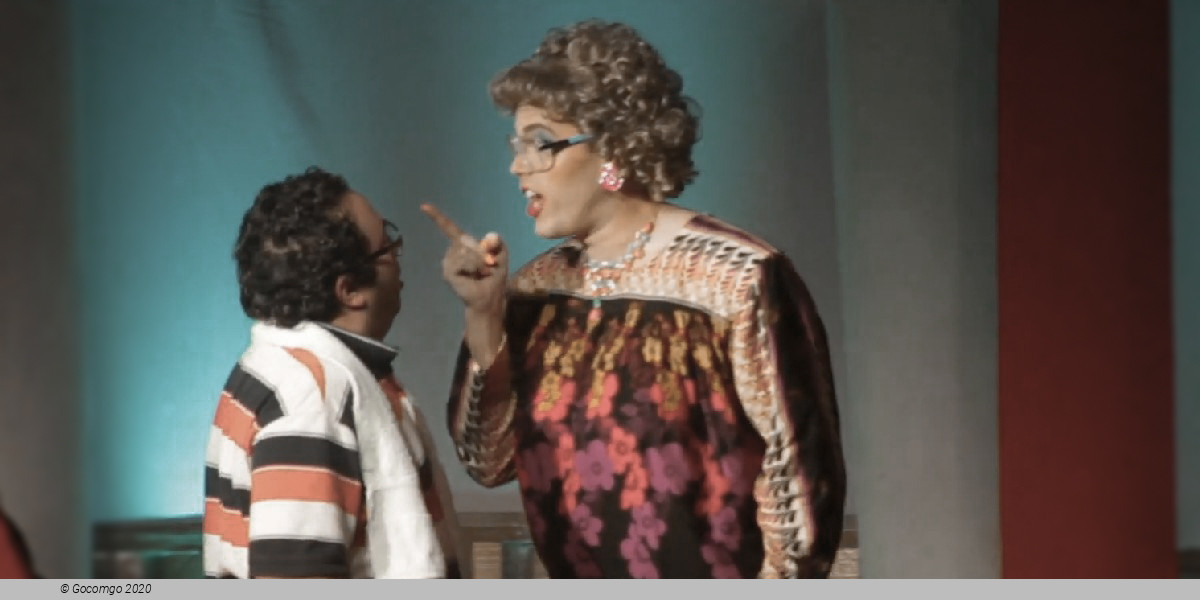
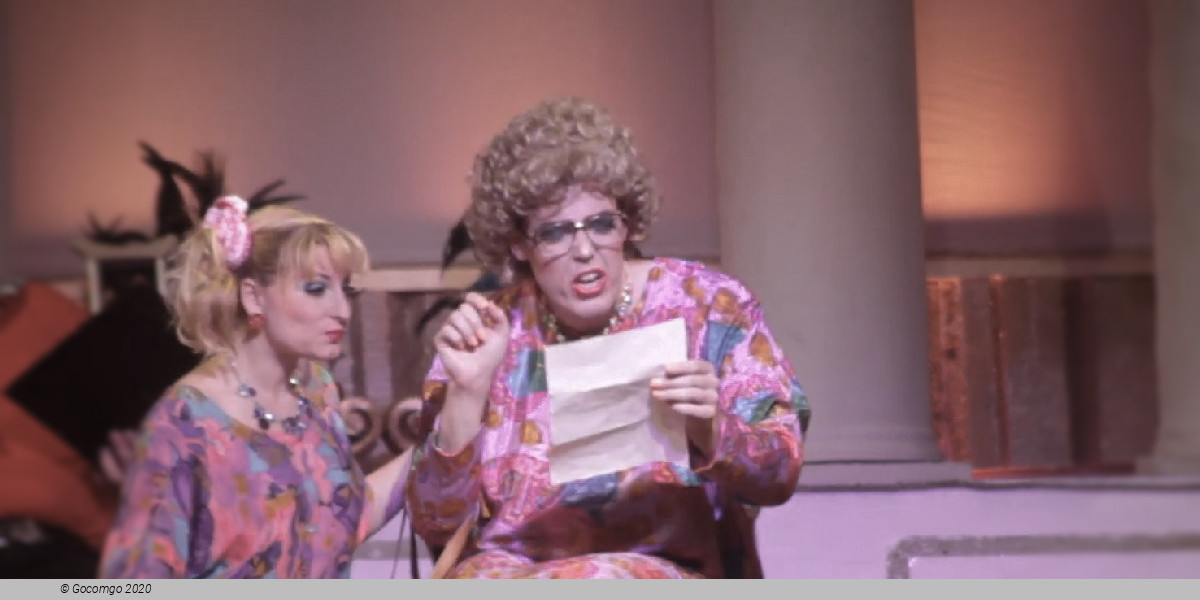
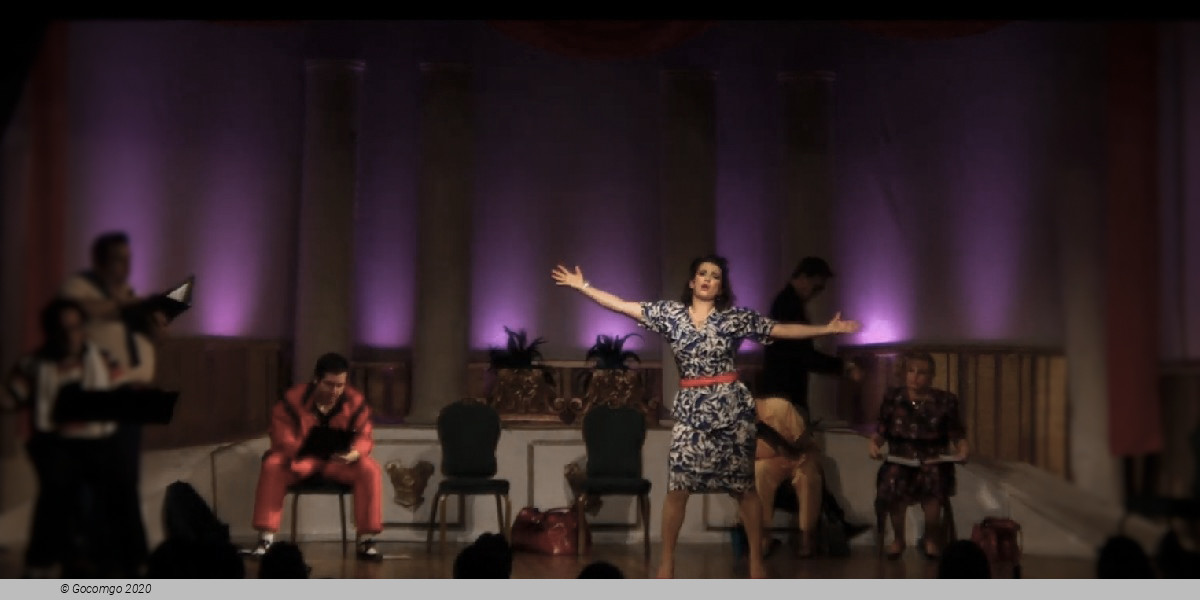
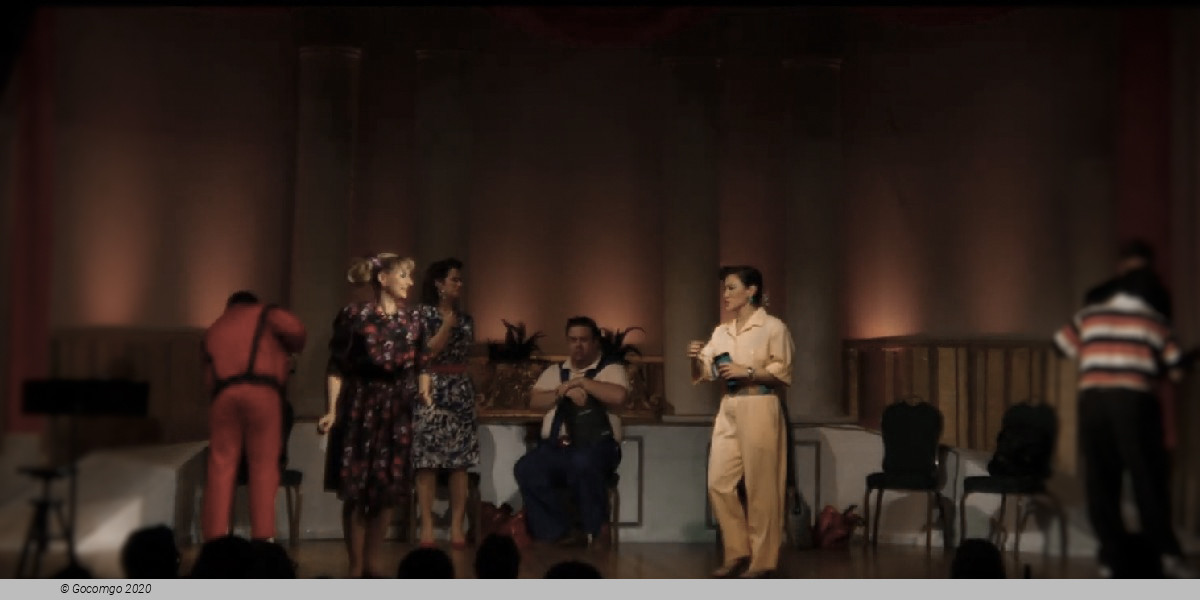
An opera where the prima donna is a baritone? Le convenienze ed inconvenienze teatrali is an excessively long and daunting title for an opera of such unrestrained delight. That is likely what German film director Helmut Käutner thought when he renamed it Viva la mamma in the famous 1969 adaptation for the rococo Cuvilliés theatre in Munich, changing the history of this work forever. First seen in Naples in 1827, this farce of a “theatre within a theatre” narrates the mishaps of a second-rate opera company as it stages the great serious drama Romolo ed Ersilia in a provincial theatre. The unbearable tensions between the two lead singers are finally resolved with the decisive intervention of one of their mothers. The co-production by Ópera de Lyon shared with the Grand Theâtre de Genève and Teatro Real is brought to life by Laurent Pelly, a tireless champion of Donizettis comedies, as one recalls from his production of La fille du régiment which we enjoyed some seasons ago.

History
Premiere of this production: 21 November 1827, Teatro Nuovo of Naples

Le convenienze ed inconvenienze teatrali (Conventions and Inconveniences of the Stage), also known as Viva la mamma, is a dramma giocoso, or opera, in two acts by Gaetano Donizetti. The Italian libretto was written by Domenico Gilardoni, adapted from Antonio Simeone Sografi's plays Le convenienze teatrali (1794) and Le inconvenienze teatrali (1800).

Synopsis

Time: 18th century
Place: "A provincial Italian theatre"

A regional (and mediocre) operatic troupe is rehearsing a new work—Romulus and Ersilia—and faces numerous obstacles. The prima donna acts every bit the diva, refusing to rehearse. The German tenor cannot master either the lyrics or melodies. In the midst of much quarrelling, various singers threaten to walk out. The situation turns more dire with the arrival of Mamma Agata (a baritone role), the mother of the seconda donna. She insists on a solo for her daughter and even issues detailed demands on the musical arrangement of the aria. When the German tenor refuses to go on, he is replaced by the prima donna's husband. The show eventually collapses, and rather than pay back all the investors (whose money has already been spent), the company flees the town under cover of night.

Venue Info

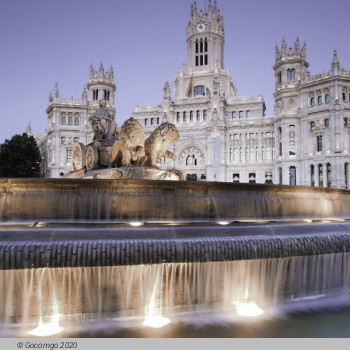
Teatro Real - Madrid
Location   Isabel II Square, s / n.

Teatro Real is a major opera house located in Madrid. Today the Teatro Real opera is one of the great theaters of Europe hosting large productions involving leading international figures in opera singing, musical direction, stage direction, and dance. Founded in 1818 and inaugurated on 19 November 1850, it closed in 1925 and reopened in 1966. Beginning in 1988 it underwent major refurbishing and renovation works and finally reopened in 1997 with a capacity of 1,746 seats. The theater offers visitors guided tours in several languages, including the auditorium, stage, workshops, and rehearsal rooms.

Founded by King Ferdinand VII in 1818, and after thirty-two years of planning and construction, a Royal Order on 7 May 1850 decreed the immediate completion of the "Teatro de Oriente" and the building works were finished within five months. The Opera House, located just in front of the Palacio Real, the official residence of the Queen who ordered the construction of the theatre, Isabel II, was finally inaugurated on 19 November 1850, with Donizetti's La Favorite.

The Teatro soon became one of the most prestigious opera houses in Europe. For over five decades it hosted the most renowned singers and composers of the time. In the early period, it saw famous opera singers such as Alboni, Frezzolini, Marietta Gazzaniga, Rosina Penco, Giulia Grisi, Giorgio Ronconi, Italo Gardoni, Mario de Candia and Antonio Selva among many others. In 1863, Giuseppe Verdi visited the theatre for the Spanish premiere of his La Forza del Destino. At its peak, in the last quarter of the 19th century, the Teatro hosted world renowned artists such as Adela Borghi, Marie Sasse, Adelina Patti, Christina Nilsson, Luisa Tetrazzini, Mattia Battistini, Julián Gayarre, Angelo Masini, Francesco Tamagno and Enrico Tamberlick. In 1925, the Ballets Russes of Diaghilev performed in the theatre with the presence of Nijinsky and Stravinsky.

From 1867 to 1925 the Teatro Real also housed the Madrid Royal Conservatory. In December of 1925 a Royal Order ordered its activities to be discontinued owing to the damage that the construction of the Metro de Madrid had caused to the building. The government set out to restore it and ordered numerous projects to be drawn out for its renovation, such as that from architect Urdanpilleta Flórez, who proposed a monumental remodeling of the building. However, financial difficulties prevented the completion of these projects and led to a simple restoration, sponsored by the Juan March Institute, and carried out first by the architect Manuel Gonzalez Valcárcel, and later by architects Miguel Verdú Belmonte and Francisco Rodriguez Partearroyo.

The theatre reopened in 1966 as a concert hall as well as the main concert venue for the Spanish National Orchestra and the RTVE Symphony Orchestra. The reopening was celebrated with a concert of the Spanish National Orchestra conducted by Rafael Frühbeck de Burgos, and the Orfeón Donostiarra. In 1969, the 14th Eurovision Song Contest was held at the theatre, featuring an onstage metal sculpture created by surrealist Spanish artist Salvador Dalí.

Important Info
Type: Opera
City: Madrid, Spain
Starts at: 20:00
Acts: 2
Sung in: Italian
Titles in: Spanish,English
Top of page