
Teatro Real 20 November 2022 - Premiere L'Orfeo Premiere | GoComGo.com

Premiere
L'Orfeo Premiere

Teatro Real, Main Auditorium, Madrid, Spain
All photos (9)
Select date and time
6 PM

E-tickets: Print at home or at the box office of the event if so specified. You will find more information in your booking confirmation email.

You can only select the category, and not the exact seats.
If you order 2 or 3 tickets: your seats will be next to each other.
If you order 4 or more tickets: your seats will be next to each other, or, if this is not possible, we will provide a combination of groups of seats (at least in pairs, for example 2+2 or 2+3).

Important Info
Type: Opera
City: Madrid, Spain
Starts at: 18:00
Acts: 5

E-tickets: Print at home or at the box office of the event if so specified. You will find more information in your booking confirmation email.

You can only select the category, and not the exact seats.
If you order 2 or 3 tickets: your seats will be next to each other.
If you order 4 or more tickets: your seats will be next to each other, or, if this is not possible, we will provide a combination of groups of seats (at least in pairs, for example 2+2 or 2+3).

Overview

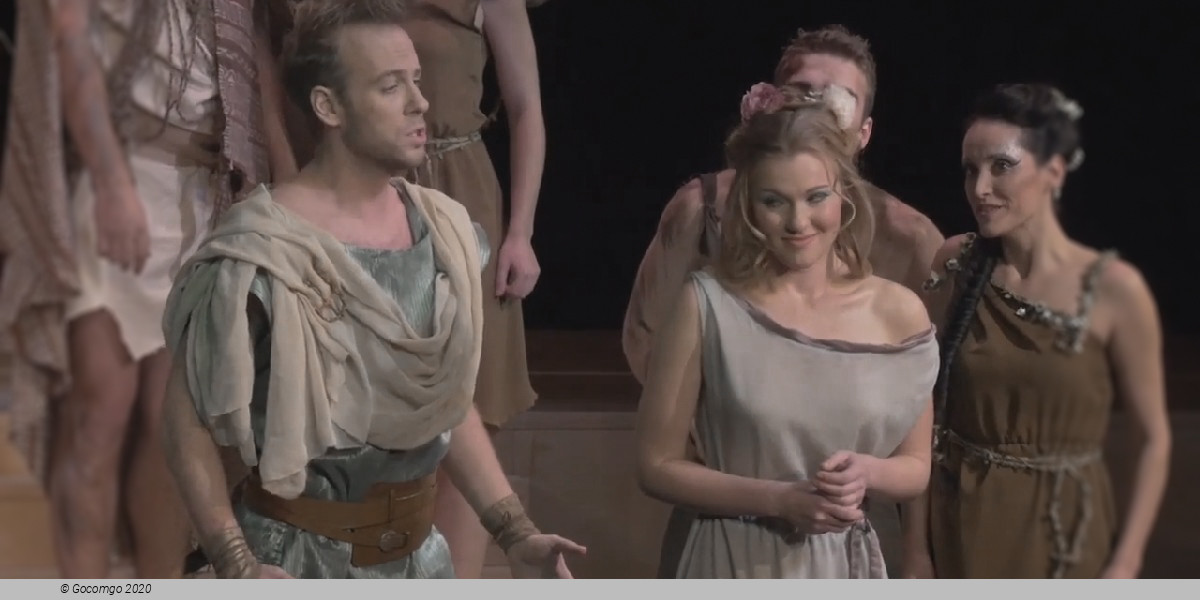
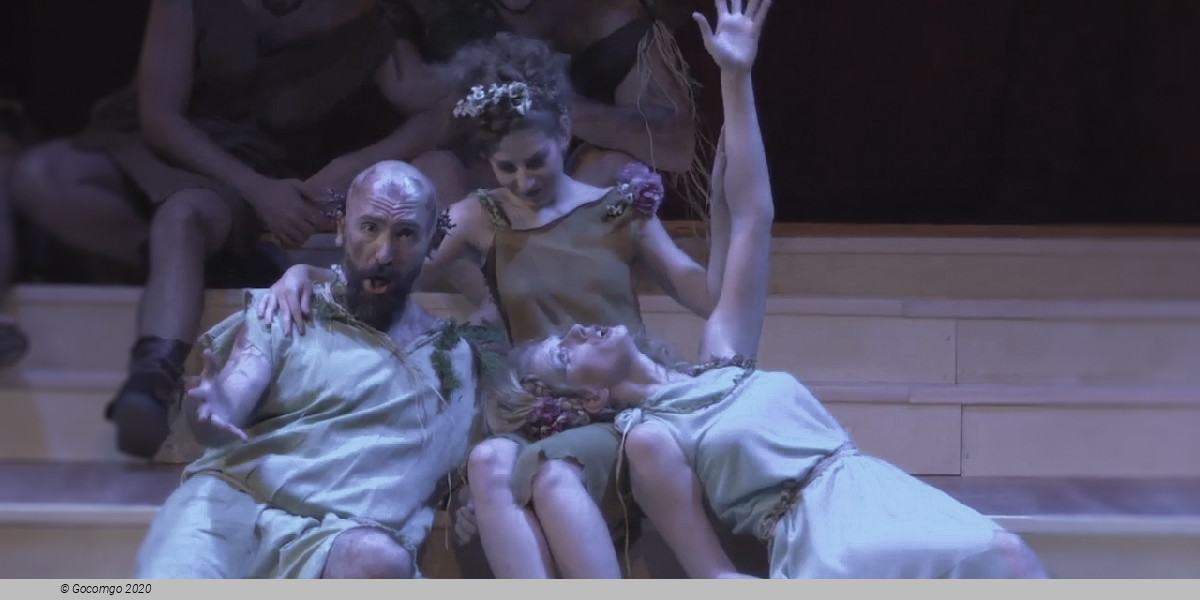
The first operatic experiments in history were conceived on the ambitious premise that –in the same way as with the legendary Orfeo- it was possible to tame human passions with the voice and music: instil happiness, sadness, or even more so, bring them face to face in an abrupt manner, as when the fateful messenger interrupts the wedding celebrations in the second act of this opera. It is not surprising, therefore, that the myth of the famous Thracian singer was the protagonist of some of the first titles in this genre.

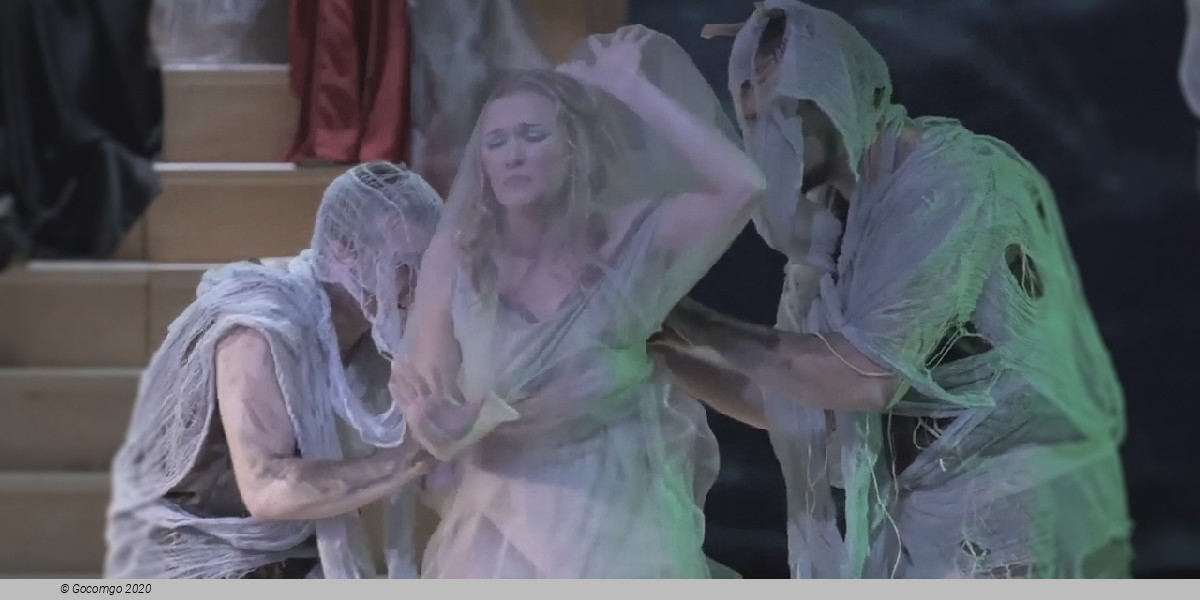
The efficacy of these artifices not only concurred with Neoplatonic philosophy of order and the consonance of the universe: thanks to the genius of Monteverdi , the audience of that time discovered in  L’Orfeo  the alliance between theatre and singing provided  a dynamic to the human experience of unexplored emotions and unsung intensity.  The German choreographer Sasha Waltz takes on a similar challenge in her understanding of this founding work in the history of opera: the integration of the arts in a flowing continuo of seamless sound and movement, able to dominate – by way of harmony and geometry - our own passions.

A production of Sasha Waltz & Guests in collaboration with the Dutch National Opera Amsterdam, Grand Théatre du Luxembourg, Bergem Internacional Festival and Opera Lille

History
Premiere of this production: 24 February 1607, Carnival season Mantua

L'Orfeo is a late Renaissance/early Baroque favola in musica, or opera, by Claudio Monteverdi, with a libretto by Alessandro Striggio. It is based on the Greek legend of Orpheus, and tells the story of his descent to Hades and his fruitless attempt to bring his dead bride Eurydice back to the living world. It was written in 1607 for a court performance during the annual Carnival at Mantua. While Jacopo Peri's Dafne is generally recognised as the first work in the opera genre, and the earliest surviving opera is Peri's Euridice, L'Orfeo is the earliest that is still regularly performed.

Synopsis

The action takes place in two contrasting locations: the fields of Thrace (acts 1, 2 and 5) and the Underworld (acts 3 and 4). An instrumental toccata (English: "tucket", meaning a flourish on trumpets) precedes the entrance of La musica, representing the "spirit of music", who sings a prologue of five stanzas of verse. After a gracious welcome to the audience she announces that she can, through sweet sounds, "calm every troubled heart." She sings a further paean to the power of music, before introducing the drama's main protagonist, Orfeo, who "held the wild beasts spellbound with his song".

Act 1

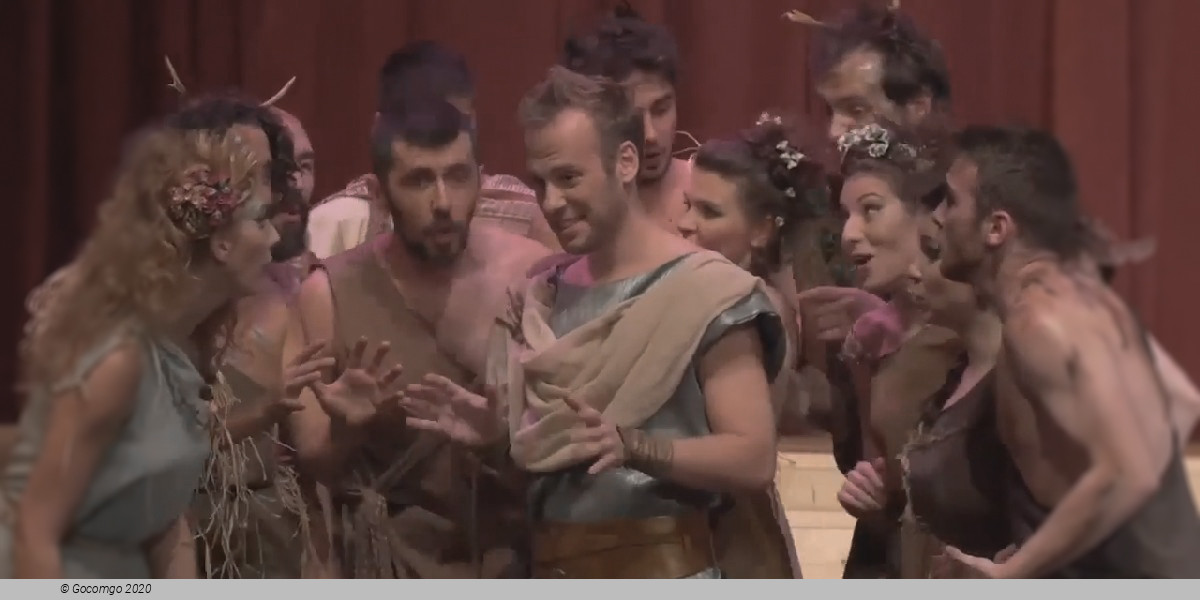
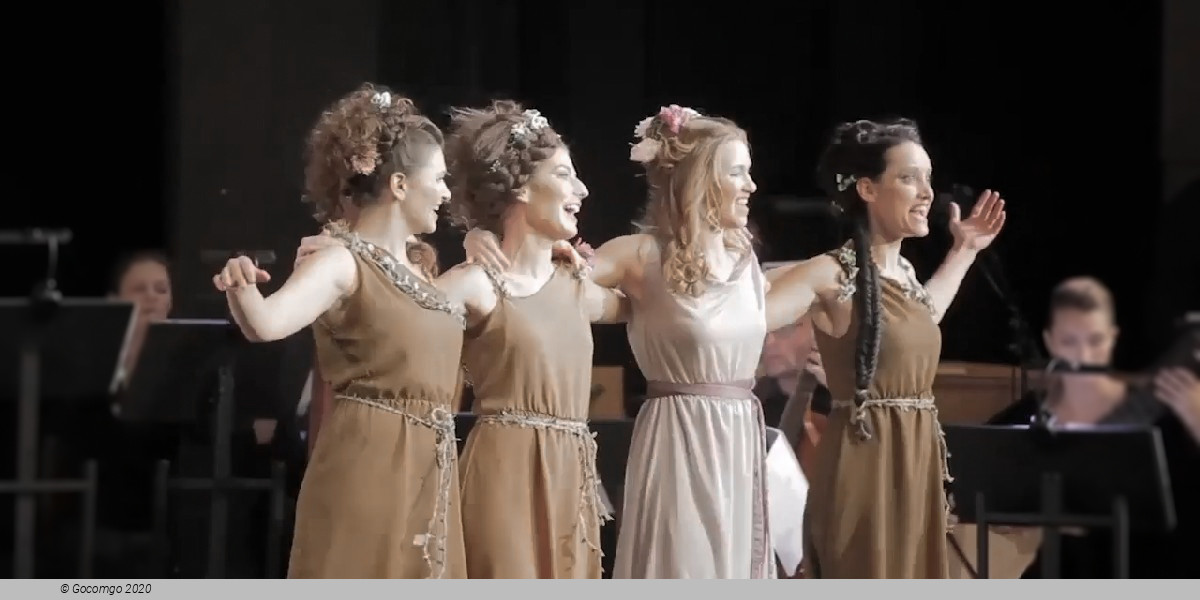
After La musica's final request for silence, the curtain rises on act 1 to reveal a pastoral scene. Orfeo and Euridice enter together with a chorus of nymphs and shepherds, who act in the manner of a Greek chorus, commenting on the action both as a group and as individuals. A shepherd announces that this is the couple's wedding day; the chorus responds, first in a stately invocation ("Come, Hymen, O come") and then in a joyful dance ("Leave the mountains, leave the fountains"). Orfeo and Euridice sing of their love for each other before leaving with most of the group for the wedding ceremony in the temple. Those left on stage sing a brief chorus, commenting on how Orfeo used to be one "for whom sighs were food and weeping was drink" before love brought him to a state of sublime happiness.

Act 2

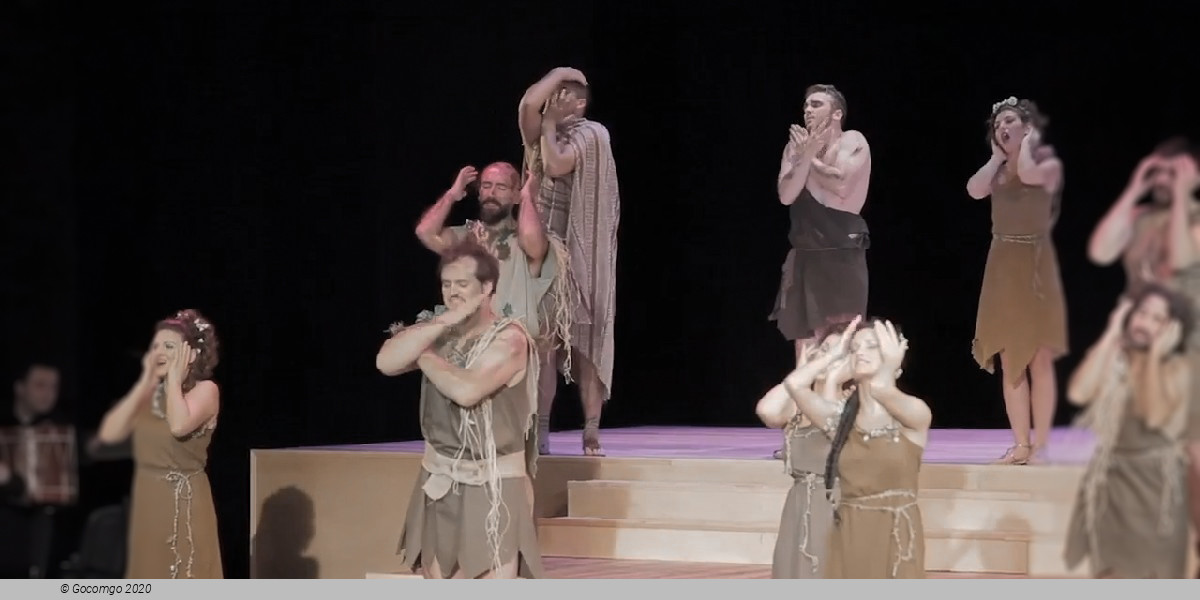
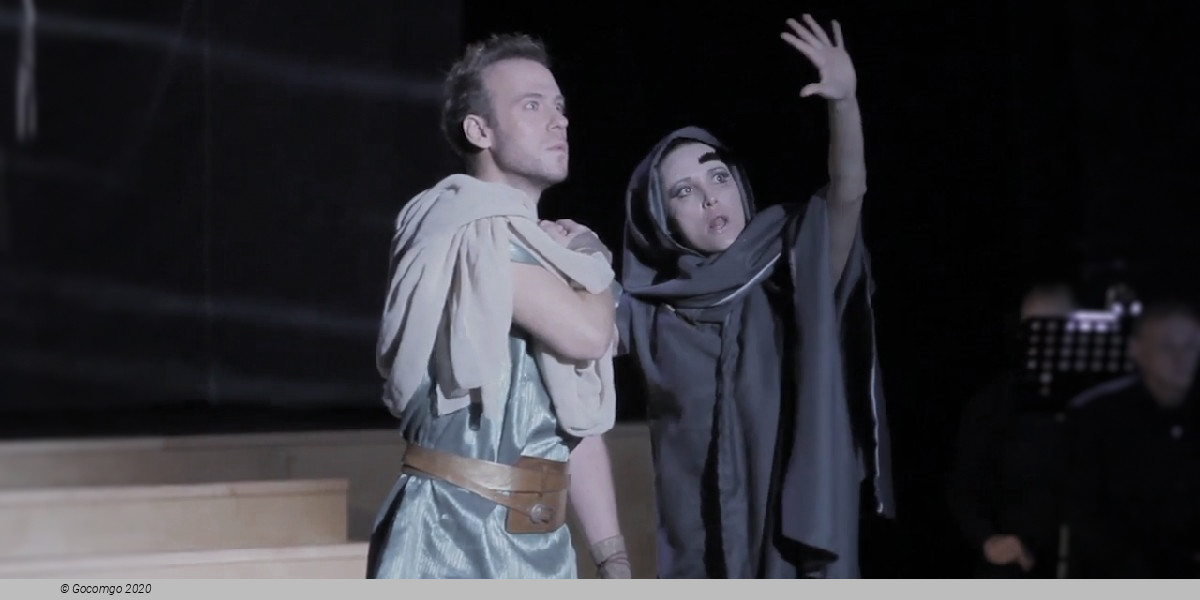
Orfeo returns with the main chorus, and sings with them of the beauties of nature. Orfeo then muses on his former unhappiness, but proclaims: "After grief one is more content, after pain one is happier". The mood of contentment is abruptly ended when La messaggera enters, bringing the news that, while gathering flowers, Euridice has received a fatal snakebite. The chorus expresses its anguish: "Ah, bitter happening, ah, impious and cruel fate!", while the Messaggera castigates herself as the bearing of bad tidings ("For ever I will flee, and in a lonely cavern lead a life in keeping with my sorrow"). Orfeo, after venting his grief and incredulity ("Thou art dead, my life, and I am breathing?"), declares his intention to descend into the Underworld and persuade its ruler to allow Euridice to return to life. Otherwise, he says, "I shall remain with thee in the company of death". He departs, and the chorus resumes its lament.

Act 3

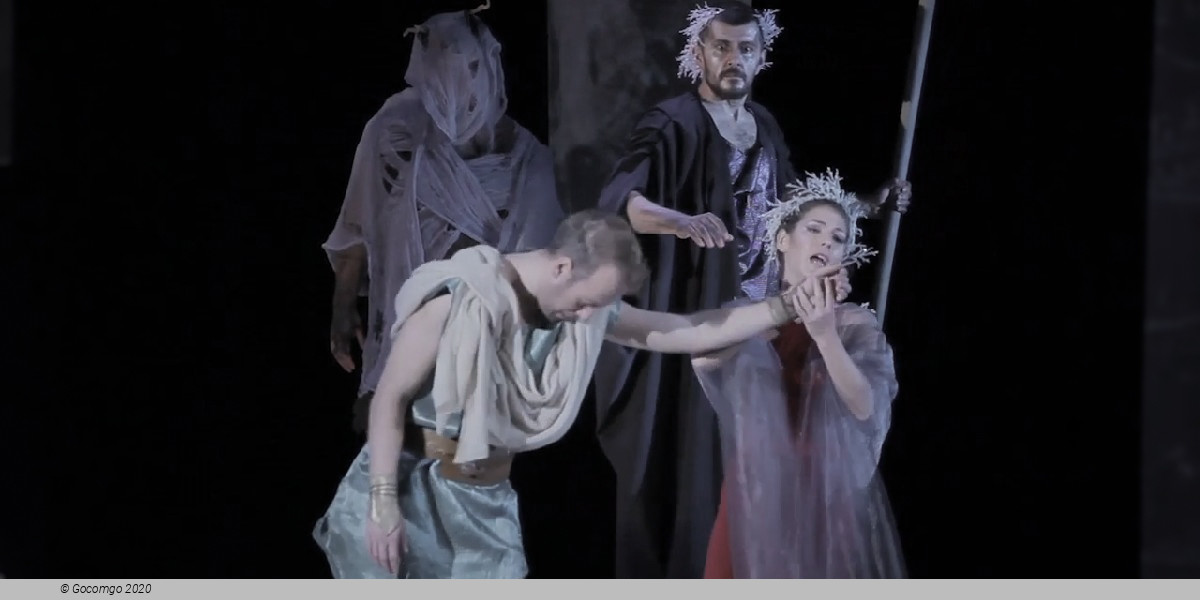
Orfeo is guided by Speranza to the gates of Hades. Having pointed out the words inscribed on the gate ("Abandon hope, all ye who enter here"), Speranza leaves. Orfeo is now confronted with the ferryman Caronte, who addresses Orfeo harshly and refuses to take him across the river Styx. Orfeo attempts to persuade Caronte by singing a flattering song to him ("Mighty spirit and powerful divinity"), but the ferryman is unmoved. However, when Orfeo takes up his lyre and plays, Caronte is soothed into sleep. Seizing his chance, Orfeo steals the ferryman's boat and crosses the river, entering the Underworld while a chorus of spirits reflects that nature cannot defend herself against man: "He has tamed the sea with fragile wood, and disdained the rage of the winds."

Act 4

In the Underworld, Proserpina, Queen of Hades, who has been deeply affected by Orfeo's singing, petitions King Plutone, her husband, for Euridice's release. Moved by her pleas, Plutone agrees on the condition that, as he leads Euridice towards the world, Orfeo must not look back. If he does, "a single glance will condemn him to eternal loss". Orfeo enters, leading Euridice and singing confidently that on that day he will rest on his wife's white bosom. But as he sings a note of doubt creeps in: "Who will assure me that she is following?". Perhaps, he thinks, Plutone, driven by envy, has imposed the condition through spite? Suddenly distracted by an off-stage commotion, Orfeo looks round; immediately, the image of Euridice begins to fade. She sings, despairingly: "Losest thou me through too much love?" and disappears. Orfeo attempts to follow her but is drawn away by an unseen force. The chorus of spirits sings that Orfeo, having overcome Hades, was in turn overcome by his passions.

Act 5

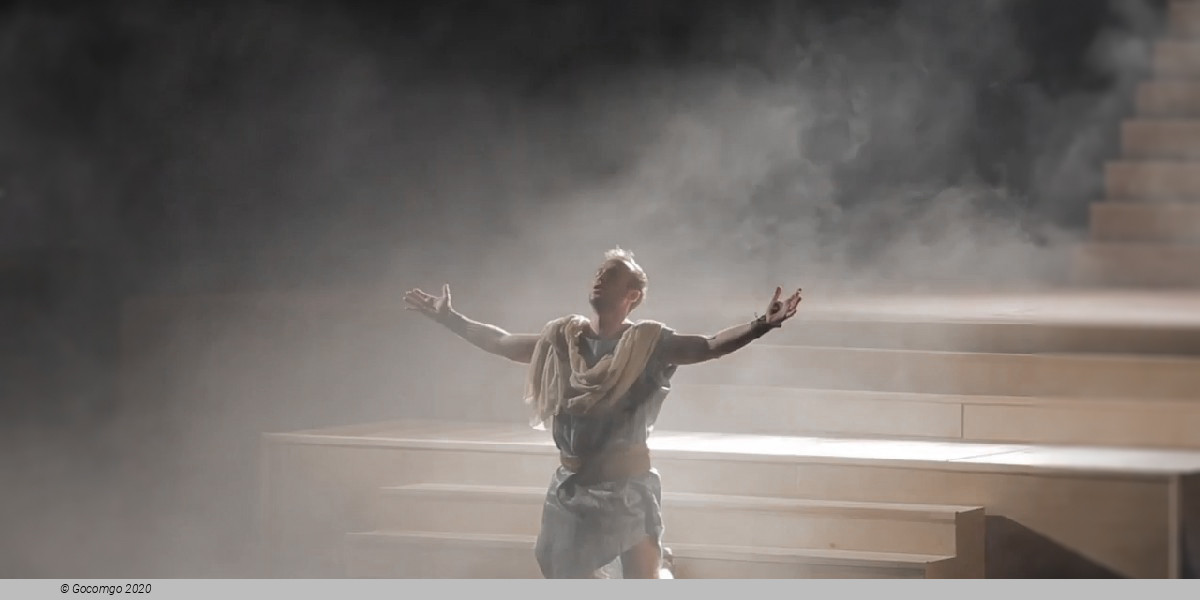
Back in the fields of Thrace, Orfeo has a long soliloquy in which he laments his loss, praises Euridice's beauty and resolves that his heart will never again be pierced by Cupid's arrow. An off-stage echo repeats his final phrases. Suddenly, in a cloud, Apollo descends from the heavens and chastises him: "Why dost thou give thyself up as prey to rage and grief?" He invites Orfeo to leave the world and join him in the heavens, where he will recognise Euridice's likeness in the stars. Orfeo replies that it would be unworthy not to follow the counsel of such a wise father, and together they ascend. A shepherds' chorus concludes that "he who sows in suffering shall reap the fruit of every grace", before the opera ends with a vigorous moresca.

Original libretto ending

In Striggio's 1607 libretto, Orfeo's act 5 soliloquy is interrupted, not by Apollo's appearance but by a chorus of maenads or Bacchantes—wild, drunken women—who sing of the "divine fury" of their master, the god Bacchus. The cause of their wrath is Orfeo and his renunciation of women; he will not escape their heavenly anger, and the longer he evades them the more severe his fate will be. Orfeo leaves the scene and his destiny is left uncertain, as the Bacchantes devote themselves for the rest of the opera to wild singing and dancing in praise of Bacchus. The early music authority Claude Palisca believes that the two endings are not incompatible; Orfeo might evade the fury of the Bacchantes and be rescued by Apollo. However, this alternative ending in any case nearer to original classic myth, where the Bacchantes also appear, but it is made explicit that they torture him to his death, followed by reunion as a shade with Euridice but no apotheosis nor any interaction with Apollo.

Venue Info

Teatro Real - Madrid
Location   Isabel II Square, s / n.

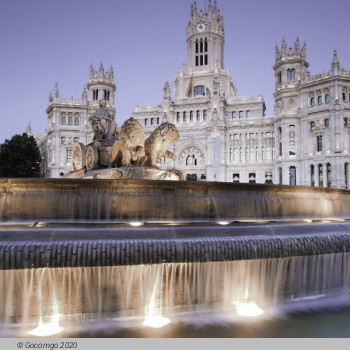
Teatro Real is a major opera house located in Madrid. Today the Teatro Real opera is one of the great theaters of Europe hosting large productions involving leading international figures in opera singing, musical direction, stage direction, and dance. Founded in 1818 and inaugurated on 19 November 1850, it closed in 1925 and reopened in 1966. Beginning in 1988 it underwent major refurbishing and renovation works and finally reopened in 1997 with a capacity of 1,746 seats. The theater offers visitors guided tours in several languages, including the auditorium, stage, workshops, and rehearsal rooms.

Founded by King Ferdinand VII in 1818, and after thirty-two years of planning and construction, a Royal Order on 7 May 1850 decreed the immediate completion of the "Teatro de Oriente" and the building works were finished within five months. The Opera House, located just in front of the Palacio Real, the official residence of the Queen who ordered the construction of the theatre, Isabel II, was finally inaugurated on 19 November 1850, with Donizetti's La Favorite.

The Teatro soon became one of the most prestigious opera houses in Europe. For over five decades it hosted the most renowned singers and composers of the time. In the early period, it saw famous opera singers such as Alboni, Frezzolini, Marietta Gazzaniga, Rosina Penco, Giulia Grisi, Giorgio Ronconi, Italo Gardoni, Mario de Candia and Antonio Selva among many others. In 1863, Giuseppe Verdi visited the theatre for the Spanish premiere of his La Forza del Destino. At its peak, in the last quarter of the 19th century, the Teatro hosted world renowned artists such as Adela Borghi, Marie Sasse, Adelina Patti, Christina Nilsson, Luisa Tetrazzini, Mattia Battistini, Julián Gayarre, Angelo Masini, Francesco Tamagno and Enrico Tamberlick. In 1925, the Ballets Russes of Diaghilev performed in the theatre with the presence of Nijinsky and Stravinsky.

From 1867 to 1925 the Teatro Real also housed the Madrid Royal Conservatory. In December of 1925 a Royal Order ordered its activities to be discontinued owing to the damage that the construction of the Metro de Madrid had caused to the building. The government set out to restore it and ordered numerous projects to be drawn out for its renovation, such as that from architect Urdanpilleta Flórez, who proposed a monumental remodeling of the building. However, financial difficulties prevented the completion of these projects and led to a simple restoration, sponsored by the Juan March Institute, and carried out first by the architect Manuel Gonzalez Valcárcel, and later by architects Miguel Verdú Belmonte and Francisco Rodriguez Partearroyo.

The theatre reopened in 1966 as a concert hall as well as the main concert venue for the Spanish National Orchestra and the RTVE Symphony Orchestra. The reopening was celebrated with a concert of the Spanish National Orchestra conducted by Rafael Frühbeck de Burgos, and the Orfeón Donostiarra. In 1969, the 14th Eurovision Song Contest was held at the theatre, featuring an onstage metal sculpture created by surrealist Spanish artist Salvador Dalí.

Important Info
Type: Opera
City: Madrid, Spain
Starts at: 18:00
Acts: 5
Top of page