
Teatro Real 17 April 2023 - Premiere Nixon in China Premiere | GoComGo.com

Premiere
Nixon in China Premiere

Teatro Real, Main Auditorium, Madrid, Spain
All photos (10)
Select date and time
7:30 PM

E-tickets: Print at home or at the box office of the event if so specified. You will find more information in your booking confirmation email.

You can only select the category, and not the exact seats.
If you order 2 or 3 tickets: your seats will be next to each other.
If you order 4 or more tickets: your seats will be next to each other, or, if this is not possible, we will provide a combination of groups of seats (at least in pairs, for example 2+2 or 2+3).

Important Info
Type: Opera
City: Madrid, Spain
Starts at: 19:30
Acts: 3

E-tickets: Print at home or at the box office of the event if so specified. You will find more information in your booking confirmation email.

You can only select the category, and not the exact seats.
If you order 2 or 3 tickets: your seats will be next to each other.
If you order 4 or more tickets: your seats will be next to each other, or, if this is not possible, we will provide a combination of groups of seats (at least in pairs, for example 2+2 or 2+3).

Overview

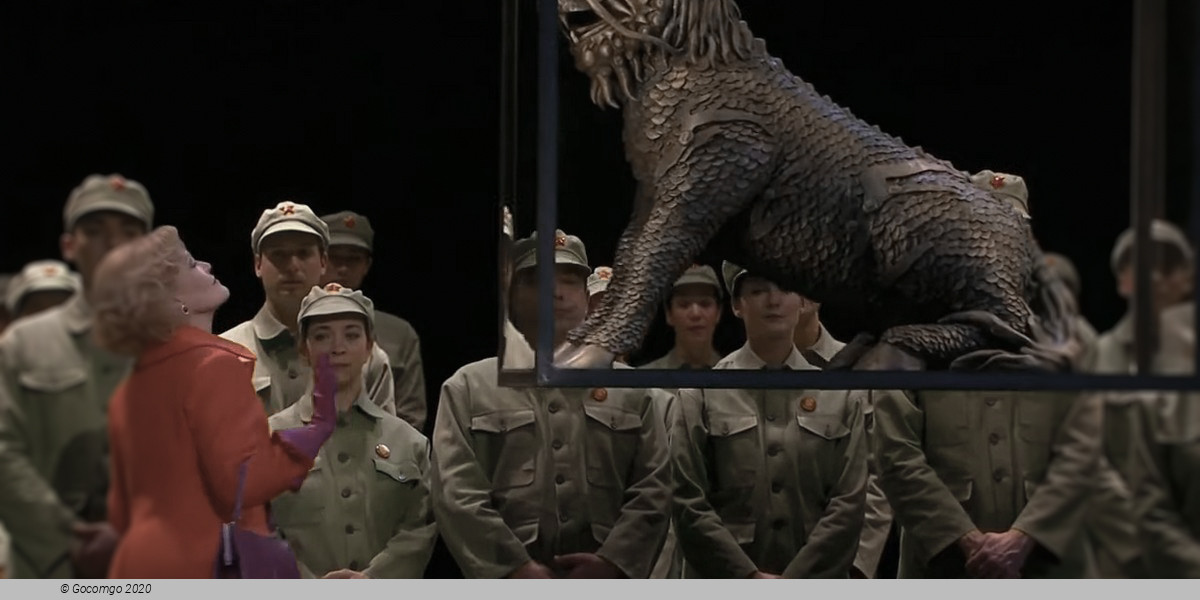
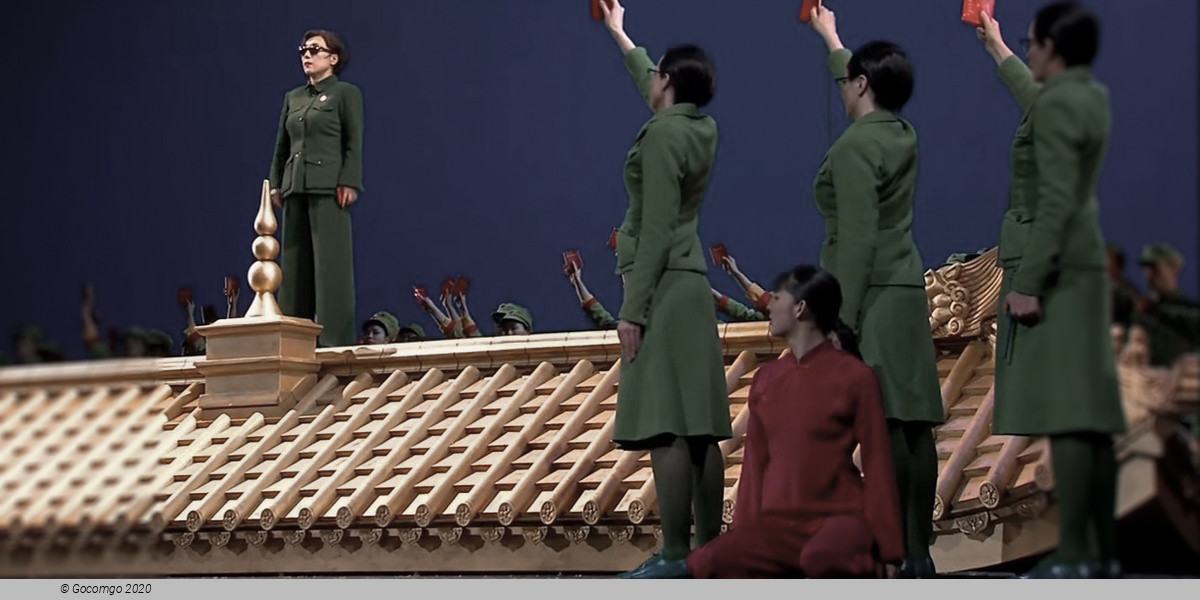
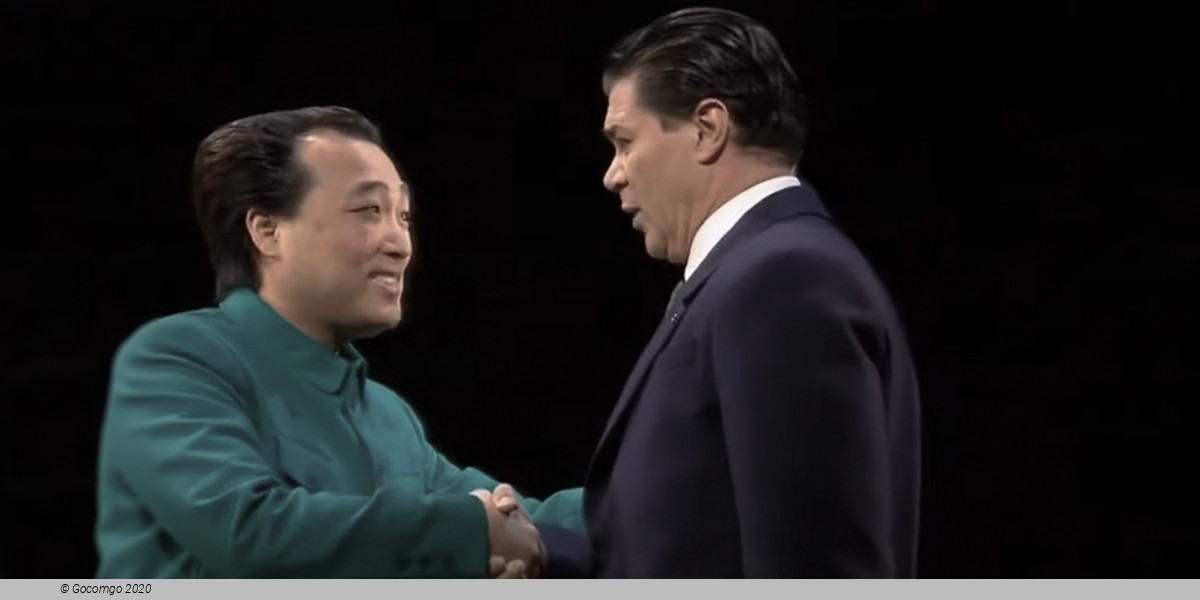
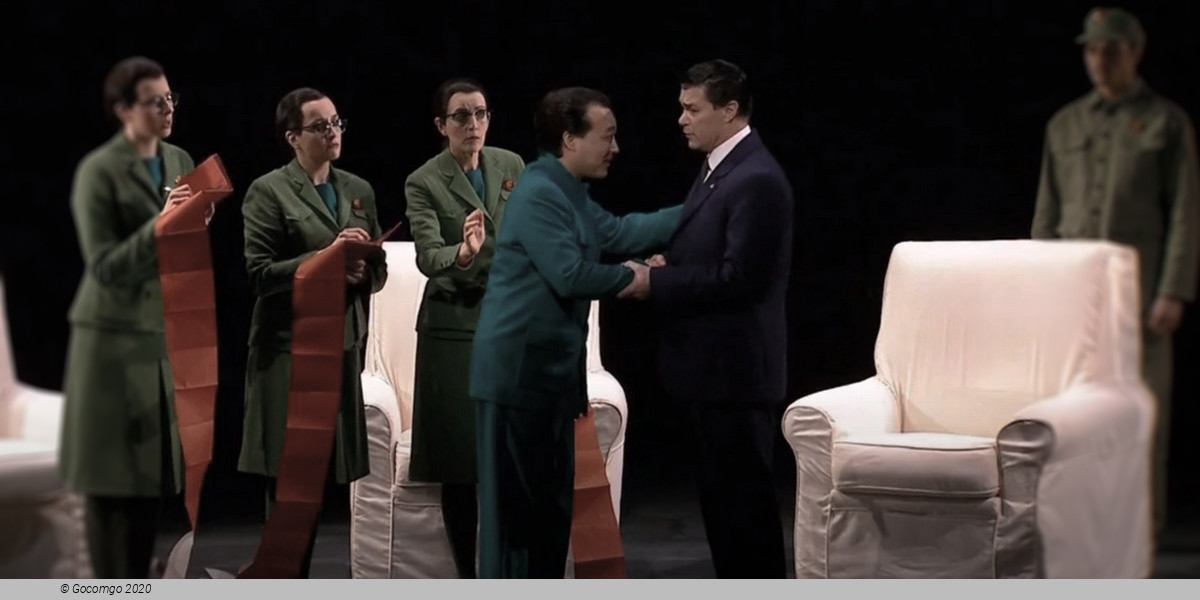
With staging inspired by the Maoist ballet Red Detachment of Women, the libretto by Alice Goodman recreates the historic meeting of the President of the United States with the Great Helmsman, Mao Zedong, in February 1972. Making use of extensive iconography from the Richard Nixon Foundation and the Richard Nixon Museum, this production by John Fulljames (Street Scene at the Teatro Real in 2018) immerses the audience in this original reflection about culture shock, the exercising - and loneliness -.  of power, and its authoritarian repercussions.

A title like Nixon in China for an opera could only be interpreted in 1987 as an intriguing gag or a daring gesture of militant postmodernism. Nonetheless, the grammatical structure of this title, with innumerable precedents from the opera seria tradition –Achille in Sciro– and buffa –Il turco in Italia–, tel us that we have an opera solidly rooted in the history of the genre here.  That is to say: arias, ensembles, concertantes, choruses and even ballets. Far from being forgotten, Nixon in China has been seen on stage without interruption from the moment of its premiere until now, with performances of singing legends such as June Anderson or Sumi Jo.

New production of the Teatro Real, in coproduction with Den Kongelige Opera de Copenhague and the Scottish Opera

History
Premiere of this production: 22 October 1987, Wortham Theater Center, Houston

Nixon in China is an opera in three acts by John Adams with a libretto by Alice Goodman. Adams's first opera, it was inspired by U.S. president Richard Nixon's 1972 visit to the People's Republic of China.

Synopsis

Time: February 1972.
Place: In and around Peking.

Act 1

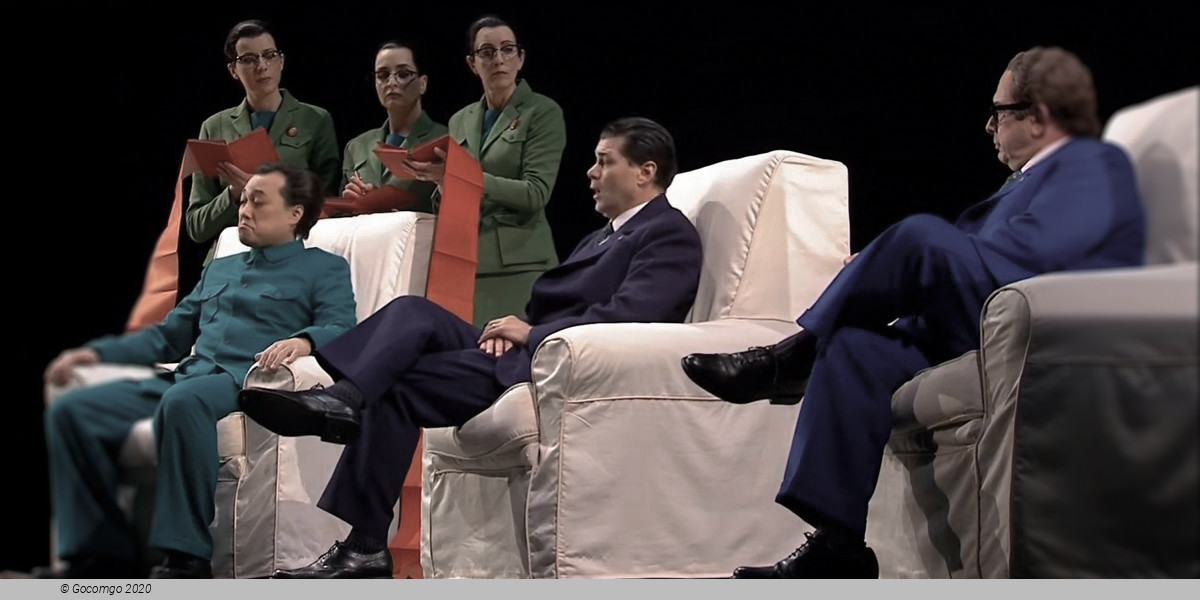
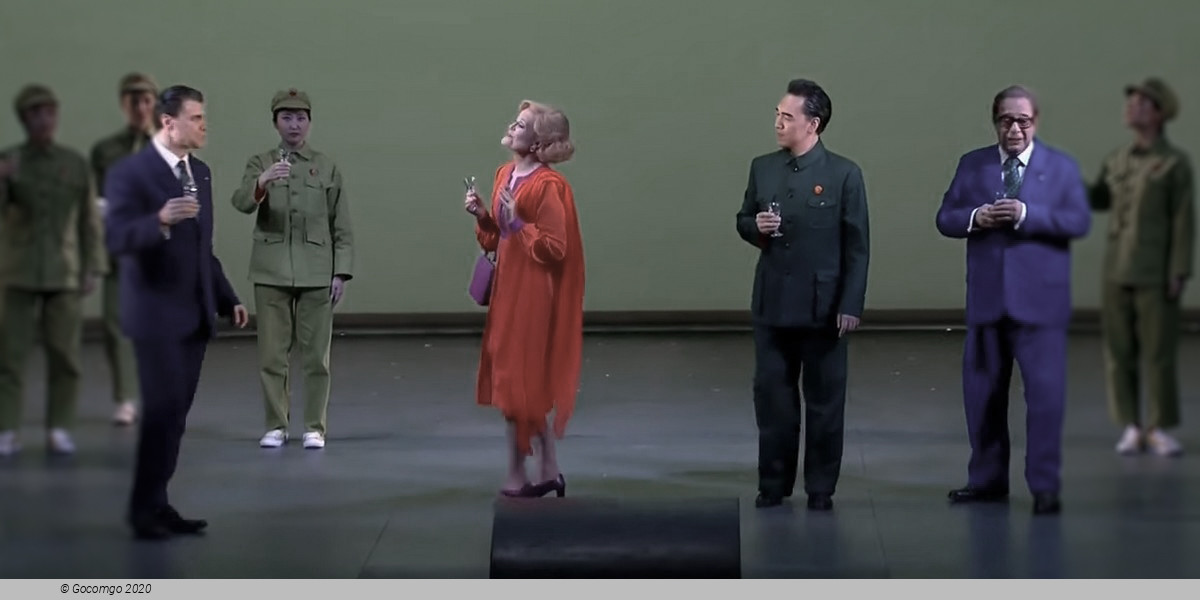
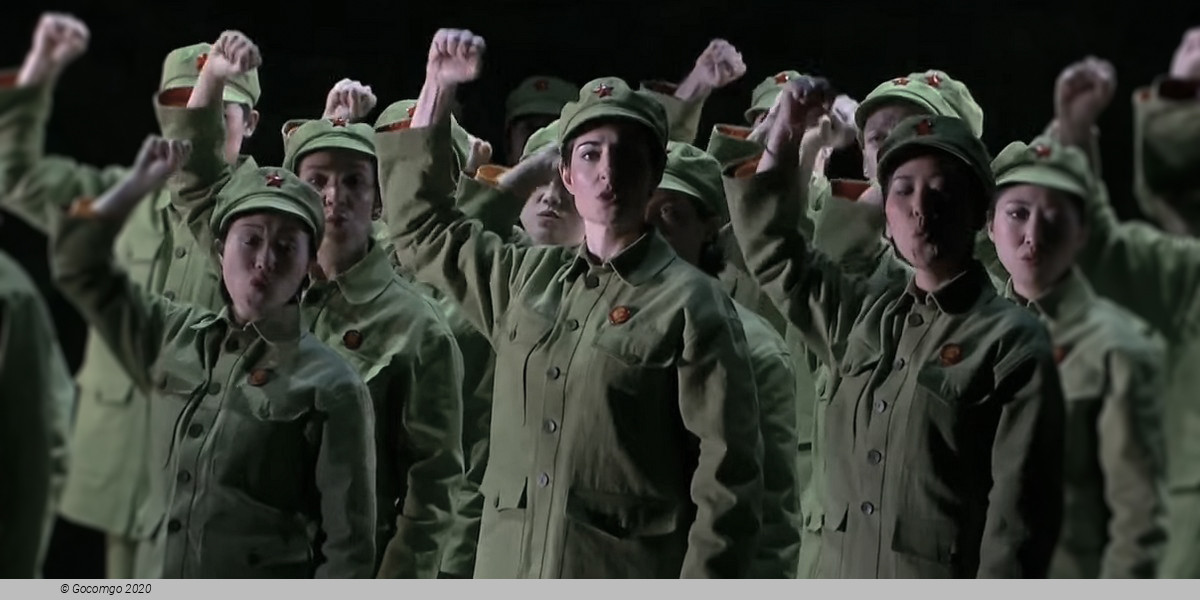
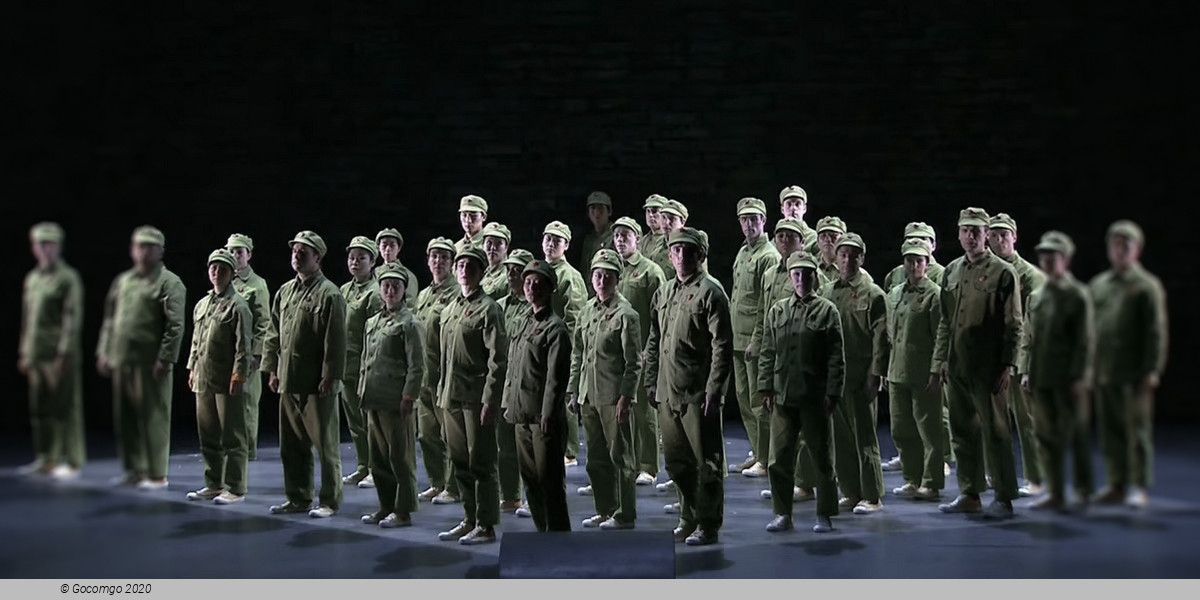
At Peking Airport, contingents of the Chinese military await the arrival of the American presidential aircraft "Spirit of '76", carrying Nixon and his party. The military chorus sings the Three Rules of Discipline and Eight Points for Attention. After the aircraft touches down, Nixon emerges with Pat Nixon and Henry Kissinger. The president exchanges stilted greetings with the Chinese premier, Chou En-lai, who heads the welcoming party. Nixon speaks of the historical significance of the visit, and of his hopes and fears for the encounter ("News has a kind of mystery"). The scene changes to Chairman Mao's study, where the Chairman awaits the arrival of the presidential party. Nixon and Kissinger enter with Chou, and Mao and the president converse in banalities as photographers record the scene. In the discussion that follows, the westerners are confused by Mao's gnomic and frequently impenetrable comments, which are amplified by his secretaries and often by Chou. The scene changes again, to the evening's banquet in the Great Hall of the People. Chou toasts the American visitors ("We have begun to celebrate the different ways") and Nixon responds ("I have attended many feasts"), after which the toasts continue as the atmosphere becomes increasingly convivial. Nixon, a politician who rose to prominence on anti-communism, announces: "Everyone, listen; just let me say one thing. I opposed China, I was wrong".

Act 2

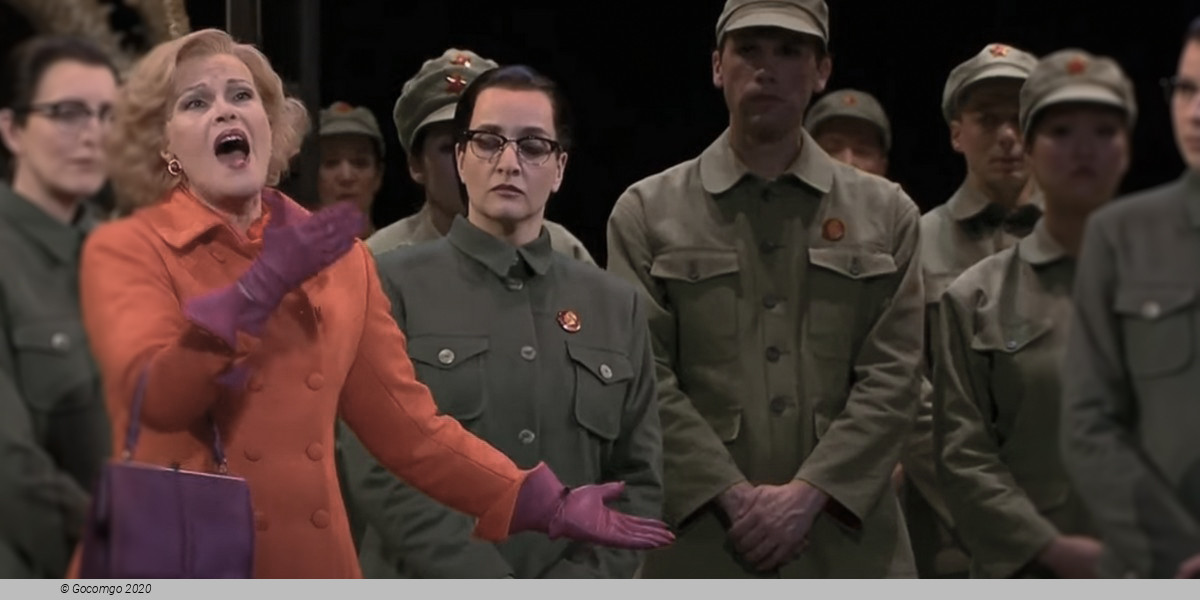
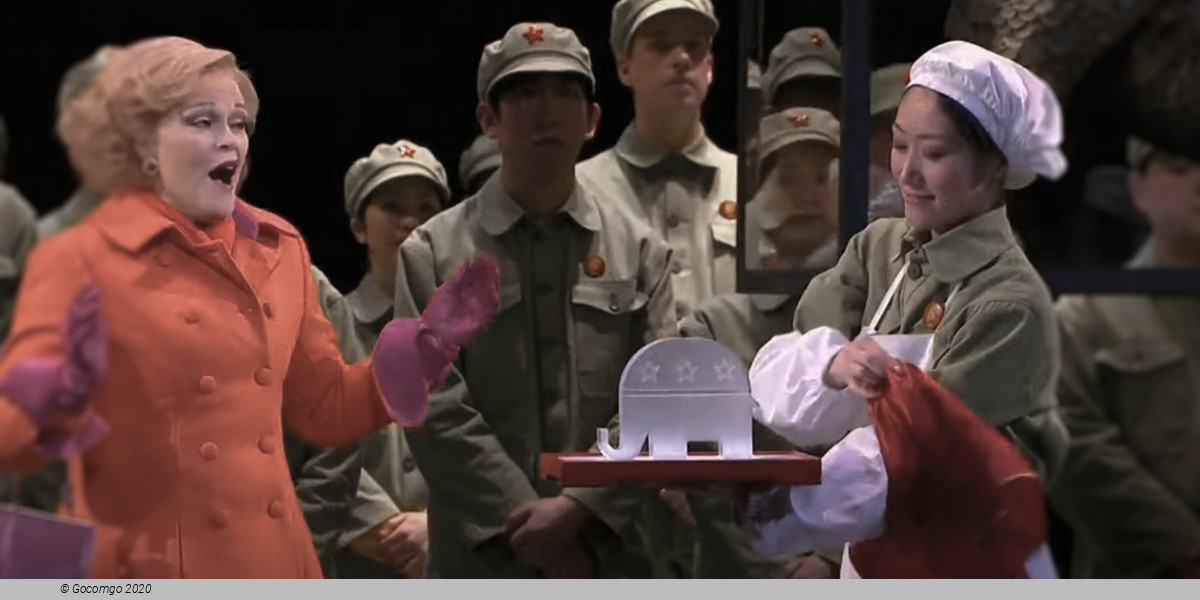
Pat Nixon is touring the city, with guides. Factory workers present her with a small model elephant which, she delightedly informs them, is the symbol of the Republican Party which her husband leads. She visits a commune where she is greeted enthusiastically, and is captivated by the children's games that she observes in the school. "I used to be a teacher many years ago", she sings, "and now I'm here to learn from you". She moves on to the Summer Palace, where in a contemplative aria ("This is prophetic") she envisages a peaceful future for the world. In the evening the presidential party, as guests of Mao's wife Chiang Ch'ing, attends the Peking Opera for a performance of a political ballet-opera The Red Detachment of Women. This depicts the downfall of a cruel and unscrupulous landlord's agent (played by an actor who strongly resembles Kissinger) at the hands of brave women revolutionary workers. The action deeply affects the Nixons; at one point Pat rushes onstage to help a peasant girl she thinks is being whipped to death. As the stage action ends, Chiang Ch'ing, angry at the apparent misinterpretation of the piece's message, sings a harsh aria ("I am the wife of Mao Tse-tung"), praising the Cultural Revolution and glorifying her own part in it. A revolutionary chorus echoes her words.

Act 3
On the last evening of the visit, as they lie in their respective beds, the chief protagonists muse on their personal histories in a surreal series of interwoven dialogues. Nixon and Pat recall the struggles of their youth; Nixon evokes wartime memories ("Sitting round the radio"). Mao and Chiang Ch'ing dance together, as the Chairman remembers "the tasty little starlet" who came to his headquarters in the early days of the revolution. As they reminisce, Chiang Ch'ing asserts that "the revolution must not end". Chou meditates alone; the opera finishes on a thoughtful note with his aria "I am old and I cannot sleep", asking: "How much of what we did was good?" The early morning birdcalls are summoning him to resume his work, while "outside this room the chill of grace lies heavy on the morning grass".

Venue Info

Teatro Real - Madrid
Location   Isabel II Square, s / n.

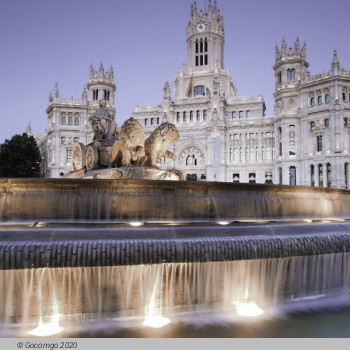
Teatro Real is a major opera house located in Madrid. Today the Teatro Real opera is one of the great theaters of Europe hosting large productions involving leading international figures in opera singing, musical direction, stage direction, and dance. Founded in 1818 and inaugurated on 19 November 1850, it closed in 1925 and reopened in 1966. Beginning in 1988 it underwent major refurbishing and renovation works and finally reopened in 1997 with a capacity of 1,746 seats. The theater offers visitors guided tours in several languages, including the auditorium, stage, workshops, and rehearsal rooms.

Founded by King Ferdinand VII in 1818, and after thirty-two years of planning and construction, a Royal Order on 7 May 1850 decreed the immediate completion of the "Teatro de Oriente" and the building works were finished within five months. The Opera House, located just in front of the Palacio Real, the official residence of the Queen who ordered the construction of the theatre, Isabel II, was finally inaugurated on 19 November 1850, with Donizetti's La Favorite.

The Teatro soon became one of the most prestigious opera houses in Europe. For over five decades it hosted the most renowned singers and composers of the time. In the early period, it saw famous opera singers such as Alboni, Frezzolini, Marietta Gazzaniga, Rosina Penco, Giulia Grisi, Giorgio Ronconi, Italo Gardoni, Mario de Candia and Antonio Selva among many others. In 1863, Giuseppe Verdi visited the theatre for the Spanish premiere of his La Forza del Destino. At its peak, in the last quarter of the 19th century, the Teatro hosted world renowned artists such as Adela Borghi, Marie Sasse, Adelina Patti, Christina Nilsson, Luisa Tetrazzini, Mattia Battistini, Julián Gayarre, Angelo Masini, Francesco Tamagno and Enrico Tamberlick. In 1925, the Ballets Russes of Diaghilev performed in the theatre with the presence of Nijinsky and Stravinsky.

From 1867 to 1925 the Teatro Real also housed the Madrid Royal Conservatory. In December of 1925 a Royal Order ordered its activities to be discontinued owing to the damage that the construction of the Metro de Madrid had caused to the building. The government set out to restore it and ordered numerous projects to be drawn out for its renovation, such as that from architect Urdanpilleta Flórez, who proposed a monumental remodeling of the building. However, financial difficulties prevented the completion of these projects and led to a simple restoration, sponsored by the Juan March Institute, and carried out first by the architect Manuel Gonzalez Valcárcel, and later by architects Miguel Verdú Belmonte and Francisco Rodriguez Partearroyo.

The theatre reopened in 1966 as a concert hall as well as the main concert venue for the Spanish National Orchestra and the RTVE Symphony Orchestra. The reopening was celebrated with a concert of the Spanish National Orchestra conducted by Rafael Frühbeck de Burgos, and the Orfeón Donostiarra. In 1969, the 14th Eurovision Song Contest was held at the theatre, featuring an onstage metal sculpture created by surrealist Spanish artist Salvador Dalí.

Important Info
Type: Opera
City: Madrid, Spain
Starts at: 19:30
Acts: 3
Top of page