
Teatro Real 1 November 2023 - Premiere Orlando paladino (concert version) | GoComGo.com

Premiere
Orlando paladino (concert version)

Teatro Real, Main Auditorium, Madrid, Spain
All photos (1)
Select date and time
7:30 PM

E-tickets: Print at home or at the box office of the event if so specified. You will find more information in your booking confirmation email.

You can only select the category, and not the exact seats.
If you order 2 or 3 tickets: your seats will be next to each other.
If you order 4 or more tickets: your seats will be next to each other, or, if this is not possible, we will provide a combination of groups of seats (at least in pairs, for example 2+2 or 2+3).

Important Info
Type: Opera
City: Madrid, Spain
Starts at: 19:30
Acts: 3

E-tickets: Print at home or at the box office of the event if so specified. You will find more information in your booking confirmation email.

You can only select the category, and not the exact seats.
If you order 2 or 3 tickets: your seats will be next to each other.
If you order 4 or more tickets: your seats will be next to each other, or, if this is not possible, we will provide a combination of groups of seats (at least in pairs, for example 2+2 or 2+3).

Overview

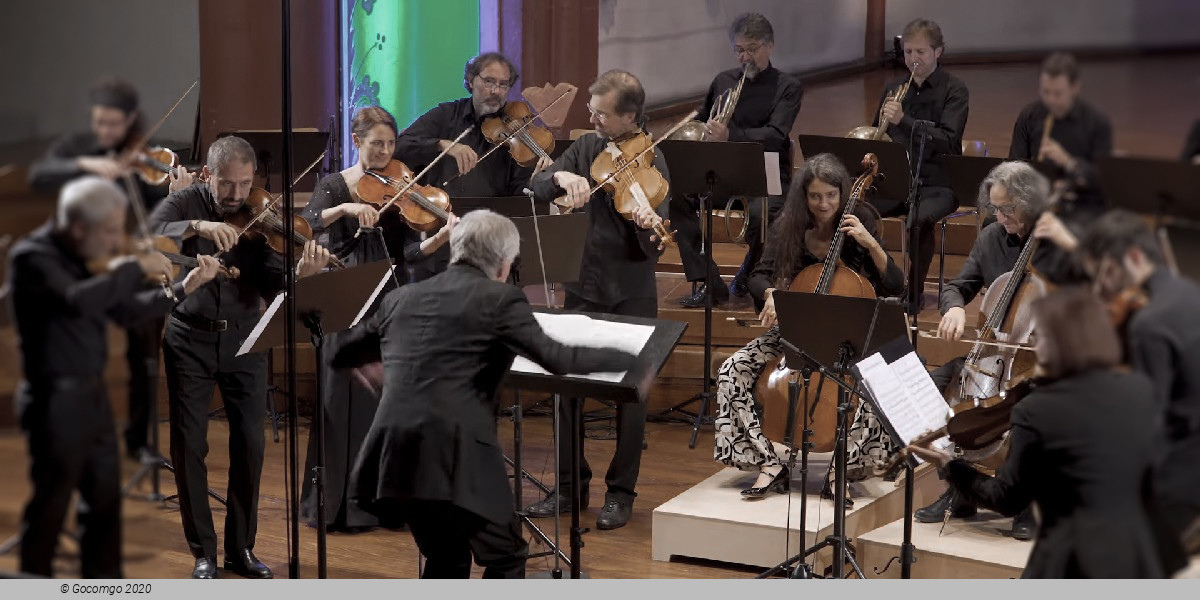
After almost fifteen years, an opera by Haydn returns to the Teatro Real. Irreverent and naughty, this concert version of the great classicism comes together with the renowned instrumental ensemble Il Giardino Armonico, conducted by Giovanni Antonini.

The Age of Enlightenment is known to us for the elevation of reason, the exaltation of virtue, moderation and, ultimately, all those attributes that we consider contrary to the fanciful, passionate or unpredictable nature that we presuppose in a good show. Haydn's Orlando Paladin shows us a totally different aspect of eighteenth-century rationality: that which consists in parodying —by reduction ad absurdum— the excesses of the Baroque era, taking in this case the already well-known —and outrageous— episode of jealousy of the famous Christian champion.

Thus —and in case we were few—, this Orlando paladin will have on this occasion a third suitor for Angelica, Rodomonte, king of Barbaria; a servant always ready to complain about the excesses of his employer, Pasquale, and an innocent couple of shepherds. Irreverent and naughty, the most performed opera during the composer's lifetime is also a premonition of the comic-serious approach and of some of the most emblematic characters of Mozartian operas, particularly Don Giovanni.

History
Premiere of this production: 06 December 1782, Eszterháza

Orlando paladino is an opera in three acts by Joseph Haydn which was first performed at Eszterháza on 6 December 1782. The libretto by Nunziano Porta is based on another libretto, Le pazzie d'Orlando, by Carlo Francesco Badini (set by the composer P.A. Guglielmi in 1771), itself inspired by Ariosto's epic poem Orlando furioso.

Synopsis

Act 1
Scene 1 – A mountainous landscape.

The shepherdess Eurilla and her father Licone are alarmed by the appearance of a threatening knight, searching for Angelica and Medoro. Eurilla tells him of their love and that they have taken refuge in the nearby castle. The knight reveals himself as Rodomonte, King of Barbary, infatuated with Angelica and intent on protecting her from Orlando’s jealousy.

Scene 2 – Angelica’s tower.
Angelica laments that she has to live in hiding to avoid Orlando’s mad frenzy. She summons the sorceress Alcina, who offers her protection. Medoro now enters with the unwelcome news that Orlando and his squire Pasquale have been sighted nearby but is unsure whether to stay or escape.

Scene 3 – A wood.
Pasquale is discovered by Rodomonte, who proceeds to challenge him, but is distracted by Eurilla, who says that Orlando is nearby looking for him. Alone with Eurilla, Pasquale explains that his life of adventure is blighted by a constant lack of food (and love).

Scene 4 – A garden with a fountain.
Medoro swears his fidelity to Angelica but despite her protests suggests that for her own safety he should leave her for a time. When they have gone, Orlando appears, cursing the obsession that drives him on, convinced that Medoro is the only obstacle to the fulfilment of his love. He sees that Medoro has carved Angelica’s name on every tree in the garden and smashes down the trees and fountain. 

Scene 5 – A grove.
The braggart Rodomonte is still in pursuit of Orlando and narrowly misses him when he arrives to interrogate Eurilla, on the whereabouts of Medoro.

Scene 6 – A delightful garden.
Angelica’s fearful premonitions are interrupted by Pasquale and Eurilla, who warn her of Orlando’s approach. Rodomonte joins them, still eager to fight Orlando, and then the peace-loving Medoro, in fear of Orlando’s prowess enters. Alcina appears and reassures the lovers, while warning Rodomonte that he cannot defeat Orlando. Orlando bursts in raving, but Alcina magically immobilises him and imprisons him in an iron cage.

Act 2

Scene 1 – A grove.
Orlando has been freed from the cage, but not from his madness. Rodomonte is once more about to attack him, but when Eurilla brings news that Medoro and Angelica have fled, Orlando dashes off in pursuit.

Scene 2 – A wide plain by the sea
Medoro seeks refuge by the sea, and at Eurilla’s suggestion, conceals himself in a grotto, asking her to tell Angelica of his unhappy fate. Eurilla and Pasquale discover their love for one another as she invites him to follow her to a castle. Angelica laments her suffering. Alcina plans to resolve the lovers’ difficulties. As Angelica is about the throw herself into the sea in despair, Alcina’s magic transports her to Medoro’s presence and they re-affirm their love. They are on the point of seeking a new refuge when Orlando appears, but Alcina intervenes again to allow the lovers to escape. Orlando is distracted by the sudden appearance of two sea-monsters.

Scene 3 – A room in the castle
Pasquale and Eurilla exchange more endearments. Rodomonte enters with Alcina, who invites all to her magic grotto.

Scene 4 – Alcina’s enchanted cave.
Orlando and Pasquale arrive in search of Alcina, and the paladin furiously insults the sorceress for protecting Medoro. She responds by turning him to stone. Angelica, Medoro, Eurilla and Rodomonte enter, marvelling at this sight. Alcina restores Orlando to his human state, but his frenzy is unabated. As Alcina retires to the back of the cave Orlando pursues her and the rock closes in behind him.

Act 3

Scene 1 – The Underworld, by the river Lethe, the Elysian Fields beyond
Charon, the infernal ferryman, watches over the sleeping Orlando. Alcina commands him to wash away Orlando’s madness with water from the river of forgetfulness, and Orlando wakens confused.

Scene 2 – A room in the castle
While discussing their marriage, Eurilla and Pasquale are interrupted by Orlando, seeking his squire’s aid.

Scene 3 – A forest
Angelica is pursued by wild savages. Medoro rushes to her assistance but is wounded. Rodomonte and Orlando engage in a duel.

Scene 4 – A courtyard
Angelica is delirious, believing that Medoro is dead. Alcina assures her that this is not so, but that he is healed of his wounds. Rodomonte and Orlando enter together, now comrades. The waters of Lethe have blanked from Orlando’s mind both his love for Angelica and his hatred of Medoro. Angelica and Medoro can now love one another without fear, Pasquale and Eurilla are united, and Orlando may go in search of fresh deeds of valour.

The opera is scored for flute, two oboes, two bassoons, two horns/trumpets, timpani, strings, continuo.

Venue Info

Teatro Real - Madrid
Location   Isabel II Square, s / n.

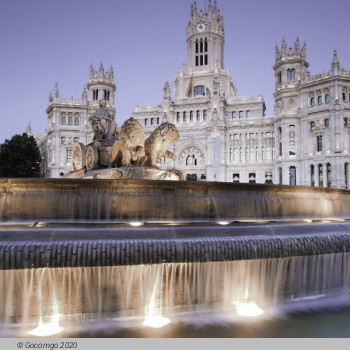
Teatro Real is a major opera house located in Madrid. Today the Teatro Real opera is one of the great theaters of Europe hosting large productions involving leading international figures in opera singing, musical direction, stage direction, and dance. Founded in 1818 and inaugurated on 19 November 1850, it closed in 1925 and reopened in 1966. Beginning in 1988 it underwent major refurbishing and renovation works and finally reopened in 1997 with a capacity of 1,746 seats. The theater offers visitors guided tours in several languages, including the auditorium, stage, workshops, and rehearsal rooms.

Founded by King Ferdinand VII in 1818, and after thirty-two years of planning and construction, a Royal Order on 7 May 1850 decreed the immediate completion of the "Teatro de Oriente" and the building works were finished within five months. The Opera House, located just in front of the Palacio Real, the official residence of the Queen who ordered the construction of the theatre, Isabel II, was finally inaugurated on 19 November 1850, with Donizetti's La Favorite.

The Teatro soon became one of the most prestigious opera houses in Europe. For over five decades it hosted the most renowned singers and composers of the time. In the early period, it saw famous opera singers such as Alboni, Frezzolini, Marietta Gazzaniga, Rosina Penco, Giulia Grisi, Giorgio Ronconi, Italo Gardoni, Mario de Candia and Antonio Selva among many others. In 1863, Giuseppe Verdi visited the theatre for the Spanish premiere of his La Forza del Destino. At its peak, in the last quarter of the 19th century, the Teatro hosted world renowned artists such as Adela Borghi, Marie Sasse, Adelina Patti, Christina Nilsson, Luisa Tetrazzini, Mattia Battistini, Julián Gayarre, Angelo Masini, Francesco Tamagno and Enrico Tamberlick. In 1925, the Ballets Russes of Diaghilev performed in the theatre with the presence of Nijinsky and Stravinsky.

From 1867 to 1925 the Teatro Real also housed the Madrid Royal Conservatory. In December of 1925 a Royal Order ordered its activities to be discontinued owing to the damage that the construction of the Metro de Madrid had caused to the building. The government set out to restore it and ordered numerous projects to be drawn out for its renovation, such as that from architect Urdanpilleta Flórez, who proposed a monumental remodeling of the building. However, financial difficulties prevented the completion of these projects and led to a simple restoration, sponsored by the Juan March Institute, and carried out first by the architect Manuel Gonzalez Valcárcel, and later by architects Miguel Verdú Belmonte and Francisco Rodriguez Partearroyo.

The theatre reopened in 1966 as a concert hall as well as the main concert venue for the Spanish National Orchestra and the RTVE Symphony Orchestra. The reopening was celebrated with a concert of the Spanish National Orchestra conducted by Rafael Frühbeck de Burgos, and the Orfeón Donostiarra. In 1969, the 14th Eurovision Song Contest was held at the theatre, featuring an onstage metal sculpture created by surrealist Spanish artist Salvador Dalí.

Important Info
Type: Opera
City: Madrid, Spain
Starts at: 19:30
Acts: 3
Top of page