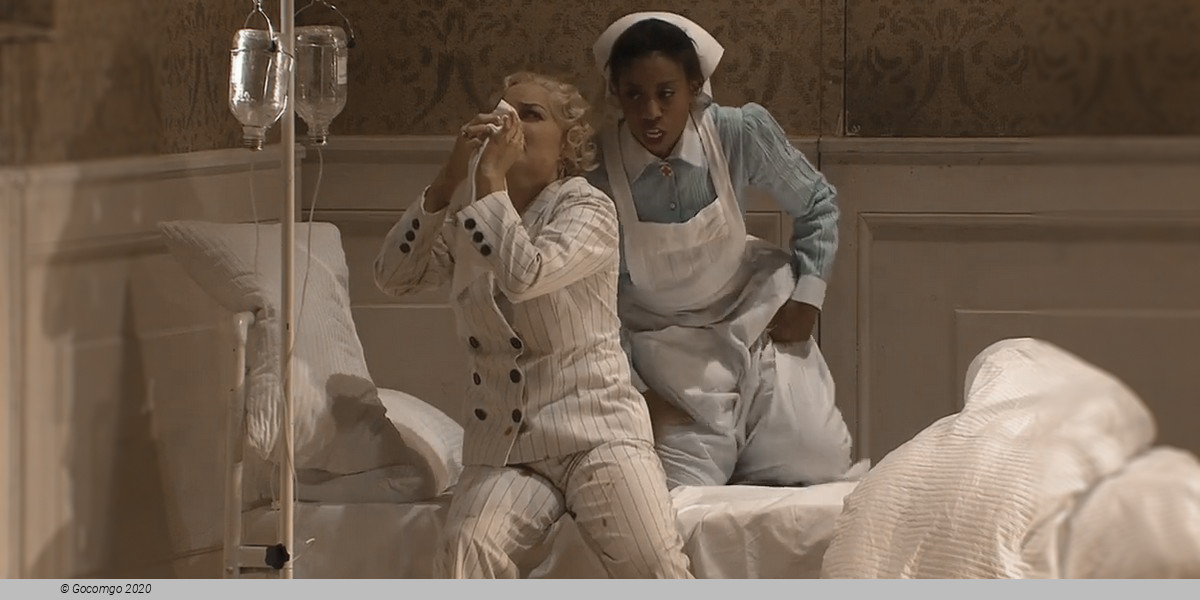
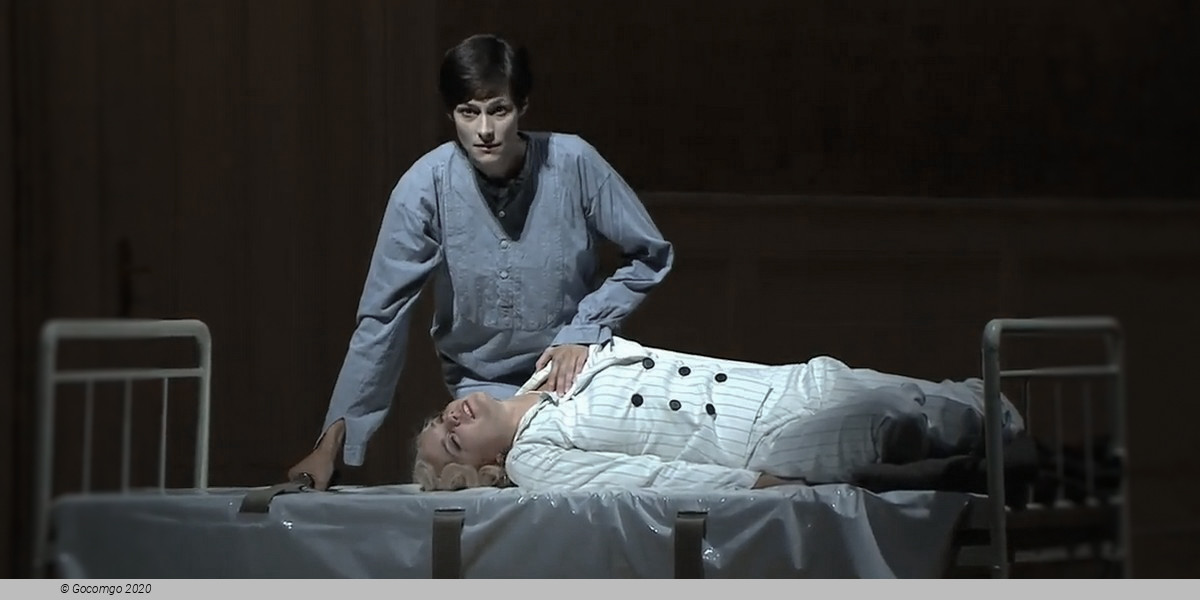
Orlando (Roland), a great soldier in Charlemagne's army, falls desperately in love with the pagan princess Angelica, who is in turn in love with another man, Medoro. Orlando cannot accept this and he is driven to madness, prevented from causing absolute carnage only by the magician Zoroastro (who eventually restores his sanity).
Act 1
On the summit of a mountain, at night - The wizard Zoroastro scans the heavens and sees signs in the stars that the warrior Orlando will once more turn to deeds of valour and recover from his passion for the princess of Cathay, Angelica. Orlando himself appears, torn between love and duty. With a wave of his wand, the magician conjures up disturbing visions of the great heroes of antiquity asleep at Cupid's feet. Zoroastro urges Orlando to forget Venus, the goddess of love, and once more follow Mars, god of war.(Aria:Lascia Amor). Orlando is at first shamed by Zoroastro's words but then decides love and duty do not necessarily conflict, reflecting that Hercules was not robbed of his status as a hero by his affair with Queen Omphale,or Achilles by disguising himself for a time as a woman (Aria:Non fu già men forte).
In a grove with shepherds' huts - The shepherdess Dorinda reflects on the beauties of nature, which however do not fill her with tranquility as they used to, which she feels may be a sign that she is falling in love. Orlando rushes across the scene with a princess, Isabella, that he has just rescued from danger, and Dorinda thinks he may be in love too. (Aria:Ho un certo rossore). Dorinda has been sheltering princess Angelica in her hut, as Angelica had found the wounded Moorish warrior Medoro near death and fallen desperately in love with him and brought him to recuperate in the shepherdess's hut with her. Dorinda is upset that Medoro and Angelica are in love, as she has fallen in love with Medoro herself, but Medoro tells Dorinda that Angelica is a relative of his and assures Dorinda that he will never forget her kindness to him (Aria:Se il cor mai ti dira). Dorinda knows Medoro is not telling the truth, but finds him utterly charming anyway (Aria:O care parolette).
Zoroastro tells Angelica he knows that she is in love with Medoro and warns her that Orlando's jealousy when he discovers this will lead to unpredictable and possibly dangerous results. When Angelica meets Orlando, she pretends to be jealous of his rescue of Princess Isabella, telling him he cannot expect her to love a man who may not be faithful to her (Aria: Se fedel vuoi ch’io ti creda). Orlando protests that he could never love anyone but her, and offers to do anything to prove it, including fighting fierce monsters (Aria:Fammi combattere).
As Orlando leaves, Medoro enters and asks Angelica who she was with. She explains that Orlando is a mighty warrior and besotted with her and advises that they should retreat to her kingdom in the east to escape his wrath. Dorinda is upset to see them embrace, but the lovers tell her not to be downhearted; one day she too will find love. Angelica presents Dorinda with a jewelled bracelet in gratitude for her hospitality (Trio:Consolati o bella).
Act 2
In a forest - Dorinda, inconsolable over the loss of Medoro, listens to the melancholy song of the nightingale and finds it chimes with her mood (Arioso:Quando spieghi tuoi tormenti). Orlando demands to know why Dorinda has been telling people he is in love with Isabella. Dorinda denies this and says she was speaking not of him but of Medoro and Angelica's love. She shows him the bracelet she claims Medoro gave her and says she sees his face in every brook and flower (Aria:Se mi rivolgo al prato). Orlando recognises the bracelet as one he had given Angelica and is furious at her betrayal. He vows to kill her, then himself, and pursue her in Hell itself (Aria:Cielo! se tu il consenti).
On one side, a grove of laurel trees, on the other, the entrance to a cave - Zoroastro advises Medoro and Angelica to flee Orlando's wrath and promises to protect them on their journey, advising them that they should always be guided by reason (Aria:Tra caligini profonde). Angelica and Medoro are saddened at having to leave the woods where they fell in love and Medoro carves their names into the trees as a memento (Aria:Verdi allori). Angelica is grateful to Orlando for having saved her life once and feels guilty for having lied to him, but tells herself that he will come to understand her love for Medoro, being in love himself (Aria:Non potrà dirmi ingrata). She takes a sad farewell of the beautiful grove where she first fell in love (Aria:Verdi piante).
Orlando rushes in and attempts to murder Angelica, who calls in vain for Medoro to rescue her. Zoroastro conjures up some spirits to whisk Angelica away in a cloud. Orlando begins to lose his reason: he imagines himself to be dead and sees himself entering Hades. He experiences a vision of his hated rival in the embrace of Proserpina, queen of the underworld, but then notices that Proserpina is crying and feels pity for her.(Accompagnato:Ah! Stigie larve). Becoming infuriated again, Orlando rushes into the cave, but it splits open, revealing Zoroastro in a flying chariot. He puts Orlando into it and carries him away.
Act 3
In a grove with palm trees - Medoro became separated from Angelica in the confusion and has returned to Dorinda's hut to seek refuge once more. He tells her he would love her if he could, but his heart is not his to give (Aria:Vorrei poterti amar). Dorinda comments on the whirlwind of passions caused by love (Aria:Amore è qual vento). Orlando appears and, addressing Dorinda as Venus, declares his love for her. Dorinda can see Orlando is still out of his senses, and this is even more apparent when he confuses her with a male enemy he had fought with previously.
Zoroastro appears and orders his attendant spirits to transform the grove to a dark cave, where he will try to restore Orlando to sanity. He knows that tempests eventually recede, and calm will return (Aria:Sorge infausta una procella).
Angelica finds Dorinda weeping and she explains that Orlando in his madness has burnt her cottage to the ground, killing Medoro in the process. Angelica is devastated and when Orlando appears she begs him to kill her too (Duet:: Finché prendi ancora il sangue).
Orlando hurls Angelica into the cave and, imagining he has rid the world of all its monsters, lies down to rest. Zoroastro declares the time has come for Orlando's mind to be healed; a magical bird descends with a golden phial, the contents of which the sorcerer sprinkles on Orlando's sleeping face. As Orlando begins to feel the effects of the magic potion, he sings the aria, Gia l'ebro mia ciglio. Orlando awakes, restored to reason, but is horrified to learn that he has killed both Medoro and Angelica and begs for death himself. Zoroastro has saved Angelica and Medoro however; Orlando is overjoyed to see them and wishes them a happy life together. Dorinda will forget her sorrow and invites everyone to her cottage to celebrate (Chorus: Con un diverso ardor, gia che ciascun e pago).







 Isabel II Square, s / n.