
Teatro Real 20 November 2021 - Partenope | GoComGo.com

Partenope

Teatro Real, Main Auditorium, Madrid, Spain
All photos (5)
Select date and time
7:30 PM
Request for Tickets
Important Info
Type: Opera
City: Madrid, Spain
Starts at: 19:30
Acts: 3
Sung in: Italian
Titles in: English,Spanish

E-tickets: Print at home or at the box office of the event if so specified. You will find more information in your booking confirmation email.

You can only select the category, and not the exact seats.
If you order 2 or 3 tickets: your seats will be next to each other.
If you order 4 or more tickets: your seats will be next to each other, or, if this is not possible, we will provide a combination of groups of seats (at least in pairs, for example 2+2 or 2+3).

Overview

Four suitors for one woman –one is a transvestite in disguise – is the point of departure of one of the most remarkable operas composed by Handel for the audiences of London.

With Partenope, the Saxon composer employed a dramatic register that combined the antihero and satirical character of 17th century Venetian operas with the sentimental comedies of confusion that characterized opera buffa. Rejected by the head of the Royal Academy of Music because the libretto was a product of “the depraved taste of the Italian audience”, nonetheless, Partenope was such a commercial success that it was revived seven years later on the same stage at the King’s Theatre.

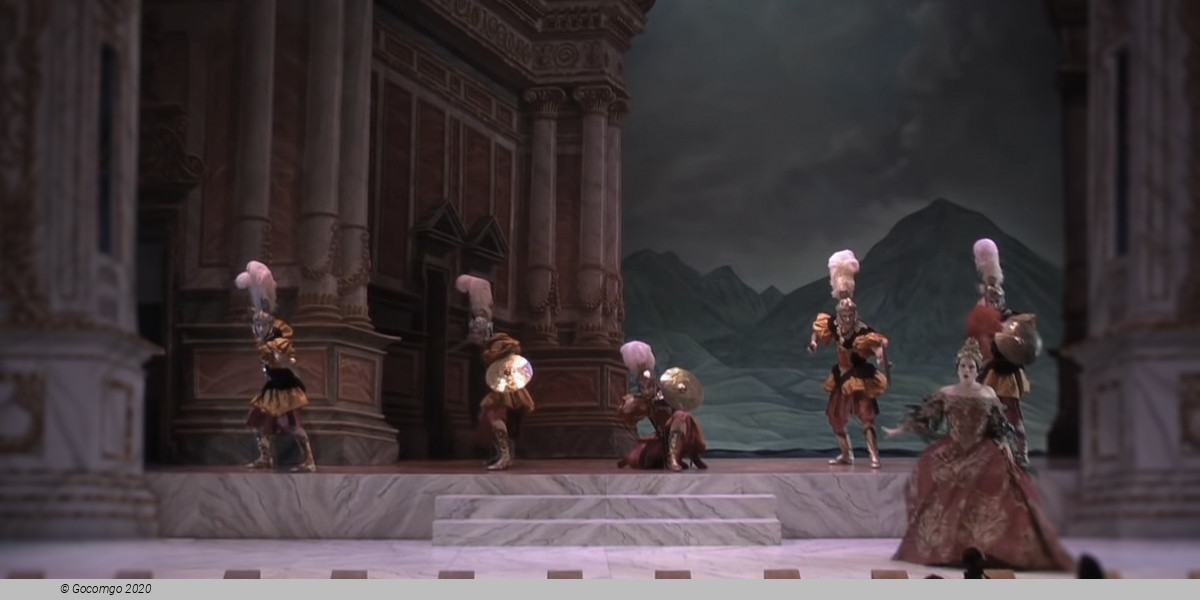
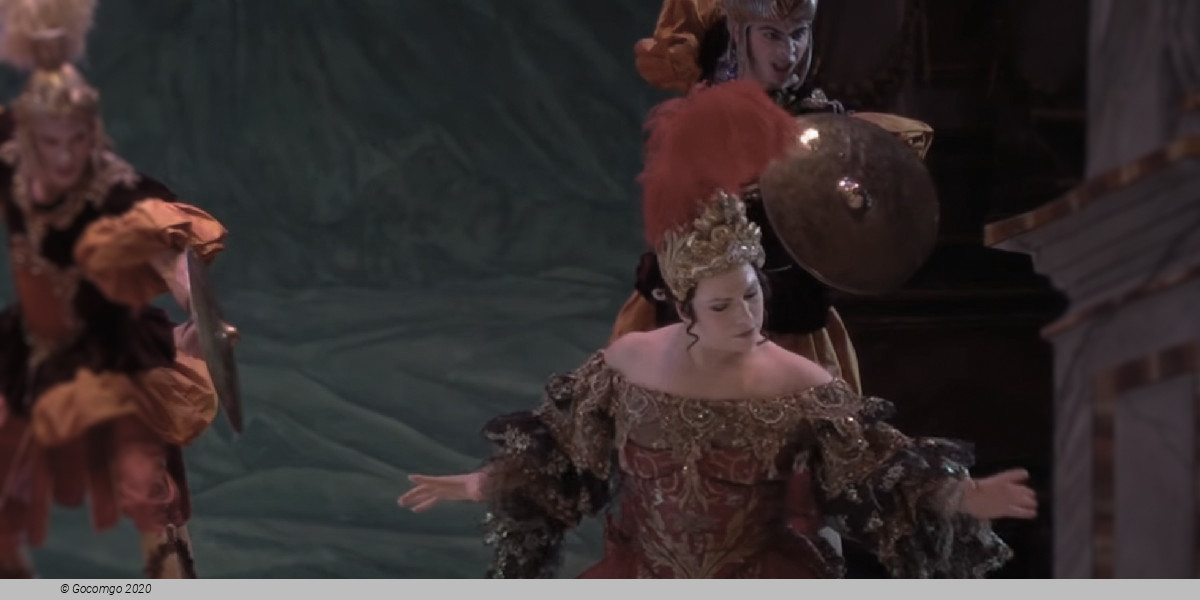
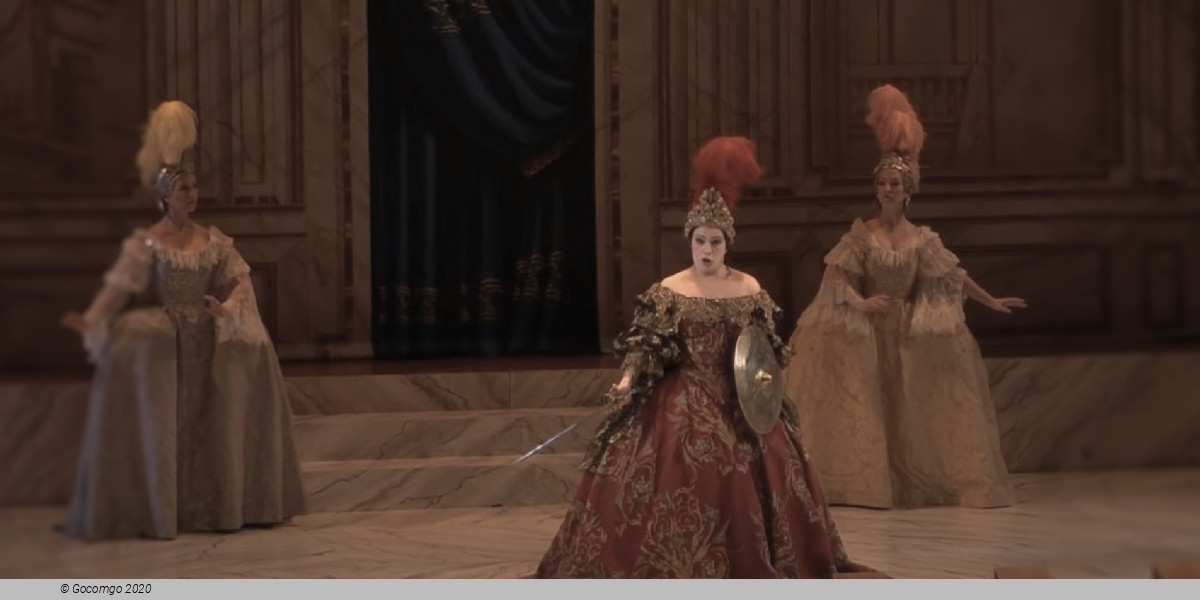
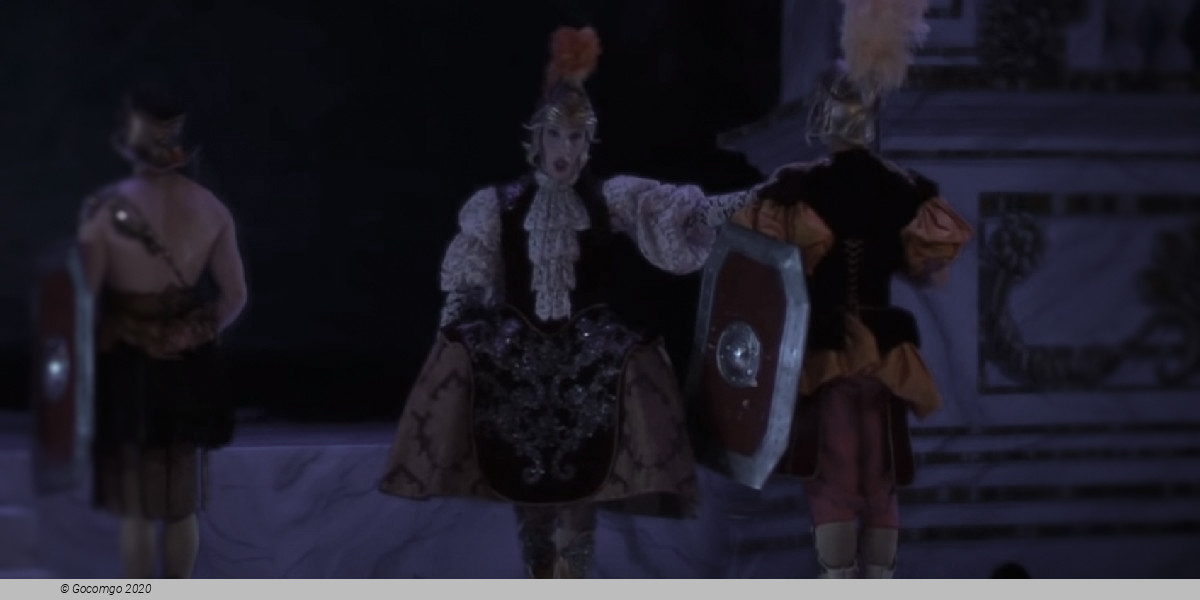
At a distance from the musical conventions of opera seria, the score of Partenope is lighter than customary, with its short arias and numerous ensembles. These push the action forward and bring it closer to a symbiosis between the singing voice and theatre. The stage direction of Christopher Alden –recipient of the Oliver Award for the Best New Opera Production in 2009– brings this delightful work to life in a sophisticated and urban setting inspired by the mansion of Nancy Cunard, where the world of photographer and visual artist Man Ray plays an important part.

Coproduction of the English National Opera, San Francisco Opera and Opera Australia

History
Premiere of this production: 24 February 1730, the King's Theatre, London

Partenope is an opera by George Frideric Handel, first performed at the King's Theatre in London on 24 February 1730. Although following the structure and forms of opera seria, the work is humorous in character and light-textured in music, with a plot involving romantic complications and gender confusion. A success with audiences at the time of its original production and then unperformed for many years, Partenope is now often seen on the world's opera stages.

Synopsis

Scene: Naples, in antiquity

Act 1
In the first scene we see Queen Partenope, founder of Naples, in her throne room adorned with a statue of Apollo, entertaining her guests, among them handsome and dashing Prince Arsace of Corinth, suitor for her hand, and the rather shy and lacking in confidence Prince Armindo of Rhodes, who is also in love with Partenope but cannot bring himself to tell her so. A new guest arrives and introduces "himself" as Prince Eurimene, but "he" is really the princess Rosmira in disguise, Arsace's previous fiancé whom he jilted when he decided to try to win the hand of Queen Partenope and who has tracked him down to Naples. Arsace is astounded by the resemblance of the newcomer "Eurimene" to his ex-girlfriend Rosmira and confronts her when they are alone. Rosmira admits it is she and berates him for his inconstancy. Arsace claims he still loves her, to which Rosmira replies that if so he can prove it by promising not to reveal her name or that she is a woman. Arsace solemnly swears to do so.

"Eurimene" /Rosmira also has a conversation with the sad Armindo whom she discovers really loves Partenope for herself, rather than just being after her position and money. Armindo can't bring himself to tell Partenope that he loves her because he thinks she prefers Arsace. Partenope herself has also noticed Armindo moping about and wants to know what the matter with him is. He does confess his love to her, to which she replies that she is committed to Arsace. Hearing this, Rosmira steps forward in her disguise as "Eurimene" and says "he" loves her too, hoping to keep Partenope from Arsace, but upsetting Armindo in the process.

Yet another suitor for Partenope's hand arrives, Prince Emilio of the neighbouring kingdom of Cumae. He has brought his army with him, and demands she agree to marry him. She refuses and he threatens her with war, to which she replies that she will not be intimidated. She says she will go into battle and fight herself and asks Arsace to lead her troops, which makes the other suitors jealous.

Alone with "Eurimene", Armindo is feeling very down about the fact that "Eurimene" is his rival, but "Eurimene" assures him that is not really the case.

Act 2
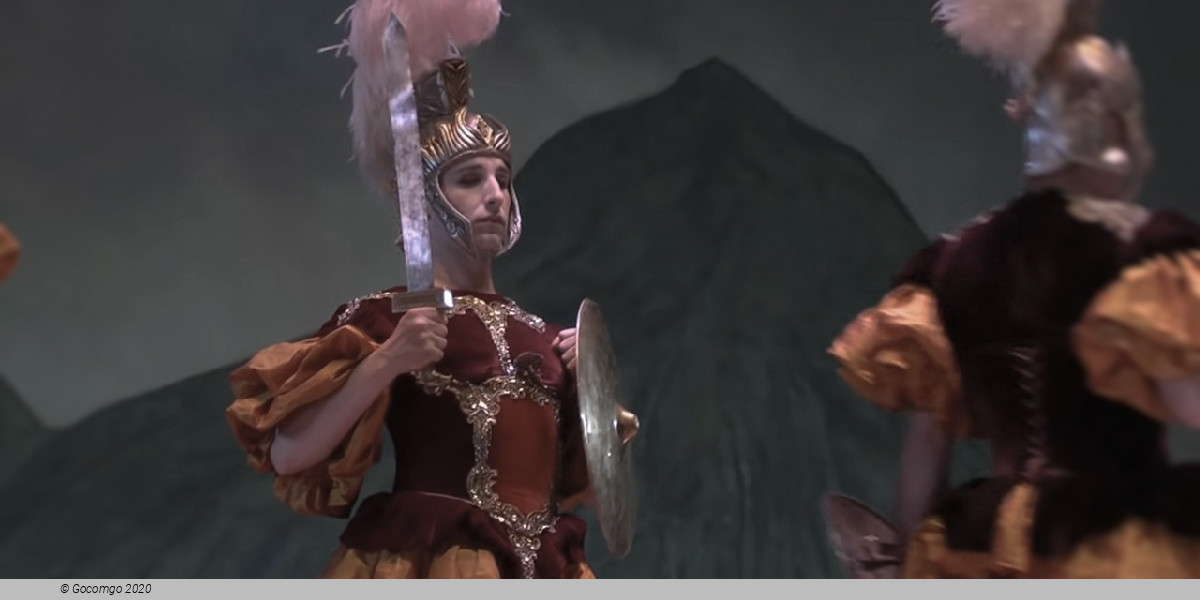
The second act begins with a depiction onstage of the battle between Partenope's and Emilio's forces. Partenope is ultimately victorious,and Emilio is imprisoned, but not before Armindo has rescued her from a dangerous situation and thereby saved her life. Rosmira, in her identity as "Eurimene", also fought in the battle and proudly asserts that "he" captured Emilio. Arsace denies this, claiming credit for that himself. At this "Eurimene" challenges Arsace to a duel.

Armindo once again tells Partenope how much he loves her. She is more encouraging to him this time but does not commit herself.

Arsace tries to make things up with Rosmira but she is very disdainful towards him. Arsace is torn between his desire for Queen Partenope and his old love Rosmira.

Act 3
Rosmira, still in disguise as "Eurimene",tells Queen Partenope that "he" challenged Arsace to a duel because "he" was sent by Princess Rosmira to avenge her honour on the man who promised to marry her but jilted her at the altar. The horrified Partenope asks Arsace if this is true and he has to admit it is. Partenope declares she will have nothing more to do with him; Armindo is looking better and better to her as prospective husband.

Arsace is having a sleepless night, knowing that he will be expected to fight "Eurimene" in a duel the next day. But how can he fight a duel with the girl he loves? Rosmira comes to him in his rooms, watched by Partenope. When Arsace calls Rosmira's name, Partenope steps forward accusing him of faithlessness, and Rosmira /"Eurimene" does the same.

The next morning, all assemble for the duel between Arsace and "Eurimene". Arsace is in a dilemma as he has solemnly sworn not to reveal Rosmira's identity but he cannot bring himself to fight a duel with a girl. Suddenly seized by an inspiration, he says that as the person who was challenged, he is allowed to decide how the duel will be fought - and demands they fight without their shirts on. "Eurimene" hesitates, but all the others tell "him", yes, that is correct, Arsace can say how the duel will be fought, so go on, take your shirt off. "Eurimene" has no choice but to admit "he" is really Princess Rosmira and accepts the contrite Arsace as husband. Partenope will marry the overjoyed Armindo and Emilio will take his troops and go back home to Cumae.

Venue Info

Teatro Real - Madrid
Location   Isabel II Square, s / n.

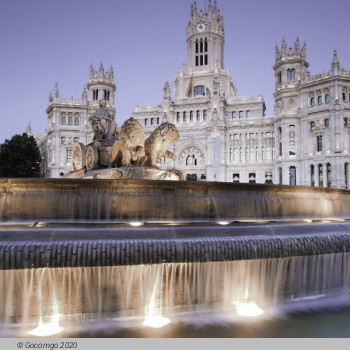
Teatro Real is a major opera house located in Madrid. Today the Teatro Real opera is one of the great theaters of Europe hosting large productions involving leading international figures in opera singing, musical direction, stage direction, and dance. Founded in 1818 and inaugurated on 19 November 1850, it closed in 1925 and reopened in 1966. Beginning in 1988 it underwent major refurbishing and renovation works and finally reopened in 1997 with a capacity of 1,746 seats. The theater offers visitors guided tours in several languages, including the auditorium, stage, workshops, and rehearsal rooms.

Founded by King Ferdinand VII in 1818, and after thirty-two years of planning and construction, a Royal Order on 7 May 1850 decreed the immediate completion of the "Teatro de Oriente" and the building works were finished within five months. The Opera House, located just in front of the Palacio Real, the official residence of the Queen who ordered the construction of the theatre, Isabel II, was finally inaugurated on 19 November 1850, with Donizetti's La Favorite.

The Teatro soon became one of the most prestigious opera houses in Europe. For over five decades it hosted the most renowned singers and composers of the time. In the early period, it saw famous opera singers such as Alboni, Frezzolini, Marietta Gazzaniga, Rosina Penco, Giulia Grisi, Giorgio Ronconi, Italo Gardoni, Mario de Candia and Antonio Selva among many others. In 1863, Giuseppe Verdi visited the theatre for the Spanish premiere of his La Forza del Destino. At its peak, in the last quarter of the 19th century, the Teatro hosted world renowned artists such as Adela Borghi, Marie Sasse, Adelina Patti, Christina Nilsson, Luisa Tetrazzini, Mattia Battistini, Julián Gayarre, Angelo Masini, Francesco Tamagno and Enrico Tamberlick. In 1925, the Ballets Russes of Diaghilev performed in the theatre with the presence of Nijinsky and Stravinsky.

From 1867 to 1925 the Teatro Real also housed the Madrid Royal Conservatory. In December of 1925 a Royal Order ordered its activities to be discontinued owing to the damage that the construction of the Metro de Madrid had caused to the building. The government set out to restore it and ordered numerous projects to be drawn out for its renovation, such as that from architect Urdanpilleta Flórez, who proposed a monumental remodeling of the building. However, financial difficulties prevented the completion of these projects and led to a simple restoration, sponsored by the Juan March Institute, and carried out first by the architect Manuel Gonzalez Valcárcel, and later by architects Miguel Verdú Belmonte and Francisco Rodriguez Partearroyo.

The theatre reopened in 1966 as a concert hall as well as the main concert venue for the Spanish National Orchestra and the RTVE Symphony Orchestra. The reopening was celebrated with a concert of the Spanish National Orchestra conducted by Rafael Frühbeck de Burgos, and the Orfeón Donostiarra. In 1969, the 14th Eurovision Song Contest was held at the theatre, featuring an onstage metal sculpture created by surrealist Spanish artist Salvador Dalí.

Important Info
Type: Opera
City: Madrid, Spain
Starts at: 19:30
Acts: 3
Sung in: Italian
Titles in: English,Spanish
Top of page