
Teatro Real 23 April 2023 - Ptolemy, King of Egypt (Opera in concert version) | GoComGo.com

Ptolemy, King of Egypt (Opera in concert version)

Teatro Real, Main Auditorium, Madrid, Spain
All photos (1)
Select date and time
6 PM

E-tickets: Print at home or at the box office of the event if so specified. You will find more information in your booking confirmation email.

You can only select the category, and not the exact seats.
If you order 2 or 3 tickets: your seats will be next to each other.
If you order 4 or more tickets: your seats will be next to each other, or, if this is not possible, we will provide a combination of groups of seats (at least in pairs, for example 2+2 or 2+3).

Important Info
Type: Opera
City: Madrid, Spain
Starts at: 18:00
Acts: 3

E-tickets: Print at home or at the box office of the event if so specified. You will find more information in your booking confirmation email.

You can only select the category, and not the exact seats.
If you order 2 or 3 tickets: your seats will be next to each other.
If you order 4 or more tickets: your seats will be next to each other, or, if this is not possible, we will provide a combination of groups of seats (at least in pairs, for example 2+2 or 2+3).

Overview

The Cleopatra who schemes a sinister course of action behind the scenes which this opera narrates and that premiered in 1728 at the Royal Academy of Music in London is not the same woman who, four years earlier, stared in - Giulio Cesare en Egitto-, rather it is her great grandmother. Notwithstanding, her perversions created an operatic figure of the first order: after eliminating her husband –Tolomeo VIII–, she puts her son Tolomeo IX, the lead character of the opera, on the throne. Later, unsatisfied, Cleopatra deposes this son and replaces him with his younger brother –Tolomeo X - , Alessandro in the opera. The action begins as the latter receives the order to kill his punished brother, who lives an exile’s life with a false name on the island of Cyprus. After various frustrated assassination and rape attempts, and a faulty poison draught, brotherly love overcomes the abominable plans of the fatal queen.

The premiere opened with Francesca Cuzzoni and Faustina Bordoni, two artists whose rivalry had provoked violent upheaval in the stalls a year before, along with the legendary castrato Senesino, and the basso Giuseppe Maria Boschi, to whom Händel dedicated some of his best arias di furore. A group of voices which demands an absolutely first class cast such as the one we will have the privilege of enjoying on this occasion.

History
Premiere of this production: 30 April 1728, King's Theatre, London

Tolomeo, re d'Egitto ("Ptolemy, King of Egypt") is an opera seria in three acts by George Frideric Handel to an Italian text by Nicola Francesco Haym, adapted from Carlo Sigismondo Capece's Tolomeo et Alessandro. The story of the opera is a fictionalisation of some events in the life of Ptolemy IX Lathyros, king of Egypt.

Synopsis

Place: Cyprus
Time: around 108 BC,
The action takes place at the time of Ptolemy IX (Tolomeo), who was deposed by his mother and joint ruler of Egypt Cleopatra III in favour of his younger brother Ptolemy X (Alessandro). Its themes include revenge, lust, lost love, devotion, and eventually, reconciliation.

Act 1
The action opens with Tolomeo on the beach of Cyprus, where he meets his shipwrecked brother, Alessandro. Alessandro has come under orders from Cleopatra to kill his own flesh and blood. Tolomeo becomes aware of Alessandro's identity and is tempted to kill him, but can't bring himself to do so. Tolomeo (going under the name of Osmin to protect himself from the wrath of King Araspe, an ally of Cleopatra) hides, and Elisa, sister of the king, turns up. Alessandro wakes, thinks she is like a goddess, and declares his love for her. She, however, loves "Osmin." She is very flirtatious. But as she and "Osmin" talk, it becomes clear that her feelings are not requited, that Tolomeo loves another (Seleuce, his wife, who he thinks is lost). Alone, he considers taking his own life.

We are then introduced to Seleuce who is also going under an alias, "Delia." She sings of her dispossession, then sees Tolomeo on the shore, but she runs away when Araspe arrives. Araspe is furious at Seleuce, whom he pursues with amorous intent. Act One closes with Tolomeo visualising his wife, wishing that she could appear before him and ease his pain.

Act 2
Tolomeo loses his temper and declares to Elisa that he is not "Osmin" but is indeed the deposed joint ruler of Egypt. Elisa tells the resentful Araspe to bring "Delia" before them. This is done and Tolomeo rapturously declares his love to Seleuce. She, in order to protect Tolomeo, pretends she doesn't know what he is talking about, while in typical operatic fashion voicing her inner thoughts in parenthesis; how this deception is painful to her and she longs for her husband.

Tolomeo reiterates that he cannot love Elisa and she rages at this. Tolomeo leaves and Alessandro enters, reiterating his love for Elisa. Elisa claims that the only way she can love him in return is if he murders his brother. Seleuce sings another lament and Tolomeo echoes her words in the background. Araspe bursts onto the scene and tries to rape Seleuce. Tolomeo can't bear the sight and rushes to defend his wife. He reveals their true identities, and Araspe sings ruggedly of how he will punish the lovers. The couple are left alone at the end of act two and touchingly sing synchronised for the first time of how their love for one another will doom them both.

Act 3
Alessandro has a letter positing the death of Cleopatra. He says she has paid the price for her cruelty. Somehow Araspe interprets Alessandro saying he wants to go home to Egypt with Tolomeo as meaning he wants his brother slain, but wants someone else to do it. Araspe, of course, thinks himself the very man for the job and delights in avenging the jealousy he feels.

Elisa forces Seleuce to cede Tolomeo to her, saying he'll die otherwise. Tolomeo rejects Elisa once more. She says if he is so brave and intent on rejecting her, then he should drink some poison. This he does. He describes the effect the poison is having, and then, apparently, dies. Alessandro comes to the desperate Seleuce in the remotest part of the wood and promises to reunite her with Tolomeo. Araspe triumphantly reveals the body of Tolomeo to Alessandro. He is sure that Seleuce is his but Elisa reveals the potion was actually a sleeping draught and she will torture Seleuce and put her to death. At this point Tolomeo wakes up and Alessandro presents Seleuce to him. Husband and wife are reunited and Alessandro declares Tolomeo as Egypt's rightful ruler. The opera ends with a joyous quartet expounding that when suffering turns into joy, all can be forgiven.

Venue Info

Teatro Real - Madrid
Location   Isabel II Square, s / n.

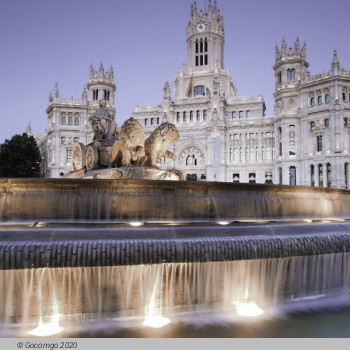
Teatro Real is a major opera house located in Madrid. Today the Teatro Real opera is one of the great theaters of Europe hosting large productions involving leading international figures in opera singing, musical direction, stage direction, and dance. Founded in 1818 and inaugurated on 19 November 1850, it closed in 1925 and reopened in 1966. Beginning in 1988 it underwent major refurbishing and renovation works and finally reopened in 1997 with a capacity of 1,746 seats. The theater offers visitors guided tours in several languages, including the auditorium, stage, workshops, and rehearsal rooms.

Founded by King Ferdinand VII in 1818, and after thirty-two years of planning and construction, a Royal Order on 7 May 1850 decreed the immediate completion of the "Teatro de Oriente" and the building works were finished within five months. The Opera House, located just in front of the Palacio Real, the official residence of the Queen who ordered the construction of the theatre, Isabel II, was finally inaugurated on 19 November 1850, with Donizetti's La Favorite.

The Teatro soon became one of the most prestigious opera houses in Europe. For over five decades it hosted the most renowned singers and composers of the time. In the early period, it saw famous opera singers such as Alboni, Frezzolini, Marietta Gazzaniga, Rosina Penco, Giulia Grisi, Giorgio Ronconi, Italo Gardoni, Mario de Candia and Antonio Selva among many others. In 1863, Giuseppe Verdi visited the theatre for the Spanish premiere of his La Forza del Destino. At its peak, in the last quarter of the 19th century, the Teatro hosted world renowned artists such as Adela Borghi, Marie Sasse, Adelina Patti, Christina Nilsson, Luisa Tetrazzini, Mattia Battistini, Julián Gayarre, Angelo Masini, Francesco Tamagno and Enrico Tamberlick. In 1925, the Ballets Russes of Diaghilev performed in the theatre with the presence of Nijinsky and Stravinsky.

From 1867 to 1925 the Teatro Real also housed the Madrid Royal Conservatory. In December of 1925 a Royal Order ordered its activities to be discontinued owing to the damage that the construction of the Metro de Madrid had caused to the building. The government set out to restore it and ordered numerous projects to be drawn out for its renovation, such as that from architect Urdanpilleta Flórez, who proposed a monumental remodeling of the building. However, financial difficulties prevented the completion of these projects and led to a simple restoration, sponsored by the Juan March Institute, and carried out first by the architect Manuel Gonzalez Valcárcel, and later by architects Miguel Verdú Belmonte and Francisco Rodriguez Partearroyo.

The theatre reopened in 1966 as a concert hall as well as the main concert venue for the Spanish National Orchestra and the RTVE Symphony Orchestra. The reopening was celebrated with a concert of the Spanish National Orchestra conducted by Rafael Frühbeck de Burgos, and the Orfeón Donostiarra. In 1969, the 14th Eurovision Song Contest was held at the theatre, featuring an onstage metal sculpture created by surrealist Spanish artist Salvador Dalí.

Important Info
Type: Opera
City: Madrid, Spain
Starts at: 18:00
Acts: 3
Top of page